Shownotes
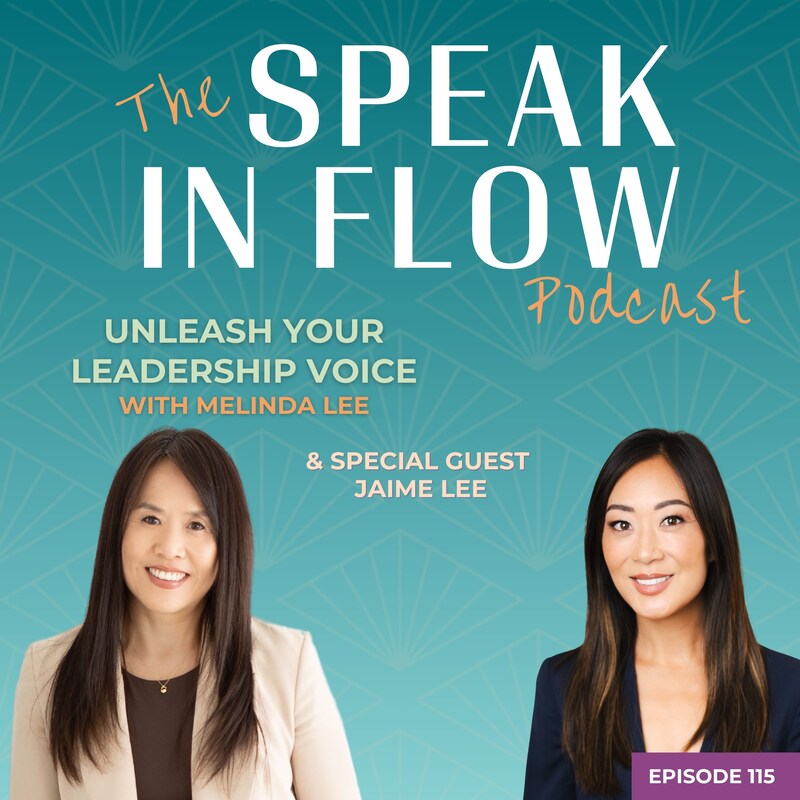
Jaime Lee, USC trustee, real estate CEO, and keynote speaker to thousands, once hyperventilated into a paper bag before speeches. In this vulnerable conversation with Melinda Lee, she reveals how she rewired her mindset from "I can’t say the alphabet if called on" to commanding boardrooms and commencement stages. Discover her counterintuitive secret: preparedness isn’t about perfection, it’s about pivoting.
In This Episode, You Will Learn:
The “Rubber Band” Moment
How immigrant roots and a "keep your head down" upbringing fueled Jaime’s terror of speaking, and the visceral physical reactions she had to conquer (shaking hands, a burning neck, and a mind going blank).
The Volunteer Cure
Why saying "yes" to unpaid speaking gigs (even while shaking) became her secret weapon: "It doesn’t get easier until you do it. But every time you do, it gets easier."
- The game-changer: Speaking about scholarships for deserving students gave her a "mission over fear" mindset.
When Plans Go Sideways
Jaime’s "decision tree" method for high-stakes negotiations, and why she backtracks to the human element when things derail.
"People surprise you. If you’re only prepared for ‘perfect,’ you’ll crumble."
Gen Z, Nuance, and the Art of Disagreeing
Why social media trains us to avoid hard conversations, and how to "dance" with differing opinions without sacrificing conviction.
"You can’t change systems by throwing rocks from the outside. Get in the room, then speak truth with gravitas."
Connect with Jaime L. Lee
LinkedIn: https://www.linkedin.com/in/jleela/
About the Guest:
Jaime Lee is the CEO of the Jamison group of companies, a powerhouse real estate enterprise that owns and operates over 18 million square feet of commercial, multifamily, retail, and medical properties across Southern California, with a $3.2 billion net asset value. Her expertise has earned her 100+ speaking engagements for organizations like ULI, JP Morgan, and UCLA, covering real estate, global supply chains, and leadership.
Fun Facts:
- 🏊 Triathlon Newbie: After completing her first triathlon in 2023, she’s training for another, proving that growth happens outside comfort zones.
- 🧬 Longevity Geek: Fascinated by the science of aging, she’s as curious about life extension as she is about real estate development.
- 👧 Big Sister Energy: The eldest (and only daughter) of four siblings, she’s been leading since day one.
About Melinda:
Melinda Lee is a Presentation Skills Expert, Speaking Coach, and nationally renowned Motivational Speaker. She holds an M.A. in Organizational Psychology, is an Insights Practitioner, and is a Certified Professional in Talent Development as well as Certified in Conflict Resolution. For over a decade, Melinda has researched and studied the state of “flow” and used it as a proven technique to help corporate leaders and business owners amplify their voices, access flow, and present their mission in a more powerful way to achieve results.
She has been the TEDx Berkeley Speaker Coach and has worked with hundreds of executives and teams from Facebook, Google, Microsoft, Caltrans, Bay Area Rapid Transit System, and more. Currently, she lives in San Francisco, California, and is breaking the ancestral lineage of silence.
Website: https://speakinflow.com/
Facebook: https://m.facebook.com/speakinflow
Instagram: https://instagram.com/speakinflow
LinkedIn: https://www.linkedin.com/in/mpowerall
Thanks for listening!
Thanks so much for listening to our podcast! If you enjoyed this episode and think that others could benefit from listening, please share it using the social media buttons on this page.
Do you have some feedback or questions about this episode? Leave a comment in the section below!
Subscribe to the podcast
If you would like to get automatic updates of new podcast episodes, you can subscribe to the podcast on Apple Podcasts or Stitcher. You can also subscribe in your favorite podcast app.
Leave us an Apple Podcast review.
Ratings and reviews from our listeners are extremely valuable to us and greatly appreciated. They help our podcast rank higher on Apple Podcasts, which exposes our show to more awesome listeners like you. If you have a minute, please leave an honest review on Apple Podcasts.
Transcripts
Welcome. Dear listeners, to the speak and flow podcast where we dive into unique strategies to help you and your team achieve maximum potential and flow even when the stakes are high, when the pressure is high. Today I have the complete honor of introducing a highly accomplished leader. Her name is Jamie Lee.
2
:Melinda Lee: She is a trustee of Usc. She's an independent board of directors for James Campbell and CEO of Jameson. Realty.
3
:Melinda Lee: Hi, Jamie, welcome.
4
:Jaime Lee (she/her): Hi, thank you so much. It's such a pleasure to be here.
5
:Melinda Lee: I am looking forward to really just diving into your incredible journey. And before we get into that, can you share with the audience what is happening in the real estate world. What you're excited about.
6
:Jaime Lee (she/her): Sure. Well, we're one of the leading housing developers here in Los Angeles. We've brought over 6,500 units to market in the last decade, still under construction, on a couple 1,000,
7
:Jaime Lee (she/her): with a few more in the pipeline. And the area that we're really focused right now is office to multifamily conversion, so converting underutilized office buildings which everyone hears, there's so much of because of the pandemic and turning them into apartments. And so we're doing that on several projects spanning downtown to Koreatown, to the west side.
8
:Melinda Lee: Wow! That is so fascinating, exciting!
9
:Melinda Lee: And you have had incredible success.
10
:Melinda Lee: And you speak on hundreds and of keynotes, panels.
11
:Melinda Lee: Can you share with us. What is your secret sauce to preparing for some of these keynotes?
12
:Jaime Lee (she/her): Oh, let's see. Well, I feel like I need to start off by saying
13
:Jaime Lee (she/her): I hated public speaking when I was younger. I never did it. I was terrified to even raise my hand in class, and that carried from when I was very young. All the way through my law school days
14
:Jaime Lee (she/her): I feel like I grew up in a culture where my parents were immigrants, and I was 1st generation born, and it was all about assimilation and fitting in and not being noticed. So it was this mantra of Keep your head down, stay quiet, do your work. Do well on tests and exams, but don't share your opinion. Don't ruffle feathers, don't rock the boat.
15
:Jaime Lee (she/her): and that lack of practice in speaking really carried through and just grew into a you know it was terrifying for me into my twenties, so that I would always do the bare minimum, you know. Every now and then we'd have a mandatory speech class, and that would be a traumatic experience in law school. We all had to do a moot courts and oral argument, and to be considered to join that team. And I remember going in being like, please don't even consider me. I'm just doing this because it's required.
16
:Jaime Lee (she/her): and so I never, ever thought that I would be in this position where I do so much public speaking. Now, I almost feel like it's my profession. And the way I really started out was from volunteering, and so, after I graduated from law school, I went back and started volunteering for the Alumni Association at Usc. And as I joined different committees there would be different speaking opportunities which I would always decline, and one year I was scholarship.
17
:Melinda Lee: I have a question. I have a question, so can you share with us, like, what were the feelings, what were like inside your body that you would feel, and the thoughts that would go through your head
18
:Melinda Lee: for a moment when people were.
19
:Jaime Lee (she/her): Like if you wound a rubber band.
20
:Melinda Lee: Oh!
21
:Jaime Lee (she/her): Really, really, really tightly. It was just a like a clenched
22
:Jaime Lee (she/her): shaking. I guess I would say.
23
:Jaime Lee (she/her): My neck would get really really hot, my hands would be shaking, and it's almost like
24
:Jaime Lee (she/her): your mind going blank.
25
:Melinda Lee: Yeah.
26
:Jaime Lee (she/her): It's the opposite of flow which flow, you know. In order to flow, you have to be relaxed. You have to be clear on your message. You have to know what it is that you're talking about.
27
:Jaime Lee (she/her): And in all of those instances it was just this mind numbing. I remember telling my friend we would have a really scary law school professor who would call on people. And this was in a civil procedure class, which was technical, and you had to stretch your mind to make arguments. And when you're in that terrified sort of fight or flight state, I remember telling my friend like I can't even say the alphabet
28
:Jaime Lee (she/her): if she called like. That's just how much. And it's just my friends and classmates around me. But there's something about this sense that people are looking at you, and they're expecting you to say something. And so those are the moments. This
29
:Jaime Lee (she/her): you know what you have to fight through, this process of 1st of all, being able to stand up in front of people and just say the Abcs.
30
:Jaime Lee (she/her): Then moving to something that you're speaking very passionately about, which is.
31
:Melinda Lee: Right.
32
:Jaime Lee (she/her): What it was when I was scholarship chair. It was raising money for very, very deserving kids, who otherwise may not have been able to have a full experience at Usc. Or to afford to even attend.
33
:Melinda Lee: Right.
34
:Jaime Lee (she/her): So when there was.
35
:Melinda Lee: You were like afraid. But you, like found a path like something was really something you're passionate about something that you knew was deserving. And so.
36
:Jaime Lee (she/her): Mission. And with these stories, okay, I have to get up there and I have to do it. I remember the 1st time I did. My neck was all hot. I was jumping up and down. I was breathing in a bag.
37
:Melinda Lee: Oh!
38
:Jaime Lee (she/her): Behind the stage, and I remember a couple other board members were just like, What's wrong with you. And I was like, I really really hate public speaking. I kept looking at the exit sign. I was thinking, I just make a run for it, and my remarks were on the podium. So I said, If I'm just gone and they can't find me, then I'm sure someone else will just come up and read what I had written, and those were really the thoughts that would go through my mind before I would speak, and the 1st time you get through it I'm reading off the page. I'd memorized it forward and backwards.
39
:Melinda Lee: No.
40
:Jaime Lee (she/her): Over, prepare over, prepare. That was really what
41
:Jaime Lee (she/her): carried me through is this sense of at least I could have a shred of confidence because I knew what I was talking about. I cared about it, and then I'd memorize it backwards and forwards. I'm still not a great off the cuff
42
:Jaime Lee (she/her): speech giver at all. But for me it was the the safety within. Preparedness helped me get up there, and what you find is as you do the reps, it gets easier and easier, and the more I did. I mean, it's utterly terrifying for the 1st dozen or so times that you do it.
43
:Melinda Lee: Right.
44
:Jaime Lee (she/her): But as I got more practice, as I got involved with different organizations.
45
:Jaime Lee (she/her): and just got better and better. And so it's that root of preparedness, but then also pushing yourself to have these experiences and realizing it doesn't get easier until you do it. But every time you do it it gets easier.
46
:Melinda Lee: Yeah, like you said the route of preparedness, and then pushing yourself, continuing to do it, and then also like, if you can have the passion around it. If you can find the why behind it.
47
:Jaime Lee (she/her): Yes.
48
:Melinda Lee: And because that is going to be your fuel, to stretch yourself to put yourself out there, even if it's uncomfortable. But if you can. Yeah, lock into the why?
49
:Jaime Lee (she/her): Definitely.
50
:Melinda Lee: And then. So now so now and then, then you did did a Commencement speech.
51
:Jaime Lee (she/her): And see in front of 12,000 people.
52
:Jaime Lee (she/her): I know that was definitely the biggest audience that I've ever spoken in front of, and it's so funny. That was probably the least nervous I've ever been.
53
:Jaime Lee (she/her): Which was incredible to me and it. And people said, Oh, is that just because it was a faceless blur? And I was like, no, I could see people like taking a sip of water or clapping their hands, or something. It was zeroing in on individual people. But
54
:Jaime Lee (she/her): again, it was that preparedness. Yeah, I had remarks that I cared about, and I had a lot of conviction. And then I remember, I remember what it was like to be a student graduating.
55
:Jaime Lee (she/her): And
56
:Jaime Lee (she/her): it's sometimes it's not about what you say. It's about how you say it. And so it was just conveying this feeling of enthusiasm and optimism and pride for what they had accomplished. That was the feeling that I wanted them to to leave with.
57
:Jaime Lee (she/her): and the sense that the sky is the limit. So my remarks were all about setting huge, audacious goals, because if all of us look back 10 years at who we were 10 years ago no one would ever have predicted or imagined we could be where we are today, and we should carry that same level of
58
:Jaime Lee (she/her): awe and wonder. And you know, audaciousness into what we do in the future, because we tend to underestimate what we can do in the future, even though we've already shown ourselves.
59
:Jaime Lee (she/her): So much with what we've just experienced in our lives.
60
:Melinda Lee: What an experience for you, too, to be able to go up there, feel so comfortable after that journey of like you said you would have never forecasted, in whatever how many years it was that you'd be speaking in front of 12,000 people about.
61
:Jaime Lee (she/her): And.
62
:Melinda Lee: About stretching ourselves and dreaming big. What a journey that that must have been really fun and thrilling for you.
63
:Jaime Lee (she/her): Yeah, it was great. It was filled. I was filled with a lot of pride, and I'm very, very involved at Usc, as you mentioned. So it's just.
64
:Melinda Lee: It.
65
:Jaime Lee (she/her): Very, very meaningful to me.
66
:Melinda Lee: Oh, yeah. And then the audience was there. They're they're all supportive and inspired. I love what you said about what do I want them to feel. And how do I want them to feel and lead with that.
67
:Jaime Lee (she/her): Yes, because the thing is, most people don't remember who spoke at their commencements, and I'm sure they don't remember my name, but I actually heard from someone this week who said, Oh, yes, I've heard your name before, because someone sent me your Commencement address.
68
:Jaime Lee (she/her): and they recognized me from it, and they said, Oh, yeah, your message was so. They remembered that it was a message. So if you just even Googled, you know that Commencement speech, it would come up. But people remembered the message of of what I encouraged them to do. And so that's always great.
69
:Melinda Lee: Awesome. And what is it like to be in front of an audience that really is not as welcoming, maybe judgmental board meetings with different stakeholders.
70
:Jaime Lee (she/her): Yes, I've definitely been in very contentious public meetings with.
71
:Jaime Lee (she/her): you know, hundreds of people giving public comment. Whether it was against you know, this is when I was president of the Harbor Commission at the port of Los Angeles. A lot of people remember, in that time coming out of the pandemic, the cargo backlog that we had with all of the container ships.
72
:Melinda Lee: Yep.
73
:Jaime Lee (she/her): At anchor. So we had a couple of big hearings, and
74
:Jaime Lee (she/her): it's about reading the room and being adaptable and as flexible as possible. I feel like these days. We've just gone away from nuance
75
:Jaime Lee (she/her): and this concept that
76
:Jaime Lee (she/her): things are not black and white, but rather there are so many different different stakeholders for any given issue. There are so many different opinions and competing interests.
77
:Jaime Lee (she/her): And the more nimble you can be in taking in information and then synthesizing it and reacting to it in a way that is both empathetic and understanding, but also holding firm to what your core goal is in that context or in the negotiation, is really important. There are sometimes I walk into a room. And I think it's going to be
78
:Jaime Lee (she/her): this way, like this group is going to go in this direction, or this is how the talk is going to be. And the 1st person who speaks, you know, starts off with so much negativity and so much pessimism that it's like, Oh, my gosh, okay. Now, I have to pivot on how I'm going to present my opening remarks because I need to synthesize and adapt to what this person has said, and weave it in, so that I'm not
79
:Jaime Lee (she/her): acting like I'm either callous or blind
80
:Jaime Lee (she/her): what their needs are, and I think negotiation is such a great Forum for that, because you learn to really think on your feet. And again it'll always come back to prepare prepare. When I was 1st starting off
81
:Jaime Lee (she/her): in my industry. I was negotiating on behalf of you know, different clients for real estate space, and I would go into some. I'd be terrified. And so I need. You know, it's like a mini speech, almost when you're even if it's just one other person across the table. But you have to know all of your numbers. You have to know all of your clients, goals and wishes and dreams. You have to know what's the rock bottom like. They're not going to go past this number. They're not going to go above this number. And then what are all the pieces at play? What are all the different?
82
:Jaime Lee (she/her): You know levers that I can move up and down to just get to the baseline result that I need. And I would go in and be really nervous. And it's like, Okay, I would in advance. Say, here are all those parameters. But then I would say, this is my opening, my opening, ask or offer, and then depending on what they say. If they say this, then I can say that, and if they say that, then I can say, and that was the level of preparedness that I went into just on a micro detail.
83
:Melinda Lee: Do you map it out.
84
:Jaime Lee (she/her): Oh, yeah, you could. It's like they might say, you know, it's like a decision tree.
85
:Melinda Lee: Yes, yes.
86
:Jaime Lee (she/her): And so you can say if they say yes to this, or if they say no to that, or you might hear from them like this one area we cannot give. It has to be this number. So then, we have to use all of these other levers to toggle up and down to get to where we need to be, and so I'd be astounded. Sometimes you go in with a really good counterparty to your negotiation and be like, oh, this is a tough customer. Now I'm really on my feet, and I'm going back to everything that I prepared in that negotiation. Sometimes I would walk into the room. I'm like this guy
87
:Jaime Lee (she/her): doesn't even know how big the space is, or you know what the starting like. Asking rate is for something. And that was the clear delineation of how you can be successful in these things is that level of preparedness.
88
:Melinda Lee: Wow!
89
:Jaime Lee (she/her): People surprise you all the time. So.
90
:Melinda Lee: That's amazing. Right? Right? Yeah, no, you do. And then so in the moment.
91
:Melinda Lee: have you been in a moment where you're just caught off guard like. What do you do? So you're prepared. You have all of these different avenues that you could take them down. And and so how do you know what it? What if like, it goes completely sideways? What do you do?
92
:Jaime Lee (she/her): If it goes completely sideways, you have to backtrack to a human element.
93
:Jaime Lee (she/her): I will say that there are things that used to just surprise the hell out of me and knock you off your feet.
94
:Melinda Lee: Yeah.
95
:Jaime Lee (she/her): And I just they're wide eyed like, Oh.
96
:Melinda Lee: Hey!
97
:Jaime Lee (she/her): Didn't expect that to happen.
98
:Melinda Lee: Yeah.
99
:Jaime Lee (she/her): These days. I think I've seen most of the tricks in the book.
100
:Melinda Lee: So you're.
101
:Jaime Lee (she/her): I'm a little bit more prepared for that, and that's what goes to it. You can sit in your room
102
:Jaime Lee (she/her): and prepare as much as you want, but until you get out there and you have a lot of reps.
103
:Melinda Lee: Right.
104
:Jaime Lee (she/her): Sitting across the table from someone sitting, you know, even if it's with a friend. This doesn't even have to be a business negotiation. Sometimes you meet up with a friend for lunch, and you think like, Oh, this will be so fun! We haven't seen each other in a while. We want to catch up.
105
:Jaime Lee (she/her): and they'll sit down and just be like everything is terrible. This is what happened wrong, and my whole life is falling apart. It's like, oh, this conversation is going in a completely different direction, and what you have to really do is say I'm adaptable. I wanted to have a fun.
106
:Jaime Lee (she/her): ladies lunch, and instead, this is going to turn into a little bit more of a therapy session. And that's okay, because this is my friend. But you have to shift gears. You can't. You can't respond to that. One thing like Oh, well, everything's great. You know. I got a massage I worked out today like everything. You can't respond in that way.
107
:Melinda Lee: I can't.
108
:Jaime Lee (she/her): You have to say you have to say. Oh, I'm so sorry I didn't realize
109
:Jaime Lee (she/her): you're like something so difficult. And how can I help you?
110
:Melinda Lee: Yeah, yeah. So someone is resistant or contentious. You you just you go there right.
111
:Jaime Lee (she/her): You have to take it in.
112
:Melinda Lee: Get in!
113
:Jaime Lee (she/her): Have to hold firm like if it is a negotiation, if it is a public comment, complaining session, it's like I hear you. We understand your frustration. Thank you
114
:Jaime Lee (she/her): for sharing that with us, but that doesn't necessarily mean cave and give up on what your negotiation piece is, or what your purpose is in being in that situation.
115
:Jaime Lee (she/her): So I encourage people really to think deeply about what's your message? What are you trying to either convey or earn or get or help, and to always have that be the compass that guides you in your communications. But you have to have this sense of. I'm dancing on my feet a little bit, because I'm going to be
116
:Jaime Lee (she/her): flexible to whatever is being thrown my way. If you only go in saying like, I'm going to walk in. Everyone's gonna love me. They're going to say yes to everything that I propose, and things will turn out perfect. And I'm going to be a hero. Then you're setting yourself up to be really, really surprised sometimes.
117
:Melinda Lee: And then what do you think about the the way that people are communicating now, especially with millennials and.
118
:Jaime Lee (she/her): Gen. Z. Like they think
119
:Jaime Lee (she/her): it's amazing, because I'm an elder millennial, and people complained about us for so long at the beginning of my career. And now I get to look at them and say, Well, we don't look so bad anymore. But it goes back to that sense of
120
:Jaime Lee (she/her): difficult conversations.
121
:Jaime Lee (she/her): nuance and critical thinking. I think social media has really set up this younger generation, for if someone says something I don't like, I can just unfollow them.
122
:Melinda Lee: Or if someone said.
123
:Jaime Lee (she/her): Something I don't like. I can just write some mean, scathing, horrible thing that cuts to their humanity in their comment section, because you're behind this wall of obscurity. And so we create these echo chambers because the algorithm wants to feed you, the things that you want to listen to. And
124
:Jaime Lee (she/her): we have to get back a little bit more to saying it's not just this answer or that answer. It's not just black or white. It's not just your view and my view, there are so many gradations of things in between, and if you are
125
:Jaime Lee (she/her): in a safe place, whether it's a negotiation or a friendship, or a fundraiser, or whatever it may be. If you're in a safe place, then we should be able to explore those things together. We should be able to agree to disagree on different things. We're allowed to have differing opinions, and we should feel safe to express those without being immediately, you know, canceled or thrown under the bus, or whatever it may be. But I really encourage people to say.
126
:Jaime Lee (she/her): Okay, this is going to be a more complicated conversation than I expected it to be, but I'm gonna
127
:Jaime Lee (she/her): come to it with a whole heart and an open mind.
128
:Jaime Lee (she/her): I'm not going to sacrifice the things that I believe in that I really hold to be true. But I'm also going to listen very earnestly with someone who has a very different opinion from me, and I've left many conversations, you know, especially in this political climate, with people saying like.
129
:Jaime Lee (she/her): I completely hear you from your position. That makes sense of why, you would
130
:Jaime Lee (she/her): feel very passionately about that, and I will agree to disagree. And here's my opinion, and
131
:Jaime Lee (she/her): you know great numbers of people across the spectrum, who I hold very close to my heart, and we're able to have those conversations. So I really encourage people to say, like difference of opinion is not a bad thing. It's a great thing.
132
:Jaime Lee (she/her): It helps you even shore up your conviction the things that you believe in by being able to tango with other people's beliefs. It's really easy to say, like, this is what I believe, and then I surround myself with people who believe the same thing, and then all we can do is just like talk about it together, and just feel more reinforced
133
:Jaime Lee (she/her): right
134
:Jaime Lee (she/her): beliefs. But when you interject a differing opinion, you say, Oh, wow! I hadn't thought about it that way.
135
:Jaime Lee (she/her): Or maybe it's like, Yeah, oh, that's interesting. That's how someone thinks about it. But I still believe in what I believe in. I think those are very, very powerful conversations, and it helps keep our society more woven together.
136
:Melinda Lee: Yeah, and it. And it helps you with your dance, right? Going with what you're saying. Like, if we're gonna continue to stretch ourselves and be in the nuance of difficult conversation. You have to have. You gotta know your partner. Who are you dancing with, and what moves are they gonna make. So that we can yeah be in.
137
:Jaime Lee (she/her): Especially if you want to effectuate change.
138
:Melinda Lee: Yes.
139
:Jaime Lee (she/her): That's another thing. I really admire Gen. Z. Younger people today, and having this great confidence and strength in their convictions, they're coming out and just saying their opinion. They're fighting the fight. They're speaking truth to power. That is so incredibly important, because I did not.
140
:Melinda Lee: So young.
141
:Jaime Lee (she/her): When I was young.
142
:Melinda Lee: Did it.
143
:Jaime Lee (she/her): It, took.
144
:Melinda Lee: I didn't
145
:Melinda Lee: long time for me to say like, well, this is what I believe. I'm just gonna keep it.
146
:Melinda Lee: You do.
147
:Jaime Lee (she/her): Sit inside quietly, and I'm gonna think about it in my mind, and not.
148
:Melinda Lee: Sure.
149
:Jaime Lee (she/her): So I really really admire this strength of speaking truth to power. But I also encourage people to understand that it's much easier to make change from within an organization, or an institution, or a paradigm, or whatever it might be, than it is to stand outside and throw rocks at it.
150
:Jaime Lee (she/her): But there's a certain amount of credibility that you have to earn. Like every single person's voice, deserves to be heard. Every single person deserves to be seen.
151
:Jaime Lee (she/her): but in some of these, like, if you want to rise in different organizations, or if you want to be taken seriously by people who are really making decisions. It's okay to play a game to get into those you know rooms, or you know where the room where it happens, Hamilton. But and not again, not to compromise what you believe in, but to understand that in order to
152
:Jaime Lee (she/her): be heard sometimes you have to build that credibility. You have to build that gravitas, and that comes from preparedness. It comes from showing integrity in every interaction of saying, in very, very respectful ways, that I sort of disagree with how you know this company is doing something with how this school is doing something with how this, whatever it might be, this our family, is doing something.
153
:Jaime Lee (she/her): And being able to have those conversations in very, very collaborative.
154
:Jaime Lee (she/her): It's in varied, like heart centered ways.
155
:Melinda Lee: Right? Right? It's not just about you just communicating what you want and what you need.
156
:Jaime Lee (she/her): Or holding up a sign and posting it on your social media, and just screaming that everything is is messed up in the world. There are ways to effectuate positive change.
157
:Melinda Lee: Yes, be the solution, be the change.
158
:Jaime Lee (she/her): Getting into the.
159
:Melinda Lee: Yes.
160
:Jaime Lee (she/her): Organizations and saying like, Look, this is how prepared I am. This is how professional I am. This is what I bring to the table, and then can I offer you something constructive that we could do differently, or that I'm noticing, or that makes me uncomfortable.
161
:Melinda Lee: Wow! Jamie, I really appreciate your insights, your experiences, and could you share with us one last golden takeaway that you want the audience to remember.
162
:Jaime Lee (she/her): Hmm!
163
:Jaime Lee (she/her): Step outside your comfort zone.
164
:Jaime Lee (she/her): because when it comes to public speaking and putting yourself out there, the reps are, what matters. It really does get easier the more often you do it. But if you can't take that step outside of your comfort zone to, you know, give a speech or do a presentation, or join a nonprofit, or speak on behalf of somebody? Or do a podcast.
165
:Jaime Lee (she/her): If you can't step outside of that, then you'll never get that experience, and you'll never get that little bit of incremental comfort.
166
:Melinda Lee: Yes.
167
:Jaime Lee (she/her): People to just push the boundaries a little bit, so that you only you only grow when you're stretching yourself.
168
:Melinda Lee: Right, bring in the passion, be prepared, bring in the passion, and step outside yourself.
169
:Jaime Lee (she/her): Certainly.
170
:Melinda Lee: Love it. And, Jamie, if do people, are you open for people to reach out to you for developmental development opportunities? I don't know if you want to share your handle or.
171
:Jaime Lee (she/her): Sure on Linkedin. I'm Jaylee la, because no one spells my 1st name correctly. So.
172
:Melinda Lee: No way.
173
:Jaime Lee (she/her): Initial letter JLEE. LA. On Linkedin.
174
:Melinda Lee: That's so funny. I could see. I mean, I mean, that's the way that most people smell it. How you spell it!
175
:Jaime Lee (she/her): No, most of you are. JAMI think it was one of the most popular names throughout the eighties, for both girls and boys. Actually there were 7. Jamie's in my high school.
176
:Melinda Lee: Wow!
177
:Jaime Lee (she/her): Yeah.
178
:Melinda Lee: And I noticed that you're also doing an iron, a marathon.
179
:Jaime Lee (she/her): I'm a triathlon.
180
:Melinda Lee: Or Triathlon.
181
:Jaime Lee (she/her): Yeah, yeah.
182
:Melinda Lee: Coming up!
183
:Jaime Lee (she/her): I did my 1st one last summer, so I'm.
184
:Melinda Lee: Woo.
185
:Jaime Lee (she/her): Looking to start ramping up for another one. Hopefully, this September.
186
:Melinda Lee: Oh, my goodness!
187
:Jaime Lee (she/her): Yeah, it's been a fun experiment. Because I, you know, basically for a decade, was just having kids and going through that, you know baby stage, and so getting back to myself. It's been great to have a physical challenge, and something that gets me out there, and you know, helps me synthesize thoughts.
188
:Melinda Lee: Stress is a great stress reliever, and it helps you sleep better. So all important things for busy working moms.
189
:Melinda Lee: Wow, that's amazing. That's inspiring. Maybe I should think about doing it.
190
:Jaime Lee (she/her): I'll start with the 5 KI highly recommend. I love 5 ks.
191
:Melinda Lee: Okay, okay, I'll let you know about it.
192
:Jaime Lee (she/her): Ok. Give me.
193
:Melinda Lee: Thank you, Jamie, so much. I had a really fun time appreciate you. Continue. I send you continued success and positive vibes for future work, and, you know, really appreciate your time and your insights. Today.
194
:Jaime Lee (she/her): Thank you so much for having me, and likewise such a pleasure.
195
:Melinda Lee: Thank you and to the audience. I trust that you got your golden takeaway, and that you implement them right away. And remember anytime that you have a chance to communicate. You also have a chance to connect, to inspire, and to make a difference in this world. Thank you so much until next time. I'm your sister in flow.
196
:Melinda Lee: Much love.



