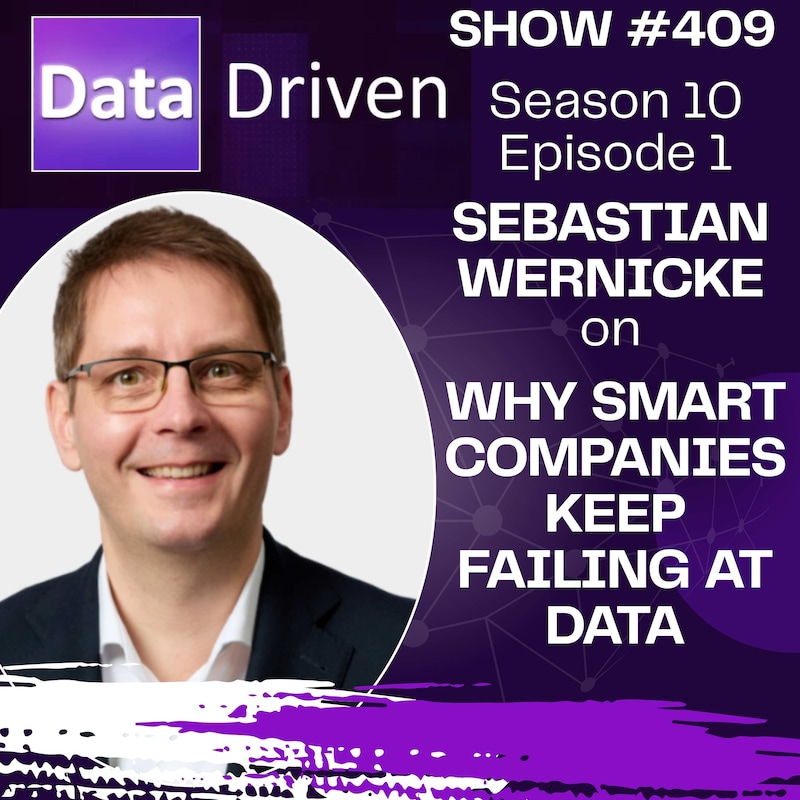
Shownotes
As we launch season 10, your favorite semi-sentient British AI co-host returns to the microphone alongside Frank La Vigne for a compelling exploration of what it truly means to be a data-driven organization.
In this episode, Frank sits down with Sebastian Wernicke, author of "Data Inspired" and renowned expert in data and AI strategy, to discuss why turning data into action remains a formidable challenge for so many organizations.
Together, they dive into the enduring gap between data insights and meaningful change, the crucial role of leaders in fostering cultures of evidence and inquiry, and why technology alone won’t move the needle without the buy-in—and sometimes the irrationality—of humans.
From the evolution of data culture and the pitfalls of management by numbers, to the psychological barriers that lead to "data frustration," this episode offers a candid, nuanced look at the real obstacles standing in the way of better decisions.
Links
Sebastian Wernicke on LinkedIn - https://www.linkedin.com/in/wernicke/
Watch this episode on YouTube - https://youtu.be/2qP4p0YKxI8
Data Inspired (affiliate link) - https://amzn.to/4xkCuBV
Time Stamps
Transcripts
Machine learning is when you take a bunch of data and you have a clear
Speaker:goal and you're training the model to fulfill that goal. And
Speaker:I'm aware AI is also built on machine learning, but the distinction I make is
Speaker:that I say, well, AI as we use the term now, is basically you
Speaker:take a bunch of data, you don't really have a goal,
Speaker:but you're training it anyways. And I mean, that's roughly how most
Speaker:of these language models are trained, right? A new season deserves a proper
Speaker:host. As Data Driven kicks off season 10,
Speaker:Bailey, your favorite semi sentient British AI co host,
Speaker:has returned to the microphone after a 15 episode absence.
Speaker:While our temporary substitutes did their best, and several deserve
Speaker:honorable mention for bravery under difficult conditions. It's time to bring
Speaker:back the class, the sass, and the occasional dose of dry British
Speaker:skepticism. To open the season. Frank Lavinia
Speaker:sits down with Sebastian Wernicke, author of Data Inspired, for
Speaker:a fascinating discussion about why organizations struggle to turn data
Speaker:into action, how leaders create data driven cultures, and why the
Speaker:biggest obstacle to better decisions may not be technology at all. It may
Speaker:be the wonderfully irrational humans making them. So put the
Speaker:kettle on, adjust your dashboards, and join us as we begin season
Speaker:10 of Data Driven.
Speaker:Well, hello and welcome back to Data Driven, the podcast where we explore the emerging
Speaker:industry that is data science, AI,
Speaker:and all of it is underpinned by data engineering. However, my
Speaker:favorite data engineer in the world will not be here. But
Speaker:again, I think as the world focuses on AI, I think we really need to
Speaker:step back and think about data. So with that, today we
Speaker:have Sebastian Wernicke, who is a leading expert in data and
Speaker:AI strategy. And he believes that the key to unlocking
Speaker:data's power lies not in technology, but in leaders
Speaker:fostering a culture of evidence and
Speaker:inquiry, which I think is very, very true.
Speaker:You could throw all the AI, all the agents you want, but if you don't
Speaker:have the data right, you don't have it raw. You don't have anything.
Speaker:And he has three acclaimed TED talks, which is cool. He's reached over 5 million
Speaker:viewers and. Well, welcome to the show, Sebastian.
Speaker:Well, thank you. Thank you for having me. Great to be here. Yeah,
Speaker:I'm excited to have you. Tell me about this
Speaker:one. I mean, it's pretty cool. You've had TED Talks, right?
Speaker:That's pretty epic. So you've been doing this for 20
Speaker:years, right? Yeah. Data was not really taken
Speaker:serious. Arguably it's not taken seriously enough today,
Speaker:but I would say 20 years ago, it Certainly was not taken seriously.
Speaker:Yeah, well, it was sometimes taken seriously, but
Speaker:I think that's sort of a resonating theme. So the
Speaker:interesting thing is, I think if you've been in this field for so long,
Speaker:is that you really notice history repeating again and
Speaker:again and again. Right. So we had the era of big data,
Speaker:if anybody even remembers the term. Then came analytics,
Speaker:then came digitalization, and now it's AI.
Speaker:And in the end it always comes back to data and whether you
Speaker:manage to take all the great insights that the data
Speaker:is giving you and actually implement them in the organization and
Speaker:create some change ultimately. Right. That's all what data is
Speaker:for. If you don't create change with data, you don't need all that
Speaker:expense and investment into it. Yeah, it's a good
Speaker:way to put it. And even before that, even before there was big data, there
Speaker:were OLAP cubes. I remember I actually worked for,
Speaker:in the virtual green room we were talking about. You're based in Germany. I used
Speaker:to live in Frankfurt and prior to joining
Speaker:Deutsche Bank, I had worked at basf, or the big
Speaker:chemical company Americans would know as basf.
Speaker:And I remember sitting in the cubicle of
Speaker:one of the SAP gurus that we had talking about OLAP
Speaker:cubes and all this crazy stuff. And I just was
Speaker:like, you ever have a conversation that is very, you look
Speaker:back on it now and it was very prescient, you know what I mean? It
Speaker:was very future facing. And then at the time you're
Speaker:sitting there and you're like, you partly understand what was happening and
Speaker:you partly are very. I'm not sure if this
Speaker:person's crazy, you know, And I
Speaker:remember she was one of the DBAs that we had in doing advanced analytics.
Speaker:And you know, she said that, you know, my goal is to figure out, you
Speaker:know, will rainfall in Western Australia impact
Speaker:prices here, which will ultimately impact, you know, how we
Speaker:go to market with, you know, at the time, a chemical
Speaker:company. And I just remember sitting there thinking like, I can't
Speaker:tell if that's brilliant or crazy. It was
Speaker:data science. Because before the term was invented in a way. Exactly.
Speaker:I mean, that's really what it was. It was. And you know, now when you
Speaker:say that, it's not so crazy. Right? Because, you know, we had a previous
Speaker:call, we were talking about, you know, finance people actually
Speaker:would. It'll be the episode prior to this. So hopefully you've listened to that. Not,
Speaker:not you, but you, the audience you're welcome to listen to,
Speaker:but where they talked about finding Alpha, like finding the
Speaker:signal that matters before anyone else does. And that's really
Speaker:what she was doing. It just, you know, in
Speaker:the late 90s that sounded a little crazy,
Speaker:but I think it's also one of these things that's still true today. I mean,
Speaker:everybody's trying to find the advantage in the data. And I think
Speaker:it's also of course interesting to then see with
Speaker:everybody just accumulating more and more data analytics becoming
Speaker:much, much faster. We don't even fully know, I think what
Speaker:AI is going to do to the speed of the
Speaker:generation of insights, not the adoption, but just the speed of generation.
Speaker:And everybody's still trying to find that edge. And
Speaker:I think that as people increasingly look at data
Speaker:for a while you could have an edge by
Speaker:looking at the data to optimize and to go in these incremental
Speaker:ways where it's like the 1% optimizations over time add up.
Speaker:And I think that's become the baseline. That's just the expectation
Speaker:right now you have to do that already. And so
Speaker:sort of a transition happening, I think where you now need to think about, well,
Speaker:I'm already using data for that. I'm optimizing my processes,
Speaker:I'm adding the automation. So where's the next
Speaker:edge going to come from? And I strongly believe that it's
Speaker:now again a shift to the anomalies and the
Speaker:shift to the outliers and not trying to look
Speaker:to data to give you those straight answers where you go for, I mean that's
Speaker:not going away just to be clear, that's. But that's baseline expectation
Speaker:now you need to add to that to look into the data and say, okay,
Speaker:what's the next interesting question? Where am I going to find that
Speaker:new product idea? Where am I going to find that new idea
Speaker:for revamping a process that
Speaker:maybe nobody dares to rethink today? And I think that's
Speaker:the exciting part of what everybody who's in data
Speaker:can be working on today. That you sort of transcend that,
Speaker:look for just the correlation and say, okay, what's on the
Speaker:fringes here? That's a good way to put it. I
Speaker:think you touched on something that is important.
Speaker:Leaders really have to foster
Speaker:a culture here of looking for evidence and data.
Speaker:It has to be pervasive, I think, because finding anomalies and data,
Speaker:you're right, that's kind of like baseline now.
Speaker:Right. But in order to do this you
Speaker:really have to have teach people respect for data and an
Speaker:understanding of basically evidence based approaches to things.
Speaker:Right. Escalate when needed, but don't escalate. Don't use
Speaker:data for data's sake. Right. And how do
Speaker:leaders do that? Right. How do you, you have to educate the leaders, I assume,
Speaker:right? Yeah. Well, I mean, I'm. Oh, and I just, I think I
Speaker:have to preface that a little bit because I'm always very careful with that. I
Speaker:think leaders get told 20
Speaker:times at least a day what should be their priority and what
Speaker:leaders should do. Leaders must do this, leaders should do that, and
Speaker:so on. I am going to try and make the case
Speaker:that here. I think it is really a leader's job. And
Speaker:the reason, I think is quite simple.
Speaker:Within an organization, leadership usually
Speaker:thrives on being right. I mean, that's what we look for in leaders.
Speaker:We look for the confidence, we look to them to say,
Speaker:this is the way we're going. This is what I believe in.
Speaker:And if you take this change with data
Speaker:seriously, it basically flips the whole thing on its head. Because
Speaker:your baseline assumption, I think almost has to be, well,
Speaker:we're kind of wrong today. It may be right, what we're doing for the business
Speaker:right now, but every single day we have to start
Speaker:looking where are we wrong? And then correct that.
Speaker:And everybody in an organization, of course,
Speaker:is smart, so they will look to leadership to see
Speaker:what's the culture here. And I mean, we all know that culture, it's
Speaker:a bit of a fuzzy word, but I think you can easily unpack it. I
Speaker:mean, it's not what's on the PowerPoint slides, it's not what's on the posters
Speaker:in the hallway. And yet culture is who gets hired, who gets
Speaker:promoted and who gets fired. And that's
Speaker:the baseline of it. And people will look at that. And
Speaker:so leaders are the ones, I think, that get to set the tone in the
Speaker:room, that get to shape these things. And if you are in
Speaker:a culture where, for example, the executive will say, well, we're a
Speaker:data driven company, and then turns around and promotes the head of marketing who
Speaker:has publicly proclaimed that he really has a good gut feeling and never
Speaker:trusts the data. Everybody has learned, well, you're not really a data
Speaker:driven organization. And so that's, I think, where
Speaker:leadership really comes in. It's only leaders who can
Speaker:create these safe spaces and signal to everybody
Speaker:it's okay to come with data that disagrees with the status
Speaker:quo. It's okay to come with an analysis that disagrees
Speaker:with what I have said for the past year, for the past two years.
Speaker:I'm willing to challenge and change my
Speaker:Convictions. And only when that is done on a very regular
Speaker:basis and the organization can observe that, I
Speaker:think. Are you creating the culture that is that fertile ground for
Speaker:these very small insights?
Speaker:Maybe at first, you know, but they need the space to be explored, they need
Speaker:the space to grow and maybe to even create some
Speaker:experiments to further validate that. That's
Speaker:true. And I think the idea of promoting people with
Speaker:gut feelings, and I'm not that gut feelings are necessarily
Speaker:bad, but I think you're right, it sends the wrong
Speaker:message. You coined a term called data frustrated,
Speaker:which I think is pretty accurate. So how did you get to that
Speaker:term? Data frustrated, by the way, is just the pre stage to becoming
Speaker:data cynical at some point. So it's kind of
Speaker:like the stages of grief, right? There are stages to it.
Speaker:Yeah, well, I think it was just a feeling
Speaker:that I perceived whenever I was working with
Speaker:my clients on data projects that there was always
Speaker:that point where you would sit together maybe within the project setting, maybe when you
Speaker:go to dinner afterwards, where people would tell you, oh my God,
Speaker:we've invested so much time, effort and money into
Speaker:data, you know, hundreds of millions going to spend another few
Speaker:millions, hundreds of millions in the future. But we're not
Speaker:really satisfied with the results we're getting. What's happening here?
Speaker:And I think that question came up again and again and again. And I think
Speaker:that's the very definition of frustration. You sort of
Speaker:notice something isn't going as you want and at the same time
Speaker:you're not finding an answer or maybe you think you have the answer
Speaker:and then you try that and it doesn't move forward. Now
Speaker:an interesting thing is the data on that. It confirms
Speaker:that. So I found a couple of surveys
Speaker:from various years. It starts out in 2010, and there's another one,
Speaker:2019, 2024, where some
Speaker:consultancies asked executives what
Speaker:are the top 10 reasons why you're not happy
Speaker:with the results that you're getting out of your Data projects?
Speaker:And 2010, it was three reasons that came out on top.
Speaker:It was, well, we don't think we have enough management attention on it.
Speaker:We don't really understand the business case as much as we'd like to, and
Speaker:we don't think we have the skills. Now the interesting thing is in
Speaker:2019 they did a similar survey and the same
Speaker:three reasons come out on top. And then in
Speaker:2024 the same three reasons come out on top again.
Speaker:They change orders. Sometimes when AI comes, everybody says, ah, we probably
Speaker:don't have the skills. But I mean how frustra as that you
Speaker:think you know the top three reasons standing in your way.
Speaker:And they also don't sound that difficult. I mean, you know, if there's not enough
Speaker:management attention, pay attention. If you don't have the skills, do some
Speaker:training, calculate some business cases. But apparently that's not the solution.
Speaker:And I think that's where data frustration ultimately comes from.
Speaker:So over these just decade and a half now, the problems have
Speaker:been the same. So like, how do you,
Speaker:what is really the problem? Are those the problem? Because if it's something, if you
Speaker:know something is a problem for 15 years, you don't address it. There's an
Speaker:underlying problem that maybe you're misidentifying the problem.
Speaker:You're putting the blame on the wrong things. Like what do you think it is?
Speaker:I think it's that missing cultural component that if
Speaker:you think about some of the things we just discussed. Right. The
Speaker:space that leaders need to create for having controversial
Speaker:discussions, which is also sometimes known as psychological safety.
Speaker:And on the other hand, you have all this technology that's creating
Speaker:measurements that needs to process the data. And whether it's
Speaker:a cube, it's a data lake, or a data mesh, doesn't matter.
Speaker:These two discussions never happen in the same room. You
Speaker:have one part of the organization thinking about the next technology cycle,
Speaker:constructing architectures, discussing
Speaker:what's the best way to organize data. And then you have other parts of
Speaker:the organization that are thinking about culture, that are thinking about
Speaker:transformation, that are thinking about leadership education.
Speaker:And these two things are never brought together. And I think
Speaker:that's the issue. So it's not a sort of technology versus culture.
Speaker:And you don't need technology. All you need is culture. And it's also not
Speaker:data or gut feeling. Of course, you need both because data is never
Speaker:going to give you all the answers. So a good intuition is quite helpful in
Speaker:many cases. But it's about really
Speaker:bringing these two elements together and integrating them.
Speaker:And for me, that's the missing component where, you
Speaker:know, the what, what, what the surveys express. I think
Speaker:that, that management attention, the, the skills, the
Speaker:business case, I think these are symptoms and so you
Speaker:can't really treat them as the causes of the data frustration. It's just
Speaker:what resurfaces when you don't pay enough attention to the cultural element.
Speaker:So how do you get. So it sounds like you brought up something very, very
Speaker:real, like the people working on the actual technology. 10
Speaker:and I'm guilty of this. I'm a technologist, right?
Speaker:Yeah. I mean, no, all Our listeners
Speaker:are right. So like I often will catch myself like when I'm like deep down
Speaker:a technical rabbit hole, like, wait a minute, what am I actually doing here?
Speaker:That's a skill that was not easy to develop.
Speaker:But how do you, I mean, is it people working
Speaker:on kind of the, the cultural side of things, like, don't they need to talk
Speaker:to the technology people and like, because, because
Speaker:historically, and this goes back to when I was sitting in the
Speaker:cube at BASF where, you know, the, that cube,
Speaker:that cubicle was in the basement and behind, you know, regular. It was in the
Speaker:basement. And then the, the, the, the DBAs were like in a sealed off
Speaker:portion of the basement. Right. And like, you know,
Speaker:I don't know that that's kind. And if you ever seen the TV show, the
Speaker:IT crowd, it's a British show. Yeah, yeah. You know, they were kept
Speaker:in the basement too. Like I think historically it was not
Speaker:seen as crucial to the business.
Speaker:Right. It was kind of a back office job and people, it was kind of
Speaker:pushed to the side. And I think it's been years since that's
Speaker:really been true. But
Speaker:I think what we're seeing is a bit of the lingering effects of that. Is
Speaker:that a fair thing to say?
Speaker:Well, I mean, I think there's a bit of a
Speaker:problematic history here where I think for a very long time
Speaker:it was mostly perceived as a cost factor.
Speaker:And so the incentive was to optimize for cost
Speaker:and optimize for efficiency. And suddenly we're expecting
Speaker:technology to drive transformation
Speaker:and innovation. And of course that completely
Speaker:changes the incentivization. And I think it also creates
Speaker:sometimes these gaps within technology organizations
Speaker:where there's one part that says, okay, for years we've been trained on
Speaker:ensuring efficiency, security,
Speaker:reliability, and suddenly we're supposed to open up this huge
Speaker:experimentation stage. Other things continue,
Speaker:you know, as we, as we want them. So that
Speaker:is definitely something to recognize and acknowledge. But on the other hand,
Speaker:I'm not a big fan of always saying, okay, you know, the
Speaker:other people should do something. Clearly everybody needs to talk
Speaker:with each other. But I think there's also something that we can do on the
Speaker:technology side or more specifically. So I've been running data science teams for
Speaker:many years now. So for example, what I do in my teams
Speaker:is whenever they ask me for training, what I will
Speaker:propose to them are trainings that I think you might call
Speaker:soft skills. But I think they're just essential skills. So I will
Speaker:send them to communication trainings,
Speaker:stakeholder management trainings. We will
Speaker:together Talk about decision making, how that works, how you
Speaker:influence people in a room, how decisions are really made. Because
Speaker:I think many data scientists come in with the impression the decision is
Speaker:made at that meeting where they come in with a PowerPoint slide. And that
Speaker:insight, you know, that everybody will say, oh, brilliant,
Speaker:finally we have that insight. We're now going to change our ways.
Speaker:Which I cannot blame them because that's, as a,
Speaker:you would intuitively think that. And it's I think also
Speaker:a good belief in humanity if you would think I could simply
Speaker:influence people like that. But I think it's adding
Speaker:that part of understanding to the technical
Speaker:profession. That's something that as a technical team you can do. That's
Speaker:also something that as a technical leader you can do to just
Speaker:add these additional skills. I was two weeks ago at a
Speaker:data science conference and I was speaking in the AI and
Speaker:MLOps track with a very strange
Speaker:topic. I just talked about decision making for half an hour
Speaker:and I was really worried that the resonance would be okay. We came here to
Speaker:look at a Python notebook and suddenly this guy is talking about psychology. So what's
Speaker:going on here? But the resonance and the number of questions
Speaker:I got, I mean, they just showed me there's a real openness, almost like a
Speaker:craving to understand that because everybody has
Speaker:been in that room. I know I have many, many times where
Speaker:we had all the analysis, right? The data was good,
Speaker:we had scrubbed it, we had understood it, the area under the curve or
Speaker:whatever quality measure, it was good. And we showed them. I don't
Speaker:know, when you drive your trucks around Southeast Asia, you can save 15%
Speaker:of fuel. And then a year later, half a year later, trucks are still
Speaker:driving around like they used to. I mean, that's such a frustrating experience
Speaker:on the data and analytics side that I think people are really,
Speaker:really eager to learn how do I overcome this? And
Speaker:how can I be more effective in
Speaker:actually changing something and actually
Speaker:being effective
Speaker:in my job and being seen with what I do.
Speaker:And maybe we can use that as a platform and
Speaker:basis to expand it from the technology side.
Speaker:And of course it's not a one sided thing,
Speaker:right? At the same time, when I speak, let's say with
Speaker:HR leaders, I always emphasize
Speaker:you need to make sure that there is more technical understanding in the
Speaker:organization. You cannot treat data
Speaker:as this simple API where you basically say request dashboard and then
Speaker:suddenly the dashboard is built a couple of weeks after. That's not how it works.
Speaker:You need to understand how this works. You need to also understand how
Speaker:data works. And what, what it can and cannot give you, because
Speaker:otherwise you're just coming at this with the wrong expectations and
Speaker:you're almost bound to be disappointed in the end. That's
Speaker:a good way to put it because I think one of the naive things I
Speaker:thought in my youth too, is that we would make better decisions if only
Speaker:we had the data. And then that didn't work out. Well,
Speaker:maybe, maybe it was about access and discoverability in the data,
Speaker:but I think ultimately the problem is a human problem. And
Speaker:it's funny you mentioned that. Right. You know, people go to a tech conference, they
Speaker:expect to see jupyter notebooks, et cetera, et cetera. Right. They expect to see code.
Speaker:I just got back actually really late last night from DevOps days,
Speaker:Austin. And a number of the talks
Speaker:were not technical. They were about influence and how decisions are
Speaker:made and Campbell's Law. And now
Speaker:I was working the business. I wasn't able to see the whole conference, but the
Speaker:way that those talks resonated with the crowd I thought was very
Speaker:interesting because that was, you know, soft skills. And the whole
Speaker:soft versus hard skills goes back to apparently US military
Speaker:training, right? Where hard skills. Okay, yeah, yeah, yeah. So. So apparently the
Speaker:origin is not that soft. It means it's easy or it's not important or it's
Speaker:fluffy. It really means like, you know, you know, actual
Speaker:kinetic things that are hard. Tanks, guns,
Speaker:bullets, that sort of thing, Missiles and, you know, dealing with people. Things that are
Speaker:soft, like, you know, living things. Right. So that's
Speaker:apparently the origin of it. So. Which is. It's an unfortunate term because I think
Speaker:when people hear soft skills, they're like, yeah, right. Especially engineers.
Speaker:And. But I just found that interesting because I think, I think a lot of
Speaker:IT professionals have gotten to the point where they get very frustrated because
Speaker:the data says one thing. Right. But the process
Speaker:hasn't changed. Right. Or they're still making the same bad decisions or
Speaker:not data driven situations. And, you
Speaker:know, and I think you have a lot of people in leadership
Speaker:roles, not in it, but outside of it, that are data
Speaker:frustrated. Yeah, yeah, go ahead. No,
Speaker:no, we, we call them delivery skills in, in my team, that's ultimately
Speaker:what. Well, I, I know that some people like to refer to soft skills also
Speaker:as, as human skills, but I'm also not happy with that because, you know, if
Speaker:you don't have the skills, you're not human. No, that, that doesn't work. But, but
Speaker:we call them delivery skills because that I think brought home that aspect of. Well,
Speaker:if you want to deliver. If you want to deliver impact, here's the skills
Speaker:you need and there's the core skills, your technical component, of course,
Speaker:you got to have that clear. But you have to know how
Speaker:to deliver these insights into an organization that isn't
Speaker:just waiting for the next statistical analysis to
Speaker:be delivered. But it's unintuitive. And
Speaker:that was one of the fascinating things I found when researching for the book. So
Speaker:the book contains an entire chapter on psychology because I just
Speaker:found it so fascinating to understand that
Speaker:interplay of data and human brains and
Speaker:what happens. And turns out there's actually even a study from the year I
Speaker:was born. So it's been around for a while where
Speaker:they took a couple of students in Stanford and asked
Speaker:them, what's your opinion on capital punishment? So they took strong, emotional,
Speaker:controversial topic, and then they showed them a fake study.
Speaker:And that study was made up of data that was
Speaker:constructed in a way so that you could imagine. Half the data
Speaker:gave you arguments for capital punishment and half the data would give you arguments
Speaker:against. And the researchers just wanted to find out, okay, can data change
Speaker:people's minds? And the fascinating thing is they found out,
Speaker:yes it can, but in exactly the opposite direction that you
Speaker:want. So the people going in that are pro capital punishment, they come out
Speaker:and say, oh yeah, I finally found, found the data to confirm my beliefs. There
Speaker:was also a bit of sketchy data in there that said I'm not right, but
Speaker:that's sketchy. And the sources, I don't believe them. And the people that were
Speaker:against capital punishment, they came out with exactly the same feeling. They said,
Speaker:oh, there was so much good data in there against capital
Speaker:punishment, I must be right. A bit of sketchy data that was pro, but
Speaker:that can't be right, I don't believe it. And that's, that's
Speaker:an insight that's been around for so long and of course it's been replicated
Speaker:enormous amount of time. And
Speaker:just go on social media you will see that effect applied at scale,
Speaker:very much so, the echo bubbles and everything. But we still tend to operate
Speaker:on this, what I like to call the data deficit theory, that it's just like,
Speaker:oh, all we're missing is, you know, the saying, right, the right
Speaker:data to the right people at the right time and suddenly
Speaker:things will improve for the better. And psychology and
Speaker:research for decades has shown us this is not the
Speaker:case. We don't like to be proven wrong and our brain
Speaker:will do a lot of tricks and a lot of self convincing
Speaker:to just make us very Very reassured that
Speaker:we're right. Yeah, I mean that's
Speaker:really, is that, is that the,
Speaker:that's really a human problem. How does,
Speaker:obviously it's also been shown in monkeys actually. Oh really? Okay, so
Speaker:it might be a biological problem. Right. And I wonder,
Speaker:I wonder, you know, will you, will we see as model LLMs
Speaker:get better at reasoning and kind of holding opinions, will they do the same
Speaker:thing? Is it maybe just part of, it's just a function of the system?
Speaker:I don't know, it's, I mean the, the,
Speaker:the thing is, so that's what I find is one of the bigger
Speaker:dangers of AI actually because so I
Speaker:differentiate in the book pretty clearly between machine learning and AI.
Speaker:So I'm not sure it's canonical, but I think it's useful. So basically I
Speaker:say machine learning is when you take a bunch of data and you have a
Speaker:clear goal and you're training the model to fulfill that goal.
Speaker:And I'm aware AI is also built on machine learning, but the distinction I
Speaker:make is that I say, well, AI as we use the term now is
Speaker:basically you take a bunch of data, you don't really have a goal,
Speaker:but you're training it anyways. And I mean, that's roughly how most of
Speaker:these language models are trained, right? You feed them all of these texts and
Speaker:then you say my goal is to make the user happy and
Speaker:for many people to be happy with the answers. So what
Speaker:does that lead to? Well, first of all, you're training a model that
Speaker:by definition is going to be extremely convincing
Speaker:because that model has been trained on how do I circumvent all of
Speaker:these psychological traps, how do I make people feel good all the time?
Speaker:And that's all the sycophancy discussion of course we're having. But I think it's also
Speaker:more subtle. There's some studies that actually
Speaker:looked at, for example, models generating propaganda and
Speaker:found out that language models are much more effective than humans
Speaker:at generating propaganda. Because I think just the way they're trained,
Speaker:there's some implicit mechanisms that these models have learned
Speaker:that they can exploit. And so the ironic thing is that
Speaker:actually you should be trusting machine learning because machine
Speaker:learning, lots of data, clear goal, there's some
Speaker:statistical proof that you can make after a while and say,
Speaker:okay, of course it's better than a human. The classic examples, the cancer
Speaker:detection, now the self driving cars. But it turns out
Speaker:in studies that people just don't trust machine learning.
Speaker:There's a really weird study I found from Wharton, for example, where they
Speaker:showed people that a machine learning model was superior
Speaker:to their own decision making. And then they asked them,
Speaker:as they do in these studies, you can earn some money here and you can
Speaker:either trust your gut or you can trust the machine learning model.
Speaker:Everybody on average, of course, went with their
Speaker:own feelings. Even though they had seen that the model performs
Speaker:better, they just needed to catch it doing something
Speaker:wrong and that they would immediately say, I don't trust this thing.
Speaker:Then there's a weird mechanism that they added where people could start to influence the
Speaker:results and suddenly they trusted the model more, even though the model didn't
Speaker:change at all. So very, very weird effects. But
Speaker:what I'm getting at is machine learning is something that's extremely
Speaker:trustworthy and yet our brains are just wired to
Speaker:distrust it. It all seems so mechanical, so
Speaker:mathematical, so unhuman. I think that's what many people
Speaker:say. Right. They don't feel comfortable with that. And then here along
Speaker:come these language models where you should definitely not trust
Speaker:them. They have not been trained on a specific goal. We have no idea what's
Speaker:going on under the hood. They're pretty good, to be fair, but
Speaker:still weird effects happening.
Speaker:And yet implicitly, we completely trust them just because of the way that they
Speaker:interact and because they have this amazing, amazing human,
Speaker:like, user interface to interact with us. And
Speaker:that's something I think we're going to have to grapple with that suddenly we found
Speaker:a machine that can be very convincing but actually shouldn't be very
Speaker:trustworthy. That is a very good way to
Speaker:put it. I actually just saw a video last night where they were talking about
Speaker:how an AI will map human emotions
Speaker:and not so much map the emotions. I'll send you a link to the videos
Speaker:from the infographics show. And, you
Speaker:know, it was not meant for. It was meant for, like, the general public, I
Speaker:think, to watch. But, like, there were things in there where. And it makes sense,
Speaker:right, because they, they basically categorize or
Speaker:store words in. We'll call them spaces. Right. So they,
Speaker:they. Certain words that you will use will indicate that you're in a certain
Speaker:emotional state. So. And it was very
Speaker:fascinating. I was like, this sounds.
Speaker:It sounds dangerous. Right. And so
Speaker:it'll know, like, if it can. It can know, like, if it's. Depending on what
Speaker:the prompt is and how it was trained, it can use different words to kind
Speaker:of guide you back to whatever emotional state it wants you to go in,
Speaker:which is, you know, a very
Speaker:dangerous weapon. I dare say it's manipulation at
Speaker:its very best. Yeah. And on the other manipulation at scale.
Speaker:Yeah. And on the other hand, not surprising that the models would be able to
Speaker:do that. I mean, you know, they know 20 TV shows you watched and they
Speaker:can recommend you a movie that you never thought of. But still like, so
Speaker:why wouldn't it work with emotional states? I think, of course our brain likes
Speaker:to suggest to us that we're so complex to figure out where
Speaker:perhaps in fact we are. Not always at least.
Speaker:Yeah. If you ever watch a Star Trek Next Generation and you watch it with
Speaker:like today's vision. Right. You
Speaker:know, like they, there are lines in there that I find kind of funny with,
Speaker:you know, 20, 26 kind of
Speaker:vision. Right. Is, yeah, I'm an AI. I, I, I can be
Speaker:completely impartial. That was what Data said in a couple
Speaker:of times. And I like, oh, we were so innocent
Speaker:then. And there were a few other things where, you know, a big
Speaker:subplot. Picard would say, well, you know, you really can't calculate
Speaker:the human condition or something like that. It was very, I think it was very
Speaker:much a product of its time. Yeah, yeah. That's the one thing
Speaker:they really didn't quite get right. It's so interesting.
Speaker:Yeah, I hadn't thought about that. Yeah. Like, you know, if you watch
Speaker:them like now, it's kind of like, you'll see
Speaker:particularly when they talk about AI and kind of how AI people interact
Speaker:with AI, some of it is very, very, very much on point. Right. You'll, you
Speaker:know, there's one episode, any episode, where they interact with the computer through
Speaker:voice. Very much how we interact with voice assistants today. Right.
Speaker:Yeah. They didn't anticipate the seductiveness and the human likeness.
Speaker:Right? Yeah, no, they know, they, I mean it was just, and honestly, who
Speaker:really could? Right? No, yeah. Unless you're like
Speaker:extremely paranoid like Philip K. Dick. Right. Like, you know,
Speaker:but sometimes, sometimes paranoia is another way to say you're
Speaker:further ahead of the curve than other people.
Speaker:But that's what science fiction is all about.
Speaker:Exactly. Right. Like sometimes the crazier it comes out
Speaker:when it's mentioned, the more it'll has long lasting effect.
Speaker:So we mentioned kind of like data driven and data frustrated. What is
Speaker:data inspiration then? Is that kind
Speaker:of the end, the ideal end state is data inspiration?
Speaker:Like what I think the goal is to add data
Speaker:inspiration to the data driven organization. So
Speaker:I don't think it's any way plausible to
Speaker:argue, oh, let's swing the pendulum around. Of course we're
Speaker:going to have dashboards. Of course we're going to have optimization, of course we're going
Speaker:to have automation. I mean, that's all what a data driven organization
Speaker:really is about. But I think the important part about being
Speaker:data inspired, I think there's two components that I deeply care
Speaker:about. One is that I think the notion of data driven
Speaker:can also have this notion of here's a preset path to
Speaker:average and everything's just going to be optimized.
Speaker:And in the end, that's going to kill innovation, it's going to
Speaker:kill creativity, and it's also not going to be very fun.
Speaker:And I think that's not true when it comes to data, or at least that's
Speaker:also not how I perceive data. I know that when many people hear the term,
Speaker:they think about these tables and numbers and things that are not very
Speaker:exciting. But in the end, if you think about it,
Speaker:there's a lot of innovation potential in data. And
Speaker:I myself, I find myself being creative with data.
Speaker:You connect data sets that probably weren't meant to be connected, but you find
Speaker:this new, exciting insight. We have art created with
Speaker:data that is amazing. We have things like data journalism, which I
Speaker:find some of the most interesting and most fascinating forms
Speaker:of journalism. So I think we need to recognize that data
Speaker:is more than these cold hard facts that just tell us go
Speaker:left, go right, but that there is a lot of
Speaker:additional potential in here. And ultimately for a
Speaker:organization or a company, I think that's also the potential for
Speaker:transformation. So not in the way that you have, you know, the
Speaker:data driven part, that's opt, that optimizes what's
Speaker:already there. And then you have a few creative people with these
Speaker:brilliant strategic ideas that are going to take the organization to the next
Speaker:level. I think that's wrong thinking. You know, that's again, having
Speaker:two conversations in different rooms that should be in a single room. You are going
Speaker:to find your next breakthrough strategy and your next
Speaker:breakthrough product, most likely in the data. If you
Speaker:connect everything that you have, if you allow for experiments,
Speaker:if you, as we said, look at the outliers, look at the
Speaker:anomalies. And I think that's the important aspect that I
Speaker:like to emphasize here when I say data inspired, that you
Speaker:just don't forget about these aspects and
Speaker:don't just build organizations that are happy when the dashboard
Speaker:is green. Yeah, yeah.
Speaker:You know, there's a lot of organizations and I've worked for them in the
Speaker:past, that it basically it's a scorecard world.
Speaker:Yeah. And as long as you hit those certain numbers and
Speaker:the mental gymnastics and I
Speaker:wouldn't say shady, but I would say awkward ethical
Speaker:situations people would throw themselves into. I mean, it can be
Speaker:shady. That's the. So. So, so there's an interesting thing
Speaker:I found that most of the
Speaker:inventors of data driven methods, so one of the
Speaker:famous one W. Edward Deming, for example, one of the inventors of
Speaker:statistical process control, all of them
Speaker:come to the realization that steering a company by
Speaker:numbers is a really, really bad idea.
Speaker:So they all have that insight. And with Deming it's
Speaker:quite extreme and also unfortunate. So there's this quote,
Speaker:and I'm sure you've heard it right. What gets
Speaker:measured gets managed or what gets measured gets done.
Speaker:And oftentimes when people put that on a slide, they will quote Peter Drucker. Now
Speaker:there's a whole webpage on the Peter Drucker Institute where they say
Speaker:Drucker never said that. And the
Speaker:actual quote comes from Deming. But the
Speaker:really, really annoying thing is he actually said the exact opposite. So
Speaker:his full quote is, it's wrong to assume that if you
Speaker:can't measure it, you can't manage it.
Speaker:Yeah, and he only gets cited with that second part. He must be turning around
Speaker:in his grave because he was so against management by
Speaker:numbers that he put it on his list of seven deadly
Speaker:sins of management. It was so important to him that people
Speaker:realized that you need to honor what can't be measured. And that
Speaker:exactly what you're saying, if you just steer by numbers, you're going to end up
Speaker:in a shady place. And I think that's not just theory. I mean there's lots
Speaker:of public examples. So for example, ge, you know, for year
Speaker:after year after year delivered extremely stable
Speaker:profits, unusually stable profits, because that's what they measured
Speaker:themselves by until somebody figured out, well, the
Speaker:accounting that led to these stable profits might not
Speaker:entirely have been kosher to say it very carefully
Speaker:or the. I mean while we're talking from Germany, the
Speaker:Volkswagen diesel scandal, right, Dieselgate,
Speaker:there were a couple of engineers who were told, I want you to build an
Speaker:efficient engine and if you don't, you're fired. Well, and that's the
Speaker:only number I care about. So the engineers made very,
Speaker:very sure that the engines would hit that number.
Speaker:But of course that led them to other
Speaker:troubles down the line. So I think that's also one of the real
Speaker:dangers. If we're just talking about data driven organizations that ultimately
Speaker:or very easily actually it can lead to this notion of
Speaker:we steer by numbers and we Invent a few
Speaker:KPIs, maybe complex ones. And as long as we hit the KPIs,
Speaker:the business will be fine. And of course, what you start doing is you start
Speaker:managing the numbers and not the business. And both can diverge
Speaker:quite a bit. Yeah, no, that's.
Speaker:Incentives drive behavior. So if you
Speaker:change the incentive, the incentives should be running the business, not hitting
Speaker:a KPI. Right. KPI's are a means to an. No. Like,
Speaker:you know, and it's funny because, like, I've seen people do really dumb things
Speaker:just because that was in their KPIs. And I, I just,
Speaker:I, I did not know that about Deming, like, because he's often
Speaker:cited as like, you know, the management by numbers guy. But the fact that
Speaker:I hear that, I'm like, oh, my God, like, he really must be rolling over
Speaker:in his grave. I know, I know. And I mean,
Speaker:also, just to defend the people that want to steer by numbers,
Speaker:I have these discussions in my team all the time. For example,
Speaker:performance reviews, where I'm very much against
Speaker:doing performance reviews based on metrics because
Speaker:I really believe that these won't do people justice. But then
Speaker:maybe a performance review isn't going the way you thought it would be. And
Speaker:what's the immediate reaction that you get? Well, people will come to you and say,
Speaker:okay, next time I want numbers, because that will give me reassurance.
Speaker:And when I hit my numbers, I know I've done a good job. And I
Speaker:think in management that may just be the same, right, that you say, well, how
Speaker:do we know we're doing a good job if we don't have objective measurement, if
Speaker:we don't have numbers to hold ourselves to
Speaker:as a standard? And of course, as always, I think
Speaker:there's a bit of a balancing issue. The interesting part is
Speaker:you may know this from project management and project management, you have this triangle
Speaker:where a project can be cheap, it can be good, it
Speaker:can be fast. Unfortunately, you only get two out of three.
Speaker:And with data, I think there's a similar triangle,
Speaker:which is data in my mind. It can be simple, it
Speaker:can be accurate, and it can be universal, which means it
Speaker:tells you something about the entire business. And I also think you only get two
Speaker:out of three. So if, for example, you have something that's
Speaker:accurate and simple, it won't be very universal. It will be
Speaker:measuring a tiny process somewhere in manufacturing hall 4D,
Speaker:but not tell you how the whole business is doing.
Speaker:And so what does that mean? Everybody wants accurate. And I
Speaker:think when it comes to steering a business or steering a business unit, you want
Speaker:universal. So what's the one you need to forego? That
Speaker:is simplicity. And you really need to engage with the complexity. And
Speaker:that's what some organizations do. I mean, I know everybody's a bit tired about
Speaker:hearing about Amazon, but if you look at what Amazon does in a business meeting
Speaker:and there's various books about that, they will look at 400, 500
Speaker:different KPIs in a single meeting
Speaker:just because they want to make sure that they're not optimizing for one number
Speaker:at the cost of the rest of the business or managing one number up and
Speaker:the other one goes down. And so I think they have deeply
Speaker:understood this principle that, okay, we want accurate, we want
Speaker:universal, so we need to go complex. Sorry.
Speaker:Yeah, I mean, you're right because you know, you can only
Speaker:model, particularly the specificity part.
Speaker:Right. Like, yeah, that, that, that I think is very, and it's very
Speaker:tempting to assume that you can have one model to rule them all,
Speaker:but that's just not. I mean, I think finally when it comes to
Speaker:LLMs, I think people are finally figuring that one out, right? Where you'll have different,
Speaker:smaller, fine tuned models versus models with
Speaker:trillions of parameters that'll cost ridiculous amount of money to run.
Speaker:Yeah, well also I think the whole agent discussion of course
Speaker:is going this way, right? You're realizing we won't have the universal
Speaker:agent that will do everything, but people are creating these really, really
Speaker:specialized tools that can then interact with each
Speaker:other and play to their goals. So we're sort of doing the
Speaker:opposite. Right. At first we said, well, we don't have a special or specified
Speaker:goal for creating these AI models. And now we're sort of trimming
Speaker:it down again and saying, well actually we'd like a bit of a goal in
Speaker:there. Right, Right, yeah. No, that's
Speaker:interesting. What
Speaker:I'm looking at some of the notes here and this is what is a
Speaker:data resistant mind. Because I think that's interesting, I think it's an
Speaker:interesting concept because I think I know what you mean. But I'm like, I never
Speaker:had a label for it before. I think the data resistant
Speaker:mind, I mean it starts with things like the Stanford study, right?
Speaker:So our mind is just confronted with data and
Speaker:just takes it the wrong way. But there's other effects
Speaker:that have been shown. So I mentioned the monkey
Speaker:study. So again, apparently they like to study brains. In Stanford
Speaker:there's a study that's much younger where they had a monkey looking at dot
Speaker:patterns on a screen and the monkey essentially had to decide which way
Speaker:are the Dots moving, and then press a button, depending on what it thought.
Speaker:The researchers, what they did is they wired up the monkey's brain,
Speaker:which led them to some fascinating and scary result,
Speaker:which is a couple of seconds before the monkey actually was pressing a
Speaker:button, they already knew which way it was going to decide
Speaker:and they could predict that. But then of course, they
Speaker:did the following thing. They said, okay, if we can predict how the monkey's going
Speaker:to decide, we're going to show it opposing signals. So we're
Speaker:going to have some of the dots suddenly move in a different direction
Speaker:and see whether the monkey changes its mind. And
Speaker:what they found was the closer the monkey was to a
Speaker:decision, the more it simply ignored that new information.
Speaker:So as the brain was sort of forming the signal from the
Speaker:noise, it was stronger and stronger and stronger in its
Speaker:belief and it filtered out anything that was contradicting that
Speaker:belief. And now, of course always very dangerous
Speaker:to transfer monkey brain studies to human brains,
Speaker:but I think ultimately that's the same way that we function as
Speaker:well. The closer we are to having made up our mind, the more certain we
Speaker:are of something, the more likely we are to reject contradicting
Speaker:data. Which of course is a very, very painful irony, because
Speaker:when would data be the most valuable? When we're certain
Speaker:of something and it actually contradicts us. And so
Speaker:we need to recognize the data resistant mind
Speaker:on an individual level. But then of course, many companies,
Speaker:organizations, it's not just a single brain. So suddenly you have
Speaker:lots and lots of data resistant minds interacting with
Speaker:each other and interacting with each other on different
Speaker:timescales. And so that again shows you
Speaker:how ridiculous actually that notion of the data deficit theory is, right?
Speaker:If you just think that in this jumble of noise you can throw in a
Speaker:few numbers and they're going to influence a decision, it's futile. You
Speaker:really need to think about the entire mechanism from beginning to end. And I
Speaker:mean, we all know this or have been in a situation,
Speaker:there is no single decision point or decision meeting. Just like in
Speaker:the monkey brain, where they found there's at first a bit of chaos and it
Speaker:starts to form a decision signal. I think that resonates very much with how
Speaker:I perceive organizations making decisions. There's a notion here,
Speaker:bit of politics over there, and suddenly at some point you feel,
Speaker:well, things are probably moving in this direction and suddenly everybody is moving in that
Speaker:direction. And that that is a very
Speaker:data resistant mechanism that we need to,
Speaker:where we need to put some engineering into that decision process and the decision
Speaker:framework, the decision Architecture to make it work. It's not going to happen by
Speaker:default. Yeah, I often wonder, because if that happens in
Speaker:monkeys, it happens. Assuming it happens in people, it happens in
Speaker:organizations. There's got to have been some evolutionary
Speaker:advantage to it, right? Things don't. Things
Speaker:don't exist in a vacuum is one of my beliefs. Now, again, maybe I'll see
Speaker:data and I'll fight it. You tell me that I'm wrong, I'll fight it.
Speaker:But I really think that things, particularly natural
Speaker:things like behavior in animals or in groups of people,
Speaker:or there has to be some kind of evolutionary
Speaker:advantage. I wonder how we got here. Right? That's the engineering me,
Speaker:like, how did we get here? That's a fascinating
Speaker:question. And there's actually some people that have thought about that. So I
Speaker:only very briefly mentioned that in the book. There's a book by two
Speaker:researchers called Mercier and Sperber who make a
Speaker:very fascinating argument. So they start with the
Speaker:following premise. They say, if rational
Speaker:thinking is so good, why don't we see it all over
Speaker:the place? Why are we humans the only creatures that have
Speaker:evolved rational thoughts if it's so good? And
Speaker:the conclusion they come to which you can
Speaker:subscribe to or controversial, but I find it very interesting is that they say, well,
Speaker:maybe rational thought did not evolve for
Speaker:actually thinking through a decision before we make it.
Speaker:Maybe rational thought evolved to rationalize and to
Speaker:justify decisions after they have been made,
Speaker:which again, I'm not entirely sure whether I subscribe to that
Speaker:myself fully, but I think it would make a lot of sense
Speaker:in that context, if you think about
Speaker:rational thought not being the decision making process that's in
Speaker:control of everything, but something that comes in after
Speaker:and helps us justify it to ourselves and others,
Speaker:how we came to a certain conclusion.
Speaker:An interesting piece of research that adds to that. So there's
Speaker:various studies that have been done with humans that have
Speaker:had a particular kind of brain damage where
Speaker:they're not able to process emotions, so they have a damage
Speaker:to a certain part of the prefrontal cortex.
Speaker:And you would think that these people are the perfect rational
Speaker:decision makers. They have lost the capability to process emotions.
Speaker:And it turns out also otherwise they behave normally, they, they talk
Speaker:normally, they have high IQ scores and everything. And what the
Speaker:researchers are finding is that these people are
Speaker:completely incapable of making any decision at
Speaker:all. They can't even decide. Yes, they cannot even
Speaker:decide what to have for lunch because they will find
Speaker:an additional rational reason and yet another additional rational
Speaker:reason for why this sandwich might be better. Than the salad or why the
Speaker:salad might be better than the sandwich or the burger. So these people become
Speaker:incapable of decision making and these
Speaker:studies. So there's a brain researcher, Antonio Damasio, who
Speaker:started that. Their conclusion is
Speaker:that most decisions just
Speaker:cannot be made on a purely rational level. So you need
Speaker:emotion to tip the scale at some point to move you
Speaker:in that direction. So that mechanism that stands in the way
Speaker:where ultimately, you know, the emotion is telling us, I'm not going to listen to
Speaker:this data and I'm going to subscribe to that data
Speaker:has a flip side to it where it might actually be
Speaker:the part of the brain that allows us to make
Speaker:decisions in the first place, because otherwise we would just be overwhelmed
Speaker:by data that doesn't give us a clear direction.
Speaker:And that's true, Link. And also too, thinking requires effort,
Speaker:FDA requires calories, and calories were not at a surplus until
Speaker:very recently in human history. Yes.
Speaker:So I think maybe there's something. It's an optimization trick, Right.
Speaker:Maybe that's what it is. It's a fascinating thing.
Speaker:And we can go down that rabbit hole. But one of the things I thought
Speaker:was interesting is that you said that there were four ways to
Speaker:derail your data driven journey.
Speaker:Yeah, yeah. So what, what are those four things to avoid?
Speaker:Yeah, so, so the first one, and this comes really out of the project experience,
Speaker:I think with, with many data projects, they start out by
Speaker:saying, let's do a quick win or let's do a pilot or
Speaker:let's do a lighthouse project. So let's take the lighthouse project for
Speaker:example. And I think the assumption there is everybody thinks data
Speaker:is hard and you know, people might not like to engage with it.
Speaker:So what if we build a very impressive lighthouse project,
Speaker:then surely everybody must look at this and say, oh, this was a
Speaker:great idea, we're going to come along. It
Speaker:doesn't pan out that way for various reasons. I think one of the main reasons
Speaker:is that the organization will look at this lighthouse project and say, well,
Speaker:okay, you constructed this in a place where it was very
Speaker:easy to construct a lighthouse. You know, usually these lighthouse projects,
Speaker:they get all the management attention, they get the budget.
Speaker:If for some reason they don't work, they get more attention, they get more budget
Speaker:because everybody's already committed to them. And so they don't get the
Speaker:organization moving. So I think this notion of let's not engage with
Speaker:the difficult parts of this, just build a lighthouse, I think is one of the
Speaker:main traps that I see now.
Speaker:Another trap is that I think
Speaker:let's say out of a good intention, which is the intention to
Speaker:avoid complexity. Oftentimes
Speaker:use cases, various data use cases will be
Speaker:analyzed in a very isolated fashion from each other. So
Speaker:I think many people working in the data space will have seen this. You take
Speaker:the individual use case and then it gets a score, maybe the
Speaker:complexity and the business value gets put just this two
Speaker:by two matrix. And then you sort of try to find, oh, we're going to
Speaker:do the ones that are sort of medium difficulty and we want to
Speaker:get a lot of business value out of it. And
Speaker:what that does is I think it neglects the fact
Speaker:that many of these use cases will be related and all of them will be
Speaker:tied to building a solid data foundation. And
Speaker:so when there's oftentimes I think a complaint of saying,
Speaker:oh, you know, we're doing the same data transformation in 10 different
Speaker:places. And oftentimes where that comes from is because the use cases
Speaker:are planned and implemented in isolation, because nobody wants to deal with a
Speaker:complex topic of touching the entire data
Speaker:foundation. And so I offer some workshop
Speaker:formats and some methodologies that I found useful to
Speaker:actually make sure that you put all of these use cases on a
Speaker:common ground basis and are able to connect them
Speaker:to each other. Then there's
Speaker:another interesting one, which is that
Speaker:oftentimes we believe that the data
Speaker:and the technology is going to be the hard part
Speaker:about a data project. So the
Speaker:example that I previously mentioned, we were actually
Speaker:optimizing trucks driving through Southeast Asia and
Speaker:we were launching in that thinking that the hard part would be
Speaker:designing the algorithm, because as you and probably a lot of
Speaker:listeners know, finding optimal routes, it is a hard problem, and especially
Speaker:with different parameters coming in and so on. But we
Speaker:actually developed an algorithm that was doing pretty pretty well and pretty, pretty
Speaker:fast. What we had completely
Speaker:overlooked and underestimated were two things. One is the
Speaker:complexity of restructuring a warehouse, because in order to
Speaker:drive these optimal routes, you would have to have completely
Speaker:restructured the way the warehouse is working. And that was a
Speaker:complexity that everybody was just afraid of because you would essentially
Speaker:be, it's almost like made to order, right? You would say, okay, put this package
Speaker:here and then put this package there. And that's not how it works. They get
Speaker:their pallets and the pallets get into the truck entirely.
Speaker:And the other part was simply politics because the hard
Speaker:part there was, well, if you tell people you can save 20% of fuel,
Speaker:you're also telling them you have been wasting 20% of fuel in
Speaker:the past. And so we should have been a
Speaker:bit more careful about that, which I can completely understand. And it
Speaker:was also a very political organization in many places.
Speaker:So the data project was
Speaker:hard, but it wasn't the hard part. And I think oftentimes when we
Speaker:say, let's implement a use case, we think about, where are we going to get
Speaker:the data, who's going to write the algorithm, how are we going to get that
Speaker:into production? It and completely neglecting all of these other
Speaker:factors, which ties into the fourth trap, which is
Speaker:ignoring the human factor. And I think this is something that
Speaker:comes very much out of the data deficit theory, where we think,
Speaker:oh, once we show this amazing technology to
Speaker:everybody, everybody will be happy. And I use this example in the book of saying,
Speaker:let's say you are using a language model to make an automated
Speaker:marketing newsletter. As a technology person, you would think
Speaker:this is amazing. I can categorize the customers
Speaker:into clusters, then I can address each of these clusters
Speaker:specifically. I can measure the response rates, I can measure the open
Speaker:rates. All of these really fantastic things. Not very
Speaker:expensive. The technology is there. Let's go for
Speaker:it. What you don't recognize is that there's a whole bunch of people
Speaker:in the organization that will think very differently about it. The
Speaker:marketing department feels like it's losing control. You might have, if it's a
Speaker:retailer, let's say you will have a category manager, maybe that says, well, I'm
Speaker:incentivized on the sales here, so if your automated
Speaker:newsletter is suddenly disrupting what gets sold and what gets
Speaker:left behind, my bonus is gone. The warehouse manager
Speaker:says, oh, your newsletter is suddenly going to change our
Speaker:orders. You know, can we even have that stock ready in time? I don't know.
Speaker:And so that's, I think, the big, big human factor that is often
Speaker:underestimated. And maybe as a corollary of that, I think also
Speaker:sometimes, and I'm guilty of that myself, you know,
Speaker:sometimes as data people, we just miss out on some of the operational
Speaker:realities. I know one project we weren't involved in, but it was
Speaker:involving a steel manufacturer and they had an
Speaker:agency that had designed an app for the workers
Speaker:to sort of see how the machines were doing. The only problem was
Speaker:that app didn't really work with the mandatory safety gloves that everybody
Speaker:had to wear. Had these big, big, big thick
Speaker:mittens trying to control an iPad. Doing that.
Speaker:Not really the way it works. That's come up quite a bit,
Speaker:actually. The notion that they get these apps and for whatever reason,
Speaker:the end users were never consulted or brought into
Speaker:the process. Amazing. Isn't it? Yeah. Yeah.
Speaker:The book is called
Speaker:Data Inspired and the author is
Speaker:Sebastian Wernicke who's been here speaking with us.
Speaker:Thank you. And where can folks get the book on Amazon, on
Speaker:Audible, everywhere where books are sold. And
Speaker:if you get enough on Amazon, they will surely be available on Audible or as
Speaker:an audiobook soon. So we're still working on that. I
Speaker:do love myself a good audiobook. Yeah, me too. Me too. So
Speaker:hopefully that's going to be in the making soon. And I mean, if you want
Speaker:to find out more, you can go to datainspired.org that's my website
Speaker:and I'm always happy to connect with folks on LinkedIn. So that's where I
Speaker:am. That's where I regularly post. So get in touch and reach out and let's
Speaker:have some data conversations. Excellent. Thank you. I'll let the
Speaker:outro music play.
Speaker:Sam.
