Shownotes
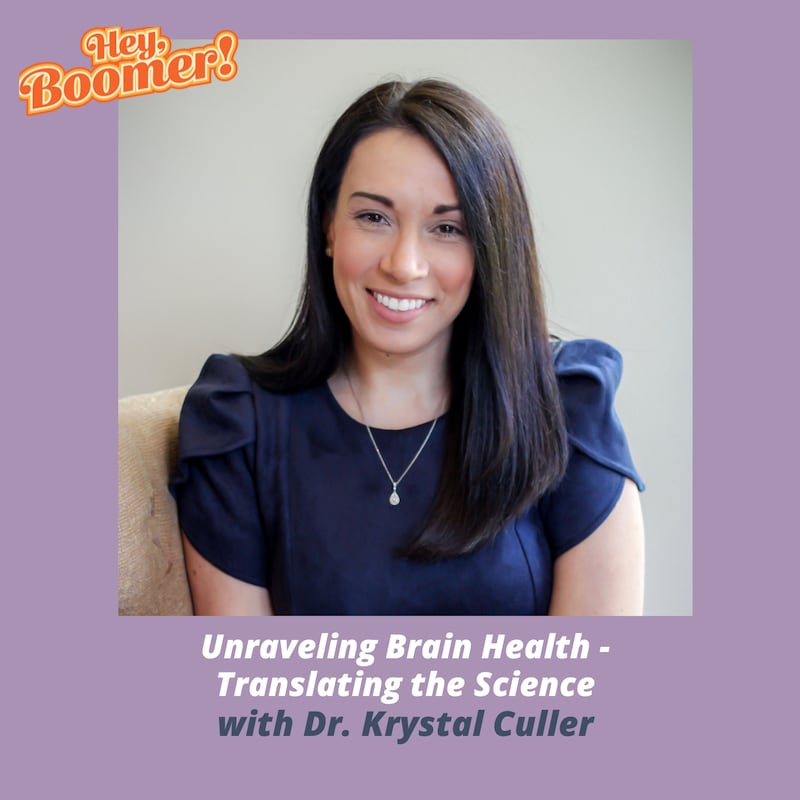
Dr. Krystal Culler is a passionate advocate for brain health, particularly in the field of gerontology. Growing up with the love and support of her grandparents and older adults, she developed a deep connection with them and spent most of her time with them. It was during her time in grad school when her grandmother started experiencing dementia and her mother went through cognitive changes without receiving a proper diagnosis for years. Additionally, Dr. Culler herself had a shocking Grand Mall seizure, which made her question how she could support people in similar situations.
Recognizing the lack of support for brain-related issues, especially among females, she decided to pursue a doctorate in behavioral health to understand the interconnection of various factors. This journey led her to a career in the broader brain health space, allowing her to combine her interests and continually learn about the brain.
In this episode we talked about:
1. Definition of brain health
2. Deceptive marketing of brain supplements
3. Importance of mental stimulation
4. Effects of alcohol on sleep and brain function
5. Importance of nutrition for brain health
6. Cognitive side effects of medications
7. Brain aerobics and brain training programs
------------------------------------------------------
Thanks so much for listening.
Please subscribe, comment and review where ever you get your podcasts.
Follow us on Facebook, LinkedIn, YouTube and Instagram
You can email me with questions or comments at wendy@heyboomer.biz
You can reach Dr. Krystal Culler at the Virtual Brain Health Center
Other Resources mentioned in this episode:
Women's Brain Health Initiative
This podcast uses the following third-party services for analysis:
OP3 - https://op3.dev/privacy
Transcripts
Foreign.
Speaker B:Welcome to another exciting episode where we dive deep into the topics that matter most to our generation.
Speaker B:I'm your host, Wendy Greene, and today we have a very special guest joining us.
Speaker B:Dr.
Speaker B:Crystal Color is the founder of the Virtual Brain Health center, and she will unravel the mysteries of brain health and help us translate the science into actionable steps we can take to keep our brains in tip top shape.
Speaker B:In today's episode, Dr. Culler will discuss how the definition of brain health has evolved over the years.
Speaker B:We'll explore the crucial connection between brain health, mental health, and cognitive health.
Speaker B:Plus, we'll uncover the truth about brain supplements in the market and the deceptive marketing tactics used to promote their benefits.
Speaker B:But that's not all.
Speaker B:Dr. Culler will also share her expertise on engaging in mentally stimulating activities and brain aerobics.
Speaker B:We'll delve into the impact of alcohol on brain health and the importance of sleep rituals for a restful night.
Speaker B:And of course, we can't forget about the essential role nutrition plays in maintaining a healthy brain.
Speaker B:So grab your notepads or if you're walking, make sure you come home and write some things down and prepare to have your mind blown as we unravel the secrets of brain health.
Speaker B:But before we dive in, I want to give a big heartfelt thank to all of you who have been leaving comments and reviews on Apple and Spotify.
Speaker B:Your feedback is invaluable and helps us bring you the content you want to hear.
Speaker B:Have you all ever had this experience where you go and you're like, oh, where did I lay down my phone?
Speaker B:Or I was just getting ready to do something and now I can't remember what it was I was getting ready to do or oh my gosh, here comes I can't remember her name.
Speaker B:That happens to all of us, no matter how old we are.
Speaker B:The difference is that as we age, we give more significance to those brain snags, those memory snags.
Speaker B:We worry about our brain health and will we be able to maintain our memories and our abilities into the future?
Speaker B:My guest today, Dr.
Speaker B:Crystal Culler, is the founder of the Virtual Brain Health center, and she comes highly recommended to me by a couple of people that I greatly admire.
Speaker B:I have a million questions for her, as I'm sure you do, so hopefully we can get all of them answered.
Speaker B:Hello, Crystal.
Speaker A:Hi.
Speaker A:Thank you so much for having me here today.
Speaker B:Oh, I'm excited to have you.
Speaker B:Let me do a brief intro of a, you know, a little background of who you are.
Speaker B:So Dr.
Speaker B:Crystal Color is on A mission to revolutionize brain care for everyone.
Speaker B:As a doctor of behavioral health and a holistic brain health expert, she brings nearly two decades of unparalleled expertise in working with individuals, families, providers and advocacy organizations specializing in brain related diagnoses.
Speaker B:With her groundbreaking work in translational and applied brain health science, she has garnered a collection of prestigious international and national awards.
Speaker B:Her innovative brain health programs and services have left an indelible mark locally, internationally and globally.
Speaker B:So welcome Crystal.
Speaker A:Yes, thank you.
Speaker B:I have so many questions and I want to thank the audience for also contributing questions.
Speaker B:And you all can continue to contribute questions as you're watching live through the chat.
Speaker B:But let's start by learning a little bit more about what brought you to doing brain health work.
Speaker A:No, I appreciate the introduction and even the way you frame the talk because I think for myself, I never set out really thinking about brain health.
Speaker A:I started college, didn't know the social sciences existed, let alone the field of gerontology, where I started to major in studying aging.
Speaker A:And I think for most of us we can look back at times in our lives and say, I didn't know that was a pivotal moment, but it was.
Speaker A:I grew up, I was so fortunate, with love and support from grandparents and older adults and I spent most of my time with them.
Speaker A:And then while I was in grad school, my grandmother was on her journey with dementia.
Speaker A:Towards the end, my mom was in her mid-50s, going through some cognitive changes and taking years to get a diagnosis of Ms. And then I had a fluke seizure event, grand mal seizure in grad school, which really pumped the brakes.
Speaker A:And I kept thinking I'm studying psychology of aging, but how do I help support people?
Speaker A:My whole family is having issues broadly related to the brain, especially females and society, and our health care systems and policies aren't always set up to support us.
Speaker A:So I thought there had to be a better way and went on to get my doctor in behavioral health just thinking about how things all come together full circle and knew that's where my career would take me.
Speaker A:So I'm fortunate that I guess my brain misfired really to redirect me into this broader brain health space.
Speaker A:But it's really pulled together all of my interests across different areas and you know, everything's about brain health.
Speaker A:So I get to be a lifelong learner every day.
Speaker A:So I'm grateful.
Speaker A:I get to learn and share through the experiences and the lovely people who have come in and shared their stories of how brain health help empowers them for their health and well Being, well.
Speaker B:That was quite a journey to brain health.
Speaker B:And we're very glad that you decided to take that journey because we're looking for some answers today.
Speaker B:But first off, you, in your bio, it talks about translational and applied brain health.
Speaker B:Can you help us understand what that means, those terms?
Speaker A:Yeah.
Speaker A:I'm so glad we start with this question, because I think brain health has really evolved in understanding what it means.
Speaker A:It sounds so broad and not tangible to us.
Speaker A:A lot of the research that comes online is respectable research universities, but it's behind paywalls.
Speaker A:And the average person isn't going to read journal articles and say, now what does this mean to my life?
Speaker A:You know, I hear this research, finding it came out, what can I do about it now?
Speaker A:How does it apply to me or my loved ones and my family?
Speaker A:And so I have kind of fallen in that space of saying, well, here's the science, here's the limits, here's what we know.
Speaker A:But there's a lot of things we can do.
Speaker A:And I'm so excited for the conversation today because I hope people will take the message away that brain health's about all of us, but we have decisions that are in our control that can make our brain health better.
Speaker A:It looks different for all of us, but we all have a right to better brain health.
Speaker B:Your role is to translate a lot of what's behind the paywalls and the research to help those of us who either wouldn't understand it if we even saw it or don't have access to it to understand better what we can do.
Speaker B:Is that right?
Speaker A:Yeah, it's really been in that spot.
Speaker A:And as well as for people that know visit their healthcare providers and you have limited time and your providers are giving you a recommendation like, eat better.
Speaker A:And there's so many places to start and kind of where can you go from there?
Speaker A:So we really try to help people get the researched, informed evidence that can help them, but make it very practical and know it's hard to do huge lifestyle overhauls, but we can start making these small steps.
Speaker A:So we really try to support people with that information to start because for some reason, it gets lost.
Speaker A:And if you Google brain health, you'll end in a rabbit hole of a lot of places.
Speaker A:So how can we really make sure people get some reliable information to help their curiosity and support their own care?
Speaker B:Okay.
Speaker B:All right.
Speaker B:So there were several questions that came in.
Speaker B:Crystal, when you start talking about, you know, our brain health at this stage, a lot of people were asking questions about mental health and is there a relationship between a healthy brain and a healthy mental outlook on life?
Speaker A:There is, and I think one of the first places to maybe start with this is what is the definition of brain health?
Speaker A:And it has really changed over the years.
Speaker A:Before it looked more about the physical aspects of your brain.
Speaker A:If you're having damage, then brain health is for people that are only neurologically healthy or present healthy.
Speaker A:So no chronic health conditions, no acute health conditions, no mental health concerns.
Speaker A:And you can see how many people that you may know in your family or loved ones just get nixed off that list.
Speaker A:And that was previously how we looked at brain health, but now we look at it much broadly of we all have a brain we want to take care of, it looks different for all of us.
Speaker A:So brain health really starts to look at aspects of thinking, feeling and doing.
Speaker A:So we know a lot of our moods related to our mental health are thinking.
Speaker A:Most people go cognitive health and then the doing is the actions, connections with other people, how we're moving throughout our day, where we're spending our time.
Speaker A:So this broader picture I think sees this bigger spectrum of it's our holistic health is brain health.
Speaker A:And it's very hard to talk brain health and not talk about your mental health, how you're doing, your nutritional health, how you're fueling your body and your mind.
Speaker A:So all those intersections of your wellbeing come together under this brain health umbrella.
Speaker A:And although I'm not trained as a mental health provider, I look at it as one big continuum.
Speaker A:Because if you're talking mental health, you're talking aspects of brain health.
Speaker A:And if you're talking brain health, you're also checking in on someone's mood and their mental well being.
Speaker A:And I'm so glad you even mentioned that too.
Speaker A:That positive outlook on our life has a huge impact on our physical health, brain health and mental health.
Speaker B:Yeah, and we talked about that a few weeks ago with a doctor that was on about the importance of a positive attitude.
Speaker B:So I was curious, you know, we think of the brain as this separate organ.
Speaker B:Right.
Speaker B:And the mind as something outside of that.
Speaker B:And so it's interesting to hear your description how the mental health and the physical health is all kind of interwoven and related.
Speaker A:Yeah.
Speaker A:And I think brain health, when we start to dive even deeper, we start to realize how it's all interconnected.
Speaker A:As you said, mind, body, spirit, and no two brains are alike, just like the two bodies either.
Speaker A:So.
Speaker A:So it's going to be this, how can we take what we know in the science and Apply it to ourselves and we may have some areas where we're doing what we should be.
Speaker A:We checklist and there's other ones that really need our attention now.
Speaker A:And so there's not one general recommendation, but I think that's the nice point is it does bring brain health to all of us and there's things we all can do every day.
Speaker B:Yeah.
Speaker B:So I know that makes this conversation a little tricky because we have to be somewhat generic since we're not individually speaking to one person.
Speaker B:But you know, the other question, and I was thinking about this as I was coming up with this crystal, like we don't want people to that have already experienced cognitive decline or, you know, that have a gene that seems to lead more likely to some kind of dementia.
Speaker B:We don't want them to feel guilty like they did anything wrong to not protect their brain.
Speaker B:But how much of our brain health depends on our DNA and our hereditary and how much can we actually, you know, manipulate or prevent with our health habits?
Speaker A:Yeah, I'm grateful you brought this up because it's not a perfect science.
Speaker A:We hear brain health, but we know it's not perfect where people who have had high levels of education or lots of volunteerism, as you said, end up with some type of brain based disease or one of the broader dementias or even Alzheimer's disease.
Speaker A:So if we think about brain health, it's 90% lifestyle, 10% genetics.
Speaker B:Really.
Speaker A:I'm glad that was your response because usually it goes one of two ways where we can feel a little more empowered about the things we can do.
Speaker A:But then also on the genetic side, the field of epigenetics is changing so much.
Speaker A:And much like you said, the lifestyle can sometimes offset if we have a genetic predisposition when those symptoms come online for us or when they present.
Speaker A:And then it gets complicated because sometimes we have these genetic risk and the lifestyle still doesn't help us buffer.
Speaker A:You can think about some people that have that for high blood pressure and heart disease, you're living a healthy lifestyle and there is this role that genetics does play.
Speaker A:So how do we keep that in mind for everyone?
Speaker A:So I like to say it's that one rule of thumb, 90% lifestyle, 10%.
Speaker B:Genetics, that is really empowering and I'm glad to hear you say that.
Speaker B:Yeah, thank you.
Speaker B:When was the last time you took a trip where you learned some things, met interesting people and had the level of adventure that felt just right for you?
Speaker B:Well, with Rhodes Scholar, the not for profit leader for boomers and beyond, you will find all of this.
Speaker B:I have traveled several times with Rhodes Scholar and each time has been outstanding.
Speaker B:So check out all of the amazing travel opportunities both within the US and abroad and sign up by going to Rhodescholar.org heyboomer and if you use the heyboomer, it lets them know that you heard about their travel services from our show.
Speaker B:And have you downloaded the Life Vitality Assessment yet from the heyboomer Biz homepage?
Speaker B:If not, what are you waiting for?
Speaker B:This short assessment will validate what you have been feeling about your energy levels and your desires to feel fulfilled as you move through this next stage of your life.
Speaker B:So check it out now and start to make some adjustments based on the feedback that you get so that you begin to feel more fully vitalized.
Speaker B:And one more thing.
Speaker B:On September 13th, I will be co facilitating the the Next Fearless Leader Cohort with the amazing Kathy McAfee.
Speaker B:This eight week group mentoring program will help you become a bolder version of yourself and lead your life more fearlessly.
Speaker B:So if you are looking to make that step to the next level, whether it's still in corporate or in volunteer organizations or just in your own life, check out the fearlessleader.com and if you mention hey Boomer in your application, you'll get $100 off of the price of admission.
Speaker B:So this is kind of an off the wall question.
Speaker B:But you know, I hear it.
Speaker B:People say, what about Prevagen, right?
Speaker B:So I want to protect my memory.
Speaker B:And you hear those commercials, oh my brain.
Speaker B:My memory is so much better with Prevagen.
Speaker B:Are there really drugs like Prevagen that can improve our memory if it started to fail?
Speaker A:Yeah, I think, you know, Prevagen was one that caught the headlines.
Speaker A:It's also called for people who may not.
Speaker A:You're recognizing the name but not putting two and two together.
Speaker A:It's the Jellyfish supplement that AARP started the lawsuit against for more deceptive marketing.
Speaker A:And what happened was if you can make the claim that it does prevent memory loss in decline, you need the science behind it to support that.
Speaker A:And unfortunately, the reason where most of theirs was wasn't necessarily the product, it was the marketing and deception.
Speaker A:And so I think if there really was one supplement out there or one pill all of us could take to be healthy, we wouldn't have this array of complex health issues or acute health conditions or even with brain health.
Speaker A:So unfortunately, it's not one magical little supplement.
Speaker A:I do encourage people to work with their healthcare providers and see what's going to work for you.
Speaker A:Historically what has happened for some of the supplement and supplement industry is these supplements have been around for a long time.
Speaker A:They put a fancy label on it.
Speaker A:A lot of them have a sparkly glitter brain or some new packaging, and it's the same supplement.
Speaker A:And now they're advertising or emphasizing the brain benefits that can come from that.
Speaker A:So just be a little careful.
Speaker A:Our minds sometimes in our eyes, see something pretty and flashy and we go to it.
Speaker A:But read that research, talk to your health care provider.
Speaker A:Pharmacists are a great resource as well, and websites can tell you a lot, too.
Speaker A:If you scrutinize real quick, you'll see real small sample sizes or not a lot of research behind what they're saying and being careful.
Speaker A:So be mindful of that with there's a time and place for supplements.
Speaker A:Work with your providers for them.
Speaker B:Okay?
Speaker B:And so staying on the field of drugs, Doris is saying that many of us are prescribed different medications for different conditions.
Speaker B:That we, you know, as we age, different things come up.
Speaker B:Are there or do doctors even talk about some of the impact that those different medications might have on our brain health while they're keeping our blood pressure lower or our cholesterol lower?
Speaker B:Those kinds of things?
Speaker A:You know, I'm so glad you brought that up because broadly, there's not too many medications that you will take for any chronic or acute condition that wouldn't have some type of cognitive side effect.
Speaker A:And, you know, it shows up differently in all of us.
Speaker A:For some, it may be brain fog, headaches, dizziness.
Speaker A:If you ever start reading those side effects, they'll say they're uncommon, but it's common if it happens to you and you're that one person, so to be careful of that, and I always encourage people, is you may be starting some medications with your provider to keep those lines of communication open.
Speaker A:If something's not typical for you and you've had some time to be adjusted, it might be time to come off.
Speaker A:I know for myself, I live with migraine disease, and so I have been on a medication where I had attention span like Nat in my memory.
Speaker A:I was writing so many things down, and I go to my neurologist and I say, there's something off.
Speaker A:And next thing you know, it's the side effect.
Speaker A:I was on Topamax, which other people know is called Dopamax because it makes you dopey.
Speaker A:So it was very much kind of helping me understand my experience, but then realizing this is not the pharmacological path for me.
Speaker A:So having some of those conversations and I admit at that time I was pretty timid because it was so strange and bizarre.
Speaker A:And then I realized medications can do that.
Speaker A:So how to wean off and try something new.
Speaker A:And sometimes those symptoms will present even after you've been on a medication for a while.
Speaker A:Doesn't always mean the side effects will stay the same as your body is changing or you're taking other things through your diet or supplements.
Speaker A:So to really make sure to honor what you're noticing and start that conversation with the healthcare provider or your neurologist.
Speaker B:As well, just for that, because I think sometimes, like you, we're timid to bring things up.
Speaker B:We think, all right, well, this is just the way it is.
Speaker B:I'm curious, Crystal, how the reduction in our our hormones like testosterone and estrogen as we age and do those affect our brain health, the reduced hormones?
Speaker A:You know, that's a great question, and it's been one that is really coming online in the brain health space of the role of hormones for us.
Speaker A:And we know they tend to have neuroprotective factors for us, whether we're talking estrogen or testosterone.
Speaker A:But there's a great book, Lisa, the XX Brain for the Female Brain, that really took a deep dive into a lot of that research, but also acknowledges for women, we haven't been included in research for a long time, let alone women of different minority backgrounds.
Speaker A:And so although brain is kind of this buzzword, we still have a lot of these unknowns of how it happens.
Speaker A:But we know across our care continuum, we see it in adolescents with puberty, we see it for women with menopause, that there are these changes that happen where it's biology and the brain coming together and so better understanding what we can do.
Speaker A:So I believe there's about two or three really good books from some researchers that talk about what we know for women, but it is one that's really coming online.
Speaker A:A lot of more research dollars going there.
Speaker A:Global Women's Brain Health Initiative as well.
Speaker A:And also understanding the role of testosterone for men, too.
Speaker B:Yeah.
Speaker B:So much to so much to think about with this.
Speaker B:So June has a question.
Speaker B:She says with normal aging, not really memory loss, but a sort of lightheadedness and slower reactions as you get into your 80s, 90s, can anything be done to stop that or to minimize that?
Speaker A:So one thing that does happen with the reaction time, we tend to think about that with our processing speed, how quick we can do something.
Speaker A:That's one of the first things that starts aging for us in our mid-20s and through mid-20s.
Speaker A:Yes, I get to tell my undergrad students, enjoy the peak because after that it changes, but it looks different.
Speaker A:And so what we tend to find is as we age, we rely more on our life experiences or ways that we know how we can compensate a little.
Speaker A:And it gets to that point where then we notice it.
Speaker A:And Wendy, in your introduction, it was so lovely, is it's probably something that's been happening for a while, but we notice it more with age.
Speaker A:And younger adults will say, oh, I had that glitch and it like rolls off my shoulders.
Speaker A:I'm not thinking about it as much.
Speaker A:But to honor what you are noticing, but that processing speed is one that changes pretty quickly and it's a slower decline over time.
Speaker A:But you will see a lot of the brain games and some of the cognitive tests really target that processing speed.
Speaker A:And our reaction times is something we know that's this normative age change.
Speaker A:But there are some ways we can do some things to tune it up a bit.
Speaker B:So is that why sometimes also you've got that word on the tip of your tongue but you can't retrieve it?
Speaker B:It's taking longer to retrieve it.
Speaker A:I love that question.
Speaker A:That's called the tip of the tongue phenomenon.
Speaker A:And a lot of us like, you know, you're pointing to your tongue and we study it in psychology of aging.
Speaker A:But what we tend to find is as we age, we still can resolve around 90% of the tips of the tongue.
Speaker A:What happens is it just takes a little longer.
Speaker A:Oh, you know that movie with that actor with the dark hair and you can visually start to see the movie and you're playing it out.
Speaker A:It's when you're doing those cues and those prompts, if you can resolve 90% of them, that's still pretty good accuracy.
Speaker A:And so just keep that in mind.
Speaker A:But it's a well documented phenomenon like you mentioned earlier, worldwide, all ages.
Speaker B:That's so interesting because I mean, and like I said in the beginning, we always think it's worse now that it happens when it happens to us as we're older.
Speaker B:All right, so some of those things you alluded to that we can do to improve the processing speed or maybe the tip of the tongue thing, things, is that like doing crossword puzzles or challenge, you know, wordle, those kinds of things.
Speaker A:You know, I'm so glad you highlighted some of the most popular ones we see for, you know, brain stimulation or cognitive stimulation.
Speaker A:You'll, you'll hear it called pretty much any different thing with the word brain neurocognitive and Then the second word tends to be something related to fitness engagement, enhancement.
Speaker A:And we're talking about the same thing, some type of mentally stimulating activity or exercise where we put in our time and investment and it's not something we can easily do.
Speaker A:If it's something you can do very easily, you're not hitting that right level of challenge.
Speaker A:So I try to tell people you want three things.
Speaker A:Something that's new, something that's novel, and something that's challenging.
Speaker A:So that idea of making your brain sweat is kind of the visual.
Speaker A:I say you want to go in and you want to try those brain aerobics about 20 minutes a day total to get some good mental stimulation.
Speaker A:And for crosswords, if those are your go to, that's fantastic.
Speaker A:You might use that to pass the time.
Speaker A:It may be more of a relaxation strategy.
Speaker A:That's not going to be the item you choose to get that brain fitness component.
Speaker A:That might be where you want to switch to something numbers based, visual based or commute, computer based.
Speaker A:Something completely different from words and letters.
Speaker A:So I always joke that for me, that's Sudoku.
Speaker A:I'm up to a six by six square and I am so impressed when I see these very advanced books of someone else.
Speaker A:But that's where I'm at and that's okay.
Speaker A:I'll keep learning and keep progressing.
Speaker A:But that's where I know that will challenge my brain.
Speaker B:So what do you mean by brain aerobics?
Speaker B:What does that mean?
Speaker A:Yes, it's the idea of stimulating your brain, some type of intentional fitness.
Speaker A:So you probably have a workout routine, you know, to exercise your body.
Speaker A:But do you allocate 10 to 20 minutes a day to work out your mind?
Speaker A:And it's that caveat of its new novel and challenging meaning it's something that's not easy that can come to you.
Speaker A:It may be just reading something completely new.
Speaker A:I joke, for me, that's reading sports.
Speaker A:I learn something new every time I read about sports.
Speaker A:For other people, it might be going and reading a scientific finding or something about history.
Speaker A:So something outside of your comfort zone and norm.
Speaker A:So you're being very intentional and you're going to learn and process that information a little differently than the things that are already interesting to you.
Speaker A:They're great for lifelong learning.
Speaker A:But really try to allocate some time each day of something that doesn't come real easy, something you're putting a little bit of effort into.
Speaker A:We say the 20 minutes as a rule of thumb, but that might be 10 minutes.
Speaker A:In the morning, reading some different type of news outlet or listening to a podcast and then 10 minutes later in the day of a new puzzle.
Speaker A:And I think with brain games, that's the nice balance.
Speaker A:There's so many different ones like you mentioned from crossword ones that are paper based, number ones, computer ones are great because they're hard to mimic on paper and pencil.
Speaker A:There's one that comes out that fireflies in a jar and they fly out and then it says repeat, which pattern did those fireflies twinkle out in?
Speaker A:And I'm like, I have no idea.
Speaker A:That's the brain game I should be trying because it's something so different, has some visual stimulation and then as you're learning something new so you can still have fun.
Speaker A:But that's really your goal for your fitness is new stretching outside and making sure you can't just do it right away.
Speaker B:So if you wanted to do brain games, you would Google brain games and you could find all kinds of things.
Speaker A:There are some I know for your listeners.
Speaker A:AARP has a relationship with BrainHQ.
Speaker A:I mentioned them.
Speaker A:They're one of the most research based in the scientific literature behind their trainings.
Speaker A:But because people might be members of aarp, but also they're covered through a lot of insurance plans now supplemental insurance plans will cover some of your access to that and you can try and there.
Speaker A:There's other ones like Lumosity, a brain yoga is one.
Speaker A:It's a free app, so if you want to start free.
Speaker A:But it gives you a lot of the ones that are, you know, 3D or visual puzzles that can easily be manipulated on a computer but would be a little harder if you're not playing with actual blocks at home but still challenge your brain in a different way.
Speaker B:Yeah, okay.
Speaker B:Elizabeth reminded us that part of that other question came in from June was about lightheadedness.
Speaker B:Is there something you can talk about about lightheadedness and brain health and how that might be prevented or mitigated?
Speaker A:Yeah, I haven't seen that come directly in the conversation because usually it tends to be a symptom of something else that you're working on, whether it's chronic health, sometimes blood pressure, there's a whole bunch of things as well as medication.
Speaker A:So if you're noticing that, to notice if there's a time of day where it occurs, the duration of it, maybe what's happening before.
Speaker A:So you can have those conversations with your provider because a lot of times that information is really helpful to help them find out some treatments or some other modalities that could be helpful or as you said, it might be looking back at something you're doing or before.
Speaker A:I used to have issues with my blood pressure and I couldn't get right up out of bed in the morning, it was way too low.
Speaker A:I bought them out and I'd fall on the floor and I had to learn some strategies and then got things fluctuated.
Speaker A:So keep in mind there's differences for all of us.
Speaker A:But if you can find out if there are certain times a day, the duration and anything that might be before that, sometimes it's sleep, napping, sitting a long time, what's happening.
Speaker A:So you can help give your provider those important details.
Speaker B:Yeah, and I think that's an important point that you made, Crystal, that you know, the body systems are so related and interconnected and depending on each other.
Speaker B:So the lightheadedness may be being caused by something else and we're just experiencing as the brain reaction because that's how we feel.
Speaker B:Lightheaded.
Speaker B:Yeah.
Speaker B:Okay, but you did mention sleep.
Speaker B:And I know that as we get older, sleep tends to be more interrupted and more difficult, more up and down through the night.
Speaker B:How important is it to get a good six or seven hours of sleep every night to keep our brains healthy?
Speaker A:Now, I'm glad you asked this because for the longest time I think this is the one factor we really didn't pay much attention to for our health and well being.
Speaker A:It's oh well, we can get by great with four or five hours of sleep.
Speaker A:And from your total health wise, a lot of the research says that's not true, and it's true for a very small percentage of people.
Speaker A:But the recommendations for the amount of sleep we need help our brain.
Speaker A:So everything we go through throughout the day, at night, that's where a memory consolidation happens.
Speaker A:That's how we consolidate our memories.
Speaker A:And when we're sleeping well, our systems in our brain take out the toxins that we accumulate from the day.
Speaker A:So there's a lot of interesting things that happen when we sleep, but it's very important.
Speaker A:I think one that we probably all notice right away is how you feel or your mood is the day after.
Speaker A:You don't sleep real well, you're probably not out of your norm, you're a little more irritable, you might find it more challenging to do things that you regularly do without much effort, or it might be that day things seem very overwhelming.
Speaker A:And so think about how lack of sleep shows up for you.
Speaker A:And much like you said, we may have disruptions, but how we can prioritize sleep and make sure if we get back into bed we can fall asleep typically within 10 to 15 minutes and get that restfulness aspect.
Speaker A:I think that's the part that really was overlooked for a long time in our general health and wellness.
Speaker A:But it becomes very important when it comes to our brain health.
Speaker B:So with that in mind, crystal doctors will prescribe sleep medications or people may think, oh, I have a couple of glasses of wine that'll help me sleep.
Speaker B:Those kinds of things.
Speaker B:If you're, if you're medicating in some ways, whether prescribed or not prescribed, and you still get those six or seven hours, is that good or is that more, is that diminishing your brain?
Speaker B:You know what?
Speaker B:I'm not sure I'm asking that.
Speaker B:Right.
Speaker A:No, I understand what you're saying.
Speaker A:And I would say the one for alcohol, it interrupts your sleep in the deep sleep, the stages of sleep you can get to.
Speaker A:So it might help you fall asleep.
Speaker A:But in terms of getting that restorative, restful sleep, alcohol is very disruptive.
Speaker A:It's also disruptive to those brain functions that sleep provides for us.
Speaker A:It doesn't get to act as efficiently.
Speaker A:So that's one where I would say it's choosing your battle, so to speak, but to always talk with your healthcare providers about that.
Speaker A:But another one that as you mentioned for people is it's just more difficult to allocate the time or if you have health needs.
Speaker A:So a lot of times I've been referred to as sleep specialist in the past, might be a great referral is they start really looking into things that you may be taking for granted.
Speaker A:What does your environment look like?
Speaker A:What is your actual sleep routine?
Speaker A:Most of us probably have a routine for the morning, but do you have one with rituals before you go to bed?
Speaker A:And a part of that is it's very disruptive for most of us to go from watching some high conflict movie to then just go roll into bed.
Speaker A:There's just, you've been so stimulated, you've seen the screen, your emotions were going up and down in the movie.
Speaker A:If you're really captivated and they are trying to go to sleep.
Speaker A:So you might not realize that some of the things that you are just doing as part of your routine aren't giving you the benefits that before bed.
Speaker A:So sometimes it's looking at your routine modification, important ones, the environment you're in, you want to be able to go to sleep.
Speaker A:When you get into that bedroom, you want it to be comfortable a lot of times, cool, cooling, there's a lot on temperature but just start thinking about that environment.
Speaker A:And are there some rituals or practices you have that can help you unwind?
Speaker A:Because it's very hard.
Speaker A:It's a different type of way to go to sleep when you're very stimulated and trying to go in bed, versus as you're getting more relaxed, maybe doing some breath work.
Speaker A:And next thing you know, it's.
Speaker A:It's the morning.
Speaker A:So you can really set yourself up in some different ways for that.
Speaker B:Yeah, I like that because we do have morning routines, but the nighttime routine, ritual, like you said, have a little nighttime ritual for sleep.
Speaker B:That's nice.
Speaker B:What about our nutrition?
Speaker B:Like, you know, every doctor that you talk to talks about nutrition.
Speaker B:So our brain is an organ.
Speaker B:Talk to me about, are there certain foods that, that nourish our brain, that don't nourish our brain that we need to look out for?
Speaker A:No.
Speaker A:I'm glad this one came up.
Speaker A:And I can say you could probably spend hours talking about this with the amount of research and information available.
Speaker A:But a lot of it, when it comes to brain health and nutrition is some guiding principles.
Speaker A:We know that diets, specific diets, work for chronic disease conditions like heart disease, high blood pressure, diabetes.
Speaker A:And that may look different from someone just wanting to do healthy weight loss.
Speaker A:There's so many diet plans out there, it can get very confusing and very overwhelming.
Speaker A:But for brain health, we think back of the diets, the Mediterranean diet, the Dash diet, that are showing benefits for your brain.
Speaker A:They have a lot of similarities.
Speaker A:So one of the first ones, it's the plant slant, or Dan Buettner talks about this in the blue zones, too, is more plants, more fruits and vegetables.
Speaker A:If we can slant that way, and a lot of times if we can up our intake to the desired level, like if you're only getting three a day and you can get in five, you start to realize as you're full off of more nutritious foods, you're not wanting maybe the sweets or some of the treats that you would typically be going for.
Speaker A:So if you're looking at the idea for how many fruits and vegetables you're getting, can you add one at lunch, make that stick with your routine, and then maybe sprinkle an extra serving on there?
Speaker A:At dinner, if you're already eating vegetables, can you do two?
Speaker A:You know, how is this looking throughout your day?
Speaker A:So a lot of it is whole fruits and vegetables.
Speaker A:Another part is simply shifting foods that come from a package to those whole foods.
Speaker A:So if there's alternatives you can have when you're wanting things that are packaged, it has a lot of not so much nutritional benefits.
Speaker A:There's a time and place for them.
Speaker A:But if you're realizing you're eating a lot of things from food wrappers and that's your norm is can you get to the more whole foods from your, your rich greens, your fruits, your vegetables, your whole grains and how can we start to add those in and limit some of the sweets and highly processed foods?
Speaker A:I think some of the main ideas of those diets and the third one I'll point out because I think a lot of us overlook this is hydration.
Speaker A:A lot of times when they say if you're real hungry, if you drink a glass of water, it's not cliche, it's actually figuring out your dehydrated.
Speaker A:And we know that our quench of thirst is one of the things that deteriorates when we're aging.
Speaker A:And so typically, even now, if you're feeling thirsty, you're about 1 to 2% dehydrated already.
Speaker A:So you're already at a deficit.
Speaker A:And if you think about that feeling of thirst for adults, I've seen statistics where sometimes it almost doubles that 1 to 2% just because you're not getting that sensation.
Speaker A:So thinking about how to be intentional with adding water and hydration throughout your day with the caveat of when is that cutoff time in the evening you if you want good sleep, so watch the water intake and caffeine late in the afternoon.
Speaker B:Right, right.
Speaker B:Otherwise you're up all night.
Speaker B:Yeah, yeah, no, that's good.
Speaker B:And what about.
Speaker B:You didn't talk about meats.
Speaker B:What about red meat, fish, chicken, you know, is it the same as like heart health?
Speaker A:Yeah, a lot.
Speaker A:I would say a lot of it is very similar.
Speaker A:If you're following heart healthy diet, you're following the recommendations typically for your brain for proteins, I would like to say eat like a European.
Speaker A:So if you've ever been in Europe or you've traveled, like your serving of meat is the palm of your hand.
Speaker A:It is not our U.S. american steakhouses and you know, the dinners we tend to get.
Speaker A:So think about it that way.
Speaker A:And you want rich lean proteins the best.
Speaker A:We all have different differences or needs and preferences.
Speaker A:And for your, you want the healthy fats from fish as well as tree based nuts.
Speaker A:So if you think about it, a walnut looks like a little brain.
Speaker A:You want tree nuts.
Speaker A:So walnut is a perfect brain food, no pun intended.
Speaker A:But it also will help you keep that visual healthy fat from your nuts, your beans and your meats and a lot of it does recommend limiting the red meat in comparison to more of the lean proteins and the fish like salmon a couple times a week.
Speaker A:Keeping that in mind.
Speaker A:But I always recommend the serving size go back to eating like a European and the Americans might see a little bit more health benefits that way.
Speaker B:Yeah.
Speaker B:So so much of what you shared with us is a lot of good practical health related knowledge.
Speaker B:You know, to eat right, to get your exercise, to drink plenty of water and to recognize.
Speaker B:I think what this is, one of my favorite things that you said was that 90% of our brain health is up to our way, that we take care of our brain and 10% is hereditary.
Speaker B:I think that was super empowering and important.
Speaker B:Thank you for that.
Speaker B:What would someone be looking for when they contact the Virtual Brain Health center, the organization that you started, I think just about a year ago, Is that right?
Speaker A:Yeah, we launched during the pandemic and it was really in a response to people wanting to know about brain health and how can we get people information and support.
Speaker A:So we have a resource page on our site if you're looking to want to do a brain health virtual test.
Speaker A:Kind of.
Speaker A:See, we've talked different areas of brain health where you're doing great, where you can improve and get some recommendations.
Speaker A:There are some free online assessments.
Speaker A:You can do that to kind of start your journey or to pick your priority area under this big brain health umbrella.
Speaker A:And we work with a lot of other industry partners, researchers to bring different aspects of brain health to people through a lot of educational programs and events.
Speaker A:So we aim to be a one stop shop where you can get some information about brain health but find other resources that are freely available to you on the website to support your learning journey.
Speaker B:Yeah.
Speaker B:So Crystal's site is the virt, not the.
Speaker B:It's virtual brain health center.com and there is a way, a contact button there.
Speaker B:So if you wanted to reach out to Crystal specifically with specific questions based on what you learned on the podcast today, but we weren't able to answer, it's virtual Brain health center dot com.
Speaker B:Crystal, I always like to ask if there's a takeaway.
Speaker B:So what does the science show us about how we can protect our brain health going forward?
Speaker A:I would like to say I think there's two general guidelines I can recommend.
Speaker A:And this comes from a question I was just asked by someone last week.
Speaker A:What's the one thing for brain health?
Speaker A:There's not one thing.
Speaker A:The general guideline is for all of us to do one thing better each day for our brain and we know when we start building those small habits, it leads to this bigger lifestyle impact and change.
Speaker A:And so start thinking, what's your one thing a day where you can make a better decision for your brain?
Speaker A:Is it getting that glass of water in with your medications in the morning?
Speaker A:Is it spending that time learning something new?
Speaker A:What's the one thing?
Speaker A:And keep moving forward on that path and the journey will look different for all of us.
Speaker A:But it's lifelong.
Speaker A:We have one brain, so let's protect it together.
Speaker B:We have one brain.
Speaker B:Let's protect it.
Speaker B:Absolutely.
Speaker B:Thank you.
Speaker B:Yeah.
Speaker B:Audrey, just one last comment here.
Speaker B:Audrey says the nutrition part is so interesting because I went carnivore four years ago.
Speaker B:She's 69 and her brain has never worked better.
Speaker B:Animal fats and cholesterol are so important for our brains.
Speaker B:There isn't much about oxalates out there, but Sally Norton just published a super good book called Toxic Superfoods.
Speaker B:Are you aware of that, Crystal?
Speaker A:I haven't heard that book, but I'm writing that one down for my reading list to check out.
Speaker A:Okay.
Speaker B:All right.
Speaker B:Thank you for that, Audrey.
Speaker B:So, Crystal, thank you so much.
Speaker B:This has been wonderful.
Speaker B:And as I shared your contact information, virtual brain health center.
Speaker B:And that is also something that I will put in the show notes for anybody who is listening to the podcast.
Speaker B:Let me just say that if you like hearing what's on.
Speaker B:Hey Boomer, I would love to hear from you.
Speaker B:So you can email me with comments at wendyboomer Biz or you can leave reviews on Apple or Spotify like this one from Dr. David Bernstein.
Speaker B:And he says Wendy Greene is a seasoned, organized and well prepared podcast host.
Speaker B:She provides excellent content to her audience, asks great and provocative questions, and knows what her audience wants to understand.
Speaker B:So I love hearing those kinds of things.
Speaker B:So please go ahead and leave me comments and reviews on Apple and Spotify.
Speaker B:And next time you're thinking about travel, please check out Rhodescholar.
Speaker B:Go to Rhodescholar.org hey boomer.
Speaker B:And go don't forget to download the life vitality assessment from the Heyboomer Biz homepage.
Speaker B:And now I want to tell you about who's coming up next week.
Speaker B:I'm super excited about this.
Speaker B:Do y' all remember the book Tuesdays with Maury about Maury Schwartz and his his outlooks and his discussions about how he was facing life as he was dying with als?
Speaker B:So what I'm going to encourage you to do is take it out and read it again before next week's show because my guest next week is Rob Schwartz, who is Maury's son.
Speaker B:And a few years ago, Rob and his mother found a manuscript that Maury had written before he was diagnosed with ALS and then put it away.
Speaker B:And Rob is a journalist and he edited it and published it as a new book called the Wisdom of Maury.
Speaker B:So I'm so looking forward to bringing this to you.
Speaker B:And it's my birthday on the day that we will be talking to Rob, so this will be my birthday present to you.
Speaker B:That should be a great show.
Speaker B:And I always like to leave you with a reminder to live with curiosity, live with relevance, and live with courage.
Speaker B:And remember that you are never too old to set another goal or dream a new dream.
Speaker B:Thank you so much, Crystal, for all that you shared today.
Speaker A:Yes, thank you.
Speaker A:And I'd like to say it was a mental workout of our conversation.
Speaker A:So thank you.
Speaker A:I appreciate it.
Speaker B:Good you had your brain aerobics today.
Speaker B:All right, bye.



