Shownotes
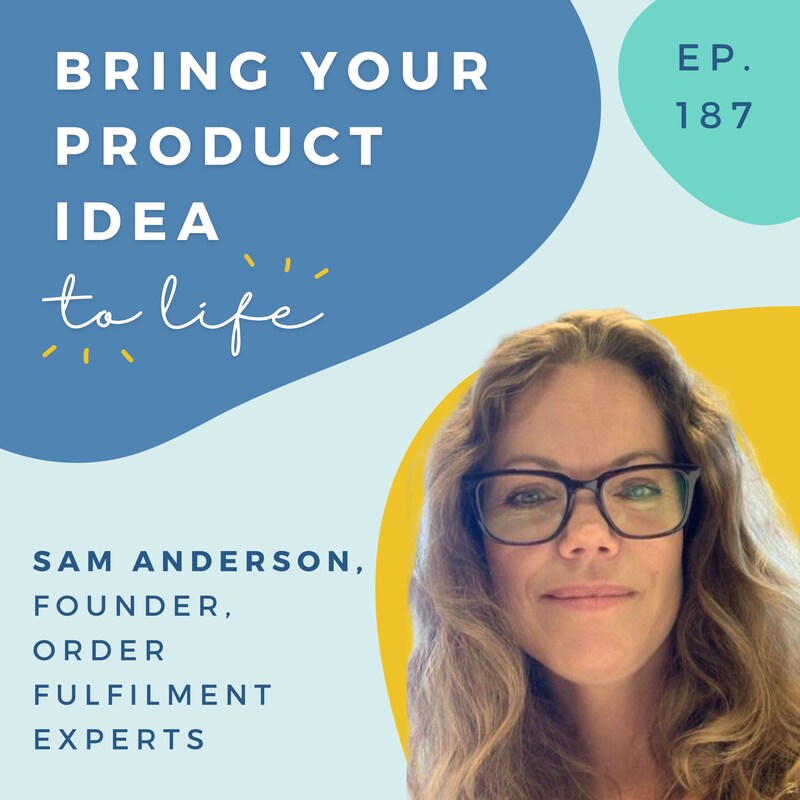
At what stage for you move from packing your orders on the kitchen table to using an order fulfilment centre? Today’s podcast guest is Sam Anderson, the founder Order Fulfilment Experts who providing product owners and ecommerce businesses with smart and reliable order fulfilment services, so you can focus on other aspects of your business and continue to grow.
Order Fulfilment Experts can send orders business to customer, or business to business, help you prep your products to be sent to Amazon and more.
Sam explains when you should start looking at using a fulfilment company, and the benefits it can bring. There is no need to sacrifice bespoke packaging, Sam shares how this has been a key way companies stand out from the crowd, and the sort of personalised packaging that they can provide. We discussed managing logistical challenges, and some of the common mistakes she sees businesses make from over ordering stock to spreading themselves too thin across too many sales channels.
This episode is absolutely packed full of useful information and tips, and I can’t wait for you to listen.
Listen in to hear Sam share:
- An introduction to herself and her business (01:37)
- Working with different size businesses, and ensuring they can support small businesses (02:15)
- When to look at outsourcing order fulfilment (03:56)
- The importance of building fulfilment costs into your prices and margin (06:28)
- Benefits of using a fulfilment centre (07:35)
- Examples of the types of bespoke packaging fulfilment centres can do (10:20)
- The importance of bespoke and standing out from the crowd in ecommerce (14:50)
- The psychological challenges of scaling your business and starting to outsource (15:49)
- The differences between fulfilling orders Business to Customer and Business to Business (18:36)
- How they help their clients manage their stock, and why they encourage them not to have too much (19:51)
- Dealing with logistical challenges such as the problems in the Suez Canal and Royal Mail strikes (23:33)
- Supplying products to Amazon, and ensuring that they conform to Amazon requirements of how it is sent (28:43)
- Tips for starting to supply to new territories and mistakes to avoid (34:46)
- The importance of not diluting your efforts by trying to sell on too many channels, but instead focusing on getting one right (36:28)
- Her number one piece of logistical advice when running an ecommerce business (39:38)
USEFUL RESOURCES:
Order Fulfilment Experts Website
Order Fulfilment Experts Facebook
Order Fulfilment Experts Instagram
Order Fulfilment Experts Linked In
Order Fulfilment Experts Twitter
Free Resource: The Top 10 Mistakes To Avoid When Building A Sustainable E-Commerce Business
LET’S CONNECT
Join my free Facebook group for product makers and creators
Buy My Book: Bring Your Product Idea To Life
If you enjoy this podcast, and you’d like to leave a tip, you can do so here: https://bring-your-product-idea.captivate.fm/support
Mentioned in this episode:
FREE call for Amazon Sellers
I’m running a free call on 26 Feb for anyone selling on Amazon (or planning to) who’d like some practical support and a chance to talk things through together. It’ll be very relaxed - a mix of updates from me on upcoming Amazon policy changes, Q&A and discussion about what’s working and what’s not right now. It’s fine to come along and chat, or to just sit back and listen. I’d love to see you there if you’re able to join.
Amazon Sellers Support & Connect
FREE call for Amazon Sellers
I’m running a free call on 26 Feb for anyone selling on Amazon (or planning to) who’d like some practical support and a chance to talk things through together. It’ll be very relaxed - a mix of updates from me on upcoming Amazon policy changes, Q&A and discussion about what’s working and what’s not right now. It’s fine to come along and chat, or to just sit back and listen. I’d love to see you there if you’re able to join.
Transcripts
Welcome to the bring your product idea to life podcast.
Vicki Weinberg:This is the podcast for you if you're getting started selling products or if you'd like to create your own product to sell.
Vicki Weinberg:I'm Vicki Weinberg, a product creation coach and Amazon expert.
Vicki Weinberg:Every week I share friendly practical advice as well as inspirational stories from small businesses.
Vicki Weinberg:Let's get started.
Vicki Weinberg:Hello.
Vicki Weinberg:It has definitely been a few years since we did an episode all about logistics and today I am delighted to have Sam Anderson on the podcast.
Vicki Weinberg:So Sam is from Order Fulfillment Experts and she gives E commerce businesses peace of mind and frees up their time so they can focus on the bigger things.
Vicki Weinberg:So what Sam's company does is anything logistical for your business.
Vicki Weinberg:So her company works on fulfillment, on shipping, on Amazon prep, all kinds of other things.
Vicki Weinberg:And Sam was really generous of her time.
Vicki Weinberg:She answered, I had so many questions about the logistics of running a product business when it's a good time to outsource.
Vicki Weinberg:How do you outsource?
Vicki Weinberg:What kind of things can you get somebody to do for you?
Vicki Weinberg:And she has some really, really great advice and tips as well, as well as some advice on about the common mistakes she sees people make.
Vicki Weinberg:And we talk about all of this in a lot of detail.
Vicki Weinberg:This is a really actionable episode.
Vicki Weinberg:And however you manage your storage and fulfillment now, I definitely think you're going to learn something from this.
Vicki Weinberg:So I would love now to introduce you to Sam.
Vicki Weinberg:So hi Sam, thank you so much for being here.
Sam Anderson:Thank you so much for having me.
Vicki Weinberg:No problem.
Vicki Weinberg:Can we start with you?
Vicki Weinberg:Please give an introduction to yourself, your business and what you do.
Sam Anderson:Of course.
Sam Anderson:So my name's Sam Anderson and I'm the founder of a company called Order Fulfillment Experts.
Sam Anderson:And basically we are the logistics part of E commerce.
Sam Anderson:So we pick, pack and post online orders, not just direct to consumer, but also to retailers and wholesalers.
Sam Anderson:We store the stock here and as orders come through with, we're an outsourced logistics department, if you like, for our E commerce business owners and they, we then obviously distribute their products.
Vicki Weinberg:That's brilliant.
Vicki Weinberg:Thank you.
Vicki Weinberg:And it sounds.
Vicki Weinberg:Well, you do an awful, you do an awful lot there.
Vicki Weinberg:And do you work with businesses of all sizes?
Vicki Weinberg:So do you work with really small businesses as well as the larger ones?
Sam Anderson:Yes, I mean we are a small fulfillment house as they, as fulfillment houses go in the sense that, you know, we're not Amazon esque point of phrase.
Sam Anderson:So the sorts of customers that we have range from, you know, a handful of orders going out daily up to about sort of 350 to 500 orders a day.
Sam Anderson:And we do, we, unlike other fulfillment houses, you know, we don't have that minimum spend or minimum amount of racking or number of orders that need to go out.
Sam Anderson:So when I set the business up over 10 years ago now, we very much focused on the army of home based business owners who were perhaps, you know, bubble wrap all over the kitchen table or in the garage.
Sam Anderson:They had everything racked out and they were getting to that painful stage of oh, I'm not working on my business, I'm working in it.
Sam Anderson:And that's when we would normally step in and take over the fulfillment for them.
Sam Anderson:But yeah, we really do work with a really eclectic mix of different E commerce business owners.
Vicki Weinberg:That was really useful.
Vicki Weinberg:Sam, thank you for that.
Vicki Weinberg:When you just said that about people working in their businesses and not on their business, that leads in really nicely to what I wanted to ask you about, which is if someone's listening and they're thinking, oh, I might like to outsource my fulfillment and may maybe, you know, they're right at the beginning of their journey.
Vicki Weinberg:What's the.
Vicki Weinberg:Why are some reasons that people might want to outsource it?
Vicki Weinberg:First of all, and I think you've just touched on one there, which is when you're just spending all of your time packing rather than creating or marketing or all of the other things.
Vicki Weinberg:And what are some of the.
Vicki Weinberg:Yeah, what are some of the benefits of outsourcing it?
Sam Anderson:So it is important to actually make that decision at the right time.
Sam Anderson:And that's why your question is such a good one.
Sam Anderson:Because we have had customers come to us at the right time, Wrong time.
Sam Anderson:We've had customers and maybe by answering the wrong time to come to us, that will help sort of narrow down the right time.
Sam Anderson:Because we have had customers come to us when they haven't even really launched their products and they have great plans and they think it's all going to.
Sam Anderson:They've spent an awful lot of life savings perhaps on, on product and marketing and things like that, but they haven't road tested it and they haven't actually been there and done that and got the T shirt before.
Sam Anderson:They then know it's time to outsource.
Sam Anderson:So I think really it is very much that it's a tried and tested business concept.
Sam Anderson:You know, it works.
Sam Anderson:You know, you've got the margin to allow for someone else to fulfill it for you.
Sam Anderson:Doesn't mean, it mean, it doesn't necessarily mean, sorry, that it costs an awful lot to outsource it.
Sam Anderson:It Just means that, you know, you do perhaps need to think about building in that infrastructure in terms of costs to your business when you're looking to become scalable.
Sam Anderson:If you always plan to stay small and just do it yourself, then obviously that's a completely different ball game.
Sam Anderson:But if you do plan to scale the business, you do need to build in those infrastructure costs to be able to do that.
Sam Anderson:And so anything that's been tried and tested, you know the concept worked, you know, you've got a market for it and you can see the orders going out yourself and you've already establish the things that don't work, perhaps a little bit, and how to pack things and how.
Sam Anderson:What returns policy you need and how you like things done in terms of the presentation of the parcel to the customer and what distribution channels you'd want to use, then that is normally a really good time to move it over because you know that obviously the business can afford to outsource it and it will also then take it to that next level in terms of growth and scalability.
Vicki Weinberg:Thank you so much for explaining that.
Vicki Weinberg:I think that's really useful.
Vicki Weinberg:And I particularly liked what you said about thinking about building into your margins the cost of the fulfillment.
Vicki Weinberg:Because of course, if you're using fulfillment centres, a cost involved.
Vicki Weinberg:Because it often surprises me that when businesses start to sell their products on Amazon, which is what I specialize in, and we'll talk about that a bit more later, they will often say to me, okay, what do Amazon charge for?
Vicki Weinberg:What are their storage fees, what are their shipping fees?
Vicki Weinberg:Because they want to build that into their margins.
Vicki Weinberg:And I often say, well, how are you fulfilling your orders now?
Vicki Weinberg:Because actually, there's not often a huge difference in terms of the cost.
Vicki Weinberg:And I feel like, yeah, I'm often quite surprised when we get to that stage and they say, oh, I need to build that in.
Vicki Weinberg:And I think, oh, I'm often surprised they haven't built that in already.
Vicki Weinberg:Assuming they've had a product that they've been selling, whether they've been taking it to the post office or using a fulfillment house.
Vicki Weinberg:Yes, I think that's a really good thing to think about.
Vicki Weinberg:I think at the beginning of your journey with your products, however, you're going to fulfill it.
Vicki Weinberg:Not just when you get to the stage of thinking about getting someone to help with that.
Vicki Weinberg:Absolutely.
Sam Anderson:And I think it also boils down to the value of your time, how you value your time.
Sam Anderson:And if you value your time at £50 an hour and you're sticking stamps on things that's not effective use.
Vicki Weinberg:Yeah, that's a really good.
Vicki Weinberg:That's a really good point.
Vicki Weinberg:And are there any other benefits to outsourcing your fulfillment other than the time, would you say.
Sam Anderson:So Invariably it can in fact, save quite a bit of money as well.
Sam Anderson:It really does depend on each individual business as to how much money it can save.
Sam Anderson:But obviously a fulfilment house generally would have economies of scale by sending out through all the various courier networks as well as Royal Mail, which means that postage and couriers tend to be less expensive packaging, bought in in bulk.
Sam Anderson:And then also, obviously, I mean, the fulfillment houses, Bread and Butter is going to be the actual time they spend doing the actual fulfillment and they will make a little markup on the postage, they'll make a little markup on the packaging and then the storage and any goods in or stock, text and things that you get asked to do.
Sam Anderson:So.
Sam Anderson:But generally they're getting economies of scale, which means that even if you do outsource it, you possibly pay less than you are now anyway, but particularly when you factor in the cost of your time, because obviously that's probably going to be the biggest difference in it.
Vicki Weinberg:And, yeah, that's really helpful.
Vicki Weinberg:Thank you.
Vicki Weinberg:And one thing that you're not.
Vicki Weinberg:You're not saying, and possibly because you're being very modest, or maybe this is something that's unique to me, is that when I had my products business, one benefit that I found when I outsourced the fulfillment is it all looked nicer, so everything was just packaged a bit better than when I was doing it.
Vicki Weinberg:So I do think that's, you know, not for everyone, because some people have that gift, don't they have been able to package and order?
Vicki Weinberg:Sometimes I buy things on Etsy and it's all package and it's beautiful and I don't have that skill.
Vicki Weinberg:So for me, that was definitely a huge one, is I just felt like the experience the customer was getting was so much nicer when I was paying somebody else to do that.
Vicki Weinberg:And of course they did it to the requirements that I had.
Vicki Weinberg:But, yeah, I think that was something huge.
Vicki Weinberg:And that's something else I wanted to talk to you about, because I know that one thing you can do is you don't just put every order in a.
Vicki Weinberg:In a box, do you, and put it in the post.
Vicki Weinberg:So can we talk a little bit about some of the things that you can do to personalise customer experience and why businesses might want to consider how they package up their products?
Sam Anderson:Absolutely, yes, of course.
Sam Anderson:So.
Sam Anderson:And that was a really good point about things looking better when they do arrive and also being able to make sure that orders stay pace and they go out in a really quick, timely fashion.
Sam Anderson:That's also, obviously, when you're doing it yourself, sometimes you just think, I can't be bothered to go to the post office today, or I have missed in my collection or what have you.
Sam Anderson:Whereas, of course, the perception from a customer will be a lot greater if you are making sure those orders are going out all the time in terms of bespoke packaging and so that it really stands out for your customer base in terms of what you're delivering in.
Sam Anderson:We do get asked to do an all sorts of different things, so whether some of them are to make it look as though it's gone through a fantasy postal system and that's really quite fun.
Sam Anderson:So we've got Terry Pratchett's legacy stuff in the Discworld and we're sending out things that make it look as though it's gone through a completely fantastical postal system that he's written about in one of his books.
Sam Anderson:Other things can be, we've got a customer who works in quite a competitive industry, actually, but they've differentiated themselves by creating short runs of exclusive artwork on large postcards and then also including retro suites into their packaging.
Sam Anderson:And so they're then actually becoming the preferred supplier, despite the competition in the market, because they're adding this extra value and people are now wanting to collect the pieces of artwork, which is lovely.
Sam Anderson:So no matter what industry you're in, you can always set yourself apart by really offering, just thinking through an additional element to what you're trying to deliver and kind of put a smile on that customer's face when they get it.
Vicki Weinberg:That's really interesting and I love that Terry Pratchett example you gave.
Vicki Weinberg:That sounds really fun.
Vicki Weinberg:I'm tempted to buy something now just to see how it arrives.
Vicki Weinberg:And so is that something that a fulfilment centre can do for you, then?
Vicki Weinberg:If.
Vicki Weinberg:If you have requirement.
Vicki Weinberg:I mean, I know, I know you can't speak for.
Vicki Weinberg:For everyone, but certainly something.
Vicki Weinberg:If a customer came to you and said, I want you to put this in the packaging and tie a bow and whatever, you know, whatever it is, put a card in.
Vicki Weinberg:Is that.
Vicki Weinberg:Is that all things you're happy to do?
Sam Anderson:Yes.
Sam Anderson:Well, that's actually why quite a lot of customers would come to us, because they want a bespoke service.
Sam Anderson:And unlike the larger fulfillment houses out there, who are entirely systems led and perhaps will Say, this is how we work.
Sam Anderson:You have to fit in with that.
Sam Anderson:We ask our customers, what would you like?
Sam Anderson:And we will fit in with that.
Sam Anderson:Obviously, we do have to have a degree of systematization, but in parallel with that, we also can do very much more bespoke things for our customers.
Sam Anderson:So I'm not saying that there aren't other fulfillment houses out there that won't do bespoke, but that's our niche.
Sam Anderson:That's really where we sit, is where customers would like something a little bit out of the ordinary and.
Sam Anderson:Or to deal with the business owner.
Sam Anderson:And we also have like a buddy team that manage a portfolio of customers and they're on WhatsApp with our customers all the time.
Sam Anderson:So it's that added customer service as well, as opposed to just having to raise a ticket, for example, be able to speak one.
Sam Anderson:So.
Sam Anderson:But yeah, the bespoke side of it is definitely something that's growing in the market as well, so that E commerce businesses stand out from the crowd.
Vicki Weinberg:Yeah, that's really nice that you can offer that personal touch, because you're right that it's.
Vicki Weinberg:It's quite.
Vicki Weinberg:I think it's quite rare to get that.
Vicki Weinberg:And I think it's really nice that you can offer that personal service to customers by often the bespoke packaging of products, but also that you have that relationship with customers as well.
Vicki Weinberg:Because I feel it can be hard.
Vicki Weinberg:I think this can be a hard thing to outsource in the sense of you don't have that control, you know, because I'm sure that it's important to your customers that things are packaged in a certain way and they're presented as they need to be presented.
Vicki Weinberg:So I think it could potentially.
Vicki Weinberg:I can see it being quite a hard thing to hand over to somebody, especially if you've been doing it yourself and, you know, you've been doing it as you want and you've been doing it really well.
Vicki Weinberg:I can see that that's another hurdle get over as well.
Sam Anderson:Very much so.
Sam Anderson:It's that psychological hurdle of having to let go to be able to scale the business.
Sam Anderson:And it's a really tough one.
Sam Anderson:Really hard.
Sam Anderson:And everyone that I speak to in their head, they know they have to do it, but their heart is struggling a little bit to take their business to the next stage.
Sam Anderson:So we're very familiar with that sort of internal struggle our customers might have when they're initially wanting to come on board with us, which is why, you know, we try and do as much as we can to make Them comfortable.
Sam Anderson:We have an open doors policy.
Sam Anderson:We have a live Google Meet running all day, every day.
Sam Anderson:They can jump on.
Sam Anderson:We have open WhatsApp groups dedicated with their buddy teams and I'm in on so that they can communicate with us whenever they like.
Sam Anderson:And obviously our systems and processes and things they've got full access to and they get their full reports as to what's done.
Sam Anderson:We'll even sort of video things and photograph them and send them through on the WhatsApp group so they can see their products as they come in and make sure they're happy with how it was delivered in from their supplier and all those sorts of things.
Sam Anderson:So yes, it's.
Sam Anderson:It's really just building that trust so that they know that we will care about it.
Sam Anderson:So that they know that.
Sam Anderson:Yeah, it's looked after.
Vicki Weinberg:Well, thank you for explaining all of that.
Vicki Weinberg:And it sounds like you do an awful lot.
Vicki Weinberg:And we mentioned, right, you mentioned right at the beginning that as well as doing B2B fulfillment from I guess, customers, websites and ebay and other marketplaces, that you also do some B2C fulfillment for wholesale orders and things like that.
Vicki Weinberg:I would really like to know from your perspective what the difference are between fulfilling B2B and B2C orders and whether that's, you know, whether you're doing it yourself or whether you're outsourcing it.
Vicki Weinberg:Is there anything that people need to be aware of?
Vicki Weinberg:I guess, particularly if you're moving from solely B2B to B2C?
Sam Anderson:Yes.
Sam Anderson:So B2C tends to require a lot more just in time approach to everything because you would need to make sure the orders you get in that day go out that day so the customer receives them the next day.
Sam Anderson:Unlike with B2B where if it's a retailer expecting something or a wholesaler, you generally have a slot that you need to deliver in on a timed.
Sam Anderson:So you've got, you know, your actual diary and your forecast projections in terms of product that needs to go in and you can watch how it's being sold and therefore plan accordingly.
Sam Anderson:With B2C it can be a lot more volatile.
Sam Anderson:You could maybe have an advert that goes out in a newspaper and suddenly you've absolutely deluged with orders that you weren't anticipating.
Sam Anderson:So it does have a very different sort of approach in the sense that you have to sort of contingency plan more, I would say, and build in stock and resources to be able to handle the peaks and troughs that can occur not just seasonally, but perhaps, you know, as I mentioned if an influencer then gets mentions a product and or it goes out on the media somewhere, that can have a direct.
Sam Anderson:And of course it's so important when that happens to make sure you respond really well because otherwise it kind of does you a disservice if you don't.
Sam Anderson:So yes, B2C is a lot more dynamic than B2B I would say in terms of like needing to really make sure that everything is kept, everything goes out same day.
Sam Anderson:Really.
Vicki Weinberg:That sounds.
Vicki Weinberg:Yeah.
Vicki Weinberg:Thank you so much for explaining it.
Vicki Weinberg:I'm thinking.
Vicki Weinberg:Well, I hadn't actually thought about it at that level of detail, but it sounds like stock management is so, so key here, particularly if you're running both B2B and B.
Vicki Weinberg:Whichever, I guess.
Vicki Weinberg:We haven't even touched on stock.
Vicki Weinberg:Sam, what do you do in terms of helping customers manage their stock?
Sam Anderson:Well, funnily enough, we encourage them not to have too much.
Sam Anderson:Having said what I've just said, that seems a bit sort of counterintuitive.
Sam Anderson:However, as you probably know, Amazon only really want to hold about 90 days worth of stock.
Sam Anderson:And there's a good reason for that because obviously it allows for any seasonal peaks and troughs.
Sam Anderson:It means that things are turning over in their warehouses and they've not got stock stuck on shelves gathering dust that isn't moving.
Sam Anderson:And I think it's a really good lesson that we can apply to all of our E commerce businesses because it really doesn't make sense, especially for a smaller and growing E commerce business, to overstock simply because obviously you're paying so much for the stock, but also then the storage space.
Sam Anderson:And if you're not sure how quickly you're going to sell it, you can end up, you know, the whole cost of that stock, including the extended storage, can actually sort of skew your margins and your business model.
Sam Anderson:The 90 days is a pretty good starting point and obviously it's not an exact science because you cannot take into account, you know, unprecedented peaks and troughs.
Sam Anderson:However, I do think that it's one of the metrics I look at is the yield of my racks and it's a good metric that E commerce business owners could look at as well in terms of the amount of space you've got, how much is actually coming in and going out and actually turning, because that's what you want.
Sam Anderson:You don't want bucket loads of stock.
Sam Anderson:You want a really high yield on the amount of orders you've got going out for the amount of storage space that you require.
Sam Anderson:And that's the sign of a really healthy business, e commerce business.
Sam Anderson:And if you start to notice you've got more coming in than going out and you're having to increase your storage all the time, that's a really good sort of alarm signal to look at.
Sam Anderson:Why is that happening?
Sam Anderson:What do we need to do to fix that?
Sam Anderson:Because having bucket loads of stock isn't necessarily, you know, the most sensible thing to do.
Vicki Weinberg:That's so helpful.
Vicki Weinberg:Thank you.
Vicki Weinberg:And it sounds, I like the 90 days or whatever it is because I guess that might depend based on the business and how long like production takes, for example.
Vicki Weinberg:But I think it makes total sense to think ahead and think, okay, how much stock am I likely to need for the next quarter, let's say, and plan accordingly because you're right in that obviously quarter four, hopefully everyone will be selling, we hope everyone's going to be selling more and might need a bit more stock.
Vicki Weinberg:And then there were certainly, especially if you sell a seasonal product, there can be times of the year where things are a bit slower and you maybe don't need to be holding as much.
Vicki Weinberg:So I think that's, I think that's a really good reminder to sort of plan stock rather than be, to be maybe proactive rather than reactive where possible.
Vicki Weinberg:Because I, I definitely see, and I'm sure you do too, where you know, a certain product gets, gets sold out and then there's a wait for more to come in, which isn't always a bad thing, especially if you can take pre orders.
Vicki Weinberg:I mean that can be, you know, that can be great to get the money in and also to build up a bit of excitement that way.
Vicki Weinberg:Equally, it can be quite stressful, can't it, for business owners when they're, when, you know, you're constantly trying to work out how much of everything you have and how long it will last and when you need to be ordering in and things like that.
Sam Anderson:Yes, definitely.
Sam Anderson:And we saw actually during, you know, the supplier issues when, you know, with COVID that people then moved their suppliers to closer to home because although they weren't, you know, necessarily as cheap as buying it in from the far east, actually when they looked at the whole cost of it, including delivery and landed into the warehouse, plus the fact they didn't need as big a production runs, it actually made more sense from a business strategy standpoint to do it that way than wait for a couple of containers stuck in the Suez Canal, for example, that then arrives and it's out of season, which is obviously worst case scenario.
Sam Anderson:But yes, there are some amazing the technology available nowadays to be able to forecast and report on historical data based on your orders and your stock movements is really fantastic.
Sam Anderson:So it is becoming easier, but as you say, it's not easy.
Sam Anderson:And also, especially if you're in the early days of your business and you haven't got any sort of historical data in terms of your stock movements and orders to look back on, projecting into the future is that much more difficult.
Sam Anderson:But it does get easier with time, very much so.
Vicki Weinberg:That's really reassuring.
Vicki Weinberg:Thank you.
Vicki Weinberg:While we're talking about some of these unexpected things that happened, so the Suez Canal was a really good example of something that nobody, I mean, maybe some people, but most of us didn't foresee and took a lot of people by surprise.
Vicki Weinberg:And then obviously Covid.
Vicki Weinberg:But let's talk about some of the more common things that when I say unexpected, perhaps people haven't planned for.
Vicki Weinberg:So, for example, I think it was last year there were quite a few Royal Mail strikes.
Vicki Weinberg:Do businesses need to think about having a contingency plan in case things come up?
Vicki Weinberg:Is that something you recommend?
Vicki Weinberg:And do you have any other advice about what small businesses can do when some of these things come up that really put a spanner in the works?
Sam Anderson:Yes.
Sam Anderson:I mean, I do know a number of businesses that really struggled during the Royal Mail strikes and it was dreadful to see.
Sam Anderson:And I think it has made everyone within the industry contingency plan much more than they ever did, because you realize that how reliant people are.
Sam Anderson:But it was also a mindset thing.
Sam Anderson:I think, because the general public realized Ramail was on strike, they thought, well, I better not order anything, I'll go to the shops instead.
Sam Anderson:So it's all about communicating with the customer and saying, look, I know that the strikes are on, but we can get stuff to you anyway.
Sam Anderson:We've got these other distribution methods.
Sam Anderson:So obviously we were sending everything out by courier instead of Royal Mail and everything was getting through the system.
Sam Anderson:But we did notice, just because of public perception, that they might not get their orders in time for Christmas, that the orders dropped off anyway because they thought, well, I can't take the risk.
Sam Anderson:So it's all about communicating with your customer and saying, look, we can still get this to you.
Sam Anderson:In fact, you'll get a better delivery service because it's coming by courier.
Sam Anderson:And yes, being very.
Sam Anderson:It's one of the ones that obviously has happened in the past, but I don't think anyone really foresaw it really coming in.
Sam Anderson:In the run up to Christmas, which is when everyone in the industry, you know, builds up their bank account and, you know, season through maybe quieter periods in the year.
Sam Anderson:So it was, it really could.
Sam Anderson:Was devastating for some E commerce businesses.
Sam Anderson:We know that.
Sam Anderson:And the other thing I've noticed is that people have moved away from using Royal Mail entirely in some instances and are starting to use private courier networks as opposed to Royal Mail, so that they aren't beholden to them so much.
Vicki Weinberg:Well, that makes total sense, I think, especially when, if you have been burnt, let's say, I can definitely see that you might think of, okay, how are we going to do things differently going forward?
Vicki Weinberg:And that makes sense.
Vicki Weinberg:It sounds like having some sort of contingency in place if you're doing your own fulfilment especially is important.
Vicki Weinberg:Just thinking through, okay, should this happen again, what would I do?
Vicki Weinberg:If it's okay, Sam, I'd love to change the subject entirely actually and talk a little bit about Amazon because as you know, that's something that I specialise in and Amazon fulfilment can be tricky.
Vicki Weinberg:We've kind of spoken about sort of how you might fulfill because I guess how you fulfill customer orders if they were doing Amazon fbm, which means fulfilled by merchant, obviously.
Vicki Weinberg:Obviously that's fairly straightforward for you.
Vicki Weinberg:But what about if customers are doing Amazon fba, which for anyone who doesn't know what that means, that's when you send your stock into Amazon for Amazon to fulfill for you.
Vicki Weinberg:So let's talk a bit about what kind of things you need to consider before sending any stock into Amazon.
Sam Anderson:So we.
Sam Anderson:Well, so there's.
Sam Anderson:Every single product seems to have its own rules and regulations and therefore it's quite difficult to be prescriptive about this because every single type of product will have different sets of rules and regulations to adhere to.
Vicki Weinberg:From our perspective, I guess the first thing to say worth knowing.
Vicki Weinberg:So sorry to interrupt, Sams.
Vicki Weinberg:I guess that's one thing actually to say to people is that if you are looking to send your products into Amazon, have a look about what the requirements are for your specific product because, yes, you're right, every single thing you send is different.
Vicki Weinberg:So sorry to interrupt, Sam, but I thought it was worth letting people know that whether they're fulfilling orders themselves or asking someone else to do it, it's worth knowing what the rules are at the outset.
Sam Anderson:Very much so.
Sam Anderson:And so for the examples that we've got here where we're sending palletized goods into Amazon for them to be sold on Amazon prime, we get a very, very prescriptive set of instructions from the customer, Amazon in terms of how it needs to be presented to them.
Sam Anderson:And we will then spend quite a lot of time relabeling, rebagging, resealing, basically having to rework entirely the product in some instances so that it is the right presentation for them, so that when is receipted into their warehouse, it works with their own systems and processes.
Sam Anderson:So, I mean, obviously working.
Sam Anderson:I have a lot of customers who would love also to work with you and go work on Amazon, you know, get their products into Amazon as well.
Sam Anderson:Because I think selling off of multiple sales channels is, is, can only really benefit your brand or your sales.
Sam Anderson:I can't see any other disadvantage from it.
Sam Anderson:Unless, of course, there are some brand restrictions.
Sam Anderson:And you do need to speak to someone like yourself, who's an absolute specialist in it, because it is a minefield.
Sam Anderson:And we know that from the specific things that we're asked to do.
Sam Anderson:To send out.
Sam Anderson:Every single thing we do is completely different.
Sam Anderson:We now actually got people on board who will specifically deal with product assembly and product repackaging for to go back into Amazon because it is a job in its own right in many respects.
Sam Anderson:And you need to have, you know, head on your shoulders to do it because it can be quite specific.
Sam Anderson:So I'm sorry I can't be more generalistic about it because, you know, the examples that we get that we send out are quite complex and I think that's because we attract that kind of customer.
Sam Anderson:But yeah, the best thing to do is to leave it to people that know what they're doing.
Sam Anderson:That's really, honestly the best thing to do.
Vicki Weinberg:That is really helpful.
Vicki Weinberg:Thank you.
Vicki Weinberg:And I know you say it's generalistic, but I think it is still a really helpful response because people often don't realize the requirements for sending things into Amazon.
Vicki Weinberg:I mean, something that comes up time and time again with my clients is the relabeling.
Vicki Weinberg:Because sometimes you have to be label and sometimes you don't have to.
Vicki Weinberg:And it seems to be luck of the jaw.
Vicki Weinberg:There doesn't actually seem to be some logic behind some of the decisions that are taken.
Vicki Weinberg:But I know also that sometimes, yes, repackaging has to be done or there needs to be additional packaging added and it is a bit of a nightmare.
Vicki Weinberg:So I guess my best advice here is to be really clear on what's expected before you make the decision.
Vicki Weinberg:Okay, is this something I want to pursue?
Vicki Weinberg:And I mean, as you might, you might be surprised to hear me say that I do think selling on Amazon is a good option.
Vicki Weinberg:For lots of businesses, not all.
Vicki Weinberg:I do think getting Amazon to do your fulfillment 99% of the time is a good idea.
Vicki Weinberg:Again, not.
Vicki Weinberg:Not always.
Vicki Weinberg:Just as you'll know, every business is so different.
Vicki Weinberg:But I think if you are going to consider it, you need to go into it with your eyes really open and know exactly what's required.
Vicki Weinberg:Because some people do make the decision, actually, this is a bit too much of a headache.
Vicki Weinberg:And I think that's fair enough because it is.
Sam Anderson:And I think that's why we're getting quite a bit of business that way, because they can then hand it off and go, okay, well, it's someone else's headache now.
Vicki Weinberg:Yeah.
Vicki Weinberg:And I actually think that's a good solution.
Vicki Weinberg:And that's something I often say to people, is if you.
Vicki Weinberg:If you don't feel that's something you want to do, it is worth, you know, looking at maybe getting someone to do that for you.
Vicki Weinberg:Because it's.
Vicki Weinberg:None of it is impossible.
Vicki Weinberg:It's just.
Vicki Weinberg:It's just.
Vicki Weinberg:I think a headache is a really good way to describe it, isn't it?
Vicki Weinberg:It's just an invitation.
Vicki Weinberg:So, before we finish off, Sam, we've covered so much today, and thank you so much.
Vicki Weinberg:But what I would love to talk about.
Vicki Weinberg:To talk about now, and I say it's a bit strange to tell me something I'd love to talk about, but I would like to know, because obviously you've got so much experience, I think it'd be really useful for our audience to hear some of the mistakes that you.
Vicki Weinberg:You see.
Vicki Weinberg:Not to end on a negative point, but I think these would be really good, practical things that everyone can learn from.
Vicki Weinberg:So can you talk us through as many as you like of the things maybe that we haven't covered already that you think could be really useful for people to take away?
Sam Anderson:Yes, that's no problem at all.
Sam Anderson:And as you say, I do think we have covered quite a few already.
Sam Anderson:So, for example, not overstocking and making sure you've got the right amount of stock in place and testing before you take the plunge, and particularly if you're then going to outsource.
Sam Anderson:One other mistake that comes to mind is that customers, when they can dilute their efforts a little bit when they're looking to tackle new territories.
Sam Anderson:So, for example, we've had customers that have set up with stock in other continents, particularly in the US and they've done that because they've seen great success in the UK and potentially Europe as well, fulfilling into Europe.
Sam Anderson:But they want to get a next day delivery into the States.
Sam Anderson:And we, on nearly every occasion we've seen that they've found it actually less costly and easy to just fulfill into those continents directly from one point because they've ended up having, well, two or three businesses that all have very different sort of customer bases and markets and need servicing in different ways.
Sam Anderson:Plus of course obviously there's the accountancy side of it, there's the exchange rate side of it and I think it just is something that is obviously can be done when the time is right.
Sam Anderson:But I think it's making sure that you don't make that decision too soon because I've noticed a lot of companies that have lost a lot of money trying to get into other international markets by setting up fulfillment houses in other parts of the world and then realizing actually they haven't got the resources to run it as another business effectively.
Sam Anderson:So the other things we have actually spoken about are obviously personalization, that's an absolute big one.
Sam Anderson:And then we're also obviously sales channels, we obviously have talked about Amazon and I've also seen people go to the nth degree and have sell off in fact too many channels.
Sam Anderson:So for example you might, they have a pop up shop or a showroom, they might be at trade fairs, they might sell off a group on Wayfair ebay as well as Amazon and their own website.
Sam Anderson:And whilst you can't sort of do them down for the effort and enthusiasm, in actual fact again they were just really, they needed to nail one thing down really well and then move on to the next because they were dissipating their efforts and actually it ended up having an overall sort of negative effect on the business because they were exhausted.
Sam Anderson:I mean it sounds exhausting just thinking about it actually.
Sam Anderson:So, so yes, I think, you know, that is one thing that we as well that we've seen.
Sam Anderson:Something else that comes to mind is thinking that more product lines mean that you'll get more business.
Sam Anderson:Doesn't always, we've had customers that have brought in more and more product lines and it doesn't necessarily equate to more and more sales.
Sam Anderson:And the other thing that does sort of make me think is that sort of just not always hyper branding your packaging because especially in the run up to Christmas, even Royal Mail send out white vans and without wanting it to be sound, you know, unfortunately people do have sticky fingers.
Sam Anderson:So anything that looks very luxurious and that isn't going fully tracked can go awry.
Sam Anderson:So when you, before you start spending a fortune on, you know, hyper branding, your Packaging.
Sam Anderson:Think about obviously your customer base and your sale point and whether the customer is happy to pay for a full end to end tracked, signed for service for that to be delivered.
Sam Anderson:And if that's a yes to all those things, then go for it.
Sam Anderson:But I have seen people do ultra hyper branding on stuff and then send it second class and of course goes missing.
Sam Anderson:So I'm sure there are more but I, I, those are the ones that came to mind for just now.
Vicki Weinberg:That's really helpful.
Vicki Weinberg:Thank you so much, Sam.
Vicki Weinberg:And I know that you have a download, don't you, with your top 10 mistakes that you see on there and we'll make sure that that's available somehow from the show notes for this episode as well.
Vicki Weinberg:So people will be able to go and get hold of that.
Vicki Weinberg:Because I do think that'll be, you know, it's a really useful resource.
Vicki Weinberg:I've read it and I think, yeah, there was lots of things to consider in there.
Sam Anderson:Oh, thank you.
Sam Anderson:Yes, absolutely.
Sam Anderson:Make that available for people and no problem whatsoever.
Vicki Weinberg:Brilliant, thank you.
Vicki Weinberg:And before we finish off, I've got one final question and this actually seems a bit mean given how much you have shared, but we'll try anyway.
Vicki Weinberg:What would your number one piece of advice be around the logistical side of running an e commerce business?
Sam Anderson:I would say cost it out.
Sam Anderson:I had quite a few customers come to me and then realize that they've not really built it in and I suppose this now goes full circle because we started our conversation on that, didn't we?
Sam Anderson:And it is something you need to build in to the cost of your business and I've seen so many smaller e commerce businesses that have forgotten to build in those costs and then want to scale but can't unless they put their prices up and obviously they've already got an existing customer base and then it gets difficult.
Sam Anderson:So definitely build in costs when you're going through that initial planning stage, look to the future and look to build that in.
Vicki Weinberg:That's so helpful.
Vicki Weinberg:Thank you so much, Sam.
Vicki Weinberg:Thank you for everything you've shared.
Vicki Weinberg:I think this is going to be a super useful episode for everyone.
Vicki Weinberg:So thank you.
Sam Anderson:Oh, thank you so much for having me, Vicki.
Sam Anderson:Absolute pleasure talking to you.
Sam Anderson:Thank you.
Vicki Weinberg:Thank you so much for listening.
Vicki Weinberg:Right to the end of this episode.
Vicki Weinberg:Do remember that you can get the Fullback catalogue and lots of free resources on my website, vickyweinberg.com Please do remember to rate and review this episode if you've enjoyed it and also share it with a friend who you think might find it useful.
Vicki Weinberg:Thank you again and see you next week.



