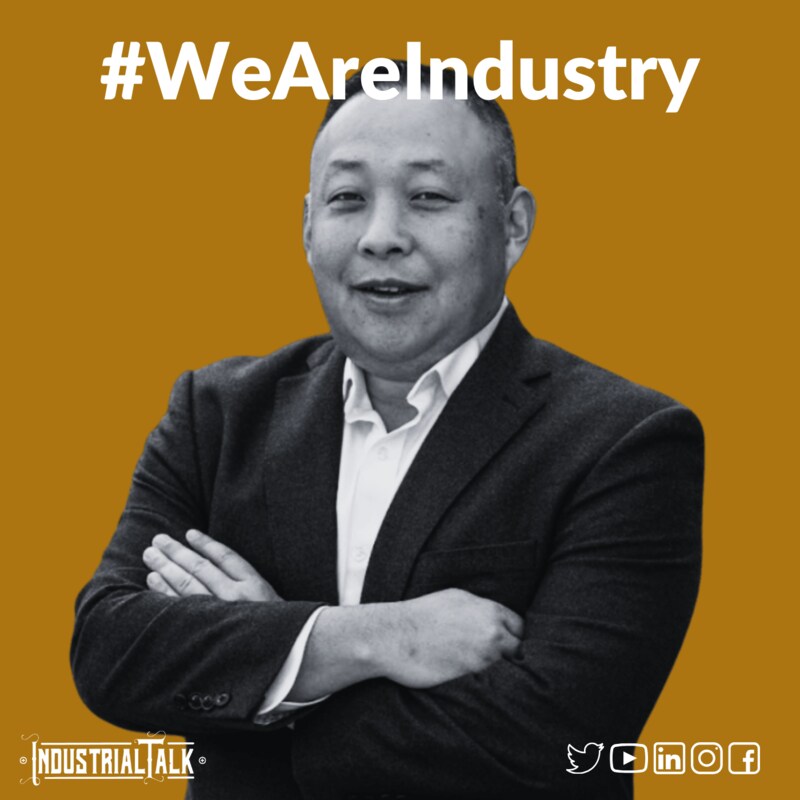
Industrial Talk is talking to Chris Chuang, Co-Founder and CEO at Relay about "Reliable communication solution for improved organizational safety".
Chris Chuang from Relay discussed the importance of communication in manufacturing safety on the Industrial Talk Podcast. Relay's device, which integrates Wi-Fi and cellular networks, is designed for frontline workers and offers features like panic buttons, location tracking, and real-time language translation. The device, manufactured in-house, is durable and resistant to harsh conditions. Chuang emphasized the role of AI in enhancing productivity and safety, aiming to digitize workflows and improve efficiency. Relay's five-year journey in the market is built on reliable radio performance, now poised to leverage AI for data-driven insights and automation.
Outline
Introduction and Purpose of the Podcast
Scott welcomes Chris Chuang from Relay and highlights the importance of communication in safety, especially in manufacturing.
The conversation aims to discuss the necessity of proper communication and its impact on safety, particularly in the context of reshoring and nearshoring.
Scott mentions technical difficulties faced at the beginning but expresses satisfaction with the eventual conversation.
Chris Chuang's Background and Relay's Mission
Scott shares information about Chris, including his background in consulting, venture capital, and entrepreneurship.
Chris discusses his professional journey, starting with consulting in telecom and venture capital, and his involvement in companies like Matricity and Bandwidth.
Chris explains the creation of Republic Wireless, which aimed to save consumers money by merging Wi-Fi and cellular networks.
The discussion transitions to Relay, a solution designed for frontline workers, emphasizing the importance of communication and safety.
Relay's Technology and Manufacturing
Scott inquires about the manufacturing process of Relay's communication device.
Chris explains that Relay manufactures the device in-house, focusing on simplicity and durability.
The device is designed to be compact, durable, and easy to use, with features like waterproofing and location tracking.
Chris shares anecdotes about the device's durability, including drop testing and real-world scenarios where the device performed well.
Safety Features and AI Integration
Chris discusses the safety features of Relay, including a panic button that triggers a dynamic radio channel and location broadcasting.
The device is designed to enhance safety by providing real-time communication and location tracking during emergencies.
Chris explains how AI is integrated into the platform to proactively check on workers in potentially dangerous situations.
The conversation touches on the importance of human interaction in maintaining trust and building relationships, even in the context of AI-driven solutions.
Future Plans and Vision for Relay
Chris outlines Relay's future plans, focusing on leveraging AI to unlock the power of data and digitize workflows.
The company aims to integrate AI with their cloud-based platform to provide more efficient and actionable insights for frontline workers.
Chris mentions the importance of earning trust by delivering a reliable radio solution before introducing advanced features.
The discussion concludes with Chris expressing his enthusiasm for the future of Relay and the potential for AI to enhance human productivity.
If interested in being on the Industrial Talk show, simply contact us and let's have a quick conversation.
Finally, get your exclusive free access to the Industrial Academy and a series on “Why You Need To Podcast” for Greater Success in 2025. All links designed for keeping you current in this rapidly changing Industrial Market. Learn! Grow! Enjoy!
Industrial Academy (One Month Free Access And One Free License For Future Industrial Leader):
Business Beatitude the Book
Do you desire a more joy-filled, deeply-enduring sense of accomplishment and success? Live your business the way you want to live with the BUSINESS BEATITUDES...The Bridge connecting sacrifice to success. YOU NEED THE BUSINESS BEATITUDES!
TAP INTO YOUR INDUSTRIAL SOUL, RESERVE YOUR COPY NOW! BE BOLD. BE BRAVE. DARE GREATLY AND CHANGE THE WORLD. GET THE BUSINESS BEATITUDES!
Industrial Talk, communication, safety, reshoring, near shoring, manufacturing, AI, human element, frontline workers, productivity, language translation, cloud integration, data tracking, private 5G, knowledge transfer.
00:00
Scott, welcome to the Industrial Talk podcast with Scott Mackenzie. Scott is a passionate industry professional dedicated to transferring cutting edge industry focused innovations and trends while highlighting the men and women who keep the world moving. So put on your hard hat, grab your work boots, and
00:21
let's go all right once again. Welcome to Industrial Talk.
00:24
your company. I believe come:
06:43
I'm doing great. Happy Monday. I'm excited we
06:47
had, we had some chit chat before the conversation, so we're not going to bore you with the chit chat on this conversation, just because we can do that all right before we get into the conversation around relay and what you do, and then all the reshoring and the near shoring and all the manufacturing impacts that your solution could help, help sort of minimize. Give us a little background
07:11
on Chris. Where do you come from?
07:13
Yeah. So most importantly, I'm a husband and father of four amazing kids, two boys, two girls. My oldest is in college, and my youngest is just 10 and still likes to cuddle. And so, you know, that's that's the most important thing I do. But My professional background, I started out at Mackenzie doing consulting to Telecom, and
07:39
real quick, it's not spelled like the right way to spell Mackenzie, you know that
07:43
llpaper or a game back in the:
09:44
Yeah, well, I'm all dazzled by your street cred. My gosh, that's impressive. You started when you were
09:50
10, huh? You're just eight and a half. But who you know can random? Who's gonna do the math
09:55
on that one? Hey, and that's why you because of that VC background, that's why you knew. Back. Not many people know SPAC.
10:01
That's right, that's right, yeah, I'm familiar with the various roads to IPO or Yeah, yeah. I really fell in love with more building products and entrepreneurship side of things through that bandwidth and Republic journey. And really, those journeys gave us the building blocks for what relay does, and that we got really good at voice communications, right, powering Skype and those kind of early, innovative voice services. And then we got really good at merging cellular and Wi Fi networks together in a super simple, you know, easy way. And then all that, we combined to build a solution for the frontline workers, which I'm here to tell you more about today.
10:45
I like that heck of a job with that summary, let me ask you this, this cell phone, the cellular and Wi Fi combo. Yeah. Now, of course, I'm at my house right here. I'm here. I got a Wi Fi. Everybody has a Wi Fi right now, and I've got a cell phone right here. Is that technology and and I received call, is that technology a part of my iPhone?
11:10
It is. But honestly, and I you know, we're no longer part of Republic. We sold it to dish networks couple years ago, but the big carriers still haven't perfected it. I think our version was actually still better from Republic Wireless days. It's really hard to make like Wi Fi and cell work together, and we actually created our own technology. 75 plus patents around this technology. Took us, you know, a lot of mistakes and a lot of years to get it right, and now we actually deliver that through our relay device as well.
11:46
That's just that's so cool. I'm enjoying this conversation. I don't even know where to go. I'm gonna
11:52
digress quite frankly,
11:56
so many doors, and it's like I need help anyway. Anything you want, Scott, but I'm not going to geek. I want to hear about relay now. I've been out on your website. I see the website relaypro.com, is the location and and right off the bat, I have to ask your solution. Are you vertically manufactured and integrated? Do you manufacture the device. I can't say it's a phone. It's a communication
12:25
device. What do you what do you call it?
12:28
Yeah, well, first of all, and I could do a little demo later for those listening one device, if it's in the, you know, palm of your hand, my hands are not abnormally large, so you could get a sense of the scale here. But to answer your question, yes, we do manufacture the device. You know, it'd be so much easier just to build an app for a smartphone or even work with a traditional screen based interface. You know, I think you'd under, you know, from your background, you'd appreciate this. What's really hard is making something simple and and so we had to, and do, pour a lot of engineering into taking the complexity of a smartphone and really shrinking it down into like a single button type device with a very small screen that is really not the focus of the experience. And so to do that, we had to control all layers of the solution. So we build, you know, we build a ground up underneath the hood. It's a full smartphone. So we get, you know, smartphone chipsets, every possible radio and sensor like a smartphone would have. But then we've engineered it to be smaller, more durable, lower cost, and just a whole lot simpler, which is the kind of interface that the front lines need.
13:41
Okay, I was a knuckle dragger. I was out in the field. I did all that stuff and and I can honestly say, and I'm not proud of this, I wouldn't be too kind to equipment. Now that's just no and how do you ensure that that product, given the the technology is durable. Just durable.
14:03
I mean, yeah, yeah.
14:06
It's taken a lot of that's probably the hardest part of the hardware engineering. There's a whole lot of software behind this thing, but we had to build it so that, unlike a radio that, you know, when you drop a radio, it shatters, you know, it's antennas and buttons will come off. You can notice there's no big, giant antenna. There's no, you know, protruding buttons. It's actually, you know, the battery is sealed in so it's, it's IP 68 rated, you know, waterproof up to 30 minutes. And so a fun video we have is actually drop testing a relay against a traditional, you know, high end radio, yeah, and the radio explodes, you know, in slow motion, which is an awesome, you know, fun video, and then the relay essentially bounces. And so I had a customer recently tell me, like last week, literally, that he threw the relay into, like, a shallow lake. Like, let it sit there for 30 minutes. Retrieved it, you know, after the fact, thinking there was no way it would work. And he pulled it out and crystal clear audio,
15:11
because we're just like, hey, let me just see if I can ruin this piece of this device just because I can. Yep, yep. You understand that thought process. Now, I understand the fact that I would, okay, here's, here's something.
15:26
It's small, it's compact.
15:28
It's got, it's got, it's, it's very sleek looking. But then again, what if I lose it? Well, you I find it for me.
15:39
Yes, actually, you know, you know, as you know from the industrial world, radios get lost a lot. In fact, that's the hidden recurring cost that every radio has, right is, and they have street value. They get stolen because they get, they get sold on eBay, right? And so with Relay, we built it with location tracking as well. So literally, at any given moment, if you turn on that setting, you can see on a map where exactly your relay is. Even when the battery has has, you know, when the device is shut off, it's got a little extra battery charge in it that allows it to continue to broadcast location. So getting ready to say, but it's dead, yep, yep. We view an engineer for that so it can actually hang on for a couple of weeks of additional sort of secret battery life, just to broadcast a little bit of location so that it can be found and recovered. So with relays, they rarely get lost and they're hard to break. We've run them over with golf carts and luggage carts, and you know it. It survived quite a lot of different physical challenges.
16:47
How long have you guys been in business? I am on your website, but I'm not going to click till I win and find it. How long you guys been in business?
16:55
So we've been serving the front lines with this product for five years. But as I mentioned to the sort of my history, this has really been like a two decade journey, starting with bandwidth about two decades ago, learning how to do voice technology, and then we started the Republic Wireless business about, you know, 15 years ago, and we got good at wireless technology, and then we've kind of brought it all together in this latest product over the last five years.
17:24
Okay, I have to ask you, because you've got some mad telecommunication shops. Okay, yeah, if I don't, I get pinged a lot about 5g Yeah. Is that? Is that happening? 6g whatever I've added up to 6g Yeah.
17:46
So 5g definitely out there. 6g come in. You know, a variant of 5g that we see really relevant for the industrial world is private 5g essentially where, you know, industrial plants are rolling out their own private cellular networks just for their their needs and and that can really power everything from relays to robots, right? Like they need that connectivity. And so I think before 6g it's more about the private G, if you will.
18:17
Ah, check it out. See, I knew you'd have the answer. Now I'm a better person because now I now I can, I can walk with confidence in knowing that somebody's going to ping me and I'll go say, Oh yeah, really. How about private G
18:29
Yes, there you go. There you go. All
18:31
right, with that said, there are a lot of changes taking place in the workforce. It just is, I mean, from where I've come from to where it is today, way above my pay grade, but we still have to get things done and and it's, you know, we we've mentioned and we've talked about bringing in manufacturing, reshoring them. This is the My challenge. And help me how you help me understand how your solution, technology can help address this. We have a big push that we're want to reshore manufacturing, expand that manufacturing line, and all I can see is, one, well, we better have demand. But two, do we have the people? It's still, we can automate so much, but there's still a people equation. Help us understand a little bit about that, that whole, that's a that's a bag full of unsafe type of stuff.
19:38
Yeah, happy to touch on that. So, you know, while we've built a communications product right with our history, we really think about our mission as helping the productivity of the front lines soar, and we help productivity soar in a few different ways. First, is communications right? The more connected a team is the. The more you can, you know, communicate effectively across different types of languages. You know, we do a real time language translation across different kinds of devices, across different kinds of locations, right? The more connected a team is, ultimately, you know, that's a huge driver of productivity. But the other aspect of what we do is safety, right? So we think that productivity can soar when you have great comms and safe workers, and when you have a safer environment, ultimately that attracts better talent as well, right? Which is ultimately what every frontline leader is struggling with, is, how do I keep my best people? How do I bring in more talent? And so, you know, I think a core requirement, a baseline of attracting the best type of talent, is providing us a safe environment. And so relay is not only a communication solution, we're actually a safety solution as well. How that works is a couple different ways. So first of all, this device, and you could see the button here, that's the main interface. You push the talk, but you also push for help, right? So if I were to rapidly press this button five times, this becomes a panic button. And what it does is, so if you're if your fault, if you fall in, if you're trapped, if you're any if you had a heart attack, whatever the situation, rapidly press the button five times, and it's going to trigger a panic. And what a panic incident will do is, first, it'll spin up a dynamic radio channel, right? So amongst all the different responders, security, maintenance, if there's a health officer on duty, a general manager, everybody's now in a real time radio channel, instantly no matter what device they're on. By the way, a lot of times, managers are on iPhones, we have an app that can pull them in from that. You might have a dispatcher on a laptop, they're pulled in, and then, of course, the people on the devices. So now the whole incident response team is on a channel, and then this device will then broadcast the location, indoor location, of that that person in distress, right? So everybody's pulled into a channel, they know exactly where you are, and now they can start to coordinate the most rapid response to that distress the whole time, just to stop or pause or one last part, that whole interaction is being logged and stored in the cloud, right? So, so what, what people can do with that is review the game tape after the fact, right? How could we have shaved seconds or minutes off of this response? Who responded at what moments? How do the people move across the facility. So I'm a basketball coach in my spare time. I love nothing more than watching film and studying how we can get better as a team. And now operations leaders can do the same when they have to respond to a safety incident, when you can tell your workers about this is how seriously we take safety, right? I think that goes a long way to helping workers feel safe, and that ultimately allows, you know, those leaders to bring in and keep the best talent.
23:08
So here's a scenario that
23:12
happened to me. When I was running an industrial maintenance company. There was a young professional, and it was just he had a hemorrhage, a cerebral hemorrhage. It just was, sadly, his time. Now, he fell over, collapsed. Does your device take that into consideration where there's, like, I'm working, I'm having a good time. Oh, that's it. I can't press it five times and begin that alert, there's something a little bit more proactive in that
23:46
sense, yes, so we do have an accelerometer in the device which can track a fall however, there's a high rate of false alarms with with fall detection, you know, these radios are in really, you know, physically active environments. And so the feedback we've gotten, you know, as we've tested, some of that is, hey, the false alarms are kind of like, too, too frequent, right? So, so the way we're attacking that salute, that kind of situation, is by because, you know, relay is all, you know, running through the cloud, right? And because we've, we've integrated AI into our platform, now you can essentially start to check in on a worker. So for example, if someone's doing maintenance in a particular machine, and it's sort of, they're on their own, it's maybe they're crawling into, you know, a attic or, you know, a subterranean area, you know, these kind of dangerous loan worker scenarios, not quite what you described, but, you know, I think in the similar vein, we can know that they're in the dangerous place. We can know that there's no other relay near them. They're alone, right? And we can start to have our agent, our AI, proactively check in on them, right? So it's you. Hey, hey, Scott, are you okay? You know everything all right, and if we don't hear you, talk back, right? So verbal communication, then we will start to wonder if something's wrong, and then we'll alert the human response team to go check in on you. So it's not foolproof for exactly the cerebral hemorrhage situation that you described, but it can cover a lot of other types of you know, call it related, loan worker situations.
25:28
Do you see your device? It's communication centric. Yep, we're communicating. There's a lot of activity, operational information and operational activities out in the field. Do you find your device? Does it say, Hey, I'm out here on, you know, pump 123, and it's leaking. Here's some pictures. Does this information find its way to the technology stack that exists at the organization. They say, I've got a CMS, or I got an ERP, whatever the technology stack is great.
26:07
Question, yeah, so a big part of the benefit of having a device that's cloud based, and you know, we'd like to say kind of designed from the cloud down, is that we've always had data tracking, you know, as part of our vision here. And really, you know, the frontline world data doesn't happen over over a keyboard, right? They aren't typing. They aren't you know, their hands are busy, their eyes are up. And so the workflow really happens with people talking to each other over radios, moving right throughout physical space. And so if you can track, you know, where the people move, and then what they're saying, because they're not typing, you essentially have, you know, the fingerprint of the workflow. And then, yes, we will take that data, run it through our cloud, and then integrate with what we call systems of record, the kind of you alluded to, we like to think of ourselves as a system of action, right? That can, you know, complement those systems of record, right? Because what happens when you get a, let's say, a system record, saying, you know, they issue a work order, right? This machine needs maintenance tickets created. Well, ultimately, that usually hits some human dispatcher on a radio, who tells, you know, Scott or Joe or Chris to go, go do something, right? So our big idea in that, in this sense, is that the system of the action side of things also needs a system, and a radio isn't really a system, right? And it's not cloud based. And so, so we can fill this gap and help really digitally transform the whole workflow. There's systems of record, right? But those need a system of action that kind of drive the complete digitization and tracking of the whole workflow.
27:50
Yeah, because that's the kind of, you know, along the same lines is as we talk about reshoring and near shoring and and expansion and automation and all the jargon that exists out there in the world of manufacturing. The reality is, is that I have to be more efficient. I have to compress that time. I have to realize that I have, here's a situation. I've got to correct the situation, and I've got to get back into full operate, whatever it might be, whatever that you know, use case is. But the reality is, is that you have to constantly drive for efficiency. And it just appears that that radio, lack of that device relays, device enables that compression,
28:35
absolutely, yeah, and all that stuff, yeah, well said. And you know, another way to think about the frontline teams is that, you know, it's really a tribal knowledge sharing kind of environment, right? It's often a an apprenticeship, right? Where you have this experienced technician or worker training a new batch, and especially with the great, you know, resignation, right in the early retirement of arguably the most knowledgeable workers. A lot of frontline leaders are struggling with how to get these, this sort of, you know, younger generation up to speed. And so, you know, part of our vision, and we're next year, we'll start to roll out some of these features, is, well, if, if you have an experienced worker using relay, right? And it's capturing their day to day, where they're moving what they're talking about, ultimately, we can start to kind of write the manual, if you will, the training manual. That isn't a static, you know, manual document, you know, not in that sense, but a live, AI, queryable, type of face, right? We're now the person just starting, you know, the job. Can ask, you know, a relay agent, you know, the our AI, how do we, you know, fix this machine, or what are the steps for this? And we can essentially transfer the knowledge, and again, a little bit of vision casting here. From the experienced worker right to this new worker. But when I say vision casting, like, like, like quarters right, not years right, before we can start to roll out some of this kind of power.
30:12
See, what's interesting is that that conversation about knowledge transfer,
30:20
unlike you, I was with Price Waterhouse.
30:25
Yeah, old PwC, managing director with them. And, you know, we were talking about that way back when we got a tsunami of silver people leaving the force. And how do we capture that knowledge? Because it not and we just didn't have the that was always a challenge. And you know, they're still talking about it today. Look at that.
30:45
Yep, yep. Well, hopefully we can make a dent in that problem and start to close that gap a little bit
30:50
before we we exit this conversation, because I'm really enjoying it. I want to, I want to hear what you have to say about what that future looks like, what what's next on relays, vision of where you're going, because that you've got your device been sort of in operation five years, but for a number of other years, trying to come to this. But, but where do you see it going?
31:13
Well, we think we're really just at the beginning of unlocking the power of the cloud and really the data side of things that we just alluded to becoming this like system of action that pairs with your systems of record. So for us, the first step in all this was we asked, you know, all our customers, to replace that old brick on a belt that doesn't talk to the cloud with this modern, you know, cloud designed device, right? And get that worker connected, start the data flowing into the cloud and down from it. And now that we've done that, and honestly, you know, Motorola is like number one in the world as to traditional radios. And you know, you know, I respect their product greatly. It's, it's been the rock solid solution for years, but I think we're the first solution. Like, if you were to benchmark the core metrics of radio performance, things like, how does it perform in 100 decibel type environments, right? Like, those kind of challenging benchmarks, I think this device is the first one maybe ever built like that is, can match or exceed Motorola's highest end radios, right? So, and why I that's important for us is we had to earn the right to then now start to deliver the cloud, right? And you earn the right by being able to replace that, that, you know, reliable old radio, with this modern, better one, I think that the first five years has been about earning that right, being trusted to go now unlock this next chapter of potential, which is all about that data and digitization of those workflows and and AI has come at the perfect time, right? Because we've been capturing this data for, you know, a few years now, we've got, you know, billions of messages flowing through our platform, 10s of billions of words, right? That inform our language translation models and AI, you know, billions of locations, right? But, but, you know, in the past, you would be like, Okay, I have all this data. Like, what's like, the dashboard, what kind of report can I create to utilize this? And honestly, that's where it usually falls down. Well, with AI, right? You no longer need to structure that data into a static report. You can just query AI and have it rapidly go, you know, basically surf the whole entire ocean of data and bring back the right solution. So, so I'm really excited about what we're going to bring to market, even early next year, as to leveraging AI to unlock the power of this data and all that's built on first earning the right to be the radio. And I think we've done that.
33:53
I'm still dazzled by the fact that people are still printing out reports. I want to print out a report. Like, really, do you, do you really want to do that or, or, can we
34:03
be smarter at that?
34:05
That's just,
34:06
that's, oh, I mean, it's, I mean, you must have a secret camera in our, like, product roadmap room, because, because you're speaking to one of the most common pain points that every frontline customer tells us about who, who has ever wanted to actually write a shift report, right? But every, every single shift needs that right to transfer the knowledge and and still a lot of its pen and paper, and it's extra time after you've already finished your shift. It's just pure pain, and it's inefficient. It's analog. So you know our vision and what's something that we'll be rolling out next year is, well, if you're talking throughout your shift, right, and you're moving and we're capturing all that data, how about we at least draft that shift report for you and allow you to edit it and save you, you know, some precious time and get you home to your family fast.
35:00
Faster, yeah, and it's quality. It's
35:01
not just pencil whipped. I never did that. I've never pencil whipped, a thing
35:07
we've all pencil with far too often, and no one should have to do that anymore, with solutions like relay coming to market.
35:15
Oh, the human condition. Chris, how does somebody get a hold of you saying, Gosh, I like what he's talking about. How do I get a hold of Chris?
35:25
So first of all, you can check out our website, as you mentioned, www.relaypro.com but you know, we are beyond our technology. We are about relationships. And I love I still interview every candidate that joins us on our team, and I still love talking to as many customers as I can. So so if there's anybody out there customer partner who wants to or someone who wants to join us, just feel free to email me as well directly. My email is C, and then C, H, U, A, N, G, so C, Chuang at relay pro Comm, shoot me an email, and I'll get I'll get back within a day or two at the longest. Are you out there on LinkedIn and I'm on LinkedIn? Yeah, feel free to search me on LinkedIn and message me that way as well. But email LinkedIn. We are a personal relationship oriented company, and I'd love to connect with anybody who wants to you're a
36:19
personal relationship company in the world of AI, which then drives to no personal relationship. But thank you. My I had a conversation. I digress here. Had a conversation with my daughter, and she's in marketing, and I was having this conversation. I said, I still think that there's a huge demand for the human interaction no matter what we are doing in the world of AI. It's still a human conversation.
36:42
Here I am. I am so strongly supporting what you just said there, because and how we think about AI is we're not building AI to replace humans. We're not building robots. We want to use AI to supercharge humans, to help them humans soar in their productivity. That's what our mission is all about.
37:05
That's that's the right answer. You were
37:09
wonderful. It's really how we feel about I agree with that, man,
37:12
you were wonderful. Thank you for being on Industrial Talk.
37:16
My pleasure. My pleasure. Thanks for having me, and I hope to meet you when you come to Raleigh next year, and maybe we'll host another one of these, as we talked about earlier
37:27
on site. And I'll bring my stuff, and I'll lay it, light it up, and and it'll just be fun,
37:33
you know. And you come, we could, we could have some fun. And, you know, we briefly that really does language translation across 35 plus languages. So we can have five different people all speaking different languages with four and and it's going to be in real time, playing out in Mandarin, Spanish, French, you know, Swahili, whatever language we want to pick. And we could do a little like language test challenge kind of thing. It'd be a lot of fun.
38:01
Wow. Well, well, estoy aprondo, I'm trying to learn Spanish.
38:09
You don't have to. We can just use your relay. There you go.
38:13
All right, we're gonna have all the contact information for Chris out on Industrial Talk. This is a must connect individual, So fear not. He's a nice guy. You can tell he's a nice guy. All right, stay tuned. We will be right back.
38:25
You're listening to the Industrial Talk Podcast Network.
38:34
Industry is cool. You go on. You go and look at that video, and you see that little you see the technology that's being delivered by by relay. See, it's pretty cool. And is it needed? Yes, it is, absolutely it's needed. All right, reach out to him. You know that that's a must connect a is it? Is it's about being able to have those relationships, those collaborative relationships. You need to you need to continue educate. You need to collaborate, and you need to innovate those that's the link to succeed, and we want you to succeed, and then we want you to succeed. So you need to talk to me, you need to tell your story, or you need to figure out how to tell your story effectively, to bring out that human side of you. Don't be, you know, slave to that AI slop. Don't dishonest. I want you to be honest, because we need you to succeed. Be bold. Be brave. Dare greatly. Hang out with Chris. Change the world. We're gonna have another great conversation shortly. So stay tuned.