Shownotes
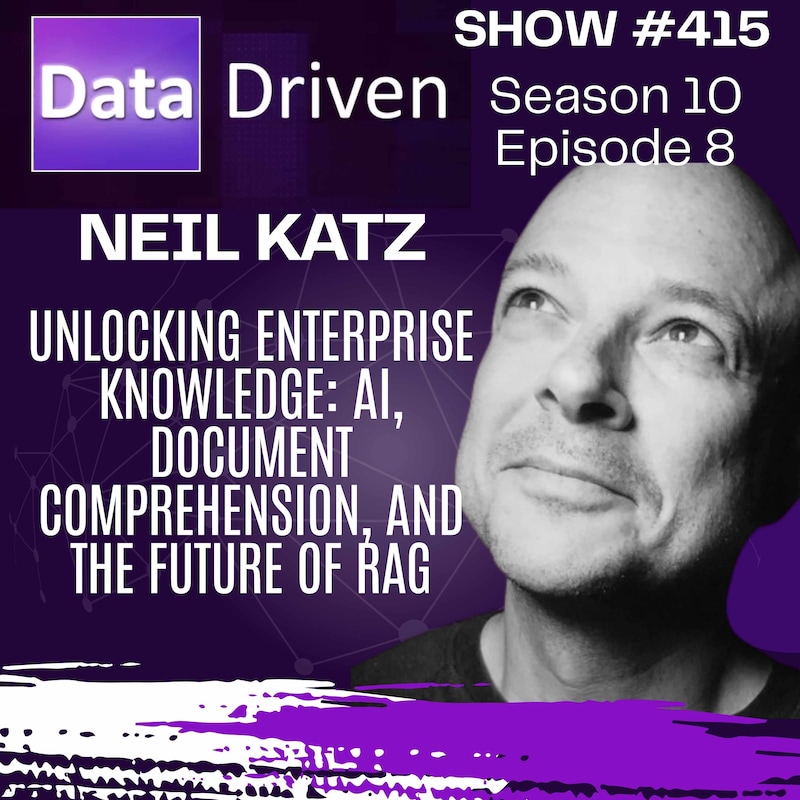
In this episode, hosts Candace Gillhoolley and Frank La Vigne are joined by Neil Katz, Chief Product Officer at Valantor AI—a four-time Emmy winner whose unconventional journey spans from technology startups to award-winning journalism, and now to the forefront of enterprise AI innovation.
Neil shares his unique perspective on the evolution of AI, from the early days of digital design and machine learning, to building large-scale AI and document intelligence platforms for major organizations. The conversation explores the critical challenges of knowledge extraction, document comprehension, and securing sensitive data in today's era of sovereign AI. Together, they uncover the hidden complexities behind Retrieval-Augmented Generation (RAG), discuss the importance of hybrid search strategies, and reflect on where the field is heading as enterprise needs push the boundaries of what AI can do.
Whether you're a data professional, an AI enthusiast, or just curious about how language models are transforming how we understand information, you won’t want to miss this candid and thought-provoking deep dive into the future of AI and data integrity.
Links
- Neil on LinkedIn -https://www.linkedin.com/in/neilkatz/
- Watch on YouTube -https://www.youtube.com/watch?v=qf8qifz_RL8
Time Stamps
00:00 Early career in tech and journalism
04:01 Early consumer AI experiences
06:49 Early AI and machine learning developments
11:43 Anthropic's new findings on AI models
16:15 Data sovereignty in AI systems
19:27 Implementing open source AI models
22:49 Breaking down documents for models
25:45 Understanding the RAG system process
28:47 Challenges in AI data processing
31:22 Challenges in RAG with Insurance Data
36:35 Understanding and managing data security
39:35 Early days with OpenAI GPT
40:48 Explaining vector and similarity search
46:57 The evolution of computing models
47:29 Computing evolution to cloud and edge
Transcripts
Hello and welcome back to Data Driven, the podcast where we explore the emerging field
Speaker:of data science, artificial intelligence, and of course, all the hype
Speaker:around AI. All of it is impossible without data
Speaker:engineering. However, my favoritest data engineer in the world can't make it
Speaker:today, but I did bring the most curious person I know,
Speaker:and that sounds really bad, quantum curious, but she's also data curious
Speaker:too, Candice Cooley. How's it going, Candice? It's great. I'm very
Speaker:excited about today. Our guest has a really exciting
Speaker:background. Yeah, just looking at his, his
Speaker:LinkedIn profile makes me ask a lot of questions. Our guest today is
Speaker:Neil Katz, who is Chief Product Officer at Valantor AI
Speaker:based in New York. In the virtual green room, we geeked out on some New
Speaker:York stuff, but he's also a 4-time Emmy winner
Speaker:and he knows that it's a non sequitur. So welcome to the show, Neil.
Speaker:Thank you very much, guys. Great to be here. Much appreciated. Good to have you.
Speaker:I have to ask first, the Emmys. Did you work in media? Did you work—
Speaker:what, how did you get an Emmy? I, yeah, I've, I probably have— 4
Speaker:times. 4 times, true. I probably have one of the, one of the stranger
Speaker:backgrounds to be in leadership at an AI company these days, but I actually
Speaker:started my career in technology. When I came outta college, I built one of the
Speaker:first digital design companies outta New York City. This is Web
Speaker:1.0, so kind of dating myself here, but After a couple years of doing
Speaker:that, we sold that company and I had a soul-searching moment. I just realized I
Speaker:had spent my early 20s just spending all my time in
Speaker:dark rooms with computers till 4 in the morning. And I didn't
Speaker:want to do that anymore, or at least not for my whole life. So I
Speaker:retooled, became a journalist, and spent 20 years in
Speaker:journalism, having the great fortune to be able to report in places
Speaker:like Iran, Vietnam, India for quite a time,
Speaker:southern Mexico, all over the United States. for places like the New York
Speaker:Times and CBS News and, and then Weather Channel, where I was running the
Speaker:digital news division at the Weather Channel. We actually built a digital news
Speaker:operation from the ground up, which was really a cool opportunity. And
Speaker:strangely enough, even though I mentioned these nice brands like the New York Times and
Speaker:CBS News, the 4 Emmys actually come from our time at the Weather
Speaker:Channel, where we built a documentary
Speaker:unit and went all around the world, really. Wow.
Speaker:Reporting on the relationship between climate change and extreme weather
Speaker:and social issues in a way that you wouldn't expect.
Speaker:So we reported everywhere from Iraq to
Speaker:Ethiopia to Sudan to Central and South America,
Speaker:and of course all across America. And then we're lucky enough to win
Speaker:some Emmys for documentaries we did. The first one we did
Speaker:was actually— that we won for— was about the southern border of the United States.
Speaker:and how many immigrants were dying actually at that
Speaker:border, actually inside Texas when they crossed over. Things had become
Speaker:hotter, things had become drier, and the passage had become more dangerous.
Speaker:It's not how it works today because right now everyone goes to the southern border
Speaker:and basically says, hi, I'm here and I want asylum. But back then you snuck
Speaker:in, and in Texas it had become very dangerous, and they would
Speaker:find a couple bodies, corpses a week, out in kind of the badlands of
Speaker:southeast Texas. So anyway, starting off on a weird note for an AI
Speaker:podcast, I realize, but I spent a long time in the journalistic world
Speaker:and happy to go into that if you want. And then something interesting happened.
Speaker:IBM came along and purchased the Weather Channel in one of probably the
Speaker:strangest acquisitions in the era. Yep. We
Speaker:can say a lot about that if we want to, but then I got thrusted
Speaker:right back into technology. I'd run from it. So I'm going to do this content
Speaker:thing and then tell people's stories and got thrust right back
Speaker:into tech. And IBM really I think to their credit, made us much
Speaker:more of a technology company than a media company. That was actually probably pretty good
Speaker:for us. And then I was running big product and AI teams
Speaker:under Watson, IBM Watson Group, and met my,
Speaker:my current partner, Ben Fletcher, who's our CTO. And we formed
Speaker:a company called EyeLevel, which just got acquired by Valontour. We can tell that
Speaker:story in a minute. Ah, very cool. But even back in,
Speaker:I actually looked up the date right before this podcast, back in 2016, so about
Speaker:6 years before the launch of ChatGPT. We were using
Speaker:the Watson model to build some really popular AI experiences for
Speaker:consumers. We built something called Watson Weather, and about 2
Speaker:million people a day were chatting, if you will, a chatbot that was on
Speaker:Facebook Messenger, of all things, which was the popular place to chat,
Speaker:that gab back then. And 2 million people a day were chatting with
Speaker:our AI bot and trying to get their weather or hurricane warnings.
Speaker:And these models were not nearly as good as the GPT-class models.
Speaker:But what we saw was really interesting. We were, we understood what you
Speaker:wanted maybe about 35% of the time.
Speaker:So pretty high failure rate. I was thinking of the early Siri experiences. You're like,
Speaker:if this is artificial— At the time it was magical, right? At the time
Speaker:it was magical. 'Cause I also worked lots in the, the
Speaker:before thing. I think you're right. I think people are gonna remember the, at least
Speaker:the early part of the 21st century as there was before
Speaker:ChatGPT launched and then after ChatGPT launched. You're probably right. The before time. But, but
Speaker:a lot of people don't realize there was natural
Speaker:language processing. It's old. I remember being a kid on the Commodore
Speaker:64 playing Zork, right? And again, that seemed
Speaker:magical at the time. Really couldn't chat with it per se. Yeah. But
Speaker:just the idea that you could type something in. And before that there was ELIZA,
Speaker:which you've probably heard of. But, you know, but
Speaker:I remember building out chatbots. I remember using chatbots on Facebook Messenger
Speaker:where it would basically do a lot of linguistic processing. was
Speaker:not nearly as coherent or, or as
Speaker:good of responses as you get from ChatGPT. But
Speaker:yeah, no, people forget. Hopefully none of our listeners, because a lot of ours
Speaker:are very savvy. But a lot of people, a lot of the normies out there,
Speaker:just assume there were no chatbots prior to— There was a lot of
Speaker:hard work that probably won't get any glory because it
Speaker:just wasn't as cool. But we saw something I think really
Speaker:we saw a piece of the future when we built this system, which was that
Speaker:when we got it right, when people were able to communicate effectively with
Speaker:this chatbot, the engagement stick looks
Speaker:basically the same as the ChatGPT engagement stick. It just was vertical. Right. So
Speaker:if we got you, you were hooked. You'd come every single day, you'd talk with
Speaker:us for many minutes a day trying to get your weather. If we didn't, of
Speaker:course you were gone because we didn't get it right. But you could see already
Speaker:what was possible if you could make this work in a more generalized way.
Speaker:The stickiness of chat cannot be overstated.
Speaker:You know, yeah, the way you've been talking about it, you, you know, you were
Speaker:involved before ChatGPT. So my question is, how
Speaker:has your definition of AI changed over the last 5
Speaker:years? Oh, that's a good— that's
Speaker:a really good way of putting it. Look, I think in the before times,
Speaker:You would build— like, most of what was built was machine learning, if we're honest
Speaker:with ourselves. Most of the things that you would practically create was more about
Speaker:basically statistical algorithms to try to find efficiencies or try to find
Speaker:things that were popular. So much of it was something that people
Speaker:wouldn't even recognize today, actually, when they say something like AI. These were like internal
Speaker:tools that you would use to improve the various performances in a company, maybe improve
Speaker:your supply chain by 5%. But already you saw
Speaker:the kernels, as I'm saying, of what you could possibly do. I think now obviously
Speaker:we're in the era of much more generalized models, which to me feels like one
Speaker:of the big breakthroughs of GPT that was very different from what was happening with
Speaker:Watson. Watson in its day was pretty badass. I don't know if I can say
Speaker:that word on your pod. I don't know what your PG rating is, but— We'll
Speaker:figure it out. All right. You gotta bleep me, let me know. But
Speaker:you remember this thing won Jeopardy, which was very hard to do a long time
Speaker:ago, but things were much more specialized. You'd be building models that were
Speaker:around one very specific business problem. You try to train it
Speaker:on the specific business problem. And that kind of made sense,
Speaker:especially from IBM's perspective, because they have business customers that all it's about— it's only
Speaker:about private data. But it was very limiting. And I think that's what actually
Speaker:the breakthrough with GPT was, like, wait a second, actually the right way to get
Speaker:to something that's more useful even for specific tasks is to make the
Speaker:models more generalized. And obviously now today, people, you
Speaker:can almost ask it anything And it can do almost anything.
Speaker:For me, the exciting part though is not even where we are at the moment.
Speaker:Language models— this is something a lot of people in the public don't understand, your
Speaker:audience will understand— language models are trained on language.
Speaker:A lot of people don't understand that they're not math geniuses. We're trying to make
Speaker:them better at math, but they're actually word geniuses. And
Speaker:that unlocks a huge amount of human potential that computers never touched before.
Speaker:Our knowledge really has been— it's been unable to
Speaker:communicate with computers in that way. But even though that's been
Speaker:really amazing, I think the next step, which we're not there yet, is getting the
Speaker:models to do things that are not language, right? So people don't quite understand that
Speaker:you can't build a rocket ship to go to Mars with a language model. We
Speaker:don't— that's what the models do today. So we're still like a step away, I
Speaker:think, from some very different innovations that probably don't look like the language models
Speaker:today. So that was a long answer on that question, but— All
Speaker:the math that these models are good at all go—
Speaker:they're not good at math per se, like you said, but they are good
Speaker:at math. But all the math goes into linguistics and
Speaker:text, right? You can ask it— what's interesting is now if you ask it to
Speaker:say how many Rs are in strawberry or what's 2 2, it'll
Speaker:actually write code. It's good at writing the code that'll give you the answer,
Speaker:right? But no, you're right. And it's an interesting—
Speaker:it's very curious to see how
Speaker:people misinterpret what AI is doing, right? People say, oh, it's
Speaker:hallucinating. I was like, from a certain point of view, it's always hallucinating, right? Because
Speaker:it's just guessing the next logical step. And I know there's
Speaker:attention mechanisms and all that that do keep it honest. But I
Speaker:was once at an event, and I hate to name-drop, but
Speaker:this was Esther Dyson. Oh, yeah. Right? Yeah. Somehow I ended up in the same
Speaker:room with her. I'll never figure out how, but, but she was, I
Speaker:was on the same panel and she was saying like, this was 2023, so early
Speaker:days of what we're, what we have today. Yeah. And she was saying, well, there's
Speaker:no real difference between autocomplete on your phone or
Speaker:guesses the next number and, and ChatGPT. And I was
Speaker:like, far be it for me to tell her she's wrong. Sure. Certainly in a
Speaker:public forum. But also too, she's right in a sense that the stealth
Speaker:bomber is the same tech, technology as a paper airplane,
Speaker:right? They're both doing a lot of the same things. Obviously one's way more
Speaker:advanced than the other. What fascinates me— I won't explain on that one.
Speaker:Yeah, I think both are radar invisible. But no, but I'm
Speaker:actually— I often find myself surprised at how far we've taken
Speaker:the transformer and LLM architecture. I didn't think— I thought
Speaker:we would run out of steam after a couple years, right? But
Speaker:things like things that have no business working, fine-tuning,
Speaker:That was— for fine-tuning, that's harsh. But for things like
Speaker:distillation, it shouldn't work as well as it does.
Speaker:Reasoning on these things also works way better than I would have
Speaker:bet on. I'm sorry, I cut you off. I'm agreeing with you. I think reasoning
Speaker:and logic is something you would think maybe would be beyond guessing the next word
Speaker:or the next token. But you can see
Speaker:emerging properties in language models that seem to go far beyond what you think guessing
Speaker:the next word would offer way
Speaker:more. And I can only imagine that's probably the attention
Speaker:mechanism. There's some kind of wisdom in the attention mechanism. But that—
Speaker:I think it's going to sound weird. I almost think we don't
Speaker:necessarily know. No, that's crazy. Yeah. There's the
Speaker:new paper that came out from Anthropic, I think last week, that was talking about
Speaker:that. It wasn't even totally new because this idea of a latent space inside
Speaker:models has been around for a long time. This idea that there's some kind of
Speaker:its own thinking space where it's doing things in its own language, in its own
Speaker:quote-unquote mind, whatever that means for a model. But Anthropic reconfirmed that
Speaker:and is finding that their models are now— they've been able to figure out where
Speaker:inside the model this activity is happening. That's interesting because
Speaker:obviously no model has been built to do that specifically. And so what is so
Speaker:surprising is just by training them on the world and then
Speaker:refining them, they have emergent properties that aren't specifically developed.
Speaker:That's a whole new kind of thing in the history of human invention. There's no—
Speaker:like when someone invented the fork, it didn't have— there was no way it would
Speaker:have some emergent properties and suddenly become a spoon and do something else. So
Speaker:something, something special is going on as these models get bigger,
Speaker:smarter, better trained, and more refined. Oh, that's a great way to put it. And
Speaker:it makes you wonder too, what— maybe language is the secret
Speaker:sauce to— I don't want to say consciousness, but intelligence. Maybe language
Speaker:is in itself the magic. Emerg— no,
Speaker:the notion of emergence, emergent properties is not unique to AI,
Speaker:right? You'll see birds will flock a certain way, right? And
Speaker:all they're doing is following the bird in front of them, right? And they inadvertently
Speaker:makes these patterns. And it seems
Speaker:language is the gateway to some kind of emergent properties of
Speaker:intelligence and reasoning. It could be. And I'm actually also interested in
Speaker:languages that aren't our own. If I think about like DNA, a chemical
Speaker:language. It's one of those areas where I think language models will eventually be pretty
Speaker:good, as opposed to the pure physics of building a spaceship, which they
Speaker:will be good at as well, but this is a different problem. But there's lots
Speaker:of languages that humans are not naturally conversant in. We can't think in
Speaker:DNA, but a language model perhaps can, and that can— You could find—
Speaker:that's a great point, right? What sorts of things could this possibly unlock?
Speaker:And mathematics is also, to your point about building a spaceship, mathematics is also a
Speaker:is a language in itself. Most humans don't
Speaker:think it, can't think of it natively, but there are some, right? It might be
Speaker:the gateway to, to other ways of thinking about this.
Speaker:Very much so. Yeah, it's— Candace, you kicked off an awesome question, by the way.
Speaker:I think that you answered that question maybe 10 minutes ago and it kicked off
Speaker:a great conversation. So thank you. No, it was great. I really, I'd like to
Speaker:dig a little deeper into the idea of DNA as a chemical language.
Speaker:So what do you mean by that? And how has thinking
Speaker:about biology influenced the way you think about AI?
Speaker:Boy, that's a good deep question. Look, in our practical work and the things we
Speaker:do for customers every day, I wouldn't say that we think in a biological sense
Speaker:or that DNA is part of that story, at least the work we deliver today.
Speaker:But it excites me because when I try to think about what are the unique
Speaker:things that— where are the places in the universe where language can create something new?
Speaker:DNA literally is the language of life. English or
Speaker:Spanish, human languages, are like the language of consciousness.
Speaker:DNA is the language of life, the fundamental building blocks of creation,
Speaker:at least on this planet. We don't know what it'll be like on some others.
Speaker:That's powerful witchcraft. That's powerful stuff to be playing with. And so I—
Speaker:and things that the human brain just isn't really built to speak that, to
Speaker:think conceptually in DNA. So to me, that's going to be a very
Speaker:powerful space when we can really get language models just to be native,
Speaker:natively speaking the language of creation of life on Earth. That's
Speaker:super interesting. It's nothing we do. I wish I could say I'm delivering that to
Speaker:Air France and EDP, some of our customers today. We're not, sorry. But that's some
Speaker:cool sci-fi where I think we're not that— we're not 20 years from that. Maybe
Speaker:we're 10 or 5. Baby steps. Yeah. So one of the things that I
Speaker:see on the Valintor website is
Speaker:really piqued my interest for a number of reasons. It was, you mentioned
Speaker:enterprise visual intelligence, which one, that's
Speaker:very interesting. 2, for sovereign AI
Speaker:environments. So tell me about what sovereign AI means
Speaker:to you, because everyone has a slightly different take on it. I've written a book
Speaker:on it. I have my own take on it. I'll send you a free copy
Speaker:of my book and you can, you can, you can tell me if I'm full
Speaker:of it or— Same, same. What? I'll sign it for you. Yeah, I'll
Speaker:sign you, I'll sign you the PDF. But the, the sovereign AI
Speaker:went from being this really weird niche topic to
Speaker:now is the topic of the G7, right? And
Speaker:obviously there's fallout for that. So what does sovereign AI mean
Speaker:to you? For me, it means, I think for us as a
Speaker:company, it means that we believe, look,
Speaker:fundamentally, I think the world's most important
Speaker:The world's most important knowledge, in a lot of sense, is not on the
Speaker:public internet and never will be. So much of
Speaker:the vital data in the world sits
Speaker:behind firewalls, right? Sits behind corporate or government or military walls.
Speaker:And if we want to liberate that with AI, with the
Speaker:newest technologies, we think that's not going to come from companies or
Speaker:organizations that have built 20, 30 years of digital security around the golden
Speaker:egg of knowledge in their company. That's probably not going to be them opening up
Speaker:the kimono and firing that off across the internet and sending it to ChatGPT
Speaker:or Anthropic. There's a big— the next wave, I
Speaker:think, is letting companies, governments,
Speaker:countries even have sovereignty over their
Speaker:entire AI stack, from the data that they've been protecting for
Speaker:decades to getting the models and the
Speaker:harnesses and the stacks to run right next to the data. So
Speaker:you have a boundary around your world, not like a
Speaker:militaristic border, but like a boundary around your space so you can
Speaker:confidently and safely build AI that sits right next to the
Speaker:data that you've been working on protecting for the last few decades. I know in
Speaker:the political space, as you brought that in, obviously the
Speaker:EU is thinking about this, the Middle Eastern countries are thinking about this. We
Speaker:often get calls from, from the Middle East on this stuff. I think
Speaker:they think it more from like a geopolitical perspective of Can we trust
Speaker:America? Can we— increasingly, companies, countries feel like they can't.
Speaker:Our relationships are fraught. So if we can't trust America, maybe
Speaker:we can't trust the products coming out of America, and we need to have control
Speaker:from the global perspective. We're not really thinking about it from
Speaker:geopolitics, not what we do. But when we go to a company like
Speaker:ADP, for example, obviously they have a tremendous amount of
Speaker:enormously privileged data from their customers, the largest payroll provider in the
Speaker:country, hundreds of millions of people's financial information is stored in that
Speaker:company, a lot of it actually down in mainframes in the basement, old
Speaker:IBM machines that we used to work for, old iron.
Speaker:That's not going out to ChatGPT. They wanna build AI around that
Speaker:stuff too, but they're not gonna use some public endpoint to throw that at
Speaker:Fable, whoever it is. So they need solutions to bring really powerful AI
Speaker:that can sit next to their best data. And that's really how we think about
Speaker:it. Because as
Speaker:organizations— I'm sorry, go ahead. No, go ahead, Candace. I've been hogging the mic because—
Speaker:As organizations continue to adopt AI, how do they— how do you balance
Speaker:innovation with the need to keep sensitive data
Speaker:secure, compliant, and under your own control?
Speaker:I think when people— when people say— I'm trying to guess what the word innovation
Speaker:means here for you. I think what you might mean is the latest, greatest model
Speaker:from the biggest companies. And, but the open source universe
Speaker:of models is not far behind. It's generally, maybe it's 6 months
Speaker:behind. There's a lot of debate about how robust the models are. But it's
Speaker:getting shorter, right? The time span's getting shorter. And I think that's an interesting metric,
Speaker:right? 'Cause it used to be, ah, they're about a year behind or, or early
Speaker:in 2022, right? Ah, no one can ever touch OpenAI and where they
Speaker:are. Look, the, look, the, those companies may also
Speaker:make business decisions, the OpenAIs and the, the frontier
Speaker:model companies, as we're calling them, they may eventually move to a model that's not
Speaker:just SaaS, right? Today they've decided to be pure cloud. That doesn't
Speaker:mean they have to be pure cloud in the future. But from a, like, how
Speaker:do you help a company implement today standpoint, what we're really talking about
Speaker:is helping them run open source models
Speaker:inside their security perimeter. And our core technology, Ground X,
Speaker:is an enterprise-grade RAG and document understanding system.
Speaker:And the way that we've built it allows you to bring in all the documents
Speaker:of your company, all the knowledge of your company. And we've done
Speaker:some really special things on the first principles so that you don't even need a
Speaker:frontier model to get the best performance out of the information
Speaker:inside your company. We've actually built our own, trained our
Speaker:own vision models to take apart your documents, break
Speaker:them down into small pieces. Here's a table, here's a diagram, here's a text
Speaker:block. You break things down into atoms, then you could feed those pieces,
Speaker:small pieces of data one at a time into models and get the same kind
Speaker:of performance you would get as if you were trying to work to a frontier
Speaker:model. So we make it possible for companies to use smaller, faster, cheaper
Speaker:models on-prem or in managed cloud
Speaker:so they get all the benefits of the frontier on their private data.
Speaker:Yeah, that's how we're approaching it today. Interesting. So do you— are you talking about
Speaker:a chunking strategy? For RAG, or are you talking about
Speaker:fine-tuning or all the above? It starts with a chunking
Speaker:strategy. It's funny, our product really comes out of— we're talking now in a
Speaker:philosophical way about AI, but our product really comes from really practical problems.
Speaker:When we were at IBM, we'd see this problem. The same thing
Speaker:would happen over and over again on big projects where you were
Speaker:trying to get a company's information to work with a model. At that time,
Speaker:Watson was the model. Now it's other models. But the problem is always the same.
Speaker:What is a company's knowledge? Essentially, it's typically stored in documents,
Speaker:and documents are visually complex. And fundamentally, these
Speaker:documents confuse language models because they're
Speaker:either really long, or they're very visually confusing,
Speaker:or they're very dense in certain parts. The frontier models are getting
Speaker:better at understanding these things, but when we started, it was really bad.
Speaker:So our first problem was like, Company
Speaker:X hands you 100,000 pages of
Speaker:stuff. They say, this is what I know. This is what my department— this is
Speaker:what my legal department knows. This is what my HR department knows. Okay, how do
Speaker:you make that work with AI? At the time, you really
Speaker:couldn't. And what we did was we
Speaker:trained a vision model. We actually trained a video model because the document
Speaker:models weren't good enough. The Detectron
Speaker:2 is where we eventually landed. It's our most recent one we're working on from
Speaker:Meta. It's a really great video model. So the purpose of that video models designed
Speaker:to follow a soccer ball around the— around a video screen or
Speaker:security footage and things like that, but they're really good at detecting
Speaker:objects. We trained that vision model on a million pages of
Speaker:corporate data, all kinds of stuff— legal, medical, financial, what have you.
Speaker:And the purpose of that was because we realized the
Speaker:problem of a document or a million documents was too big for
Speaker:models to deal with. And this is still true because no matter what they
Speaker:say the context window is, it's not really true. And so you— it
Speaker:became obvious to us that to make models work with your documents and your
Speaker:data, you had to break them into really small pieces. And so we did that
Speaker:with a vision model that we trained to basically identify on every
Speaker:single page where's the table, where's the
Speaker:text block, and where's the graphic. And then we have an
Speaker:agentic pipeline that essentially feeds those small
Speaker:objects into a visual language model. Again, one that can be
Speaker:smaller, cheaper to run because we're giving it small bits to work on,
Speaker:and have it explain in great detail what those objects are
Speaker:into text that's friendly to language models, or text that's
Speaker:friendly to essentially search is the other aspect of this. Because when
Speaker:you build these systems— I'm in the weeds now, and you tell me if you
Speaker:want me to come back out to 30,000 feet, the engineering weeds a
Speaker:bit— these systems are really— RAG
Speaker:systems are document understanding is the first problem and
Speaker:search is the second problem. Yes. The document
Speaker:understanding problem, everyone thinks it's solved. It's actually not. It's still pretty hard.
Speaker:And if you get it wrong,
Speaker:the downstream consequences of it are extremely severe.
Speaker:It's not so much that you have incorrect
Speaker:information in your database. That's a problem. You ingested 100,000 documents or a
Speaker:million documents. And let's imagine you're using a system that's not ours and you've got
Speaker:15, 20% of that's incorrect when it gets turned into LLM-ready
Speaker:data. Okay? Okay. That's a problem.
Speaker:But the real problem is it's a silent failure.
Speaker:So you'd never know which chunks are right and which chunks
Speaker:are wrong. So now you've got this burning problem sitting in
Speaker:your database, in the, in your AI representation of your data, which you've now
Speaker:vectorized, you've turned it into numbers, you've done these things with it. But underlying, it's
Speaker:not the same as the actual information that came out of your company. And you
Speaker:don't know where it is. Kind of smolders just below the surface,
Speaker:and you never know when it's going to cause trouble. I'm sorry, I cut you
Speaker:off, but— No, that's right. And it— how does that represent to folks? It represents
Speaker:in a funny way, because at first blush, it looks like we don't have a
Speaker:problem at all. You produce an MVP, you're like, oh, it looks pretty
Speaker:good. Most of these answers are right. Looks pretty good. Then the SMEs get
Speaker:in there and really play, and they're like, wait a second, this is in— this
Speaker:is In an intermittent way, which every engineer knows is the worst problem you can
Speaker:have. You don't want an intermittent bug. In an intermittent way
Speaker:that's nearly impossible to figure out why or track, this thing is wrong.
Speaker:Now everyone thinks these are model hallucinations. We have
Speaker:found that 90 to 95% of the errors in RAG-based systems are
Speaker:not model hallucinations. They're incorrect—
Speaker:it's like an information gap. It's a comprehension gap.
Speaker:It's that the things that you have bad information— it's garbage in, garbage out. The
Speaker:information that sits in your RAG database is not an
Speaker:accurate representation of the world, of the documents you put in the first place.
Speaker:Right. Now someone asks a question or an agent asks a question of your RAG
Speaker:system, you've done a search. We can get into how you would do search and
Speaker:why that's complicated. You basically search your RAG database for the 20 to
Speaker:100 blocks of text most likely to contain the answer to this question.
Speaker:And then the model synthesizes those together and produces a final answer.
Speaker:This is RAG. Most of the errors are not because the
Speaker:model just made some stuff up, because the whole point of RAG is that you
Speaker:can only answer based on the content I've just given you. It's typically the
Speaker:answer— the content I've given you is wrong, and it's hard to
Speaker:figure out why or where. So I went down a rabbit hole here, but this
Speaker:is the core of our technology, the problem we've been trying to solve for a
Speaker:number of years, this is the problem we started solving at IBM. And
Speaker:frankly, IBM wouldn't let us solve it, and so we left. From
Speaker:IBM's perspective, it was a research
Speaker:problem that was too middle
Speaker:space. I couldn't commercialize it 6 years ago at IBM,
Speaker:so IBM said, I can't make money today. And it wasn't a
Speaker:$100 billion bet like quantum computing that they hope will make them into the next,
Speaker:you know, bigger than SpaceX. It was this weird middle research problem.
Speaker:And so we left it high level to build that. And that's the core of
Speaker:the Ground X tool, that and really powerful search, which I can get into if
Speaker:you want me to get into that. But that's the ultimate beginning data layer
Speaker:of how you build knowledge, an AI empowered knowledge system inside a company,
Speaker:whether you're using that for customer support or agent orchestration
Speaker:or finding fraud in insurance claims, which a lot of our customers do.
Speaker:You got to start with that, the engineering right to turn a company's knowledge
Speaker:So you don't have a comprehension gap into something AI can understand.
Speaker:No. And it's funny you mentioned IBM. Sorry, Candace, I cut you off.
Speaker:But one of— I used to work at Red Hat up until a few days
Speaker:ago. So a few days ago, literally. And so I'm quite familiar with that.
Speaker:So, and then one of— I'm sorry, what? We're built on actually the first
Speaker:Kubernetes, the first on-prem implementation we did was built on OpenShift. Oh, very cool. I
Speaker:worked on OpenShift AIs. It was But
Speaker:what's fascinating about this is that I, my last project was
Speaker:a RAG, kind of like how to teach the field sales, like what RAG is,
Speaker:right? Because there was this product called InstructLab. InstructLab said, hey, just
Speaker:fine-tune your models. You'll be fine. Don't worry about RAG.
Speaker:Didn't really work out that way. But so it was like, no, let's reintroduce
Speaker:RAG into the conversation. So ultimately, kind of like the lab I
Speaker:worked on, so I, I had the opportunity to, to deep dive into the space
Speaker:for a couple months starting in January. Yeah. So it's a spot near and dear
Speaker:to my heart because RAG RAG solutions are really going to be
Speaker:the shortest path to enterprise ROI. I still
Speaker:think so, obviously partially because we sell a product that does it, but
Speaker:we had to— we could choose to pivot into something else, but we— and every
Speaker:few months someone comes out and says RAG is dead. Why do they say that?
Speaker:They say that because the models are bigger and better, but we've
Speaker:always had this point of view that if you really think macro,
Speaker:Okay. The world's— it would be—
Speaker:it's very difficult to move all of the world's information,
Speaker:which is currently stored on the cheapest medium possible, hard drives and flash
Speaker:drives, move that into GPU, the world's most expensive
Speaker:silicon. So unless there's a huge architecture
Speaker:change on the hardware side, and I think eventually there probably will be,
Speaker:but for where we are today, you're not going to move everything
Speaker:from a hard drive onto a GPU. And that means by
Speaker:definition, you need something in the middle that can figure out what to
Speaker:feed the model when, depending on what kind of— what an agent wants
Speaker:or what a human wants to do next. And it's like RAG, I think, is
Speaker:that middle layer that's gonna be with us for quite, quite some time. Yeah, I
Speaker:think at most it won't die. It might evolve. I know there's RaFT and then
Speaker:there's something else. PEFT, I think, is the other one. No, RaFT
Speaker:is the other one. RAG-assisted Retrieval augmented fine-tuning, right? But
Speaker:I think the RAG pattern, whether or not it'll still be called RAG, is— you're
Speaker:right. I think it's fundamental. I think it's a fundamental force of the AI
Speaker:universe personally. But— Yeah, we do too. And you
Speaker:mentioned fine-tuning models. That was when this whole craze started. I think it would go
Speaker:into big enterprises and all of them were like,
Speaker:yeah, RAG sounds interesting, but also boring to me. I want to go fine— I
Speaker:want to fine-tune my own model. I want to do it because that looks like
Speaker:a lot of fun, frankly. Then you find out, and it's
Speaker:cool, at the other side of the engineering project inside a company, you're like, hey,
Speaker:we have our own model inside the company, and you're a hero. And that's awesome.
Speaker:Resume-driven development is probably what's behind it. Maybe.
Speaker:But when you get in there and you're like, wait a second, how do you
Speaker:actually fine-tune a model? You have to fundamentally— you need
Speaker:question-answer pairs. You have to distill knowledge out of, again,
Speaker:those millions of pages of documents we started with. You still have the same problem
Speaker:in the beginning. Now you're going to try to distill that into
Speaker:basically question-answer pairs that you can then go fine-tune a model with.
Speaker:And I think everyone found out pretty quickly that is dirty, messy, difficult
Speaker:business. And companies' knowledge is really
Speaker:chaotic. And trying to distill out the perfect
Speaker:tens of thousands of QA pairs out of that was actually pretty difficult and
Speaker:time-consuming and out of date. As soon as new information happens, your
Speaker:fine-tunes are out of date. So that being said, now
Speaker:we're doing something that's a little bit in the middle. One of the things our
Speaker:technology is really good at is extracting information from documents. And the
Speaker:pattern that most of our customers did in the beginning was pure RAG. Okay.
Speaker:And GroundX is an end-to-end RAG platform that
Speaker:does the ingest, the processing, the parsing, the storage,
Speaker:the search, the re-ranking, all of that. And you can set it up in 3
Speaker:lines of code. Wow. So that's cool, you know, problem solved.
Speaker:However, increasingly we're seeing is a different kind of pattern
Speaker:where a lot of the information, a lot of the things people
Speaker:ask are not actually good for RAG.
Speaker:People would— and customers don't often understand this, right? So
Speaker:people ask questions that typically merge structured
Speaker:information and unstructured information and sometimes graphed
Speaker:information, relationship between things. Okay, so let me give you
Speaker:a— let me give you a perfect example from some of our customers in the
Speaker:insurance space of a question that RAG is natively bad at. Okay,
Speaker:we do a lot of work, we have a lot of customers, we have another
Speaker:product called FraudX, and FraudX helps insurance carriers
Speaker:find the potential evidence of fraud in their claim files
Speaker:about 40 times faster than human review. Interesting. When you have
Speaker:an accident, let's say an accident in a building or on a construction site, How
Speaker:do you actually— what does fraud mean? Often someone's faked an accident,
Speaker:or they've had a real accident and they've inflated their injuries so they can have
Speaker:a much bigger settlement. Okay, the evidence for
Speaker:that is sitting inside the documents. It's sitting inside 5,000 to
Speaker:10,000 pages of documents. A human would take about 50
Speaker:hours to read these 5,000 to 10,000 pages. Yeah, a well-trained
Speaker:human will take about 50 hours to go try to find the inconsistencies in the
Speaker:stories. I'm going to get to the point. A lot of that is
Speaker:contained in the medical history, a medical chronology. Okay,
Speaker:so this person had an accident, 2 years later they had back surgery.
Speaker:Does the accident relate to the back surgery 2 years later? You could discover that
Speaker:in the medical chronology of every single thing that happened to them medically over 2
Speaker:years. An investigator might want to say something like,
Speaker:how many times did this person go to physical therapy Before they had back
Speaker:surgery. Because if you rush to back surgery,
Speaker:if you haven't gotten all the physical therapy, maybe you're trying to get a settlement,
Speaker:or maybe the doctors you're working with are trying to push you too fast.
Speaker:Okay. RAG cannot answer that question. Why?
Speaker:Because RAG can't count. So it's a judgment call, right?
Speaker:I mean— Not that. Not that.
Speaker:They're actually asking a very concrete question. They're asking a structured data question.
Speaker:How many physical therapy appointments did this person have before they had
Speaker:surgery? If you ask that question in SQL,
Speaker:you could answer it instantly for a millionth of a penny.
Speaker:Easiest thing in the world to do in an Excel spreadsheet. Or select
Speaker:star from wherever. Yeah, easiest thing to do.
Speaker:Weirdly, a RAG system cannot answer this question well.
Speaker:Why? Because RAG is using unstructured data. It's
Speaker:unstructured search is what RAG really is. Fundamentally what RAG is, is you've
Speaker:taken all this doc, all these unstructured documents, you've stored them.
Speaker:Someone asks a question, you then search that data
Speaker:to try to find the 20 to 100 blocks of text most likely to answer
Speaker:the question. Semantically most likely, right? That would— that's sure.
Speaker:Okay. We use a mixture of techniques, but let's imagine it's just purely semantic for
Speaker:the moment. What if you've had— let's
Speaker:imagine you get that, you nail that search, but someone has had 200
Speaker:physical therapy appointments. By definition, you're going to miss them.
Speaker:The other problem is RAG doesn't actually know how many things, how many events
Speaker:exist, because it doesn't— by its nature, it's searching, it's
Speaker:filtering out information, searching and giving you a piece of it. So let me
Speaker:get to the— sorry, let me get to the point. Okay, we're going to— Candace,
Speaker:I see you're floating. I'm going to, I'm going to take you home. We'll get
Speaker:it when we get there. Okay. We're gonna get right back to DNA in a
Speaker:second, I promise you.
Speaker:What we see now is that
Speaker:customers don't understand the difference between— even you guys were a little like, wait a
Speaker:second, there's a difference between a structured and unstructured question? You guys do this all
Speaker:day long. They don't understand very upfront that
Speaker:you might be asking a structured question— show me how many times a thing happened—
Speaker:You might be asking an unstructured question like a judgment call,
Speaker:Candace. Explain what happened in the ER visit.
Speaker:That's a good unstructured question. You might be
Speaker:asking a relationship question. How often did this doctor and lawyer work
Speaker:together on a case? And so what we really need are
Speaker:systems that when you ingest your documents, you can
Speaker:extract the information and interpret it in multiple ways so that you could
Speaker:store it in structured databases, unstructured
Speaker:databases, which mostly is vector, and even graph
Speaker:databases. And then when someone asks a question, they don't have to care
Speaker:that whether it's structured, unstructured, or relationship-based like a graph.
Speaker:So that's where we're going on the tactical level. We're seeing companies really need—
Speaker:it's going beyond RAG, but it starts with that
Speaker:document comprehension. If you don't get the documents right, if you can't
Speaker:extract it, all is lost downstream. All right, let's talk about DNA. Let's get off
Speaker:this topic, right? Let's get out of here. Let's talk about using language models to
Speaker:talk to whales or something like that. Let me ask you though, so then
Speaker:is knowledge extraction becoming the new competitive advantage?
Speaker:We think it's 2 things, and this is where the conversations start. It's knowledge extraction.
Speaker:It's, it's, can you accurately represent, we call it the comprehension gap. Can you
Speaker:accurately represent the information inside this company in some way that AI can do
Speaker:something with? And can you keep the information
Speaker:safe, which gets into this sovereign AI? And can
Speaker:you keep it inside the bound— whatever boundary a company is comfortable with? Are
Speaker:they comfortable with our SOC 2 cloud? Smaller
Speaker:companies are. Are they comfortable with a boundary that lives inside their
Speaker:managed cloud on AWS? Some information is
Speaker:okay there. Do they need the boundary to be in the basement? Do they need
Speaker:to be in a data center they control machines? Do they need to be air-gapped?
Speaker:The military needs things to be air-gapped. So we're built to run in all of
Speaker:these environments, wherever the boundary is. You can natively install us right
Speaker:next to the mainframes if you want to and still get that data comprehension
Speaker:to work. So would better
Speaker:documentation, better document
Speaker:understanding be more valuable than simply deploying another
Speaker:AI agent? The AI agents haven't—
Speaker:what's an agent? An agent is just a, it's a bunch of prompts. To me,
Speaker:an agent is like the future of the if-then statement. Okay. A very
Speaker:sophisticated if-then statement, really. An agent is a bunch
Speaker:of prompts that, you know, use a model for judgment to do a thing,
Speaker:whatever that function is. But underneath— but you have to have the data underneath for
Speaker:it to know what it's talking about. Ultimately, a company's knowledge is probably going to
Speaker:be stored in documents and conversations, and that has to be turned into something that
Speaker:agents can understand, or else
Speaker:you've got a bunch of nothing at the end of it. You've got a bunch
Speaker:of agents running around in circles talking to themselves.
Speaker:That makes sense. That's an interesting way to put it. Think of it.
Speaker:What, what do you think is next for
Speaker:kind of the rag space, right? I think you and I are both in agreement
Speaker:that it's here to stay. It's not going to die. There'll be many of clickbait,
Speaker:ragebait articles saying that. But,
Speaker:and the other thing too, actually, is you said there's multiple approaches,
Speaker:right? Obviously semantic is the most obvious, but What are the other ones
Speaker:that you find most effective? Yeah,
Speaker:mechanically under the hood, search is a hard
Speaker:problem, actually. And it's really core to making RAG work. It's obviously
Speaker:fundamentally 2 things. Can I get the document— the documents right?
Speaker:And when someone asks a question, can I find the right pieces inside the RAG
Speaker:database? We come from a funny place on this, actually.
Speaker:Because we started doing this before GPT launched. Once GPT
Speaker:launched, let me get a little tinfoil hat for a second. That's
Speaker:going to make it juicy for you. Okay, maybe a little tinfoil, make it juicy.
Speaker:I'm not a conspiracy guy, I'm just going to give you a little bit. Okay,
Speaker:juice it up for you. All right, so when—
Speaker:a lot of people don't know this— OpenAI originally had a RAG
Speaker:product. Okay, and
Speaker:the RAG product actually was— No, that's right. I'm sorry, I cut you off.
Speaker:I had a moment of realization. We were actually one of the first, first 20
Speaker:testers of OpenAI. We were like one of the early guys who were given access
Speaker:to the GPT models back in the day. And they had— they weren't really
Speaker:commercializing anything just yet, but they had a RAG service. And
Speaker:what a lot of people don't realize is it was not a vectorized service. They
Speaker:were not vectorizing the data yet. They were actually— their first pass
Speaker:at this, which is a bit more similar to what we do, was just storing
Speaker:it as text. And then doing various kinds of text search
Speaker:against the text to try to find the chunks that would eventually go
Speaker:into the language model. Now, here's the tinfoil hat part. Okay,
Speaker:when they launched ChatGPT publicly, they
Speaker:removed that RAG service. They killed all the
Speaker:web pages, so you could never even see that they had one unless you use
Speaker:the Wayback Machine. We've got some emails that we're talking about it with them way
Speaker:back, and then they told everybody, you know what? The better way to do
Speaker:search actually is for you to vectorize all your data and do
Speaker:vector search, not text search. And what do they wind up selling
Speaker:the next day? An embedding service to vectorize your data.
Speaker:So embedding models, that's the— and I'm not saying they're a tinfoil hat. They're an
Speaker:awesome company. They have great products. We use them all the time. They have plenty
Speaker:of detractors without us joining the— I'm not in the hater group at all.
Speaker:I'm making it fun and funny, but We always
Speaker:thought actually vectorization and vector
Speaker:search, which you call— most people call similarity search,
Speaker:is one of several techniques you need to blend together to
Speaker:get to the answer when you do search. Why
Speaker:vector search? When you say similarity, it's basically trying to
Speaker:find things that are related to each other, that's more similar to each other, to
Speaker:the question, right? Semantically similar to the question. Here's
Speaker:the problem. When you have a lot of data,
Speaker:you have too many things that are similar to each other. It's— if
Speaker:you've got a jar of red marbles and you've got 10
Speaker:red marbles, all different shades, and you say, find me the medium
Speaker:red marble in a jar of 10 marbles, you can do it.
Speaker:If you have 100 million marbles, all different shades of
Speaker:red, find me medium red marble. It's really hard.
Speaker:And so what happens in systems that are heavily vector-focused or
Speaker:100% vector-focused, which is a lot of systems out there today,
Speaker:the more information you add, the worse your RAG database performs.
Speaker:We've done a lot of testing on this. Most vector systems will
Speaker:start to fail or decline in performance in as few as 10,000 pages of
Speaker:information. Wow. Remember, our world, we
Speaker:do a lot of scale. But we have customers that have— an insurance customer
Speaker:might have 20, 30 million pages of information
Speaker:across their thousands of insurance claims.
Speaker:So I can't go to a customer and say, after 10,000 pages, look out,
Speaker:things are not gonna be so good. A lot of projects don't realize that's a
Speaker:problem because a lot of things haven't scaled yet. A lot of projects are still
Speaker:working on small knowledge bases. Yeah, they're all POCs. Yeah, there's
Speaker:a lot of that. We're getting past that now. We're going beyond that now, but
Speaker:still a lot of things are living in the small database world. When you scale,
Speaker:you start to get problems. So our approach has always been really fundamentally
Speaker:different and maybe a bit more similar to OpenAI's original idea.
Speaker:We actually begin with the first search is a
Speaker:bigram text search, taking advantage of 20 years
Speaker:of good text search that's been like solid technology around a long time. We
Speaker:use that to downsample to 1,000 potential retrievals out of the
Speaker:system. Then We've, we have a
Speaker:heavily tuned model that we designed that real-time
Speaker:vectorizes those 1,000 results, then does the similarity,
Speaker:and then does a re-rank at the same time. And then you get down to
Speaker:the 20 to 100, let's say, much more likely
Speaker:answers to your question. At the same time, we're
Speaker:also doing something different with the data. When we
Speaker:ingest your data we don't just represent it precisely as it
Speaker:exists on the page. We're creating a lot of
Speaker:metadata around every chunk so that
Speaker:the chunks themselves are more differentiated than
Speaker:any other system, so that when you do similarity, you wind up
Speaker:with things that are more different than each other. So you don't run into that
Speaker:marble problem we just discussed. So it's a more powerful way to do vector
Speaker:search, more differentiated on the data. It's merged with other
Speaker:techniques, and it's also merged with what we call like a
Speaker:micrograph inside of it. So we're— every time we ingest documents, we're
Speaker:creating keywords around all the chunks in there, and then we graph those.
Speaker:That allows us to graph the chunks together so we can see relationships between things.
Speaker:So basically, it's a 3— the marketing version would be like
Speaker:3-way hybrid search, but now I just told you how you actually do it.
Speaker:And well, yeah, that makes sense, right? Each one of these Each one of these
Speaker:is gonna have their own weaknesses, right? So hopefully it's like the power system where
Speaker:it's a 3-phase power, right? You know, when they all kind of, if you
Speaker:do enough different approaches, they, where one is strong, one's gonna be weak
Speaker:and vice versa. Yeah, I think that's part of it for sure. Yeah.
Speaker:So we've always come at it from just like a first principles perspective, which is
Speaker:sometimes good and sometimes bad cuz it's, you're, you're going against the grain of
Speaker:maybe what everyone thinks is the right way to do it. But to your point,
Speaker:what people think is the right thing— way to do something is
Speaker:there's— everyone has an agenda, right? That's interesting. For sure.
Speaker:Even OpenAI itself was a controversial bet. Now that the bet paid off, people don't
Speaker:realize it was a bet, right? There was a lot of controversy a decade
Speaker:ago of would this transformer architecture work
Speaker:well enough? If I just add more data and more money and more training, does
Speaker:this become something really interesting or not? Or do I need a different technique?
Speaker:And OpenAI made this enormous financial bet that, nah, just keep working on it, keep
Speaker:putting more cash, more training, and more data into this particular
Speaker:model architecture. It will be something quite extraordinary.
Speaker:So did that bet ever pay off? We don't know if it'll
Speaker:pay off yet, right? They haven't— Oh, pay is the operative word. But I think
Speaker:you're right. And I think, like we said earlier, like the transformer
Speaker:architecture, we've gotten more mileage out of it than I originally thought.
Speaker:And out of— than a lot of the original creators of it thought. I mean,
Speaker:there's a reason why— I'm like, I'm not inside Google, but I assume there's a
Speaker:reason why Google created— literally created it and was like, interesting,
Speaker:but am I gonna throw $10 million at— $10 billion at that? Maybe not that
Speaker:interesting just yet. Someone else proved it.
Speaker:Sorry, Candace, I was hogging the mic because I was geeking out pretty hard.
Speaker:No, I'm totally geeking out. I'm totally fascinated. And I'm wondering
Speaker:if you think RAG is a long-term architectural
Speaker:pattern, or do you think it'll eventually
Speaker:evolve into something more sophisticated as enterprise AI
Speaker:matures? In a way, my answer is—
Speaker:you're gonna hate this answer— I was a journalist for 20 years, and I hate
Speaker:when someone says both. I was like, pick a lane, man.
Speaker:And here's why I say both. It would be silly to say that what we
Speaker:have today is what we'll have tomorrow. Obviously, that's just not true. There'll be more
Speaker:interesting patterns and techniques to do these things over time. And
Speaker:we might be 10 years out, but the chipset will evolve. So maybe it can
Speaker:take on— maybe it can hold more data inside of the
Speaker:model than we can do today. But at the same time, if I think about
Speaker:the history of computing, so much never changes. We're still—
Speaker:take a really simple example, edge versus cloud. This
Speaker:conversation has been happening since the beginning of computing, right? There was the
Speaker:mainframe that was cloud, if you will. There was the
Speaker:compute was in the center, and then the mini computer moved it to a
Speaker:little bit of a rim around that, but it still was in the center. Then
Speaker:PC revolution, massive. Everyone's forget it, compute's on the edge.
Speaker:We have all this power on our desk. And then that happened
Speaker:for 20 years. Then I was like, wait a second, maybe we should go back
Speaker:to the cloud. And then the cloud came along, we start to put the compute
Speaker:in the center. Then mobile came along, and now we've got these powerful supercomputers in
Speaker:our phone. It's like, now it's at the edge. Now it's going to— same thing.
Speaker:So just a lot of metaphors in computing just seem to be forever. And to
Speaker:me, I think there's something in RAG that's pretty fundamental, which is
Speaker:that the big fence, fancy, expensive thing in the middle
Speaker:will probably never have all the information it needs to. And it's always going
Speaker:to need something that has a larger database of knowledge than it
Speaker:and filter it in real-time ways so that it can answer a question or perform
Speaker:a function. And if you just think about what RAG is really fundamentally, it's that.
Speaker:It's that the universe for information is really vast. It's out here.
Speaker:It's hard for me to store all that and use it in a functional way
Speaker:in real time inside whatever thing I'm building. And so you need something in the
Speaker:middle that helps you search and sort and filter and deliver it in the right—
Speaker:in real-time way. Sorry, that was not a straight-line
Speaker:answer. That was like both sides of the mouth on that one, but I think
Speaker:that's the truth. That makes a lot of sense.
Speaker:We are— I would love to talk to you another hour or 2, but I
Speaker:think we're at the end of time and I'm going to be respectful of your
Speaker:time. So where can folks find out more about you and your
Speaker:company? Yeah, so the company is Valantor
Speaker:and you can get us at valantor.com.
Speaker:V-A-L-A-N-T-O-R. Luckily it's spelled like it
Speaker:sounds. I just spent a week and 2 weeks in Croatia and
Speaker:I don't know what they're doing with the alphabet over there, but I'm trying to
Speaker:make sense of it. It's an awesome country. I got nothing bad to say, but
Speaker:they need some vowels. Okay. But Valontor is easy to
Speaker:pronounce. So valontor.com, check us out. And for
Speaker:me, look, if you want to see the documentaries, you could search— would you search
Speaker:weather films or Weather Channel documentaries on YouTube and see some of the cool stuff
Speaker:from my past? But check us out at valontor.com. And if
Speaker:you're an enterprise that has the kind of problems we're talking about, large
Speaker:amounts of data, scale, security, accuracy is what you need, say hi.
Speaker:Cool. Excellent. That sounds great. That sounds great. Thank you so much for your time
Speaker:today. It was fabulous. Thanks a lot, guys. I really appreciate it. And
Speaker:next time we'll get back on the DNA, Candace. I'm sorry, it felt like we,
Speaker:we ran outta time before we can get back there. It's okay. We'll have you,
Speaker:we'll have you back and then we'll— Have you back. Yeah. That's
Speaker:it. Thanks a lot. I'll let the outro music play.
