Share Episode
Shownotes
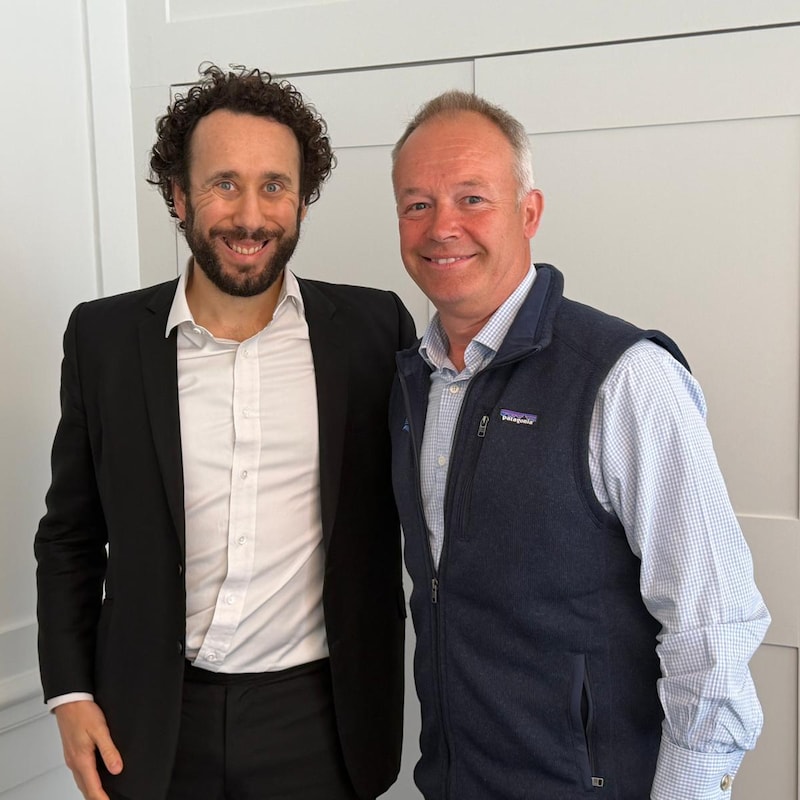
Three decades on from joining a graduate scheme during one of the deepest property recessions in living memory, Marcus Phayre-Mudge, fund manager and partner at Thames River Capital, has watched the listed real estate sector cycle through booms, busts, structural change and a creeping crisis of confidence between boards and shareholders. Speaking to Propcast host Andrew Teacher, the long-serving manager of TR Property Investment Trust delivers an unvarnished assessment of governance, manager-investor alignment, communications and the persistent question of scale that continues to challenge the UK market.
Phayre-Mudge begins by setting out a framework he still uses to explain the two distinct ways property cycles inflict damage. “There are two diseases for real estate,” he said. “One is a much more short, sharp shock, a bit like being punched in a pub. It hurts like hell, but it’s over quite quickly. That’s when you get a very dramatic change in the cost or availability of capital, which is what we saw in the GFC and more recently in 2021 with the dramatic change in the cost of money.”
The second, he warns, is more pernicious. “The other disease, which is actually much more insidious, more of a long COVID if you like, is the consequence of a long period of overdevelopment.” In periods like this, landlords across entire sectors become price-takers, dealing with tenants who know that competition to lease space places enormous downward pressure on rents.
His own entry into fund management came via a deliberate pivot away from surveying. Recalling a conversation with his boss at Knight Frank & Rutley over funding for an accounting night course, he laughed at the negotiation. “Marcus, if I fund this and you get the qualification, you’ll leave. I said: well, if you don’t fund it, I’ll also leave.”
The qualification opened the door to Henderson, predecessor to Janus Henderson, where alongside veteran fund manager Chris Turner he looked after the private allocation of TR Property Trust, then a smaller vehicle with exposure across both listed and private real estate. Later, in 1999, he assumed control of the listed property equity sleeves of two small Henderson diversified equity funds, each capitalised at between £20 million and £30 million, marking the start of his career in the public markets.
A move to Thames River Capital (TRC) in 2004 with mentor Chris Turner remains a moment Phayre-Mudge recalls fondly. “We told the founders of Thames River, Charlie Porter and Johnny Hughes-Morgan, that the only reason we’d really moved was because we didn’t have to change the name, which was entirely fortuitous.”
A new hybrid fund, blending equities with physical property, launched in 2005 and remains a source of pride. “That fund is still alive and strong and has never closed to redemptions,” he said, a particularly impressive feat given the recent difficulties faced by PAIFs in the UK as well as some of America’s largest real estate fund managers.
The Global Financial Crisis tested the model and, by his own account, came close to derailing it. “Whether by good judgment or good luck, probably a bit of both, we moved to 20% cash in both funds the quarter before Lehman went down. That’s why we survived.”
But he is quick to acknowledge the asymmetry that defines life in fund management. “If you’re a fund manager and you move to 20% cash and you’re wrong, you’ll massively underperform your benchmarks. If you’re right, your clients are still losing money, just considerably less than if they’d been fully invested.”
Among the more provocative observations of his career has been how the rise of passive capital has hollowed out the dialogue between boards and shareholders. “Around 20 years ago, I only ever engaged with the C-suite and had virtually no engagement with boards. That has changed a lot. We’ve had to feed back views to boards behind the scenes, partly because so much capital has moved passive that boards are living in something of a vacuum. They get feedback through formal channels via brokers and bankers, but you hear what you want to hear through those channels.”
That conviction underpins his views on a generation of CEOs and the quality of governance they preside over. He singled out the rise of finance directors moving into the top seat, an evolution he regards with mixed feelings. “There’s always the exception that proves the rule, and one must call out David Sleath for what he’s done at Segro. He’s been there a long time now and is a good example of a CFO who became CEO.”
But, he added, the picture in smaller companies is different. “In the smaller and mid-cap space, I’d say you absolutely need these businesses to be run by people with a property background and a property outlook.”
Alignment between management and shareholders is the thread that runs through much of his commentary. He cited Big Yellow as the gold standard. “The best example of all is Nick Vetch and Jimmy Gibson at Big Yellow. Obviously Jimmy is now retiring, but Nick founded the business and remains executive chair. You know you’re in safe hands because there is alignment.”
LondonMetric’s Andrew Jones and Shaftesbury Capital’s Ian Hawksworth drew similar praise as executives capable both of articulating a strategy and demonstrating meaningful skin in the game.
The era of zero interest rates, he argued, produced a swathe of externally managed vehicles that have since had to confront the consequences of weak structures. “Some very smart people, smart possibly at creating structures rather than necessarily skilled at spending other people’s money, launched a full range of externally managed vehicles.”
On notice periods, his message is unambiguous. “A one-year notice period should be standard. I don’t speak with a forked tongue here. I’ve had a rolling one-year notice period on TR Property since I started in 1997. You’re always 12 months away from the chop, but if you do a good job the board will back you. You can’t have notice periods that are essentially just poison pills.”
He also points to the internalisation of Supermarket Income REIT by Atrato Partners as an example of improved manager-shareholder alignment.
Life Science REIT drew a particularly sharp post-mortem. “I think the creator of Life Science REIT is talented at spotting a business opportunity and market timing,” he said. “Unbeknownst to him, the high noon moment turned out to be the IPO. But the capital had been raised, (was quickly spent on an ecletic mix of standing assets and development opportunities) and the value destruction was borne by shareholders not the manager”
Phayre-Mudge argues that had management been more closely aligned with shareholders, the outcome might have been materially different. The point carries added weight as the sector begins to recover. UK leasing activity across London, Oxford and Cambridge accelerated by 6% year on year in Q1 2026, with Cambridge alone accounting for more than 166,000 sq ft of take-up. That momentum sits within a broader structural story, with the Oxford-Cambridge Supercluster Board and Public First estimating the corridor could deliver £78 billion in additional gross value added if growth accelerates, underpinned by 3,000 knowledge-intensive firms employing 152,000 people and generating £45 billion in annual turnover across the arc.
On the UK majors, Phayre-Mudge is sanguine about Simon Carter’s departure from British Land. “Does it mean there’s a problem inside British Land? Absolutely not. Their campuses, and Broadgate in particular, will continue to thrive. Their retail warehouse portfolio is very good, if fully valued, which is contributing to the share price’s 35% discount.”
Canada Water, however, appears to him more burden than opportunity. “Perhaps a bridge too far, even for a balance sheet the size of British Land’s.”
His critique extended squarely to City Hall. “Unfortunately it’s taken a long time for the Mayor of London to wake up to the fact that he has essentially destroyed large-scale residential development through unrealistic affordable housing requirements. You can’t solve the problem by ensuring that no developer can make any money. The developer will simply wait for a change in government.”
Landsec’s foray into residential drew similarly direct treatment. “Of all the sectors Landsec could have chosen, residential is the hardest to make stack without prior knowledge of that market. The single reason the wider market didn’t like that strategic shift is because it simply couldn’t explain how it would be in any way earnings accretive.”
He sees a wider strategic failure among the UK majors. “Tritax Big Box barely existed 15 years ago. Landsec and British Land could easily have reduced their shopping centre exposure and moved into logistics. But hindsight is a beautiful thing.”
Grainger was treated more sympathetically. “Helen Gordon has done a good job over the years repositioning Grainger, fixing the balance sheet and giving it a clear strategy,” he said, while warning that political risk continues to weigh on the sector. ‘However the earnings yield remains too modest for many REIT investors’.
The US multifamily market, by contrast, offers what he sees as a clearer model. “What you’re selling to the investor is something eminently secure, with genuine index linkage, run with efficiencies that can only be driven by scale.”
Few episodes attracted sharper criticism than Unite’s pursuit of Empiric. “Our counter-argument was straightforward: if you’re an undergrad you want to be in a building with hundreds of other people, facilities, a bar. Postgrads aren’t getting out of the PRS for purpose-built student housing.”
When a profit warning followed within days of the takeover announcement, he was withering. “The whole thing was a catalogue of disaster. Whether it’s reality, communications or both, this is the price you pay for being in the public market. Shareholders say: I no longer trust you. And trust is at the heart of all of this.”
Hammerson, by contrast, has earned its way back into his portfolio. “The new CEO has been sensible in what he’s said so far,” he noted, while flagging Brent Cross as a genuine opportunity and questioning the retention of Terrasses du Port. “We are back owning Hammerson shares after a period away.”
The conversation closed on the structural challenge that has dogged the sector since the REIT regime was introduced in January 2007: scale, and the obsession with net asset value that constrains it.
“We’ve had some dark days where we described NAV as standing for Not Actual Value,” he said. “You’ve got to go to the US model, which is earnings-based.”
The logic, he believes, is straightforward. “When the underlying market is weak, REITs are reflecting that by trading at large discounts. Their boards won’t allow them to raise capital below NAV, so they’re hamstrung. But that’s exactly the moment when you should be raising money, and that’s precisely what happens in the US. That’s how you grow these companies.”
Consolidation, he added, is now a matter of necessity rather than choice. “The wealth managers who own these businesses have themselves consolidated enormously. There simply is no place for a sub-£500 million market cap business in that world.”
LondonMetric and Tritax Big Box, he argues, demonstrate what is possible. “We encourage companies to raise capital to make accretive acquisitions and we are far less sensitive about whether the price is above or below a figure pencilled in by one of four major valuation firms.”
Asked for his closing advice to listed CEOs, Phayre-Mudge returned to first principles. “Show some respect to the owners of the business. If you think you’re being smart enough to hoodwink people, you will be found out. Building and maintaining trust is sacrosanct and you will be hugely rewarded for it. Because for all of these people, it is a very lucrative environment. And in many respects, a very safe one.”
The day job, he reminded listeners, is rarely complicated in concept, however demanding in execution. “Do not obsess about short-term performance, that’s your shareholders’ job. That’s my job. Your job is to get on and do the day job: spell out what you’re going to do, be clear, be honest when things go wrong. It’s all very straightforward. It’s what we all tell our children. Work hard, do your best.”