Shownotes
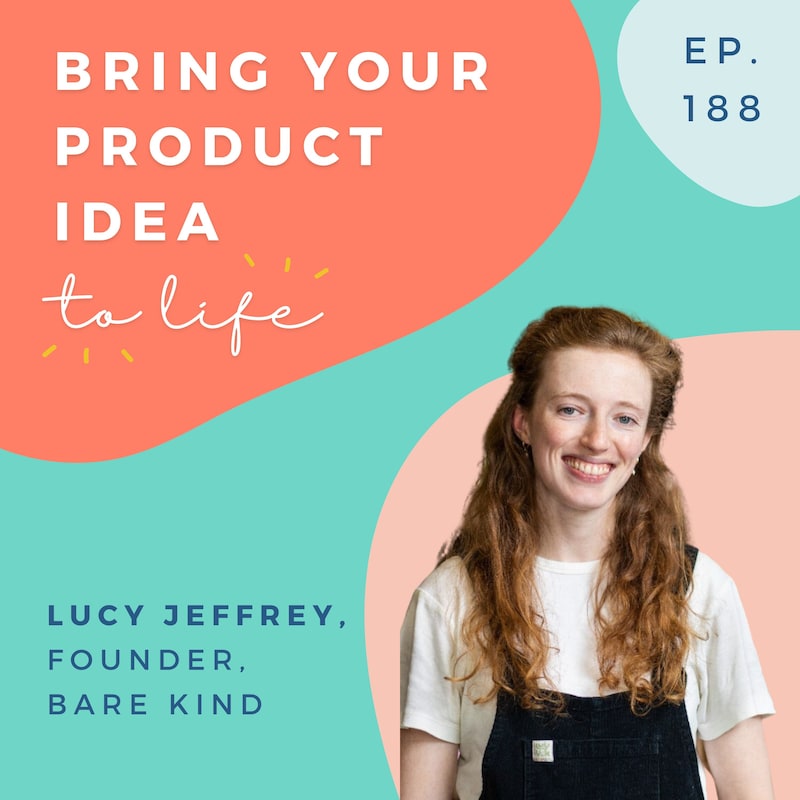
Today on the podcast, I'm speaking to Lucy Jeffrey, the founder of Bare Kind, a bamboo sock company that saves endangered animals by donating 10% of the profits to the animal on the sock. She's also the co-founder of Candid Founders, a Youtube channel that shares the highs and lows of growing Bare Kind so other business owners can learn from their journey.
Lucy shares how she manages the logistics of partnering with over 25 charities, and how her willingness to follow her gut and take a risk led her to quit her job in the pandemic, set up Bare Kind, and enjoy rapid growth.
Lucy shares mindset tips for those tricky cold outreach calls, and why it is so important to share the lowlights of business, as well as the highlights.
It’s a really inspiring episode that will lift your spirits, and encourage you to keep going.
- An introduction to herself and her business (01:36)
- What inspired her to start Bare Kind (02:11)
- Designing her products (04:51)
- Partnering with charities and designing the right sock for them (05:51)
- Managing the logistics of donating income from the sock sales to charities (08:46)
- Find manufacturers for socks (10:07)
- The benefits of having been in person to visit her manufacturers in Turkey (11:51)
- Quitting her job and setting up Bare Kind in lockdown (15:07)
- The power of taking risks and following gut instinct (16:45)
- Transitioning from being a solopreneur to having a team (19:12)
- Selling via wholesale and using Faire (22:41)
- How to get out of your own way and do cold outreach (24:32)
- Systemizing wholesale (26:51)
- How her Youtube channel Candid Founders came about (28:01)
- Why it is important to share the lowlights as well as the highlights of business (31:11)
- Her number one piece of advice for product creators (33:34)
The Bring Your Product Idea to Life Podcast - Best Business Podcast Award, Independent Podcast Awards 2023
USEFUL RESOURCES:
LET’S CONNECT
Join my free Facebook group for product makers and creators
Buy My Book: Bring Your Product Idea To Life
If you enjoy this podcast, and you’d like to leave a tip, you can do so here: https://bring-your-product-idea.captivate.fm/support
Mentioned in this episode:
FREE call for Amazon Sellers
I’m running a free call on 26 Feb for anyone selling on Amazon (or planning to) who’d like some practical support and a chance to talk things through together. It’ll be very relaxed - a mix of updates from me on upcoming Amazon policy changes, Q&A and discussion about what’s working and what’s not right now. It’s fine to come along and chat, or to just sit back and listen. I’d love to see you there if you’re able to join.
Amazon Sellers Support & Connect
FREE call for Amazon Sellers
I’m running a free call on 26 Feb for anyone selling on Amazon (or planning to) who’d like some practical support and a chance to talk things through together. It’ll be very relaxed - a mix of updates from me on upcoming Amazon policy changes, Q&A and discussion about what’s working and what’s not right now. It’s fine to come along and chat, or to just sit back and listen. I’d love to see you there if you’re able to join.
Transcripts
Welcome to the Bring Your Product Idea to Life podcast.
2
:This is the podcast for you if
you're getting started selling
3
:products, or if you'd like to
create your own product to sell.
4
:I'm Vicki Weinberg, a product
creation coach and Amazon expert.
5
:Every week I share friendly, practical
advice, as well as inspirational
6
:stories from small businesses.
7
:Let's get started.
8
:Today on the podcast, I'm speaking to
Lucy Jeffrey, the founder of Bare Kind,
9
:a band based sock company that saves
endangered animals by donating 10 percent
10
:of the profits to the animal on the sock.
11
:Lucy is also the co founder of
Candid Founders, a YouTube channel
12
:that shares the highs and lows of
growing Bare Kind so other business
13
:owners can learn from their journey.
14
:Um, as you might've guessed just in
that introduction, Lucy is really
15
:candid about every aspect of starting,
growing, and running her business.
16
:This was a really great conversation.
17
:She was really open to all the
questions I had to ask, including,
18
:you know, the big logistical challenge
of partnering with so many charities.
19
:Um, I believe Lucy said it's over 25
at the moment and perhaps even more.
20
:Um, so as you can imagine,
that's a big task in itself.
21
:It was really fascinating to talk to Lucy
about how she went from having, um, an
22
:idea for a company to quitting her job to
now running a business, employing staff.
23
:Um, yeah, there's, she's
been on quite a journey and
24
:there's lots to share with you.
25
:So I really hope you
enjoyed this conversation.
26
:So hi, Lucy.
27
:Thank you so much for being here.
28
:Lucy Jeffrey: Hi, Vicki.
29
:Oh, thanks for having me.
30
:Vicki Weinberg: So can we start with
you please give an introduction to
31
:yourself, your business and what you sell?
32
:Lucy Jeffrey: Yeah, absolutely.
33
:So hi, my name is Lucy Jeffrey.
34
:I'm the founder of a company called
Bare Kind, started the brand five
35
:years ago, and we sell bamboo socks
where 10 percent of the profits are
36
:donated to the animal on the sock.
37
:So the whole premise is you can wear these
amazing, jazzy, cute animal socks, but
38
:know that you're doing some good as well.
39
:So we're partnered with nearly
30 animal conservation and rescue
40
:charities around the world now.
41
:Um, and we just really believe that you
can, you know, do business for good.
42
:Vicki Weinberg: That's amazing.
43
:And I've got so many follow on
questions I want to ask you, Lucy.
44
:Um, but before I go down any rabbit
holes, I'm going to start right
45
:at the beginning and ask what
inspired you to start Bare Kind?
46
:Lucy Jeffrey: So I used
to work for a bank.
47
:Um, so I've got no background in this
whatsoever, but it was an okay job.
48
:I enjoyed it.
49
:It was fine, but it wasn't really
lighting any fires underneath me.
50
:So I just wanted to do something else
to help the planet in my own little way.
51
:And I actually started the
company with, not with the socks.
52
:It was with other products.
53
:So I started with reusable straws, um,
recycled tote bags, things like that.
54
:I'd say I was just experimenting.
55
:They were mini projects.
56
:I didn't really think
much would come from it.
57
:But I was just kind of enjoying the
process and learning, you know, what
58
:it is to, you know, run a, you know,
a very small business at that point.
59
:And then I came on to the socks.
60
:So I knew I wanted to donate to charity.
61
:I love animals.
62
:I wanted to support animal conservation.
63
:So it started with the
charity model first.
64
:So this 10 percent donation,
I then thought, okay, what
65
:product shall I start with?
66
:And I just landed on socks.
67
:Started with a pair of turtle socks.
68
:So it was literally just
one design to start with.
69
:That was 2019 and my customers loved them.
70
:I'm like, what's coming next?
71
:I want orangutans.
72
:And so we've just kind of
released socks, uh, since then.
73
:Um, it wasn't until the end of 2020
when I did actually quit my job.
74
:Um, to pursue this full time.
75
:So we're nearly on three years
full time on the business now.
76
:And yeah, we've got, we've
got over 50 animals now.
77
:Like it just kind of happened.
78
:I now own a sock company, but
it was never really the plan.
79
:I was just experimenting and went
with the flow and now I own a
80
:sock company, but yeah, I love it.
81
:Vicki Weinberg: That's so interesting.
82
:Thank you.
83
:And I had no idea that that was never
the, you know, that was never the plan.
84
:It's really interesting that you started
out with other products, just seeing how
85
:it went and where you've ended up now.
86
:Lucy Jeffrey: Yeah.
87
:I don't think many people have that one
light bulb moment where they're like,
88
:bam, this is my best selling hero product.
89
:Like it didn't happen that way.
90
:Like I was just playing around
and then I started moving in the
91
:direction that I saw was happening.
92
:So, you know, I gave up on the
straws because they were everywhere.
93
:Like there was, there wasn't something
super unique about them in the end.
94
:Um, you could buy them in Asda.
95
:So I was like, I don't
think this has legs.
96
:Uh, but the socks part of
it, I think is very unique.
97
:Um, you know, we do all
the designs ourself.
98
:We're very targeted with, you know, how
specific we're being on the designs.
99
:They're very, very curated.
100
:Um, and we're not just donating
to say one blanket animal charity.
101
:Um, we're being super, super targeted
with the animal and the charity.
102
:So if it's an orangutan sock, it's
an orangutan charity and so on.
103
:So that actually creates a lot of
work in itself, but it does mean
104
:we are quite unique in that way.
105
:Vicki Weinberg: Absolutely.
106
:And are the socks the first
products that you designed yourself?
107
:Were the other products ones
that you were sort of buying
108
:in, if, if you see what I mean?
109
:Lucy Jeffrey: Yeah, I guess so.
110
:So the straws were, yeah, they
were just plain to start with.
111
:Then I started putting my logo on it.
112
:So nothing fancy there.
113
:The bags and the t shirts, um, I did
get designed, very basic designs.
114
:I mean, some of the t shirts again
were literally just my logo or we
115
:had like a few turtles on them,
uh, but nothing, nothing too fancy.
116
:I just, I just paid a freelancer to do
those, but the socks, I do see the socks
117
:as the first thing, which we were like
highly, like, yeah, detailed on what we
118
:wanted from the design and the colours.
119
:Um, and you know, building that range and
now it's turned into its own industry.
120
:It's actually quite a
difficult part of the business.
121
:It's very exciting.
122
:Like what should we do next and what
colours and, you know, but it can be
123
:overwhelming, um, because when I first
started, it was a case of, okay, I don't
124
:have tigers, so I will do a tiger sock.
125
:We don't have many green socks, so
let's throw in some more green colours.
126
:But now we've got quite a big range.
127
:We have to be more like considered
about which designs we're doing next and
128
:which charities you want to work with.
129
:And that's, that's, that's a massive part
of the business that's really grown legs.
130
:Vicki Weinberg: That makes sense.
131
:I didn't think about that as
well as you're designing what
132
:the sock actually looks like.
133
:You're also having to
think who you partner with.
134
:That's yeah.
135
:So that is that other angle.
136
:Which, which way round
do you do that, Lucy?
137
:Do you work out who you want
to partner with and then design
138
:the sock or is it the other way?
139
:Lucy Jeffrey: Bit of both.
140
:Um, so it used to be that I
would fine, pick an animal.
141
:I'd say I want to do this animal next.
142
:We'd start working on the design and I
would in the, in the process of that,
143
:I would start reaching out to animal
charities that I'd like to work with.
144
:Now we've got bigger and more well
known charities tend to come to
145
:us first now, which is quite nice.
146
:So we'll have someone come in
and say, hey, I found you online.
147
:We support butterfly conservation
and we'd love to work with you.
148
:So then we say we might even
have something in the pipeline.
149
:This is the thing we had when the
butterflies came to me, we had some
150
:butterfly socks being worked on.
151
:I just hadn't got around
to the charity part of it.
152
:So I was like, great,
yeah, let's work together.
153
:I've got a sock coming.
154
:Um, but we try, because it's actually
quite a hard part of the business.
155
:It's actually hard to get in front
of the charities at the right point.
156
:If they're, they tend to be
very overworked teams that
157
:are relying on volunteers.
158
:So, um, it can be quite hard to kind of
get their attention and get their time.
159
:So if you've got a charity that's willing
to work with us and knows us already, that
160
:is definitely the easiest route for us.
161
:Vicki Weinberg: That makes a lot of sense.
162
:And I guess, do they, do the
charities tend to have much
163
:input into the design process?
164
:Lucy Jeffrey: No, we, we tell them to send
us, if they're involved from the start,
165
:we'll tell them to send us like exact
photos of the animals that they work with.
166
:So we'll try and be as,
um, realistic as possible.
167
:Um, a great example of that is
when we've started working on our
168
:otter sock, um, it's wild, um, I
think it's wild otter trust UK.
169
:Um, and they were very keen on the,
at the start to say it is a European
170
:otter, not the American kind, because
the American one is the one with the
171
:kind of cream, fluffy face that's
used in a lot of advertising and
172
:on garments and things like that.
173
:They are very cute.
174
:Um, so they were very specific
that, you know, they don't support
175
:that species, that's American.
176
:So, you know, make sure it
is specific to European.
177
:So they are from like a, being a
technical animal expert point of
178
:view, but for the most part, we just
crack on with the design and you
179
:know, that, that's all part of it.
180
:They don't, they're not involved
with, but we're looking to work
181
:with charities in a more bespoke way
where we co brand with them because
182
:at the moment they're just fully,
it just says Bare Kind on the socks.
183
:There are socks we say 10 percent
donated to charity, but we don't
184
:put the charity on the sock.
185
:That's all on our website.
186
:So if we needed to change
anything, we can do that.
187
:And it's not just like on the product,
um, but looking to work with some
188
:charities where we actually build
a range that's kind of co branded
189
:with the charity itself as well.
190
:Vicki Weinberg: That makes sense.
191
:That's really nice as well.
192
:And is it, um, I'm guessing
the answers, yes, but it'd be
193
:really good to have some input.
194
:So is it a logistically a challenge
to manage, making sure that the
195
:donations go to the charities?
196
:I know it sounds silly, but you've
mentioned that you, I mean, I've
197
:seen you have a huge range of stocks.
198
:You work with 30 charities.
199
:How does that.
200
:Lucy Jeffrey: Yeah, it was very difficult
because to start with the way I've set
201
:it up was I just signed the contract
at time of speaking to the charity.
202
:So we had donation days because
I donate annually and we had them
203
:sporadically spread through the year.
204
:And at first I was like, okay, good.
205
:This is good for cashflow
because it means I'm not having
206
:a massive lump sum coming out.
207
:But then it became logistically really
hard to carry on with because we're
208
:trying, we're having to manually work out
the donations at each different point.
209
:So now we've moved all
of them to once a year.
210
:So we'll finish the calendar year.
211
:It means that we're kind of
doing our accounts anyway.
212
:Um, and then we'll go to them
in like Jan, Feb to say, okay,
213
:we've done the 2022 donations.
214
:This is what's coming to you.
215
:And it is a big job.
216
:Um, my partner has recently joined me.
217
:He quit his job at the start of the year.
218
:He's been a massive help because
he's a whiz on spreadsheets.
219
:So that part has been because we do just
have to rely on Excel and like pulling
220
:all the information, uh, that way.
221
:Vicki Weinberg: Yeah,
that sounds really hard.
222
:I'm glad you've got someone who knows.
223
:Yeah.
224
:Obvious about that.
225
:. So about, so let's go back to when
you started creating your socks.
226
:Um, what I'd love to know is because
your socks are, obviously, they're
227
:bamboo, they're really high quality.
228
:How did you go about getting the
socks actually produced, because I
229
:mean, a sock isn't something that
you're buying and sticking a logo
230
:on, you know, it's something that I
presume, I don't know how, what the
231
:terminology is, darned maybe, but they're
certainly manufactured bespoke for you.
232
:How did you go about finding
someone to work with?
233
:Because I'm, I know that with, you
know, the values that your company
234
:has, I'm sure you were, there was
a lot of thought that went into
235
:finding the right facility as well.
236
:Lucy Jeffrey: Yeah.
237
:So to start with, it was just a case
of going to Google and having a look,
238
:um, at what manufacturers I could find.
239
:They're quite, uh, they're not
very upfront with anything like
240
:pricing, MOQs or anything like that.
241
:You do have to kind of get in
touch with quite a few to start
242
:understanding how they work.
243
:So it's a lot of emailing, um, and I
found a few good partners in Turkey.
244
:Turkey's a very popular
place for sock manufacturing.
245
:Um.
246
:Yeah.
247
:outside of China.
248
:And I wasn't at the time really
sure if I wanted to manufacture in
249
:China, but I found a good partner in
Turkey who we are still working with.
250
:And the reason I went with them is yes,
one, I could see their certificates,
251
:their SEDEX audited, uh, things like that.
252
:So I could, there was
transparent about that.
253
:They were very good at communication.
254
:Like I was, you know, hearing
back from them quite quickly.
255
:Um, they were also willing
to lower their MOQs for me.
256
:I kind of explained the situation,
my like vision for the company.
257
:They liked the animal donation thing.
258
:So lowered the MOQ, this
minimum order quantity.
259
:Um, so I didn't have to order
thousands to start with.
260
:Um, and I've now like rewarded that
because now we're ordering hundreds of
261
:thousands from them of pairs of socks.
262
:So it's kind of like they've,
we've been able to grow with them.
263
:Um, what I would say though, is we
recently went to visit them in Turkey.
264
:So, um, a few weeks ago, we went
to visit them, um, as well as other
265
:manufacturers, because we're looking
at kind of spreading the load a bit.
266
:Having one, more than one
manufacturer, reducing our risk a bit.
267
:Um, going to see them was
the best thing we ever did.
268
:Like, it was so interesting.
269
:We learned so much.
270
:I think the relationship
building is so important.
271
:And I think especially if you're looking
for new manufacturers, like just being
272
:there in person shows how serious you are.
273
:Like one of the factories we were at,
they were working with massive brands.
274
:Um, I probably, I probably can't share,
but massive brand UK worldwide brands.
275
:And they were being manufactured
whilst we were there.
276
:And I was like, oh, we're just
like a tiny UK based sock brand,
277
:but they didn't seem to care.
278
:They were just happy that
we were there speaking about
279
:business and placing orders.
280
:So I think it's.
281
:Going to visit them was
definitely the best thing we did.
282
:We should have done it sooner.
283
:Vicki Weinberg: It is
hard though, isn't it?
284
:And obviously when you started out
travel was not, you know, ideal.
285
:Lucy Jeffrey: No, we wouldn't
have been able to like, I
286
:quit my job in 2020, right?
287
:So travel wasn't, that was,
that was, it is what it is.
288
:Um, but possibly should have gone
last year, but I think we'll try
289
:and now we know how important it is
to visit it, we'll make sure that
290
:that's kind of part of the process
to finding new manufacturers.
291
:Vicki Weinberg: And as you say,
relationships are so important and
292
:I like the fact that you, you know,
you're talking about, you explained
293
:to them about your vision, about how
you partner with the charities and
294
:that clearly made a difference to them
deciding to lower their MOQs for you.
295
:Um, and I think that being open with,
you know, with people you want to work
296
:with, trying to build a relationship
rather than it being purely transactional
297
:really does make a difference.
298
:Lucy Jeffrey: Yeah, a hundred percent.
299
:It's way easier to explain
where you're coming from.
300
:I think, especially because
their English is pretty good,
301
:but it is their second language.
302
:So I think it's so much easier to
convey what you're trying to go for.
303
:So to give you a good example, um, we
haven't had this yet, but we've had to
304
:had like warnings that this can happen
specifically in China, that when you're
305
:trying to push on price to get price down,
they will be like, okay, that's fine.
306
:Lower the price, but they will
then lower quality somewhere else
307
:in the supply chain without really
like speaking to you about it.
308
:Whereas we're trying to explain to them
that price, we obviously want a good
309
:price, but we don't want a price so
low that it compromises the product.
310
:Whereas I think other companies
are like, well, just the cheapest
311
:possible price, because you know,
there are cheap socks out there.
312
:Um, and I think they don't
necessarily understand that as well.
313
:Whereas I feel like in person,
it's so much easier to explain our
314
:values and say, look, that's, we
just, we want a good price, but we
315
:don't want to compromise quality.
316
:We don't want you to give us a
price that's so unsustainable
317
:for your business that you feel
like you have to cut corners.
318
:Um, and it's just things like that, that
it's really hard to convey over email.
319
:Vicki Weinberg: It is, but it's
so important that you say to have
320
:those conversations because I've
heard of similar things as well.
321
:Um, and it, and it really is hard
as well when you're doing everything
322
:remotely and there may be shipping socks.
323
:I mean, I know that.
324
:You know, for lots of us, this
is how we have to work, but it is
325
:hard when it's all email and you're
getting things sent in the post and,
326
:you know, having to just, there's
lots of back and forth, isn't there?
327
:There's nothing like being able
to go and sit down with somebody.
328
:Lucy Jeffrey: Yeah, absolutely.
329
:And that takes time, the back and forth.
330
:It's very time consuming.
331
:Vicki Weinberg: So you mentioned,
um, quitting your job earlier.
332
:Um, am I right in thinking that
that was right in the middle of the
333
:pandemic when you decided to do that?
334
:Lucy Jeffrey: Yeah, it was
the end of end of:
335
:So we were just going into the
third lock, that Christmas lockdown
336
:that everyone hated because we were
told we could go home for Christmas
337
:and then they changed their mind.
338
:So, um, and I remember it very
well because it was my birthday.
339
:So I had to have a lockdown birthday
and then I was like, you know what?
340
:I'm going to quit.
341
:And I literally did the next day.
342
:Like it was, it'd probably been in
the pipeline for a while, so it wasn't
343
:like a super rash decision, but it
was literally that day I was like,
344
:I don't want to go back to work.
345
:And so my partner was like, you know what?
346
:Just roll the dice.
347
:Let's do this.
348
:And I quit the next day and that was it.
349
:Vicki Weinberg: That's really brave.
350
:Lucy Jeffrey: Well, I did, my
partner that was super supportive.
351
:He was like, roll the dice.
352
:Like he was, he worked for the same
bank, um, a bit higher up than me.
353
:Um, so he was like, I've got us,
I've got a sustainable, like income.
354
:So just, yeah, take
the risk, go and do it.
355
:And now, he's now quit and joined me.
356
:So, um, we didn't think
it would happen this fast.
357
:Like we kind of thought, oh,
maybe one day that we'll run the
358
:business together, but didn't think
it would be three years later.
359
:I thought it'd be much
further into the distance.
360
:Vicki Weinberg: That's amazing.
361
:And it's amazing that he
was so supportive as well.
362
:And were you like in the back.
363
:You said you'd been thinking about
possibly quitting your job and
364
:going in full time for a while.
365
:Were there sort of milestones you
were looking for or in your mind, was
366
:there, were you like, oh, I need to
be at this stage before I do that.
367
:Was there anything like that
you were thinking around?
368
:Lucy Jeffrey: No, I honestly cannot.
369
:I did not think about it too much.
370
:I just, I'm quite an impulsive person.
371
:I'm also very, follow my gut instinct.
372
:I guess it makes me quite a good
entrepreneur because I'll just go
373
:kind of headfirst into something.
374
:Um, and so far it's.
375
:It's done well for me, but it was, I guess
the path was, I actually shut the business
376
:down during the main parts of COVID.
377
:So like March onwards, because
my mum was doing my shipping.
378
:So all the stock was at my parents house.
379
:And I was like, you can't leave the house.
380
:So don't, that's just, I'm going
to just shut the website down.
381
:Um, then August that year.
382
:I took out a bounce back loan.
383
:So that was the kind of
government scheme that came out.
384
:And I was like, why not?
385
:It's risk free.
386
:Like if I don't use the money, I'll
just pay it back and not pay the
387
:interest, not pay any interest.
388
:So I took out a small loan.
389
:Honestly, it was like 3000 pounds.
390
:It wasn't too much.
391
:And I had quite a bit of stock.
392
:So actually the premise was, I
was like, let me, I just need to
393
:clear through the stock and then
I'll decide what's going to happen.
394
:Maybe I'll just.
395
:I honestly thought maybe I'll
just close the business down.
396
:I don't know what I want to do with it.
397
:I put all that money, 3,
000 onto Facebook ads.
398
:I was like, here we go.
399
:Let's just see what happens.
400
:And I sold out like by November and
I was like, huh, that felt good.
401
:Maybe I'm onto something.
402
:So I just quit my job.
403
:So it does sound very rash when you
like look back on it, but I had been
404
:like looking at other jobs and other
stuff, like I'd been considering like
405
:where my next move would be, so to
me, it was a case of let me roll the
406
:dice now, see how the business goes.
407
:And if it doesn't work, I'll go find
another job, but I'm still doing it.
408
:I'm still self employed.
409
:So, uh, it's going well so far.
410
:Vicki Weinberg: I mean, it kind of seems
rationally, but then also, as you say,
411
:you sold so well during those three,
two or three months that I guess you had
412
:the data, like you must've been able to
see them, that it was a viable business.
413
:People like your products, they
were continuing to buy them.
414
:So that must've been really reassuring.
415
:Lucy Jeffrey: Yeah, absolutely.
416
:Like we had, we definitely
had the sales for it.
417
:Like looking back.
418
:So I actually know that that October,
which is when we first switched
419
:the ads on, we took 5, 000 pounds.
420
:So not like crazy money, but enough
for me to think like I've just sold
421
:5, 000 pounds worth of products.
422
:Like there is something here.
423
:I think we did about the same in November.
424
:Definitely would have done
more, but we sold out.
425
:Um, and then to give context
last year, last November, I
426
:think we did 150, 000 pounds.
427
:So like that's, that's the kind
of different, like difference
428
:in growth that we've done.
429
:Um, and that's, yeah,
we are very seasonal.
430
:So Christmas is like a
huge time of year for us.
431
:Um, but yeah, we've, yeah,
we've had some massive growth
432
:since that, that first October.
433
:Vicki Weinberg: Awesome.
434
:And I've got, and obviously you've
grown in other ways as well because
435
:your range has expanded a bit.
436
:I know you've got a team behind you now.
437
:Do you want to talk a little bit about
that and about some of the ways in which
438
:you've grown in the last few years?
439
:Lucy Jeffrey: Yeah, absolutely.
440
:So that, that first year where
I was full time in the business,
441
:I hired a couple of people.
442
:And what I would say is I haven't hired
anyone directly into the business without
443
:some kind of supporting grant or scheme.
444
:So my first hire was through the
government Kickstarter scheme.
445
:So that was the thing that was
going on during COVID to help
446
:people that were out of work.
447
:Um, so the government paid for her for six
months, then I bought her on full time.
448
:Um, and then I did some like
university internship programmes.
449
:Like a few where the university paid
for them to be on board for eight weeks.
450
:Again, I did three of those
and I've kept them all on.
451
:Um, people have like moved around since
I've had two leavers because they've
452
:gone onto either grad schemes or back
to university, but, um, I've, yeah,
453
:I've not hired someone full time into
the business without having help first.
454
:And it's almost like a
paid probation period.
455
:So it's fairly risk free to
us, for us, um, as a business.
456
:Um, but that's been
really, really helpful.
457
:So I think I've had slightly
inorganic growth in the team because
458
:of that, because I wouldn't have
been able to afford to grow the team
459
:in that way without those grants.
460
:Vicki Weinberg: That's really interesting.
461
:And thank you for sharing that because
I'm not sure that people know that,
462
:that kind of thing is available.
463
:Um, because I know lots of businesses
get to the point where it would be
464
:really handy to have another team member,
but as you say, it is a cost and an
465
:up, well, yeah, it's an upfront cost.
466
:Um, so that's really used,
that's really useful.
467
:So looking at what maybe.
468
:Yeah.
469
:Um, universities or, or the
government are offering at the time.
470
:Sounds like a really sensible approach.
471
:Lucy Jeffrey: Yeah, your local
council, your own university.
472
:So I go back to my university for a
lot of support or a local university.
473
:If you just, if you're in a university
town, contact them, see if they have
474
:any kind of support like that, uh,
local councils, but yeah, there's
475
:loads of schemes out there where you
just, I mean, it's a bit of effort,
476
:but you have to go searching for them.
477
:Vicki Weinberg: I think you've
definitely got a lot of initiative
478
:Lucy, because it sounds like you just
like, yeah, just go out and find things.
479
:Which is, yeah.
480
:Lucy Jeffrey: And then just
grab it, just go for it.
481
:And that's the thing.
482
:Like I've, I don't think too much.
483
:I will make very quick decisions.
484
:So I'll find the scheme or
whatever it is and then be
485
:like, that's a good opportunity.
486
:And then I'll just do it.
487
:So I think we don't flounder too much.
488
:We just make a decision and go.
489
:And that's why I really enjoy working for
myself versus a corporate, because you
490
:can make a decision and then just do it.
491
:So you're really agile.
492
:Whereas in a corporate, I was working
for one of the world's largest banks.
493
:Like that thing moves as
slow as a cruise ship.
494
:Like that's not, you're not
making fast decisions each day.
495
:So that's why I really
enjoy working for myself.
496
:Vicki Weinberg: Yeah.
497
:It sounds like for you, that
probably was quite frustrating.
498
:Lucy Jeffrey: Yeah, I didn't mind, like,
you don't really notice it at the time,
499
:but looking back on it, I've realised
now, like, the absolute difference.
500
:I've recently done, did an exercise
where, um, with my psychologist,
501
:where I'm working out, like, my
values and how I like to live my life.
502
:And one of them we worked out
is agency, which means I like to
503
:have the like autonomy to make a
decision and do it if I want to.
504
:So I don't really like having like
constraints, red tape, that kind of thing.
505
:So it's no wonder that I've like got
frustrated with the corporate world.
506
:Vicki Weinberg: It sounds you're
definitely like, you're definitely
507
:cut out to be an entrepreneur.
508
:Lucy Jeffrey: Yeah, I hope so.
509
:I mean, it's been nearly three years
now and I think I'd struggle to go
510
:back for working for someone else
now, so hopefully I can keep doing it.
511
:Vicki Weinberg: Oh, I don't
see any reason why not.
512
:It sounds like you're
just growing and growing.
513
:And, um, so speaking of that, let's also
talk a bit about the wholesale side of
514
:your business, because that's something
else that I think has grown a bit.
515
:Lucy Jeffrey: Yeah.
516
:So I started just with the website.
517
:So it was just D2C, um, maybe some
marketplaces where I might've been on
518
:the Etsy or something like that, but
didn't dive into wholesale straight away.
519
:So.
520
:In 2021, I had kind of reactive wholesale.
521
:So maybe up to 20 people came to me
to say, we'd love to stock your socks.
522
:And I had no idea how to do that.
523
:So I just made up a price and a
process and just went from there.
524
:Um, but then since the kind of birth of
these marketplaces that have come out,
525
:Faire, Ankorstore, um, we've really
seen growth through those platforms.
526
:So we signed up for Faire.
527
:In October, 2021, put all my own customers
onto it because it's 0 percent commission
528
:when you put your own customers into
the platform, but then I didn't really
529
:start really seeing the potential
of the platform until February 22.
530
:And we started looking at it and
thinking, okay, they actually
531
:offer lots of good deals.
532
:They had credit at the time.
533
:They offered that payment terms,
free shipping, things like that.
534
:So we started really pumping volume
through that all our own lead
535
:generation, loads of cold email outreach.
536
:And we've gone from those 20 to, I
think up to 800 retailers total now.
537
:Um, yeah, over, over the course
of like the last couple of years.
538
:So there'll be some of those that have
kind of stopped us and then they're not.
539
:Um, so that's not a consistent 800, but
we've got some massive wholesale customers
540
:now that order quite a lot from us.
541
:Um, so we've had some
really good growth there.
542
:Vicki Weinberg: That's amazing.
543
:And it sounds like, again, you've been
super proactive there with like getting
544
:people on to Faire, doing cold outreach,
because I know that a lot of that is
545
:the things that people don't want to do.
546
:And I wonder if you're talking about
sort of doing things without, I
547
:don't want to say about thinking,
but sort of just getting things done.
548
:I think that sort of mentality really
helps with things like cold outreach
549
:because it's so easy to overthink
it and think, well, this person,
550
:why would they want to stock me?
551
:This person won't want to hear from me.
552
:I think there's a lot to be said for just
sending the email or picking up the phone.
553
:And yeah, you've obviously had
massive success from doing that.
554
:Lucy Jeffrey: Yeah, absolutely.
555
:I think it's very easy to get in your
own head and think, they might not be
556
:right for me, but on this, like we've
ended up being stocked in so many random
557
:places that we wouldn't have thought of.
558
:Um, a massive part of our wholesale
customer base is podiatrists.
559
:So people that look after foot health, um,
they like stocking bamboo socks because
560
:they are really good for your feet.
561
:So that was kind of one person came
to me and said, I'm a podiatrist.
562
:Like, have you thought about
stocking in more podiatrists?
563
:Here's a Facebook group that, and
you can sell in the Facebook group.
564
:So I just started in there.
565
:And that's, that's where a lot
of our customers came from.
566
:Um, so we've kind of gone
down into that niche.
567
:So again, it's just being really
open minded and yeah, it's usually
568
:yourself and your own mindset
that's holding yourself back.
569
:Like, don't be scared of cold emailing.
570
:Just embrace the fact that a lot of
the time you won't get any replies, but
571
:then sometimes you might just get an
order, like, and that happens a lot.
572
:We'll just suddenly get an order.
573
:We've been emailing them
over the past few months.
574
:Maybe 10 emails total, we never
hear anything back and then
575
:suddenly they place an order.
576
:It's yeah.
577
:It's a bit of a random one that you're
not, you're not getting much from
578
:back from them until you get the sale.
579
:Vicki Weinberg: Yeah.
580
:That's really interesting.
581
:And I think it's good for people to
hear as well, because I know that when,
582
:especially if you're doing sort of cold
outreach, it can just feel really be
583
:demoralizing to constantly be churning
out emails and not get anything back.
584
:So I think that hopefully
that'd be really, really,
585
:really reassuring for people.
586
:Lucy Jeffrey: Yeah, definitely.
587
:It's, don't expect replies.
588
:This thing you're, you're
speaking to business owners.
589
:They're really busy.
590
:They're not for the most, I mean, I don't
reply to cold emails, um, unless I'm like
591
:super interested and that's very rare.
592
:So, but just know that sometimes
it's ticking over in someone's head.
593
:So you have to be persistent.
594
:Like if you give up after one
email, you won't get anywhere.
595
:So you have to be persistent
with it because they have to, you
596
:know, you just want to be front,
like front of mind for them.
597
:Like.
598
:And it's, it might be that it
gets to Christmas and they go, oh,
599
:that email from five months ago.
600
:Um, you know, okay, now I'm ready.
601
:So it's kind of a timing thing as well.
602
:They're not always going
to be ready to stock you.
603
:Vicki Weinberg: That's really useful.
604
:I really think that's genuinely
useful for people to hear.
605
:And you mentioned at the start when
people started contacting you for
606
:wholesale, you would just almost, you
know, make it up as you were going.
607
:Have your processes changed since then?
608
:I'm assuming they have, but yeah.
609
:Lucy Jeffrey: Yeah.
610
:Yeah, we're much more professional now.
611
:I think it's, and it
makes it easier for us.
612
:Because obviously I was
starting from scratch then.
613
:So I kind of had to sit down and work out
what my price was and my margins and all
614
:of that, and then just go back to them on
the email and say, hey, this is the price.
615
:But now we have, you know, packs and
catalogues and things we send out.
616
:And it's all the way that we've built
it is we've completely systemized it.
617
:So we shouldn't have to think.
618
:So if someone comes to us
and has a question, we should
619
:just have the answer there.
620
:Ready to send.
621
:Um, and that's good because it takes a
bit of kind of the thinking out of it
622
:for you, but also it means if you're
outsourcing it, if you've got a VA or
623
:someone in your team or anyone else that's
doing it for you, it's, it's been passed
624
:on to them and they know the answers
already and it's easy for them to be,
625
:um, working on it without your help.
626
:Vicki Weinberg: makes sense.
627
:Because obviously as you grow and you get
busy, um, you just need things to work
628
:as smoothly and as simply as possible.
629
:Yeah, absolutely.
630
:So I know, uh, thank you by the way Lucy,
for all that you shared with us today.
631
:Um, are we coming to, I've only got
a few more questions, but one thing I
632
:did want to mention is that I know that
as well as, you know, giving up your
633
:time to talk to me here, you also share
a lot about how you're running your
634
:business and, uh, um, the sort of behind
the scenes on your YouTube channel.
635
:So did you just want to
mention that briefly?
636
:Because I do genuinely think
that's something that will
637
:be interesting for people.
638
:Lucy Jeffrey: Yeah.
639
:And it's an interesting one.
640
:It comes off the back of the wholesale
side of it as well, because it started
641
:off because we wanted to talk about Faire.
642
:So the wholesale platform, we were trying
to make more sales, but there was our
643
:blocker to it was people didn't really
know what Faire was or how to use it.
644
:So we started doing tutorials
to say, this is how you sign up.
645
:This is how you get our socks.
646
:And this is, this is why you get
an offer and things like that.
647
:So we were trying to
build trust through video.
648
:Then we realized that people were hitting
our videos quite a lot because they
649
:were searching for Faire and finding us.
650
:So I was kind of like, I feel
like we're onto something here.
651
:So we started doing more tutorials
for the business side of it.
652
:So how to make more sales on
Faire, how to use their email
653
:marketing tool and things like that.
654
:So we became a bit of a.
655
:We found, again, we found our
niche in that little corner of the
656
:internet and it's grown from there.
657
:And now we've since released a
podcast, but we do it on YouTube
658
:and more videos, just honestly
anything to do with the business.
659
:We're very, we're oversharers I'd say.
660
:So we share our monthly ballpark.
661
:We share everything about our numbers
and what profit we're aiming for.
662
:So we're just trying to be as
transparent as possible of like,
663
:this is what it's actually like
to run a business and grow one.
664
:And we say it as we're trying to grow
our business from six figures to seven.
665
:So learn from us in the process.
666
:Um, and it's been a really fun journey.
667
:I really enjoy it actually.
668
:Um, so yeah, definitely check it out.
669
:It's, um, it's actually
called Candid Founders.
670
:So we've kind of rebranded that side
of the business to be Candid Founders.
671
:And it's all about founders being
candid, funnily enough, um, and
672
:we've off the back of that, we've
launched a wholesale course as well.
673
:So because we've learned so much of
the process, we've actually now started
674
:teaching entrepreneurs how to wholesale.
675
:Um, so that's through the
YouTube channel as well.
676
:You can find loads of tips on
there for free, or you can find
677
:the course at wholesale autopilot.
678
:com.
679
:Um, but yeah, I mean, definitely check
out the YouTube obviously, because
680
:it's free and there's so much stuff
on there that you can learn from.
681
:Vicki Weinberg: Thank you so much, Lucy.
682
:So we'll put the link to the
YouTube in the show notes.
683
:I genuinely think it'd be useful.
684
:And as I said, before we started
recording, I really like what you're
685
:doing in terms of being really open about
your business, how you're growing, what
686
:you're doing, decisions you'll make, all
of that, I just think is invaluable to
687
:someone who's perhaps slightly, I don't
want to say behind, but slightly earlier
688
:in their journey than you are, maybe, or
maybe at the same stage and just wants
689
:to see what someone else is doing because
not everyone is always up for sharing.
690
:Um, especially when it's not, you know,
not the positive side, because obviously
691
:we all do things and think, oh, we
could have done that differently, but
692
:it's really good to, you know, that
you're so open about what you've learned
693
:and as well as all the wins as well.
694
:Lucy Jeffrey: Oh, thank you.
695
:Yeah.
696
:It's because I really want
that from someone else.
697
:Like, and it is, is you want to look
at the person who's a step in front
698
:of you, because I feel like all the
podcasts out there from the really big
699
:businesses and founders that have kind
of done their multi million exits.
700
:Very inspiring, but it's
not super relevant for me.
701
:And I can't necessarily
learn too much from them.
702
:I actually want like practical
advice and tips of what I could
703
:do right now for my business.
704
:And so, yeah, that's exactly
why we've, why we started it.
705
:And yeah, it's kind of
warts and all as well.
706
:Like we didn't hit our um, profit
targets and things like that last year.
707
:So we kind of did a podcast on why we
didn't, what went wrong type thing.
708
:And it's, it's not because
it's things went badly wrong.
709
:It's more because we've learned something
and we've changed it for this year.
710
:So it's, and people can
learn from that too.
711
:Vicki Weinberg: That's really helpful.
712
:And what you said is so funny
because it really mirrors, that's
713
:the whole reason for me starting
up this podcast was that I too, so
714
:years ago, I had a product business.
715
:I'm not running that now, but
I found that in the early days.
716
:Every podcast I listened to was a
founder who was so far along the line.
717
:Sometimes they'd actually sell,
you know, sell their business
718
:on it, but that far ahead.
719
:And I was just like, I don't
know how to bridge that gap.
720
:I need to hear from people who
are like just a tiny bit ahead of
721
:me, not, you know, so far that I
can't, it's not even relatable.
722
:Um, so it's really good that you're,
you're doing that because at the
723
:time I couldn't find anybody.
724
:And like I said, this was eight years ago.
725
:I couldn't find anybody who was
sharing what they were doing in real
726
:time and being really honest about
it because a lot of what I was seeing
727
:on social media at the time, as well
as people sharing the good bits.
728
:Which is understandable because
of course we all want to share our
729
:highlights, but it's really nice now
that people seem to be more open to
730
:share the things that perhaps aren't
ideal or the things they've learned
731
:from and not just the, the best bits.
732
:Lucy Jeffrey: Yeah, definitely.
733
:I think there's a wave of it
coming through, especially
734
:on LinkedIn, more and more.
735
:These people sharing the, not the low
lights, but yeah, I guess the learning
736
:points as well as the highlights because
yeah, I think it's Instagram is, is
737
:the worst one for it in my opinion,
in terms of being a real highlight
738
:reel, like, especially like with
all the influences and stuff there,
739
:you know, it's all very photoshopped
and positive and happy and it's.
740
:I think it's not, it's not,
everyone knows it's not always
741
:like that, but you're sitting there
scrolling thinking, oh, this sucks.
742
:I want to do this.
743
:But it's, you're looking at
someone else's highlight.
744
:Vicki Weinberg: Yeah.
745
:There is that saying, isn't there?
746
:You're comparing someone else's, I can't
remember the word, I can't remember how
747
:that you're comparing someone else's
highlights your everyday or something that
748
:I can't remember how the quote goes, but
it's something like that because yeah.
749
:And I think, I think that's changing
and I hope it continues to change.
750
:And your video I think is really helpful
as, as well, because I feel like on
751
:video people are often more candid
perhaps than, than in written form.
752
:Lucy Jeffrey: Yeah, definitely.
753
:Vicki Weinberg: So before we finish off
Lucy, what was your number one piece
754
:of advice for other product creators?
755
:Lucy Jeffrey: This is off the back of it
happening to us at the moment is I think
756
:from the start or from wherever, wherever
you are in your journey right now, I
757
:try and get super organised with like
just everything that's going on from a
758
:process point of view and documenting it.
759
:So we use notion for this.
760
:It's really, really useful and it
will, basically providing a database
761
:of like just all the information
and bits and pieces to do with
762
:the business and the product.
763
:So we'll do things like, a, you
know, kind of product timeline.
764
:So all the different designs we have,
uh, idea design stage sampling in
765
:production, restocking out of stock.
766
:Like that's one thing in the notion.
767
:So we'll have that almost
like as a little Kanban board.
768
:And then we'll have all the
different charities and like,
769
:where are they in the journey?
770
:Who have I spoken to?
771
:Because I think it's so easy to
do everything and just get it
772
:all done and then have no, have
no record of what you've done.
773
:And then your brain just
fills up and up and up.
774
:And then one that is really hard for
you to keep track of everything, that's
775
:going on too, it's then really hard
to pass it off onto someone else.
776
:So one of the girls that joined
the team last year and then
777
:left eight months later, because
she was joining a grad scheme.
778
:We knew she was going to leave.
779
:So we said, just anything you
put in place, implement, do a
780
:tutorials, a screen record to show
how you do it and then document it.
781
:And then it just means it's really
easy to pass off onto someone else.
782
:And I think, especially in product,
there are so many moving parts.
783
:Like you've got your website and
your marketing, the product itself,
784
:sustainability, like shipping.
785
:Do you use a fulfillment warehouse?
786
:Like all those moving parts, keep it all
in one place, because it just makes it
787
:so much easier when you're onboarding
someone new or you're making any changes.
788
:And it's easier to do it from the
start rather than now when we're five
789
:years in and trying to kind of scrabble
around to get everything into one place.
790
:Vicki Weinberg: That's really smart.
791
:And I think as well, and I'm obviously,
hopefully this won't happen, but from
792
:business continuity perspective, let's
say you were, you know, something
793
:happens to you, maybe you were ill
when you were out of the business for
794
:a few weeks or a team member leaves
unexpectedly, I guess it makes it super
795
:easy for someone else to come in and
go, okay, where were they with that?
796
:Let's pick it up.
797
:Well, not, maybe not easy, but
certainly easier than if nothing was
798
:documented because yeah, you hear
about this happening, don't you?
799
:About people maybe, um, falling ill,
perhaps having to take a few weeks
800
:away and literally no one can step in
and cover because nobody knows what
801
:they're doing and how they do it and
where this piece of information is.
802
:So that sounds really sensible.
803
:Lucy Jeffrey: Especially if
it's a remote team as well.
804
:So I'd say in, um, to compliment that
I definitely have a cloud service where
805
:everyone is saving all stuff centrally.
806
:So you should have nothing.
807
:If you've got a remote team,
they shouldn't be saving
808
:stuff to their own laptops.
809
:One, if the laptop dies, that's it.
810
:Um, but two, you can't access
those files when you need them.
811
:You know, they might just be on holiday.
812
:Like it doesn't have to be something
like they've gone off sick or
813
:they've left the company suddenly.
814
:It might just be there on holiday
and you need access to a file.
815
:So definitely have like one
central place to put everything.
816
:Vicki Weinberg: That's such good advice.
817
:Thank you, Lucy.
818
:I love how much practical
stuff you shared with us today.
819
:It's really useful.
820
:Lucy Jeffrey: No worries.
821
:Vicki Weinberg: Well, thank you so much.
822
:I'm going to link to everywhere that
people can find you in the show notes.
823
:And yeah, again, thank you.
824
:Lucy Jeffrey: Thank you.
825
:Thanks for having me.
826
:Vicki Weinberg: Thank you
so much for listening right
827
:to the end of this episode.
828
:Do remember that you can get the
full back catalogue and lots of free
829
:resources on my website, vickiweinberg.
830
:com.
831
:Please do remember to rate and review
this episode if you've enjoyed it
832
:and also share it with a friend
who you think might find it useful.
833
:Thank you again and see you next week.



