Shownotes
Welcome to the Health Marketing Collective, where strong leadership meets marketing excellence.
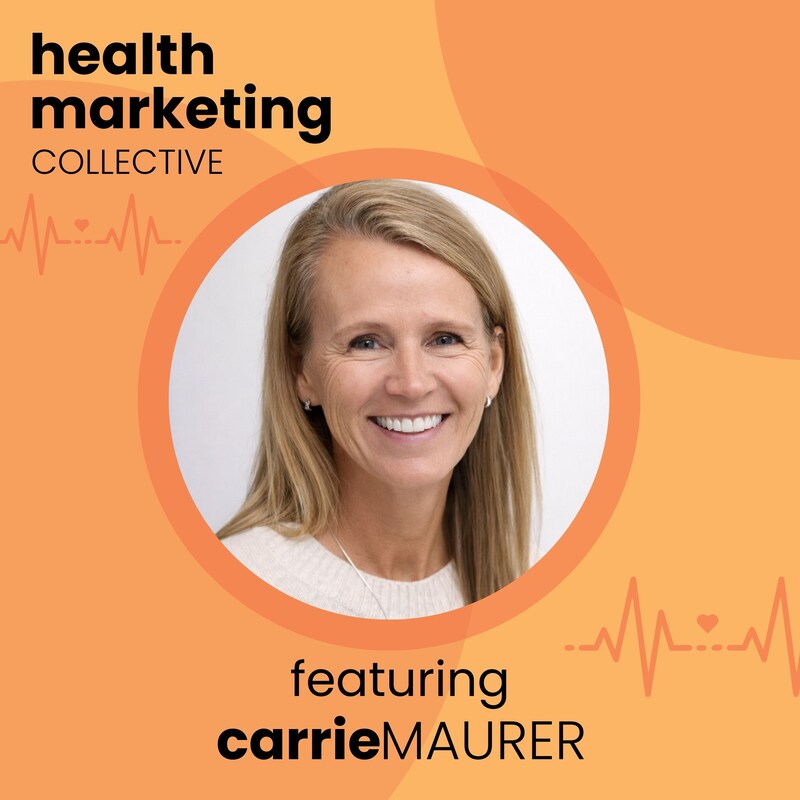
On today’s episode, Carrie Maurer joins Sara Payne for the second conversation in a powerful two-part series dedicated to the realities of high-stakes, consensus-driven B2B buying environments. With over 25 years of experience as a senior marketing and growth leader, former CMO, and advisor to CEOs across industries, Carrie Maurer brings deep expertise in guiding leadership teams to unlock market expansion and position marketing as a true partner in revenue growth.
This episode centers on the inside story of how major B2B buying decisions are really made—and why even the most innovative solutions and persuasive pitches can still stall or slip through the cracks. Sara and Carrie zoom in on two critical, often misunderstood concepts: the group dynamics behind big-ticket buying choices, and the pivotal role trust and risk management play in moving opportunities through complex sales cycles. More than exploring marketing tactics, they tackle structural and cultural barriers that can either empower—or hinder—marketing from being a genuine driver of business decisions and deal velocity.
Key Takeaways:
- In High-Stakes B2B, Inaction Is the Real Competitor
- Carrie Maurer points out that B2B deals most often stall not because a buyer doesn’t like a solution, but because taking action feels risky—and the default, safest choice is to do nothing. Buyers hesitate when they cannot fully defend their decision internally, meaning trust and risk reduction are more impactful than even the best innovations.
- Decisions Are Made by Groups, Not Individuals
- The notion that marketing and sales can win over a single ‘key decision maker’ is fundamentally flawed. Meaningful B2B decisions are nearly always made by buying groups—informal or formal clusters with varied priorities, concerns, and veto power. Effective marketing strategies must look beyond personas to understand and support the group dynamics and internal politics that shape consensus.
- Marketing’s Role Is to Help Decisions ‘Travel’
- Success isn’t just about generating interest. Marketing must help opportunities move from initial clarity (awareness) through confidence (defensibility) to consensus (organizational alignment). This means anticipating objections, aiding internal champions, and providing tools and narratives that enable buyers to ‘sell’ the decision internally.
- Operating Models Can Be Hidden Constraints or Force Multipliers
- A major cause of stalling is not creative failure but structural misalignment within marketing teams. When internal processes and shared services slow marketing’s responsiveness, opportunities slip and trust erodes—both with buyers and inside the business. Organizations that prioritize impact (speed, alignment, proximity to buyer needs) over efficiency (queues, rigid processes) empower marketing to be a genuine growth driver.
- Trust Is Built Through Defensibility, Not Just Brand Warmth
- In B2B, trust isn’t about likability or soft sentiment. It’s about creating ‘safety’ for buyers: Are you enabling them to defend and own the buying decision with confidence in front of skeptical stakeholders? Marketing must provide proof points, support, and responsiveness at exactly the right moment to reduce the personal and emotional risk involved in high-profile buying decisions.
This episode provides both a mirror and a map for marketing leaders: If your team is only focused on personas, lead generation, or creative campaigns, you’re missing the real leverage point. True marketing excellence requires architecting cultures, systems, and models that enable decisions to move with confidence, speed, and group consensus—because when decisions move, revenue follows.
For more insights or to connect with Carrie Maurer directly, reach out via LinkedIn, and stay tuned to the Health Marketing Collective for the best in leadership-driven marketing strategy.
Mentioned in this episode:
Health Marketing Collective is Powered by Inprela
The Health Marketing Collective is powered by Inprela: a communications firm built for health brands determined to lead, not follow. We partner with marketing innovators who aren't just chasing attention—they're building movements. Connect with the audiences shaping the future of care and lead the conversations that move your market. Ready to rise above the noise? Visit inprela.com. Let's create something that moves the market.
Transcripts
Welcome back to the Health Marketing Collective, where strong leadership meets marketing excellence. Today's conversation is for CMOs and senior marketing leaders navigating long buying cycles, high-stakes decisions, and consensus-driven B2B environments. This is the second conversation in a two-part series with Carrie Maurer, someone who's spent her career inside exactly these kinds of organizations. In our previous episode, we talked about what it really means for marketing to be accountable to growth. Today, we're zooming in on how buying decisions actually get made and why trust and risk matter more than innovation in high-stakes B2B. Carrie Maurer is a senior marketing and growth leader with more than 25 years of experience as a CMO and advisor to CEOs across enterprises, high-growth companies, and startups. Today, she works with leadership teams on growth strategy and market expansion, helping marketing show up as a real driver of decision-making, not just awareness. Carrie, welcome to the show.
Carrie Maurer [:Thanks, Sarah. Great to be with you today.
Sara Payne [:Yeah. So let's start at the beginning. When high-stakes B2B deals stall, Why do they stall even if the buyer likes what they see?
Carrie Maurer [:Because I— maybe short answer is because liking something isn't the same as believing it's safe to buy. And if I double-click on that, you know, in many B2B decisions, the real competitor isn't another vendor. It's the buyer doing nothing. And inaction sometimes feels safer than action when the perceived risk of getting it wrong outweighs the update of moving forward. And innovation can certainly create interest. But what I would say is trust is what's going to enable action. So buyers don't stall because solutions, again, aren't impressive. They stall because they can't yet defend the decision.
Carrie Maurer [:Within their own organization. And this connects directly to what we talked about in episode 1, and decisions don't move because information increases, they move because confidence increases. And if a buyer isn't confident, they can't defend that decision, and the safest choice is to just wait or, you know, keep cycling through. So you can often see this moment in a deal. Meetings continue, interest is there, but next steps become vague. Timelines slip, conversations circle instead of advancing. And that's usually not, again, a product problem. It's a confidence problem.
Carrie Maurer [:Trust in this context isn't a soft concept. It's a practical one. And it's what allows someone to say, I'm comfortable putting my name on this.
Sara Payne [:Yes, absolutely. There's so much goodness in what you just said there. A lot, lot to unpack. We're going to, we're going to get into trust for sure. I want to start by getting more, talking more about the buyers. And if this is what's really going on for buyers, it really does raise a bigger question about how marketing is actually set up to address those realities. At a structural level, what's the biggest mismatch you see between how marketing teams operate and how those B2B buying decisions actually happen?
Carrie Maurer [:And Sarah, maybe if we could, before we talk about that sort of that operating or operating model or even the disconnect that there might be, I'll ground you in how I've seen B2B decisions get made.
Sara Payne [:Yes.
Carrie Maurer [:Um, so in the most meaningful B2B decisions, there is almost never a single buyer. There's a buying group. Often this— sometimes this can be a formal panel, but oftentimes it's an informal, even sometimes unspoken, um, group that's made up of people with very different concerns. So you've got Some people who have an economic concern, you have people who have a technical reviewer or a legal or compliance review. And some of those people have veto power. Maybe you don't even know who has full veto power inside an organization. So you've got this dynamic inside a B2B environment that is not a single person I can just market to or sell to. And those groups don't decide in a straight line.
Carrie Maurer [:They decide through conversations, through influence, through objections, and even internal selling that our champion or stakeholders have to do. And that's— you'll sometimes hear me refer to decisions are made by systems, and not systems of software, but systems of people, incentives, risk, and power dynamics, for lack of a better word. So what marketers are trained on is this thing called personas, right? We've all heard it, and that work is critical. So personas help us understand the motivations and pressures and context at the individual level, but personas alone don't explain how decisions move or stall inside organizations. Personas help us understand people, but decisions are made by groups might be the whole summary of that rambling, if you will. So the disconnect happens when marketing stops at who the buyer is and doesn't design for how the decisions travel internally. And so helping decisions survive the journey from what I'll call clarity to confidence to consensus. Um, that journey happens inside organizations, not inside funnels.
Carrie Maurer [:And when decisions stall at the point, marketing, um, didn't fail creatively, it failed structurally.
Sara Payne [:Wow, I love that. I love this couple of lines there that really resonated with me, that decisions aren't made in a straight line. And we often over-index on who the buyer is versus how decisions travel. That's such a great phrase and concept to really be sort of reframing this whole thing is really thinking about how decisions travel. Is there anything else inside of sort of this design mismatch or structural mismatch that you think marketing organizations really need to be aware of or focusing on? This idea that maybe we're oversimplifying the buying decision or this concept of, you know, marketing to individuals. You know, it's just so, I feel like it just is so common and prevalent really in complex buying environments. Is there sort of anything else, any other advice you have around thinking about this on a structural level?
Carrie Maurer [:I think, you know, once you accept that decisions are made by buying groups, that's the first, you know, it's amazing how oftentimes within our organizations we have to get, whether it's IT or operations, to understand that that's a dynamic that a B2B marketer is dealing with and that these groups function as systems. The role of marketing really changes. Marketing's job isn't just to influence the initial buyer, it's to help the decision travel. And that means helping both sides of the equation, the buying organization move toward what I call confidence and the selling organization stay aligned and prepared as the decision evolves. So every meaningful deal, an internal champion, someone who believes in the solution but now has to sell it inside their organization, That person is navigating the politics, credibility, multiple stakeholders. And modern marketing or today's B2B marketing must be designed to support that internal selling motion. And that means going well beyond understanding personas or direct marketing to those personas. And when marketing works, it really anticipates those moments instead of reacting to them because sales has now come back in and said, I've got this objection now, or this is a risk.
Carrie Maurer [:How do you help me introduce that? What language will hold up when this gets reviewed by legal? Kind of a thing. So when we're being reactive to those things, Nobody's front-footed. We're all on our heels. And so it's when marketing can really anticipate those moments that we can be incredibly impactful on the pace of the opportunity moving through the sales cycle.
Sara Payne [:Yeah, I'm glad you went there because I wanted to go there next too, in terms of talking about supporting that internal champion and moving that decision forward. You're using, you know, this, this idea of anticipating what those hurdles are going to be. What else does marketing need to do to really help move the decision forward inside an organization?
Carrie Maurer [:You know, one of the things I might say here, Sarah, is there's this— one of the most persistent myths in marketing is that consumer buying is emotional and B2B buying is rational. And that simply isn't true in my experience. B2B buying is deeply emotional. The consequences are personal and very visible of decisions that we sponsor in our organizations. Our careers, our credibility, our reputation are all on the line when we champion bringing an organization in to solve a business challenge that we have. And when those decisions are made, especially in buying groups, that emotional load multiplies. So buyers aren't just asking, will this work? They're asking, will I be able to defend this decision if it's questioned? And that's why defensibility matters so much. Marketing, again, can generate interest, we can generate excitement, we can even generate enthusiasm, but if it doesn't reduce the fear and increased defensibility, the decision stalls when it enters this system that I refer to.
Carrie Maurer [:So trust in this context isn't about likability or brand warmth. It's about safety. It's about whether someone feels confident enough to walk into that room full of skeptics and say, this is the right decision, and here's why.
Sara Payne [:Yeah, you're so right. I mean, you could almost make the argument that these B2B buying decisions are actually far riskier and far more emotional than the consumer, you know, right? Because of everything you just described, right? This is your, your reputation, your career-long reputation that you've built. These are often very expensive buying decisions. All of that comes into play here. And also, as you talked about, because we're talking about more than one decision maker, you know, by committee, that emotional load, as you said, multiplies. It's such a beautiful way to, to describe that and to think about that. There's just so much personally at stake for them. What, as we think about, you know, that, that, that risk and that feeling that there's a lot personally at stake, what else can marketing do to really make sure that trust shows up in that moment? Right when they are ready to put their name on a recommendation in front of key stakeholders internally.
Carrie Maurer [:Yeah, I think things that marketing can do, you know, proof points, helping build relationships, enabling the demonstration certainly of how others have been successful in— so all of those things that we might think of as a more traditional role of marketing can certainly jump in here now in this moment, whether it's, again, the context with which this solution has helped other organizations, how you think about supporting and giving the narrative to the person who's going to champion and supporting them as they go through their organization. Marketing can now step in in some of those more, maybe more traditional roles. But it really starts with this idea that we are enabling an internal organization and we're doing this across multiple, multiple stakeholders. I think the other thing that we need to think about is how we work as an organization is as important as the work we do. So what I have certainly seen is organizations, especially large organizations, want to design marketing around efficiency. And so what that means is you're usually working within a shared services model, marketing already being a shared services organization, and now that team has to pivot to a shared services organization. If marketing cannot work at the pace and the complexity of the environment that sales is operating in, we will never meet the moment and we will never have the ability to foster this kind of complex environment that our salespeople are selling in. And so I think one of the other things that we have to do for our marketing organizations is look at how we are operating.
Carrie Maurer [:And if we've built a model that requires queues and requires us to work at the pace of our internal organization capacity, not at the pace of the opportunity or at the pace of the market, marketing is going to lose the battle.
Sara Payne [:Yeah, for sure. I mean, there's probably so many people listening to this that are like, shout it from the mountaintop, Kari. We need louder for the people in the back, right? Like, I need my boss and my executive leadership to hear that. I mean, you're so right, right? Like, you, we can't ignore, um, how often the system around marketing makes it harder and not easier to show up in all the ways that you're talking about here and what we talked about in episode 1 and this one as well.
Carrie Maurer [:Yeah.
Sara Payne [:Um, that operating model really can be a hidden constraint in many different ways. And I don't think executive leadership really realizes that.
Carrie Maurer [:So absolutely be— it can absolutely be the difference between an organization feeling like their marketing organization is hugely strategic and one that doesn't. And again, because the ability to influence decisions doesn't come from talent alone. It comes from proximity and timing and alignment. And when we pool our resources or queue our work in a first-come, first-served or first-in, first-out model, context disappears, the opportunity disappears, and teams lose proximity to buyers and deals. Timing breaks. Insights arrive after the moment has passed and marketing gradually loses its ability to operate as a strategic partner. So structure doesn't shape efficiency, it shapes impact. And I think that's the thing that I, you know, having been both on the operations side of marketing and the product side of marketing, I think is often missed is the way we structure our organization needs to be structured around impact, not around efficiency.
Carrie Maurer [:And the alternative isn't more process or more tools. It's actually about more intentional design.
Sara Payne [:Love that. Such a great insight, Carrie. So powerful. I think one of the— for me, that's one of the really big takeaways from this whole conversation It seems to me that perhaps operating models are really an underestimated factor in B2B marketing effectiveness and really need to be put more into the spotlight and really need to be understood and documented in terms of where some of those— we're maybe slowing things down too much. We're overcomplicating things. We're not giving ourselves enough nimbleness in our ability to reprioritize things, as you were talking about. It makes me wonder, too, I mean, I think what you're talking about here is without an operating model that really does allow marketing to thrive in the way that you're talking about it, it has to then impact the buyer on some level in terms of the erosion of that trust, right? Because if you, if you're not there in the moment with that relevant, right, in the moment that it's needed for that buyer with the, with the speed of the responsiveness and, you know, customized in the way that they need it, that's, that's an opportunity to either deliver trust or erode trust, really. I mean, if trust has been a key theme throughout this entire conversation, and that's why I say I think that the operating models are really an underestimated factor here.
Carrie Maurer [:I think they can be a force multiplier for sure. And I would say too, you know, when I think about the size of the organization, You would think the larger the organization, the greater strategic advantage they have in the market because they've got reputation potentially, they've got tried and true investment in innovation, they've got a great deal that they can bring to the market. However, when that large organization is so encumbered by how it's structured, its operating model, we absolutely give the scrappy startup organization that can move at pace a market advantage. And so it's as much about this. And then you've got just complement that by the satisfaction of your marketing team because there's nothing more frustrating for a marketer to be pinched between the stakeholders internally who absolutely want marketing to help influence the pace of the way the deal moves through the sales cycle. You're at the table, you've got the skill set, you've got the market knowledge, you've got the talent to do exactly what marketing needs to do strategically. And then they have to pivot sometimes to their own, what feels like marketing because it's a shared services model and they get stalled internally and can't move at the pace of the opportunity. And now they're getting this this dissatisfaction from their internal stakeholders when they know exactly how to move this forward.
Carrie Maurer [:And so you've got this dynamic where you're giving the external market an advantage and you're frustrated internally because you can't move at the pace you know you need to move at. That's why we see dissatisfaction across our marketing organizations today. It's because of that pinch, in my view.
Sara Payne [:Yeah, absolutely. And what— address that.
Carrie Maurer [:And that would back to your question about, you know, if I sat down with the CEO as a new CMO, I'd say, let me see the satisfaction of my marketing organization, but let me see the satisfaction of my sales and product teams in terms of the pace that we can move at to meet these moments.
Sara Payne [:Yeah, absolutely love that. And I mean, what a sobering headline, really, if you walk in and say, we're, we're giving market share to the, you know, what they like to call them, the ankle biters, right? The smaller, the smaller competitors out there because our operating model is getting in the way. It's got to change, period, end of story. And here's what that's going to look like. Right? I mean, that's a, that's a powerful conversation. Because they're likely going to have to have support around that at the highest level to change, you know, some of the reasons why, I have to imagine, the operating models get so, you know, complex and slow is because of all these different checkpoints and systems-level structure that's in place from a risk mitigation standpoint.
Carrie Maurer [:Right. Right.
Sara Payne [:And so in order to remove those, you're probably going to have to have some buy-in from a pretty high level.
Carrie Maurer [:Completely agree. So I feel hugely accountable to this conversation. As, you know, as a CMO, I think it's my job to look at the pace my team can move at and am I enabling an environment that they can move at the pace and the complexity of these B2B opportunities? And if they can't, that's the job I have is to, you know, it's to remove those blockers from my team. And so as a new CMO, boy, that would be the first thing I'm going to come in and evaluate.
Sara Payne [:Yeah, absolutely. Well, Carrie, as we sort of put a bow on this two-part conversation, one on, you know, marketing's accountability to revenue and this one more on how you actually execute against that. Any final advice for CMOs in terms of what they should stop over-indexing on or what they should be paying more attention to? Any sort of last, last headlines here to put a nice bow on it all?
Carrie Maurer [:I'd say if marketing is truly going to be accountable to revenue, it has to be trusted as a risk reduction partner. And what that means is designed around real buying behavior, fluent in the commercial and competitive context, embedded where decisions actually get made within a buying organization, and supported by an operating model that moves at the pace of the market. And when those conditions exist, marketing doesn't just stay busy, it helps decisions move And when decisions move, revenue follows.
Sara Payne [:That's so great. So, so simply stated, so well stated. It gives everybody sort of that, a really great roadmap for what to build and what to shoot for. Obviously building it is easier, easier said than done. That's right. But I think you've given just a tremendous amount of advice in both of these episodes around how to get there. And I certainly would welcome folks to reach out to you directly. Kari, if they have additional questions or things they would want to dig into deeper around this.
Sara Payne [:And to that point, how can our listeners get in touch with you to, to chat and learn more about your work?
Carrie Maurer [:Yeah, the fastest, most efficient way would be through LinkedIn. So welcome any, any outreach.
Sara Payne [:Excellent. Thanks again, Kari, so much for joining me in these two conversations. I, I know I learned a lot.
Carrie Maurer [:Oh, it was my pleasure. Thanks, Sarah.
Sara Payne [:Thank you, Carrie. And thanks to everyone listening. If this series has resonated with you, be sure to subscribe to the Health Marketing Collective. We'll see you next time.
