Shownotes
About the Show:
"if you stay active, if you stay engaged in your life and you're serving a larger cause, like for me, helping other people to find the courage and the energy to reinvent themselves and go back to their childhood, which is what I've done with myself."
– David Nelson
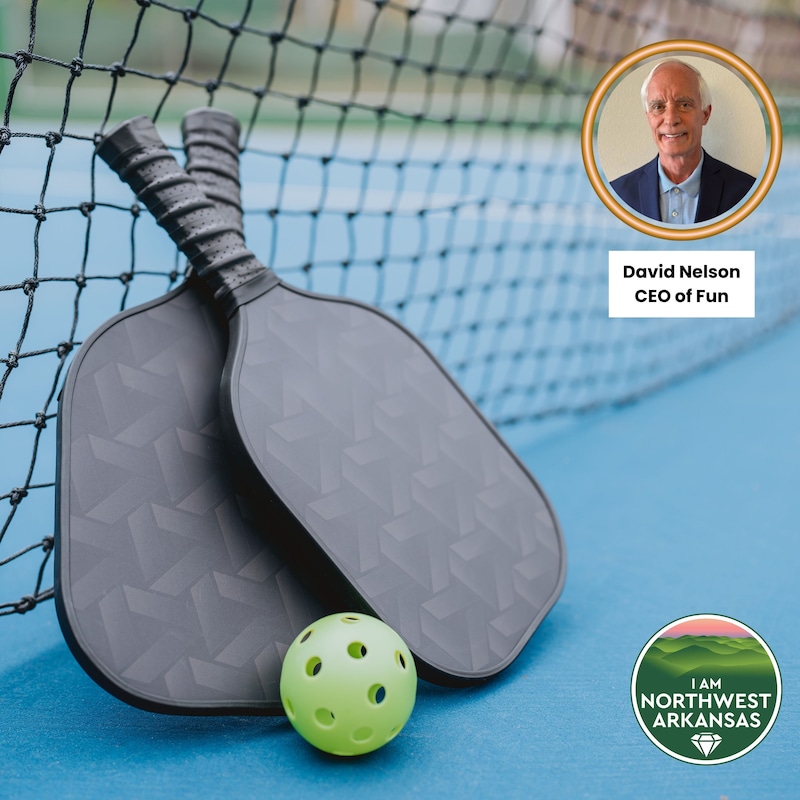
What does it look like to reinvent yourself at 71? For David Nelson, it starts with a pickleball paddle and a whole lot of intentional joy.
David is a wellness expert, motivational speaker, and founder of AHA University — and he'll be the first to tell you he's also the CEO of Fun. In this episode of I Am Northwest Arkansas®, he sits down with Randy Wilburn to talk about what happens when you stop treating age as a ceiling and start treating it as a starting line.
After a running injury forced him to find a new outlet, David discovered pickleball — and what began as physical therapy quickly became something much bigger. He's now using the sport as a bridge between generations, cultures, and communities, proving that a simple game can open doors that might otherwise stay closed.
This is a conversation about reinvention, the underrated power of play, and why Northwest Arkansas keeps showing up as the kind of place where people — and possibilities — flourish. No matter where you are in life, David's story might just be the nudge you didn't know you needed.
Key Takeaways:
- Reinvention Has No Age Limit: You can start something new, find purpose, and build community no matter how old you are.
- Pickleball as a Gateway: Pickleball brings people of all ages together and helps build coordination, connection, and confidence.
- The Power of Play: Play is not just for kids—adults and seniors need it for mental and physical health.
- Active, Healthy Aging: Staying active makes a difference, even if it’s just walking or playing with friends.
- Importance of Family & Community: Northwest Arkansas is a place where family matters, and there are many ways to connect with others.
- Storytelling & Legacy: Sharing your story and listening to others can inspire, heal, and help you find your real voice and values.
- Consistency Matters: Small steps and gradual improvement add up over time.
All this and more on this episode of the I Am Northwest Arkansas® podcast.
Important Links and Mentions on the Show*
- Aha.University
- David Nelson on LinkedIn
- FindItNWA.com NWA’s Hyperlocal Business Directory
This episode is sponsored by*
Signature Bank of Arkansas "Community Banking at its Best!"
*Note: some of the resources mentioned may be affiliate links. This means we get paid a commission (at no extra cost to you) if you use that link to make a purchase.
Connect more with I am Northwest Arkansas:
- Grab our Newsletter
- Email Us at [email protected]
- Connect With Our Facebook Page
- Connect With Us on Threads
- Connect With Our Instagram
- Connect With Our LinkedIn Page
- Join The Facebook Group
- Connect with our Fearless Host, Randy Wilburn on LinkedIn
Thank you for listening to this I am Northwest Arkansas podcast episode. We showcase businesses, culture, entrepreneurship, and life in the Ozarks.
Consider donating to our production team to keep this podcast running smoothly. Donate to I Am Northwest Arkansas
Mentioned in this episode:
NWA Daily Version 4
Transcripts
Hey folks, and welcome to another episode of I Am Northwest Arkansas,
Speaker:the podcast where we dive into the heart of the Ozarks, celebrating the
Speaker:people, places and ideas shaping our region.
Speaker:Today's guest is living proof that reinvention has no
Speaker:age limit. David Nelson is a dynamic force,
Speaker:a wellness expert, motivational speaker, founder of
Speaker:AHA University, and yes, the self
Speaker:proclaimed CEO of Fun. At 71 years
Speaker:young, David is on a mission to help others rediscover
Speaker:play, purpose and possibility, often one
Speaker:pickleball game at a time. From his base in Northwest
Speaker:Arkansas, he's building a global coaching platform
Speaker:for active, healthy aging. Telling powerful
Speaker:intergenerational stories and showing the world that that your
Speaker:best chapter might just be your next one. So whether
Speaker:you're 30, 60, or somewhere in between,
Speaker:this conversation will leave you inspired to reinvent
Speaker:yourself and have a little fun while you're at it. Right
Speaker:after this, we will get into our conversation with David Nelson.
Speaker:It's time for another episode of I Am Northwest
Speaker:Arkansas, the podcast covering the intersection of
Speaker:business, culture, entrepreneurship and life in general
Speaker:here in the Ozarks. Whether you are considering a move to this
Speaker:area or trying to learn more about the place you call home,
Speaker:we've got something special for you. Here's our host,
Speaker:Randy Wilbur. David Nelson. How
Speaker:are you doing today? Fantastic. I got to play pickleball for a couple hours
Speaker:this morning. Woohoo. Oh, that's good, that's good. I'm glad
Speaker:to hear that. Well, listen, I'm excited to have you on the podcast. You and
Speaker:I actually met as I was going through the process of the
Speaker:TEDx Fayetteville program and that's where we
Speaker:bumped into each other. And you heard my talk on
Speaker:it's never too late to do the thing that you're called to do. And I
Speaker:guess there was some type of kindred spirit there in terms of
Speaker:some of the things that you're doing and what I was talking about
Speaker:in my TED Talk. And so I really appreciated the time that
Speaker:we got to share with each other, both in the time
Speaker:leading up to the TED Talk, the actual TED Talk, and then afterwards.
Speaker:And so you just reaching out to me to share what
Speaker:you're working on just got me really interested by saying, you know
Speaker:what, there's a bunch of Davids out there here in Northwest Arkansas, and
Speaker:I would love to be able to connect them all through my I Am Northwest
Speaker:Arkansas podcast. So I'd love for you just to quickly
Speaker:introduce yourself. You call yourself the CEO of Fun.
Speaker:What does that mean? And how did that Title come
Speaker:to be. Great question. A good opening. Thank you for
Speaker:that. You know, thing is for me
Speaker:is that my final
Speaker:adventure in my life started.
Speaker:7, 11, 20, 22. That was the very
Speaker:first day that I played pickleball at the Rogers
Speaker:Adult Wellness center in Rogers, Arkansas. I also met a
Speaker:lady that day, her name is Carolina.
Speaker:And she introduced herself to me
Speaker:and we started talking and there's a lot more to it. I could,
Speaker:could go into it, but the bottom line is that I was
Speaker:reinventing myself because I'd been a runner for 44
Speaker:years, I'd been retired for like six years. And I
Speaker:met this lady because I had to get out of running because my right
Speaker:hip went out. So it's like, what can I do? And I figured, well, it's
Speaker:time to slow down a little bit. And somebody challenged me to play
Speaker:pickleball and I just fell in love with the sport. And I later
Speaker:fell in love with the lady Carolina who introduced herself and I
Speaker:wrote a book about it called I A Pickleball Love
Speaker:Story and it's on Amazon Kindle. Small little thing,
Speaker:but I love writing. And as my wife said to me the other day, she
Speaker:said, David, you were born to inspire people. I love
Speaker:that. And so what's important about that three
Speaker:years ago, rather than going through all my 71 year history
Speaker:is that for me the adventure that I'm
Speaker:on right now is to use pickleball as a bridge between
Speaker:generations, cultures and countries. So I'm
Speaker:working for example with a lady that's in England, Katie's her
Speaker:name and she has an 18 year old son. And this is the
Speaker:best, most dramatic example I can think of of how I
Speaker:reinvented myself and help other people to do it. Her 18 year
Speaker:old son went through some reconstructive surgery on his
Speaker:face, got depressed, was causing him
Speaker:tremendous emotional problems, was on medications and
Speaker:all kind of stuff. I said, Katie, you know what to do with him.
Speaker:We've been talking for several months and she took him to play
Speaker:pickleball. Within a week he is already improving
Speaker:dramatic just by playing freaking pickleball. Why do I get
Speaker:excited about it? It comes down to this, Randy. Pickleball
Speaker:is the only sport that grandma grandpa
Speaker:can play with the parents and with the kids. It's easy to
Speaker:learn, it's accessible, it costs, is very low, cost of
Speaker:entry. I've seen so many people get married playing pickleball
Speaker:and this is something that's been on my heart for six years.
Speaker:The AHA University, that's our website. If anybody Wants to
Speaker:check that out. But it's all about active, healthy aging, and
Speaker:reinventing. Because when I first met the lady who would become my
Speaker:wife, she said she was in the process of reinventing
Speaker:herself. That word just keeps coming back over and over
Speaker:again to me so quickly. For me, what's
Speaker:important is helping older people to enjoy their
Speaker:life. As a health coach, a lifestyle reset coach.
Speaker:I call myself the AHA Lifestyle coach. The point is
Speaker:to help people to enjoy their life, play pickleball
Speaker:safely, and not get out there and try to duplicate what I do. I'm a
Speaker:crazy man. I just jump all over the place and have
Speaker:fun with it. But the point is, for me is
Speaker:that pickleball is the gateway sport
Speaker:to a lot of other sports. It helps people to be active.
Speaker:It involves coordination. My wife has some balance
Speaker:problems, so it helps her. And pickleball is a combination
Speaker:of tennis and ping pong, so it
Speaker:blends the two. You know, you played before, right? Yeah. So
Speaker:that's the main thing is that rather than giving my whole 71
Speaker:years, I've reinvented myself a dozen times. I'm writing a book
Speaker:about it. I want to cooperate with you on that and
Speaker:introduce this concept. And we're starting it at the Springdale
Speaker:Senior center, and we're going to be helping people to get
Speaker:into pickleball, tell their stories. So it's all about
Speaker:having fun with the older folks. Because when you retire,
Speaker:who are you? Yeah, well, you know, it's funny you say that,
Speaker:because I think a lot of people self identify by the work they
Speaker:do. Right. And I mean, unfortunately, you are more
Speaker:than just your career. Right. I mean, that's just, you know, you
Speaker:could be a multitude of things. And I think that's why this
Speaker:kind of message really does resonate with me. Because if
Speaker:we pay attention as human beings, we have
Speaker:a number of opportunities to reinvent ourselves throughout
Speaker:our lives. It starts happening when we're a child and as we grow up
Speaker:and we hit puberty, and then we hit being in the teenage years,
Speaker:and we're not the same kid that we were when we were 6 or 7.
Speaker:And then when you go to college, you reinvent yourself again.
Speaker:And then when you get out into the workforce, depending on the type of
Speaker:work that you do, you get another opportunity to reinvent yourself. And
Speaker:then even after you hit, as I like to talk about being 40
Speaker:or hitting what I call halftime, there's still another
Speaker:opportunity to reinvent yourself. And what you're saying to me is that even
Speaker:at 71, you can reinvent yourself. I mean, just to.
Speaker:I don't do public math, but to back up from 2025 to
Speaker:2022 is just three years. So, you know,
Speaker:late 60s, early 70s, you know, you're still thinking about
Speaker:ways to reinvent yourself and to make the most of
Speaker:all that life has to offer. And. And it's interesting how
Speaker:you found pickleball as kind of like one of
Speaker:the foundational tools for you to be able to do that. It is.
Speaker:So the bottom line of why pickleball is so important
Speaker:to me personally is that for me,
Speaker:it is the opening act to be able to talk to
Speaker:people about the most important thing we can ever do
Speaker:on a daily basis, find ways to play. And
Speaker:so the young man that I played with this morning, Ian, has
Speaker:a nonprofit organization helping kids to get out of gaming
Speaker:addictions. And he is an expert
Speaker:on that because he was addicted to games,
Speaker:video games, in college and even before that. Now at
Speaker:age 37, he's got two young children, and he's on a mission
Speaker:to help people to understand why their children
Speaker:get involved with games and get them more involved in their
Speaker:lives. So working with Ian
Speaker:and with a whole bunch of other folks here in northwest Arkansas on
Speaker:pickleball and other nonprofit organizations. I just made a
Speaker:metal lady today as well. Her husband is involved
Speaker:with aao, which another Arkansas athletic
Speaker:organization, and they're sports related.
Speaker:And the bottom line there is that the one sport
Speaker:that connects people together is a pickleball. Again, it's easy
Speaker:to learn. And the biggest thing that we're doing now is
Speaker:we're doing a research project to demonstrate. And
Speaker:my goal is to work with the U of A, which I've done many times
Speaker:over the 30 years that I've lived in northwest Arkansas.
Speaker:And, you know, people have said to me, you're crazy to do this in
Speaker:northwest Arkansas. Why are you doing it here? So let me
Speaker:address. And the thing is, I love it here.
Speaker:I mean, we have a beautiful environment. I'm an outdoors guy again,
Speaker:running, you know, for 44 years. It's outside. I love.
Speaker:Used to love running hills. My goal. Hopefully I'll get back to that.
Speaker:But pickleball has allowed me to, again, reinvent myself
Speaker:and feel good about myself. That's the whole point of this among
Speaker:elders. So to finish on the children. The point is to connect
Speaker:the grandkids with the parents, because they all say the same
Speaker:thing. I feel lonely. I feel isolated, and
Speaker:this silly darn cell phone is causing so many
Speaker:problems. So I want to get people off the cell phone onto the
Speaker:pickleball court. And I've seen with young people, sometimes the only
Speaker:time they'll get away from the video game is to be on the
Speaker:pickleball. You can't hold this thing while you're on the court. Right.
Speaker:So I've seen young people do that and old people.
Speaker:That one guy I play with, Don, the only time he gets off
Speaker:his oxygen is to play pickleball. I mean, that inspires
Speaker:me. Yeah, well, I mean, and again, there's something
Speaker:about the camaraderie of playing against somebody else. It's one of the reasons
Speaker:why, you know, tennis is such a spot popular sport for even
Speaker:older people. I know I have friends of the family
Speaker:who have played tennis into their 80s, and, you know, outside of
Speaker:a couple of bouts with tennis elbow and, you know, some creaky
Speaker:joints, you know, they get out there and hit the ball, and it's just. It's
Speaker:a great workout. And pickleball, it's a smaller court,
Speaker:and you. It can be a little bit faster than tennis, even.
Speaker:And, you know, your reflexes, you really have to keep your reflexes in tow
Speaker:because of the smaller size of the court. So there's a lot of
Speaker:opportunities to. To really exercise the body
Speaker:and the mind. Right. Because you mentally, you have to be strong in order
Speaker:to be able to navigate the court and to
Speaker:negotiate returning the ball, the pickleball, back to
Speaker:the opposing team. And. And you got to play. Typically, you can play
Speaker:with other people. And so you have that aspect of it. So there are just
Speaker:so many ways that pickleball is a great outlet and a
Speaker:great sport for people to pick up, even at an
Speaker:advanced age. Yeah, that's it. And so for me,
Speaker:as the psychologist, in me, that was my degree
Speaker:as a kid, is that this is the one
Speaker:opportunity for people, again, at any age,
Speaker:you know, pick up on what you said about tennis, that, yes, there
Speaker:are athletes that continue on into their 80s, but what if
Speaker:you're 50, 60, 70? Are you going to pick up tennis?
Speaker:When you compare that to pickleball, forget it.
Speaker:And I'll give you an example. When I was a kid growing up in St.
Speaker:Louis, Missouri, and I was running a course back then, I
Speaker:met this older guy who was my age, 70, and he said, oh, I see
Speaker:you're in pretty good shape. I was like 35, half
Speaker:his age. And he said, I was thinking about running.
Speaker:And I said, let me ask you something, sir. Do you feel good? Do you
Speaker:feel healthy? He says, yeah. I said, do you want to maintain Your health.
Speaker:He said, yes. I said, don't run.
Speaker:Go out and walk. You know, work into it. But
Speaker:there are a lot of other things that people can do if they're older
Speaker:to get in shape and stay in shape rather than killing yourself and trying to
Speaker:be an athlete if you've never been one. I've been blessed
Speaker:that I've kept the same body and the same weight for. For
Speaker:50 years. My role model as a kid was the
Speaker:guy who started the physical fitness craze in the 50s, Jack
Speaker:LaLanne. You might be old enough to remember him.
Speaker:I remember him, yeah. So the thing is, what I want
Speaker:to help people to do with active, healthy aging, I see this
Speaker:as the future of human potential available
Speaker:for people. And I wanted to start here in northwest
Speaker:Arkansas, because this is where I'm going to die
Speaker:for me. I just. Today. Not today, though. Just. No, no,
Speaker:no. I've got to. I've got another 30 years unless I run into a bus
Speaker:or a semi because I don't get sick. I don't believe in
Speaker:being. My motto is live healthy, die healthy. Yes. That's
Speaker:the way Jack died. He worked out and had a great routine. He did for
Speaker:50 years. He worked out Randy until the age of
Speaker:96. And the day before he died of pneumonia, he was still working
Speaker:out. I know that's going to be me. Going to be on the pickleball court
Speaker:doing that. So that's why this is so much fun. I'll put
Speaker:some links in the show notes for Jack Lalanne on YouTube because he has
Speaker:some really great videos, and they're actually quite. They're actually quite
Speaker:motivating. Both he and his wife would work out cons
Speaker:a lot. And I remember watching his stuff when I was a kid,
Speaker:and I'd be like, man, who is this guy with these tight outfits on and
Speaker:everything? And he. He really. He walked the walk and talked the
Speaker:talk. But the thing that I took away from him was just the
Speaker:consistency of getting out and working out. Not that you got to kill yourself
Speaker:every day, but that a body in motion stays in motion.
Speaker:And I remember him talking about that in those concepts.
Speaker:And, you know, you can laugh about it, but
Speaker:unfortunately, we live in a world in a day, in an age where a
Speaker:lot of specifically Americans, right, since mostly Americans listen to this,
Speaker:although shout out to those folks in India and some other places that listen to
Speaker:this podcast. But because a lot of
Speaker:Americans live a sedentary lifestyle, it is really
Speaker:difficult to overcome a lot of the health issues
Speaker:that creep up because of the sedentary
Speaker:lifestyle. So when you live an active lifestyle,
Speaker:it's a lot harder. You know, it's a lot. Well, I should say it's a
Speaker:lot easier for you to keep your body going even when it
Speaker:hurts. Right. Because, like, I'm, you know, I'm not old. Old, but I
Speaker:know sometimes I wake up in the morning and I feel a little tight, and
Speaker:I always try to stretch. And before I get out and get and do my
Speaker:workout, I do the same thing six days a week. But, you know,
Speaker:sometimes I don't feel like it. I don't want to do it. But once I
Speaker:force myself out the door and about, I would say,
Speaker:I don't know, maybe two or three minutes into my workout, I
Speaker:feel great. And it's just a. You know, sometimes you just need that
Speaker:vitamin D on you, that sunshine, just that fresh,
Speaker:cool air, especially this time of year in the wintertime. And
Speaker:when it hits your face and it hits your body, you just react differently.
Speaker:And all of a sudden, it seems like your limbs wake up, that your
Speaker:muscles wake up, and even whatever you might have been feeling
Speaker:starts to subside. And, you know, I. I've talked to a
Speaker:number of people that have those feelings that they wake up a little creaky in
Speaker:the morning, a little sore, but then once they get out and start
Speaker:working out, whether it's a light jog or a walk or whatever, and you don't
Speaker:have to go crazy, it makes all the difference in the world.
Speaker:Absolutely. Well, and I'll bring it back to you and your grandfather,
Speaker:okay. With what he did in the 60s.
Speaker:He was the oldest person who entered through for
Speaker:that job, what he did for television and sportscasting,
Speaker:and he ended up giving that speech about
Speaker:when Kennedy was shot. And, you know, if you stay
Speaker:active, if you stay engaged in your life
Speaker:and you're serving a larger cause, like for me, helping
Speaker:other people to find the courage and the energy
Speaker:to reinvent themselves and go back to their childhood, which
Speaker:is what I've done with myself. So I look at people like
Speaker:your grandfather. I love interviewing people like that. How did you do
Speaker:that? Where did you come from? I mean, I want to have larger conversations with
Speaker:you about your grandpa. Yeah. Because the thing is, I'll
Speaker:bring it to the grandpa stage of my own grandfather, is that
Speaker:he had an asphalt paving business. And I remember when I was 17,
Speaker:I wanted to buy the company from him. So I sat
Speaker:down at the kitchen table with Grandpa. I said, grandpa, sell me the business.
Speaker:Yeah, I'm just a dumb kid. What do I know? But he
Speaker:set me straight. And this is the point of getting older people to talk about
Speaker:their stories and about reinventing themselves. He was 62.
Speaker:I was 17. We're sitting at the kitchen table, and he asked me
Speaker:a really important question. How much money do you have?
Speaker:I said, Grandpa, I'm 17. I said, okay, I know you.
Speaker:He was a Golden Gloves boxer. I mean, he was a fighter about your size.
Speaker:He was a bigger guy. So it's like, you don't give Grandpa any crap.
Speaker:This is the way it is. But I said, okay, all right, that's over.
Speaker:And you don't want to teach me. You just want to retire. But I said,
Speaker:grandpa, why didn't you develop the biggest business
Speaker:in the asphalt paving business in the 60s when he
Speaker:got started in this in the 50s? And he said, david, I've got one good
Speaker:crew, and I'm making all the money that I need, paid for
Speaker:the houses for my three children. Ian. Grandma traveled all around
Speaker:the world. She got to drive her Cadillac. He drove his
Speaker:little red pickup, kind of like Sam Walton, I
Speaker:mean, but on. Obviously on a much smaller scale. But he taught
Speaker:me so many great lessons about people and being
Speaker:satisfied with doing a certain amount and
Speaker:touching lives. So let me bring this back to the heart
Speaker:and the reinventing stories with my grandpa that I'd love to hear more
Speaker:about your grandfather is that he had several black people
Speaker:working for him, and he always respected people. He said, I look
Speaker:at people one way, David, and this is for you. He said, are they
Speaker:a work a worker or not? And he had this one guy who
Speaker:worked for him. His name was Willie, and he loved the
Speaker:ladies. And unfortunately, he got
Speaker:caught in the wrong bed. The guy husband comes in and shoots the man.
Speaker:Dead man. So his family
Speaker:disowned him, Said, oh, you know you're worthless. But my grandfather
Speaker:paid for that man's funeral. He wanted him to get a decent burial
Speaker:because he said, he was a good worker, he did his job.
Speaker:Yes, he made a mistake, but he didn't have to pay for the
Speaker:man's burial. I mean, you know, but that is what is in
Speaker:me, and that's what I see is in everyone. We've got great stories
Speaker:from our family that can help us to be a guide.
Speaker:Older people need to remember the importance of their
Speaker:grandparents. Younger people have no clue who in
Speaker:the world they are. So I love helping young people to find
Speaker:who they are so they can make good choices
Speaker:and go forward in their life. So I'll end it with the
Speaker:grandpa Story because to me, grandparents have so much
Speaker:to offer. So I want them to volunteer to make a difference in
Speaker:their community however they want to do it. Pickleball is just my starting
Speaker:point. Yeah. Yeah. I think that's like your gateway, if you think about it that
Speaker:way. It's a gateway sport. Yeah. So again, you shared
Speaker:that you lived in northwest Arkansas now for 30 years.
Speaker:What originally drew you here, David? Why did you come to
Speaker:northwest Arkansas, and how has this community
Speaker:supported your journey? So both with pickleball and
Speaker:then even before that, because, I mean, obviously you liked it here. 30 years
Speaker:is a long time. I only have 11 years under my belt here in
Speaker:northwest Arkansas, and I feel like, wow, I can't believe I've been here 11 years.
Speaker:But what has it been like for you for 30 years here in
Speaker:northwest Arkansas with all of the changes that I know you've
Speaker:seen in this area? Oh, yeah. Well, the thing
Speaker:that I've done, wherever I've lived and I've lived all over the country, we're not
Speaker:going to go into all that. But the bottom line of it is I always
Speaker:get to know the oldest people in the area.
Speaker:So by going out and talking to the oldest people, business people,
Speaker:ordinary people, whatever, because I love listening to people's stories.
Speaker:And we're developing AHA University as what I call a living legacy
Speaker:storytelling platform. And so the thing is going out
Speaker:and talking to older people in the area. One of
Speaker:them is now an adopted sister of mine. I'll just say her first
Speaker:name, Annetta. She grew up in Harrison, Arkansas. She
Speaker:is a true Archie, but she's traveled all over the world.
Speaker:When she was married, her husband was in the. In the
Speaker:Navy, so they traveled. And she's had all kind of great experiences. No one
Speaker:asks her about that. I loved learning from
Speaker:her. So what I learned about northwest Arkansas, and of course
Speaker:I've traveled, I know the state like the back of my hand now, because I'm
Speaker:working with people all over the state, is that this is what I
Speaker:want to bring back, is that essence of family.
Speaker:We've forgotten what it means to be a fully
Speaker:human being. We've forgotten about the importance of
Speaker:family. We've forgotten a definition of community.
Speaker:Who's in your community? So to answer your question, Randy,
Speaker:it comes down to this. What I Learned moving from St.
Speaker:Louis down to northwest Arkansas, people actually care about
Speaker:family. I love that. And so was it evident to you right
Speaker:away or. Absolutely. Really? Okay, Absolutely. Well,
Speaker:that's the psychologist in me. I love helping people to
Speaker:sort out Their issues because my father was an alcoholic, so he
Speaker:did everything unhealthy. I want the complete opposite. No, I love
Speaker:that. That's cool. I like hearing that kind of story. And, you know, I do
Speaker:believe that northwest Arkansas is a family
Speaker:oriented space. It really does make a difference.
Speaker:And I think that's like. It's one of the things I use to
Speaker:describe northwest Arkansas when I say why I lived here. Because I, you know,
Speaker:I. I packed my family up. We all left Boston
Speaker:and came here over 11 years ago. And my
Speaker:kids were much younger then. And all of them, including the youngest,
Speaker:have basically spent their formative years here in
Speaker:Arkansas, in northwest Arkansas specifically. And it has been a really
Speaker:family oriented environment for them. I mean, the
Speaker:relationships that they've built up, the people that they've come in contact
Speaker:with and every. Everything that I have built between this
Speaker:podcast and my career, I've had a lot of opportunities
Speaker:to really connect with some amazing people, and I consider them
Speaker:all friends. And I would say that that's the thing that I really
Speaker:enjoy about northwest Arkansas is that whenever I go out,
Speaker:I just run into people that I know. And it's always like,
Speaker:you just saw this person the other day, even if it's been several
Speaker:weeks or, you know, you're. That reconnection period is always
Speaker:crisp and it's quick and you're like, right back at wherever you left
Speaker:off, the last conversation. And that, to me, is the embodiment of
Speaker:northwest Arkansas. I never had that experience, quite
Speaker:honestly, in New England. New England was great. It was just
Speaker:a different flavor. I didn't quite have that experience in Atlanta because
Speaker:everything was spread out. The Bay Area was a little different for me because I
Speaker:was much younger and my focus was different. So I didn't care about
Speaker:family as much. When you're young and just out of college, you're just trying
Speaker:to. You go out and do life. And I, you know, I just.
Speaker:I didn't know any better. Now I know better. And because I
Speaker:know better, I see the value and importance of
Speaker:putting that focus on family, whatever that is. Right. I mean, family
Speaker:could be a single mom and her kids, and, you know, they're in.
Speaker:So. And because of this type of area where there's so many
Speaker:other folks that come into that community, into that
Speaker:village, if you will, that you. Even if you do have a
Speaker:small family unit, you feel connected to the bigger group of
Speaker:folks. Exactly. And if you. And if you don't. And let me add this.
Speaker:And if you don't, I believe there are A lot of really
Speaker:good programs here in northwest Arkansas. There are a lot of really
Speaker:good people here that, you know, I'm just amazed
Speaker:at just connecting with people over coffee and what that ultimately leads
Speaker:to. I mean, I could just tell you story after story after story
Speaker:of what I have done with this podcast that has led
Speaker:to so many beautiful relationships.
Speaker:And honestly, I mean, you know, me doing the TED Talk was.
Speaker:One reason was because of this podcast and because of some of the work that
Speaker:I'd been doing in the community, how I got involved with Ozark
Speaker:Natural Foods, how I started working at the Fayetteville Public Library.
Speaker:I mean, the list goes on and on and on. But, you know, I mean,
Speaker:that's a testament to this area and why it is
Speaker:such a powerful force for people. But it is what you make it,
Speaker:you have to do it. Meaning that somebody listening to this right now,
Speaker:they could be inspired by your words about pickleball
Speaker:and about Aha. University and about how you can go out and reinvent
Speaker:yourself. But they still have to do it. They still have to put one foot
Speaker:in front of the other and make it out there to the Rogers
Speaker:Workout Facility or go to the Springdale Rec place and go play
Speaker:pickleball or do something like that, because you're not going to meet anybody
Speaker:sitting in your La Z Boy chair at home or on your couch.
Speaker:You've got to get out and meet folks. And if you need
Speaker:assistance in that or if you need some guidance or advice, I'm
Speaker:happy to point you in the right direction with some
Speaker:resources that will kind of help you identify some
Speaker:different ways that you can connect with other people in the community,
Speaker:other like minded people, other people that have kindred
Speaker:interests and things of that nature. So I just want to encourage people
Speaker:listening to this that you know, all hope is not lost and don't feel
Speaker:like you're alone. You're only alone, especially in northwest
Speaker:Arkansas, if you want to be. That's it. That's it. So my
Speaker:final thing that'll go with that is, like you, I. I love
Speaker:connecting people to resources. I love connecting people to
Speaker:people. But the thing that is the essence of David is
Speaker:helping people to reinvent themselves from
Speaker:the inside out. And my one little claim to fame
Speaker:with that that I will take credit for is that Oprah and
Speaker:I have one thing in common. We both kept a daily
Speaker:personal diary for 51 years. I
Speaker:started October. You told me that that sounds. That's so
Speaker:crazy that you've been that consistent and done that for
Speaker:51 years. Yeah, and the thing is that
Speaker:I am the embodiment of what my wife described the
Speaker:other day. And I'll use this as my ending thing for me. She said, david,
Speaker:your brain and your mind is wired to inspire people.
Speaker:Yeah. So my joy, Randy, is helping you
Speaker:and everyone I talk to to find the courage and
Speaker:the energy to find what is
Speaker:really important. And I'll end with my four Bs. What is your real
Speaker:voice? Who are you? Okay, your voice,
Speaker:your vision of who you are. That's in the reinventing
Speaker:the third beat. What is your values? What are your value system?
Speaker:So I'm in complete agreement with northwest Arkansas and
Speaker:the melting pot that I see here. And the final V
Speaker:is victory over fear. I live
Speaker:with an aha attitude of gratitude or abundance
Speaker:with every breath, because at my age, I've helped
Speaker:a number of people to die. But I love inspiring people to want to
Speaker:live. That's what AHA University is about. Old,
Speaker:young, black, white, blue, green. I just love people.
Speaker:I love my life. And it's because my wife inspires the crap out of
Speaker:me. Yeah, yeah. No, I love that. And I mean, I think
Speaker:that, you know, it's never too late to pick up
Speaker:something that you're interested in and really run with it. Right. I
Speaker:think, again, our minds sometimes play tricks on us.
Speaker:Oh, yes. Sometimes our minds don't do what the body
Speaker:wants to do and vice versa. So we have to. We have to kind
Speaker:of. That's why I think it's so important to pray and to
Speaker:meditate and to take time to separate yourself from all the noise
Speaker:that's out there so that you can reconnect back with yourself. Because I
Speaker:think that a person that spends time in introspection,
Speaker:a person that spends time, a little bit of time separated from everybody
Speaker:else, and a little solitude, it goes a long way. Right?
Speaker:And so. And like, I. I'll liken it to the story of,
Speaker:like, for those of you that read the Bible, you know the story of Moses,
Speaker:when he went up on the mountain. He went up on the mountain and he
Speaker:had an experience where he. He saw God. And in that experience
Speaker:of God, when he came back down, he was so
Speaker:unrecognizable. When people looked at him and they were like, what's going
Speaker:on here? Who is this guy? And so. But that
Speaker:example in the Bible is. Is a great example.
Speaker:It's symbolic, I think, of. You know, sometimes you have to set
Speaker:yourself apart to be able to kind of work on yourself
Speaker:and take that next step in your evolution,
Speaker:evolutionary process. Right. That we all go through. Some of us
Speaker:don't fully achieve that. And I think as a motivational
Speaker:speaker, that you are and that you're becoming. You realize that
Speaker:because it's that age old comment that we hear all the time,
Speaker:you know, make the dash count. If, you know, like, we're born one
Speaker:year, we die another year. But it's everything that you do
Speaker:in between that time that makes all the difference in the world.
Speaker:And I know that this episode's a little different than a lot of our
Speaker:normal episodes, but it is motivational from
Speaker:the vantage point that it is never too late to do the things that
Speaker:you're called to do. It's never too late to pick up that pen and get
Speaker:up a half hour early each morning and just write in your
Speaker:journal. It's never too late to get out and force
Speaker:yourself to walk, whether it's five minutes a day and
Speaker:then 10 minutes a day and then 15 and then so on and so forth.
Speaker:It's never too late for you to meet somebody, to
Speaker:fulfill some objectives that you've had in your life, to not die
Speaker:alone. Right. Because nobody wants to die alone. But I think again, it's important
Speaker:for us, whether we're looking for romantic companionship or
Speaker:just friendship, that we've got to get out outside of the four
Speaker:walls that sometimes surround us. Those four walls can both be
Speaker:physical, but they can also be mental walls. And
Speaker:you've got to be able to overcome that in order to
Speaker:be your fully measured self. And so
Speaker:I'll end my thing with congratulating you for what you've done with this
Speaker:podcast. Because the thing is, you inspire the crap out of me, too. I
Speaker:only work with and talk with people that inspire me anymore, Randy. Yeah,
Speaker:and so if you stop and think about that, if you reinvent yourself and you
Speaker:have the path that you believe in, your own mind, body,
Speaker:heart and soul that God wants you to be on, which is what I'm on.
Speaker:I'll be doing this for the next 30 years. Yeah. I'm going to be one
Speaker:of the oldest lived people in America because I get up every
Speaker:day so inspired to meet people like you. So thank
Speaker:you. Yeah. Well, you're absolutely welcome, man. And David, I
Speaker:appreciate you, you know, connecting with me at the TEDX
Speaker:Fayetteville event. And, you know, shout out to Sammy and
Speaker:Angela and the rest of those amazing folks that are part of TedX
Speaker:Fayetteville. They did such a great job with the most recent program
Speaker:and I look forward to the next one that is coming up in the new
Speaker:year. But while I really want to wish you a lot of
Speaker:success with AHA University, if somebody is listening to this and
Speaker:they're like, you know, ready to run through a brick wall after hearing you talk
Speaker:and hearing you share your story and to talk about pickleball and all the
Speaker:other things, what's the best way for them to get in contact with you? Our
Speaker:website is AHA University. My email
Speaker:is David Nelson, my name at
Speaker:AHA University. My phone number
Speaker:479-750-1565.
Speaker:I'm all of it's available for people because the bottom line
Speaker:of when you learn to reinvent yourself the way that I've done
Speaker:is I love playfully listening to people's stories
Speaker:and I hope to be as good of a listener as you are one day.
Speaker:Well, listen, that is a. I do consider myself an active
Speaker:listener, but for full transparency, I continue
Speaker:to, to exercise my listening muscle. So every time
Speaker:I put on these headphones and I get behind the mic, I work
Speaker:to fine tune that listening tool, that
Speaker:tool belt that I have. And, and you know, I take that Japanese approach. I've
Speaker:talked about it before on this podcast, but you know, the Japanese, Mr. Toyota
Speaker:came up with this whole Kaizen approach which is just consistent
Speaker:improvement. It's just little by little, incremental growth,
Speaker:incremental improvement. Incredible. Makes all the difference in the world. How do
Speaker:you eat an elephant? One bite at a time. You can't
Speaker:eat the whole elephant in one sitting. You can't eat the whole elephant
Speaker:with one spoon. You have to take your time and eat the
Speaker:whole thing. And so I think it's important for people to understand that
Speaker:like the first step is the most important step, but the next
Speaker:most important step is the one after that because you just have to
Speaker:keep going. So it's not huge leaps. It's not, you know, you're
Speaker:not going to, you know, go so far ahead of yourself.
Speaker:Just take your time and get started. And you'd be surprised
Speaker:how quickly you can develop and build that
Speaker:muscle for whatever that muscle needs to be, whether it's active
Speaker:listening, whether it's getting out and getting into a road race
Speaker:in your latter years because you want to run. I mean, I saw a
Speaker:video the other day of a, of a man who just won the world record
Speaker:for 100 meter dash. I mean he was like 101
Speaker:years old. Now of course he was racing like one other person. So you
Speaker:know, but, but I mean it's like yo. Well, that was really inspiring
Speaker:that, that Guy was out there doing it, and he wasn't running super, super
Speaker:fast, but he was getting down there and probably doing better than
Speaker:people maybe even half his age. And, you know,
Speaker:the thing, and I'll leave it at this, because I don't want to. I don't
Speaker:want to beat a dead horse, but I think in this day and age, there
Speaker:are a lot of people that walk around defeated, that feel like
Speaker:life has either let them down, that situations and or
Speaker:circumstances have really set them back.
Speaker:But my advice to anyone that's listening to this is that
Speaker:again, just like what David said earlier right at the top of this
Speaker:podcast, it is never too late to do the thing that
Speaker:you're called to do. It's never too late to learn a new hobby,
Speaker:to learn a new skill, to try something that you've never
Speaker:done before, maybe you were fearful about. There are other
Speaker:people that are just like you, that are going through
Speaker:the process on a daily basis that have the same
Speaker:fears, that have the same challenges. And some of them, I guarantee,
Speaker:probably live in your neighborhood. So getting together in
Speaker:groups and organizations, like what David is doing with his
Speaker:pickleball and other programs like that, will help you get out
Speaker:of your comfort zone and help you discover and
Speaker:explore some things about you that you didn't know were even
Speaker:possible until you put yourself out there. And
Speaker:so, you know, like, what David's saying is, I want to encourage everybody
Speaker:listening to this particular episode that you can do it
Speaker:and you have all the tools necessary to do it. And if there's anything
Speaker:that either of us can do to help you kind of get
Speaker:out of your own way and allow yourself to be the best
Speaker:version of yourself, we're certainly here for that. As always, you can reach
Speaker:me here at lo@im northwest
Speaker:arkansas.com. you can visit our site, I am northwest
Speaker:arkansas.com, but you can also check out David and what he's doing with
Speaker:Aha. University. And I think,
Speaker:you know, listen, it will definitely serve you well, David, to see what he's
Speaker:doing and how he might be able to help you. So, David Nelson, we
Speaker:really, really appreciate you taking time out of your busy schedule this
Speaker:holiday season to be with us here on the I Am Northwest Arkansas
Speaker:Podcast. And I thank you for coming out to my coffee event.
Speaker:I thank you for asking me about potentially coming on the
Speaker:podcast. And, you know, when you said you were the CEO of Fun, I was
Speaker:like, well, what's this guy talking about? You know, I was like, yeah, what's his
Speaker:deal? But then as we talked and got to know each other a little bit
Speaker:more and spent some time, I was like, oh, you know what? I think that's
Speaker:a good message. I think too often, we're out. You know, I always. I've always
Speaker:considered myself a merchant of hope. And so because of
Speaker:that, I always want to spread good news. I mean, yes, I could talk
Speaker:about a lot of the bad things that are happening in the world right now,
Speaker:but I choose not to focus on that. I get it. It's going to be
Speaker:there. It's always. We're always going to have trouble throughout our lives. That's just
Speaker:a given. It's just part of the package deal of living, of if you
Speaker:breathe, you're going to have trouble, you're going to run into trouble, it's okay,
Speaker:because you can overcome that trouble, and it doesn't always
Speaker:stay that way. So you got your ups and your downs and end
Speaker:with this story. For some of you, if you've never seen it, there's a movie
Speaker:called Parenthood with Steve Martin, and there's a scene in that
Speaker:movie where he's really struggling
Speaker:both with his wife, played by Mary Steenburgen, as well as
Speaker:with some of the choices and decisions that his children made
Speaker:in the movie. And it was just really chaotic in the
Speaker:house and everything. And then he starts talking to the
Speaker:grandmother that's there, and she's an elderly lady, like, really old.
Speaker:But all she did was say, hey, you know, because he
Speaker:asked her, well, what did you do when you were growing up? And she said,
Speaker:hey, you know, life has its ups and downs. Life is like a roller
Speaker:coaster. You're gonna go up and you're gonna go down. You just
Speaker:have to hold on and enjoy the ride. And as she was saying
Speaker:that, the film shows Steve Martin on a roller
Speaker:coaster, going up and down as she's saying that. But that's
Speaker:always stuck with me. And I saw that movie years ago. It's a really great
Speaker:movie. I highly recommend people check out Parenthood when you get a chance.
Speaker:And those of you that have seen it, you know what I'm talking about. But
Speaker:it's a really great scene. And it's always been a reminder to me
Speaker:that, you know, life is going to have good times and bad times,
Speaker:but it's how you bring yourself to those moments that
Speaker:matters the most. And for some people, they just
Speaker:can't deal with adversity. And for others, adversity
Speaker:is kind of like a badge of honor, because like, like. Like people
Speaker:say whatever doesn't kill you only makes you stronger. So
Speaker:Nietzsche. Yeah, exactly. Exactly. I'll end with one
Speaker:little phrase that I want to be known for, and I didn't come up
Speaker:with this. What we've forgotten as we get older is the importance
Speaker:of playing. The TED Talk that I want to do on pickleball
Speaker:is all about the importance of playing all through your life.
Speaker:So what I do in my reinvention process is help people to turn their
Speaker:work into play. If you're having fun,
Speaker:in the end, what's important is just to go out and play and
Speaker:find people who want to be healthy and healthier.
Speaker:Because when you find healthy people, you will build
Speaker:healthier relationships and a healthy community. That's
Speaker:my final message. All right. I love it. I love it. Okay, well,
Speaker:thank you so much, sir. We really, really appreciate you. I appreciate
Speaker:you, Randy. Yes, sir. Thank you, sir. Thank you. We're going to be playing pickleball
Speaker:soon. Soon. Very soon. Listen, What a joy
Speaker:it was to sit down with just this gentleman, David Nelson. He is
Speaker:a true example of purpose, passion, and play.
Speaker:I love his energy. It's so contagious. His vision is bold and
Speaker:his belief in the power of connection is something I think we can all learn
Speaker:from. If you're curious about Aha University,
Speaker:please visit him on the web and learn more about what he's doing.
Speaker:If you're looking to get into pickleball or you're just inspired
Speaker:by the idea of reinventing your life at any age,
Speaker:I really encourage you to follow David's journey and
Speaker:see where it leads. Trust me, it'll be
Speaker:fun. As always, thank you for joining us here on I Am Northwest
Speaker:Arkansas. You can check out the show notes for more information from this particular
Speaker:episode and ways to contact and stay in touch with David and
Speaker:myself. If you enjoyed this episode, please share it with a friend.
Speaker:Leave us a review and subscribe wherever you listen to
Speaker:podcasts. Until next time, take care, stay
Speaker:curious and keep celebrating this amazing place
Speaker:we call home. Peace.
Speaker:We hope you enjoyed this episode of I Am Northwest
Speaker:Arkansas. Check us out each and every week available
Speaker:anywhere that great podcasts can be found. For show
Speaker:notes or more information on becoming a guest, visit
Speaker:I am North Northwest Arkansas.com we'll
Speaker:see you next week on IM Northwest
Speaker:Arkansas.




