Shownotes
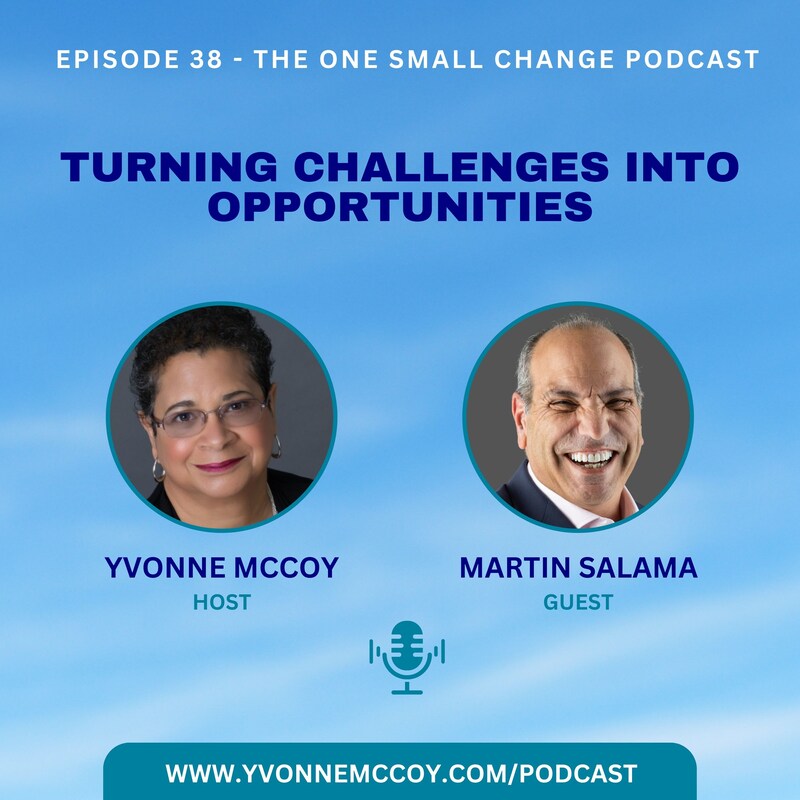
Join host Yvonne McCoy as she dives into an engaging conversation with Martin Salama, exploring how unexpected challenges can lead to significant personal and professional transformations. Martin shares his story of resilience through financial setbacks and personal changes, highlighting the powerful concept of shifting from a mindset of lack to abundance. Throughout the episode, Martin reveals his three-step cycle of A's—Ask, Act, and Attitude—and how entrepreneurs can apply this framework for sustainable success. Yvonne and Martin discuss the importance of open-ended questions, strategic networking, and the mindset shifts necessary to thrive in business.
Guest Bio:
Martin Salama is a renowned life coach known for helping individuals and entrepreneurs unlock their potential by shifting mindsets from scarcity to abundance. With a journey defined by resilience in the face of financial loss and personal upheaval, Martin has transformed challenges into opportunities, encouraging others to focus on growth and empowerment. His work now focuses on helping entrepreneurs create sustainable and thriving businesses through his unique coaching methodologies.
Chapters:
00:00 Life-Changing 2008 Project Venture
06:18 Mindset Shift Inspired by Ted Lasso
07:36 "Think 'How,' Not 'Does'"
10:36 Effective Questioning in Marketing
14:04 From Intention to Implementation
19:21 "Attracting Clients Through Self-Presentation"
21:17 "Ask for What You Want"
24:35 "Supercharge Your Business Growth"
Main Quote by the Guest:
"Things happen through me. Good or bad, they happen through me." - Martin Salama
Links to Guest's Website:
Transcripts
Welcome to the One Small Change, and I'm thrilled that you're
Speaker:here with me, and we're gonna embark on a journey of exploration and
Speaker:transformation. I'm your host, Yvonne McCoy, and I bring almost thirty
Speaker:years of entrepreneurial experience. And I have a passion
Speaker:for discovering how you can grow through the power of seemingly small
Speaker:change. And I wanna make sure that, you know, you know the
Speaker:things that are going on in this journey and that you can have the
Speaker:inspiration to keep exploring as well. This week, we are talking
Speaker:with the amazing Martin Salama. Martin,
Speaker:hi. How are you? I'm great, Yvonne. I'm excited to be here with
Speaker:you. Thank you for having me on your show. I am so
Speaker:excited. And one of the things you're gonna share is how a smaller
Speaker:unexpected change or decision sparked a remarkable
Speaker:transformation in the growth in the profession and what you do now.
Speaker:So tell us more about your small change, which typically in
Speaker:retrospect never seems small, and, what the
Speaker:impact it had on you. Oh my god. I could pick so many,
Speaker:but I won't go back to my childhood one. I I
Speaker:do have one from my childhood, but I'll go to one that happened basically
Speaker:to everybody in to most everybody in 02/2008.
Speaker:K? So it wasn't small at the time either, but, you
Speaker:know, this is one that shaped who I am today, I would
Speaker:say. The events of what happened, though, during that time shaped
Speaker:me today. So in the February, my wife and I were
Speaker:working on a project for five years to build a multimillion
Speaker:dollar health club and tennis center in New Jersey by the Jersey
Speaker:Shore. And it took us five years because, you know, you gotta go through all
Speaker:of the things you could think of. Find the land, do a feasibility study,
Speaker:architecture, engineers, then go to the city to get the approvals.
Speaker:And that was the longest part of all, getting the approvals. And during
Speaker:this time, we'd go to the bank and they're like, we love this project. We
Speaker:can't wait for it to start. You know, we'll we'll fund it when it's
Speaker:time. Fantastic. So in the fun of
Speaker:February, we finally get all the approvals.
Speaker:Go to the bank, and they're like, yeah. We're not lending right now. I'm like,
Speaker:what happened to we'll fund it whenever it's ready? You know, the last few years,
Speaker:two thousand five, six, seven, they were giving money away.
Speaker:Almost like when, you know, when you go to Costco and the women on the
Speaker:end of the condo are handing you samples Yeah. They were they were handing you
Speaker:samples. I refined my house a bunch of times during this
Speaker:time to fund the project. So they're like, yeah. Things are
Speaker:changing. I'm like, I don't care. You told me that
Speaker:it'd be. A month later, Bernie Madoff, the
Speaker:subprime loans, the financial world falls apart.
Speaker:And just like that, I'm broke. And I
Speaker:the 3 and a half plus million that I put in, that I borrowed, that
Speaker:I my investors is gone.
Speaker:And, I went into a depression for about a year.
Speaker:And during that time Only a year? Only a year. Believe it or
Speaker:not. Maybe a little more than a year. But, you know, during that time, I
Speaker:stopped paying my mortgage. I stopped paying I had no money. I stopped
Speaker:paying my car payments. About a few months later, my son says, dad, look
Speaker:outside. They were towing away my BMW.
Speaker:That's how broke I was, and I never had that happen to me before. I
Speaker:never had a car repossessed. The house eventually
Speaker:got foreclosed on. But because I lived in New
Speaker:Jersey and there were so many foreclosures, it literally
Speaker:took them years till they remembered about us.
Speaker:Right? So here we are. It's about a year or so later, and I'm
Speaker:saying, okay. I gotta figure out what I'm doing now. I gotta you know?
Speaker:And I decided I didn't wanna be a businessman anymore. I've been that my whole
Speaker:life, which they now call entrepreneurs. You know, back in my day, we were
Speaker:businessmen. Now we're entrepreneurs. You know? High highfalutin
Speaker:title. And I was like, okay. What do I wanna do? And I
Speaker:looked around and I thought about my life, and what I love doing best was
Speaker:helping community organizations as a leader. And people would come in and say, but, Martin,
Speaker:I can't do what you're doing. Said, but but, Yvonne, I don't need you to
Speaker:do what I'm doing. I want you to do what you're good at. And
Speaker:I realized I was coaching these people to their potential. So
Speaker:I looked at the coaching, and I decided to become a life coach. And
Speaker:a little small thing happened along the way. About two months before it was time
Speaker:to start life coach training, it was my twenty fourth wedding
Speaker:anniversary. And my wife gave me a very interesting gift that year.
Speaker:She said I want a divorce.
Speaker:I'm sorry. And I I I should've said something, but I didn't
Speaker:get anything like that for you. You know? But I didn't. You know? I was
Speaker:like, I was knocked. I I you know, to tell you the truth, I
Speaker:probably knew it was coming, but until it actually happens,
Speaker:nobody really believes that that's gonna happen. And I
Speaker:I I I said to myself, why does everything keep happening to me? And I
Speaker:but I made the decision I was still gonna go through with live coach training.
Speaker:And I think that was the turning point for me, making that
Speaker:decision to continue with that. Because as I started
Speaker:getting to live coaching and they said to me, it doesn't matter who you
Speaker:think you have to be. You could be whoever you want to be. That
Speaker:opened the doors for me and gave me the ability to
Speaker:search within myself and realize when I was saying things like, why
Speaker:does everything keep happening to me? That was me looking to
Speaker:blame everybody else. And now I say things happen through
Speaker:me. Good or bad, they happen through me.
Speaker:I it's funny because I had almost a similar
Speaker:experience in the sense of I bought a book
Speaker:that was written by Thomas Leonard about 22 strategies
Speaker:that you know, life strategies that everybody should have. And I bought it
Speaker:for I was teaching a community class. And so I bought it so I could
Speaker:give my students these strategies. And as I read it, I was
Speaker:like, oh my god. I need this. Oh my god. I need this. Oh my
Speaker:god. I need this. And at the end, it said, if you wanna
Speaker:learn how to coach, come to this free teleconference,
Speaker:which is it was like, I need all this stuff. And, again, because you didn't
Speaker:have to have the answers, you just had to ask the right questions,
Speaker:which for me was a total turnaround.
Speaker:I think, you know, one of the things that we very much have in common
Speaker:from what you said is that it's really important
Speaker:to be able to do so well, you can be yourself. There's so many
Speaker:societal kinds of constructs around us all the way from
Speaker:childhood all you know, with with the limiting beliefs and stuff like that.
Speaker:And it's like I heard somebody say the other day, it
Speaker:there are two kinds of people in the world. People who go, you know,
Speaker:you know, what happened to me, and people who go, what can I make
Speaker:happen? And I think that that is, you know, a
Speaker:mindset shift that you need. And and we get them in the
Speaker:weirdest places. One of the biggest places that I got a mindset
Speaker:shift was Ted Lasso. I don't know if
Speaker:if you've ever heard that seen that show. I have. I love it.
Speaker:But there's also a podcast that goes with that called What Would Good Lasso
Speaker:Do? And it's got a a a positive psychology coach and a
Speaker:leadership coach. The the show is only thirty minutes. The
Speaker:podcast is, like, ninety minutes. But
Speaker:it's like you know, it has changed my life. I mean, just to say to
Speaker:myself, don't be judgmental. Be curious.
Speaker:Wow. Just just just that that simple a
Speaker:thing. Right. Right. And for me, I look at it as, when
Speaker:I'm doing my my workshops, okay, one of the things I say to the people
Speaker:right at the beginning is I want you to ask yourself a question,
Speaker:but be careful how you ask the question. I don't want you to ask,
Speaker:does this apply to me? Change it just a little bit
Speaker:and say, how does this apply to me? By
Speaker:saying, does this apply to me, you're giving yourself a one word
Speaker:answer, yes or no. How does it
Speaker:apply to me is an open ended question that gives you the ability
Speaker:then say, okay. Let's see where we're going from here. It's like saying I
Speaker:can't. Instead, what you should be saying is how can
Speaker:I? Right. Right. So so just, you know, something
Speaker:that you've never talked about on this on this podcast is is the
Speaker:difference between closed questions and open ended questions,
Speaker:and and the quality of the response that you get
Speaker:when you have an open ended question. So can you talk a
Speaker:little bit about that and how entrepreneurs can use that?
Speaker:Oh, absolutely. Absolutely. So very often,
Speaker:especially entrepreneurs, and I say that the the
Speaker:difference between a good entrepreneur and a great entrepreneur or a
Speaker:bad entrepreneur and a good and great entrepreneur is are you a
Speaker:leader or are you a boss?
Speaker:Right? The bosses are the ones that that ask the closed
Speaker:ended questions. Did you do this?
Speaker:Right? The the leader is someone says, how
Speaker:did it go when you did this? How was
Speaker:it? Right? Or even or even better before
Speaker:it starts, you say, how would you do this? Right. Right. Sure. Absolutely.
Speaker:How would you do this? Exactly. Or instead of saying, do
Speaker:this, which is not even a question. Do this exactly as
Speaker:I tell you, which is really micromanagement saying, if you don't do it exactly
Speaker:as I'm telling you, then you're not doing it. Well, you know, my
Speaker:thing is, I always say, entrepreneurs have the knack
Speaker:of bringing in great quality, and then they micromanage them
Speaker:into mediocrity. Right. Exactly. So that's the
Speaker:difference. That's when you become either a leader or a boss.
Speaker:And the leader is looking to be inclusive of everybody,
Speaker:ask questions of everybody that that
Speaker:that invoke deep thought responses,
Speaker:not yes or no answers. That's the a closed question a closed end
Speaker:question is yes or no. It's did you.
Speaker:It's it's instead, the open ended questions are
Speaker:how did this come? What how did you do this? Why what was
Speaker:the reason for this so that they go so further? And then you go, and
Speaker:how did you feel about that? And or what was the end result
Speaker:of that? Things that invoke thoughtful
Speaker:answers. My favorite question
Speaker:is tell me more. Tell me more. That's a perfect one. Do you know?
Speaker:Because that way, it doesn't it doesn't, you know, it doesn't color the
Speaker:answer one way or the Right. And, you know, you can get
Speaker:clarification, and then you can ask, like, specific questions, which
Speaker:reminded me when we were talking about this. You know,
Speaker:one of the first I mean, the fastest way to use this is in
Speaker:your in your, marketing. If you say to
Speaker:somebody, do you need this? Then their answer is yes or no.
Speaker:Do you know? But if you say to them, how,
Speaker:you know, how many times have you struggled with or how how many different ways
Speaker:have you tried to get this done? Right. Then you then you get them thinking
Speaker:about and saying, oh, you know, I've done this several times. Maybe I
Speaker:need to find another way to do it. Right? So
Speaker:before we before we run out of time, I wanna make sure that we have
Speaker:plenty of time to talk about your free gift and and your, you know,
Speaker:action steps that you've got for all of us. Mhmm. Okay. Cool. So
Speaker:I I you you when we were talking beforehand, you said, you know, three
Speaker:step three three points or something. And I and what made me think of is
Speaker:something that's in my my what I started with was
Speaker:a coaching program that was about helping people
Speaker:shift their mindset from lack to abundance and all that stuff, which
Speaker:is very important in whatever you're doing, and I've incorporated into
Speaker:my new program. So recently, I came up with
Speaker:something specifically for entrepreneurs. It's called the three steps the
Speaker:secrets three step framework for a sustainable
Speaker:thriving business. Mhmm. Coaching business, it could be for
Speaker:anything. And it comes from something
Speaker:that's a mindset based that is in my book,
Speaker:and I call it the cycle of a's. Okay?
Speaker:And the cycle of a's takes something that is a little woo woo
Speaker:in the world and makes it a little more practical, which is the
Speaker:law of attraction. Okay. Right? People go, oh, that's
Speaker:all woo woo stuff. You think about it and it happens. And the people
Speaker:that don't really understand it, they go, oh, you know, I
Speaker:did the law of attraction. It didn't work. Because they're thinking very
Speaker:linearly linearly. They're thinking, okay. I think about it,
Speaker:and it didn't happen. And that's where the cycle of a's comes in.
Speaker:So for me, the cycle of a's are three letter a's
Speaker:that, you know, the people that are here, they can go to my site,
Speaker:which we'll tell you about later, to download some some
Speaker:some things. Right? And one of them is the cycle of a's, and on it,
Speaker:it shows it in a perpetual emotional cycle. The first
Speaker:a is ask. Ask God. Ask the universe for what you
Speaker:want. And that could be as simple as I just came up with an
Speaker:idea. That's an ask.
Speaker:Right? But if you just think about it and do nothing about it, and
Speaker:then three years later, you see it on TV and go, oh my god. I
Speaker:thought about doing that. Yeah. Right? How many
Speaker:of us have been there? Been there. Right. So that's where
Speaker:the the next a comes in. Act. Start
Speaker:working towards getting that ask. Oh, I came up with an
Speaker:idea. Well, what would it look like? How would it be
Speaker:become about? What are the steps that need to happen? And
Speaker:start putting it into motion. And then the last a is
Speaker:really where the rubber meets the road. It's a good way to put it.
Speaker:And it's have an attitude of I don't
Speaker:care about the outcome emotionally.
Speaker:Right? Because if you care so much about the outcome, that's
Speaker:where that lack mentality comes in
Speaker:and Mhmm. Goes everything out. So now this is in
Speaker:my program for anybody for thinking about it in that
Speaker:way, you know, in their life. So then I said, okay. Let me turn around
Speaker:and and put it into, into into business terms.
Speaker:So ask, clarify what you true truly desire for your
Speaker:business, set your intention, and get specifics on your
Speaker:goal, define your vision for your business, be specific about the revenue you
Speaker:want, the number of clients, and the kind of impact you wanna make.
Speaker:And it goes a little further than that. Then the act is move from
Speaker:intention to implementation. This is where the magic happens.
Speaker:Remember that the universe isn't Santa Claus. You
Speaker:know? You have to take actions. Then you implement it. Break
Speaker:out of your comfort zone and adjust as needed.
Speaker:Right? And then the third one is attitude. Let go of the emotional
Speaker:attachment to the outcomes and staying positive regardless of
Speaker:the results. Detach from the outcome after putting it in the
Speaker:effort, it's important to let go of any attachments, cultivate
Speaker:it, positivity, and maintain
Speaker:that mindset of abundance, and then it goes a little further.
Speaker:But you get the overall gist of it. Well, I you
Speaker:know, the things that you're saying are so important. I mean, one of one of
Speaker:my kind of philosophies is, you know, that
Speaker:you you grow in leadership. Unfortunately, for entrepreneurs,
Speaker:they tend to go right into kind of leadership and management of a project or
Speaker:whatever their skills is, and they don't spend enough time in kind of the
Speaker:personal development space because you need that
Speaker:when you move from projects to managing and leading other
Speaker:people. Right. So it's kind of like they feel like they're going
Speaker:backwards. What you know, what what's you know, that kind of thing. But I
Speaker:think, you know, the way that I describe a lot of what
Speaker:you're saying, don't get attached to the, you know, the specific outcome,
Speaker:is I I say to people, you know, the one of the biggest thing mindset
Speaker:that helped me is I used to think that success was kind of a
Speaker:binary choice. You did something you either succeed seeded or you
Speaker:failed. And what I found when I looked at that was
Speaker:things that I thought I didn't know that I could succeed in, I didn't
Speaker:do. Mhmm. Right. Now I now
Speaker:I yeah. I mean, now you know, because I was I was brought up to
Speaker:be, you know, you need to be the best. You need to be at the
Speaker:top of the class. You need to be you know? And so when to be
Speaker:perfect. Yes. And so I find so many people
Speaker:are practicing to be perfect, you know, that they never get anything done.
Speaker:And I went through that stage myself. I don't I mean, you know, everything that
Speaker:I talk about, I've done. So, you know, now I know that
Speaker:it's you take an action, you either succeed or you
Speaker:fail. Either way, you need to evaluate, you know,
Speaker:why did I succeed? Why did I fail? Make adjustments and and do it
Speaker:again. So my new model is fail for
Speaker:fail forward faster. Right. I love it. Because if I'm
Speaker:failing forward faster, it means I'm doing something and I'm
Speaker:I'm making progress. And that's really what it what it's about. And I think
Speaker:the other thing is, you know, a typical place where people want
Speaker:instant results is, you know, they go networking thinking
Speaker:they're gonna get a client, and you don't. That's not the purpose of
Speaker:networking. If you go networking and you say I never got a
Speaker:client, it's because you that was not where you were gonna
Speaker:find a client. What you're gonna find is connection
Speaker:and community who's gonna attach you to places and people
Speaker:where your your clients might be. Referrals. Referral
Speaker:partners. Yeah. And so I find you know, one of the things that I get
Speaker:you know, I think is I
Speaker:feel like everybody I hope that everybody that I meet and
Speaker:talk with leaves better off than when they when they met me.
Speaker:Right. Right. Is that And so so, you know, my goal is
Speaker:not focused on me. My goal is how can I support
Speaker:you? Right? Yeah. And it takes all the
Speaker:pressure off, and it it you know, that kind of thing. So,
Speaker:you know, we've talked about a lot of stuff. Mhmm. The
Speaker:one thing I kinda wanted you to talk a little bit more about was let's
Speaker:talk about money and the scarcity mentality
Speaker:because that, you know, that and the idea that I'm not worth
Speaker:it or you know, because when you when you talk with a coaching client that's
Speaker:in business, they're always under pricing. Yes.
Speaker:Yes. Because they don't believe in themselves enough.
Speaker:Right? So that whole money thing comes from the mindset
Speaker:of I'm not worth it or the lack or I don't deserve
Speaker:it. Right? Or why should I have it?
Speaker:Right? Instead of why shouldn't I have it? Why can't I have it?
Speaker:Right? And and it's understanding that you're looking
Speaker:at things with the glass half full half empty,
Speaker:excuse me, instead of looking for it as being full, not even half
Speaker:full, full. And that there's more that can come.
Speaker:And I think that's a one of the differences between attracting the
Speaker:right client and trying to sell somebody. Yeah. You know, because
Speaker:you're like, you know, you need my service. You know? But if you are putting
Speaker:yourself out there so that the things that you're doing, people go, that's an
Speaker:interesting person. I think I'd like to talk to them more, and you're attracting them.
Speaker:Right? By the time they become clients, they already know what your
Speaker:value is. Mhmm. And I think, you know, I think one of the
Speaker:best things, that can happen to two good
Speaker:things. One of the best things that can happen to somebody is you're talking
Speaker:to somebody and before you finish, they go, I wanna work with you. How much
Speaker:you know, tell me what I need to do. Right. I mean, it's just
Speaker:an amazing kind of thing. Right? And then the other
Speaker:thing is I don't think that we, entrepreneurs,
Speaker:know that we can say no. Yeah. You know, this is not a good
Speaker:person to work with. You know? And and it could be for a variety of
Speaker:reasons. Not that they're not a good person, but, you know Not a good
Speaker:fit. It's not a good fit. Right. You're not you're not at the right point
Speaker:in your business. You you know, whatever the case may be. You know, you can't
Speaker:put food on your table so you don't need to buy a $25,000 program. You
Speaker:know? I mean, it could be a whole lot of different things. And I
Speaker:I think that we go through, and I jokingly call it
Speaker:entrepreneurial prostitution. It's where where you're trying to get
Speaker:cash flow and you and and your mindset is, I can do anything if
Speaker:the price is right, which which dilutes, you
Speaker:know, which dilutes what you really do well. And and
Speaker:it also it also you know, if you get a client that's not the right
Speaker:client, it will suck the life out of you, and they will never be
Speaker:happy. That's so true. You could you could have two or three
Speaker:clients that are ideal, you know, and put in less
Speaker:energy than you put into somebody who is that you are just
Speaker:like Banging your head against the wall. Yeah. Yeah. I, you know,
Speaker:I I jokingly said long time ago when I first started, for some reason, I
Speaker:attracted a lot of male tech
Speaker:guys. Okay. And I love them because they always paid in
Speaker:full. They always showed up on their you know, for their coaching on time. They
Speaker:you know? But every time I brought something
Speaker:up, it was like, oh, I read a book on that. I read a book
Speaker:on that. And I was like, but did you do it? I did not. It
Speaker:was like when the when it was over, it's like, thank god this is over.
Speaker:Do you know? So so I think that that I I think some of the
Speaker:things that we're talking about is, you know,
Speaker:is if you don't this is this
Speaker:is my 40 my $40 best advice I ever got
Speaker:from my therapist. She said, if you don't ask for what you
Speaker:want, you're going to be uncomfortable and you're going to be
Speaker:disappointed a lot. Right. If you ask for what you want,
Speaker:you will still be uncomfortable, but you will get it a lot more
Speaker:often. So well put. Well put. And for me,
Speaker:the the concept was that I didn't wanna be
Speaker:uncomfortable. And then I realized I was gonna be uncomfortable either way.
Speaker:Well put. Okay. So we there's gonna be a link in
Speaker:the, in the notes where you can get this great, great
Speaker:gift. Right. Also, Martin does a workshop every month,
Speaker:so you wanna, you know, you wanna go do that as well. Yeah.
Speaker:Okay, Martin. Yeah. When was the last time you did something new for the first
Speaker:time? When was the last time
Speaker:I did something new for the first time? Oh my
Speaker:goodness.
Speaker:Well, last week. Good.
Speaker:Last week, I I was on vacation. We went to San Antonio, Texas in
Speaker:the January, and it was cold there. And they actually
Speaker:had a snowstorm of a half an inch where I'm like, okay. So big deal.
Speaker:It's for them. And we went to
Speaker:the Alamo. Oh.
Speaker:Right? And for me, I love learning about stuff.
Speaker:And what I learned there was that right near the right near
Speaker:San Antonio was the first Six Flags of
Speaker:in America. So anybody doesn't know six flags is a is
Speaker:a theme park. In New Jersey, they call it great adventures, but six
Speaker:flags. And do you know why it's called six flags?
Speaker:No. K. And neither did I. Okay?
Speaker:And I learned because Texas has been ruled
Speaker:by six different countries. Okay.
Speaker:Alright? Spain, France,
Speaker:Mexico. Those are the three easy ones, and America are the four is
Speaker:the fourth easy one. The last two are gonna surprise you.
Speaker:Number five is Texas was a country from when the
Speaker:Alamo when they lost the Alamo, and a month later, they beat the Mexicans
Speaker:in 1836 for ten years, eighteen forty five, nine years, whatever.
Speaker:Then they Mexico was coming after them. They go, we don't wanna be with you.
Speaker:We'll become part of America. So in 1845, they
Speaker:became a state in the union. And then the
Speaker:last one was they seceded with the rest of the
Speaker:Confederate States, so they were under the Confederate States of
Speaker:America, which made for number six.
Speaker:So that's why they're always saying they're leaving.
Speaker:That's fantastic. That's fantastic. Okay, guys.
Speaker:Before we run out of time, I need to wind this up.
Speaker:And, you know, so if you haven't done it already, I need
Speaker:you to subscribe and share this, and to engage on
Speaker:social media. And and, you know, this is designed to help
Speaker:you supercharge your business through connection. This is my way of giving back to
Speaker:the community and introducing people to you and ideas that's
Speaker:gonna help to you to fuel your quest for growth and impact.
Speaker:And I hope you will join me on the one small change and on a
Speaker:regular basis. And if you haven't gone to the, the the
Speaker:first page, you'll see all the people that have been kind enough to give their
Speaker:time and energy, to this endeavor. And so,
Speaker:Martin, what are your what are your last words? What do you, you know, want
Speaker:people to take away? What I'd like for them to take away
Speaker:is consider putting into action the cycle
Speaker:of ACE. Ask, act, and attitude.
Speaker:And you could go to the you know, you'll be able to go to the
Speaker:show notes, click on the link, and find the link there. You know, it'll
Speaker:take you to download a little deeper of what we talked about about
Speaker:ask, act, and attitude in the cycle of ACE. That is so
Speaker:fantastic because in the age of information,
Speaker:it's not just information you need. You need to know how to apply it and
Speaker:implement it. Right. So, guys, our time is up. And as
Speaker:I always say, remember, change is simple, but it's not always easy. It
Speaker:requires resilience and courage and a willingness to step
Speaker:outside your comfort zone. And so I hope you will take a few minutes
Speaker:every week to join me for the one small change as we try
Speaker:to, you know, have a bold vision and do
Speaker:innovative possibilities. And until the next time, I will
Speaker:see you then. Thank you, Martin. Thank you, Yvonne. It's been a pleasure to
Speaker:be here.