Shownotes
Forest Park, a vibrant gem in St. Louis, is celebrating its 150th anniversary this year, and let me tell you, it's got quite the backstory! We get right into the heart of the park's history, where we explore its origins and the myriad of events that have taken place since 1876. From hosting Olympic events to being the backdrop for Janis Joplin's free concert that had hippies dancing under the stars, Forest Park has always been a hub of activity and culture.
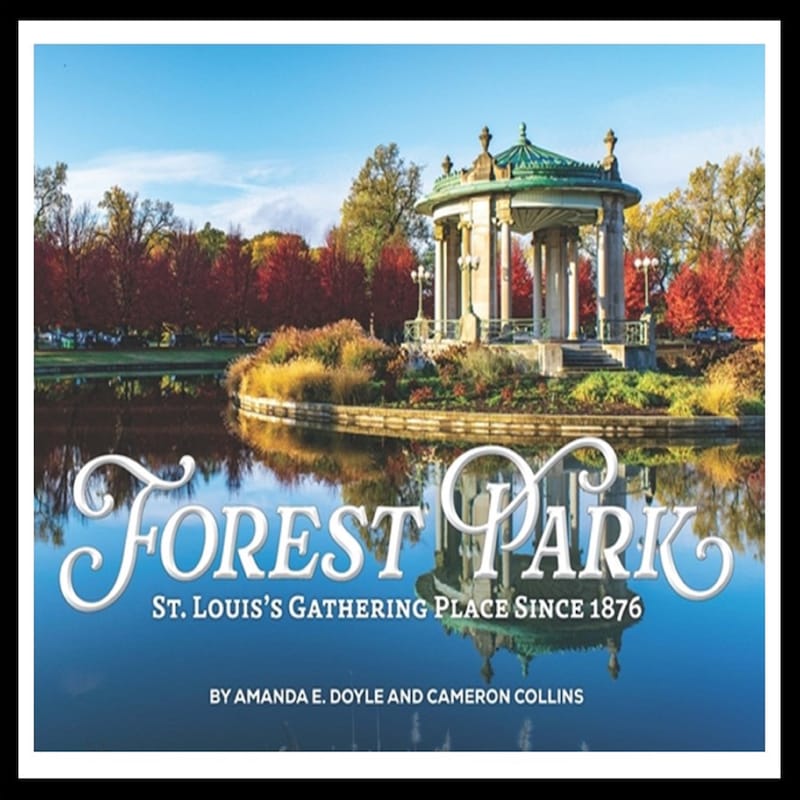
Our guests, Amanda Doyle and Cameron Collins, are the authors of a brand-new book that captures the essence of the park's rich history, titled 'Forest Park, St. Louis: Gathering Places Since 1876.' They share fascinating anecdotes, including how the park was once considered a potential site for an airport! Who would've thought that the sprawling greens could have been a runway? This episode is a delightful mix of humor and history, perfect for anyone wanting to learn more about this beloved park with some hidden history.
[00:00] Forest Park Teaser
[00:35] Show Welcome and Sponsor
[01:13] World Refugee Day Plug
[02:05] John Muir Quote and Guests
[03:00] Authors Bios and Banter
[04:11] First Forest Park Impressions
[07:09] Janis Joplin Free Concert
[08:53] Founding Vision and Land Deal
[11:13] Park Memories and Renewal
[14:03] Writing the Book Together
[15:35] Pageant and Kennedy Woods
[18:51] Hidden Monuments and River Des Peres
[21:45] Worlds Fair Myths and Legends
[24:44] Cut Stories White Ghost Dogs
[26:01] Handball Rivalries and Crime
[26:20] Handball Rivalry Tale
[26:57] Book Tour Dates
[28:24] Research Beats AI
[30:33] Bandstand Basement Lore
[32:33] Forest Park Fun Facts
[34:52] Tornado Tree Aftermath
[35:35] Sponsor Break
[38:15] Writing The Book Together
[43:25] Design Choices And Layout
[47:09] Wrap Up And Odd Holidays
[51:35] Final Sign Off
Takeaways:
- Did you know that Forest Park was the site of Olympic events, making it a historical gem?
- Each year, over 15 million visitors flock to Forest Park, proving it's a must-visit spot!
- Janis Joplin once rocked a free concert at the World's Fair Pavilion in Forest Park, how cool is that?
- Forest Park is the first park in the country featuring a statue of Thomas Jefferson, predating D.C.'s by 30 years!
- The park has undergone a massive transformation, thanks to the efforts of Forest Park Forever, revitalizing its beauty.
- Did you know that the park's original plan was for it to be double its current size? That's some ambitious dreaming!
Book Tour Dates/Times
June 20: Noon-2pm, Barnes & Noble in Ladue
June 22: 1-2pm, Clarendale Clayton
June 24: 4-7pm, Forest Park Boathouse (150th anniversary of the park)
July 22: 7pm, St. Louis County Library Main Branch
September 20: 2-3:30pm, Kirkwood Public Library
This is Season 9! For more episodes, go to stlintune.com
#forestpark #forestpark150 #stlouisparks #urbanparks #stlouishistory #urbanparkhistory
Transcripts
It was the site of Olympic events. 15 Million plus visitors come to this place yearly. It was the site of a free concert by Janis Joplin and has the first statue of Thomas Jefferson.
And it was the first in the country, predating the one in Washington D.C. by three decades. Where is it? You'll find out on St. Louis in tune.
Welcome to St. Louis in tune and thank you for joining us for fresh perspectives on issues and events with experts, community leaders and everyday people who make a difference in shaping our society and world. I'm Arnold Stricker along with co host Mark Langston.
Mark:Greetings to you, Mark, and salutations. All that kind of thing.
Arnold:All that kind of wonderful language like that. Even our vocabulary.
Mark:Yes, we'll have vocabulary words later in the show, won't we?
Arnold:Yes, we will.
Mark:Okay.
Arnold:Yes, we will.
Mark:I like vocabulary words.
Arnold:Folks, we're glad that you joined us today. We want to thank our sponsor, Better Rate Mortgage for their support of the show.
You can listen to previous [email protected] where you can follow us and even leave a review. And Mark, before we get to our thought to ponder, I wanted to mention some events that are coming up this weekend.
And if you're listening to this show, you can catch this. It will be June 20th. So it is the World Refugee Day celebration.
Four Hands Brewing Company on:So if you're out of state, you want to travel to St. Louis just for that particular event, you can do.
Mark:Come on By, we'd love to have.
Arnold:You on the Come on Down and the time is not listed here. So not quite sure what that is.
Mark:It's an all day thing.
Arnold:It could be an.
Amanda:We'll be there all day.
Arnold:World Refugee Day is an all day.
Mark:It's an all time thing. That's right.
Arnold:So we've got an interesting thought to ponder today. It's by a gentleman who's well known in the what I would say the park industry and the nature industry.
John Muir in every walk with nature, one receives far more than he seeks. In every walk with nature, one receives far more than he seeks.
And if you've ever walked through the park that we're talking about, which I just gave the answer to, it's Forest Park. All of my intro was about forest park in St. Louis, we're celebrating the 150th anniversary of the park.
Louis, gathering places since: Amanda:Thank you so much for having us.
Cameron:Yeah, thank you. It's a pleasure to be here.
Arnold:Now, folks, I want to give a little bio here. Amanda is a Midwestern transplant. She's the author of 12 previous books, From Neighborhood Guidebooks to A Compendium of St. Louis Music History.
Mark:Wow.
Amanda:12 Compendium. There's my vocabulary word for you.
Arnold:We've got all kinds of big words on St. Louis in tune.
Her website is AmandaEdoyle.com and Cameron Collins is the author of two editions of Lost Treasures of St. Louis, the co author of St. Louis the History of Brewing in the Gateway City, 3rd Edition and Scenes of Historic Wonders St. Louis.
es blog best personal blog in: Cameron:Thank you. Great to be here.
Arnold:So this is a.
This book is, folks, it's hot off the press@reedypress readypress.com and it's so hot that the pages, when I got the book yesterday, Mark, it was kind of glowing. And they said, just watch the ink doesn't run too fast on there.
Amanda:You might have gotten the radioactive copy. I'm a little worried about that handle with gloves, maybe.
Arnold:And for the radio. That's fine. It's radioactive.
Mark:That's why he glows in the dark.
Arnold:I got a question. Since both of you are out of towners, you're not natives to St. Louis like Mark and myself.
What was the first time you visited Forest park and what were your impressions?
Mark:Wow, What a question.
Amanda:I'm letting Cameron go first because he has an awesome meet cute story about him in Forest Park. So go ahead.
Cameron:So I grew up in upstate New York, little city named Elmira. I went to college at the University of Dayton in Ohio. And when I graduated, my parents flat out refused to let me move home.
And so my best friend from Dayton convinced me to move to St. Louis.
And my first time coming to St. Louis, I was being driven down Highway 40 with the destination being our or my new apartment in Baldwin, of all places. And I had never been to Baldwin before. And with all Due respect to that lovely community was not where a 25 year old wanted to live.
But as we drove, I looked on my right and I saw the St. Louis Zoo and I saw this magnificent park. And on my left I saw this cute little neighborhood that I would later learn to become Dogtown. The Pat Connolly Tavern was right there.
And I vowed, I'm going to live in one of those little apartments. And I did. About maybe a year later, I was in one of those apartments and I had Forest park unfurled from my door.
Arnold:Oh, wow.
Cameron:And it was the best few years of my life. I loved it.
Arnold:Forest park was your front and backyard.
Cameron:It was. It exactly was.
Mark:Did it remind you of Central park in New York at all?
Arnold:No.
Cameron:And I. I do have a lot of experience with Central Park. I didn't grow up in the city, but my dad was from New York. But. And it's a wonderful place, but it just has a different vibe. You don't.
You can't drive in Central Park. It's smaller.
Arnold:A fact that New Yorkers really don't realize.
Cameron:Yeah. And it doesn't have all the cultural institution that we have here. And it just has a little.
But they're both wonderful parks and they're both wonderful in their own way.
Arnold:Yes.
Amanda:Amanda, I'm trying to remember the first time I feel like probably I came to the various institutions I think I visited. The zoo was the first thing that I ever. And that was when I was in college in Columbia. And it took me a while to.
And I think maybe this is common experience. It took me a while to see the rest of the park in between. I knew the zoo and I knew the art museum, the science center, Steinberg Rink.
But seeing the interstitial part that is the park, all of that stuff, it took me a long time to appreciate. That's all. That's really what's holding it all together. That's the common factor.
Arnold:I think it's kind of like executive function with your brain. You get older, executive function kicks in. I think it's like for me, maybe for you, Mark, to executive function of the park.
That and what you were mentioning, that you really don't appreciate it until you get older and you can see the vast opportunities and the richness that it can give.
Amanda:Yes. And all the connection in between things that you maybe thought of as separate before. Yeah, definitely.
Arnold:So I'm going to jump right into it here. Big aha's for you guys. I was looking at this and when I heard about the free concert by Janis Joplin. I was like, holy smokes.
Mark:I don't remember that at all.
Arnold:I don't either.
Amanda: n there remembers it. I mean,:And there is actually there's some video on YouTube but it does not have audio. There's little snippets of it. But the story as we've been able to find information.
She had played a show the night before at Kiel, if I'm remembering that right.
Arnold:That's correct.
Amanda:And it, it didn't go as long as the fans wanted. I think she went on late. There was kind of. People were unsatisfied.
And so the next day she and her band played, pulled up at the World's Fair pavilion. Word had spread amongst people that this might be going to happen.
And they played just a flat out free show at World's Fair Pavilion for all the long hair hippies who hadn't had enough the night before, which is incredible.
Arnold:That was Mark and myself.
Mark:I had long hair.
Arnold:Yeah, you did.
Mark:And I. Funny you say the World Fair pavilion. I forgot they did free concerts there every Sunday or something. Saturday or Sunday.
Amanda:There are some really great images of like just out there.
Mark:Great artists came out.
Amanda:Forest Park Forever has a really good blog section on their website that's not super period, super often updated but really good in depth stuff there. And they have a story about the Janis Joplin concert and then a bunch of pictures of other shows that happen.
But yeah, we think Loofest and Evolution Fest are the first music we had in the park. But there was. Casey had shows there, there was a Rush show in the park, all kinds of stuff like that.
Mark:So that's pretty cool. I do remember that.
Amanda:Yeah, There you go. You got one in your pocket. At least I do.
Arnold:Cameron, what's big? Aha. In doing the research for this book,.
Cameron:My favorite fact is, and probably my favorite fella is Hiram Leffingwell. He was the guy that had really had the vision for Forest park. And if he would have gotten his way, the park would have been twice as big.
e park instead of being today: Arnold:Yeah. WashU wouldn't be where it is.
Mark:Wow.
Arnold:That'd be the park.
Mark:That's a big park. Park.
Cameron:That's a big park.
Mark:Yeah, that's a really big.
Cameron:I mean it would have probably would have extended maybe to Big Bend, you know, going west. And it also just that many people found it absurd the Idea of where they put the park.
you know, in St. Louis in the:They. But as Amanda tells the story, really it turned into kind of a real estate deal.
nd so forth, we ended up with: Arnold:He got shut down the first time he did talking about this park. And then what is it, 20 years later or something like that?
Amanda:Yeah, it was 15 or 20 years for sure.
Cameron: e initially it started in the: Arnold:And then there was some dust up about selling bonds for funding. Yeah, that went to court.
Amanda:We have a great photograph in the book. We have a mutual local historian friend who lent us this artifact that he has purchased. That was a sheet of. Of redeemable coupons.
So you were purchasing a bond to kickstart the construction of the park and then you were going to be able to turn in your coupons for $6 return every month or whatever.
Arnold:Kind of like SNH Greenstand.
Amanda:That is exactly what I thought when I saw it. Set of knives. But yeah, that was later deemed to be not the way it was going to happen.
Yeah, the state legislature was involved with a lot of the creation of the park and how it was all going to go down.
Mark:I love that park. I grew up off a big bend right down Forsyth, so we spent a lot of time in that park as a kid. There's a waterfall right there by Skinker.
We used to swim that and we used to ice skate on the lagoons and there's nothing like it. And I think people still do it today. And I would.
If you guys ice skate, I would tell you to try it when it gets really cold and you know that you're not going to fall through, but boy, it's fun.
Amanda:So how many kids in your family, Mark?
Mark:Just two.
Amanda:Okay.
We did a talk for the Landmarks Association a couple weeks ago and somebody in the audience was saying when I was a kid, like we were there all the time, said there I was one of 11 kids and there was so much free stuff to do in the park. And I was like, your mom was like, go find free things. Eleven children. Thank you.
Mark:Sounds like the hard Tricks. In our neighborhood, they had 11 kids.
Amanda:Oh, could I Catholic.
Mark:It's Catholics.
Arnold:Forest Park Forever has done some wonderful things because on Art Hill, the golf course used to go right. It's a hole that went right through there.
Mark:Still. Good argument.
Arnold:There was when it snows. Oh, yeah.
Amanda:But not to play golf down there.
Arnold:No. We used to build fires and everything there too. Stay warm. I don't know that you can do that now. But the curbing was all torn up.
The park was really in. In disrepair.
Amanda:Yeah.
Arnold:Until Forest Park Forever really kind of came on and has rejuvenated and it's keeping it up.
Matter of fact, I want to mention, if you're not comfortable skating on one of the ponds, you want to go to Steinberg, where the ice is probably maybe 3/4 of an inch thick and you won't drown if you happen to go through the ice. And they're renovating that to make that interesting.
Amanda:I was going to say talk about Forest Park Forever. It is turning into. They are re envisioning that whole side of the park. It's going to be incredible.
And one of the things that's going to be awesome, even though it's not that sexy, is they're improving the access across Kings Highway. Because if you think about crossing Kings highway east side of Kings highway, that's.
There's thousands and thousands of people who want to get to the park. And it's. Right now it's a pain.
Mark:Yes.
Arnold:And they've linked all of the waterways together, I believe now. So all the waterways are connected.
Mark:Yeah. See, when we used to ice skate, it was terrible. You didn't go round and round like.
But when we get on those lagoons, you just go straight and go forever.
Arnold:Yeah.
Amanda:Yeah.
Mark:That's a little bumpy, but it's. But fun. I highly recommend it. Put those skates on, Ronald. I want to see you skate.
Arnold:I have been. I learned to ice skate before I learned to roller skate.
Mark:I never roller skate. Did you guys roller skate?
Amanda:Oh, yeah.
Cameron:Oh, yeah.
Amanda:I love to roller skates.
Cameron:Omar New York Joy Crest skating.
Amanda:Oh, mine was Skateland South. All right.
Mark:Okay.
Arnold:Had those roller skates that you actually attached to your leather shoes.
Amanda:Oh, yeah. Those are fancy.
Mark:Not that they're younger than you are. They had the ones with the blades on them.
Amanda:No, I could never master that. No.
Mark:Okay.
Amanda:No. I need some grounding. 1. One plane of existence is not going to work. I need four. Four things on the ground.
Mark:An exit ramp there. Arnold. Sorry.
Arnold:No, you're fine. So when. When did you Start working on this book.
Amanda: Oh gosh. What year is this?: Cameron:I feel like we started talking about it.
Amanda:That's what we did, a lot of talking.
Arnold:I do remember how you guys get together on that too. That's part of that. Keep going.
Cameron:Yeah. I remember bumping into Amanda in a schnooks months and months ago and I was like, hey, aren't we supposed to be writing a book?
And but what's great is Amanda and I have actually known each other for years. We both of course were in the stable of reading press authors. And so I do remember the first time we met was at this party.
It was at the Royale, which is our home base. That's where we did a lot of our weeds, where we wrote most of the book was in a bar.
Mark:And what's your background?
Amanda:Yeah, you're like, I want to see all your tabs. Your tabs for the last year and a half.
Cameron:And so I will tell you, I thought I was done writing books. I have a day job and it's just a lot of work.
And Amanda called me up one day a couple years ago and said, hey, I wrote the Tower Grove park book and I. We've. I want to write this book about Forest park and I want to write it with you. And so I was like, only one person can bring me out of retirement.
That's Amanda Doyle. Yeah. And I'm just grateful because it's been so fun and it's fun talking about Forest Park.
Mark:Yeah, it's a great book. I just finally got hot off the presses and yeah. Got a chance to look through it. It is great.
Arnold:It is.
Mark:I just stopped and started reading. I go, wait, I don't have time to do that. It's really a great book.
Arnold:And I've never heard of this. The pageant and, and oh, and mass stories.
Amanda:There are so. Yeah, that's a. That was post World's Fair.
Of course a lot of people think of the World's Fair as that was the shining moment of not just the park but of St. Louis. But it was St. Louis got a taste for large events in the park after that for big public civic celebrations.
inning of time until today in:There were hundreds of thousands of people who came to see it over the course of a couple of evenings. It's just the Kind of thing that you almost wonder, could we pull something like this off now?
But it was really an incredible moment for the park and for people's idea of what you would go to do in the park that you could go to a huge event like this.
Arnold:It was a celebration of the 150th anniversary of the founding of St. Louis.
Amanda:Yep. And they had. They had people representing Greek mythological characters and native tribes and early explorers and all kinds of stuff.
Mark:Are the Kennedy woods still in Forest park named after Heck?
Cameron:Yeah. And okay. And so originally they were really just called. It was called the wilderness.
Of course, they didn't get Kennedy's name in Kennedy Forest until after his presidency. But actually the Kennedy woods is probably the closest part of the park today that looks like its original landscape, where I'm amazed by it. You.
If you walk into Kennedy woods today, you can feel like you're in the woods. You're in the woods.
Mark:Yeah. Amazing. It was like that when we used to go through.
Arnold:But.
Mark:Go ahead.
Cameron:But yeah. And I just.
That's something I love about the park so much, is you can go from that feeling of I'm in the wilderness and take a few steps and you're in front of the St. Louis Art.
Amanda:Museum or playing handball or going to the planetarium. It's all within that span of acreage, which is pretty cool.
Cameron: h century, latter half of the:And we had guys like Logan Rivas saying they should move the Capitol because that was.
Arnold:There was a big press to do that.
Cameron:There was actually a convention. And. But this eastern states simply said, we don't want that, so we're not going to show up.
So the vote was lost, but they had plans to tear down like the White House and the Capitol and rebuild it on the grounds of Jefferson Barracks. And so there's so much St. Louis in forest park, this grand scheme plan. And you start even to mention as well, but it's still St. Louis.
So the wheels are going to come off a little bit here and there.
Arnold: Louis, gathering place since:And we have authors Amanda Doyle and Cameron Collins in studio. This enduring nod to great St. Louisans. I have never heard of that, and I've never seen that.
Amanda:Okay. So I had to go looking. I'm glad I'm not the only one. So there's an award given every year called the St. Louis Award, and I will say I do see it.
I'll see it in the paper when it happens, given this year or two, and it's who has been the greatest influence in the community in the last year or whatever.
Mark:Have you gotten this award yet, Arnold? I know where I haven't gotten anything.
Amanda:Clearly we haven't. They've lost all of our numbers.
But I read about it, and then I read that they don't give the individual a plaque or whatever, but there is a permanent monument in the park that is the award for everyone. So I literally parked my car and went looking because I knew it was somewhere near the base of the World's Fair, Pavilion Hill.
And that's where it is. It's in a little grove of pine trees. And the statue itself, the sculpture, is called Pine, and it's this stylized, like, rusting corten pine tree.
Abstract pine tree. But now that I've seen it, Arnold, I'll tell you this. I can't not see it once you know it's there.
So every time I'm driving, I'm like, oh, there it is.
Arnold:Yeah.
Amanda:But I've walked and driven and run by it a thousand times and never knew it was there.
Arnold:That's the thing you can drive through and your eyes are catching different things. Walking or riding your bike is a whole nother thing.
Amanda:Yep.
Arnold:And it kind of gets you back to those places, kind of like the. The Turner Memorial. Or you're going to see the. Up by the Jewel Box, the ruins of the front of the. What is it, one of the places.
Cameron:Van Deventer Place.
Arnold:Vandeventer Place. Unless you get out and, oh, there's a plaque and read that.
Amanda:Oh, there's plenty of things in Forest park that I'm sure most people don't have any idea are there because it. And maybe you just always go to the Muni and that's all you do in the park. So you.
You know that route, but you have never seen the things that are just around the History museum. There are a bunch of plaques on the sidewalk called History Underfoot, and they're just little factoids about different things.
And unless you were walking, you literally wouldn't see it. So there's quite a lot there.
Cameron:And how about. One of my favorite things that you can only see while walking is the entrance to the river to Pear, which was routed underground in Forest Park.
Mark:Where's that?
Cameron:It's on the. It's on. It's off of walking the loop. Kind of near the hatchery, kind of near the fish.
Amanda:And you would never know it's there. It's literally just like a grate.
Arnold:The fish hatchery on the ground.
Mark:I'll be.
Amanda:There are plenty of people who have never seen the fish hatchery.
Cameron:It was terrifying. It's not. It doesn't look like something you'd want to go walking down, but that's how they get down there if they need to.
Mark:I had no idea.
Arnold:Okay. So I'm going to have to off air. I'm going to have to find that spot. I always thought that that happened at. In University City.
That was the kind of the entrance back in there. And then it. They went under Skinker and into the park.
Cameron:There could be another entrance.
Amanda:Yeah, that's the one that's in the park that we know. So. Yeah, they're not advertising it, I'll tell you that. I don't think they want people exploring.
Arnold:We'll need to delete this area. This portion.
Amanda:Please eat this podcast once it's a. Oh, okay.
Mark:You had mentioned the. The. The fair. The World's Fair. So I grew up really close and we used to drive down Forest Park Expressway.
Arnold:Yeah.
Mark:And the old. Do you remember the old concrete wall? Yeah, the old concrete wall. I miss it. And I just finally noticed how they rebuilt it.
And they have little indentations where you used to be able to look through the wall. They had these long. But they filled those in. It's just. It's not the same to me without.
Amanda:The little spy holes.
Mark:Yeah, they were kind of like long. You couldn't get a body through it. But you.
Amanda:But you could try.
Mark:But you could look through and see what was going on with the World's Fair. And it was all along there. And I was talking to somebody about it and they didn't even know. What do you mean? There was a wall here?
I said they tried to replicate the wall.
Arnold:Yes.
Mark:You know, not a very good job. No, they didn't. It wasn't. Yeah.
Amanda:There's so much. There's so much. That's one of the great things about the fair history in the park.
There's so much lore and things people think happened and things that really did happen. And it's. It's an Unending source of conversation about.
Mark:The hot dog did. Was that invented at the World's Fair?
Amanda:Was not.
Mark:He's saying no ice cream. Cameron. No.
Cameron:We actually have a section in our presentation. If anybody's wanting to hear us talk about this. We actually have a myth busting section.
Mark:Oh, come on. Camera.
Cameron:It's no fun. But the hot dog, it's possible that it gained popularity as a result of the affair, but it was not invented there. But we do have the waffle cone.
Is true. That one's good.
Amanda:Yeah.
Cameron:And then the other big myth that we even at one of our presentations somebody pushed back on us is that the axle for the Ferris wheel is buried in the park somewhere. That is also false, but not according.
Amanda:To one woman that I met two weeks ago. She's convinced that I'm wrong and she's right. And I was like, you know what? I wasn't there. So, I mean, could be.
Mark:That's good.
Amanda:Let's see.
Mark:Sorry, Arnold.
Arnold:Is she going to get her.
Mark:That's all right.
Arnold:Metal detector out.
Mark:I heard they put the whole Ferris wheel. They buried the whole thing. Not just the axle, but the whole thing.
Amanda:I mean, if you want to talk about going off the rails, we're not going too far. But can I tell you, there is a whole conspiracy theory involving a. An ancient race of technologically advanced people called the Tartarians.
Mark:I heard something about this that's in the book.
Amanda:Some people say. No, it's actually not too much. I think I might have said the word. But I was scared to go to. I don't want to bring out the Tartarians against me.
But yeah, there.
There is a theory that all of these buildings of the World's Fair were there because they were created by these ancient people and they've been there. And it's a whole. That's a YouTube hole. You don't want to go down. Do that in a private browser.
Arnold:Call home.
Cameron:We may need to mention that in one of our events.
Amanda:We might need to. I'm scared.
Cameron:We have an event coming up at the Royale. Stuff that didn't make the book. And maybe that needs to go.
Amanda:That'll be later in July. Yeah.
Arnold:Can you give us a. A teaser?
Amanda:Oh, sure.
Arnold:Give us something that didn't make the book.
Mark:Yeah.
Amanda:So in the 70s. It's been a while since I've researched this, so let's not. Let's keep the dates broad.
In the 70s, there was a band of roving stray dogs that got into the St. Louis Zoo and they were going in at night and attacking zoo animals like antelopes, little things they could get to. And they acquired this legendary status. And the lead dog was allegedly a pure white dog that they called the white ghost.
And St. Louis started watching what was going on with this and the police department was called in to come and help and apparently were just firing shots into the zoo to hope they hit a dog.
Mark:Oh, there you go.
Amanda:And actually accidentally shot a zebra.
Mark:Oh my gosh, it's terrible.
Amanda:And the dogs I guess eventually went away. But people were writing in letters to the editor saying if the White Ghost is captured, I'll adopt him. Like St. Louis, of course supported the dog.
They were like these poor animals.
Mark:Sympathy.
Amanda:Yeah. So that'll be in the. The Forest park after dark, kind of.
Mark:So does that mean there's a volume two? I'm sorry. Of this book.
Amanda:Yeah. It will have to print it as like a pulp magazine maybe with the.
Arnold:White Ghost on the front.
Amanda:Totally. I don't know if that's gonna merit the hardcover book treatment. That might be more of a one off kind of thing.
Arnold:But Cameron, what's your. That you can reveal.
Cameron:I still like the handball.
Amanda:Oh yeah.
Cameron:And Amanda, you actually did research on this as well. Well, all the sports and so forth in the park. But I guess like that handball court over there by the visitor center has been the site of some.
Some testy competitions, I guess we can say. And wasn't there a fella that there was a murder?
Amanda:Yeah, there was a guy who was. I feel like this was the late. I feel like the 70s was really. When this is going on. Late 70s and he was called King Julio.
His name was Julio something. He called himself King Julio but he was like shot when he was leaving the court and it was unrelated to that.
But his main rival in handball that everyone knew like then had to stand up and be like, it wasn't me and. But I am the best handball player now. That kind of thing.
Arnold:It's one way to win.
Amanda:If I had done it. Oh my. So yeah, lots of. Lots of crazy stuff. It's a big part.
Arnold:So what's on the agenda for. I know we've got matter of fact folks on the agenda for them. They are going to be traveling all over the place speaking and talking about the book.
I want to give you some dates and some times and locations. June 20 from noon to 2pm at Barnes and Noble in Ladue. June 22 from 1 to 2pm at the Clarendale Clayton.
That's free and open to the public on 24 June, which is the anniversary of the park, the actual anniversary. They'll be at the Boathouse from 4 to 7pm on the 22nd of July.
They will be at the County Library Headquarters at 7pm and September 20th from 2 o' clock to 3:30pm at the Kirkwood Public Library. And I'll put those on the podcast page so you can check those out. Also, where can they check out other dates and times and locations that may occur?
Cameron:I will. I haven't done it yet, but I will put them on my website. I know that for sure. Which is distilledhistory.com okay.
Amanda: page for the book, orrestpark:And also we'll be putting up some of the historical images that either are in the book or just couldn't fit in the book because there are so many incredible historical photos of the park and things in the park.
Arnold:Now let people know you both have written tons of books. Let people know this is something, a real simple kind of deal, right?
Amanda:Yes.
Cameron:What do you mean?
Amanda:Say more?
Arnold:It's something that I can go and I can Google this stuff and I just put it in, throw it into AI spits it out for me and I've got myself a book.
Amanda:Yeah.
Arnold:And I can put that on Amazon and ebook at it and I can make lots of money.
Cameron:I think you could do that, but I think. Doesn't our publisher have an AI checker?
Amanda:Indeed they do. And also I was with you till the make lots of money part. You could probably sell a lot of books. I don't know if you could make a lot of money.
It's expensive to print books. But no, it's. This is the thing we. In the book, actually, we have an entire bibliography of all the sources that we consulted.
This to really have a picture of the whole park and not just what happened in the last 150 years. You could Google that. But I think what we bring to it and why we work so well together is the context of it. What does this mean?
What does this thing that happened in the park have to do with the rest of St. Louis and how we, how the city has changed and what has happened in this city in relation to the country? Everything. All that context and just connecting those dots is really, I hope, what we managed to do in the book.
Arnold:Because you spent a Lot of time. Missouri History Museum, other museums, newspaper archives,.
Amanda:State Historical Society, People's stories. A good friend of mine gave me two milk crates. Her dad worked for many years. He was a union guy in North County. And the unions used to have their own.
Not only headquarters buildings, but libraries of materials related to whatever. So electrical workers would have different things. So they.
He had a whole Collection of Just St. Louis History books that he had accumulated over the years. And she brought me these two milk crates from her mom's basement and said, there may be some stuff in here you can use.
There was stuff in there I have never seen in any other library that were just there. So just people offering their stories and their photographs and their family. Their family picnic pictures and. And things like that are really.
Mark:That's volume three. You got us working the front. The front of the book. Yeah, that is. Is that in front of the Muni? Is that bandstand in front of the Muni?
Amanda:Yes, that's it. The Nathan Frank Bandstand.
Mark:Is that right? Yeah. And there's a basement to it. Have you seen. Seriously, did you all have it? Don't know this.
Amanda:It's like the basement in the Alamo.
Mark:From peewee's plant stuff. No. We went over there once when it was frozen.
Amanda:There's a lot of hijinks you got.
Cameron:Up to on frozen, but I'm getting ideas.
Mark:We rode our bikes over there, though. We'd ride around on bikes. Yeah, but there's a. If you look at it. If you go along, look at it sometime, and you can see the door that goes.
It goes down underneath there. And I think the band members. That's maybe their. Their dressing room or whatever it was.
Amanda:Listen, if there's a basement. We're getting in.
Mark:There is. There's a basement to it. So there's a lower level.
Amanda:Cool fact about the basement.
Mark:It's about as big as that is. Yeah, I've always loved it. Yeah. And once you go over and you see it. You want to go back now?
Amanda:I want to go in the basement. There was a pavilion there before when the park was built.
There was always a music pavilion there, but it looked very different and had an onion dome looking kind of thing. And it burned down not too long after the park opened or not too long after the fair. Actually, it was there during the fair.
People took pictures, but it's called the Nathan Frank Bandstand.
Mark:Didn't know that. I never knew that.
Amanda:Nathan Frank was a congressman from St. Louis. He was actually the first Jewish elected official in the State of Missouri, I think. Definitely in the city.
And he donated money to refurbish the bandstand. And that was the first private money donation to the park in history.
Mark:It was always like that with the moat around it. I guess they take the band members over by boat.
Amanda:They used to have. I've seen before when they have, like a walkway out there. So I don't know if that's for.
Arnold:Maintenance or float over in the timpani.
Cameron:I never.
Mark:I know. I would have loved to have seen it in action.
Arnold:Oh, yeah.
Mark:I think they should do something over there once in a while.
Arnold:Yeah.
Mark:Before a muni thing.
Arnold:Yeah.
Mark:They have a little band over there.
Arnold:Playing or something that would be giving them some ideas.
Cameron:I love how we're still learning.
Mark:Yeah.
Cameron:We just learned that there's a basement.
Amanda:There we go.
Mark:It's there. I'm telling you.
Arnold:Okay. While we're talking about.
Mark:I know.
Arnold:Let's go ahead and do mental floss because I do have some lesser known, fascinating facts about Forest Park.
Amanda:Oh, boy.
Mark:Okay, let's go.
Arnold:And we all know that a major river is buried underneath the river to pair. Okay. But did you know that the park contains salvage hotel ruins?
If you walk past the scenic ponds near the Muni Opera House, you'll see decorative stone ruins. They are not replica park decorations.
They are real salvage limestone pillars and arches rescued from downtown majestic Lindell Hotel after it burned to the ground in.
Mark:Wow.
Amanda:Keep going.
Arnold:How about we know about. I did. I thought this was very interesting and maybe Cameron, you alluded to this.
Deep inside Kennedy Forest, located right next to Skinker Boulevard, lies a hidden geographic anomaly called Pine Circle. Perfectly symmetrical ring of towering pine trees that does not appear on standard digital map park maps.
Locals know it as a secret oasis to lie down on the grass and look straight up into a geometric canopy of gray green. Wow.
Cameron:That one I knew about.
Arnold:Wow. That it was almost an airport.
In the early 20th century, after the World's Fair, serious proposals were introduced to pave over portions of the park to build a, quote, air landing field, unquote, to accommodate emerging commercial aviation flights right into the center of the city.
Mark:Sure. Now, Lindbergh. Charles Lindbergh didn't. I think you have something in the book about Charles Lindbergh.
When he finally came back, he packed the house. Boy.
Amanda:Oh, yeah. He buzzed that entire crowd out in front of the history museum.
Mark:Yeah. And it was packed.
Amanda:There was. There were air flights there briefly. There was a airmail route between St. Louis and Chicago.
So where the horse stable is now the St. Louis Mounted Police headquarters is the former airplane hangar.
Cameron:Yeah.
Amanda:Yes. And Lindbergh flew that route for a while.
Cameron:Looks like an airplane hair.
Mark:Did you know any of this?
Arnold:I knew they had done some really short takeoffs. Friend. That's where the equestrian place it. Exactly.
Amanda:Yep.
Mark:Yeah, that's what she said.
Arnold:Yeah. I was. Sorry, I was reading this thing right here that the World's Fair actually ruined the actual quote unquote forest.
They chopped down gazillion trees to make room for the World's Fair and drain its natural wetlands. And it took decades to bring the quote unquote forest back to Forest Park.
Cameron:Yep.
Mark:It's. Speaking of the trees. What a terrible. That tornado. Tornado driving down Lindell. And it's. Wow. It just is different. Yeah, it's completely different.
It is. Wow. It's tremendously different. I don't know if you've noticed.
Arnold:Yeah, they've done a good job of putting some really tall replacements in too. They're not starting with a little sapling. Yeah, they're like 10, 12, 14.
Amanda:Yeah. They went looking for ones that were already well established so they could get it back as well quickly as possible.
Mark:I never noticed really how much those.
Amanda:Trees really until they were gone. And you thought, why is it so bright?
Mark:Yeah, why should I see so far I know. Why is that golf ball this way?
Arnold:I want to take a quick break and come back. And I have one final question for our guest. This is Arnold Stricker with Mark Langton of St. Louis in Tune. We'll be right back.
As strange as it may sound, at Better Rate Mortgage, we love talking to people about mortgages. Everyone in St. Louis promises a better mortgage rate. But what you really need to turn that perfect house into your dream home is a better mortgage.
At Better Rate Mortgage, we open the door to so much more. So where are you in the home buying process? Researching, maybe wondering how much you can afford. House hunting.
Get a pre approval from Better Rate Mortgage Ready to buy. Our team is ready to make your mortgage process fast and easy.
Whether you're purchasing your first home or taking cash out to make your dream home even dreamier. Our door is open. Come on in and get started. Today we'll show you how.
-: Scott Heritage Foundation. In:The decision declared that Dred Scott could not be free because he was not a citizen.
,:The Dred Scott Heritage foundation is requesting a commemorative stamp to be issued from the US Postal Service to recognize and remember the heritage of this amendment by issuing a stamp with the likeness of the man Dred Scott. But we need your support and the support of thousands of people who would like to see this happen.
To achieve this goal, we ask you to download, sign and share the one page petition with others. To find the petition, please go to dredscottlives.org and click on the Dred Scott petition drive on the right side of the page.
. Louis gathering place since:This is the 150th anniversary of Forest park, the greatest park in the United States. I should say the greatest urban park in the United States. And we're talking to Amanda Doyle and Cameron Collins about this book.
You can get it at Reedy Press, folks.
Check the podcast page for sites and times and dates where they will be talking about the book and you can get an autographed copy and listen to what they're going to say. Last question here. There are seven chapters here. How did you divide up? And each chapter has, gosh, at least 10 sub areas.
How did you divide up what you were doing here? Did you say, okay, we're going to draw straws on this? Or Cameron, you were like, I like the early part of the park.
And Amanda, you were like, I like the last part of the park. How did you go about doing that?
Cameron:You hit the nail on the head there. The early years are very Cameron heavy because I love that old history.
And the newer years are really Amanda heavy because Amanda had an in with Forest park forever. And. But also there are funny things where. And she ribs me about this. I have never sledded on Art Hill.
Amanda:Really ridiculous,.
Cameron:I know. But I grew up in upstate New York in the Finger and I looked at Art Hill and I was like, that's not a hill.
Arnold:So it is in St. Louis. So I'm rude.
Cameron:So there were topics where I was like, I mean, you take sledding, because I've never done that. You take ice skating, because I'm not a fan. I'll take the birds.
Amanda:Yes.
Cameron:Amanda's rolling her eyes because she's saying, oh, he's going to talk about birds now. But I. My number one activity in Forest park is birding. And you'll see my bird photos throughout the book.
Mark:And you like that bird cage.
Cameron:I love the cage, but I really. I love Kennedy woods and the Hatchery. Those are my two favorite birding spots.
Arnold:Yeah.
Cameron:And so a lot of it was just us talking to each other and saying, I'm gonna do this one or I'm gonna do that one. And we. It went out great. Yeah.
Amanda:It's like anything. We made a huge list of kind of all the points we thought we wanted to cover and clumped them where they needed to be historically.
And then, yeah, you take the. Do the stuff you're excited about first. And then we got down to be like, all right, who's doing this rock painting? Somebody's got to. Yeah.
But some of it was natural overlap.
You mentioned I had written a previous book about Tower Grove park, so there's some similarities and early vision, things that were that translated well. So, yeah, really, I think we both got to do what we wanted to do.
And it is funny, I will say, reading back through it, every vignette doesn't have my initials or his initials. There are some now that I read, and I'm like, did I write that or.
Because we talked about it so much, and, you know, we each read each other's stuff as we were going. So there are literally some. I can't remember who was the one.
Arnold:Who actually wrote it, but that's good. I've always wondered, when two people write a book, is there this tension? Is this. Oh, yeah, you go do that. Oh, I've always wanted to do that.
I've really wanted to do that. And you kind of.
Cameron:You go, oh. I will mention that sometimes it was funny where I would. We worked on a common document that was like. That we could both access.
And sometimes I would log on and be like, oh, geez, Amanda got some work done. I gotta catch up.
Amanda:Yeah.
Cameron:And it was. Sometimes it was just like, nobody's written this one yet, so I'm gonna do it.
Amanda:Yeah.
Cameron:And it's done. And the other one of us would be like, all right, great, that's done.
Amanda:So now we guess I'LL do another one.
Mark:Yeah, yeah.
Amanda: t a. Like, we didn't start in:And that does take a little finessing because you have to be like, I can't refer to Leffingwell here when I haven't even introduced him yet. Right. So we got to make sure that piece is in place. But I think it all shook out.
Arnold:And I guess all of the individual parts, like the playground festival or Round Lake installed or all these individual things are these things you just accumulated. And we need to write about this or these are all the statues in Forest Park. We need to write about these people and not about these people or what.
Amanda:I think we kind of went more like. We started with what are the obvious. We'll look like fools if this is not in the book. So you put like all of the institutions.
And we don't just want to say we have an art museum. We wanted to find some specific point in history that would be interesting to talk about the art museum kind of thing.
But then definitely when we were done with the easy stuff, we went back looking for the holes and to be like, there's so much water. Like, where are we going to talk about water features in the park and which ones are the most significant or have the most interesting thing to say.
Cameron:I even remember a conversation when we. Where you and I were talking about, oh, geez, we didn't put this monument in and probably should.
Amanda:Yeah.
Cameron:Since we have this other monument in there. We didn't want monuments feeling left out.
Amanda:But at the same time, it's 150 years. There are probably people's favorite part of the park somewhere out there. That is not in the book. Because we. You can only do so much. It's just.
It's impossible.
Cameron:The dinosaurs next to the planetarium, like, where did they come from?
Arnold:Right.
Cameron:They were originally in a park in Clayton. Where did the. The red bow on the planetarium start?
Amanda:Yeah.
Cameron:And it actually started as a prank. Lots of cool.
Amanda:Yeah.
Arnold:Little stories.
Cameron:Cool stories that. I love that there was a horse race track when the park was first built.
Arnold:Yeah.
Cameron: they outlawed horse racing in: Amanda:It's real boring after that.
Arnold: ouis's gathering places since:I know that it's technically correct. Either way. You can do St. Louis apostrophe or apostrophe S. I have feelings.
Amanda:Do you?
Cameron:I don't. Because we don't have I. As authors, we only have so much input and I. There's some battles I don't fight.
Amanda:Yeah, there you go. Well, it's a battle we didn't fight. That's not how I do it. But that is the style of our publisher. That's okay.
Arnold:You know, it's fine because it's technically correct either way.
Amanda:I know, but it bothers me.
Cameron:I always plan on giving a nice bottle of wine to the graphic designer because we, we terrorized that poor person.
Amanda:That was so that you're saying, yeah,.
Cameron:I want this layout different. I want this moved over here. That and usually we. They don't give us a lot of leeway, but this one earned that bottle of wine.
Mark:How long did it take to do the layout? It looks like it took forever.
Amanda:Honestly. They work so quickly once they have everything from us.
If there were any delays, it was all us getting high resolution pictures really fast and we went back and forth a couple times. But yeah, I guess you're right. It wasn't worth fighting about. One apostrophe s on the ground.
Cameron:We lost some battles there too where we were saying, we want this photo.
Mark:Yeah.
Cameron:Nope, we're not putting that in.
Amanda:That's why they get paid. The big bottle of wine box. Yeah.
Mark:I love it.
Cameron:That's my favorite part of the process though is the. When you're doing the editing because you've. You're seeing your work for the first time in that format and you're like, wow. Like, it looks so pretty.
Arnold:It's come to life.
Cameron:It's come to life.
Amanda:It's way different than a word. A word doc. Right?
Cameron:My sister makes fun of me because I, I call it pretty all the time. The book is so pretty and so. But it really does. And I'm so proud of it.
Mark:It.
Arnold:It is.
Cameron:We are so proud of it.
Arnold:It is pretty.
Amanda:Yeah.
Mark:Yeah.
Arnold:Wow.
Amanda:Good stuff.
Arnold:Amanda, Cameron, thanks for coming in today.
Cameron:Pleasure.
Arnold:Thank you.
Amanda:Thank you for having us.
Arnold:We're going to take another quick break and we'll be right back. As strange as it may sound, at better rate mortgage. We love talking to people about mortgages. Everyone in St. Louis promises a better mortgage rate.
But what you really need to turn that perfect house into your dream home is a better mortgage at better rate mortgage, we open the door to so much more. So where are you in the home buying process? Researching, maybe wondering how much you can afford House hunting.
Get a pre approval from better rate mortgage ready to buy. Our team is ready to make your mortgage process fast and easy.
Whether you're purchasing your first home or taking cash out to make your dream home even dreamier. Our door is open. Come on in and get started. Today. We'll show you how.
-:The welcome Corps is a new service opportunity for Americans inspired to welcome those seeking freedom and safety and in turn, help strengthen their own communities. Welcome Corps is a public private partnership that is inspired by what Americans represent to so many around the world. A beacon of hope and refuge.
-: -: Mark:It is a wonderful book. I've had a chance to peruse it a little bit and I'm looking forward to doing the deep dive into it.
Arnold:Yes, digging into it to find out those things we never knew before.
Mark:No, it's a lot of stuff, too.
Arnold:Matter of fact, things we never knew before days of the day.
Mark:Oh, I've got a couple. It's National Fudge Day. Fudge. I know. Wait a minute. I lost my day. Hold on a second. It is. Here we go. It's beer day in Britain.
Of course, they drink a lot of beer there.
Arnold:That's every day for them there in the pubs.
Mark:Clean your vents day. Do you ever clean your vents?
Arnold:No.
Mark:Oh, I know we do. And it's a really scary thing to do. National Bug Busting Day. Kill the bug in the house today. Sacred Heart Day. Sneak a kiss day. Yep. Let's see.
World Elderly Abuse Awareness Day.
Arnold:Okay.
Mark:I know. Let's see. Learning Disabilities Week. National Men's Health Week.
Arnold:Okay.
Mark:I could use more of that. A universal Father's week with Father's Day coming up.
Arnold:Okay.
Mark:Yeah. The Forgotten parent.
Arnold:You know that commercial where just for Mom. I added a tag to that. Too bad for dad.
Mark:Too bad for dad it is. I know. We do get the Short end of the stick, don't we?
Arnold:Yeah, just for mom. We got it wiped out for her.
Cameron:Too bad, dad.
Mark:Okay, Global Wind Day. That doesn't say what kind of wind, but the wind wind w I n. They're like breaking wind.
I don't know if it's the same thing, but that's one of the days that it is.
Arnold:Wow.
Mark:Just a couple more here. I said National Fudge Day, Youth Day. How about that? How about that? Bunker Hill Day. I need to research Bunker Hill.
Arnold:Boston.
Mark:And then if Boston. And if your name is Gerald, it's your day. Gerald day. I've never seen a Marks day or an Arnold day.
Arnold:No, that's the deal.
Mark:I haven't seen. Seen an Amanda day. I haven't seen crazy Cameron day. Okay, that's what I got.
Arnold:There comes an age Mark, where you don't care how you look in photos anymore. You just want to look good in MRIs, Ultrasounds, and CT scans.
Mark:That's right.
Arnold:Let's see. Two nuns were stuck in a Brooklyn traffic jam when a car of rowdy teenagers pulled up shouting profanities at them.
Shocked, Mother Margaret turned to Sister Teresa and said, they have no respect. Lower your window and show them your cross. Sister Teresa nodded, rolled down the window, and yelled with a fierce New York accent, hey.
Shut your mouths, you punks. Keep acting up and I'll drag you out and beat you. You want a piece of me? The terrified teens froze.
Sister Teresa rolled up the window and asked innocently, did that sound cross enough?
Mark:Wow.
Arnold:So this is a sign in a pharmacy that said, for the employees, customer service is priority number one, and it dealt with people who are robbing the establishment. If a robber does enter the pharmacy, either through the door by jumping the counter, do not physically engage with them.
Allow them to take what they want. Another bullet point was if the robber asks for a drug that we do not carry or out of. Offer an alternative.
A man was injured yesterday playing hide and seek. He is currently in icu.
Mark:Unbelievable, isn't it?
Arnold:And this is another sign. Be advised, the hands that remove the gum and cigarette butts from the urinal are the same hands that serve your drinks.
Please dispose of them in the trash. Oh, yeah.
Mark:Why did you? Oh, I hope they read the sign. Please wash our hands, employees. Okay.
Arnold:And another sign. Due to the nature of outdoors and outdoor seating, there may be presence of insects. We are not responsible for their flight and landing patterns.
Therefore, we cannot be held accountable. If they happen to land on your food plate or drink, please ask to speak to the bug, not management or wait staff. If this happens to you,.
Mark:Wow.
Arnold:You have to do these things because people I didn't know that was going to happen like that. I don't know that bugs land on food. What's going on here? Oh, my goodness. Folks, that's all for this hour. Thanks for listening.
If you've enjoyed this episode, you can listen to additional [email protected] where you can follow us and leave a review.
Want to thank Bob Berthisel for our theme music, our sponsor, Better Rate Mortgage, our guests Amanda Doyle and Cameron Collins and co host Mark Langston in and we thank you for being a part of our community of curious minds. St. Louis in tune is a production of Motif Media Group and the US Radio Network.
Remember to keep seeking, keep learning, walk worthy and let your light shine. For St. Louis in tune, I'm Arnold Stricker.






