Shownotes
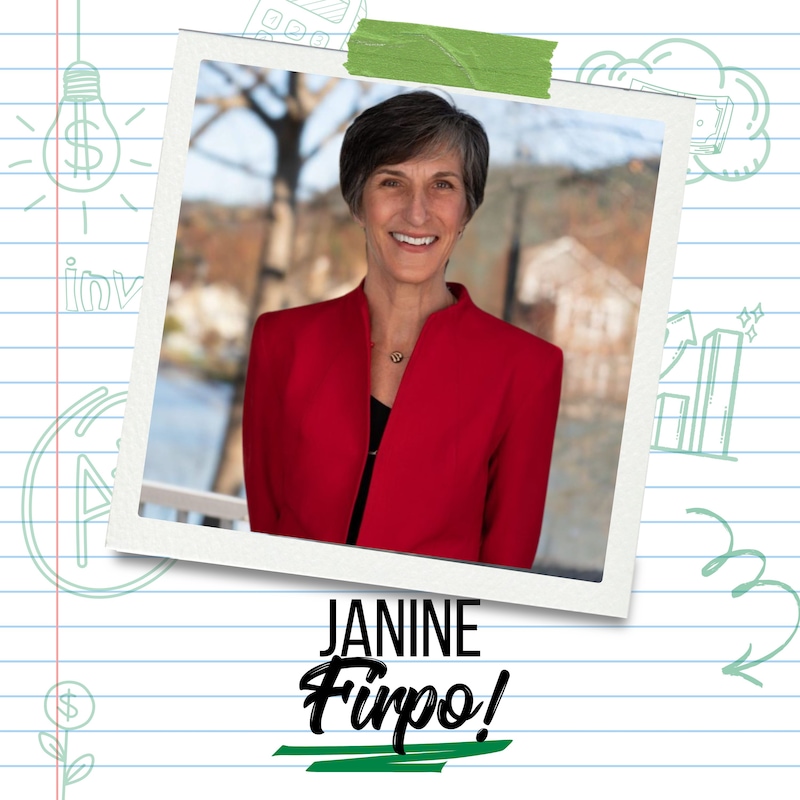
Welcome back to Don’t Retire… Graduate! In today’s episode, we’re diving into the world of values-aligned investing and exploring how women can create a more just and equitable society through the power of their money. Joining me is Janine Firpo, a social innovator, author, and one of Forbes’ 50 Over 50 female leaders making a remarkable impact later in life. After a successful 35-year career in technology and international development—including a role at the Gates Foundation—Janine pivoted toward helping women take control of their financial futures and founded Invest for Better, a nonprofit organization dedicated to empowering women investors.
Janine and I shared insights about reinventing ourselves after long careers, challenging the traditional concept of retirement, and finding new passions and purpose in the next chapter of life. Janine candidly discussed the fears and uncertainties she faced when leaving her corporate career, and how she discovered her calling in values-based investing—ultimately leading to her highly collaborative book, Activate Your Money, and the founding of several platforms, including SheEconomy AI, to help women align their investments with their values.
5 Key Takeaways:
- Reinvention Requires Both Courage and Planning: Janine’s story demonstrates that moving into a new chapter of life—whether post-career or post-retirement—can be intimidating, but financial planning and trusting your intuition pave the way for success.
- Values-Aligned Investing Is More Accessible Than Ever: Anyone, even those just starting out or with only a bank account, can make meaningful investment choices that reflect their personal values and contribute to societal change.
- Women Are Financial Powerhouses: By 2030, women are projected to control 40% of U.S. wealth, and research shows they consistently outperform men in investing when they employ long-term, buy-and-hold strategies.
- Community and Collaboration Drive Lasting Change: Janine’s collaborative approach—engaging over 150 women in the development of her book and uniting 100+ organizations in the SheEconomy campaign—highlights the importance of collective action and shared resources.
- Financial Freedom Fuels Purpose: Redefining retirement means seeing work as optional and living a life of contribution, impact, and continual growth, no matter your age or stage—don’t retire, graduate!
Join us for a journey of inspiration and practical ideas to help you achieve financial freedom, invest with purpose, and create positive change. Don’t forget to subscribe, rate, and share this episode with anyone ready to graduate into their next chapter with passion!
Mentioned in this episode:
Don't Retire... Graduate! is presented by BFG Financial Advisors
BFG Financial Advisors helps individuals and families design a financial future that supports the life they want to live—not just the numbers on a page. From retirement income and tax strategies to legacy planning and investment management, our team builds personalized plans designed for clarity and confidence. Ready to take the next step? Visit bfgfa.com to schedule a free consultation and start planning your next chapter.
Transcripts
Welcome to Don't Retire Graduate brought to you by BFG Financial Advisors. We're here to rethink what retirement really means to you so you can graduate into your next chapter of life with purpose and with passion. I'm your host, Eric Brotman and in this, our seventh season, we'll be bringing you interviews with guests who will share their money stories with us every other Thursday. If you haven't already done so, please subscribe. And like us, subscribe you never miss an episode. Today I'm pleased to be joined by Janine Ferpo. Janine's a values aligned investor and social innovator. In 2017, she left a successful 35 plus year career in technology and international development to focus on how women can create more just and equitable society through their financial investments.
Eric Brotman [:Her book Activate youe Money was published in May of 2021. Later that year she co founded Invest for Better, a nonprofit organization that helps women invest their money in ways that align with their values. And in 2024, Forbes named Janine one of 50 over 50 female leaders who continue to make an impact later in life. Janine, welcome to Don't Retire Graduate.
Janine Firpo [:Hi Eric. It's so nice to be here. Thank you for inviting me.
Eric Brotman [:Well, you know, this is one of the first times I can ever remember having a guest on the show who, who invited herself on the show. If you'll recall, when we met, this is true. And I have to, I have to have some fun with it. You said you need to have me on my, on your podcast. And I said, well, okay, tell me why. And you did. Do you recall that conversation?
Janine Firpo [:I recall the conversation well, but I don't remember what I said.
Eric Brotman [:Well, it was apparently compelling because we're here. Let's talk a little bit about and, and not spend so much time on your career, you know, which was a long career. But the fact that you pivoted and what I would say is you graduated to the next level of your life, which I think is probably what you said to me that night. So let's talk about why you did that and how the last almost decade has gone in terms of that journey.
Janine Firpo [:It's for. First of all, it's shocking that it has been almost a decade. I can't believe it. It seems like it was yesterday. So I was really fortunate. I had an amazing career. I had two amazing careers. But at some point I just knew, I knew in my bones that it was time to quit.
Janine Firpo [:And when I knew that, fortunately I had already predetermined that I could financially retire. And so for me, that was a really important precursor to actually making the decision to leave. So once I decided it was time to leave, I was working at the Gates Foundation, I had a team, and it was really important for me to make sure that all of that transitioned well before I retired. And so it took me about two years to make that whole process happen. But once it was done, I walked out the door, and I've never looked back. I couldn't have been happier to leave when I did.
Eric Brotman [:So when you make that transition, a lot of times it's a little bit like the day you turn in your thesis and you're finished college or whatever it is, where you're like, oh, deep breath, I'm done. And then there's this panic of now what? Unless you've planned for that. So. So you had two years to. To retire, which actually I think is a pretty good time frame to do a transition. But I trust that during those two years, you were already thinking about how to reinvent yourself and what you wanted to do next. Am I right? No.
Janine Firpo [:So. No. Really?
Eric Brotman [:Okay, so you've.
Janine Firpo [:I had no idea, no idea what I was going to do next. And. And I was actually really scared. I mean, I knew that I was going to retire, but I had. All my work had always been from passion. It had always been from something that came from deep inside of me that drove me to do the things that I did. And I wasn't sitting on another passion. I didn't have one.
Janine Firpo [:And I was worried. And I thought, well, is retiring? Am I just going to be bored all the time? What am I going to do with myself? Am I ever going to feel passion again? And the people who knew me all said, you have nothing to worry about. You are going to find something. And that proved to be right. When I retired, I just started doing things. One of the things that I did is I had wanted for over 20 years to invest my money in ways that align with my values, and my financial advisors weren't helping me. So I took my money back and I started working on that. And as I worked on that, I realized, you know what? We're in a position where anyone, even somebody who just has a bank account, can invest in a way that's more meaningful.
Janine Firpo [:Women want to, young people want to. Nobody's helping them. And so this thought about writing a book started to emerge. What I do tends to come less from me processing and thinking and deciding. It comes more from being and doing and observing and watching and paying and Paying attention to a deeper intuition. And what started emerging was I needed to write a book, and. And people told me not to do it. It was a really bad idea, and I did it anyway.
Eric Brotman [:Well, it's always nice to prove everybody wrong. You know, when you're told you can't do something, it makes you want to do it more than. Than ever. Writing a book is hard. And having. Having done this three times myself, I don't think. I don't think I have another book in me unless it's a romance novel. And that's for a different day.
Eric Brotman [:So. So let's talk about the book, because the book was just relatively recently published. So let's. Let's talk about not just where to find it, but why. Why to find it.
Janine Firpo [:So what I realized when I started doing this work of taking my own money back is I started to learn about how little women know about investing and money. I mean, we are taught to save, we're taught to budget. We learned all of that. But as we start to grow our wealth and as we have no more money, we not actually taught how to invest. And so most women don't take their own money in control. And what's really interesting is by 2030, which is only four short years away now, women are going to control 40% of the money in this country. And when we do invest, we actually outperform men. We're really good at it, and we make very different choices than men do.
Janine Firpo [:And so I realized there was an opportunity to help women start to step into their financial power. And by doing that, by building and growing their own wealth, we could also have an impact on the kinds of products and services and technologies, et cetera, that are developed in this country, because that's all driven by money. And our points of view have been left out of those conversations and those companies for a very long time. So it's time to start bringing our point of view back in, and we can do it through our money.
Eric Brotman [:Well, and I want to push back on some stuff, and I also want to amplify some stuff, if that's okay, because that was a lot, and it was great. First of all, I think women control more like 75 or 80% of the money. Now, it may not be direct. No, I'm being completely serious.
Janine Firpo [:I hear what you're saying.
Eric Brotman [:Yeah, it's not the same as having it necessarily in their names specifically, which is coming. And I hear that, and you're right. But the buying decisions, the saving decisions, the financing decisions, and a lot of the Financial planning decisions are really, really driven by women in various households around, at least in the United States, but I suspect around the world. So I think the impact of women in investing is actually even larger than, than you gave it credit for. And you know, I know we're looking at it slightly differently. It's not apples to apples in terms of, in terms of how women can control and understand their money. Financial advisors, myself being one of them, but financial advisors generally, over many, many years have not done a good job of engaging women as clients, as colleagues, as planners, as advisors. And so I think the fact that our business is still something like 88% male is absurd.
Eric Brotman [:However, I'm going to pat myself on the back, I'm going to try not to pull a muscle doing it. But, but at, at the time we're recording this, we're recording this just in time for New Year's, we're going into 2026. We're releasing this the end of January, I believe, or early February 2026. So by the time this is live and people are hearing it, I will no longer be the CEO of our firm. I'm stepping down after 22 years at the helm here in favor of an amazing woman, Lena Neville, who is going to do a phenomenal job. And you'll be pleased to know that our chief investment officer is Claudia Glover and a very accomplished, very talented investment manager. And so our company is very, very heavily female driven. And that's not to say that men aren't fine advisors.
Eric Brotman [:I think I did okay. But I will say that recognizing that gap and recognizing that, like Wayne Gretzky always said, I skate to where the puck is going to. The puck is going female, it's going female. And for financial advisors watching this, you best get it right or you will be antiquated. And for, for families, having open, transparent dialogue is so important. So I, I just, I, I wanted to, to thank you for, for those remarks. Now, whether, whether women have better investment results than men, I, I can't speak to that. I think at the end of the day that might be anecdotal unless you have evidence to support it, which I'd be fascinated by.
Eric Brotman [:But, but nonetheless, I do think that women in our industry are entirely too rare and are frankly, in a lot of ways better at this than, than us, us old guys, really. And I say that not to self deprecate and not to be funny, but to be completely sincere. I think that's where this industry is going to.
Janine Firpo [:Yeah. So I think so. First of all, I agree with you, what you've said in terms of women saving, they're responsible for the buying, all of that 100% true. Where they don't generally control the situation is the investment decisions, what the asset allocation is and what's actually invested in. So that's the piece that I really want to help women with. And younger women are stepping into this, which is great to see and that we are starting to see the kinds of changes that you were describing even in your own company, which is fantastic. There is actually data and research that shows when women invest they do outperform by about 40 basis points a year. It was research done by Fidelity is one piece.
Janine Firpo [:And the reason is that women are more inclined to buy funds and to buy and hold. So they set up a strategy. They're less likely to be doing day trading. They're less likely, less likely to be buying individual stocks. They're less likely to be seeing it as a game or something to and they're more likely to just be having a long term strategy and that is what helps them succeed.
Eric Brotman [:That sounds like wisdom. It makes perfect sense. And you know, I don't like that the industry is gamifying. You know, young people I think are, are, are used to the gamification of things. And if you're on a what of the trading platforms and you buy or sell something and it gives you a gold star or something, I, I, I don't know why that's the endorphin rush that people need. But it's not a game, it's, it's real life. And, and for you to get to the point in your career where work was optional, where you were financially able to, to make that transition is to me that's the definition of retirement. It's not needing to work anymore.
Eric Brotman [:I will say this, you're one of the exceptionally few people who I've talked to who didn't have some kind of plan, who came on the show. I mean there are lots of people who retire and then it's daytime TV and shuffleboard and they don't live very long. It's actually very sad. But for you to do that and not have a plan and just trust in the fact that you would find some new endeavors is a lot scary. I mean for you to say you were scared is an understatement, wasn't it? I mean that's like your whole identity was tied into your work.
Janine Firpo [:I've done this before. I mean I had a 15 year career in high tech. I went on a trip in early 1995, in one career called the, it was the CD ROM multimedia career. I came back from that trip five months later. The industry I had been in was dead and something new had arisen called the Internet. And I was perfectly positioned to be involved in that first wave of the Internet. But while I was traveling, I had made a decision that I wanted to find a way to work on poverty, kind of poverty I'd seen when I was traveling in Africa. And I walked away from the Internet industry not knowing what I was going to do or how I was going to make this work.
Janine Firpo [:So I worked for a year as a consultant part time to keep some money in the door. It took me about a year to figure out. And then I ended up crafting a second career looking at the role that technology and business could play in solving international poverty. But that all emerged as well. I mean, I had no idea. And it was. It is like jumping off a cliff. It's like jumping off a cliff and trusting that something is going to catch you down on the way.
Janine Firpo [:And it's the very, very first time I ever did it in my life. It was a very scary thing. But somehow I knew if I didn't, then I would keep going on in my life in a way that was no longer growing and it was no longer serving. And it, I had to make the jump. And then once that first time it worked. I've become much more accepting of that.
Eric Brotman [:Process, you know, as a planner, as someone who plans for a living, you know, long term planning, short term, lots of different. For me, stepping down was something that took several years to plan out and think through. And I still feel a certain way, which is what I. What's. What, what am I doing? You know, there's a, there's a lot going on right now with office renovations and a second office location and my new role. It's my first new job in over 30 years. So I knew where I was going to be. I'm not retiring, at least not in the sense that, that it's going to be a gold watch and shuffleboard.
Eric Brotman [:I'm not doing it, but, but I am recrafting and redesigning my, my life and only doing things that bring some joy to my life, which I love. And it sounds like you've done that. It sounds like you've chased a significant passion project that's not only making you happy, but is also hopefully changing the world either on a, on a one by one scale or even on a larger scale. It sounds like you're very mission driven.
Janine Firpo [:I am very mission driven and I have been most of my life. But I also know that as you said earlier, I've been on this particular journey for about eight years now. And this won't be my last game either. I mean, I will do this until at some point it becomes clear that I've done the, taken this as far as I can take it or its time is over or whatever. Somehow there will at some point be another transition and I will move to something else. And I don't know what that is, but again, I trust that it will come. I mean, I'm already getting little inklings of like that would be an interesting thing to study or that would be. And I'm like, okay, that's interesting.
Janine Firpo [:I'm going to lean into that a little bit and see where that takes me and that's kind of how I do things. Right. But I'm not, not a planner, so don't think for a minute that this is the only way I show up. I also plan like crazy. I mean, part of the reason that because even if you lean in to something, you still, there's a lot of work that has to be done. So it's a combination of doing the work, planning, figuring out how you're going to implement something and then delivering on it at the same time that you're paying attention to what's what your inner sort of sense is telling you and also watching what's emerging around you. And I could not have retired from money because that's all I really did retire from was an income. I couldn't have done that if I hadn't planned my financial well being.
Janine Firpo [:Right. That had to be done.
Eric Brotman [:Of course. Yes. Well, unless, unless you're, you know, unless there's some wild windfall. Generally.
Janine Firpo [:Yes.
Eric Brotman [:You have to plan for that and work for that and, and take your time. It's, it's a marathon, not a sprint. Although it sounds like your life is a little bit more like a relay because you keep passing the baton and finding another track. And I'm getting a very strong forest Gump vibe that I don't know where I'm going to be, but it's going to be great. Like I, you know, and that's what a cool, what a cool way to get to reinvent yourself on a regular basis. I mean, I really think that's part of what drives, drives joy. So, so the book is one of your passion projects and we'll let folks know how to get that later in the show. But you also have multiple websites which are designed to, I think, help women realign their, their money and their, and their passion and their values and those things.
Eric Brotman [:I want to put a couple of them on screen and you could talk through it. And I know one of them is AI driven. And I want to spend some time with this because you did some very cool research with AI and I think we're going to have some fun with that. So can you talk through this, this piece?
Janine Firpo [:Absolutely. So it's called the she Economy. The website is SheEconomy AI and it's an initiative from the nonprofit that I co founded called Invest for Better. And what we realized is that there were a lot of women we knew. Financial advisors, angel investors, venture fund leaders, coaches, educators, banks, all kinds of organizations that were really working at this intersection of women and money and sometimes their values as well. And we realize it's very hard to get women to pay attention to some of the things that we wanted to share with them. And so we thought, what if we created a new initiative, a large campaign to start that wakes women up to the power and the potential of their money. And so we hired a creative team.
Janine Firpo [:And the idea that we came up with was answering this question. What would the world look like if women had been equal partners in the economy for the last 100 years? And then we worked with a data analyst and some AI and we asked that question. And together we came up with a series of headlines that are coming up on the feed right now that shows what that world could have looked like. And this is a better world for men. It's a better world for women, for boys and girls, in our view. And all of these headlines are backed by data that shows that if certain things had happened at certain times or things had accelerated, these kinds of outcomes could be true. Because these are things that really matter to women and that touch us and our families personally. And things that we want to see change.
Janine Firpo [:So we want to see our own health care taken, identified and taken care of in research. We want to see ourselves being safe. We want our kids to be safe. We want our husbands to live longer. We want our environment to be something that we can pass on to our kids and our grandchildren. These are all things that matter not only to women, but to men. But women often put their money behind these things to try to help create this future. And that's what really this campaign is about.
Janine Firpo [:It's about educating women, raising awareness, and then giving them actions that they can take over a hundred day period to actually start rethinking their relationship to money and taking more control of their assets.
Eric Brotman [:Who, if, if anyone are you working with on the actual financial piece of that rather than sort of the social piece of that? Do you have, do you have a team of people who are helping with some of the financial data behind that scene too?
Janine Firpo [:So when you say the financial data, what kind of data?
Eric Brotman [:What I mean is to take 100 days and to rethink your relationship with money means first you have to have a relationship with money and to understand what that relationship needs to be. And I'm not suggesting for a minute that people don't have that, but a lot of times everyone's starting from their own position, right? So this isn't where we're all at the same starting line trying to figure this out. We're all coming from our own, our own background, our own profession, our own families, our own biases and everything else. So, so how do you, how do you build a path that anyone can jump on at any point? More treadmill like than, than, than forest path like.
Janine Firpo [:Yeah, that's a great question. And I think, you know, in the first iteration we may not be perfect with this, but what we're doing is that hundred days is a 14 week period. So every week for 14 weeks there will be a theme and we will offer actions related to that theme. Theme. And we're going to have a couple different paths for women who, you know, are in different parts of their journey. So we'll have a path for women who are just getting started on the investing journey. We'll have a path for women who are building their financial wealth. And we'll have a path for those who want to lead and who really want to take even greater steps with their, their money.
Janine Firpo [:But to give you a sense, we're going to start small. So we're going to start. The first theme is going to be what are your goals? What are your personal financial goals and how do you want to think about that? Then we'll have a week that's really about, let's just start talking about our money. Because one of the things about this is that the conversation around money is a huge taboo. And so there are great ideas, right? And it needs to stop. So, you know, have a money date with your partner or your spouse, just go talk about money or talk to your girlfriends about money or talk to your financial advisor. So that'll be a theme. So we're going to try to do things that start pretty small and where women are in the beginning, just like you said, and then we'll get more advanced, we'll talk about where they bank, we'll give them ideas about publicly available funds that they could invest a little bit.
Janine Firpo [:I'm not talking about a lot, but a little bit of money in to really make a difference. Like there are funds that are only invest in female led companies. That's kind of a cool thing. You know, you could put $100 in that. If a lot of women put $100 in that, it makes a big difference. So I think there are many, many different kinds of little steps that people can take. And part of what we're doing is we have over 105 organizations that are going to be part of this that we're offering as resources. And those organizations are going to be very involved in identifying these actions or some of the actions will be related to things that they're already offering for free.
Janine Firpo [:For example, there's a firm.
Eric Brotman [:That's what I was trying to figure out is who were the companies or the organizations or the people behind the scenes to bring that information. A lot of those logos I recognize.
Janine Firpo [:So if you go to the resources tab, this hasn't been completely updated yet. But if you go to the resources tab right now, because we're in a soft launch right now and we're going to go to a launch on March 5, you will see these different films, excuse me, these different firms are listed in category. We're going to change this up so that you'll be able to find something based on your own goals. Like I want a bank or I want a new financial advisor or I want to talk to a financial advisor. I'm looking for education. So we're going to make this much more interactive in the final iteration. But these are all different players who are part of this.
Eric Brotman [:And did you say this is a nonprofit? We're a nonprofit, yes, nonprofit. So the, the for profit entities are sponsoring or supporting in some way to make this run or. No, they're not. They're. You're just identifying them and we didn't ask them.
Janine Firpo [:What we asked them was anybody who's on the website has agreed to be there. So I'm not just putting resources willy nilly. I could put a lot more that way. But I want the people who are there to, to actually think that this concept, this idea about women being equal and women stepping into their power, I want that to be something that they connect with and that they feel good about. And then this whole idea is really about promoting all of us. So I'm super collaborative and I really Believe that when we uplift everybody, we uplift. When we up. When we try to uplift more than ourselves and we try to uplift everybody, it helps all of us.
Janine Firpo [:And that's really a big part of what I am. So even when I wrote my book, I had 150 women and some men help me write that book. It was a hugely collaborative effort. So I had about 4, 40 women who were financial advisors, experienced angel investors, experts in their field. Right. Early versions of the book. And then I took those, I rewrote them so they all had the similar voice and had about 20 to 25 women review every chapter. And then I took all that feedback and rewrote the whole book again.
Janine Firpo [:I rewrote that book like three or four times based on feedback.
Eric Brotman [:Wow. I mean, that. That's. It's a huge undertaking.
Janine Firpo [:I mean, it was a huge effort.
Eric Brotman [:What a. What an amazing collaborative thing. And, and how's the book doing? Is this creating? Are you doing public talks around the book? Are you doing book signings? Has there been a tour?
Janine Firpo [:What's.
Eric Brotman [:What's the. How's the book getting into?
Janine Firpo [:Early on, There was early on. And then, interestingly enough, someone who was actually One of those 150 women ended up moving to Europe and realized there was nothing like my book in Europe, and she really wanted to see it there. So she helped me get the book localized and translated. So the current version of the book is very US specific. As, you know, investing in different countries is very different. So we had people actually localize it so that it was adapted to the reality in Spain, France, Germany, and Poland, and it was published, translated, and republished in those books and in those countries. And it's now being translated and appified in China, believe it or not.
Eric Brotman [:That's incredibly exciting. That has to feel. That has to feel a certain way. I mean, that has to feel like, my gosh, your reach went from sort of house to neighborhood to community to state to country to the world. Congratulations. That is. That is really exciting stuff. So I want to tell.
Eric Brotman [:I want to learn a little bit about your. About your money story because, you know, you've. You're helping a lot of people recognize and rethink their money. When you were. When you were young, were you raised in a certain way that. That helped you understand that? Did you have parents or teachers or community or somebody who helped you have a passion for this or was this organic and accidental?
Janine Firpo [:So I was raised by two parents of the Depression, and money was a huge issue when I was a kid. Huge we didn't have enough. We wore hand me downs. We drank powdered milk because we couldn't afford real milk. Um, and it was a big, big problem. And at one point, my mother decided, I can't live like this anymore. And my mom got into real estate and got very good at real estate and started making money doing that. And so my mom.
Janine Firpo [:My book is actually dedicated to my mom because she taught me so much about money. And we could actually have a whole conversation just about how my mom did not do money the way most people do. She didn't do her death the way most people do. She didn't. She just. I learned a lot from her. I learned a lot about transparency. I learned a lot about real estate from her.
Janine Firpo [:So I would not be in the financial position that I am today if it hadn't not been for my mom teaching me what she taught. But the values piece.
Eric Brotman [:I'm sorry, is your mom living? Is your mom living?
Janine Firpo [:No. No. She passed away in January of 2015. So it's coming on 11. But. But I will say this about my mom. It was her choice. She chose to die.
Janine Firpo [:So I give her a lot of credit for that, actually. And that's a whole story that probably doesn't belong on this particular episode.
Eric Brotman [:I'm not sure if it doesn't. Maybe not this episode, but certainly that's.
Janine Firpo [:That.
Eric Brotman [:That is a very big topic for sure.
Janine Firpo [:Yeah. It's really, really interesting what she chose to do. And when she made the choice, my job was just to help her facilitate what she wanted to do. And it took two weeks, basically. My mom stopped eating.
Eric Brotman [:Wow.
Janine Firpo [:She stopped eating. And it took two and a half weeks before she passed away.
Eric Brotman [:That had to be so hard on you. I had to be.
Janine Firpo [:It was. It was, yeah.
Eric Brotman [:I mean, even knowing it's what she was choosing, it had to be incredibly difficult. Unbelievable. What a story. And. And so it's great that you learned some of the lessons in life about her or from her and, you know, the real estate piece, the financial piece, but what a. What an unbelievable story, Janae. I did not expect that today.
Janine Firpo [:Yeah. My mom was. She was way ahead of her time in a lot of ways. She was a fighter, she was resilient. She learned how to pick herself up from the ashes more than once, and she just lived life on her own terms, you know, and she. She left this world on her own terms. And yes, it was hard, but I was proud of her. I'm still proud of her.
Janine Firpo [:I mean, I just think that. And. And I think so much of the way we live and so much of our lives, we are conditioned by what the world has told us we're supposed to be and how we're supposed to show up and how we're supposed to live. And I just. I don't believe that stuff. I think that we can redefine what is. We can redefine what money is. We can redefine the purpose of money.
Janine Firpo [:We can redefine what money creates in the world. We can redefine what retiring is. I mean, it used to be when I was growing up, you retired at 65 and you were happy because you got to do all the hobbies you, you know, never got to do, and you expected that you would die at 80. Well, we're living to 100 or more. And if you quote, unquote, retire at 65, you're leaving 35 years on the table. That's a. That's like my two careers in 35 years. We're still energetic, we're still smart, we're still alive.
Janine Firpo [:It's like, why would we move into a space where we're no longer contributing anymore? I mean, for me, if I'm not contributing, if I'm not creating a better place to live in the world, then why am I here?
Eric Brotman [:Well, first of all, that was the single greatest commercial for the show and for my book and the stuff that I have been promoting about retirement for many, many years. You're absolutely right. 35 years, half your adult life, and there's a lot of gas in the tank and to just quit. I get it. Some people just really, truly hate what they do, and they're in some kind of. Some kind of place where they. They don't feel like they have options. Although maybe there are and maybe there aren't.
Eric Brotman [:But if you're blessed with the. The abundance mentality and the opportunity to reinvent yourself, why not reinvent yourself? Don't sit home.
Janine Firpo [:Wow. I agree. It's fun. It's like, it's engaging. The stuff that I get to do. I mean, when I did that first shift in my career and I went into international development, I had friends from the Internet world who were like, are you crazy? You. You've. You've burned out.
Eric Brotman [:You're.
Janine Firpo [:You're walking away from this fantastic future. Well, maybe. Maybe I would have been the. One of the lucky ones and pick the right company and become a multi billionaire. Maybe, maybe I wouldn't. Maybe I would have made a wrong choice and I would have ended up with a company that went under And I didn't make any money.
Eric Brotman [:So, Janine, it sounds like. It sounds like you're making a giant difference and trying to change the world and moving toward things, and you're absolutely living the don't retire graduate motto. What is it that you want to be when you grow up? What's next?
Janine Firpo [:I don't know. I don't know what the next chapter will be. But just as has happened so many times in my life before, I trust that that will emerge and I will see it as it's coming and I will be able to step into it. And for me, that's what's really exciting about the future. I don't know what it's going to hold, and I'm excited to see what happens.
Eric Brotman [:Well, that. That does sound exciting. It also sounds terrifying to those of us who, not because everything's linear, but because there's some kind of. I'm moving towards something known to me. You're moving toward the unknown again and again. And I give you a lot of credit. That takes courage and, and comfort in your. In your yourself.
Eric Brotman [:So where can people learn more about you? Where can they find your book? Where can they find your nonprofit? Want to make sure that folks who want to check out your content can.
Janine Firpo [:Thank you so much for asking that question. I'm on LinkedIn. It's the social media that I follow, and people can find me there. I'd also recommend that they go to sheeconomy AI and put in their email address so they can follow that journey and be part of it. We would really love as many women as possible to join us on this journey to financial freedom, financial wellness, and a different way of connecting to our money and investing our money. You can also go to investforbetter.org and the nonprofit that I co founded. We put women into small groups and we teach them together. We get them into conversations, and we teach them together how to invest their money in ways that align with their values.
Janine Firpo [:We also offer a lot of free webinars and everything we do is either free or very low cost because we want all women to be able to have access to this information.
Eric Brotman [:Janine, first, thank you for sharing your story so transparently. Thank you for convincing me that you should be on the show. That truly is one of the first times that's happened, and I'm so glad it did. And thank you for being here today. Keep changing the world. I'd like to thank everyone for watching and listening today. If you enjoy our show, please don't keep it a secret. Share it with family and friends so they can join you on your journey to financial freedom.
Eric Brotman [:We we'll be back in two weeks with another engaging guest. And in the meantime, next Thursday, be sure to check out BFG Financial Advisor's webinar series, Diary of a Financial Advisor, which you can [email protected] for now, this is your host, Eric Brotman, reminding you don't retire. Graduate securities offered through Kestra Investment Services, llc. Kestra is member finra, SIPC Investment Advisory Services offered through Kestra Advisory Services, llc. Kestra as an affiliate of Kestra is Kestra is or Kestra as are not affiliated with Brotman Financial or any other entity discussed.

