Shownotes
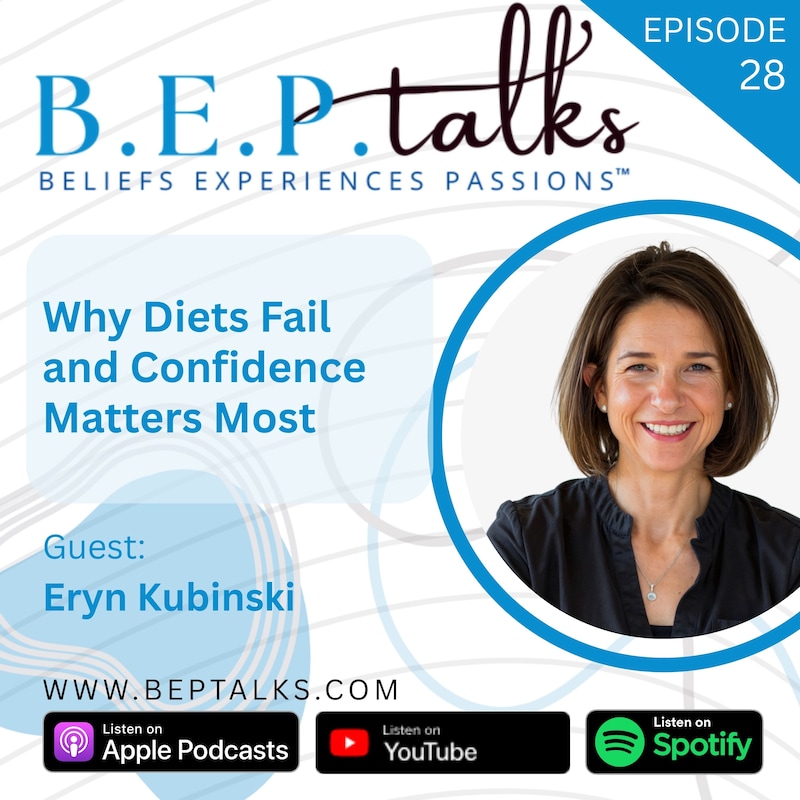
On today’s BEP Talks, I sat down with Eryn Kubinski—former pro athlete, physical therapist, and mental fitness coach—who broke down why true health is about so much more than just dieting or counting calories. We dug into the real reasons behind self-sabotage, the billion-dollar weight loss industry, and why self-trust is the ultimate game changer—not just for your body, but for your relationships and even your income. If you’re tired of quick fixes and ready to make a mindset shift that actually lasts, this is the conversation you need to hear.
If you’re feeling stuck in your wellness journey, remember: it’s not just about what you lose, but what you stand to gain—confidence, energy, and better connections with yourself and others.
🔗 Curious to learn more or connect with Eryn Kubinski? Visit adventuresofhealth.com for a chat about your personal journey!
---------------------------------
B.E.P. Talks makes it possible to connect with those who most resonate with your own personal or professional life – or both. Follow-up in the moment or come back to them when you need them most, attend their events, read their books, participate in their courses.
Visit often! Meet experts from the cross section of the world. Let them motivate, inspire and educate you.
🎤Interested in telling YOUR story?
Visit https://www.beptalks.com/ for all the info you need.
Schedule an interview. Expand your reach and influence. Begin to change the lives of others by changing your own.
You’ll love the experience and your audience will appreciate you.
🔎Explore the MeetN Platform: https://meetn.com/features?x=94034
▶️Subscribe to our Channel: / @beptalks
Follow Us on Social:
Facebook: / thegsew
LinkedIn: / johnstonbeth
Transcripts
Well, hey there, and welcome to this edition of BEP Talks,
Speaker:where people from all walks of life, from all industries and
Speaker:professions, different ages, different stages of career, and life
Speaker:itself, come so generously to share their
Speaker:beliefs, their experiences, and their passions.
Speaker:BEP Talks, that's what it's all about. And I am always
Speaker:so intrigued by the amazing stories that are
Speaker:shared and. And how they can relate to all of us
Speaker:one way or another. And I'm very, very happy to
Speaker:introduce you to this episode's very special
Speaker:guest. Coming to us from the beautiful
Speaker:mountains of Colorado here in the United States, please welcome
Speaker:Erin Kobinski.
Speaker:Hi. There she is, from the beautiful mountains of
Speaker:Colorado. Thanks for joining me, Erin.
Speaker:I've anticipated this conversation, and I'm eager to have it.
Speaker:Like so many people, you have many different titles, many different
Speaker:aspects of life, and I'm
Speaker:intrigued by all of them. In your case,
Speaker:you are listed as a mental health coach.
Speaker:You are a former professional athlete.
Speaker:You're a physical therapist, and the
Speaker:best role that you have is you're a mom. So how
Speaker:wonderful. How wonderful. I want to go back to the professional
Speaker:athlete. What sport were you involved in? I
Speaker:was a professional road cyclist, and then after I did road
Speaker:cycling, I moved into triathlon, and I was an elite
Speaker:triathlete, and I competed at, like, the national and world
Speaker:stages as a triathlete also. Oh, now you're just.
Speaker:You're just showing off, you know, now you're just showing off as well you
Speaker:should. Oh, my gosh. So. So do you still ride a bike, like, for your
Speaker:cardio and, you know, I do enjoyment once. You
Speaker:do. I actually teach spin classes again in my life for fun,
Speaker:but yeah, okay, spin
Speaker:class and fun in the same sentence. I've got to kind of, like, let that
Speaker:settle. I've got to let that settle. Okay, one of your
Speaker:other. I don't want to call it a title or a brand or whatever, but
Speaker:would you please explain to us what a mental fitness
Speaker:coach is? So I teach people how
Speaker:to rewire their brain, right? So a lot of
Speaker:trans transformation and stuff or getting rid of habits
Speaker:or getting rid of addictions is about getting to the
Speaker:layer of self and the layer of thought and emotion and how
Speaker:they're connected. And it's kind of bringing the.
Speaker:The unconscious consciousness. So you can make the
Speaker:shift in how you think, so then you can release the
Speaker:grip something has on you, whether it's sugar, carbs,
Speaker:pizza, you know, whatever is your. Whatever your vice
Speaker:is, whether it's scrolling, you know, like there's so Many other things outside of
Speaker:food that keep people unhealthy. You
Speaker:know, alcohol, pot, you know, whatever the list goes
Speaker:on, or medications. Right. We get, we get addicted to medications.
Speaker:Absolutely. We take a crutch and then we never let the crutch down.
Speaker:Exactly, exactly. So
Speaker:today, maybe even more popular than I can
Speaker:remember for a long time, it's so heavily advertised on
Speaker:tv. Weight loss. We
Speaker:seem to be, it's a strong word, but I'm going to use it, obsessed
Speaker:with weight loss. And I
Speaker:was in a business years ago where fitness was a component of it
Speaker:and a personalized nutrition program so
Speaker:that people could lose weight. And it worked very, very well.
Speaker:And I always was amazed that people would say, I'll do
Speaker:anything to lose weight except change the way I eat and
Speaker:exercise. Other than that, I'll do anything to lose weight.
Speaker:Why are we so obsessed with that as a
Speaker:goal and yet so reluctant to actually
Speaker:do what needs to be done?
Speaker:Well, I mean, the industry, it's
Speaker:broadcasted at us, right? Because it is
Speaker:broadcasted at us. We start doing it. Right. Like,
Speaker:you know, you and I have been through the fat free phase, the
Speaker:sugar free phase. Now we're in the carb free phase and the high protein.
Speaker:And I was like, and when is the one water phase coming? Anybody, Anybody want
Speaker:to like broadcast water? You know that many years
Speaker:ago there was a doctor named Dr. Stillman
Speaker:and he had something called the water
Speaker:diet. And
Speaker:this may be. When was that? I read about that. Maybe it went back
Speaker:to this, the 60s or the 70s.
Speaker:Yeah, Dr. Stillman, the water diet.
Speaker:Interesting, interesting. So now when you talk about,
Speaker:as a mental health coach and you said, you know, helping people break
Speaker:bad habits maybe, or triggers, identify triggers so that they can
Speaker:break a habit, is weight loss one of the topics that you deal
Speaker:with? So weight loss is the main topic that I, you know,
Speaker:most people come to me because they want to lose weight, but what people really
Speaker:want is to regain self trust because of
Speaker:all the noise coming at us. You can't, you don't know when to eat, what
Speaker:to eat, how to eat, how much to eat, what's really important, and
Speaker:you've lost the ability. And then you wear these devices that tell you
Speaker:like if you're doing good or not, you know, or the rings or what, like,
Speaker:and you've lost the ability just to check in with yourself.
Speaker:Right. And so when we don't have the ability to like think for ourselves
Speaker:and we're being broadcasted all the information, you get very lost. And
Speaker:then you just throw in the towel and you,
Speaker:you just do whatever you want to do or you just give up, you give
Speaker:up, you give up. So when you, you say it's broadcast ads,
Speaker:and clearly it is. I mean, it's on all day, every day, all day.
Speaker:The shots, the pills, the this, the that.
Speaker:What is it about the way our
Speaker:brain works that we'll do something like that because we're told to
Speaker:do it? Is it the restriction that makes a behavior, at least
Speaker:for a temporary period of time, something that we can do?
Speaker:But does that change anything?
Speaker:Does that really identify what the trigger was
Speaker:so that if you stop the pills or the shots, you can continue
Speaker:on your own? Well, the, I
Speaker:don't want to get too deep into the, the GLP1 pill. Stuff like that's a
Speaker:deep conversation. But as far as,
Speaker:as far as, like anybody can do anything for a short
Speaker:period of time, as soon as you put always, this is how you, you,
Speaker:for the rest of your life, you're going to have to always not eat carbs,
Speaker:forget about it. And then your brain says no, right?
Speaker:Whenever we put a very like, definitive
Speaker:like never, then our brain immediately, where
Speaker:is it? I need to get it and we can't give it up. So if
Speaker:I told somebody, like, you're never going to be able to drink another Coca Cola
Speaker:in your life, then that's all they
Speaker:would see everywhere. But as soon as I say, look, we're going
Speaker:to teach you how to. You can have a Coke whenever you want to have
Speaker:a Coke, you're just no longer going to desire the Coke.
Speaker:Well, how does that sound like, to not have a desire to even drink
Speaker:it. Oh, now you're interested?
Speaker:Well, yes. Well, I meant to say in the possibility of that by simply
Speaker:telling somebody, you can have it, but
Speaker:you're not going to want it. Is it as
Speaker:simple as that? Well, that's, that's how easy it is.
Speaker:And that is one of the things that the GLP1 medication does is
Speaker:takes out the noise, chatter. It changes. For some people, it changes like your taste
Speaker:buds. So the thing doesn't even taste good anymore. Like they. Yeah.
Speaker:Anyway. I mean, there's a lot of different things, but what you
Speaker:want to train your mind to is I can have it, but
Speaker:here are the reasons why I don't want to have it. So a lot of
Speaker:work I do is like aligning your decisions with your values,
Speaker:Right? Having a really deep emotional thought.
Speaker:Physical, like, you know, emotional, like you can feel your
Speaker:emotion attached to your goal. So the goal is not I
Speaker:want to lose 10 pounds. The goal is I want to be able to do
Speaker:X, Y or Z, or feel X, Y or Z, look in the mirror and
Speaker:be happy to look in the mirror. Right. Like some people can lose the weight
Speaker:and still look in the mirror and still hate themselves. Yes, of course.
Speaker:How sad is that? How sad is that? That's a whole other issue.
Speaker:Well, that's the issue that I get to. So we lose the weight and
Speaker:we fall in love with ourselves. Oh, so it's not about losing,
Speaker:it's about gaining. Yeah, exactly. Well,
Speaker:that's a great quid pro quo. You know, you're not just losing,
Speaker:you're giving yourself permission if you want it.
Speaker:So what happened when it comes to weight loss? Whatever happened to the word
Speaker:moderation? I don't know, kind of
Speaker:lost that. We have lost that, you know, in, in the
Speaker:speaking of it. But the reason there's probably not
Speaker:that that isn't broadcasted to us is
Speaker:it's a money making industry. I mean, the wellness industry is a billion
Speaker:dollar industry. And the reason they make so much money is because it doesn't
Speaker:last. Right. It just puts you on a temporary fix.
Speaker:And then a lot of things I talk about is like, hey guys,
Speaker:gosh, the, the dogs.
Speaker:But the reason why that,
Speaker:you know, there are great plans out there made by amazing
Speaker:physicians and amazing PhD kit people, but they're
Speaker:designed really for a specific human, normally the person who
Speaker:designed it. When I work with a client, I really
Speaker:try to help them feel internally what has worked for you, what
Speaker:feels right for you. What do you want? Right? And then I share
Speaker:like, look, my grandmother lived to 93, living on bacon, coke
Speaker:and ice cream and toast and then instant
Speaker:coffee like she ate some good things.
Speaker:But it's not so much about while. Yeah, yeah. So it
Speaker:is about what you eat sometimes. And then it's also about moderation because she
Speaker:never ate any of that stuff in excess. Right. She
Speaker:enjoyed the little, those little foods. And then, yeah, yeah, she
Speaker:didn't eat excessively ever. And you know, they've spoken
Speaker:to people, octogenarians, people who've reached 100 years, and they
Speaker:say, what's your secret? Men and women, they go, well, you know, I smoke a
Speaker:pack of cigarettes a day and I drink two
Speaker:scotch in a tumbler every night. So nothing, there's
Speaker:nothing is one size fits all in life. But with weight loss,
Speaker:it seems to be. So
Speaker:what's the word? Epidemic that
Speaker:despite all of the resources let's call them,
Speaker:is that as a country we're getting
Speaker:Less healthy. We're getting
Speaker:bigger. I believe you,
Speaker:correct me if I'm wrong, that the obesity
Speaker:issue is starting earlier in life and there are
Speaker:some ethnic attachments to that, are there not some
Speaker:cultural differences about how people eat?
Speaker:And I guess the great thing is that if everybody finds what
Speaker:works just for them as an individual. And
Speaker:listen, I have two sisters and we're all within three and a half years of
Speaker:each other. And while we are so obviously genetically
Speaker:connected that we all have such wonderful
Speaker:facts about us that differentiate us, but if we all ate the
Speaker:same thing exactly in the same proportions
Speaker:every day, we would get different results. That I know
Speaker:because we were raised under the same roof and we did that for
Speaker:years and we all ended up with different
Speaker:results. Talk to me about,
Speaker:talk about epidemic. You said people looking in the mirror and still not loving
Speaker:themselves. I'm going to guess it's particular with women. Correct me again if
Speaker:I'm wrong. How we self
Speaker:sabotage. I think we do it differently than men.
Speaker:I think men do self sabotage. I think,
Speaker:you know, that's for a different topic on a different day. But I could give
Speaker:you a great person to put on your podcast about that. But I do think
Speaker:men self sabotage differently. In
Speaker:fact, just in my personal life, like being an indecision
Speaker:is a big form of self sabotage. And I think you
Speaker:can see a lot of men in indecision, in contemplation.
Speaker:Interesting. I didn't even consider that. I didn't even say maybe because they
Speaker:know that they have a woman who's just probably going to make a better decision
Speaker:for them.
Speaker:Mic drop. Mic drop.
Speaker:Maybe, Maybe. Oh, I wasn't even thinking about that.
Speaker:But the self sabotage. And listen, I have to be honest,
Speaker:been there, done that. When a. I am a huge.
Speaker:In my family, I'm known as Aunt Cookie. I'm known as like, you know, I,
Speaker:I never smoked, I really don't drink. But boy,
Speaker:put, put a candy bar, put a Hershey bar. I don't even need like really
Speaker:great stuff. Put, you know, chocolate chip cookies. I've never met a
Speaker:chocolate chip cookie that I didn't like. So we all have,
Speaker:I guess you could call it. Yeah, we all have.
Speaker:I think we like, I call it like our vice. Right? We all have a
Speaker:vice and there's nothing wrong with it. But this is kind of going into the
Speaker:mental fitness side of things. Like, so our, our digestive
Speaker:system, from our mouth down to our bottom has the second
Speaker:largest number of nerve endings compared to our brain. So
Speaker:we feel our emotions between here and here. And then the
Speaker:other thing I tell people is like, look, you can go 30 days
Speaker:without eating. As long as you have water and oxygen,
Speaker:you'll be fine. It will be uncomfortable, but, you know, that's life, right?
Speaker:But you can go 30 days, you're not hungry. I'm not even sure
Speaker:if you know what hungry really feels like, because you're having an emotion
Speaker:and bored is an emotion. Yes.
Speaker:And misunderstanding. You think you're hungry, but you really are
Speaker:thirsty. Yeah. I always heard good advice. If you think you
Speaker:need to eat something, have a glass of water first and see if that
Speaker:doesn't, you know, calm the vice, as you refer to
Speaker:it. Wow, 30 days we could go without eating. Or longer. You
Speaker:could also run. You could also run three marathons and no food.
Speaker:Well, I'm not going to do that. Yeah, but I mean, to know, to know
Speaker:your body's capable of that, that you have that much energy stores, it's got to
Speaker:move into ketosis. It's going to feel uncomfortable moving there.
Speaker:Are you going to. You're not going to be performing at the marathon. You're going
Speaker:to just be trudging along. But you have enough energy in your
Speaker:body to do amazing things. And so
Speaker:when people like, you know, I work with athletic
Speaker:people and teaching reteaching them
Speaker:how to eat around their, their workout and kind of remove the,
Speaker:the really strict rules as an athlete, you know, like, I
Speaker:need to eat, eat every 30 minutes in my workout. I need to eat before
Speaker:the workout, I need to eat after the workout. Now I need three meals and
Speaker:two snacks. I'm like, no wonder you're not losing weight.
Speaker:You're fueling, you know, the exercise as if you're a top
Speaker:performing athlete. And we're not. We're exercising now for life and
Speaker:for health. Right. Like, let's drop that. And then, you know,
Speaker:there's. They're so surprised. Like, once we start
Speaker:calming down all the food intake, then the gut
Speaker:then gets to rest. People see their performance start to increase.
Speaker:They see their resting heart rate start to increase and their blood pressure
Speaker:decrease. Because. Because we're giving a very large system in our
Speaker:body a break. Break. Yeah. Resting it, resting it.
Speaker:Thus the. When you said, you know, the nerves and everything,
Speaker:you know that the saying follow your gut, that there is
Speaker:scientific evidence, they call it the second brain because. So
Speaker:when you feel butterflies in your stomach and your gut, that it's a very,
Speaker:it's very physiologically correct. When they say follow your
Speaker:gut. You mentioned the word ketosis. Is that a
Speaker:dangerous state for your body to be in.
Speaker:It's not dangerous. I try not to be. Wait,
Speaker:Aaron, please define. I. I'm familiar with it. Define what it is for
Speaker:our viewers, please. So ketosis is when you go into. Using fat
Speaker:stores for energy. Right? So instead of using the carb
Speaker:stores, the easy access energy, we move into fat storage. So we.
Speaker:Our body starts using fat. It's.
Speaker:It's. You can run with. Like I said, if you ran three marathons, you would
Speaker:move into ketosis. Right. Your body's gonna deplete the
Speaker:easy, easy fuel. It's gonna deplete the. The high
Speaker:octane carb fuel, and it's gonna move into ketosis, which
Speaker:is gonna start burning your fat. And, and in
Speaker:order to get there, you have to have. If you. That's why you're on a
Speaker:low carb diet, because now you don't have any extra carbs floating around in your
Speaker:body, and your body has to go into ketosis. It has to pull the energy
Speaker:from your fat stor stores. I mean, it has a place.
Speaker:I think it was originally designed to treat cancer patients.
Speaker:It's. It's not a way to live for life, in my opinion.
Speaker:Yeah, yeah, I think it has a place, but not
Speaker:a lifestyle. But I've seen people make it a lifestyle.
Speaker:Well, again, I have a niece who's a vegan. And I mean,
Speaker:my gosh, she doesn't pontificate it to anybody, but she
Speaker:follows it. It's. It's like a religion to her. And I don't mean
Speaker:literally, but. But that she's so devoted to
Speaker:it and she's a high performer
Speaker:and it just works for her. And for her, that's
Speaker:more social. That's a great. Two
Speaker:things. One kind of there's a values behind
Speaker:her vegan. Yes. It's not just about the food. No, it's not about the
Speaker:food. It's not about her health. It's more about
Speaker:the animal values. Yes. Values, Clearly. Yes. That is
Speaker:a very important part to, to dive into in this,
Speaker:like, lifestyle. Brain rewiring. You know,
Speaker:like, you can have the coke whenever you want the Coke. You're just no longer
Speaker:desiring the Coke, Whatever value is attached to that Coke.
Speaker:And we would dive into that so that you no longer desire the Coke
Speaker:because it somehow is attached to a value. You know, we can get
Speaker:into details of that. But. But also
Speaker:performance. She said she was high performing as a vegan. Yeah.
Speaker:Yes. Yes. So this is where, you know, back to my grandmother ate those
Speaker:foods. Right. And she lived to 93. She's a vegan and she's thriving
Speaker:like this. Our brain, what we think is what
Speaker:is possible. And if you think you can, you can. If you think you
Speaker:can't, you can't. And if you think the vegan diet is going to sustain you
Speaker:and, and propel you, it's going to. If you think the vegan diet is
Speaker:going to make you slow and sluggish, guess what? It's going to. It's going to.
Speaker:It will. Wow. Wow, that is so true. All right, how
Speaker:do people work with you? You're in
Speaker:Colorado, as I mentioned. Are you able to work with
Speaker:clients virtually? I do most of my work virtually.
Speaker:I have local clients, but we still meet virtually.
Speaker:I am available. We meet on
Speaker:zoom and then we stay in contact
Speaker:on a daily basis depending on which phase of their weight loss
Speaker:journey they're on. But you know, weight loss, the weight loss journey is you
Speaker:kind of need somebody in your back pocket
Speaker:accountability and. Yeah, well, that makes sense.
Speaker:Yeah. Like, what am I supposed to do right now? Now I can tell you
Speaker:at the level success is how much they utilize me. Right. The
Speaker:people that don't want to utilize me and are like, oh, yeah. So I went
Speaker:to, you know, McDonald's and I had, I'm like, you forgot to call me.
Speaker:Because they don't want to share that conversation. That's like going to confession.
Speaker:I'm going, I'm going. Anyway, I read something that
Speaker:through your work, I said that it's not just about losing, that you
Speaker:gain. Yeah. And I read in your, in your
Speaker:bio information, better relationships at home
Speaker:and at work and even the potential
Speaker:to earn more income.
Speaker:Fascinating statement. What's
Speaker:behind? I get the relationship thing because if you're happier with yourself, I
Speaker:imagine it's easier to share happiness and find
Speaker:happiness in other things that you don't, you know, trigger at the people
Speaker:closest to you. How does it affect income? Yeah.
Speaker:So one thing you know, you, you're going to gain self
Speaker:trust. One of the biggest losses in this whole, like weight loss
Speaker:cycle is you lose a lot of self trust. Why can't I do this?
Speaker:Why can't I stick to my rules? Why is this so hard?
Speaker:What's wrong with me? There's something, there's just a lack of
Speaker:trusting yourself that you're going to stick to what you said you were going to
Speaker:do. So once you start doing this process and you start building
Speaker:that self trust up now, you're going to show up more
Speaker:confidence. And when you have more confidence, you can show
Speaker:up in your work environment as with
Speaker:more authority. Right. Like, with better leadership
Speaker:skills, with an inner knowing that you trust
Speaker:yourself and your team is going to trust you. Confidence.
Speaker:You have more confidence. You make better self more. Yeah. You
Speaker:make decisions faster. Makes so much sense. Any way of
Speaker:knowing in a lifetime how many
Speaker:diets someone goes on? I would
Speaker:say, yeah, I don't know. That's a great question. But I
Speaker:would say at least once a year. So however many years
Speaker:old you are, minus, like the first 17 years. And
Speaker:then some women start dieting much younger. But, yeah,
Speaker:I would say probably on average, you go on a diet once a year.
Speaker:What about every Monday? Yeah, definitely every Monday.
Speaker:On Monday. I'll start over on Monday. Yeah. If you
Speaker:started Monday, it's now Wednesday and you're going to start again
Speaker:next Monday. There's so much. There's so much
Speaker:emotional baggage that goes with this whole thing, isn't there? And
Speaker:it's so important because it's not just about vanity. It's not just
Speaker:about your physical appearance. It's about your health.
Speaker:Yeah, it's about your health. Yeah. How
Speaker:can people work with you? How can people get in touch with you? Erin,
Speaker:on my [email protected], you can book a
Speaker:call with me. And on the call, we discover kind of like,
Speaker:where you are on your journey. And then.
Speaker:I'm really sorry about the dogs. That's okay. And
Speaker:then on the call, we look at, like,
Speaker:what. What you've been through and what your personal weight
Speaker:loss map could look like. Your personal weight loss loss path.
Speaker:Tess, settle down. Come here.
Speaker:They're exercising. They are following their plan.
Speaker:I want to repeat that. It's Adventures with an s
Speaker:of health. Adventuresofhealth.com Please,
Speaker:to the listeners, because I know our audience is predominantly
Speaker:women, but men as well, that if you're
Speaker:struggling with this, that there are solutions because
Speaker:there were reasons you're struggling. And when you can identify the
Speaker:reason, you automatically kind of identify the solution.
Speaker:And here is a pro, a former professional athlete.
Speaker:Athlete, who, I mean, you know, my
Speaker:thighs are hurting just thinking about how many thousands of miles
Speaker:you must have pedaled. So congratulations on all of your
Speaker:success in that arena and from business as well.
Speaker:So please be in touch with Erin. If this is
Speaker:something that you're plagued with,
Speaker:I hate to say it, but that if you're suffering with, if
Speaker:you're trying and not succeeding, there are reasons,
Speaker:and Erin, is your pathway to the solution.
Speaker:Thank you. So embrace that opportunity and be in touch with this
Speaker:wonderful, wonderful professional. I can just tell how much you know and
Speaker:how your heart is in it. So, Erin, thank you so much for joining
Speaker:me here on BEP Talks today. Thank you for having me. My absolute
Speaker:pleasure. What you speak about is no minor detail
Speaker:in life. You're talking about health, which is our wealth.
Speaker:And if you can have better relationships at home, at the office,
Speaker:and have the confidence to be who you truly are, meant to
Speaker:be, be your greatest self. We're here for a very short time, aren't we? Yes,
Speaker:we are. Yes, we are. Yes. So true. So, Erin,
Speaker:thanks again so much. And to all of our viewers, our listeners,
Speaker:thanks for joining me again here today on BEV Talks. We want to hear your
Speaker:story. Everybody has one. They're all worth sharing. We want to hear
Speaker:them all. So go to bebtalks.com and
Speaker:let's schedule a BEP talk with you. So thanks for listening.
Speaker:Thanks for watching. And as we always say at BEP Talks, may the best
Speaker:always be yet to come. So until we talk again,
Speaker:bye for now.