Speaker:
00:00:04
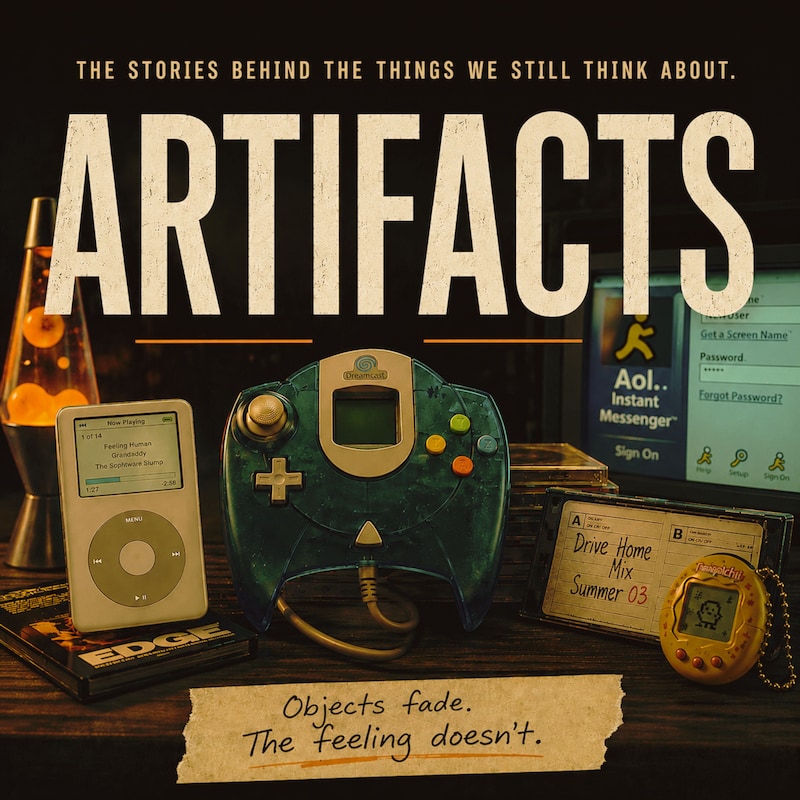
Danny: I'm Danny Brown, and this is Artifacts, a storytelling podcast about technology,
Speaker:
00:00:10
Danny: internet culture, media, and the feelings we still attach to them.
Speaker:
00:00:14
Danny: Because sometimes the objects fade, but the feeling doesn't.
Speaker:
00:00:25
Danny: There used to be an art to making someone a burned CD. Not just throwing songs
Speaker:
00:00:29
Danny: together, but curating and sequencing, and thinking carefully about track order,
Speaker:
00:00:35
Danny: like your emotional credibility depended on it.
Speaker:
00:00:37
Danny: And maybe it did, because a burned CD wasn't just music, it was effort.
Speaker:
00:00:43
Danny: It said, I spent time thinking about what you might feel like listening to this.
Speaker:
00:00:48
Danny: With the introduction of streaming, that gave us access to almost every song
Speaker:
00:00:52
Danny: ever recorded, which sure is pretty incredible but because of that music discovery
Speaker:
00:00:57
Danny: became frictionless and when things become frictionless they lose emotional weight,
Speaker:
00:01:03
Danny: Burned CDs on the other hand well they felt personal and I think people still
Speaker:
00:01:07
Danny: miss that A Burned CD was basically a digital mixtape and like mixtapes it wasn't
Speaker:
00:01:13
Danny: really about audio quality it was about identity What songs represented you?
Speaker:
00:01:19
Danny: What songs represented someone else?
Speaker:
00:01:22
Danny: And because of that, you'll learn about people through what they included.
Speaker:
00:01:25
Danny: Not a playlist generated by an algorithm, but an actual choice.
Speaker:
00:01:30
Danny: And because blank CDs weren't infinite, every track mattered.
Speaker:
00:01:33
Danny: You couldn't just dump hundreds of songs into a playlist and call it a day.
Speaker:
00:01:37
Danny: You had to commit. And that limitation created intentionality.
Speaker:
00:01:42
Danny: People spent ridiculous amounts of time arranging track lists.
Speaker:
00:01:45
Danny: You wanted the opener to feel just right. You wanted the emotional shift halfway
Speaker:
00:01:50
Danny: through. and you wanted that final song to land perfectly.
Speaker:
00:01:54
Danny: And then there was the presentation, sharpie written titles,
Speaker:
00:01:58
Danny: handmade cover art, bad printer paper inserts, tiny little touches like that
Speaker:
00:02:03
Danny: where the object itself became part of the emotional experience.
Speaker:
00:02:08
Danny: A Burned CD also captured a very specific technological moment,
Speaker:
00:02:12
Danny: that weird overlap between analogue emotion and digital possibility.
Speaker:
00:02:17
Danny: Because suddenly, people could download songs online, build their own collections,
Speaker:
00:02:22
Danny: customise their own albums, and create their own emotional soundtracks,
Speaker:
00:02:25
Danny: which at the time was really revolutionary.
Speaker:
00:02:29
Danny: Music stopped feeling completely controlled by labels, radio stations,
Speaker:
00:02:33
Danny: and retail shelves and became portable, personal, and editable.
Speaker:
00:02:37
Danny: And maybe that's why people remember that era so vividly. It felt like technology
Speaker:
00:02:42
Danny: empowering creativity instead of organising behaviour.
Speaker:
00:02:45
Danny: And what that does is it changes emotional attachment.
Speaker:
00:02:49
Danny: Finding music used to take work. You heard about bands from friends,
Speaker:
00:02:53
Danny: magazines, message boards, music channels or a friend's suspiciously overstuffed CD binder.
Speaker:
00:03:00
Danny: Discovery felt personal, and when you finally found a song you loved, it felt earned.
Speaker:
00:03:06
Danny: And now? Well, now an algorithm can recommend 100 songs before breakfast.
Speaker:
00:03:11
Danny: And sure, it's convenient, but convenience changes emotional texture.
Speaker:
00:03:16
Danny: People remember downloading songs off Napster and LimeWire not because those
Speaker:
00:03:20
Danny: platforms were amazing, but because the process itself became part of the memory.
Speaker:
00:03:25
Danny: And if you did this, you'll remember waiting 20 minutes for a song to finish downloading,
Speaker:
00:03:29
Danny: then discovering the file was mislabeled and
Speaker:
00:03:32
Danny: accidentally downloading a live version recorded through what sounded
Speaker:
00:03:35
Danny: like a microwave risking your entire family
Speaker:
00:03:38
Danny: computer for one blurry mp3 it was
Speaker:
00:03:41
Danny: chaotic but weirdly exciting and when you finally burned the finished mix onto
Speaker:
00:03:46
Danny: a CD that felt tangible finished like something you made a burned CD also said
Speaker:
00:03:54
Danny: something emotionally important it said I know you Or, at least, I'm trying to.
Speaker:
00:04:00
Danny: Music became communication. You gave somebody a mix because you wanted them
Speaker:
00:04:05
Danny: to understand your personality, your heartbreak, your excitement,
Speaker:
00:04:09
Danny: your weird taste in obscure bands, and because creating a CD took effort,
Speaker:
00:04:14
Danny: the gesture itself mattered.
Speaker:
00:04:16
Danny: And while modern playlists technically do the same thing, they don't quite feel the same.
Speaker:
00:04:21
Danny: Because physical objects create memory anchors. You remember where you got a
Speaker:
00:04:25
Danny: burned CD. You remember the handwriting, the scratches on the disc,
Speaker:
00:04:29
Danny: the awkward song choices, and that moment that somebody handed it to you.
Speaker:
00:04:34
Danny: The object stored emotion.
Speaker:
00:04:36
Danny: And maybe that's what people are really nostalgic for. Not obsolete technology,
Speaker:
00:04:41
Danny: but evidence that somebody cared enough to make something specifically for them.
Speaker:
00:04:46
Danny: A burned CD said something streaming playlists usually don't.
Speaker:
00:04:49
Danny: It said, I thought about you long enough to make this.
Speaker:
00:04:53
Danny: And maybe that's why people still remember them so vividly. Not because the
Speaker:
00:04:57
Danny: technology was better, but because the effort felt human.
Speaker:
00:05:01
Danny: I'm Danny Brown, and this is Artifacts.
Speaker:
00:05:09
Danny: Thanks for spending time with Artifacts. If this episode reminded you of a memory,
Speaker:
00:05:14
Danny: a feeling, or a piece of the internet, you've heard it disappeared.
Speaker:
00:05:17
Danny: You can find more episodes wherever you listen to podcasts or watch the video
Speaker:
00:05:21
Danny: version on Apple Podcasts, YouTube, and Spotify.
Speaker:
00:05:24
Danny: And if you'd like to support the show, visit the website for ways to help keep artifacts alive.
Speaker:
00:05:29
Danny: Until next time, take care of the things that matter to you, even the small ones.