Shownotes
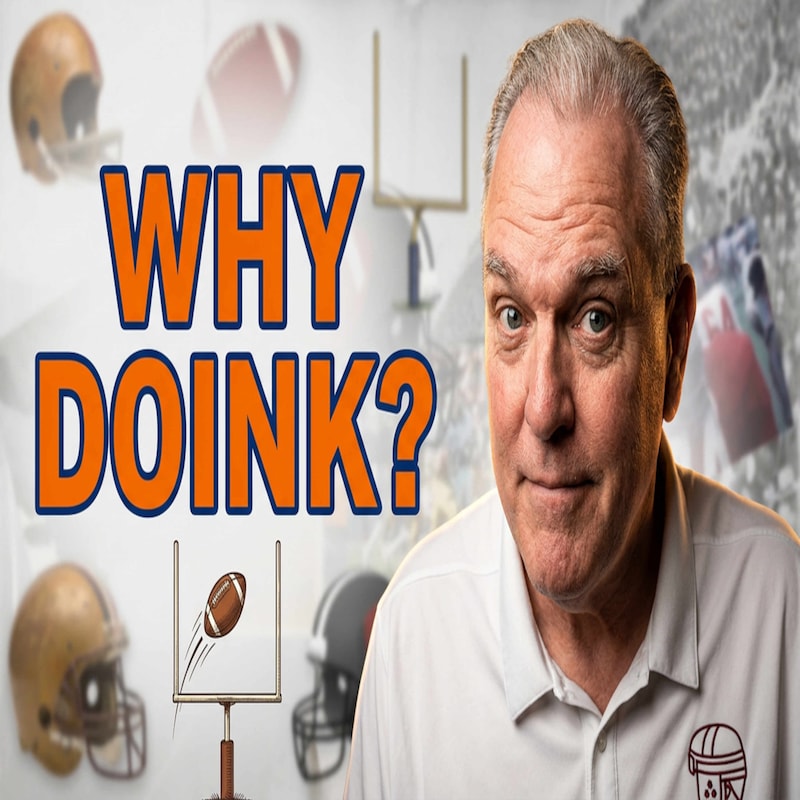
The term "doink," a phrase synonymous with the disheartening sound produced when a football strikes the goal post, has a rich historical lineage that we meticulously explore in this episode. Our esteemed guest, Timothy B. Brown of footballarchaeology.com, delineates the etymology of "doink," tracing its usage back to a pivotal John Madden broadcast during the 1986 playoffs. We delve into the evolution of this term, which originated from the 1870s when hitting the goal post resulted in a missed opportunity, referred to as a "poster." Through an engaging dialogue, we analyze the cultural and historical significance of this term, alongside the unpredictable nature of football, which is rife with chance occurrences and missed opportunities. Join us as we embark on this enlightening journey through the annals of football history, illuminating the profound impact of a seemingly simple word on the game we cherish.
Don't forget to check out and subscribe to the Pigskin Dispatch YouTube channel for additional content and the regular Football History Minute Shorts.
Miss our football by the day of the year podcasts, well, don't, because they can still be found at the Pigskin Dispatch website.
Do you want more football history? Test your Gridiron Knowledge, we feed you Daily with our new FREE activity, The Pigskin Trivia Drive.
Grab a copy of our latest book, "Marooned," on the 1925 Pottsville Maroons NFL franchise saga.
*OR* Grab a copy of our book on Western Pennsylvania football history, "World's Greatest Gridiron Team" on the 1903 Franklin All-Stars
Drop us a line at PigskinDispatch@gmail .com and check out and subscribe to the Pigskin Dispatch YouTube channel.
Contact us directly at [email protected]
Miss our football by the day of the year podcasts, well, don't because they can still be found at the Pigskin Dispatch website.
The episode presents a captivating exploration of the term 'doink,' an expression that resonates deeply within the football community, particularly when a kick meets the unforgiving goal post. Timothy B. Brown, a dedicated researcher from footballarchaeology.com, joins us to shed light on the historical trajectory of this term. The journey begins with the legendary John Madden, whose colorful commentary during a 1986 playoff game popularized the term as it is understood today. Mr. Brown recounts how prior to this, the word appeared sporadically, often as typographical errors in newspapers, and was not widely recognized in relation to football.
Through meticulous research, Mr. Brown reveals that 'doink' was not merely a spontaneous invention of Madden, but rather a term that gained traction in popular culture through various mediums, including cartoons and other forms of entertainment. The discussion further examines the historical significance of the term, linking it back to the early days of football when the act of hitting the goal post was known as a 'poster.' This episode not only serves to entertain but also educates the audience on the rich tapestry of football terminology, reflecting on how language evolves alongside cultural practices within the sport. By the conclusion, listeners are left with a renewed appreciation for the nuances of football commentary and the language that surrounds this beloved sport.
Transcripts
Every football fan knows the sound, the heart stopping clank off the upright that can ruin a season or make a miracle. We call it the doink today. But where did that word actually come from? Joining us is Timothy b.
dary John Madden Broadcast in: Timothy Brown:Hey Darin, thanks for inviting me once again. And you know, we're sitting here, we're going to talk about football's first doinks and kind of just want to know if you remember your first doink.
Darin Hayes:I don't know if that's any of your business there, big fella.
Timothy Brown:I admit, you know, kicking the ball and hitting a. Oh, oh, okay, okay.
Darin Hayes:All right.
Timothy Brown:Oh, your mind, your, your mind is terrible.
Darin Hayes:I'm not even going to tell you.
Timothy Brown:Where I asked the question and you just went.
Darin Hayes:I don't even know where my mind went. So. It went long ago, that's for sure.
All right, well Tim's alluding to a recent tidbit that he wrote that's called football's first doinks and poster. So Tim, it's a interesting story and maybe you can explain it to us. Sure.
Timothy Brown:So this, you know, lately I've been doing a bunch of these kind of multi level stories, right. I mean just different things that kind of come, hopefully come together.
But so this one is about kind of the origin of the word doink as used in football today.
And you know when, well actually I should say origins of the word doink before it was applied to football, then when it was first applied to football. And then the third thing is what did we call doinks before we called them doinks. So that's kind of the gist of, of the, the tidbit.
And so you know, when I go back and research the word doink in like the newspaper archives, anyways, most of the time, you know, the early doinks were appear to just be typos. You know, it's like somebody, you know, at the time, you know, there was somebody physically typing or setting the type, right.
I mean they had to put in manually, put in all the letters. And so doink was oftentimes a misprint or a typo misset of a word like drink or doing. And so anyways, so we had doinks.
Darin Hayes:But they had damn auto correct back in the day.
Timothy Brown:No, not, not in the types, not when they were using those little lead, you know, pieces of type. But it would have been handy if they had.
Darin Hayes:Yeah, that's for sure.
Timothy Brown: you know, sometime maybe the:And a lot of times it was in like cartoons where they're trying to use a, they're trying to make somebody who's like German or Eastern European, they're trying to apply their accent in a cartoon. And so the word doing, they also, they typically had them pronounce it doink. I don't, I've never really heard anybody use pronounce it that way.
hat they did. And then by the:It tended to be like something hollow hitting or something hitting something hollow. But it was all over the board. But it wasn't a very popular word, you know, throughout that whole time, you know, it was, wasn't a real popular word.
And then all of a sudden John Madden, who was famous for using the all kinds of, you know, kind of bizarre expressions, right, he started using doink. But he, he used it to oftentimes to describe a really solid block or tackle, you know, like a really good massive hit that was a doink.
fine and good. But then in a:And one of them he missed a 19 yarder. And it hit the uprights. And in the instant replay of the, of that kick, Madden used the word doink to describe his kick hitting the upright.
And then from that point on, you know, doink just became a word that was commonly used to describe hitting the uprights or hitting the crossbar.
And I think kind of what I, what I like about him and maybe I think part of the attraction of the word doink and just the concept of doinks is that, you know, it just kind of reminds you that football, a game of football in a lot of sports, it just filled with all these chance happenings, right? Does somebody slip? Does the ball barely pop out of somebody's hand? Does the helmet hit the ball?
And right, just right when, you know, making a tackle and fumble ensues, you know, so I mean, I just think there's as much as football Is planned and regimented game. There's just a lot of little things that might have gone the other way.
And doinks are one of them because, you know, had the ball Dr. Just gone a little bit left or right or doinked and, you know, hit the crossbar and crossed over the, you know, or hit the upright and crossed over the crossbar, then it's a good doink, right, instead of a bad doink. So anyway, so that's kind of our, our modern use of doink. And. But I also wanted to look back and see.
Okay, well, what did we call doinks before we called them doinks? And I, I don't know that, you know, for a lot of like the 20th century, until Madden came along, I'm not sure we really had a term.
ally the origins of football,:And one of the things that that rule says is that if you, if the ball hits the crossbar or the goal post, it's not good. And that event is called a poster. So that's why the title says, you know, football's first doinks and posters. So early on.
Darin Hayes:So. So it wasn't good even if it passed through the plane.
Timothy Brown:Yeah. No matter what, if it hit the goal post at all, it was dead. Dead ball? Yep. Okay, well, actually originally I don't think it was a dead ball.
It was still a live ball, but it just wasn't. It wasn't a goal, you know, whether, whether this is a kick from a goal from field or goal after touchdown. So anyway, so then I started looking.
Okay, well, where did we, you know, could I find instances searching for like, you know, ball hits the crossbar, hits the upper, whatever, you know, hits the goalpost. And so I actually was. I found, you know, five instances and then I just stopped.
So:You know, they played it under rugby rules, but it wasn't kind of official, but still, it didn't count.
Darin Hayes:Now could they have been talking about that rule then because it was so fresh in their minds from happening the week before?
Timothy Brown:Well, you know, I think they just. I think it was much more of a thing where, you know, they only made like three or four minor corrections to the rugby Union rules.
Darin Hayes:Okay.
Timothy Brown:And they added two other rules, you know, for American football. One is like to have a, a referee which, you know, rugby union just had captains making the decisions on fouls. So they did things like that.
But pretty much, I mean, it's literally, if there's, you know, whatever, I'm making up a number, but if there's 2,000 words in the rugby union rules of the time, 19, 50 of them are the same as, as, you know, the football rules. And a lot of the changes were just changes in wording. Right? I mean, that. Okay, the Brits weren't that precise in, in their wording on some things.
The Americans like to, you know, nail it down a little bit more. But anyways, you know, then there were, you know, the first four posters that I could find all involved Columbia.
then, you know, and it's like:But the reality is we had posters before football was football. Right. Because it was, it was part of rugby, you know, just like a lot of other things in the early part of the game. So doinks were posters.
And then that term just kind of faded out. You know, it left the rules. They did change it so that if the ball went over the crossbar.
And I can't remember when that happened, but so some, somewhere along the line we lost the word poster and we were left to Madden inventing the word doink or at least applying the word doink.
Darin Hayes:Yeah, I didn't realize that until I read your article that Madden came up with it because the first time I think I became, I mean, I heard the word doink of course before, but maybe it was like, you know, in the 60s when watching the old Adam West Batman things, you know, I mean,.
Timothy Brown:That's one of the things that popped up. Wham, bam.
Darin Hayes:Yeah, hit the penguin in the nose or something. Maybe doink. But I, I think when it really became connected to me anyway with football is the, the double doink that the Chicago Bears kicker had.
I believe it was a big game. I don't know if I remember if it was a playoff game or I think it was in the playoffs.
at Madden said it way back in: Timothy Brown:Yeah, I mean, all I can tell you, you know, I'm basing that on, you know, it doesn't appear in newspapers anyways until Madden says it.
Darin Hayes:It, it sounds like a mad word, that's for sure.
Timothy Brown:So anyways, he was, he was good for something and colorful language is one of them.
Darin Hayes:Yeah, definitely. He definitely made the game more interesting and really inspired a, a generation of broadcasters. I think that still carries on to this day.
You know, you still see elements from, from others trying to emulate him. So. Yeah, great, great stuff. Great research. You know, it always amazes me that you can go back in time and search all these words.
I know there's search functions in Newspapers.com and other different resources, but still to find something like the word doink, you know, that's gotta be. That's amazing that you found that much.
Timothy Brown:Well, there's other words that I look for that I never find and so then we don't do, I don't do tidbits about them.
Darin Hayes:Well, you know, your research, you do some amazing things like that and maybe you could share with folks how they could, you know, pay attention and appreciate what you're doing on your research.
Timothy Brown:Yeah, so I mean, I just published a couple times a week on Substack, so my, you know, addresses or your URL is www.footballarchaeology.com. So just go there, check it out. And I've been having some technical challenges of late with it.
Hopefully they're resolved by the time anybody listens to this podcast. But anyways, that's, that's the way to, to find it and just subscribe.
And if you do, you'll get a, get an email every time that I publish a new article with the article in the email. So yeah.
Darin Hayes:And folks, if you want to find more on this tidbit that Tim wrote about, you know, just on your YouTube, just go down in the show notes here. We have the URL available for you if you're listening on the podcast, go the show notes on there.
Get you a link right to Tim's thing and any images and his, his colorful literary storytelling is there as well. As long as his other, you know, billion and zillions of articles he has.
Footballarchaeology.com and Tim, we really appreciate you coming on, talking about this again and love to talk to you again next Tuesday.
Timothy Brown:Very good. Look forward to it.
Darin Hayes:That's all the football history we have today, folks.
Join us back tomorrow for more of your football history, we invite you to check out our website pigskindispatch.com not only to see the daily football history, but to experience positive football with our many articles on the good people of the game as well as our own football comic strip cleat marks comics.
Pigskindispatch.com is also on social media outlets, Facebook, Twitter, Instagram, and don't forget the Pigskin Dispatch YouTube channel to get all of your positive football news and history. Special thanks to the talents of Mike and Gene Monroe, as well as Jason Neff for letting us use their music during our podcast.
This podcast is part of the Sports.
Timothy Brown:History Network, your headquarters for the yesteryear.
Darin Hayes:Of your favorite sport. You can learn [email protected].




