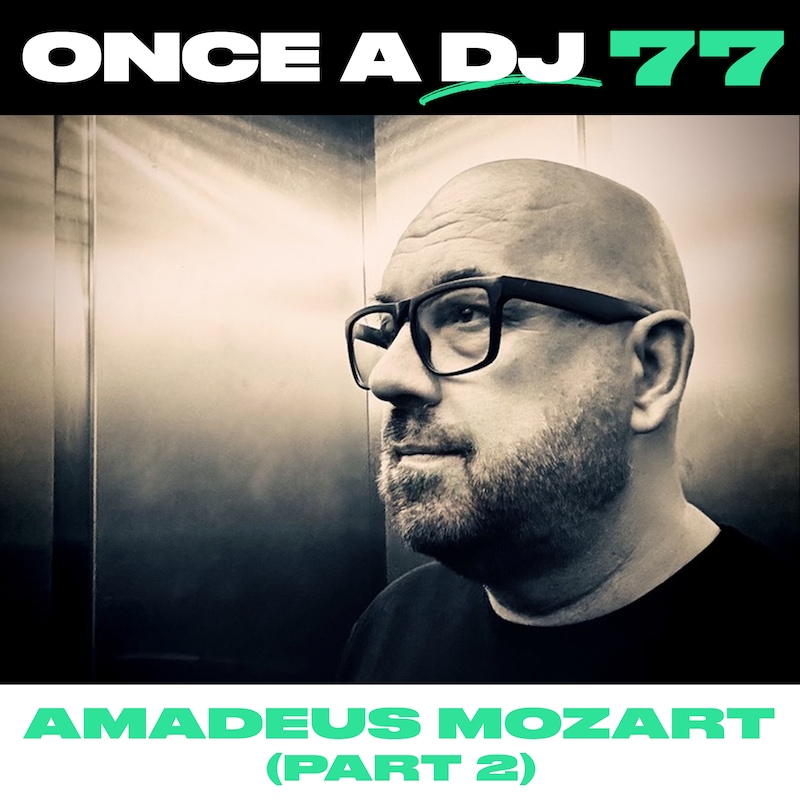
Shownotes
Paths of Rhythm is brought to you with support from vinylunderground.co.uk - take 10% off your next order with the code POR10 and free UK shipping on orders over £100
Paths of Rhythm is a Remote-CTRL production. If you're looking for audio or video production, then check out https://remote-ctrl.co.uk to see how they can help.
Other ways to support the show
- Follow the show on Spotify or Apple Podcasts
- Any feedback or questions? Hit up https://www.instagram.com/pathsofrhythmpodcast/
This one picks up where we left off - right at the moment when a mobile DJ dressed as Dr. Stiff meets a pop star called Andy Pickles and accidentally builds one of the biggest hard house labels in the country. Amadeus takes us through the Tidy Trax origin story properly this time: the Hit the Decks albums, the handshake deal that launched everything, and why sometimes the best business moves happen when you're just trying to help a mate out.There's a proper detour into wedding DJing (Amadeus has got opinions), stories about turning up to gigs dressed as a doctor with his wife as a nurse, and the moment he realized he'd gone from making tracks in his bedroom to running a business with 40-odd staff. The conversation wanders through sampling culture, remixing everything, and why nothing's truly original - from disco to hip hop to hard house to the ATV logo. It's not a linear career journey; it's more like watching someone accidentally stumble into their life's work and then double down on it.By the end, we're talking AI, Paul McCartney getting paid for robot Rihanna tracks, and why you can't build a wall to stop a train.
Transcripts
Right, welcome back to Unto dj, the show where we look at what brings us together and what sets us apart. And we're back here today again with Amadeus Mozart Ammo.
Speaker B:Hello.
Speaker A:One of the Handbaggers, one of the Tidy Boys. One half a Tidy Tracks and one or two little Boys. You learned.
Speaker B:Yeah. And you missed one out, which is quite important. I was one half of Hyperlogic and that's that. We had a top 40 hit with that.
And incidentally, we'll talk about it in a second. But that was quite instrumental to get into Tidy Tracks, as was the Handbaggers. Of course, as you mentioned, there's quite a few.
You mentioned the good ones there, but there's a lot of crap ones you didn't mention. And I thank you for that.
Speaker A:You're welcome. So, yeah, so where we left it last time then was we were a couple of years off Tidy Tracks.
But you'd just been doing the Hit the Decks albums with Guy.
Speaker B:Yeah.
Speaker A:And you said that was a good point for us to kind of end, really, because it's the start of the next episode or the next act.
Speaker B:Yeah. I think what we've covered in the first one was me, from me being born to 93 and my inspirations and yeah, we wandered off a bit quite nicely.
But it just paints a picture of where it all came from and I think that's quite important. You know, we. We talked about me being a mobile dj. Incidentally, I didn't tell you, I remembered that the. The mobile disco name I have was Dr.
Stiff's roadshow from 82 to 86, I did that. And I used to dress as a doctor and my wife used to dress as a nurse.
And it was really strange because we'd turn up at these gigs all dressed as doctors and nurses. I remember my business card, it said here, disco there, Dr. Stiff comes everywhere.
But I got a lot of bookings because I was different from the normal, you know, in life. I've always thought, okay, that's the normal way of doing it. Is there an odd way of doing something? And with. With the dj.
And I thought, I'm not going to just turn up in jeans, T shirt or back in those days, a bow tie and a jacket. I thought, I'm going to be dressed as a doctor. And then when I turn up, people are going, what the hell's going on?
So I've always tried to look for angles. But yeah, going back there, I mean, I did lots of weddings and. And I got married in 91 and I actually didn't Tell anybody.
Because I. I'd done so many mobile discos at weddings. I hated weddings. They're all the same, every single. No matter. And I'm going to offend people here. People are just about to get married.
Just don't spend a lot of money on it. It's a waste of time. I've been with my wife for 44 years and I spent 58 pound on my wedding. We.
In:I went up to my dad and my mum, I said, I got some photos from a wedding. They said, oh, I'd gone to Boots. And Adam. Developed in an hour, showed them the wedding photos. Done. 24 hours. That's it.
But I hear so many stories and. And what I hated about weddings was, here comes the buffet. Oh, they've got it. It's tomatoes cut in the shape of roses.
It's the same st. Let's do the photos. It's so formulaic. I hated it with a passion, as you can tell.
Speaker A:Were weddings in the 80s a lot more uniform? Because people really want to go with their original flavor on them now, don't they? And, you know, there's all sorts of different venues and styles.
Was it just more. Everything was the same.
Speaker B:Everything was the same. Okay, we're going to the church, we're getting married. There's a confetti. We're coming in, we're having the photos taken. Everybody's bored.
The kids are running around. Get the disc, go on. The buffet's about an hour into it. There's the speeches. It's just so formulaic. Yeah.
Admittedly now, but the only difference now is can we have the photos in black and white? And can you take photos of us when we're not looking? And we're gonna have a novelty dance at the beginning that nobody's gonna expect.
That's the only difference. It's still expensive. It's still a waste of time.
Speaker A:Did people used to give you. Because when I've done them, you'll get a load of playlists. So a mate of mine got married the other week.
I wasn't unfortunately, able to be there, but I got a mate of mine to DJ for it. So they'd given him all these playlists of stuff, all things that are important to them, important to their friends.
About an hour into the night, when the boozers kicked in. So, like he's just getting loads of people asking for drum and bass, which isn't on the list. So, you know, it's really hard like that.
But I guess back in the day, I'm assuming you'd play a lot of things like Time Warp, Birdie Song, things like that. You don't get those classics now.
Speaker B:You don't get them now. You don't get them now. But, you know, again, I'm quite passionate about this. I believe that 90% of people that go to weddings don't want to be there.
All the lads are looking at the phone, checking the football scores, thinking, I wish I wasn't here. The only people that want to go are probably the bridesmaid and the bride. Everybody would rather be somewhere else.
And when you get the invite, you know, it's like, oh, no, we got Dave and Chris's wedding on Saturday. What am I going to wear? And I think most other couples have an argument leading up to somebody else's wedding. We haven't got my present.
Do we need to get them a present? Should we get my card? Oh, it's so stressful. What am I going to wear? I'll have to buy a new suit. Oh, no. All this stress for somebody else's big day.
And all the people that get married want to do is show off in front of all their friends and say, look at us, we got married. Aren't we brilliant?
Speaker A:There's a lot of politics.
Speaker B:I'm quite angry about this, aren't I? Maybe we should. Anyway, yeah, anyway, moving on. That's weddings. So no longer a mobile DJ. 93, as we've said, it's just about the start.
I've met Andy Pickles. I thought he was a pop star. Well, he was really. I thought he was quite big headed. I thought he was a bit arrogant. You.
You know, I thought he was untouchable.
Speaker A:Was he in that celebrity world at that point? Yes.
Speaker B:It was like he tells stories even now that. And he can't remember a lot of them, that he one day is in a boat with Sonia and Bross and he doesn't know why.
The next day is at Lionel Blair's house. You know, it's like, you know, he's on Top of the Pops with his arm around Pat Sharp and.
And all these celebrities, you know, Brother beyond and stuff like that. He's doing TV shows in Germany and he doesn't. He's 19 years old, he's being wished, you know, he's got this.
Everybody has this window of opportunity he's had this year, number ones, he became a Page seven fella in the Star. So he had to take his top off and stand there in jeans and be a. You know, I mean, so this is a crazy thing for Andy and.
And a lot of it, when I talk to him about it, he either doesn't remember on purpose or he just generally doesn't remember. But anyway, so he was sort of untouchable. I was a wannabe. Well, I just breaking through. But I think Andy, he saw a picture of me once.
He liked my name. He thought it was a bit quirky. And he saw a.
Saw a picture of me on a magazine dressed in drag once, and he thought, this is an interesting character and what it was. Oh, that was unprofessional. So, yeah, I. I remember meeting him and I think he wore a blue velvet jacket. He swanned in everywhere.
And I thought he was untouchable. But then one day, I think it was about late 91, 92, hit the decks was on it. I think, because Andy was involved with the incredible side of pop music.
John Bunny's very cheesy. I mean, talk about weddings. I mean, you can't go to an even today without Swing the Mood Drive, Bunny being played. You know, come on, everybody.
It gets everybody on the dance floor. So it was very incredible. And I think Andy wanted to be a bit more credible.
I was doing Hit the Decks part of the music factory, so he could see what was going on and thought, I want a bit of that. You know, these guys are playing in techno clubs and sort of having the.
This sort of, yeah, really cool vibe about them doing these credible underground albums. And I'm doing this pop stuff. So maybe he approached me.
He approached me and Guy to come up and we did let's Play around in the studio and do some tracks. It was a bit of a get to know each other. So we did that in sort of 91, 92, and we got on very well. We had the same sense of humor.
We're both into Vic and Bob. Vic Reeves at the time, so we were quoting that and we. We hit it off, particularly me and Andy.
And I think Andy liked the fact that I was a bit stupid. I've never took life seriously, and I think even in the studio we had a laugh.
So we gelled and the barriers were broke down between him being a pop star and me being a novice. So the only thing then, me and Andy's relationship quite gelled quite well, and.
And I was with Guy Garrett and And maybe again, looking back, whether Guy felt a bit left out. You know, when two mates get on, there's three of you?
Speaker A:Y.
Speaker B:Sort of, yeah. We worked together, but they felt like I was. Me and Andy were having a bit more of a laugh. So we. We gelled. So we started to make stuff.
I remember John Pickle said, oh, it was Mozart's 250th anniversary of him dying, the original Mozart.
And because my name's Mozart, he said, why don't you do a remake of Ina Kleiner Nach Music, which was a famous Mozart track, and make a dance version, which I thought at the time was enough idea to do. But I did it anyway because I, you know, I wanted to keep John Pickles and Andy Pickles be better than.
By the way, they're based in Rotherham at this point in the back streets of Park Gate. And it's not a good area. It's, you know, run down.
You'd never expect this, you know, multi million pound record company in the back streets of Rotherham. You wouldn't expect it. And that was part of their charm really, the fact that you turned up and you're next to a shitty garage and it was.
You thought, where am I going here? But yeah, so I used to travel from Ketrin to Rotherham once, twice a week to work with Andy Pickles doing some novelty stuff.
Hit the decks, was doing well. Yeah. So things were about ready for tidy. And I suppose me and Andy, we wanted to do something credible together.
So me and Andy got together without Guy and we said, let's do. Let's do a really good cool dance track. We're talking about late, early 94 now. And Andy said, what should we do?
And I said, well, let's, you know, sampling was big, a lot, a lot of big tracks around. I said, well, let do something a bit different. And I said, can you play the keyboard? He said, I can only play one.
One thing really well and it's the New Year's Day riff from you two. I said, play that. I threw a beat underneath it and it sounded good. I said, well, let's. Let's do something with that.
He said, oh no, we'll leave it, let's do something else. And so we. We shelved it. That idea. We. We couldn't make it work. I went back to my home studio and I sampled Sweet Child of My Bunk.
Sweet Child Of Mine by Guns N Roses. The guitar riff. And I sampled it and put it. There was a big track around by Paul Decay and I think it was Called it Sampled, a big guitar track.
But I. I thought it'd be good novel to sample this Sweet Child of Mine. Nobody had done it. Put a BB on. It sounded really good. I threw in some vocals from an old sample. It was called the Warehouse.
Days of Glory got it together. I took it up to Andy and he said, this is brilliant. We're going to make this a track. I said, what about the sample? Well, they'll clear it.
Somebody will clear it. Let' get it cleared. So we sent it off to a few major record companies, one of them being London Records. London fffr.
Speaker A:Yeah, yeah.
Speaker B:And then they got. They've got a new label called Systematic. Weirdly, they just put Wigfield out and that sort of stuff. It was pop, but it was a sub.
Sub genre of London records. So we sent it to a guy called Christian and I think he'd had success with JX as well.
Because at this time, by the way, me and Andy are both big fans of huge tunes. They were sor. Like the daddies, really. And what the label Hues. The label Red Jerry ran it and they had a little stickman on the front.
We're very inspired by it. And they had JX and some other really Artemis bits and pieces. Some real cool tracks on Hughes tunes underground label.
But what Red Jerry had cleverly done, he. He. He actually originally signed DJ Misha, which was Access, which was a big track. So he didn't port and sign tracks on this underground label.
But he had a deal with London Records that if though any of those tracks bl to be big club tracks, London Records was automatically taken. So they were like the A R for London Records. And so JX came along and originally appeared on huge tunes. Jake Williams did it. Red Cherry signed it.
Son of a Gun, the track was. And I love. Oh yeah, I love that track. What a great simple riff.
It's probably the riff in Son of a Gun is probably one of my favorite riffs of all time.
Speaker A:So simple, so kind of novice question because I don't know a lot around house and all the derivatives was that stuff. Would you class that as hard house or is that yet to come?
Speaker B:I'd say it's the beginnings of hard house. And when we get to talking about hard house, it is like any genre of music.
It's not one thing whether you talk about rock and roll or whether you're talking about even hip hop, as we all know, it's a mixture of different things coming together. Hard house is no different. It's a mixture of what's gone before, put in a blender and what comes out.
And so, yeah, I would say what Huge was doing was the beginnings of hard house. Tony Devy was playing what we Raven, the hit the Deck stuff is the beginning of hard house. European music, techno, it's all coming together.
It's getting faster, it's getting a bit harder. And of course, Tony Devi's having his own. He's just started at Trade, the nightclub in London. He's. He's. His career is just about to grow in 93, 94.
Speaker A:Do you guys know him at this point?
Speaker B:Oh, well, at this point, I got to meet him a couple of times. Obviously I followed him right through from 84, but.
But I was very lucky because Music Factory, the DJ mix service, just like Mix Mag, was associated with dmc, this magazine that we talked about, Music Factory had their own magazine called Mixology, which was a good name, we thought at the time, until we realized it was to do with cocktails. Yeah, Mixology sounds good if you're into mixing, doesn't it? It's. I'm into mixing, I'm a dj, I'm into mixology. Great name. Yeah.
It was only years later we realized it was about cocktails. But we had a magazine called Mixology, which the equivalent of Mix Mag, and it was an industry magazine that got sent out to industry.
And I worked on it with Martin Smith at Music Factory. And so we would send this magazine out and we would. I. I had the ticket to go and interview anybody. Chemical Brothers. Yeah, go to the studio.
Interview Baby Dot. Yeah, go to the studio. Any. Anybody who was breaking through in the dance world, I had the ticket to.
We're taking a film crew down like we're doing now. We're going to do a podcast interview for the magazine. Who wants to go? So working for Music Factory had his privileges also.
This magazine did shape Tidy Tracks eventually. So this industry magazine, everybody's looking at the chart, it's called Mixology. I got to meet Tony Devi through that.
We had a couple of interviews, went to his studio. In fact, I filmed with a camera with Martin Smith, the last ever interviewer, Tony De V in his studio. And he's showing around all his equipment.
It's actually on YouTube. You can. Tony showing you around the studio. That's me filming that with Martin. So, yeah, I was very lucky that I could knock at anybody's door.
Like I said, we met the Chemical Brothers before they were. They'd have a hit. So all this. This all comes together, really. The fact that I'M working with Andy Pickles. We've got a track under the way.
I can go and be inspired by any other DJ studio and pick up tips. It's all working quite well. So, anyway, I've done this Guns N Roses, Sweet Child of Mine sent it to Andy. Andy said, let's redo it.
The production, it was only a demo. We sent it to London Records. They said they love it. They want to put it out on London Records. We thought, brilliant. This is. This is the start.
Somewhat big. Andy loves it, it's credible and is a DJ, by the way.
He's actually DJing in Doncaster in a pub, but he's still got that Joy Bunnyisms and he's playing party stuff. So he's desperate to get a little bit of credibility.
Speaker A:Yeah.
Speaker B:So this. This trap, signed to London records in 94, could be the biggest thing we've ever done. So they said, all right, we've got to clear the.
With, you know, with a record company in America. So the Guns N Roads, the Sweet Child Of Mine's going to be cleared anyway. That took ages and ages.
So in the background we started writing some other stuff and one of them was a novelty track that I'd come up with. My mum phoned me one day and she says, oh, I've just seen Pete Waterman on. On the tv. And he said his favorite inspiration artist was George Formbill.
And I thought, all right. She said, why don't you remix George Formby? He had a big hit called When I'm Cleaning Windows. Yeah. In the 30s or the 40s.
I said, all right, Mum, I'll do that for you.
And so anyway, I went up to the studio, my home studio, and I took George for me When I'm Cleaning Windows and I remixed it for Master Mix, DJ Only mix. And I sampled it instead of the banjo or the ukulele of George. For me, there was a big track around at the time by the grid.
It was called Swamp Thing.
Speaker A:Yeah.
Speaker B:And it got a banjo in it. So I thought, wouldn't it be good to put George Formby with this sampled?
So I'd done it for DJs only, and DJs loved it because they got George Formby mixed with a grid. It was brilliant.
Speaker A:And that Swamp Thing was a big tune.
Speaker B:It was a big tune. And John Pickles, who had already put J Bunny out under his own steam, said, this could be a hit ammo.
Let's try and get it with a major record company. So I thought, oh, God, what's going to happen? Here. But we tried to clear the Swamp Thing and they wouldn't let us have the banjo.
So we thought, we want to put it with a major rather than put it out. Music Factory Records. So we went to Stock at the time Stock, Aitken and Waterman split up.
So we went to Mike Stock and Matt Aiken had got their own record label. Hey, before that. I must tell you this, though. John Pickles, he. He. We got this demo and he wanted to tout it to different majors.
He went to see Simon Cowell and he went because Simon Cowell was head of BMG at the time. He was the daddy. He was beyond the big debt. He signed all the big acts. He got Robson Jerome. Big acts. When I say big, they were number one.
He was the king of A R. So anyway, John Pickles knew him from way back and said, hey, I've got a novelty record that could be a Christmas number one for you. We're talking 94 now. This could be Big Gun sits in Simon Cowell's office. Simon Carl says, I love it. I want it on the label, I want it on bmg.
This could be a Christmas hit. He went to sign it and he didn't do anything. Time passed, didn't do anything with it. We kept bringing him up when he definitely having it. Yeah, yeah.
We found out that all he does it was a threat. He'd got Zig and Zag, it signed as a Christmas number one and a couple of others.
So what he'd done, he'd actually signed it quite cleverly so that he wouldn't put it out till after Christmas so that it wouldn't threaten his Christmas number ones. Yeah. Which was a bit of a dirty trick at the time. But we got to find this out lucky enough.
So we pulled it back off him and that's when we went to Matt Aitken and Mike Stock, who had got a record label called Silly Money. They just set it up because it split up from pwl. So we went and see Matt Mike, they said, we love it. We'll. We'll make it Christmas number one. We'll.
We'll just run it through our studio because it's good, but I think we can. And of course, a big phantom, you know, Stockholm Mortman or Idols, back in the day. Yeah, run it through your studio, Matt and Mike. Brilliant. Just.
All we're going to do is just change it. We'll change that banjo. We'll run it through the studios. Anyway, they signed it and it. It got on CD and vinyl. It's coming out as a Christmas hit and.
But when I got the credits on the back, it was also written by Amadesh Mozart, Andy Pickles, Mike Stock and Matt Aitken. So they've got their own rights credits on it, which was a clever move. And they put it out and.
Yeah, it was hard work trying to get it in the Christmas stores, by the way, because Woolworths was the biggest player to get in the chart. If you didn't get it in Walrus, Woolworths came this. A lot of people don't know this. They think the charts are rigged these days.
o. Said to us, if you give us:Give us some. We'll put it in our chart and we'll put it. And that will help you get in the national chart.
And then, little did I know, this is the game that everybody plays, guys, this is just not us, it's everybody. If you want your truck in the charts, you have to play the game. I was shocked. I was learning all these tricks.
So anyway, we did give them:Me and Andy are Two in A Tent. Because there used to be an act called Two in A Room. A House.
Speaker A:Yeah, yeah, yeah.
Speaker B:So we thought we'd be Two in A Tent and we were DJ Stove and DJ Peg. Because we got this credible thing going over here.
We didn't want to be the same two guys, so we dressed up in Kagul's hats like we were Trainspotters. So it was DJ Peg, DJ Stall, and we were Two in A Tent. We thought we'd dress up. Nobody know. It's usually brilliant.
Speaker A:Anyway, it makes a lot of sense, doesn't it? If you're trying to keep. If you're trying to, like, push a brand you really believe in.
Speaker B:Yeah, of course, it was a natural thing to do. Anyway, it went up to number 24 in the charts and we were the highest climber.
So normally on Top of the Pops, if you're the highest climber, you go on Top of the Pops. That was the rule. Whoever's the highest climber that week goes on Top of the Pops. I thought, this is it. We're on Top of the Pops, highest climber.
We got the message come through. Oh, no. We were too novelty. They didn't want us. If we'd gone on Top of the Pops when we were at 24, we would have gone top 10.
Because in the old days, if you're on top of props, you just go up the charts. So we never got a chance on Top of the Pops. We made a video. It's on YouTube if you want to search it to. In a tent.
And we did it with Stockholm, well, Stock and Aitken. Anyway, it. It did all right. We got to number 24. We. We eventually went on and toured Denmark. We got to number three in Denmark with it.
So it was a novelty act. But in the background. I want to get this sample cleared for Guns and Roses to get on a credible label. You know, I want to get on huge tunes.
I want to be. Me and Andy want to be credible. We. We. We're good at doing pop, clearly, but we want to be credible.
I'm also working with another producer who's not been mentioned yet. Paul. Paul James, his name is. He is very important because he lived up the road from me, he saw a success. I'd have Megabase and hit the decks.
And he come and knocked at the door one day with a tape, him and his mate Paul Chambers. And they. They made some really credible, what you call techno house at the time. And we became friends and Paul.
Paul James was a really good, cool producer. But I want to plant that seed because he's going to come back in a minute. So cut a long story short, we waited and waited.
They couldn't clear Guns N Roses, so we got it replayed. Replayed. We thought that. We'll get it replayed. It's just a publishing argument. Anyway, got it replayed. It was beautifully covered.
No, you're still not having it. Guns N' Roses weren't having ball. So what. I'll tell you what, can they actually.
Speaker A:Block a replay, then?
Speaker B:They can block a replay on the. On the grounds of publishing, because the publisher can block. So there's two types of things.
You've recorded my music, I own the recording, or I wrote the music and the publisher gets involved. So if Paul McCarthy, if.
If a real novelty act do a version of hey Jude and Paul McCart and he doesn't like it, he can block it because he's the writer and the publisher can block it. It's very rare that happens because most people, hey, particularly these days, cover it because it's more money.
Yeah, I want I don't even care if it's crap, cover it. I want the money that he's going to gain. But back in the days, they're a bit sensitive. So anyway, London Record said, I tell you what, we'll put.
We'll. We'll still try and clear it, do a follow up and see what happens. So me and Andy had the pressure of doing a follow up.
We went back to Andy playing, playing New Year's Day by you two. And he played it. And this time I went through the record library because this is how we used to work back in the day.
We would sample, we'd have a big record library in the studio. The turntables was almost an instrument if you were proper. It was, it was an instrument.
And so what I did went through a record library and I found this import. At the time it was on Def Jam and it was Alison Williams Sleep Talk Talk, which was a big female vocal soul track.
And anyway, at the beginning is an acapella which says, you said you would love only me. And I was. And I threw it in and there's a big scream where she goes, ah. And it went in key with Andy while he was playing the U2.
I said, these go together brilliantly. They're out of time, but let's make it work. We made a track which was called Only Me because that's what she says in it.
We put it together and we sent it to London Records and they said, said, wow, forget the Guns and Roses, this is a hit we want. This will be your first track. Quickly come up with a name. We're going to get this out. We're now talking early 95. So we, we sampled that.
You two cleared the publishing. Allison Williams, Def Jam said, if you give us two and a half thousand dollars, you can have a sample as a buyout for life. You can have it.
It's only a little bit paid two and a half thousand dollars for that. You two clear did it. We wrote the rest and London Records said, we want it.
It took about seven goes because they were very pedantic on getting the mix down right. And then a dream come true. London Record said, I'll tell you what we'll do. We'll get a couple of remixes done and we'll put it out on Hughes Tunes.
Speaker A:Oh, were you happy with the mix that they did?
Speaker B:Well, they didn't do a mix that we did the mix. All right, what, what it is. But they came up and said, we just want you. We. We did the original mix and they Just wanted it. We had to keep going back.
And can you change that? Can change. In fact, we.
We originally we got a soul guy called Steve Edwards to come in and write a verse chorus over the top and we sent that to him and they said, oh, right, okay, can you do a dub version without Steve singing? All right, we'll do a dub version. Sent the dub version. They said, said the dub version's the original. Forget the first chorus.
So the only thing that remake always stripped all the male vocal, verse, chorus out of it. The only thing that remains is Alison Williams and. And the U2.
So the Dub became the original Christian first of all, did a thousand red vinyl, put it out. Nice little scam. There's only a thousand of these. Sent it to DJs. People loved it. Then he said, right, I'll get Tall Paul and.
And he was under the name PNC back then and Tintin out. We'll get them to do a remix and we'll put it on Hughes Tunes and that way credit is making it more credible. Huge, huge tunes were playing the game.
to go on London, but we'll do:My favorite record label. I'd met Red Jerry through mixology, done an interview with. With him. You know, it was. Tony Devi was playing it.
is the beginning. So this is:Although they, the record company did come back to us, said we need to follow it because you're number three in Denmark. Oh, no, what we going to do? So we came up with Two in A Tank and we sampled do you know, you can start back in the day. I think it's still true.
If anything's over 50 years old. There was a law where you could sample it and didn't have to clear it. We didn't have to clear George for Hornby because it was over 50 years old.
Speaker A:Yeah, yeah.
Speaker B: it was just coming up to the:So we sampled the Andrew Sisters Boogie Woogie Booger Boy of Company B. It's an old American war thing. We sampled it and we came up with another name. We thought wouldn't it Be good for.
Every time we come up with another truck, we change the name. So instead of. Of two in a tent, we were two in a tank and we did a video and that got to number five in Denmark.
So we're keeping this a secret because this is like we've got credible over here. London Records, huge tunes. We're dressed up as DJ Peg and Stove over here. The two worlds should not meet, so we kept them apart.
But the huge tunes tracker did really well, got a vibe and London Records said, we're going to put this on now 31. If we can get it in the top 40. That's the remit.
Speaker A:You, you.
Speaker B:You've got to get the top 40 as it won't go on now. And there were now 31 were interested anyway. We were lucky. It got to. It got to number 25, number 20 actually, in the charts. And so it was on now 31.
The name hyperlogic, by the way. We had to come up with an app quickly. We were in. We're in Music Factory. We're having a cup of tea.
Christian's on the phone, says, I need a name for this act really quick. And then we're was a box of paper over there, which was called logic. A4 sheets of paper.
And then there was another box over there which was a drink called Hyper Something. And we literally said, right, Hyper Logic. Yeah, that sounds great. Okay.
So in like 10 seconds of looking at two things that was in the kitchen, we came up with Hyperlogic. And that was the name. The rest is history. So me and Andy are credible at last. We're in the top.
We're on now 31, the first cream album mixed by Carl Cox. He wants to use Hyperlogic Only Me. Yes, Here we go.
But do you know, we got frustrated because we did another follow up to Hyperlogic Only Me, which was Sampled Candy Staton. You got the love. And again they said, yeah, we want it. We can't put it out till next year because our release schedule's so big. All right.
And it's at this point in the summer of 95, John Pickles and his dad, who came up with Drive Bunny concept, says to me, and it sits me and Andy down, we're frustrated. We've got now loads of good ideas coming out, but major record companies, we've got Simon Cowell trying to do us over. London Records are taking ages.
What we going to do? John Pickle says, why don't you set up your own record label? Lads of Music Factory will fund it. We've got the money. Why don't you do it, you two?
Then you can be as prolific with all your mates, Paul, James, Guy, Garrett, all these guys, guys you're working with. You can have an outlet for their music as well as yours. Why don't you go for it? So me and Andy thought, that sounds a good idea.
nk, and in the. The summer of:And on the way back I said, oh, I've got to come up with a name for a new record label. And he said, what? What are you thinking? I said, well, I love whose tunes? I love the Little Stick Man. It's a good name.
And I was looking at the back of the. Of an A can of Orange Tango and on the back was the Keep Britain Tidy logo. And I saw it, I thought, do you know what? That's everywhere in it.
At the time, it was you, Chris packets, everything you picked up. It got Keep Britain Tidy and it got that little man with a bin on it. I said, that'd be good as a logo.
So Martin Smith got his pen out and said, well, what could we do with it? And so we both decided, what about if we turn the bin upside down and have the man with his hand?
Instead of putting paper in the bin, he's got his hands on the desk and Martin got a bit of paper out and drew it. I says, I love it. That's it, we got it. Tidy Tunes. We will be tidy tunes. And he said, yeah, that's good. I said, could tiny tunes like huge tunes?
And also we were a big fan of another label that just started called Tripoli Tracks. They were in London. And I said, what about tracks? Tidy tracks.
So by the time we got from King's Cross to Ketrin, we'd got a logo and we got a name and we were going to be called Tidy Tracks. And what I loved about the name Tidy was the fact that it was. This was before anybody had used it on TV or Gavin and Stacy or.
It wasn't a credible word, but it was a good word. You know, you could say, oh, that's tidy. It meant positivity. And I knew that as a marketing man, I could have fun with it.
So summer of 95, we've got the logo, we got the name. I went back to Andy. Andy sort of said, yeah, it sounds good. I don't think he saw the potential in the name, but said, let's go with it.
So in the summer, I Had a. A demo on the. On the. In the studio, which I thought I wanted to get out and which was.
I'd come up with the name Hambaggers because at this time we hadn't got a name for Hard House. We hadn't got a name for this stuff. And there was a thing, it was.
You got Handbag, which was cheesy pop, and there was this new thing that come along called Hardback. Awful name, what it was. It was like pop but harder. And it's called Hardback. Hated it. So anyway, we came.
I came up with the name Handbaggers, which was just. Just a silly name. And I'd done this track where I'd sampled Depeche Mode, Just can't get enough the riff. And also it got the jets crush on you again.
It was a mashup like Hyperlogic, but it was very commercial. But I got Paul James, who I mentioned earlier, who did really credible remix. I said, paul, I've got this track. I want it played at trade.
I want E and M playing it. I want Tony De V playing it. The version that I've done is too poppy and he did a really good version version and it got played at trade. And.
,:The Handbag, as you found out, is the first release and that's the start.
Speaker A:Because there was, at some point, correct me if I'm wrong, the terms like handbag house. Right. Was that kind of coined off the back of this release?
Speaker B:Yeah, I. I didn't like Handbag House. I didn't like the term. But the Handbaggers was just somewhat like.
I suppose it was a tongue in cheek where we shouldn't have really called it the Handbags, really, because it was sort of pandy into that sort of audience. But there was one track in particular that I loved, which, I don't know, it was.
Paul Masterson had come, he was a great producer and he'd done this track, Amen uk. The track was called Paris Fashion and I remember hearing it in Nottingham and it.
Our first time I heard it, it was a DJ playing called Peter Martine and I heard it in Nottingham and I thought, what is that riff? It's so good. And it was. It. It made me feel sick. It was that good. I thought, I've got to find out what this track is. Amen UK Passion.
The riff in It And I went over to beat my tea. I said what is that track? And he'd got this sort of promo version of it and he said it's that. Have a look. And he was dancing around, he didn't care.
He actually gave me the record to look at. Have a. And I was reading the label. Oh, I love this. And I. I went to give Peter Martini back and he was too busy.
He was on the speaker, he was going for it and I. I was. Must have been there for nearly 10 minutes. I actually walked out the club with the record. I actually thought I'm having this record.
It was that I. I stole his record by the way. I've met him since, I have told him so this is not a revelation. So I walked out the club with a record under my arm. But that. That riff, it was.
It was classed as handbag. It was. It was camp but it was hard and I loved it and it was a bit cheesy.
Matt Dairy had got a track out at the time before he became big called Space Baby. Everything was. Was hard but it was fun. It wasn't dark. It was very difficult time. It. It was. Still got energy, it still got a bit of fun.
You got the novelty from the rave scene. Don't forget you got like Trumpton being sampled and stuff like that. You've got that weird, you know, Sesame street stuff. It was fun. Fun.
Speaker A:It's interesting how at this point the sort of underground and the mages were kind of intertwined. It sounds like.
Speaker B:Yeah, it was. The majors wanted a bit of what's happening underground. Cuz clubs were. You got the rave scene, thousands of people going. You got the club that.
Now don't forget: to: It's:You know, I think Margaret Thatcher back in the day said no more than six people can play music in the street and came up with clauses as well as clause 28 which was anti gay. She had clauses for people clubbing and stuff like that. There Was it was, you know, it was being clamped down.
So where could all these clubbers go and have fun? Nightclubs. So the super clubs opened, you know, the gate crashes, trade after hours clubs.
All these super clubs that we look back, the Gallery in London, all, all the big clubs of the UK started from about 92, 93 up to, you know, the present day. They all open, they every. And, and don't forget, back in that day, a pub shut at 11, everybody out.
So if you want to carry on drinking or partying at 11 o', clock, you had to go home or you went to a nightclub and paid 15, 20 quid to get in. So the super clubs opened at 11 and waited for everybody to be kicked out of the pub. And that was what I call the normal nightclub.
However, dance nightclubs, people probably didn't go out until 2 in the morning. So the culture of rave and these warehouses went into the clubs and so it was a great time.
It's a great time to make music, a great time to be a clubber. It was a great, you know, it was just a wonderful time back then. So 95.
I always think in life, success is all about time, timing and, you know, you could go back and say if the Beatles had come out four or five years later, that wouldn't, wouldn't have worked. They had to come, you know, 62, 63. It's all about their timing, wasn't it? And, and everything in life, the greatest things have ever happened.
If they'd come three or four years earlier or three or four years later, they wouldn't have had the success. So I think with Tidy Tracks and the Hard House, it was just a matter of. Matter of catching. They call it catching the wave.
So when a wave comes, if you don't catch it, don't capitalize on it, you miss out. And we were in the right place at the right time. Good connections. Getting to know Tony De V Trade is becoming the place to go in London.
Which is a nightclub, which is a club night at Term Mills in London, Clerkenwell Road. It's no longer there, it's flats. Shame. But it was the place to go. It was, was a, it was a gay underground club and you really did have to be it.
It was very gay in some parts but weirdly, it was also where the music industry went. So you've got muscle, muscle mares, they were called. Guys in camo with big muscles, hot and sweaty. The place mount of poppers.
I, I never forget the first time I went down to trade.
You go Downstairs and literally I've never been to a club where it took my breath away just by going in for atmosphere like sharp tip because the, the. It was so loud, it was so powerful. It was just a feeling I'll never ever forget.
So our first time I went to trade was 95 and me and Andy went and it started at 4 in the morning because it was an after hours and they started with like New York Garage, you know you've got Alan Thompson and Malcolm Duffy. So they would start, start so other clubs shut down and they would build it up.
So it would start round about there at 4, went up to Steve Thomas which went at what I call tougher house. Then Tony De V would come on at 7am and the place would just go off. It was like, like light in the touch paper, like oh.
And then E M would follow him and then Pete, Pete Warman would follow him. You had the perfect six or seven DJs taking you through a journey.
And a lot of people would like myself would go bed and get up and set the alarm to go. We wouldn't go go. Me and Andy, don't forget lightweights, we've not done drugs.
So we would go to London, go stay in a hotel, go bed and get up at 4 and go to this club. But the first time I went there I thought and what it was as well as this sort of overwhelming feeling that you're in the.
The gayest, butchest club in the world. The. There's other people enjoying themselves that are young and there's also the record industry there. Literally you'd have A R guys. I've seen.
Seen it myself. Pen and paper. There's some people there that are literally just waiting to find out what's being played.
Now the DJ booth at Terminals, it's got a coded lot. It's a real. It's like this. You're in a room and you can't hear. You can't see the dance floor and you can't hear the dance floor. What a weird feeling.
I don't know how that worked. I don't. I DJed there once and I didn't like it. It's like you're mixing your bedroom and you're guessing what the dance floor is doing.
I. I like to see and hear it but it was coded and I remember people banging on the door when Tony was playing like what the. This track you're playing and he'd hold it up and. And record labels like London Record and, and Baby Doc and all these.
So you had Producers there listening to the music going, right, I need to make a track like this. Oh, I listen to that production. You had A R guys there going, right, I think we'll sign this track. Tony, what is it?
Because he was playing imports and bootlegs and white labels. So it was a great place to be for me because I'm a clubber, I'm a fan of Tony V. I love the music.
I'm also A and R because I've got my own record label. So I'm listing out for it as well. I'm a producer and also I'm networking.
ars over there. It was great.:We're in a great position the first two years of Tidy or the first year, let's just say without jumping ahead, it was a slow start. We did the handbaggers, we sent it to a distributor and they said, this is just rubbish pop fodder.
You're never going to get this played in trade, really. You're not going to get the support you want. We, we don't want it. We couldn't shift the first.
We pressed up two and a half thousand, three thousand, couldn't shift them. Really hard work. No distributor wanted it. Paul James's mix was good, it was credible but nobody really wanted wanted it. We did a follow up single.
I came up with the name Rimshot, tried to make it a bit harder. Paul did another tough mix, not really getting momentum.
So in the end I said, look, the only way we're going to get credibility here, I'm gonna have to speak Tony De V and see if he'll remix the Handbags. You found out because I still believe in that track. And I knew him through meeting him, having the interview.
Speaker A:Yeah.
Speaker B:And I rang Tony and said, Tony, you're a track trade. We want our label to be suited to trade and not a gay label. But that's where our roots are. We, we need some credibility on this.
I've got this track called Handbags. You found out it's sort of flopped originally. It's not selling. Will you remix it?
Because once you put your stamp on it and your name on it and this is what most people did in the industry, if you get, if you want credibility in a certain area, you can get that, the king of that area to mix it. Tony said, look, I'll do it. 2,000 quid, I'll do it. Because he's, you know, he's Doing well I'll remix it for 2,000 quid.
I'm not going to put that riff in it. Depeche Mode just can't get enough because for me that's the thing that's ruining it. It's too poppy.
But I'll remix the rest of it and do a conversion for you. So the fourth release that came out on Tony tracks was actually putting the first release back out with Tony.
Dev, Tom Wilson, Paul James did another great mix and all of a sudden Tony's playing it. We, we've started this is it. So it was tidy. 104T was a catalog number. Tony Devi remix this for me is the start of it.
Speaker A:After those first three was there any sort of self doubt or was John like guys, I don't know if this is gonna work. Like what was the feeling?
Speaker B:Yeah, the feeling was a bit despondent. We, you know, Andy was not losing interested but we, we did other things. I mean two in. We.
We got a follow up called Two in a Towel and Two in a Turban which didn't catch on. But yeah, different days. But yeah, we were doing other stuff. We weren't. Look, we work. Me and Andy have always done other stuff.
We're making music for Music Factory, we're doing DJ mixes. We've got other things going on. We're not, we're not just two producers in the studio clutching and hoping that this one project works.
We've got about 10 other projects on the go so we're distracted, directed, we're not necessarily downbeat but I suppose we're. We're doing other things and think oh, that tidy thing's not going to take off. So yeah, there was a self doubt John Pickle. We had a.
wo girls to front it. It cost:You found out we went to London, recorded it, they, we filmed it, got it to mtv, it got played on MTV and then two weeks later the girls found us up and said we don't like the track, we don't want anything to do with it. Oh brilliant. Thank you very much. So we got a video out there, two girls who didn't want to front the act. Then we got two more girls to.
When we re released it, the fourth release, when Tony's mix come up we said we get two more girls to front it. And we spent another eight grand on. On a video. So we spent 16 grand on two. Two videos.
I mean, Music Factory were burning into the Jai Bunny money to get, you know, which I thank, you know, without music. We had a machine behind us, Music factory. They got 60 staff. They'd got an aerobics fitness company they were making money for.
They got other stuff they've got. And. And what we'd done quite cleverly with Tidy Tracks on our first white labels, we just put a phone number on them. So we.
We tried to make out that me and Adam and Andy were two guys in a bedroom. This was an underground record label. We didn't want to. For God's sake, don't tell them. Drive, Bunny. Beyond this, we're dead in the water.
Speaker A:Yeah.
Speaker B:And we can't have it look like a mage is behind it. So Tidy Tracks has to look like me and Andy, two kids in a bedroom making music. So that's. I think, my mobile numbers.
On the second release on the White. On the white label, it's got. For more information. Ring. And I've still got the same mobile number now. I think it's changed by one. Did it?
Speaker A:So with that fourth release, then did. Is that the point when things blew up?
Speaker B:Yeah, it. Well, I'd say. I wouldn't say blew up. There's. There's one more release to come that really blows it up. So we've done. We've done that now.
Paul James, Guy Garrett, Paul Chambers, me and Andy, we're now. To make the label look bigger. We're producing most of the stuff, so we're not signing anything. It's all done in house.
But we're having to come up with new names. So I came up with Rim Shot, we were Scooper and Sticks. We came up with loads of different names. So the label looked big than it really was.
There's only sort of four producers. But it started to look like there was lots of artists on it, so that was a trick.
Me and Andy, A lot of people these days, they just see us as DJs and head honchos of Tidy Tracks and don't realize we were studio engineers. We're geeky, We. We're cutting bits of tape together. We are producers by heart and by nature and so we're making lots of this music.
But Paul Jaynes is a great producer and. And he really did help us because the remixes he did for us as a young lad gave credibility to a lot of me and Andy. Can't help but make him pop.
And what. What I liked about Paul James was he'd take our pop stuff and he'd remix it and give it a little bit more of a credible edge.
So he did steer us to make incredible music, did Paul.
Speaker A:Was that the magical sort of recipe then?
Speaker B:It was, it was, it was. It worked really well. Paul was a great engineer. He'd get the right sound. He was very geeky. He worked in Desborough, now in Ketrin, where I' I'm from.
Hard House is sort of coming from there, really, because although we got the studios in Rotherham, I've got my home studio in my garage where a lot of the tidies tracks was made. Paul James lives up the road, about seven mile away. He's got his own studio. Paul Chambers has got his own studio.
Guy has a lot of the Hard House originals. We all came from Ketrin. We'd probably go to Rotherham to polish it off or finish it off. So by the time we got to. To.
Yeah, I mean, the first year or two.
st about to happen because in:I don't know if it's still going, but it was the big thing of the day. Everybody was. Everybody would go to make Medium in. In France. So January, we thought, let's take tidy tracks. Music Factory already got a stand there.
We'll have a little stand next to them. Let's take Tidy tracks and we'll sell our music to the rest of the world. Let's put it out there.
So me and Andy went for three days to meet them, but we had to put a big sign up behind us and it said Tidy Tracks. And we thought, nobody's going to know what we do. You know, it's hard coming up with a strap line for things.
Speaker A:Yeah.
Speaker B:So we thought, what. What we gonna. What we gonna call it? So I think me, Andy and Paul Jane sat down and said, well, what is it that we produce? It's.
We don't like Hard Bag and all. Hard, Hard. What was it? Handbag. We don't like it. Let's simplify. Let's go back to basics. It's house music, but it's hard, right?
So why don't we have Tidy Tracks for the finest UK Hard House? So we'll tell them we're from the uk.
Uk and it's house that's hard Even if you're from a different country, you'll be able to understand that simple message. Yeah, for the. For the UK's finest hard house. That was our strap line. Now, at this point, nobody had used the term hard house.
It hadn't been on an album, hadn't been used. I don't know if it had been used in a. In conversation, but it never been used commercially. Commercially.
So we were the first people to put those two words together. Ironically, nobody said, this is hard house. And so we use that further down the line. We kept using it on all the strap lines.
We had it on our bottom of our sleeves. On any future albums, it said, this is hard house. This is hard house. So we.
We established it, and once we got it on vinyl and CDs, that term, other labels were scared to use it because we'd license the term term. And so, like other labels, you actually licensed. Yeah, right. We did back in that day.
And then Nucleus came along, another record label that were producing great new hard house. And they had albums, but they couldn't use hard house. So they came up with the term hard dance. Right.
So you've got two terms where people refer to our music genre. Some call it hard house, some call it hard dance. And that's because Nucleus coined the term hard dance because they can.
Couldn't use the term hard house. So we established it. So that's 96. So, yeah, next few releases, we're pumping them out.
And then we license a track from Germany called Black is Black, which was our first. It was like an underground techno track. I heard it on a compilation in Germany. I think I heard it in Medium France. And we license it.
. Yeah, it'd be:Because there's a Dutch guy come over to me called DJ Randy, and he gives me a CDR and says, we've got a label in Holland called BPM and we've got some new stuff coming out. I want you to hear it and I'd love to get it licensed in the uk. Took his cd, went back to the uk. There was two tracks on the.
On there by an act called Signum, and one was called Ease the Pressure, and one was called what you got for me? And I thought, oh, these two tracks are great. I love to ease the pressure. We've got to put that as a single.
Let's license it but then the what you got for me track just grew on me. I thought, no, this is the big one. This is the big one. It got an instrumental version and a vocal version.
And I thought, right, we've got to license that. And we licensed it off of BPM Records and we. We put it out. It hadn't come out yet.
I think it was on a white label in Holland and it hadn't come out anywhere in the world. So Tidy Tracks had licensed this brand new act called Signum. And little did I know.
I was speaking to Tony Devi and he said, have you licensed that signal track? He said, oh, it's my favorite track of all time. I love it. I said, oh, brilliant. We've licensed it. We're going to put the vocal version out.
He went, oh, I like it. I don't like the vocal. I love the instrument. I'm playing the instrument.
Yeah, I understand why you're putting the vocal out, but I love the instrumental. I said, well, we're putting them both out. Instrumental on one side, vocal on the other. He said, oh, that's brilliant. I'm. It's a great track.
I love it to death, by the way. At this point, early 97, Tony Devy has become quite close to us because he has fallen out with his engineer.
They've had some internal battles where Tony's doing well. He's got his own label, he's got his own studio at the Custard factory in. In Birmin.
Speaker A:At this point, is Tony like, known as like. Yeah, he is.
Speaker B:He's just coming through. I think he got his face on. There was a magazine called Music spelled with a K. You remember that? He's got front cover of that Tony's.
Yeah, he's what we call is on the point of huge household name success.
Speaker A:Yeah.
Speaker B:Early 97. And so he's fallen out with his engineer.
I won't go into it, but it was an internal little battle and one day he came, they'd fallen out so bad, badly. It's usually of a money. And when you look back, it's over something silly. You know, we're not.
One thing I've noticed when people fall out, when you dig back, it's like, oh, come on, why did you fall out? And Tony had fallen out with his engineer and when he come home one day from working at trade, his engineer had.
Took all the studio equipment home and. And got rid of it and Tony had an empty room. And. Yeah, so we. We heard this from. From he. By the way, big shout out to E M, he's. Tony's.
Used to be Tony's best mate at this point. They'd gone record shopping together and E M and Tony V to go together like salt and pepper, really. But anyway, told us that Tony, we'd fallen out.
We did. So we. We contacted and said, tony, what are you going to do? And he said, I don't know, I've got to keep producing.
Why don't you come to the Tidy Studios and Rotherham and why don't you work with us? You know, work with our engineers, Work with us. Oh, that'd be great. He said, that'd be.
That'd be wonderful, because I'm going for a tough time at the moment, so I'd love to do that. And I said, oh, brilliant. Well, come up because we got an idea for a Trade ep because we were big fans of trade.
I said what I'd love to do, I'd love to get all the trade DJs to come to Rotherham and make a track. Because these D. At this point, DJs, not every DJ made tracks. We. We assume. Assume now you're a producer, you're a DJ, you're a DJ, you'RE a producer.
Not back in 96, 97. Yeah, a DJ was a DJ, a producer was a producer. But we thought it would be really good to get all the DJs that we love to come up to Rotherham.
We'd be the engineers and we would make tracks for them and we put out Tidy Tracks Presents the Trade ep. What an idea. Tony was up for this. They were all up for it. I worked with Ian at the them in my garage studio in Ketrin.
We got on really well, created a track there. We got the other guys up to Rotherham. Me and Andy and. And Paul Janes created tracks for him. And when it come to Tony's, we.
Me and Andy was working on a handbagger single or a remix. By the way, the handbags are took off. They're doing camp remixes for European record labels. We're charging three grand a remix.
For some reason, the Handbaggers would like doing loads of remixes. And we were.
So me and Andy were too busy and Tony was coming and I thought, oh, no, we'll put him with Paul James, because Paul James is credible and Tony wants to be credible. So for the Trade EP of Tony's track, let's Put Him Together. So they're in studio two, we're in Studio one. It's a nice Thursday evening and we're.
We're getting it, they're Getting on really well. And I. I noticed that Tony's got Signum. What you got for me on the decks? And he said, I want to make a track like this.
Because he's renowned for hoovers and horns, is Tony. He's, like, banging. But the Signum track is trance, really. It's trance with a house beat. It's euphoric, it's melodic.
It's not what you'd expect from Tony. Why is he like it? I don't know, but he had it on and him and Paul said, we're going to make a track like this.
So we had a break at tea time, went down to Park Gate Pizza Express, had a pizza and a drink, and then we come back and Tony said, I need to have word. We had ammo. I said, all right, okay.
And he said, I appreciate what you're doing for me here, because I'm in a difficult situation, but I've also got something to tell you. I want. I want to be retired here and I see the future, but I. I've not told anybody this, but I want to tell you it. If you tell the rest of the team.
sitive, I've got AIDS. And in:And there's so many drug medications. It was like when somebody told you that, it was like, oh, no. It was like saying, I've got stage four cancer. It was that sort of feeling.
And I just went. I said, tony, I'm so, so sorry. He said, look, I want to tell you, Ammo, if I tell everybody, I just get emotional about.
I'd rather tell one person than you tell the team. I said, all right, Tony. And then I was positive. I said, look, there's new treatments these days. Things will be all right. He says, yeah.
He said, look, I've. I've been in my room for a month crying. I've gone through all the grief thing. I'm out the other side.
I'm actually now positive we're going to make a success of it. He said, I want my new track to be called the dawn, because A, I'm working with you guys and B, I'm focused on the future. This is the dawn.
This is going to be my new sound. Working with Tidy. I'm going to go on the hard trance tip. I want melodic. This is going to be the future. I said, oh, brilliant, Tony, that's great.
News. I said, oh, by the way, I've got a remix for you if you want to do it while you're up here.
DAR International have just won the Eurovision Song Contest and they want their track remixing. They want a hard house version. We up for it. He said, yeah, I'll do it while we're up here.
So they did the dawn and they did a remix of Dana into International, which got turned down, by the way, because it was too underground. Never got released. There you go. There is a. People think the dawn was the last thing Tone did, but he actually did a remix of Diner International.
So that was. That was that. But, yeah, so the dawn which came out on the Trad EP was absolutely huge. Signum had come out just.
Well, it was about the same time these two tracks blew up. Signum became almost a household name in Trans. The dawn was ready to go and we got a set release date of.
I think it was the end of July for the Trade ep. Here we go. I've got to go down to London to see the guys at Trade to sign off the agreements.
So we're now, you know, me and Andy are on the train, I think it's early July, just before we've got to sign the agreement before we put it out. So we go to see Lawrence, who owns Trade, and we're just about to get the train from Ketrik in and I had a phone call from E M saying Tony's died.
What? Yeah, Tony's died. I thought I'd let you know he's. We'd heard he'd been in hospital, not very well, but we thought.
We thought, you know, it just been South Africa, I think, and caught a bit of a. Maybe a bit of a cold. And we heard that he'd been in hospital, so we knew that, if poorly.
But we're at the train station, station just about to go to Trade to sign the deal to put the Trade EP out. And we've just heard on the phone that Tony's died. And we were like devastated.
And we got on the train because we thought, well, we'll go and see Lawrence and talk, talk through what we're going to do. And Ian said, don't tell anybody yet. I've only just heard. This is like 8 in the morning. Don't tell anybody.
It's got to be gone through the official channels. I've just heard it from. From the family. Right, okay. So. Oh, by the time we get to Trade, Lawrence will know an hour and a half, we get to trade.
We go and sit down with Lawrence and the trade team say, right, look at them, they don't know me and Andy. So do we tell them what's happened or.
We've been told not to say a word and yet we're just about to talk to them about Tony dying and we're going to put the trade in. What do we do? We sit down, we're like Lawrence, make a cup of tea.
Then the phone rings while we're just about to talk and he gets called out the room and he gets told, just told then that Tony's died. So we're all sharing this grief at the same time and we're all about to put this record out called the Dawn. Oh my God, what do we do?
So we obviously, we just break up the meeting. We've gotta, we go back to Ketcher and back to Rotherham and literally a few days later, I think we, we speak to everybody, we speak to the family.
Family.
I always remember one thing that Tony Devi said to me and, and I brought it up actually, because Radio 1 interviewed me and I brought this up and what it was is Tony had got us, I don't know, everybody thought he was underground and loved playing music that nobody else wanted to hear and, and it was cool for a DJ to have something that, that was enclosed and a little bit clicky and, and it wasn't. Tony said to me once, he, he said, I just want to entertain. A DJ should be an entertainer.
And he said a DJ should be 80% entertainment and 20 education. That's a good DJ set. And he said, if I make music, I don't want it to be a white label, I don't want it to be underground. Underground's a bad word.
When a producer makes a record, he wants the world to hear it with show offs, with DJs. If I make a, a record, I want everybody in the world. If it went to number one, I wouldn't be embarrassed if it was in the pop chart.
Yeah, because I make music for people to hear. And I always remember, I always remember him saying that.
And so when we had the debate about what to do with this trade EP after Tony had passed, I quoted that and it made us put this EP out because I know that Tony would have wanted that to happen. He wouldn't have. Want us to pull the release.
And so we were very careful because it would have looked like we're capitalizing on this, this person's death. So we had to market it. Very cool work with the family. And we put it out and The. The dawn went out and was a massive, massive success.
Like I said, he got on Radio 1, he was a household name. Pete Tong's playing all his music. So in a way, Tony dying, how can I put it, was part of Hard House's history. It.
It made the world focus on the music he was playing. For a brief. It almost lit another touch paper, if you know what I mean. Yeah. He died at the age of 40. He was too young.
And when somebody dies young, they become a cult and an icon, particularly when they're at the peak of their game. You know, know the. It's like the Buddy Holly syndrome. It's that sort of shouldn't have gone then.
And so really what happened is all eyes were on Hard House and things were getting bigger and Tony missed the boom that was just about to happen.
Speaker A:Yeah, did, did Tony. Because you get it, a lot of people don't you, that their, their talent is recognized in a different way post death. But with Tony, was he.
Do you think he got enough sort of co credit whilst he was here? Because he won lots of awards, didn't he, and things for his DJing?
Speaker B:Yeah, I think he knew. I don't think he would have expected what was going to happen five years later. You know, Tony should have been around for the boom of Hard House.
You know, when it's on a euphoria album, it's TV advertised and you know, there's 8,000 people at Gate Crusher in an arena listening to Hard House and it's, it's. It did become. Become a massive sound. Tony missed that and, and that. That pisses me off. But did Tony dying make that help make part of that story?
You know, I think, I think it did. I think Focus was on. Was on Hard House. The Trade EP Signum was blowing up. Their second single we signed was on the Kevin and Perry film.
Everything was, you know. You know. Then the next thing we did after the success of Trade, we did the Tidy Girls EP. Nobody done that before.
We got four girls in the studio who were big DJs or resident DJs. Again, they weren't producers, but me, Andy and Paul James got Lisa Lashes and Savage.
Speaker A:Yeah, Rachel really kind of built that community, didn't you?
Speaker B:Yeah, we did. We. We built. We. It. We could see the potential in getting a dj and this, like I said, hadn't happened in the studio. Studio help make them a record.
Now what that. I'm not saying they were hands on. So they would come with an idea of a sample and they want a track that goes like this. Will you make it for me?
So me, Andy and Paul made those records and. And produced them for the Tidy Girls. And it worked because marketing wise, they were going to champion it. They were. They were the face behind it.
Tidy Girl CP blew up. It worked, Worked. We were having the. The weird success of one of our biggest tracks was actually a track called Funky Groove.
Just slightly diverting it because our label manager at the time, we'd got a label, we were big enough to have a label manager was Simon Paul, who went on to be lost witness. He suggested that we catered for the slower market because Hard House is quite fast at this point.
Speaker A:It's about 140.
Speaker B:It's 140 going up to 150. It's quite fast. And he said, if you want Judge Jwes and Dave Pearson that play, you got to slow it down.
Why don't you have another label that plays sort of more 130 to 136? And we came up with the name Untidy Tracks and writes itself, doesn't it? Right, It's. It works.
So we said, let's launch it with an ep, an Untidy Tracks ep. So me and Paul James were in the studio. I said, you do two tracks and I'll do two tracks. So I went in, I did the first, first two.
They were all right. Paul James did, did one that was like really good. And I said, oh, that's, that's better than mine. But we'll, we'll, we'll go with that.
I said, we need another track. He said, oh. I said, I want four tracks, Paul. He said, right, I'll go back, I'll load up that other track. Give me two and a half hours.
I'll knock some out. All right, okay. And he delivered a track called Funky Groove with a bass line that I'll never forget.
And I said, paul, you've just, you've just come up with the sound of untidy tracks. Just brushing that through. He said, it only took me a. I said, it's brilliant. I said, that's going to be the track.
And so he created, unwittingly the Sound of Untidy. We sent it to a label called Manifesto, I think Jules was A and R of. He said, I want it. I want to sign it.
Speaker A:Manifesto had some pretty big hits.
Speaker B:Yeah, big hits. So Jules came and remixed it as well. So Funky Groove became a really big track on untidy tracks. And it was a throw away. You got two and a half hours.
Do Something to make the EP up. That's how music works that you can't put your finger on.
Sometimes you can spend a week on a track and it does nothing and you can spend two and a half hours on a track and it blows up so untidy. Tracks is a big label. We've got credibility there. Tidy Tracks is big. We're doing all right. I mean, you know, we're.
pproaching the glory years of:Andy had stopped DJing in pubs and clubs because he didn't want that novelty thing of Persona. So we'd been, Me and Andy been so busy in the studio and building the label, we. I remember going to trade once, about 90, about 96, 7.
And I saw somebody with a. Our logo on a T shirt. And I said, Andy, we must be doing something right. Somebody's made a look, they put a logo.
So we went on to do our own merchandise. But I knew at that point, if somebody loved the logo that much, they met their own T shirt.
And then I think somebody came up to me the year after with a tattoo and I said, we've made it. If. If somebody's having it on their bodies as A two, we've made it. So.
DJ. We got a gig in Jersey in:He said, will you come over and play for me? So me and Andy said, well, okay, we're both DJs, we may as well do it. You know, they were going to pay us a bit of money.
We went out to, flew out to Jersey, played this small gig for about 300 people, and we loved it. We. It was, it was like, we're DJs again. And what was really phenomenal, people coming to saying, play this track, play that track.
They were wanting us to play all our own music, even though we were trying to not.
So we thought, hold on a minute, we're going out there, we're getting free drink, we're getting paid, and we're playing our own music and promoting our own label, I think, which is what we've got to do. So because Untidy was big at the time, we sat down and with Paul James said, well, let's go out as the Untidy DJ straight.
Three of us clubheads are doing it. They're big. There's three of them. And I think we DJ'd in Doncaster about a week later.
Three of us didn't work because two works, three doesn't because while you're waiting around, there's a lot of awkward. What do I do when it's my turn?
And also me and Andy, we're party people, we're very forward facing and Paul James is a little bit more reserved, observed. So you've got me and Andy jumping around and Paul looking awkward and. And it didn't quite click.
So me and Andy, we sort of had to tell Paul Gently that this ain't going to work. So let's forget the DJing. But then we got a chance to go to South Africa and DJ with Anne Savage in that summer of 99. So we thought it. Let's go.
So me and Andy went. Andy was actually dating Ann Savage at the show point. They were, yeah, boy and girlfriend.
Speaker A:So it seemed she was that kind of superstar.
Speaker B:Yeah, she was, yeah. And Andy was seeing her. So we, I felt a bit of a gooseberry.
hen we got to South Africa in:It was called all right, we're playing Cape Town, Johannesburg. Just to let you know, when you play Johannesburg, Brandsburg, you're in a big arena. There's 12 and a half thousand people there.
Right, okay, all right, okay, 12. Well, in our, in our arena. Yeah, yeah, the main arena, you're on 12 and a half thousand people.
Right, okay, we're gonna have to get our act together here. So we played in South Africa to 12 and a half thousand people as a sort of second gig really, me and Andy, and we loved it.
And we come back from South Africa, we were called the Untidy DJs because untidy was the biggest label at the time. Times all clumsy name.
And we come back from South Africa buzzing and we went to Sun Decentral, which was, by the way, a really big night in Birmingham. Big on the scene. Sun Decentral is like the madcap crazy hard house party. You got trade in London and you got Sunder Central in the Midlands.
And by the way, Tony took the underground hard house sound out of trade. Because that was the only place it was being played. It was at trade. The real hard else were played at trade nowhere else.
But because Tony became successful, he then played hard else at, let's call it gay underground music, like house was. He played it to the straight community at Sunder Central and Straight clubs and took that underground scene to the masses.
And so Sunder Central became a hard house club, as did other clubs. So it was Tony that brought it out of trade to the rest of the world. So Sunday Central, we loved it. We. We'd been clubbers there before.
We'd seen Tony there. We loved it. We went to Leeds Europa and we were there as clubbers. We'd just come back from South Africa and we got our records in the boot anyway.
Madness. The promoter is absolutely mad. He came up to us, said, all right, boys, how you doing? Got tinted out. Tinting out has not turned up. Darren Stokes.
We've got a 45 minute slot. Have you got your records? We said, yeah, they're in the boot because we've just come back. We're still in the boot from our last gig. You're on then.
2,000 people, Club Europa, Sunday Central, one of our favorite clubs. Main stage, you're on. Have you got your record?
So we, and this is vinyl, of course, we get our records out and we think this is our chance to make it really. We've got a captive audience. And Madders didn't introduce, introduce us as the untidy DJs. He always used to call us the Tidy Boys.
So he introduced us for the very first time, not as the untidy DJs as we were, but the Tidy Boys. So he said, ladies and gentlemen, Tintin can't make it. And he said them, we've got the Tidy Boys and we're all we were on.
And we said, right, that 45 minute slot, if we don't make a name for ourselves here, we will never do it at all. So we, we opened with Lock and Load. It just come out on a white label in Holland, blew the roof off.
We know other DJs, even the great Tone of E M they just got on with DJing. Andy got jumped on the speakers, I pulled his trousers down, I played his buttocks like bongos.
The place went mad and people were just like, never seen anything like it before because you hadn't before us doing this. Particularly in Hard House, a credible underground scene. You were supposed to look serious, not smile and get your head down. You were proper.
What are these two nutters doing? They're like clowns without makeup. And we were just going for it. And literally people came over and said, what on earth have we just seen?
It was high octane. We played our best tunes. We around, everybody loved it. The party became a of part party. And from that day onwards we were the Tidy Boys.
And that gig got us more and more gigs. Tidy Tracks were getting massive. People wanted us to come to their gig because if. Because Tidy Tracks were so big.
It's like you're getting the brand coming to you by having ammo. And Andy there, it's like it's a stamp of authority. We've got a Tidy Night on. We've got to have the Tidy Boy playing.
They must be on because they are the brand.
Speaker A:Yeah.
Speaker B:So that's what happened. We were. We were big in 99 and then before you know it, we're playing in America. We're playing three nights a week. Two, two gigs a night.
We're playing everywhere from the Rocky Mountains to Tokyo. The. The next two years. I don't want to go into every. Unless you've got questions about it, but we were playing every everywhere.
Speaker A:Yeah. So were you guys like far and away the dominant label in the genre.
Speaker B: ord label in Europe. Wow. And:The two biggest hardhouse record labels were officially the biggest independent dance 12 inch record label in Europe.
Speaker A:Did you guys feel any competition with you with Nucleus?
Speaker B:Yeah, yeah. But we loved it and it's good. It's like people say to us, oh, were you like against Nucleus and Tripoli Tracks and all these other labels?
No, because every time they had a good release out, we want to go in the studio and make a better one without competition. It's not healthy. It's like clubbing people.
People say, when you put your events on, do you hate it that other events put nights on and they got more people than you? No. It drives us forward. We need more labels, more events to make a healthy scene. But we did become the dominant one and there's.
There's a couple of reasons for that. Nucleus never had anybody fronting it. There was no face. The Tidy Boys were the face. We had a personality. We kept it cheeky.
Tidy Tracks policy was not to take life serious seriously. The music was serious. The sleeves, the albums were fun. Stupid.
Our first compilation album was called Keep It Tidy one, which was the greatest hits for the first three or four years inside. I did a merchandise booklet and I got Barry Noble and another girl called Kate, who was from the 70s, who used to do catalog poses.
You know, they've had a man in pants pointing.
Speaker A:Yeah, right.
Speaker B:Well, I got the original guy, Barry Noble, who was a friend, anyway, and I got him to wear a Tidy T shirt wearing blue wife fronts pointing. And we did a catalog that came with the album mix mag.
Saw it, loved it so much they did a two page feature on our catalog because we'd got all these really retro things. So we were making, we were making press and making news for being stupid. And then we did.
It got to: ,:Well, anyway, back in the day you didn't have Skittle or anybody like that or you didn't have the Internet. So I think we had a message board on our website, by the way. We, we had a mess.
bsite with a message board in:I remember talking to my dad who passed away in 96, and I thought of me, I thought this the other day in bed.
I think I came up with streaming before streaming because I remember sitting with my dad talking about the future of music and I said, oh, one day, dad, and I was sort of half making it up with what I knew the technology could do and half what the vision. I said, just imagine dad in the future because he loved high fi music.
I said, you'll be able to sit here and you'll be able to listen to music coming down the phone line, right?
And what it'll be is you won't own it, but you listen to anything you, you want and then if you do want to own it, you'll pay extra to own the track and keep it. And I said that to me dad, he said, oh, that'd be brilliant. And then looking back, what I was actually describing in 96 was.
Was sort of Spotify, really wasn't. Was like a radio that came down the phone line that you listened to any track you want and typed it in and then you kept one.
If you wanted to own it, you paid.
Another thing, I think I came up with QR codes before QR codes, because I remember being in a car journey in 19 and saying to Andy, wouldn't it be good if we could put our albums on a Billboard? And if you could, and there'd be a little code with a number on there, so it would say tidy 746B.
To Buy. Wouldn't it be good?:So you saw something, it had a code on it, you type the number in and press go. And then it got delivered to your house because you were on the system.
Speaker A:Okay, so just going back then, so you mentioned that first Tidy event. What kind of followed on from that, because you have got quite an established sort of reputation and history and community with your events.
Speaker B:Yeah, well, the events, like I said, kicked off from that very first one. It was lucky 2,000 people. Two turned up. It was a birthday party. It was so successful, we said, let's do another.
I think four months later we had a Christmas party at the same venue, got another 2,000. So we. We knew it was a business and we got approached by a guy called Richard Scaife, who said, I work for a company called U Boot.
I'd love to do a Tidy tour and get you Boot to sponsor it with some visuals.
So what we did is we got a guy called Dave Woodhead, who's very important in the Tidy story, because we came up with Tidy T TV before Tick Tock, before anything. We were doing Tick tock stuff in 99. So we were me, because me and Andy were fun. We loved being in front of the camera.
We created a thing called Tidy Vision, which was just a madcap clubbers jumping around visual experience that you'd see on a big screen in a club. So we. We'd done events, we got this DVD were coming out, which had got an album mixed with crazy club visuals and it was called Tidy Vision.
e did the Tidy vision tour in: In: Because in:Richard Scaife come up with the idea from Tidy Vision, said, let's do a weekender. I've got a place called Pontins in prastatin. It holds 3,000 people. We can have it for 72 hours. I said, send me two hours.
e we've done, we got, I think:It was so successful. People loved it. I come home from that event crying because I thought, this is the future. The clubbers are in the shop, we're all together, We're.
We're sharing each other, we're going in each other's chalets where it's bringing the community together. People from all over the world are together. Not for one night on the dance floor. And we. We knew it was a shit holiday camp from the 70s, so we did.
We had a knobbly knees competition. We. We did. We did typical holiday stuff that you did in the 70s.
So rather than try and gloss over the fact it was a shit holiday camp, we made fun of it's a shit holiday camp. Me and Andy did a Tidy Boys unplanned, sitting on a street sofa. And what it was. I had a channel, Channel 6, on the TV at Pontins.
They said, you can put anything you want on there. So we created a channel called Tidy tv. Me and Andy would make sketches. We would do what. What you see on Tick Tock today, we would do.
Because we had 3, 000 people eventually on that campsite, an audience watching our TV channel. In fact, it got so bad that people stayed in the chalet and didn't go to the actual club because they were too interested in Tidy tv.
people and we peaked at:It's like Glastonbury. I remember putting the tickets on two minutes. We sold out two minutes. We sold 3,600 tickets. So much so that we had to have Pontins four times a year.
We had two in Pratt in, one in Cumbersans and one in Blackpool. Four weekenders. Three and a half thousand people going for three days and three nights. That's where Tidy created its.
The Tidy Boys are the front of it. The Tidy tv. The silliness it was, you know, I mean, I know Norman Cook now does a. A Butlins thing and loads of bands now do weekenders at Butlins.
Speaker A:Yeah, yeah.
Speaker B: But we were doing it back in:A real community. I'm almost gonna say a cult community. Yeah.
Speaker A: And: Speaker B:Of the making of Tidy tracks. Really? Yeah.
Speaker A:And kind of like the keys to the success, the sense of humour and the playfulness. Did that ever cause you any problems business wise? Did anyone try and kind of take the piss or anything?
Speaker B:No, because we always had a policy, if you take your piss out yourself, nobody else can take the piss out of you. You're always one. We were always one step ahead. I'll give you a good example.
We had to do a remix album of remixing our back catalog because we'd done so much and we thought, wouldn't it be good? And I saw on a message board somebody saying, oh, Tidy, just gonna churn out the same old remixed.
So we came up with a concept and we called the album Milked because we were milking our back catalog. We followed it up with Rinse Drained. So all our remixes were actually, I think one of them were called Flogged.
Speaker A:Like self satirizing.
Speaker B:Yeah, self sat. We. So every time that they thought they were going to trip us up and call us, we would be one step ahead and beat them to it. So we never.
We never got slagged off, really. I'm sure because it's hard, fast and it was fun music and the Tidy Boys weren't taking them seriously.
I'm sure your progressive house people over here and some of Your cooler transfers DJs probably see it as not proper music or, or a proper label. But we're 30 years later and most of those labels that probably did slag us off have gone. Most of the nights have gone.
How many of the record labels can you name from the 90s that are still going? Still? I mean, this weekend we've got 1, 600 people going to Bournemouth to see Lisa Lashes and the Dirty Boys.
We still put up to 2,000 people in nightclubs, which is very hard these days, you know.
Speaker A:Yeah.
Speaker B:Particularly after Covid, which is a different story. I mean, Covid, obviously. Yeah. As an events company, that hit us hard, you know.
Speaker A:Yeah.
Speaker B:We had to, our weekenders, we had to give £97,000 worth of refund two years in a row. So 20, 20 Weekender cancelled 90 grands worth of refunds. Put it on next year, it'll be. Be fine.
2021, Boris Johnson said, oh, I don't think we're quite ready to let everybody back out, cancel again whilst he's partying with his maze. So if tidy, if there's ever a danger moment of tidy going under, under. And you know, if one of your questions is, how have you lasted that long?
Success. There has been scary moments. Yeah, yeah, there's been the, the COVID years as an events company.
We, we were still, I'll be honest with you, now we still, we're still feeling the effects of COVID You know, we're still chasing some of the debt and the problems we had from going through those two years of COVID Like every other events company, most. We could have done what some, some labels did, which is we could have gone bust and nobody got a refund.
Speaker A:Yeah.
Speaker B:But what we said is, no, we've got a family community. Let's put another event on to try and pay the debt off and then let's put another event to pay that down. Yeah, yeah, yeah.
So we would rather not go underground, leave people with no money. We've always paid our debts off and we've had lots of debts and we've had tough times since COVID Ironically, the music is back in fashion.
Hannah Lay and all, Patrick Toppin, All Eats Everything, all playing Hard House. You know, as we sit here now, Hard House is flavor of the month.
You had a guy in America, massive promoter out there who says, I want you to come out and do a tidy tour. It's like, you know, we've gone through the dating period, we've gone through.
I think if you look at say: n. If you listen to techno in:How have they called it? It seems like when Summit becomes popular and it's house, if you put the word techno on the end, it's cooler, whereas it's different, you know.
Speaker A:Yeah, yeah. Just talk about genres then as well. Is it because we played at the record fair downstairs.
Yes, a while ago and you were playing a lot of sort of disco and 80s soul and stuff like that. Does it ever get exhausting being such a pivotal person in a specific genre?
Speaker B:Do you mean like that? We have because.
Speaker A:Because you're so known for that Hard House and stuff. Is there ever, like. I just want to not listen to this for a bit and I just want to listen to some classic R and B or whatever.
Speaker B:Well, it's a fallacy that the Tidy Boys, or anybody who works for Tidy, sits in the office and plays Heaven's Cry and Hard House all day. And I think this. We. In fact, we did a. We did a sketch for Tidy TV where the Tidy Boys live together like Mormon wise.
We sleep in the same bed and we get up every morning and listen to Hard House and. And we practice dancing. There's a 30 minute. I think it's called At Home with the Tidy Boys, us.
And so again, we jumped one step ahead of what people assumed and took the piss out of it. So me and Andy don't listen to Hard House in our car. We don't listen to Hardhouse in.
In the office very much unless we're doing a R. I love lounge easy listening. What's called lounge core. I listen. I collect library music from TV and film from the 70s and the 60s.
Speaker A:KPM and so stuff.
Speaker B:I've got a KPM collection upstairs. Oh, nice. Yeah. Bruton music, KPM, Chappelle DeWolf. Yeah. So I. I'm obsessed with that sort.
Speaker A:Of music, I suppose as well, with that. It's kind of. It was the music factory of its day as well, wasn't it? You were kind of like right into spec.
Speaker B:Yeah. And we still. We. We do that now with our fitness company called Pure Energy. We make music to spec. We make music for fitness and it's license free.
Just like library music was licensed free when it went on an album, it wasn't, it wasn't published. And a TV company would sit and listen to a KPM album and say let's have that for our TV theme and pay. Pay a one off fee.
And so yeah, we, we've come full circle. I'm so obsessed with the library music. In fact some of the Tidy sleeves I've based on KPM music and.
Speaker A:Right.
Speaker B:Yeah. So all Tidy's inspiration to rich recap is retro. Retro. I'm. I love the Sweeney, I love the 70s, I love old TV and film. I love kitsch.
I love all the old nonsense from the past. And if you look at Tidy, everything we do is a pastiche or, and, and some the new kids think I love that new logo. Not realizing we've re.
We've ripped ATVs logo off from the 70s tidy vision.
I actually took the ATV later go and re read, redid it and, and if you live in the central or Birmingham area, you'll know what the old ATV logo looks like. So everything we do, if you look at it carefully, you'll say oh, that's inspired from that. Or that's taken from that.
Everything's remixed, nothing's original.
Speaker A:Yeah, I suppose as well. What, you know, talking so much about sampling and stuff, I didn't realize there'd be so much sampling involved in what you guys do.
Speaker B:Oh yeah. Every, you know, early Hard House particularly is all about samples.
Whether it's you're nicking somebody else's kick drum or whether you're taking iced tea and, and putting it.
I mean Hard House, a lot of it was hip hop sped up, you know, because on the old per Capellas and acapellas used to get on the old hip hop stuff, MC Duke and stuff like that. It's just, you know, there was a thing in the late 80s called Hip House. Yeah, yeah, you know, Mr. Lee and all that sort of stuff.
And so a lot of that, that, that sort of rhythmic fast rap was used in, in Hard House. So yeah, there's a lot of Public Enemy, there's a lot of Iced Tea. You know, you, you name them, they're. They're dotted around in Hard House.
They're great little samples. The, the one liners, you know, I mean but most house music got inspired from hip hop and, and the rap one liners.
And usually it's not the main bit of a, of a hip hop track. It's usually that one throw. Let's go you know, it might be just one.
Let's go, you know, the prod, the Prodigy use, I think let's go in, in one of their tracks, you know.
Speaker A:My up magnetic MCs.
Speaker B:So without those guys, I mean, they were inspired from sampling James Brown probably. And then don't forget hip hop without disco. And you know, they were using disco loops. So everything you got a disco was inspired by something else.
Hip hop was inspired by disco loops and James Brown. And then we're taking hip hop and then turn into hard house and hip house.
And so you look back, I mean, I think there's an interesting YouTuber, somebody's got it. It's called Everything's Remixed. And I think there's a guy who's done it. He's not just in music.
Even Star Wars, I think he's gone and analyzed it and there's about 20 scenes in Star Wars, Star wars that are lifted from another film.
Speaker A:Yeah, that sounds familiar.
Speaker B:So I think it's called Everything's Remixed.
And so with music, the only worry that we, we probably won't touch on is and it's probably for another podcast, which is the dreaded two letter word AI, which is now being very important in one of our businesses. And I think there's no ignoring it. You can fight it, you can have the moral ground around on it. But I think with AI, you've got to use it as a tool.
I'm a great believer in not pressing a button and making a record. I think that's wrong. But I do believe in pressing a button to inspire, to make a record.
So what, what a good thing about AI now is there's a, there's a thing called Suno, which creates music for you, but you have to put something in. So you can write a demo, put it in, it can be a demo, put it in and it comes back with a really good song.
And then you can take the stems out of that and then you can go back to Logic or Ableton and then say, right, okay, I get where this is going. I'm going to replace the drums, I'm going to replace it.
So using it as a tool, because all it is, it's like having another songwriter sitting next to you as a producer. We all wanted a keyboard and another producer to say, is that good? Is that bad?
So if you use AI as your second pair of ears and you're another producer, then I think it's great. But I am scared that one day my mom's going to phone up, up and say, lee I've met a track, let me know what you think. And she's 81.
Speaker A:Yeah, it does.
Because I recorded a podcast for a client on Monday about AI and what we would talk about on there is like, with you've got the situation at the moment where in America, AI companies can kind of just do what they want and crack on the eu, we've got some quite tight rules that they're trying to bring in now about you've got kind of got to dock, document what your software is trained on and stuff like that. But then it's like, is the EU going to get it through or is America gonna exert its influence?
Because the e. It sounds like what the EU is trying to do is to kind of protect creatives.
Speaker B:So I don't think the latest mind where you.
Where it'll work is I've seen that Paul McCartney and all this are back in this and Warners have just backed it, whereby their artists are going to make money out of AI. So if you want a track to sound like Rihanna, every time the A AI recalls somebody inputting that Rihanna will get a certain amount of money.
Speaker A:So it's kind of like an opt in clearance.
Speaker B:If you want to make a track like the Beatles, you, you, you input the data. But Paul McCartney, every time it works out that somebody's trying to make a.
Another hey Jude, even a dance version of it, he will get credited or the record label will get credited. So it. It's like if you can't beat the system, what you've got to try and do is make it work for you.
So I think artists, big artists can make money out of AI if they can get it sorted. So, yeah, you can make the greatest hip hop record ever inspired by Melly Mal.
But he's going to get some money or the record label get some money from you inputting. That's the only way around it. I think what we've got to do is you're not going to stop it because somebody's gonna always. You can't stop.
It's a train that's coming and it's very fast and you can't build a little wall and try and stop it because somebody will break it. But we've got to live with it.
Speaker A:Yeah, amazing. I'm mindful of time. I just want to say a big thanks to Sam and the gang at Tyx for having us again.
Speaker B:Yeah, they've been brilliant.
Speaker A:Yeah, as always. And I just want to thank you for your time as well. It's been amazing. Where can people find you online?
Speaker B:Well, I'm. I'm mainly on Facebook. I'm one of these old people that still use Facebook. I'm on Instagram, of course.
I'm Tidy Ammo on Instagram, Tidy Tracks official on Facebook and Tidy Tracks official, of course, on Instagram. We have got Tick Tock.
I find the only problem just to touch on that is because we're an adult record label, we're not allowed on Tick Tock because we say adult things and you get banned if you say adult things on Tick Tock. It's a difficult.
I know we should be part of it, but it's a difficult thing to craft because if you say something slightly controversial, you get banned. And. And when I say controversial, it can be. It can be a joke from a Carry on film and you still get banned.
So, yeah, find us on Instagram, follow us on Facebook. We've got a website called tidytracks.co.uk that's the place to go for all things tidy. Go to tidytracks.co.uk amazing.
Speaker A:Thanks so much for your time.
Speaker B:Thank you. Cheers.
Speaker A:Cheers, mate. Come on.
Speaker B:Oh, that was nice.
