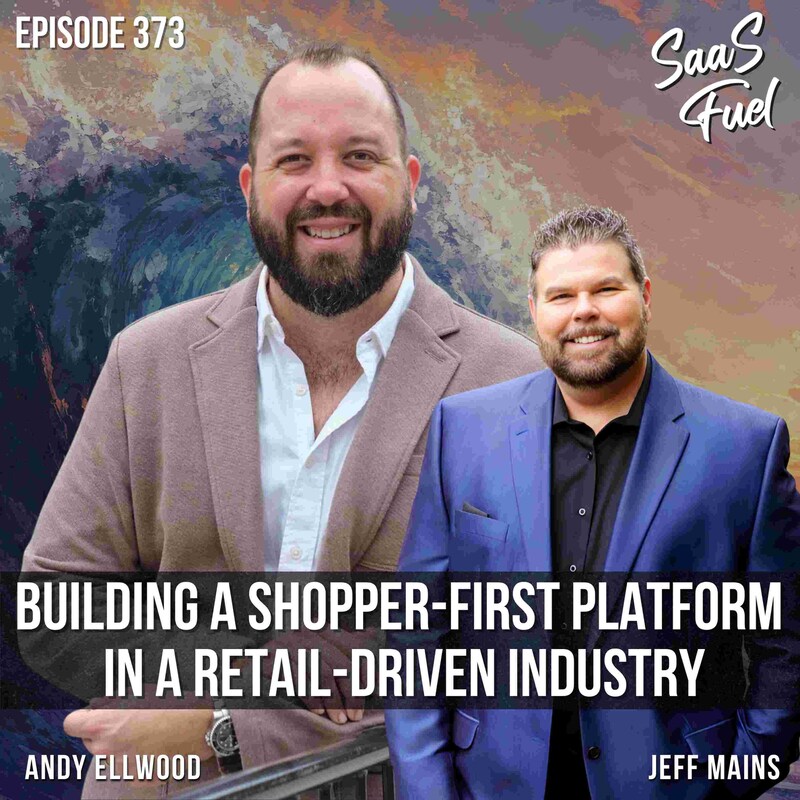
Andy Ellwood is a repeat founder whose career took him from early-stage mobile startups acquired by Facebook and Google, through eight years building Basket.com, to shutting it down during the pandemic — and ultimately back into the arena with Stretch, an AI-powered grocery platform built to give families price transparency, shopping intelligence, and an advocate at checkout.
In this conversation, Andy shares the through-lines connecting his entire career: curiosity as a competitive edge, falling in love with problems instead of solutions, and the hard-earned wisdom of setting non-negotiables before jumping back into founding mode. He explains why the $1.8 trillion grocery industry still lacks a single source of truth for pricing, how pre-purchase intent data is more valuable than post-purchase receipts, and why he built Stretch around shoppers first — even when the money is on the retailer side.
Andy also makes a bold case that the AI moment mirrors the early app store era, and that the next wave of breakthroughs will come when AI agents start negotiating on behalf of consumers, not just serving the brands selling to them.
Key Takeaways
4:35 — Curiosity is a superpower Asking one more question than you're comfortable asking demonstrates understanding and opens doors that statements never could.
5:43 — Right place, right time isn't enough Being at Facebook and Waze during acquisition moments taught Andy that you have to know what to do when opportunity arrives — not just show up.
7:36 — One feature unlocked a trillion-dollar industry Location sharing on the iPhone made Airbnb, Uber, DoorDash, and Waze possible. Andy sees AI's current "education phase" as a direct parallel to early mobile.
10:08 — Fall in love with the problem, not the solution The best entrepreneurs define success as the pain point no longer existing — not the solution they built. As technology changes, the solution has to evolve.
12:01 — PTSD is real for founders After shutting down Basket.com, Andy took four years away. People kept asking who would solve the grocery pricing problem — and that pull eventually brought him back.
13:48 — Grocery lacks a source of truth Every major purchase category has an aggregator (Expedia, Zillow, GoodRx) — but not groceries. Stretch is building that missing layer.
15:52 — A list is not a cart Brand loyalty and substitution preferences make shopping lists deeply personal. Understanding this on the backend enables true personalization, not just price comparison.
18:01 — Grocery prices are up 25% since the pandemic Consumer loyalty is now up for grabs. 84% of Americans are considering trading down on brands, nutrition, and stores.
18:47 — 17% of surveyed shoppers skipped a meal In the richest country in history, food insecurity driven by pricing opacity is what makes Andy more determined than ever.
21:50 — Pre-purchase intent is the missing data set The $10B grocery data industry is built entirely on post-purchase receipts. Stretch captures what shoppers intended to buy — the seven items they didn't find are more valuable than the 18 they did.
23:32 — Receipt Checker: a patented AI agent for refunds 10–15% of the time, store discounts don't ring up correctly. Stretch's upcoming Receipt Checker will automatically identify overcharges and file refund claims on the shopper's behalf.
26:26 — People do what they're incentivized to do Charlie Munger's principle guides all of Stretch's product design. The receipt scan behavior is unlocked by giving shoppers a reason — get your money back.
28:24 — Serving shoppers is the thing nobody else is doing Most grocery tech serves brands and retailers. Andy chose the harder path — shopper first — and is walking alone for a while to get somewhere no one else has been.
34:38 — People buy from people, not logos Andy put himself on TikTok as a new dad documenting grocery savings. A single screenshot of the app's price map got 150K views and 8,000 waitlist signups before launch.
38:46 — The CEO has three jobs Ruthless commitment to the vision. Don't run out of money. Make sure your team is not blocked from doing their best work.
40:14 — Write your non-negotiables before you get pulled back in Andy had four criteria that all had to be true simultaneously before he'd found again. Having them written down protected him from jumping into things that weren't his work.
44:31 — The shopper-side AI agent The future Andy is building toward: your AI agent negotiates against retailer AI agents — finding the best deal on your specific basket within your driving radius — before you ever leave the house.
Tweetable Quotes
"Curiosity is a superpower. The questions you ask demonstrate more understanding than any statement ever could." — Andy Ellwood
"It's not just about being in the right place at the right time. It's about knowing what to do when you're there." — Andy Ellwood
"Fall in love with the problem, not the solution. The solution will have to change. The problem won't." — Andy Ellwood
"Show me the incentives and I'll show you the outcome." — Charlie Munger (quoted by Andy Ellwood)
"Serving the shopper is the thing that nobody else is doing with the determination that we are." — Andy Ellwood
"Sometimes you have to walk alone for a little while to get to a place that nobody else has ever gone." — Andy Ellwood
"The CEO has three jobs: ruthless commitment to the vision, don't run out of money, and make sure your team is not blocked from doing their best work." — Andy Ellwood
"People don't buy from logos. They buy from people. They want to know who's behind this." — Andy Ellwood
SaaS Leadership Lessons
1. Fall in love with the problem, not the solution. Andy built Basket.com for eight years and watched it die when the pandemic wiped out their business model. What survived was his obsession with the problem — price opacity in grocery. The solution changed. The problem didn't. This is the only durable foundation for a long-building company.
2. Align incentives at every layer of your model. Stretch doesn't ask shoppers to scan receipts out of the goodness of their hearts — it offers them refunds on overcharges. Every feature is built around what shoppers are actually incentivized to do. As a SaaS founder, if your users aren't adopting a feature, ask what they think their incentives are — not what you want them to be.
3. Choose your non-negotiables before the pull comes. Andy spent four years away from founding after Basket. Rather than react emotionally when opportunity knocked, he had four written criteria that all had to be met simultaneously. Having those guardrails meant he didn't jump into something that was merely good enough — he waited until it was unambiguously right.
4. The CEO's only three jobs: vision, money, team. Ruthless commitment to the vision. Don't run out of money. Ensure your team is unblocked. Everything else is noise. This simple framework protects founders from diffusing their energy across low-leverage activities and helps them stay in their highest-value lane.
5. Forego early revenue to earn the right to build what matters. Inspired by Duolingo's founder, Andy made a deliberate commitment to B2B data revenue while resisting the temptation to monetize shoppers early. He told investors: "You're signing up to reshape a $1.8T industry — not to extract day-one ad revenue." Getting clear on what you won't do is often as strategic as knowing what you will.
6. Founders build trust. Logos don't. One TikTok video with a genuine story about grocery savings led to 150K views and 8,000 waitlist signups. No ad spend. Andy showed up as a real person — a new dad, worried about costs, building something to fix it. In a world where it takes an afternoon to spin up a company, the human behind the product is often the last true differentiator.
Guest Resources
[email protected]
https://stretchformore.com/
Episode Sponsor
The Futureproof Series - https://www.youtube.com/playlist?list=PLfkXKUPZ5xuOqMPR7_gzGybncTtavyR1N
The Captain's Keys
Small Fish, Big Pond – https://smallfishbigpond.com/ Use the promo code ‘SaaSFuel’
Champion Leadership Group – https://championleadership.com/
SaaS Fuel Resources
Website - https://championleadership.com/
Jeff Mains on LinkedIn - https://www.linkedin.com/in/jeffkmains/
Twitter - https://twitter.com/jeffkmains
Facebook - https://www.facebook.com/thesaasguy/
Instagram - https://instagram.com/jeffkmains