Shownotes
📺 Watch on YouTube and Spotify
"I started to really come to the awareness that, you know, heaven and hell are not places we go to, they're states of awareness that we embody." – Greg
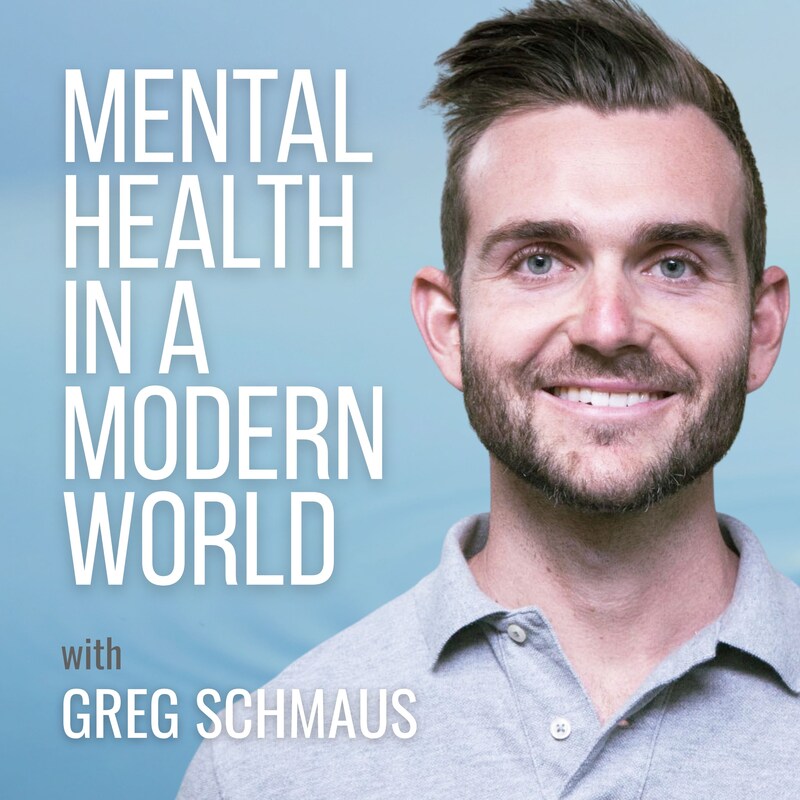
On this inaugural episode of Mental Health in a Modern World, you’ll meet Greg, a former Division I athlete whose life was turned upside down virtually overnight by debilitating anxiety and obsessive-compulsive disorder. Guided by his unrelenting quest for healing, Greg transformed his deepest struggles into a profound source of purpose—evolving from a bewildered patient into an insightful teacher and holistic practitioner. Drawing wisdom from Eastern philosophy, gut health, and family systems, Greg now helps clients all over the world reconnect with their wholeness. Curious to hear how surrender became his greatest tool, and why he sees every coaching session as a mirror into his own growth? Tune in and discover why his journey makes him such a captivating presence in the mental health space.
5 Key Takeaways
This episode is packed with transformative insights to help you reclaim your mental well-being and empower your healing journey.
- See your challenges as opportunities for growth, not obstacles—every wound has the potential to become your greatest source of purpose.
- Replace forced effort with surrender—true healing comes from letting go and allowing, rather than trying to control or resist your mind.
- Build a strong foundation through nutrition and lifestyle—prioritize sleep, movement, healthy food, and self-care practices for lasting change.
- Seek understanding and connection—find practitioners, mentors, or communities that truly “get you” to create a safe space for healing and personal growth.
- View yourself as a forever student—embracing humility and curiosity will keep you evolving, learning, and deepening your transformation.
Start putting these into action today and take empowered steps toward your own healing journey!
Memorable Quotes
"Every honest teacher must first be a humble student. For me, the first step to being an honest teacher is to be a humble student and to always stay in a state of humility."
"I started to really come to the awareness that heaven and hell are not places we go to—they're states of awareness that we embody."
"I'm interested in giving people their power back, not taking their power away from them. That's why a three to six month commitment is usually what I ask for, for clients to get started. Anything less than that, then you run the risk of getting into more victim-rescuer territory."
Connect with Harry
FullCast (done-for-you podcast production): https://fullcast.co
Instagram: https://www.instagram.com/iamharryduran/
LinkedIn: https://www.linkedin.com/in/harryduran/
Connect with Greg
Website - https://www.healing4d.com/
Instagram - https://www.instagram.com/4d_healing/
YouTube - https://www.youtube.com/@gregschmaus
LinkedIn - https://www.linkedin.com/in/greg-schmaus-22929589/
🎙️🎙️🎙️
Podcast Production & Marketing by FullCast: https://fullcast.co
Discover the best podcast services in the world at The Podosphere: https://www.thepodosphere.com/
Mentioned in this episode:
Embark on The HTM Journey
Embark on The HTM Journey
Transcripts
it was quite a shock to the system.
2
:Like it felt like my reality shifted
overnight where I was going from being
3
:a division one athlete, to within 48
hours just in this, you know, chaotic
4
:mental space and really feeling
like I was kind of drowning inside.
5
:Welcome to our inaugural episode
of Mental Health in a Modern World.
6
:I'm super excited for today's
episode because we have my producer
7
:Harry, on the show, and we're going
to turn the tables a little bit.
8
:So he's actually gonna interview
me and together we're going to
9
:explore how this show came to be.
10
:So Harry, welcome to the show.
11
:Harry Duran: Thanks for, uh,
having me on as the first guest.
12
:I feel honored and, uh, it's
been great to get to know you.
13
:When we first met, uh, it was at, uh,
Mike smis Men of Movement, uh, retreat
14
:back in seems like such a while ago.
15
:He is, got the new one coming up
already in two time flies by so fast,
16
:but that was, uh, October and you
were facilitating, you were one of
17
:facilitators there, and so I was really.
18
:Moved by the work we were doing there.
19
:Um, so I think it'd be helpful
to dig in to some of the origin
20
:stories of, of how you got there.
21
:Um, so I'm just, I'm just curious what
that journey's been like to be like a
22
:facilitator for other people's groups.
23
:Greg Schmaus: Hmm.
24
:So
25
:my journey as a facilitator, you know,
I, it's interesting because when I, as
26
:a facilitator am working with groups,
the way I see it is I'm actually just
27
:working with reflections of myself.
28
:So when I'm working with people, whether
it's individual clients or a group of
29
:men, really my facilitation comes from
finding those individuals inside of me
30
:and working with the mirror, so to speak.
31
:So I actually never feel like I'm
actually working with another person.
32
:I always feel like I'm working with
aspects of myself and I feel confidently
33
:that's what's allowed me to be a good.
34
:You know, coach, therapist, facilitator,
practitioner is because as long as I
35
:can find some aspect of Harry within
Greg or some aspect of Mike within
36
:Greg, I'm always coaching from an
authentic place and it allows me
37
:to really connect with whoever I'm
working with on a deeper level.
38
:And for me, just the participation.
39
:Participation in my own healing journey
has been really the foundation that's
40
:allowed me to do that successfully.
41
:Harry Duran: So in some of the stuff
that I've read about your origin story,
42
:if you will, you were, it seems like you
were an active athlete at some point,
43
:and then you were struggling with, uh.
44
:Several things that were help, that
were challenging for you at the time.
45
:So I'm wondering, as far back as you
want to rewind the clock, you know, can
46
:you talk a a little bit about where you
were in that pre era, um, before you
47
:start to, to, to come online and, and
figure out what was happening with you?
48
:Greg Schmaus: Yeah, so I was an athlete
as far back as I could remember.
49
:Um, initially I was a soccer player.
50
:I was a ski racer, but then
golf was really my main passion.
51
:And so I left home at the age of 16.
52
:And I went to a boarding school
down in South Carolina so I
53
:could play golf year round and
it was a golf and tennis academy.
54
:And so I, um, spent two years there and
then got a, a division one scholarship
55
:to go to the University of Houston.
56
:And during my freshman year at Houston
was when I, um, had a physical trauma.
57
:Had to have a, um, a surgical repair,
which then after my, um, surgery
58
:when I was recovering, I started
having, started having severe anxiety.
59
:I started having a lot of obsessive
compulsive disorder, a lot of like
60
:ruminating thought patterns and
started having a lot of insomnia.
61
:So I started to really struggle
mentally and psychologically,
62
:and this really kind of.
63
:Took my path in a different direction
where I really wasn't able to, you
64
:know, focus on my golf as much.
65
:I actually wasn't really able to sit in
a classroom for more than 20 minutes,
66
:so I had to take a leave of absence
and let go of my scholarship and just
67
:really devote time to my own healing.
68
:And so I struggled for a good.
69
:You know, 3, 4, 5 years with severe
obsessive compulsive disorder.
70
:And it was really, really challenging.
71
:And, you know, I went through a lot
of, like the mainstream psychiatric
72
:system, but I never really found
any results, through that system.
73
:And so I.
74
:You know, I stumbled across meditation
and started practicing meditation and
75
:instead of hitting golf balls for four
hours, I would sit in my dorm room and
76
:I would meditate for four hours just
trying to learn how to work with my own
77
:mind and trying to quiet my psyche and.
78
:and what I started to learn was,
you know, first of all, I wasn't
79
:the thinker of my thoughts.
80
:I was the witness or the observer of them.
81
:And I started to notice how, you know,
the mind works and how a lot of these,
82
:you know, what we call like mental
health pathology start to come about.
83
:And eventually I was blessed with
finding the right teachers and
84
:mentors, Paul Check being one of them.
85
:And, you know, it really set me
on this healing journey and this
86
:journey of, you know, self-discovery.
87
:And, you know, over time it started to
transition more into also a professional,
88
:you know, career and a sense of purpose.
89
:And I think that's very common in
this field is where you, you know,
90
:take the pain that you've been through
and you turn the pain into purpose.
91
:And so that's really kind of my story.
92
:you know, that brought me into a lot
of the work that I'm doing today.
93
:Harry Duran: I feel, um, and what
I've seen is that athletes have a
94
:very, committed, uh, regimen and,
and when they tackle something, they
95
:do it with all their enthusiasm.
96
:So do you feel like that that, um,
level of dedication and effort that you
97
:were putting into the, the, the golf.
98
:When it came time to switch, 'cause you
said you went from four hours of hitting
99
:golf balls to four hours of meditation.
100
:So no one, you know, people
usually don't make that jump.
101
:They try to ease their way.
102
:Do you feel like some of that training
from a sports perspective helped
103
:you when you did find something
that was working for you to go,
104
:go ahead, head first into it?
105
:Greg Schmaus: I would say it
was a blessing and a curse.
106
:You know, the blessing was the
commitment to really, you know, seeking.
107
:And discovering and practicing.
108
:but the curse is, you know,
when it comes to healing the
109
:mind, it's always a paradox.
110
:And so when it comes to healing
the mind, the more effort you
111
:put in, the more it works against
you, what you resist persists.
112
:You know, if I would, you know,
try and get rid of something, it
113
:would feed more energy into it.
114
:So the, the funny thing is the.
115
:The real healing happens in
the surrendering process.
116
:So an athlete is always trying
to force an outcome, but when it
117
:comes to things more mentally or
spiritually, it's always a paradox.
118
:So it's more in the surrendering
process that allows things to happen.
119
:And so even though I was putting a lot
of time and energy into, let's say four
120
:hours of meditation within those four
hours, it was really just a surrender.
121
:So it wasn't really, it was.
122
:Like the, the old zen term wa Wu way,
which is action through non-action,
123
:Harry Duran: Okay.
124
:Greg Schmaus: right?
125
:So it was really four hours of
learning how to not do, learning how
126
:to surrender, learning how to soften.
127
:And so it was.
128
:Yes, the, the dedication to it, but
it was also the opposite polarity
129
:of what I was used to, which was
the force, which was the power
130
:through it, which was the resilience.
131
:So it was, it was just the
opposite polarity that I
132
:needed to embody and learn.
133
:And it's more kind of like the,
the feminine side or the, the
134
:yin to the yang, so to speak.
135
:Harry Duran: And so did you find
you had to, uh, ease your way
136
:into those four hour sessions, or
did you get there pretty quickly?
137
:Greg Schmaus: I wouldn't
sit four hours straight.
138
:It was maybe over the course
of a day where, you know, and
139
:for me, I was quite desperate.
140
:So there were times where my mind
was just looping and intrusive
141
:and, you know, pretty much all day.
142
:So meditation started
to feel like a relief.
143
:It started to feel like.
144
:Almost like a, a sky of dark
clouds that would stand, that
145
:would start to have little cracks.
146
:And in those little cracks you would
see a little blue sky or you would
147
:see a little sunlight coming through.
148
:it took me a few hours a day.
149
:To begin to shift my identification
with the clouds, to the identification
150
:with the sky, which is the
identification from thought to
151
:the identification of awareness.
152
:And so that transition was where
I was really dedicated in terms
153
:of daily practice because I was
starting to get really relief from
154
:the suffering that I was experiencing.
155
:Harry Duran: When did you feel like,
uh, you turned the corner where
156
:you were starting to see that the
practices and the work you were doing
157
:was helping you get out of this?
158
:This.
159
:Funk that you are in and you know
this, this pain, you're suffering.
160
:Greg Schmaus: I would say about
161
:three or four years into it,
162
:Harry Duran: Hmm.
163
:Greg Schmaus: I started to have some
really deep experiences and some, you
164
:know, paradoxical experiences where.
165
:When I was really struggling with
obsessive compulsive disorder, I might
166
:be on vacation with my family on the
beach in Mexico, but because of what I
167
:was experiencing in my own mind, I felt
like I was in like a hellish realm.
168
:But then let's say a year later.
169
:I would be sitting in my one bedroom
apartment in New Jersey and be in this
170
:state of stillness and felt like I was
just swimming in kind of like this bliss.
171
:Harry Duran: Mm.
172
:Greg Schmaus: And I started to really
come to the awareness that, you know,
173
:heaven and hell are not places we go to.
174
:They're states of
awareness that we embody.
175
:And so that was really when I started to
turn the corner, and not just in a way of
176
:seeking relief, but in a way of actually
expanding awareness into higher states
177
:of consciousness that I started to learn
and discover a lot of deep truths that
178
:a lot of the mystics would speak about,
but through my own journey of suffering.
179
:And you know, going inward and awakening
through that process, I started to
180
:really understand what they were saying.
181
:I started to understand a lot of the
Zen teachings and a lot of the Eastern
182
:philosophies, and they were very healing
for me to come across because they were
183
:explaining what I was experiencing.
184
:And so it was probably four or five
years in that I started to really.
185
:Not just come back to baseline, but start
to actually move beyond that, um, and have
186
:experiences that otherwise, you know, I
couldn't really, um, access or explain.
187
:Harry Duran: Was a lot of that possible,
um, because of the, the teachers
188
:you were having, uh, exposure to.
189
:Greg Schmaus: Yeah, I would say that, you
know, at the time, Paul Check was the main
190
:teacher that I was working with and the
main mentor that I was working with, so.
191
:You know, I had the, the blessing
of being a client of his for,
192
:um, two and a half years.
193
:Harry Duran: How did you find Paul?
194
:Greg Schmaus: so when I was in college and
I was competing as a golfer, my trainer at
195
:the time, uh, his name was Justin Price.
196
:He was a check practitioner.
197
:Harry Duran: Oh, okay.
198
:Greg Schmaus: And so I was working with a
check practitioner at the time, but more
199
:on the strength and conditioning side.
200
:Harry Duran: Yeah.
201
:Greg Schmaus: And so at the time I
didn't know that Paul also did a lot
202
:of mental, emotional, spiritual work.
203
:but I started doing a lot of research
and I, I felt like he was really
204
:the person that could help me.
205
:And so.
206
:He has a long waiting list, but you
know, it just came to be that he was
207
:willing to take me on as a client
and it was, it was such a blessing.
208
:Harry Duran: Mm.
209
:And then as you started to enter this
world of teachers, like Paul Check
210
:was, was that, uh, eye-opening for you?
211
:Because, you know, if, if you're not
aware of this world that exists of
212
:these teachers that can move you,
you know, to levels that you, you
213
:didn't know were possible or teach
you concepts that were, you know.
214
:Probably not on your radar when you're,
when you're training, to be a golfer.
215
:When you're trying to be a golfer.
216
:Greg Schmaus: Yeah.
217
:You know, I, I grew up
in a family of doctors,
218
:Harry Duran: Mm-hmm.
219
:Greg Schmaus: but mostly western medicine,
220
:Harry Duran: Yeah.
221
:Greg Schmaus: which,
you know, has its value,
222
:Harry Duran: Yeah.
223
:Greg Schmaus: but it
also has its limitations.
224
:Harry Duran: Yeah.
225
:Greg Schmaus: And so for me, the
value of Western medicine is in a
226
:lot of like acute traumatic care,
227
:Harry Duran: Mm-hmm.
228
:Greg Schmaus: but when it comes to chronic
conditions, um, it really falls short.
229
:And so what I was experiencing
were a lot of chronic conditions
230
:Harry Duran: Okay.
231
:Greg Schmaus: so.
232
:Initially going kind of the
mainstream psychiatric route.
233
:Even some physical health challenge
I was struggling with really just
234
:wasn't finding answers there.
235
:So once I found Paul Check and a
few other people that I was working
236
:with, it all made sense to me.
237
:Like there was something inside of
me that said their answers here.
238
:Like there's truth here.
239
:And I think I had the
gift of awareness where.
240
:I was able to see the interconnection of
all the things that I was experiencing.
241
:I could see how my anxiety OCD and mental
health challenges were, for example,
242
:creating a lot of gut issues and digestive
243
:Harry Duran: Hmm.
244
:Greg Schmaus: and I could even
see how my digestive issues were
245
:exacerbating symptoms of anxiety or OCD.
246
:So I would start to see the.
247
:The interconnections between the mind,
the body, the emotions, and how everything
248
:was really one integrated system.
249
:And so once I found people like
Paul who were able to really explain
250
:that to me, it allowed me to really
understand on a deeper level what I
251
:was already experiencing, but maybe
couldn't put the right words to it.
252
:Harry Duran: Yeah, that makes
253
:Greg Schmaus: And so.
254
:On a deeper level, it actually, meeting
the right practitioners actually met
255
:the deep need of feeling understood,
256
:Harry Duran: Hmm.
257
:Greg Schmaus: which is something
that, as a child, I would say I never
258
:felt was actually to feel understood
and to find people that speak a
259
:shared language that when you speak,
you know, they're actually really
260
:understanding what you're saying and
that creates such a deep sense of safety.
261
:The nervous system, and that's
where healing takes place.
262
:Harry Duran: That's beautiful to hear.
263
:Uh, that journey that you've been
on, when did you start to think
264
:about, um, moving from being
more of a student and a, uh, to.
265
:Helping other people.
266
:Was that a slow process one off,
or, or did you start to feel
267
:as you were experiencing these
teachings that this is something you
268
:wanted to help other people with?
269
:Greg Schmaus: Well, you know, the initial.
270
:Traumas that I went through and it was,
it was quite a shock to the system.
271
:Like it felt like my reality shifted
overnight where I was going from being a
272
:division one, a division one athlete, to
within 48 hours just in this, you know,
273
:chaotic mental space and really feeling
like I was kind of drowning inside.
274
:And so.
275
:For some reason inside of me,
I always had this felt sense of
276
:this is happening for a reason.
277
:There's some purpose behind this because
it's so far out like of left field
278
:that I don't have any explanation as
to how I could go from here to here
279
:in a matter of a few days without
there being some reason behind it.
280
:And so.
281
:I was always curious what that was.
282
:And once I started to experience
a lot of deep healing, I knew
283
:that my purpose was within it.
284
:You know, like they say, every
wound is a womb that you know, has
285
:a gift that's, you know, ready to be
birthed, you know, from the inside.
286
:And so.
287
:Even when I met Paul check, he said, you
know, Greg, this is not your therapy.
288
:This is your internship.
289
:And, you know, those were
really true spoken words.
290
:And so I always had this sense,
like, there was something here
291
:that I meant to do with this.
292
:I meant to share.
293
:I meant to, you know, serve in some way.
294
:It really allowed me to also not
move into any victimhood where this
295
:was happening to me, and to feel
powerless in relationship to it.
296
:It allowed me to really use it as a
vehicle, not just to grow and heal
297
:myself, but then also to serve others.
298
:Harry Duran: Hmm.
299
:And so what was that process like
for you, um, as you started to.
300
:Figure out what, what it, what it
meant, or what it means to be a, a
301
:teacher and a practitioner yourself.
302
:Greg Schmaus: you know, something that,
that came through to me in a, actually
303
:a recent plant medicine ceremony, which,
304
:that every honest teacher must
first be a humble student.
305
:For me, the first step to being an honest
teacher is to be a humble student and
306
:to always stay in a state of humility.
307
:And so I always wanted to make sure that
even though I'm starting to coach people,
308
:to always remind myself that
I'm a forever student as well.
309
:And so.
310
:Like I shared when we started, I always
saw my clients as aspects of myself, and
311
:by doing so, the transition was quite easy
because I never felt like I was teaching
312
:somebody else or healing somebody else.
313
:I was always just working
with the mirror itself.
314
:And the mirror just happened
to be a client or a student.
315
:Harry Duran: Okay,
316
:Greg Schmaus: So, you know, there was
obviously a transition in terms of
317
:building confidence as a practitioner.
318
:Like I would say where I am today compared
to 10 years ago, I feel infinitely
319
:more confident in the work that I
do because when you're just getting
320
:started, you're just getting started.
321
:so I would say my confidence level
has increased tremendously in my.
322
:Skillset has increased tremendously.
323
:But even within that, there's still
the deep humility that says, I'm always
324
:learning from my clients just as much
as they're learning from me because I am
325
:just working with other aspects of me.
326
:Harry Duran: Hmm.
327
:Did you know what you would be
teaching or how you would be serving?
328
:Clients in those early days, were
there specific, um, modalities that
329
:you were attracted to more than others?
330
:Greg Schmaus: it was a
journey of stepping stones.
331
:Like I, I started out actually
just doing more personal training
332
:and corrective exercise coaching,
like through the Check Institute.
333
:And then I slowly focused a
little bit more on the nutrition
334
:and lifestyle coaching and then.
335
:After that I went to massage
therapy school and you know,
336
:got my massage therapy license.
337
:'cause I really wanted to be able
to work hands on with people.
338
:Harry Duran: Yeah.
339
:Greg Schmaus: And then after that I
went and studied, um, shamanic energy
340
:medicine because after doing a lot of
body work for many years, I realized
341
:that you can get a lot of results
just working with the energetic body.
342
:Harry Duran: Hmm.
343
:Greg Schmaus: Rather than just
working with the physical body
344
:because it was the energetic body
that was holding the information
345
:that was informing the physical body.
346
:Harry Duran: Yeah.
347
:Greg Schmaus: And then after doing
a few years of that, then I realized
348
:that working with the psyche.
349
:Was the most important thing because it's
the psyche that's informing everything.
350
:It's our thoughts, it's our beliefs,
it's the core archetypes, which is the
351
:language of the psyche that we carry that
is really informing everything, in the
352
:physical body and the emotional body.
353
:And so it was just kind of like
this evolution of awareness that.
354
:My, my career has almost felt
like a breadcrumb trail that I'm
355
:just following back to the source.
356
:You know, most recently it's been a
lot of work with family Constellation
357
:because I realized that if you're working
with an individual, that individual
358
:comes from a whole constellation.
359
:Harry Duran: Yeah.
360
:Yeah.
361
:Greg Schmaus: So if you don't know
the constellation that the individual
362
:comes from, you can't really fully
help and understand the individual.
363
:So now it's been working more with
the constellations itself rather than
364
:just thinking that you're working
with this isolated individual.
365
:So it's, it's been this
organic, evolving process.
366
:Um, like I said, it's been following
this breadcrumb trail back to what
367
:feels like the source, uh, or the root.
368
:You know, we always talk about finding
the root cause and, you know, humbly
369
:as the continuation of being a student.
370
:It seems as though the source keeps,
you know, going a little bit further
371
:back and a little bit further back
and a little bit further back.
372
:So it's kind of like Paul Check
says, like, the horizon is you
373
:can never reach the horizon.
374
:You know, it's always a moving target, so
375
:Harry Duran: yeah, yeah, yeah.
376
:Greg Schmaus: you know?
377
:Harry Duran: So bring us to present day.
378
:What's, what's the practice
look like now and, and how are
379
:you, you helping your clients?
380
:Greg Schmaus: So I work
with people one-on-one.
381
:Um, and most of my work is
done remotely, so I work with
382
:people all, all over the world.
383
:and most of it's done on Zoom.
384
:I, I still see some people in person,
but it's mostly a remote practice.
385
:I generally work with clients once a week
for, you know, from 75 to 90 minutes.
386
:And you know, I, I, I generally, um,
387
:try and ask clients to commit to at least
a three to six month process because
388
:healing doesn't happen overnight and I'm
not really interested in quick fixes.
389
:Harry Duran: Yeah.
390
:Greg Schmaus: Um, 'cause people that
are looking for quick fixes are usually
391
:people that are looking to be rescued,
392
:Harry Duran: Mm-hmm.
393
:Greg Schmaus: I'm not.
394
:I'm, I'm in the realm of
healing, not, not rescuing.
395
:Harry Duran: Quick
396
:Greg Schmaus: Um, I've, I've
played the rescuer role too much
397
:in the past and it never ends well.
398
:Because whenever you're in the rescuer
archetype, you're always locking
399
:the other person into the victim
400
:Harry Duran: Mm mm.
401
:Good point.
402
:Greg Schmaus: And the victim, you
know, is the, the archetype of,
403
:I'm powerless and I'm interested in
giving people their power back, not
404
:taking their power away from them.
405
:So that's why a, you know, a three to
six month commitment is usually, What
406
:I ask for, for clients to get started,
anything less than that, then you're,
407
:you know, you run the risk of getting
into more victim rescuer territory.
408
:and so most of my work, you know, the,
the foundation of my coaching always
409
:starts with, diet and lifestyle, you
know, 'cause that's always the foundation.
410
:You can't really.
411
:Do deeper work if, if someone's eating
processed food and not getting to bed
412
:on time and not moving their body.
413
:So it always starts with the
nutrition and lifestyle foundation.
414
:I really like Paul Check's four
doctor system, um, of diet,
415
:quiet movement and happiness.
416
:and then after that, then there's all the
other healing modalities that I work with.
417
:And some of the main healing
modalities that I work with are.
418
:Archetypal work.
419
:Family constellation work and parts work,
you know, so working with the psyche as
420
:a collection or multiplicity of parts,
um, is really, really supportive and
421
:it's, it's been incredible doing parts
work with people, in conjunction with
422
:Family Constellation work and archetypes.
423
:So those are kind of my key
modalities and I kind of sprinkle in.
424
:Various forms of breath work and
meditation and Qigong and all
425
:the, you know, disciplines and
practices that are really supportive.
426
:so that's, that's really what working with
me looks like, in a one-on-one fashion.
427
:And then I also have prerecorded programs.
428
:So I have my 21 day mental health
program, which is Healing the
429
:Mind, A Journey to Wholeness.
430
:I have a prerecorded archetype program,
healing your core archetypes, a journey
431
:of empowerment, and then I do some
group coaching with, um, what's called
432
:the archetype wheel, which you had the
opportunity to experience in Mount Shasta.
433
:So, so that pretty much kind
of encapsulates my one-on-one
434
:coaching work, group coaching work,
and then prerecorded programs.
435
:Harry Duran: Which leads us nicely
into the, the origins of this show,
436
:but I'm curious when you started, um,
your own podcast journey, even just
437
:as a listener and then subsequently
having people find out about you and,
438
:and wanting to have you on their show.
439
:Greg Schmaus: So my, my journey as a
podcast listener goes back to, you know,
440
:10 years ago when I just started to
get into this line of work, and it was
441
:really just a, being a curious student
of all aspects of holistic health.
442
:and then my, my journey into
actual podcasting started
443
:with, Guest appearances.
444
:And so this goes back about six
years to:
445
:fully in-person coaching practice.
446
:I had my own studio
447
:Harry Duran: Yeah.
448
:Greg Schmaus: and COVID hit
and I needed to shut it down.
449
:Harry Duran: Yeah.
450
:Greg Schmaus: And so as most, you
know, things happen when a crisis
451
:hits, you have to get creative.
452
:And so I had to kind of shift gears
and adapt and build an online business.
453
:And so during COID and the, the pandemic
was when I got into the podcasting
454
:world and started reaching out to ge,
uh, reaching out to podcasters and
455
:looking to be a guest on their shows and
started creating my own online program.
456
:I had the amazing opportunity to.
457
:Work with a good friend of mine,
Josh Trent, who has an amazing
458
:podcast, wellness and Wisdom, and
he actually really helped me, learn
459
:how to build an online business
and, um, build online courses.
460
:And so Josh was actually an
instrumental person in my journey
461
:into the podcasting world.
462
:My first guest appearance was
actually on Paul Check's podcast,
463
:and so since he and I did, you know,
a lot of healing work together, and
464
:I'm also a check practitioner, so
being a client and student of his,
465
:you know, we did a wonderful podcast
back then and that just kind of
466
:opened the doors to many other guest
467
:Harry Duran: Hmm.
468
:Greg Schmaus: and eventually, you know,
started to build my own online platform.
469
:Harry Duran: Yeah.
470
:What were those early days like
when you were showing up as a guest?
471
:Was it, uh, did it feel natural
to you to share kind of, you know,
472
:your expertise on, on a show in
a, in a public format like that?
473
:Greg Schmaus: it was always the
same, where initially I would be
474
:incredibly nervous 'cause I've always
had a hard time with public speaking.
475
:Harry Duran: Yeah.
476
:Greg Schmaus: And also I was always
very, very quiet as a child and I'm,
477
:I'm a much more introverted person.
478
:So for me, getting on stage so to speak
has always felt quite uncomfortable,
479
:but I noticed it would take me like
two minutes to get through like the
480
:anxiety and the fear and the nerves.
481
:And then I found that it
came really natural to
482
:Harry Duran: Hmm.
483
:Greg Schmaus: and it started to
feel quite effort, effortless.
484
:and so it was an interesting
experience where.
485
:There was a lot of fear stepping
into it, but once I stepped into it,
486
:then things just flowed and I got
into like just really a, a beautiful
487
:state where, it would just kind of
come through me quite organically.
488
:And so yeah, it was a, it was a challenge
to step into it, but once I did it was
489
:really a, brought a lot of joy for me.
490
:Harry Duran: So this is actually your
second attempt at, uh, launching a show.
491
:You wanna talk a little bit about
the, the first show and, and
492
:what that, what that was like?
493
:Greg Schmaus: Yeah, so a few years ago, I,
I initially was approached by a friend of
494
:mine, um, and he asked me if I wanted to,
if I was interested in starting a podcast.
495
:And so at the time I didn't really.
496
:Know the territory too much in
terms of starting my own podcast.
497
:And I wasn't ready to really
fully invest, you know, the
498
:way I'm doing now in this show.
499
:And so it made sense to kind of like
do it with someone else, um, and kind
500
:of test the waters a little bit and,
you know, maybe did about, you know,
501
:15, 20 episodes and it was great.
502
:It was a great experience.
503
:Um.
504
:But that's what I would say it was.
505
:It was testing the waters
to kind of see how it felt.
506
:'cause also, I, I had this sense
that at the time I was great as a
507
:guest, but I wasn't really sure how
it, how I would be as a host, because
508
:of my introverted nature to kind of
like hold the energy and hold the
509
:container as a host is very different
than answering questions as a guest.
510
:So I kind of dabbled in it, but I didn't
really fully commit to it 'cause I had so
511
:many other things that I was focused on.
512
:And so I would say this is really
the first time that I'm going all
513
:in, on really building my own show.
514
:so yeah, that was kind of
the, the initial experience.
515
:Harry Duran: How does the energy feel now
versus back then in terms of what we're
516
:working on together and, and what we,
we've, we've, we've planned and mapped out
517
:and your excitement about what's to come.
518
:Greg Schmaus: What feels
different now is it, it feels
519
:much more refined as a mission.
520
:You know, the podcast for
me feels like a mission,
521
:Harry Duran: Okay.
522
:Greg Schmaus: and some of it relates to.
523
:Also where I feel and see the world at
the moment and where the world is going.
524
:and so it feels like, like many other
things in life, timing is so important.
525
:Harry Duran: Yeah.
526
:Greg Schmaus: You might have the right
thing at the wrong time, you know?
527
:And so now it feels like the
right thing at the right time.
528
:Harry Duran: Yeah.
529
:Greg Schmaus: And so really focusing
on mental health in a modern world,
530
:with everything that's going on
in the world, it feels like the
531
:right time and the right mission.
532
:And so it just feels much more
aligned and also much more focused
533
:on this kind of topic, which I feel
like is so essential right now.
534
:Where back then I was still kind of
testing a lot of different areas, but I
535
:wasn't really honing in on this specific
area that we're gonna dive into together.
536
:Harry Duran: Yeah, it's so interesting
as we were having conversations
537
:leading up to this, you know,
for, for a couple of months.
538
:Um, and then as we were getting closer.
539
:And this convergence of everything
that's happening in the world.
540
:And we're recording this March, 2026.
541
:But, I feel it personally,
you know, because I'm very.
542
:Tech forward, and I'm very
AI interested, but also tied
543
:deeply into the spiritual world.
544
:And I, and I see this confluence of
all these things happening and people
545
:realizing that, uh, these ais, you
know, are, are questioning whether
546
:they have a personality or a soul.
547
:And people are wondering if the aliens are
coming are really like spiritual beings.
548
:And so we're being overwhelmed
and, and bombarded and, and
549
:also the nature of the Always on
socials, the always on 24 7 news.
550
:You know, when I was growing up, you,
you didn't know what was happening on
551
:the other side of the world immediately,
you know, that, that bombs are
552
:being like launched and it, I think
it's just having a, a huge, impact,
553
:uh, on, on people's mental health.
554
:And so I think, you know, speaking
to, to your point that the timing
555
:on this is, is very needed, I think
for, for what a lot of people are
556
:going through and feeling right now.
557
:Greg Schmaus: there's interesting
research that says the, the average person
558
:today consumes more information than
our ancestors did in a whole lifetime.
559
:Harry Duran: I believe that,
560
:Greg Schmaus: you know, the mind
has to digest, metabolize, and
561
:assimilate information, just like.
562
:The physical body has to digest,
metabolize, and assimilate food,
563
:you know, so food is really just
energy and information, right?
564
:So food would be calories
and nutrients, right?
565
:So calories are units of energy, and
nutrients are bundles of information.
566
:Harry Duran: Mm.
567
:Greg Schmaus: So when we're eating food,
we're consuming energy and information
568
:going into the physical digestive system.
569
:When you consume information on
your phone, you're consuming energy
570
:and information that your psychic
digestive system has to process.
571
:It has to metabolize.
572
:It has to assimilate.
573
:And so if you imagine that quantity,
574
:Harry Duran: Yeah.
575
:Greg Schmaus: you know,
if you think about if the.
576
:If the amount of food that we ate
in one day was the amount of food
577
:our ancestors ate in a lifetime,
what that would do to your digestive
578
:system, it would explode your body,
579
:Harry Duran: Yeah.
580
:Greg Schmaus: you know?
581
:So we are doing that to our
psyche on a regular basis.
582
:So it's, you know, it's quite
understandable why there's so much
583
:anxiety and depression and addiction
and A DHD and all these pathologies.
584
:As a result of just the flood of
information and overstimulation and you
585
:know, there's many other factors that
obviously we'll get into on this show.
586
:Harry Duran: Yeah, so talk a little bit
about the format that we've landed on.
587
:I think we're gonna be doing a mix of,
uh, some solo and some guest content.
588
:Greg Schmaus: Yeah.
589
:So we're going to have solo episodes.
590
:We'll all be delivering a
message, offering a teaching.
591
:I'm going to have guests that I will
be interviewing in various fields of
592
:mental health and holistic health.
593
:so we'll have some guest interviews
and then I'm also going to bring on
594
:some volunteers and some clients, um,
to actually do some live recorded,
595
:coaching and healing sessions.
596
:So it's almost like the, our listeners
get to actually step into the room.
597
:Of a live coaching or healing session.
598
:So we're gonna have all three, solo
episodes, guest interviews, and
599
:then actual recorded, you know,
healing and coaching sessions.
600
:Harry Duran: I think that's a
fantastic format because it really
601
:gives, uh, the listener and the viewer
like a, a taste of your world and
602
:what it's like, you know, for the
people that work with you, but also.
603
:There's something dynamic that happens
when you're in conversation with another
604
:person who's got an expertise in one field
and you sort, sort of riff off each other.
605
:And just from seeing like the shows on
which you've been a past guest, and I
606
:imagine some of those folks maybe stopping
by to make a guest appearance on this
607
:show, I think, uh, there'll be, um,
this wonderful dynamic of, um, you know,
608
:uh, what, what's the saying, uh, steel
sharpened steel or, or our instructions
609
:iron, something to that effect.
610
:So I'm looking forward to that as well.
611
:So, yeah, I'm really excited
to see where this goes and to
612
:be partnering on this with you.
613
:Uh, right now we've settled
on a weekly cadence.
614
:So new episodes will be coming out
every Friday, so you'll have them
615
:queued up for your weekend listening.
616
:Um, and then I believe we want
to direct people to mental
617
:health in a modern world.com.
618
:Is that the right UR?
619
:Okay.
620
:So that's, uh, the, the place
where you'll be able to see all.
621
:Existing episodes, uh, and you'll
be able to sign up for Greg's email
622
:list and also, uh, see all the
different places you could listen.
623
:So it's gonna be available on all
the platforms like Spotify, apple
624
:Podcast, YouTube, anywhere you
can see your favorite podcasts.
625
:So Greg, thank you for giving me this
opportunity to turn the tables a little
626
:bit and, and then just get a little bit
more of a deeper dive into, uh, your
627
:background and, and how you ended up here.
628
:Um, it's been.
629
:Exciting to get to know you and I, I
already know more about you than I did
630
:Greg Schmaus: Hmm.
631
:Harry Duran: from when we first met,
and I'm excited to have listeners come
632
:in, uh, along on this journey with you.
633
:Greg Schmaus: Thank you, Harry.
634
:Thank you so much for your support and
thank you all to the listeners tuning in.
635
:I'm really excited to go on
this journey with you all.
636
:Harry Duran: So don't forget,
subscribe, and follow.
637
:That's my job as Greg's
producer to keep reminding you.
638
:So we'll see you soon on the next episode.




