Shownotes
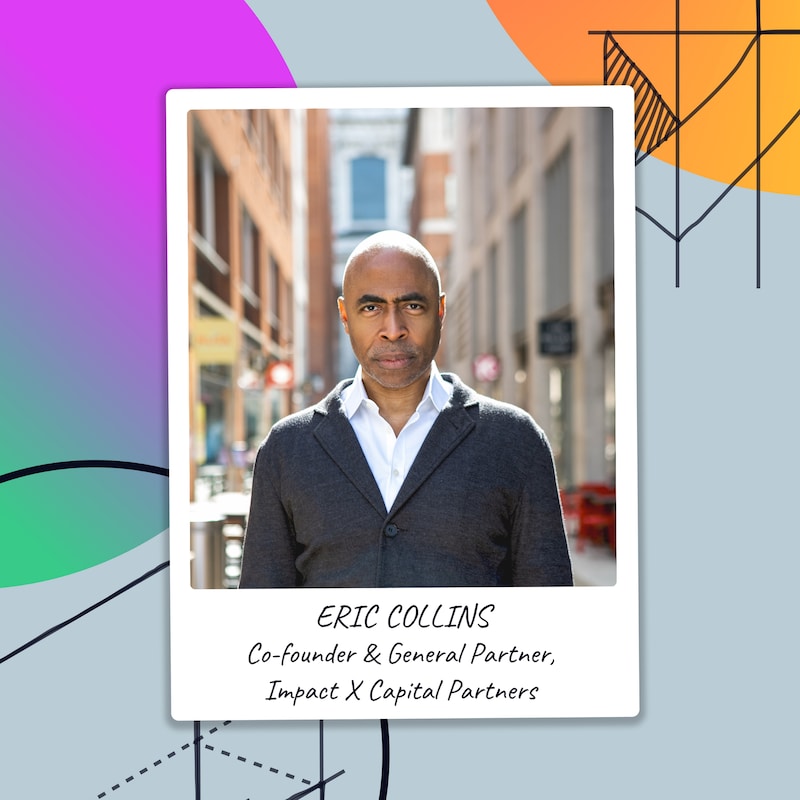
Eric Collins co-founded Impact X Capital to back the founders traditional venture capital overlooks. Inspired by the "original investors" in his own life, Eric’s work is driven by his belief that while talent is distributed equally, opportunity is not.
In this episode - our season finale - Eric discusses his move from technology executive to investor and why he sees the racial wealth gap as a problem that can be solved through intentional capital. He reflects on the journey of Impact X portfolio company Marshmallow to unicorn status and shares the logic behind investing in the animated series Iyanu.
You’ll learn:
- Why Impact X invests where other VC firms don't - and the data that backs its strategy
- Why good ideas are distributed equally across populations, but venture capital remains stubbornly concentrated
- How Marshmallow helped bridge the insurance gap for immigrants, reaching a $1.2B valuation in 18 months.
---
*** Help us shape the future of Made For Us! Take our 4-minute listener survey for the chance to win a $25 Amazon Gift Card and get instant access to our curated reading list of every book ever recommended on the show: https://forms.gle/pNyrCooa23oYsaVk7
---
About Eric Collins
Eric Collins is a serial entrepreneur, investor, technology executive, host of award-winning Channel 4 business show, The Money Maker. In 2018 he co-founded Impact X Capital Partners, a UK domiciled VC fund that has closed 2 funds with 49 investments including Europe’s 2nd Black unicorn, insurtech innovator, Marshmallow. In his award-winning book, We Don’t Need Permission: How Black Business Can Change Our World (Penguin), Eric argues investing in Black and underrepresented entrepreneurs is the surest, fastest socio-economic game changer there is.
Follow Eric Collins on LinkedIn: https://www.linkedin.com/in/ericdcollinsba/
Learn more about Impact X: www.impactxcapital.com
Read We Don’t Need Permission: https://www.penguin.co.uk/books/446046/we-dont-need-permission-by-collins-eric/9780552178648
Learn more about the Black Literary Club: https://www.theblackliteraryclub.com/
---
Connect with Made for Us
- Show notes and transcripts: https://made-for-us.captivate.fm/
- LinkedIn: https://www.linkedin.com/company/madeforuspodcast
- Instagram: https://www.instagram.com/madeforuspodcast/
- Newsletter: https://madeforuspodcast.beehiiv.com/
Season 3 credits:
Creator, producer & host: Tosin Sulaiman
Audio engineering: Justin Orive | Graphic design: Judith Raynault
Social media: Shilton Freeman | Cover art: Valentin Grimoux
Transcripts
We look at where other venture capital firms over index in terms of their investing, and then we choose the opposite people. We believe that smarts, we believe good ideas, extend equally across all populations. We believe equal opportunities do not extend across all people.
TS:Welcome to Made For Us and the final episode of season three. I'm your host, Tosin Sulaiman. Over the past few months, we've heard from founders, engineers, and investors who are creating the world they want to see through intentional design and intentional investing. From building AI for African languages to closing the disability wealth gap.
Today, we close the season with someone whose book title says it all. We don't need permission. Eric Collins is the co-founder and CEO of Impact X Capital Partners, which backs founders who've historically been overlooked by traditional venture capital. Impact X was founded in twenty eighteen and its portfolio includes Europe's second black-founded unicorn, the insurtech company Marshmallow.
In this conversation, Eric reflects on the original investors in his own life and what they taught him. He shares how Impact X was founded as an answer to the UK's racial wealth gap and what happened when the team invested in the creator of a graphic novel they discovered on Kickstarter.
If any of the episodes you've heard this season have resonated, then please spread the word and help others discover this show. And remember, you can also help shape the next season of Made For Us by sharing your thoughts in our survey, which I've linked to in the show notes. As a thank you, two winners chosen at random will win a twenty-five dollar Amazon gift card. And everyone who completes the survey gets our curated reading list of all the books recommended or written by past guests. Again, you'll find the link in the show notes, so please take a moment to share your feedback.
Now here's my conversation with Eric Collins.
EC:So, Eric Collins, I am by profession a venture capitalist and Impact X is a venture capital firm that is seeking to get outsized returns for the people who have invested with us. We invest in Europe and the UK. We are investing in several categories, the things that you'd expect digital and technology, health, education and a little bit of wellbeing. But then also we invest in media and entertainment because we do believe that representation and then who's in front of and behind the camera also not just from a representation perspective but also from a career building perspective and in the immortalizing in the canon of art creation is important. But we also believe first and foremost we have to get a return on investment. So there have to be ways in which everything we do is commercial, everything we do has to give a 10x or so return.
TS:Okay, so we'll be talking a lot more about that in this conversation. But first, I'm always interested in learning about how people got to where they are. I was intrigued by the very first page of your book, We Don't Need Permission, which you dedicated to my first investors. What can you tell us about the original VCs in your life as you describe them and how they shaped your worldview?
EC:So the original investors in my life are my parents. And when I call them investors, I'm very clear that they made decisions along the way to infuse resources into the development of my, I have a brother and a sister, into our lives. And those resources came in a variety of ways, whether it be money or whether it actually be exposure or whether it be engagement with us and curiosity in what we're doing and putting us in a primary role in their lives.
All of those sorts of things were constant and helped me to see how by not necessarily doing huge things, but doing small things consistently, almost like savings, saving has a compounding impact by doing things along the way. There's no real need at the end to do corrective action. And there's the opportunity to actually have great upside because you've done so many things in the beginning that the upside potential is almost infinite. So they are really my first investors. I mean, how many people sort of do write books and get them published, have television shows and are on prime time television, do have venture capital firms and have a great set of investors who are saying, we don't know you, but we want to put our money behind you and the ideas of what you're doing. So that's part of what happened because I had great investors from the very beginning.
TS:You also talk about how you were the first generation in your family to be guaranteed the right to vote from birth. When did that fact stop being abstract and become personal for you?
EC:Well, quite frankly, it's a very good question. I'm the first person in my family, not the first generation. I'm the first person. My older brother, who was born two and a half years before me, did not have the right to vote necessarily guaranteed by the US Constitution. We were born in Alabama. People who know Alabama and you just say it and people understand Dr. King, Freedom Rides, people being lynched, all of that stuff exists. I always call it the hot cauldron of the civil rights movement. That's where we were actually born.
And even though my parents were very well educated, very middle-class from multiple generations, they did not, when they decamped from where they originated to when they had gotten married and moved down to teach at a historically black college and university, didn't have the right to vote. Other than they had the right to vote, but they had to go through testing and other sorts of things in order to actually pay poll taxes in order to be able to actually vote.
So all that unfairness and all that systemic racism and all that systemic exclusion is what I'm talking about. When did I become aware of this? I'm confident that would have been from a very early age, probably starting in school. It would not have necessarily happened in the community in which I lived, because the communities in which I lived were populated and people by black people.
Just, I mean, we were basically in a segregated, even though it was a desegregated time in history, it was a segregated community for safety and comfort reasons. My parents always, we've always lived in black communities until I went to the university I had never not lived in a black community, a fully black community. It's not like a majority black community, it's a hundred percent black. But these were all middle-class and upper middle-class black communities. And those are people who always were constantly using the services of other black people.
TS:So let's talk about disruption, which is a theme that runs through your book. You talk about using money as a tool for disruption. You have a chapter on engaging in continuous acts of disruption. What's one of your first acts of disruption that you remember?
EC:I'm sure my older brother would say, you know, it was coming into the world was really disruptive to what had been a very comfortable situation. I was loud from the very beginning. I would say an act of disruption that I can remember would have been in school, but this wasn't a nice disruption, but it was something that's disrupted my equilibrium and it was caused by me.
We're getting ready to move into a holiday season. At my school, this was when I was in elementary school, which would be considered primary school here in the UK, there's always a Christmas pageant and I had so wanted to be in the Christmas pageant and the teacher had asked for volunteers. What would you like to be? And I didn't volunteer. And you know, somehow I thought I was Cinderella and there was, you know, the Prince was going to come find me. And so just because of who I am, my aura is going to attract the person to actually take care of my needs, know what my needs are and take care of those needs.
EC:And it was me coming home crying and my parents wondering what had happened in school and me telling them I hadn't been given a part and they had to go and they went marching down to the school, you know, to light some fires under people. And the teacher says, but Eric didn't volunteer to do anything. I didn't know Eric wanted to be in the show.
And then that's when the disruption, and I think I talk a little bit about the story in the book, this disruption actually happens because my entire sort of world then became about what needs to happen in order for Eric to become who he could be. And so it disrupted what had been a sort of a regular sort of a paradigm of activity and sort of in my life, what had been my regular actions. That is a personal disruption.
And when I, I give that as an example, because that's the basis of everything else. I wasn't able to necessarily rely on other people to take care of these things. was going to necessarily have to be the author of some outcomes. And that's, I think, the major piece. So it's not any particular day, any particular thing where I did like sitting in the dean's office at law school, which we did, that wasn't the thing.
EC:Or sitting out to try and end apartheid in terms of supporting of apartheid through the investment strategy of my undergraduate university. That's a thing that I did, but it's not that disruption. That disruption came as a result of something that happened very early. And I might not, I might have not done those things had I not had my parents to interrupt and the system to interrupt and say, Eric, something better can happen to you. And so you don't need to be so frustrated. Get with the program. This is what you're going to do. Learn to speak up for yourself and then to also participate a bit more actively in your own agenda making.
TS:Hmm, that's so interesting and unexpected. I don't remember that from your book.
So, as you alluded to earlier, you've had a really multifaceted career. At various points in your life, you've been an entrepreneur, a strategy consultant, a tech executive, film producer, Obama appointee, television host, author, and now investor. And let me know if I missed anything. But I know it's a long list, but you know, was there a moment that you decided to stop following the conventional path or...
EC:That's enough.
TS:Is that just how your career evolved?
EC:All the things that you mentioned are really on a continuum and for the same purpose. And they start off, I think, mostly on my background with people who, meaning my parents and other members of my family, who are deeply embedded in social justice as a concept and trying to make sure social justice became a reality. And they were part of that successful generation that actually did that through their efforts, through their grit, they were able to make that happen. And so, starting out in life, I was taught that, and I believe this firmly, and so I've adopted this as a real belief, that it's not just about me and sort of my forward progression, how great I am, that's not the focus.
EC:The focus is what are you doing and how are you better preparing yourselves to be of service to others? Because your purpose-driven life, and you're here for a reason, and your purpose-driven life is to become more effective at getting the outcome and helping to achieve the outcome for which you are uniquely qualified. I have that as a belief. And therefore, I behave in a certain sort of way and have to look at opportunity, meaning career and other sorts of things through that prism. So having done all of the things that you mentioned, and it's all true, they have been in order to try and be a better contributor at the end of the day, to be able to support more weight, to be able to drag a heavier sled behind me and to be able to partner more actively with other people driving that sled and to be a very good at teaming.
So all of those things are part of that sort of journey. So the title of being managing partner of a consulting firm, you know, before I was 30 has as little impact as no has less impact, I would say, then being a person who put together a team spun out from an organization that team stayed together, we made capital together, we were able to generate business, we were able to then get follow on business. That's the accomplishment right there. But the accomplishment itself led to the ability to then run a technology company, which led to the opportunity to then go in-house in a very big media company, Time Warner, as an executive, which led me to be able to take on a subsidiary of that and grow that relatively quickly with a team of people.
EC:And then that team of people who existed around the world, that then is the basis for which I'm able to then generate sufficient experience to be able to advise organizations who are then going into these various markets and have a network to help those organizations get good introductions, which then leads to the next thing, which is raising money and then being able to get people and organizations that we have sufficient confidence in you to put our money behind you and then to be able to use that to actually then generate additional return for them and for us. So it's, you know, we're still on that progression. We're still in process. I don't know exactly where it will end, but I'm still in process and trying to accumulate experiences, open opportunities, create more teams, get more people who I trust and who trust me, and then do bigger and bigger things in the world.
TS:So it's all connected by your purpose. So even though every single step wasn't planned, there is that wider purpose that runs through everything.
EC:Absolutely. And many of these were not, several of these, I'm not sure many, because either voluntarily or involuntarily, I was separated from an opportunity. The opportunity that I had in front of me, people said, no longer do we need you, Eric, goodbye. Or I could tell it's time for me to go. And then I often had to find a whole new ecosystem in which to exist. And then that, you know, having learned how to sort of adapt in a cross-cultural fashion helps me to say, well, all the world is a possibility. It's not just the city in which I live. I could live anywhere. I could enjoy anything. It could be exciting to be part of a family in a whole different space. I don't have to be close to my parents in order for us to be able to still be connected as a group. it's great. All sorts of things can happen. So I would put it in that context, actually.
TS:Right. And how does someone get on Barack Obama's radar? Can you walk us through how that happened?
EC:So I went to law school in 1988. I graduated from undergrad and went straight to law school in the United States. That's what happens in law school. so undergrad in the United States is a four-year program generally, and then law school is an additional three years. And even before law school starts, there are a series of orientation activities. Most of these orientation activities happen within a group called an orientation group. So there's a law school which has like five hundred and fifty people in it. And then your orientation groups have, and there are sections which have about a hundred people, a hundred and ten people in them. And then there's an orientation group, which is even smaller, which has about twenty people in it. and I were in an orientation group together. So we went to law school together and met the first day of law school, I'd assume.
It's not as though, I've known Barack for years and years, it is not as though, however, I was his confidant and he was my confidant. That didn't necessarily happen. The great thing about American universities and then law schools, especially there's so many, when I was going to school, there's so many people of color, so many black people. mean, in Harvard Law School, sort of a very elite law school, there were like fifteen percent of the population of the law school was black Americans. And that didn't include the black Africans who were there, the black Caribbeans who were there, it's just like the black Americans. So they're a large group.
EC:And it creates a network that is able to be leveraged in a variety of ways. And I do talk about this and we don't need permission, but he was part of, he becomes part of that network. And, you know, even if we didn't have an affinity, which there were some affinity, but even if we didn't have a direct affinity, the ability to call upon people, that is the group of you're going to call upon when the going is good, you're going to bring them in. And when the going is tough, you want to ask for assistance. That's what, that's what you learn, and that those are the people who are going to back you.
EC:And some of them will be a ride or dies and some of them will be, you know, on the outside, but when needed, there's kind of an implicit understanding that we will come to the call. We will come to, you know, respond. So whether or not you're running for Senate and you need money, whether or not you are the president and you need some people to serve, that's how that happens. So I met Barack through circumstance. And then from there, because of what that administration needed, I served on a committee at the pleasure of the president.
TS:Could you say a little bit more about that appointment and what your remit was?
EC:Yeah, so the appointment was at the Small Business Administration, which in the United States is the agency which is helping to ensure that businesses are started and get to be, not just incubated, but get to then scale effectively. And the focus of the group that I was on was for, not just any kind of small businesses, and not to the most early stages, but it's as we're in the scale-up process, what happens to women, people of color, people with disabilities, people who are veterans, et cetera, what happens to them and what are the challenges that need to be addressed on a not entry level, but on a more advanced level in terms of business ownership and business operations.
And we did studies, we put forward recommendations and those were in some ways implemented during the, I guess this was during the first Obama administration, cause it was twenty eleven, I think is when I started. So it was the first administration. But that was secondary. I had another job. This was not a full-time government job. I've never been a government employee. This was a voluntary position.
TS:Right, you see. And you also bring a historical lens to what you do and you talk about this and we don't need permission how you studied black entrepreneurship, particularly successful black entrepreneurs. How does that historical perspective inform your work?
EC:Ooh, so I think it informs it because it makes me quite optimistic. Studies that I've done, I've done two larger studies. One at the undergraduate level was called a thesis at my university. And that thesis delved into what were doing a historical analysis of black entrepreneurship and looking at the kinds of activities that black entrepreneurs were generally in and which they were generally involved and what made for a successful entrepreneur in various periods since the inception of the United States was all focused on the U S.
And then the second one was a study of the governmental policies as when I was in law school. And this was called a third year paper, which is your culminating piece of academic work. What is it? What are the economic and structural issues, but that are really steeped in law and legislation that helps the black entrepreneur to be successful? What were the programmatic elements that happened? What were the legal cases that happened that allowed things to occur effectively?
EC:But the first one, which is the historical part, was the one that really influenced me when I went into history and started looking at centuries of Black involvement. And sort of like my career, it's not only because you choose to do these things, but in some ways you don't have much choice of what to do. So if you're a Black woman who is coming out, who lives in the South, during the time of enslavement of black people in the United States, and you happen to be a free person for whatever reason, whether you bought your freedom, you were born with freedom, no matter how that happened, what was the method by which you were going to actually earn a living?
And what I found is that many of the kinds of careers that were associated with it, the kinds of businesses that were started, were those that were associated with roles and jobs that had been held and had been considered skilled under enslavement, everything from laundry, hairdressing, dressmaking, agriculture, some arts and crafts activity, things like basket making with sawgrass or something like that. All of those things were activities that were appropriate for a black woman that could either transact within a segregated community, so for a black population, or it could translate to some other community, a general population, including white people.
EC:So say housekeeping, for instance, and cleaning services. These are things that I found very fascinating because it informed me that there are places where we have been knowledgeable and credited with that knowledge across race, geography. You think about sports, you think about entertainment. So you think about black people who are singing, whatever it is, but those are places that we saw that there were opportunities for entrepreneurship and sort of real disruption and the creation of their own way.
And then you and I have thought a little bit about sort of where that then translated into very large fortunes and whether that be black hair care like Madam C.J. Walker or sale making, which is the one of the first black millionaires, self-made millionaires was actually a sale maker. All sorts of things have been going on for a long, long time. And I think based on that, helps me to see also where the DNA is deep and wide and therefore is possible to support a lot of other sorts of enterprises. That's one of the reasons why it was so good to do that work and research.
TS:And so if we fast forward to today, there are nine black CEOs leading Fortune five hundred companies, which is a record. When it comes to wealth creation and closing the racial wealth gap, where do you see things moving in the right direction and what other work do you think needs to be done?
EC:So one of my investors is the first black woman to lead a Fortune five hundred company, Ursula Burns, who ran Xerox as a CEO and chair of that organization. Miraculous, right? So back in the Two thousands, she ran that organization and was the first black woman to do that. you know, sort of an unanticipated sort of like when Barack Obama was elected.
I'm actually a contrarian about this idea. I do believe that being a CEO of a Fortune five hundred company, it's a fantastic wealth building opportunity if you're in the right organization. What is the average compensation for a CEO of Fortune five hundred company? It's over twenty five million a year or something like that, including salary as well as stock options and that sort of thing, a very huge amount of money. And then you think about who the billionaires are in the world. And there are some who have actually run other people's companies, but most of those people have made money themselves or inherited money from somebody else.
EC:So it became clear to me very early that I would have one sort of a position if I were the chair of GE and the CEO of GE, but if I started GE, it'd be a whole nother matter. And if I helped other people start GEs, then, and they were women and people of color, then that's a very, very different matter. And that's a very different kind of enfranchisement than this in the world. A CEO works at the pleasure of the board, right? As long as they are doing what they're found, they're recruited, they function, and they do that for the board and shareholders and other stakeholders also.
Now, when you are an entrepreneur who starts your own business and it becomes a behemoth and suddenly it's called Netflix, then there's a different sort of a power balance that actually exists and, quite frankly, I think it's very, very important because those sort of organizations that we didn't even know about thirty years ago, those organizations can have a very different DNA than say the Bank of England, which is two hundred and seventy five years old and has at its basis some sort of systemic issues that are very hard to undo. Why even try to change those organizations? Even though it's good, I think people should go tilting at those windmills.
EC:And there are people who are well-built for that sort of thing. I'm not. And the people that I back are actually people who are built for disruption. And those disruption is to create these other sorts of companies, sort of like Marshmallow has been created or our cartoon series, Iyanu has been created in order to build an entire ecosystem. Not an alternative ecosystem, but within the ecosystem to build one that has more both hard and soft power. So hard in terms of money, soft in terms of influence.
TS:So that brings us nicely to Impact X because what you're trying to do is build the next Netflixes and Ubers. Tell us about the origin story of Impact X, how it came together and what makes it unique.
EC:We either thank or blame Lenny Henry. Sir Lenworth Henry, who is the individual who came to a guy named Tom Ilube and said, look, there is a problem where one in two black children in the UK live below the poverty line. We need to do something about it. And Tom said, okay, that's a good point. Let's get together a group of people, not to discuss it, but to come up with solutions. And so they had a work, a working group, like forty people got together who are the good and great among black Britain.
So they're business people, fund managers, they are educators, politicians, everyone got together and then they had a session where they had a little bit of dinner, but it was all about getting into working groups and figuring out here's the solution, here's the solution. And from that, a number of things have happened. A group called the Black Equity Organization, I feel has its origins there, which is a black civil rights organization as did Impact X because people said what we need is to have our own money. And that money can then be used for a variety of things.
EC:So how do we make that money and then increase it? Not go to gatekeepers and ask for it, other than to see if we can invest some of their money along with our own, but to pool our resources and come up with a fund. And that's what we did with Impact X. And we were able to do a number of things, but we decided that the best thing to do was not to be a private equity firm, not to be a hedge fund, but to be a venture capital firm because we would find more organizations that were at the stage and doing the sorts of things that we want and for which we could write the right size check if we were doing venture and we can incubate more change and more dynamism by doing that.
And starting in: TS:Right. So you're backing underrepresented founders. Explain what you mean by that.
EC:So it's very simple definition. We look at where other venture capital firms over index in terms of their investing, and then we choose the opposite people. We believe that smarts, we believe good ideas extend equally across all populations. We believe equal opportunities do not extend across all people. So if we believe that the greatest ideas come from across the board, but there are various people in the UK, what, less than two percent of all venture capital goes to black people and less than zero point zero zero two percent goes to black women. So if we believe that black women and other black people actually come up with very good ideas, which we genuinely believe, then we should be backing them because we're going to get great results
And studies by the Kauffman Foundation and others have shown. Those other statistics that I gave about the two percent and less than zero point zero zero two percent, that comes from Extend Ventures, which is a black led research organization. And then the other piece from the Kauffman Foundation has shown, and this has been shown time and time again, when you put money behind women, people of color, they return capital at a higher rate than white men and mixed teams and, you know, women that have men and women, people of color and not of color. All of those are ways in which you get better results.
However, the orthodoxy is, and the belief in some people's minds, is that white men who come out of Cambridge and Oxford and Harvard and Yale and Stanford are the people who really create alpha, i.e. high returns on investment. And that's simply not true. There are some outlier data points that say that you should certainly look at and say, my goodness, you know, many of the seven biggest companies come out of the West coast of the United States. But if we just believe that all good things come out of the West coast of the United States, then that's how you should invest. We don't believe that.
TS:So you mentioned Ursula Burns, who was one of your first investors. Who were the other backers of Impact X and how has the investor profile changed from your first fund to the second one?
EC:So it is fascinating. you have, it's sort of a who's who here in the UK. So there's Ursula Burns, for instance. There's Rick Lewis, who has the largest private, black private equity firm here in the UK with about thirty billion of assets at under management. You have Rob Pierre, who started Jellyfish and helped to grow that organization, then sold it to a French conglomerate a few years ago for, you know, hundreds and hundreds of millions. You have Pat Young, who was the chief creative officer of the BBC. You have got Patricia Hamzahee, the he, who is a backer of the arts around the UK and was a former banker. You've got Vivian Hunt who ran McKinsey UK and now is chief chief strategy officer at a big health provider in the United States. You've got a guy named Barry Lawson Williams, who not necessarily a lot of people know, but Barry Lawson, William has been a board member on fourteen public boards in the United States.
EC:So there are about 30 of those people. Not only though, do they provide us capital and that was our first fund, but they also provide value add. That's a phenomenal advantage because quite frankly, even if a person gets capital, they need a lot of other value add to make it work because they still have to have, it's not as though you get capital and suddenly sexism is gone, racism is gone. All that still exists and you still have to get your deals. You still have to get your deals, you still have to get your dealflow and pipeline, how to make sure that that actually happens. That is the kind of ecosystem we created.
And because of that, we were able to get good results out of our first portfolio. And therefore we got to our second fund and we raised it. The second close we had was in October of twenty twenty four. And that fund has only corporations in it and organizations, funds of funds. has endowments, it has corporates in their balance sheets. So the thing which has changed between the first and the second fund is we've gone from a pilot fund where these folk who were highly committed to the cause also were committed and put their money where their mouth was and were able to help us to prove a thesis and create a track record. We then use that to go market to other organizations that had less of an affinity, but still wanted to make money. And so we then have a variety of those organizations that would be considered institutional investors who have backed us in the second fund.
TS:Right. And that includes Bank of America, Visa Foundation, the Guy's and St. Thomas's Foundation, Atomico.
EC:Illumen Capital. Illumen is most interesting because they're a West Coast fund of funds. So West Coast of the United States funds of funds, we got one. They've only backed eleven GPs and we are one of those. So it is quite a feat to get them. And this is an organization that wants to back you and back you and back you. That's their whole point. so do organizations like the other ones that you named. They look at your results and then hopefully, based on those results, then decide to invest again and again and again and serve as cornerstone investors.
TS:And how big was that second fund?
EC:You know, that second fund was still sub fifty million because there are these different sort of cutoffs. So we're below sort of that fifty million, which would be a great milestone for us to then hit. And quite frankly, this second fund still kind of feels like a pilot fund because it's proving that we can actually work with institutional investors and that they are committed.
TS:As you mentioned, your goal is to generate both financial and social returns. Is there a portfolio company that best exemplifies your investment thesis?
EC:There are lot of them. The one that I always use is Marshmallow. Marshmallow, the UK insurtech company started by Oliver and Alexander Kent Braham and one of their friends. That is an organization that's grown and grown. When we invested in twenty-twenty, this insurtech company that actually helps immigrants and young drivers to be able to get well-priced insurance, especially if you are an expat from another country, to help you to take your driving record from there, connect it to your application, and then be able to get that into these compare sites so that you get the best insurance premiums. And now they also have become not just a broker, but also an underwriter themselves. So they can actually underwrite risk themselves.
That organization built on immigrants and other and young drivers. When we invested in twenty twenty was at a thirty million pre-money valuation. Eighteen months later, they're one point two billion. So that was for us. We had our unicorn, the second black unicorn in Europe. And we also were able to liquidate some of our, so realize returns. So we were able to liquidate some of our investment. And in addition, in April of twenty twenty-five, they announced their ninety million dollar round at a two billion valuation with BlackRock and Columbia Lake Partners leading that round. So that means that we now get to be a signal for other bigger and probably and much more established GP franchises to sort of follow our example. And we hope that what they then do is say there's other, know, gold in them thar hills. If you're American, you know, that's how you might describe it. There’s gold in them thar hills. And then they follow that example.
TS:So you launched Impact X Studios in twenty nineteen. What's the opportunity you see in the creative industries and why is now the time?
EC:So if you go all the way back to the conversation that you and I were having about industries and sectors where black people have, let's use the term unfair advantage, creativity is one of those. I think most people would say that there are creative elements within the black community that have always been cutting edge and leading edge. And there have been many people who have been followed, especially in music, especially in sport and other sort of places. And there are so many generations of people who have done well in those sort of spaces, to ignore that as a potential pool of opportunity is a little silly if you ask me. It's a big oversight. And then if you're looking at sort of, but if you're looking at growth and valuation that's at the same rate as Nvidia, it's very hard to find great examples of that. But what we've tried to do is, and what we've done relatively successfully is to invest in creative endeavors the same way that we invest in other enterprises. We do small investments at the very beginning and take an inordinate size of a project or business. We then get help that through the capital infusion and our value add, get them to a set of milestones and that set of milestones, it not only unlocks additional value, it also unlocks additional funders.
EC:So there are other people who want to come to the table because that after we've de-risked something, they are ready to invest. And that has been very, very effective. The best example is a show which is currently number one on HBO in the United States and Cartoon Network. It's an animated series that's also number one in every English speaking African country on the continent, called Iyanu, which came from a graphic novel that we found on Kickstarter, helped to develop that into a pitch. And then that was purchased first for the US distribution by HBO. And then it has gone on to be a very successful project and eventually turns into, so we got, it was announced back in, I think Q1 this year that Warner Brothers discovery would be green lighting season two, as well as two films. And then we will be looking forward to the merchandising associated with it. And the reality is these projects like that can return as well as any and often faster than a company. And so that's why we do that.
TS:So just looking ahead to ten years from now, if Impact X has the success that you expect it to have, what does the UK look like in a decade from now?
EC:Remember it started off because one in two black children live below the poverty line and one in five of their white colleagues. We don't want any child to live in poverty. If they're going to be people in, you know, we've been taught by scripture, the poor will always be among us. The question of having fewer of those folk and the way that this happens is not just because businesses started, but because businesses start, they hire people. Those people get to have experiences. They either grow inside the company and they go to a different company and colonize it or they start their own company and at some point you end up with people exiting and they exit and we exit correctly and you suddenly are an Nvidia, then not only do the people who founded but a lot of other people in that organization, there's an infusion of capital.
And Give Black, a study about black philanthropy has shown here in the UK as one example that black people over index in terms of donating to organizations that assist black communities. So not only do you have an increase in terms of a rising tide for the people who are part of that organization. But then the rest of the community is actually positively impacted. Do that enough times and within a generation and the generations between twelve and twenty years, that's what we're looking for. We're looking for generational change. We are not looking for sort of incremental change, which over time gets us closer and closer to the world of the possible. We're looking for change which can be measured and seen now while we're still, we're still out there kicking and breathing.
TS:Well, Eric, thank you so much for your time. This has been a fascinating conversation. I'm really glad that we were able to speak.
EC:Thank you, Tosin. It was great and my pleasure to be here. Thank you for all your questions and your well thought through work.
TS:Thank you to Eric Collins, CEO of Impact X. I've included links in the show notes if you'd like to learn more about Eric's work and his latest initiative, The Black Literary Club. Thanks to all of you for joining me on this episode and for supporting this podcast. While we're preparing for the next season, I hope you'll check out some of the 50 plus episodes in our back catalog. And you can also follow us on social media. We're at Made For Us podcast on Instagram and LinkedIn. Finally, please do take a moment to leave us a rating on Apple Podcasts or Spotify so more people can find this show. I'm Tosin Sulaiman, see you next time.







