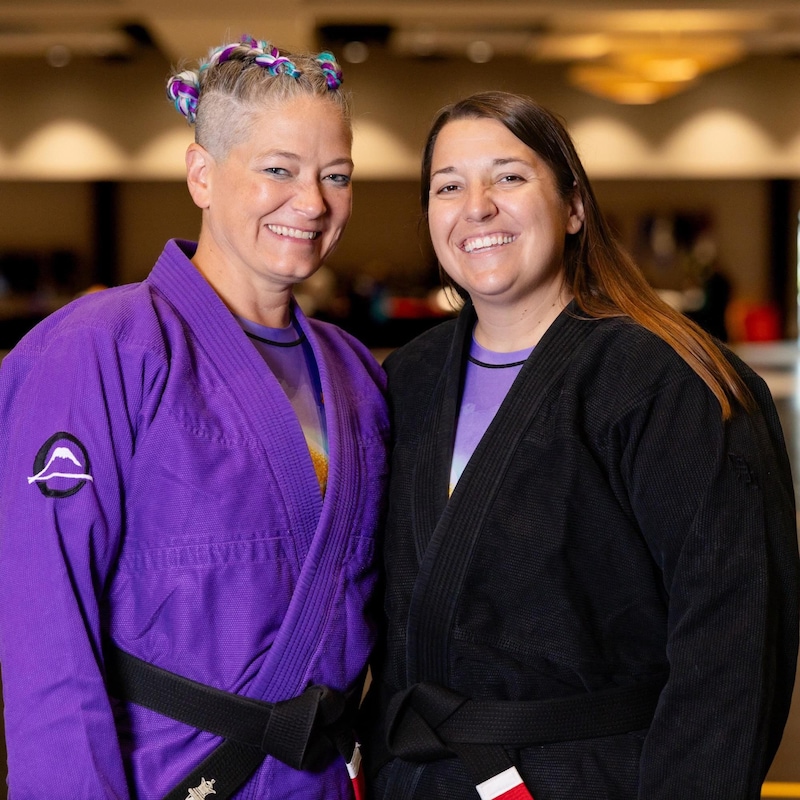
Shownotes
If you love the podcast, share it with a friend!
You can also leave us a 5-star rating in Spotify or Apple Podcasts.
🎧 Listen on Your Favorite App
🎯 New to the Podcast? Start Here
🥋 Learn More About Roll Model Grappling Camp
📱 Connect with Jen & AJ on Social Media
Instagram – @beautyandthegipodcast
Risser!: @jrizzinthehizz on Instagram
AJ: @ajclingerman on Instagram | @roll_model on TikTok
Roll Model Grappling: @rollmodelgrappling on Instagram
🎶 Production
Recording, editing, and production by Risser. Unless you hated it - then AJ did it!
⚠️ Disclaimer
The Beauty and the Gi podcast is presented solely for general informational, educational, and entertainment purposes. It is not a substitute for professional medical, mental health, or coaching advice, diagnosis, or treatment. Please consult your healthcare provider for any condition.
Transcripts
Welcome to Beauty and the gi, a podcast about Jiu Jitsu and so much more.
Speaker A:I'm AJ Klingerman, a Brazilian Jiu Jitsu black belt obsessed with Jiu Jitsu.
Speaker B:And I'm Jennifer Risser, a Brazilian Jiu Jitsu black belt made of nonsense and tomfoolery and maybe even more so now.
Speaker A:Even more so.
Speaker A:How come?
Speaker B:I don't know.
Speaker B:Less so.
Speaker B:Which one should I be?
Speaker A:I don't know.
Speaker A:Maybe more so.
Speaker B:It's more fun.
Speaker B:Yeah, I feel like I gotta lean in.
Speaker A:Okay, so before we get started, we want to address that Jen has decided to fully step away from the podcast.
Speaker A:We're definitely sorry to see her go.
Speaker A:This podcast wouldn't exist without her just wanting to do it to begin with.
Speaker A:So if you haven't been around long, you may not know the story, but Jen was in a mastermind group with me for speakers and authors, and I convinced her to come try Jiu Jitsu.
Speaker A:She was doing like, a awkward BJJ journal podcast for her first few classes, and she messaged me and was like, okay, I wanna make this full time.
Speaker A:I wanna do like a podcast for real.
Speaker A:And I was like, okay, then I want in on it.
Speaker A: And that was in: Speaker A:2019.
Speaker A: April of: Speaker A:So we're right at seven years with podcast.
Speaker A:That's crazy.
Speaker B:It's crazy.
Speaker A:Yeah.
Speaker B:So we're really sad to see Jen go.
Speaker B:Technically, we still left her on as an admin of this podcast, so she could, with enough badgering, perhaps return at some point.
Speaker A:It's not a hint, this.
Speaker A:Just saying the door is always open.
Speaker B:Y the door's not shut.
Speaker B:That's for sure.
Speaker A:That's right.
Speaker A:You know, one thing that the podcast really brought, particularly in the beginning, was new eyes.
Speaker A:Right.
Speaker A:Jen was brand new as a white belt kind of finding her way in Jiu Jitsu.
Speaker A:And I was a purple belt when we started, but I'd also been doing Jiu jitsu for, like, 20 years at that point.
Speaker A:So, you know, I'd been around a while.
Speaker A:I am still very opinionated, so I can offer my opinions.
Speaker A:So that was really fun to have that, like, new person perspective.
Speaker A:And now you're just getting something different with two women black belts.
Speaker B:Yeah.
Speaker B:And I think we still want to find ways to incorporate that newer voice.
Speaker B:You know, I think that's always something people want to hear.
Speaker B:You know, they want their experiences to be validated and that sort of thing.
Speaker B:So we definitely want to make sure that we're thinking about that, honoring that and maybe doing more Interviews with people.
Speaker A:Yeah.
Speaker A:And even just like listener questions with answers from all of you.
Speaker A:Having a question that you guys could send in the answers to and we could talk about more perspectives than just what Riser and I have.
Speaker A:Yeah.
Speaker B:So kind of a different path looking forward, perhaps.
Speaker B:But we're excited about a new chapter and that's.
Speaker B:That may be what it is.
Speaker B:Just a chapter.
Speaker B:We'll see.
Speaker A:Yeah.
Speaker A:Yeah.
Speaker A:Change can often be really hard, but it is inevitable in life.
Speaker A:And it's just how we grow and adapt from that change.
Speaker A:And that can be really exciting.
Speaker B:So the way the handoff between Jen and us happened, it just so happened that we're accidentally a little bit late on last week's episode just because of the logistics of getting it swapped over to our account and that sort of thing.
Speaker B:So if you're someone who, you know, times their every other Thursday by beauty and the Ghee.
Speaker B:We're sorry about that.
Speaker B:We're gonna do our best to keep that schedule going henceforth, but we had that little blip in our schedule, so.
Speaker A:We're sorry to Elizabeth, Amy, Stormy.
Speaker A:Those are the people that I know listen when it drops.
Speaker B:So, all right, so what are we talking about this week?
Speaker A:Yeah, we recently had GI Pans happen, and for us, we had the Indie Open.
Speaker A:And we always get a lot of questions about federation tournaments.
Speaker A:So we just thought we would give like an IBJJF 101 talk.
Speaker A:Yeah.
Speaker B:Just a quick rundown of things that are different.
Speaker A:Right.
Speaker B:You know, like your average Fuji is quite different than your average IBJJF tournament.
Speaker A:Yeah.
Speaker A:And a lot of anxiety happens in the unknown.
Speaker B:So.
Speaker A:So knowing what you have to do ahead of time or what it's going to look like can make it a lot easier to do.
Speaker A:Yeah.
Speaker B:So the first thing is registration takes a little longer than your average tournament.
Speaker B:You have to have a card through your affiliation and your affiliation head has to be a second degree black belt under ibjjf.
Speaker B:So recognized by IBJJF as a second degree black belt with an affiliation attached.
Speaker B:So that person has to sign off.
Speaker B:Even if you're a white belt, you have to get a card.
Speaker A:Yeah.
Speaker B:What is it, like 30, 35 bucks these days?
Speaker A:Yeah, I think it might be 40 for the first time and 35 for renewal or something to that extent, but.
Speaker B:Okay, you get the picture.
Speaker A:Yep.
Speaker A:So once you get that information filled out, which also includes sending in your ID and a picture for your card and all of that, getting that second degree black belt to sign off on it once, all of that is processed, then you can actually register for the tournament.
Speaker B:And just so you know, technically IBJJF does require you to register as assigned at birth.
Speaker B:However, you know, your identification says what it says.
Speaker A:Yep.
Speaker B:So yeah, that's how we approach that.
Speaker A:Registration for tournaments will close at least eight days before a tournament.
Speaker A:So if a tournament is on a Saturday, the Friday before that.
Speaker A:So like again, eight days before registration will close.
Speaker A:It can also close sooner than that when it's full.
Speaker A:Yeah, yeah.
Speaker A:So you have to kind of watch that if a tournament is very popular, they will close it when it's at capacity for the building.
Speaker B:Yeah.
Speaker B:Usually once it gets to like 75% or so, once you start looking on the list of registrants, it'll tell you, okay, we're at 90% or 92%.
Speaker B:And then you can kind of base it off of that.
Speaker A:Yep.
Speaker A:Oftentimes when you start seeing the percentages, it goes within a couple days.
Speaker B:Yeah.
Speaker B:In terms of registration, you know that you can go down in age.
Speaker B:So if you're Master 2 like me, I could register for Master 1 or Adult.
Speaker B:But if you're an adult by actual age, there's nowhere else for you to go.
Speaker B:In terms of age classes.
Speaker B:For weight classes, you have to be able to make your weight in the gear you're wearing.
Speaker B:So what that means is that you might be able to go up a weight class, but you probably cannot go down a weight class unless you can truly make that weight with your gear on.
Speaker A:Yeah, yeah.
Speaker A:And your weight has to be on point.
Speaker A:Like if you are 0.1 over, they will disqualify you.
Speaker A:And there are no second chances when you step on that scale.
Speaker A:This is happening.
Speaker B:Just a note on the weight, there is a test scale.
Speaker B:So we always tell people to go weigh yourself on the test scale before you consume anything.
Speaker B:You know, you don't really want to be putting stuff in your body yet until you know what you weigh on.
Speaker B:The tournament scales themselves.
Speaker A:Yeah.
Speaker A:And you can always register at whatever weight division.
Speaker A:And as the tournament gets closer, you can change that registration if you're not feeling like you're going to fall within that weight class.
Speaker A:But that needs to be done like a week out from the tournament.
Speaker A:They will close that.
Speaker B:Yeah, they'll close your ability to change that.
Speaker B:Okay, what about what they wear?
Speaker A:So as far as what you wear, you do have to have a competition approved GI.
Speaker A:Most of the GI sites will say that it is a IBJJF competition GI and your no GI set has to be black or white with 10% of your belt color cannot really have other colors in it.
Speaker A:I've seen people get told to change if they have a little bit of yellow in the logo or a little bit of red, something like.
Speaker A:So that they're very particular that it needs to be at least 10% of your belt color and nothing else other than black or white.
Speaker B:Yeah.
Speaker B:I mean, we've definitely seen people break those rules and get away with it, but we've also seen people not get away with it.
Speaker B:So we always choose the better safe than sorry route.
Speaker B:You know, our role model rash guards that are ranked are very specifically only white, black, or the belt rank color.
Speaker B:Just because you.
Speaker B:You're better safe than sorry on that.
Speaker A:Yeah.
Speaker A:And I do recommend, if you are trying to get away with something or you're just not 100% sure that you bring a second set, whether that's for no GI or gi, you should have a second outfit to change into.
Speaker A:What if something rips?
Speaker A:You're going to need to change.
Speaker B:Yeah.
Speaker B:Or like somebody gets makeup on your gi.
Speaker B:We had that happen to someone on our team.
Speaker B:You know, if you.
Speaker B:If you get makeup on your GI, you might get DQ'd for that GI at the.
Speaker B:In the next round.
Speaker B:So having a second GI is important.
Speaker A:They're also really particular about your belt length and everything.
Speaker A:So my recommendation is that every gym have one of the belt checkers.
Speaker A:You can get that online.
Speaker A:It is like $85, which is insane for the piece of plastic that it is, but not insane for the peace of mind that it provides.
Speaker A:Yeah.
Speaker B:Because it doesn't just do the belt.
Speaker B:Right.
Speaker B:Like, IBJJF is really specific about lengths of all sorts of things.
Speaker B:The thickness of your lapel, there's a piece of it that you have to shove up your sleeve to make sure it can clear your tricep.
Speaker B:So guys with big biceps and triceps, sometimes they struggle with that, you know, or people that are really tiny, who have really tiny GIs, sometimes they really struggle getting that much up the material of their gi, like the length of the pants, the sleeves, you know, all of that.
Speaker B:So IBJJF is really strict on that.
Speaker B:And also about belts, they're specific with how frayed they can be.
Speaker B:So, like, we.
Speaker B:We personally have, like, competition belts that we use that we don't really wear other times of the year.
Speaker A:Yeah.
Speaker A:So we're not trying to scare you with how particular it is.
Speaker A:We're just trying to prepare you and make sure that you have backup if need be.
Speaker A:Yeah.
Speaker B:Because they just can Be really particular.
Speaker B:I mean, even geese that have passed previously fail future times for one reason or another.
Speaker B:You know, subjective rules, ish can be applied differently by different people.
Speaker B:They have really specific diagram about where patches can be on your gi.
Speaker B:One time a GI I had competed in a bunch of times, the pants didn't pass because of where a patch was.
Speaker B:So I had to run and go change my pants really quickly.
Speaker B:We didn't say this at the beginning about the GI's.
Speaker B:You mentioned the IBJJF approved GI.
Speaker B:They've recently increased, like, the weight the GI has to be, but it doesn't seem like they're really enforcing that rule.
Speaker A:I feel like they're not enforcing it, particularly at the opens.
Speaker B:Yeah.
Speaker A:But you know, again, better safe than sorry.
Speaker A:And I think in any of the big ones, you know, worlds or pans or anything like that, they're probably gonna be more particular.
Speaker B:Yeah, I wasn't thinking about, like GUI type when I was watching pan.
Speaker B:So maybe when we're going back through and watching other matches, we'll look like at Indie Open recently, like origin, geese were passing that wouldn't usually pass.
Speaker B:We've got some old role model geese that passed even though they don't usually pass these days since the rules changed.
Speaker B:So that's just something to keep in mind.
Speaker B:Also, while we're talking about clothing, they have rules about like braces and that sort of thing.
Speaker B:So they can't be hard braces with, like metal in them.
Speaker A:Right.
Speaker B:They have to be sleeves.
Speaker A:Right.
Speaker B:And they can't really impact the ability to do submissions.
Speaker B:Right.
Speaker B:So if you're in a class where you can do knee bars, it can't be like a such an intense brace that the person can't knee bar you.
Speaker B:That kind of thing.
Speaker A:Yeah.
Speaker A:And just some other little things about what you can and can't wear.
Speaker A:You can't wear makeup again.
Speaker A:We did have a friend get disqualified for getting makeup on someone's gi.
Speaker A:Your hair must be pulled back.
Speaker A:You can't wear a thong, you can't wear a cup.
Speaker A:So those are a few things to know.
Speaker B:You're not supposed to have spats that are longer than your ghee pants.
Speaker B:So if you're someone that wears spats underneath, you'll want them to be cut off a little bit.
Speaker B:Or you like maybe calf height or knee height.
Speaker A:Also, men can't wear brash guards under their geese.
Speaker B:True.
Speaker B:Although trans athletes, I have seen them make some exception.
Speaker A:Yes.
Speaker B:In that regard.
Speaker B:But that's a thing that you'd probably want to get approval for and figure that piece out ahead of time if you can.
Speaker B:This is Risser of the future.
Speaker B:Also past hopping on.
Speaker B:To clarify, the IBJJF requires you to compete as the sex you were assigned at birth.
Speaker B:So trans women must compete in the men's divisions, and I have seen them make an exception for those women to allow them to wear sports bras or something else.
Speaker B:Okay, so we already talked about it, but your weight has to be on point.
Speaker B:So we always recommend that you try the test scale with all your clothing in arms or on your body before you start eating or drinking if you're close on weight.
Speaker A:And if you're close on weight, maybe try to talk to somebody who has already competed to see if they've, you know, if there was a difference between the test scale and the actual scale.
Speaker B:Yeah, that can be really helpful, too.
Speaker B:Also, if you're doing weight cutting for a tournament, talk to your coach about what appropriate weight cutting looks like and what that means.
Speaker B:You know, it sounds really easy, but it's actually pretty complex.
Speaker B:And it can be a really difficult process or it can be a fairly smooth process if you know what you're doing.
Speaker B:So, you know, talk to your coach.
Speaker B:It turns out they've probably been through this a lot of times.
Speaker B:So we don't always remember to tell our people about weight cutting.
Speaker B:But if you intend to cut weight, please talk to somebody.
Speaker B:AJ knows a ton about weight cutting.
Speaker B:She's had to do it before.
Speaker B:She's had to get a ton of us to be on weight for various tournaments.
Speaker B:So she is a wealth of knowledge for that.
Speaker B:Okay, what's next?
Speaker A:The rule is you have to be in the bullpen an hour before your match.
Speaker A:It's actually when your name is on the board.
Speaker A:So they're showing the matches as they're going on each mat, and it's like five or six matches that come up on the board.
Speaker A:Once your name is on the board, you can go through, check in and get into the actual bullpen.
Speaker B:The nice thing about getting in the bullpen is if you're close on weight, you can get your weight locked in, and then you can start rehydrating and eating and that sort of thing.
Speaker B:So that could make you want to get in the bullpen asap.
Speaker B:Unless you're stalling for some reason.
Speaker A:Yeah, if you're stalling because you're trying to lose that last point or that last ounce.
Speaker A:I've seen that happen before, too, where people are trying to run a little bit more or pee again.
Speaker A:I did Actually tell one woman to take her underwear off cuz she was point one over and just couldn't do it.
Speaker A:And her boyfriend kept saying just go throw up, just go throw up.
Speaker A:And I was like, you're going to feel like crap if you throw up.
Speaker A:Like lose the underwear.
Speaker B:And it worked.
Speaker B:She made weight y it really worked.
Speaker B:Oh the a downside is they usually give your opponent like an hour after your report time.
Speaker B:So that's not even like the time.
Speaker B:It is like that, that your mat is set for.
Speaker B:So say for example, you know your match was set for one o' clock but the tournament's running early and now you're set for 12, 15.
Speaker B:They actually aren't supposed to disqualify your opponent for like an hour after the original call time.
Speaker A:I think it's supposed to be like 20 minutes but often is much longer than that.
Speaker B:Your results really might vary.
Speaker B:I feel like I've spent like two hours waiting for an opponent that was 15 physically present to be disqualified.
Speaker B:But they like wouldn't believe us that she wasn't competing.
Speaker B:It's like she's right there, she's not doing it, she hurt herself.
Speaker B:So that's never a good time.
Speaker A:The federation does have ranking for your belt level and your age, like Master 3, Master 4, whatever.
Speaker A:There are rankings within that and that can come into play with if you have more points, you might be more likely to get a buy at a tournament, something like that.
Speaker A:But so you are racking up points.
Speaker A:If you're only going to compete once or twice a year, it doesn't really matter.
Speaker A:If you are going to compete constantly then you know, staying within your age bracket and not dropping down is going to help with your rankings.
Speaker B:Yeah.
Speaker B:So in other words she's saying like if you want to be, you know, Master 2, Black Belt World champion, compete within that division everywhere you go.
Speaker B:IBJJF if you don't really care, just look for matches.
Speaker A:Right.
Speaker B:Like if I wanted to go compete at Chicago Open in a couple weeks, I'd probably not be able to do my age and weight class.
Speaker B:Like somebody would have to move for me to get a match.
Speaker B:My weight classes and age class are not a thing where I really need to be the number one seed particularly.
Speaker B:Right.
Speaker B:There's not that many Master 2 Super Heavy Black belts out there where it's like a 20 woman bracket and I need to like get the buy right.
Speaker B:There's going to be like four or five of us and it's going to be fine.
Speaker B:But you know, if you're trying to be with an adult or if you're trying to, you know, make a name for yourself, you should consider staying within your age and weight.
Speaker A:All right, let's talk really fast about how a three person bracket works because it's really confusing.
Speaker B:They do it wrong.
Speaker B:They do it wrong.
Speaker B:They really just do it wrong.
Speaker B:I don't know what to tell you.
Speaker A:Okay.
Speaker B:Stupid.
Speaker A:So let's make the bracket.
Speaker A:Me, you and Murphy Brown.
Speaker B:Who's in the room with us?
Speaker A:Yes, Murphy Brown, who's in the room.
Speaker A:That's our dog.
Speaker B:He's sleeping underneath us and sometimes crying.
Speaker B:Okay.
Speaker A:So you and I fight first and you win.
Speaker A:Now I, as the loser, fight Murphy Brown.
Speaker B:Who had the buy.
Speaker A:Who had the buy.
Speaker A:Then if I win, I fight you again.
Speaker B:Yep.
Speaker A:This time if I win, I won the bracket.
Speaker A:Yep.
Speaker A:If you win, you win the bracket, which makes sense because you beat me twice.
Speaker A:But what is unfair is I can come back and win without having to fight you a third time.
Speaker B:Yeah.
Speaker A:Yeah.
Speaker B:It kind of stinks.
Speaker B:It does.
Speaker A:So that would make.
Speaker A:If I win, then I'm first, your second, Murphy's third, and you guys never got to fight each other.
Speaker A:Right?
Speaker B:Right.
Speaker A:If Murphy would have beat me, then I automatically get third and then he fights you and winner gets first.
Speaker A:Did I miss anything?
Speaker B:No, I think that's correct.
Speaker B:Excellent.
Speaker B:It's just kind of silly.
Speaker B:That's not how we did it when we ran tournaments.
Speaker B:It feels weird to have the loser go on to fight and then you can be one and one and win the bracket.
Speaker A:Yeah.
Speaker B:Like the, the one and two people could both be one and one with respect to the same person.
Speaker B:And one person gets first and one person gets second.
Speaker B:That doesn't feel very right.
Speaker B:So, you know, I.
Speaker B:There's no perfect way to do it.
Speaker B:But.
Speaker B:But that's better.
Speaker B:Yeah.
Speaker B:So that can be kind of confusing.
Speaker A:At the federation you don't fight for third, so that is confusing for people.
Speaker A:If you lose in the semifinals, you automatically get third and you're going to share it with the other person that lost in the semifinals.
Speaker B:Correct.
Speaker B:They also do an absolute division which you have to sign up for.
Speaker B:We recommend that you sign up for it when you get your medal.
Speaker B:The rule is, unless you're an adult black belt, you have to podium to do the Absolute.
Speaker B:And so you sign up, that time closes.
Speaker B:So the Absolute is open for a period of time for people to sign up and then they close it.
Speaker B:And usually at the end of the day, that's when all the absolutes go.
Speaker A:Yeah.
Speaker A:And that absolute is then going to be everybody in your age, division and belt rank.
Speaker A:But any weight class.
Speaker A:Correct.
Speaker B:That podium.
Speaker A:The podium, yes.
Speaker B:And that's true for all belts, except for white belts.
Speaker B:They don't do an absolute for white belts for whatever reason, which is not fair because white belts also can't do noi.
Speaker B:So they're basically like white belts.
Speaker B:We really don't want you to compete here.
Speaker A:Yeah, yeah.
Speaker B:It's not very fair.
Speaker A:Okay, so let's talk a few things about just, like, common practices, you know.
Speaker A:Well, one, wear your shoes.
Speaker A:Anytime you're not on the mat, you should have shoes on.
Speaker B:Correct.
Speaker A:They will assign one person to wear a green belt or green ankle band for scoring.
Speaker A:If you are the person that has to wear that added belt, you put it on over your own belt, which is weird.
Speaker B:Yeah, it's kind of bulky.
Speaker A:Kind of bulky.
Speaker A:Wonder, you know, some people use the belt to, like, do different stuff.
Speaker A:Can you use the scoring belt to do it?
Speaker B:Like.
Speaker B:Sure you can.
Speaker B:I don't know why you couldn't.
Speaker A:I don't know why you could.
Speaker B:It doesn't feel fair, though.
Speaker B:It's extra rips.
Speaker A:I know.
Speaker A:When the time to come to compete, you are going to give your ID to the table staff, walk over to your side that they tell you to go to.
Speaker A:The ref will call you onto the mat.
Speaker A:You will bow, obviously, kick your shoes off and head out and shake the ref's hand and shake your opponent's hand.
Speaker A:Little things as far as common practices go, if your GI comes undone, you have to retie your belt and they stop you and tell you to fix your gi.
Speaker A:Common practice is that you turn away from the reflection.
Speaker A:I've seen several black belts just hit their knees to retie their belt, but you have to do that in less than 20 seconds.
Speaker A:You can get penalized if it takes you too long to fix yourself.
Speaker B:Yeah.
Speaker B:So don't get crazy with fixing your hair and fixing your belt and everything.
Speaker B:Fix it quickly.
Speaker A:Yes.
Speaker B:This is rude, but the lower the rank you are, the more likely they are to penalize you as well.
Speaker B:That's what I've noticed.
Speaker B:Yeah, they're less likely to penalize, you know, the adult black belts, though.
Speaker A:Yeah.
Speaker A:Yeah, that's very true.
Speaker A:Points.
Speaker A:I imagine if you're looking at competing, you probably know the points, but.
Speaker A:But just in case you don't, you get two points for a takedown, a sweep and neon belly, three points for passing the guard, and four for mount or rear mount.
Speaker A:You're gonna get an advantage anytime one of those is almost achieved.
Speaker A:So, like, you have to hold position for three seconds to get the points.
Speaker A:So if you like pass guard and they're like 1, 2, and then they get the knee back in, you're gonna get an advantage.
Speaker A:Yeah.
Speaker B:At least in theory.
Speaker A:At least in theory, if you hit a submission that somebody really has to fight out of, you should get an advantage for that.
Speaker B:Advantages only matter if the points are tied at the end.
Speaker A:Yes.
Speaker B:Do you want to talk about.
Speaker B:Frequently when you're standing for too long, they penalize you.
Speaker A:Yeah, yeah.
Speaker A:So if you're standing for too long, they are going to penalize both of you.
Speaker A:This does not matter.
Speaker A:Okay.
Speaker A:This freaks people out, particularly when they're brand new and they're getting a penalty and they're.
Speaker A:They start to spiral from that moment.
Speaker A:Do not worry about it.
Speaker A:Both of you just got a penalty.
Speaker A:Really, it's the ref trying to be.
Speaker B:Like, somebody, do something.
Speaker A:Do something.
Speaker A:Yeah.
Speaker A:I will say this happens more often with the heavyweights and the super heavyweights.
Speaker A:They get a lot of penalties on their feet.
Speaker A:When I see the smaller people get more time.
Speaker B:Yeah, true.
Speaker A:First penalty means absolutely nothing.
Speaker A:During the second penalty, the other person gets an advantage.
Speaker A:Third penalty, the other person gets two points.
Speaker A:Fourth penalty is a dq.
Speaker A:But if you're racking them up together, doesn't matter till the end.
Speaker A:Doesn't matter.
Speaker A:Exactly.
Speaker A:Oh, one important thing to not get penalized is don't talk.
Speaker B:Truly.
Speaker B:Don't say you're sorry.
Speaker B:Don't say anything.
Speaker B:Literally, don't ask a question.
Speaker B:Just look at the ref and hope that they're willing to tell you whatever thing they wanted you to do.
Speaker A:Yeah, yeah, yeah.
Speaker A:Do not say anything.
Speaker A:We had a friend.
Speaker A:It was the finals of the Brown Belt Open and in a roll, he kneed the guy in the head and just said, oh, sorry.
Speaker A:And they stood him up and DQ'd him.
Speaker A:Yeah, yeah.
Speaker B:So some refs can be really serious about that.
Speaker B:So don't talk to the ref if you're confused.
Speaker B:Hopefully you have a coach nearby that can help you.
Speaker B:You know, there are certain phrases that the ref will say to start you or stop.
Speaker B:You know those phrases going in practice with those.
Speaker B:Know what they mean?
Speaker A:Yeah.
Speaker B:And really that's another tip is don't stop till the ref stops you.
Speaker A:Yes.
Speaker B:You know, like we see people sort of do the jokingly termed Brazilian tap, and it wasn't a real tap, and they're shrugging their shoulders and the ref's like, I didn't stop you.
Speaker B:You know, so that's something to keep in mind.
Speaker A:Yeah.
Speaker A:Hold the position or hold the submission until the ref says stop.
Speaker B:Yeah, don't stop fighting.
Speaker B:Don't try to like re center right.
Speaker B:Like you're fighting unless the ref stops you.
Speaker B:That's an important thing to keep in mind.
Speaker A:I had a girl in a baseball bat choke once and all the way like I'm belly down.
Speaker A:She's got, you know, she's behind me at this point and she goes fully limp and I let go and she took my back and choked me unconscious.
Speaker B:That was a heartbreaker.
Speaker A:Regret.
Speaker A:Regret.
Speaker A:And I let go before the ref told me to.
Speaker B:Yeah.
Speaker B:It's hard though because you know, in those moments you want to be a person.
Speaker B:Right.
Speaker B:Like you think someone's unconscious, you're not going to keep choking them indiscriminately.
Speaker B:So you know, I don't know if I would go back and tell you to do something differently.
Speaker B:Yeah, like that's a sucky thing that she did.
Speaker B:But also she might have been slightly going out and then I'm like, haha, she lost it.
Speaker A:I got the blood back to my brain.
Speaker A:Yeah.
Speaker A:If the points and advantages and penalties are all the same at the end of the match, it does go to rough decision.
Speaker A:If before the hand raise happens, you know, you scored points that weren't awarded or maybe they were given to the other person.
Speaker A:Take a knee, take a knee and let your coach sort it out.
Speaker A:That's happened before for us where we had to be like, you gave the wrong person points and you know, sometimes they agree, sometimes they ignore you.
Speaker A:You just have to go with it.
Speaker B:Yeah, yeah.
Speaker B:Once somebody's hand is raised, they are never changing the result no matter what.
Speaker B:So if you truly think, I mean, maybe look at your coach and see if they're telling you to stand up or not.
Speaker B:Because we've definitely had people take a knee where we're like, stand up, it doesn't matter you lost, get up, you tapped or you know, something like that.
Speaker B:But we've also definitely seen, we've seen a lot of like training of refs and you know, there's lots of times somebody else watching and a match will be over.
Speaker B:Like Duffy's match at Indie Open.
Speaker B:You know, we were sitting there for several minutes while the other refs were like reviewing the tape and awarding advantages and trying to figure out how do they fix it?
Speaker A:Yeah, thank goodness they did.
Speaker B:Yeah, they didn't fix it.
Speaker A:Right.
Speaker B:But they fixed it enough to that the proper person won.
Speaker B:And I guess that's what matters in the grand scheme.
Speaker A:Yeah.
Speaker B:Go for submissions.
Speaker B:Moral of the story.
Speaker A:Yeah.
Speaker A:Finish it decisively.
Speaker A:They will raise the winner's hand and probably turn you and raise the hand towards the audience as well.
Speaker A:Be sure to shake your opponent's hand, the ref's hand, and if possible, the opponent's coach's hand.
Speaker A:That is not always possible at a Federation tournament.
Speaker A:Sometimes they're far away.
Speaker A:Just depends on how the setup is.
Speaker A:But if you can do.
Speaker A:Do not do that before the hand raise.
Speaker B:Especially not your own coach.
Speaker A:Yeah.
Speaker A:Horsemanship's important, but we saw it a couple times at the Federation or at the Indy Open, where a guy, after he won, would run over to his coach before the hand raise, and he got penalties both times.
Speaker A:Now, those penalties didn't matter because he won.
Speaker A:He had won.
Speaker A:But if it would have been a tied score and he would have done that, he.
Speaker A:He would have lost because of it.
Speaker A:Yeah.
Speaker B:That guy was not a good sport.
Speaker B:I did not appreciate him.
Speaker A:No.
Speaker B:Speaking of being a good sport, you know, something that we expect and something that I think is generally expected at IBJJF tournaments is showing up for the podium.
Speaker B:Your opponents will sit and wait for you to show up.
Speaker B:They'll hit a point where they start calling your name, but really, your opponents will have to wait a long time if you don't just go and show up.
Speaker B:So, like, please do go be on the podium.
Speaker B:Like, if you won, you'd want the podium pick, right?
Speaker B:Yeah, I think that's a.
Speaker B:That's a part of it.
Speaker A:Yeah.
Speaker A:Yeah.
Speaker A:So clean yourself up, dust yourself off, step up on the podium no matter what.
Speaker A:And if you don't, you can actually be suspended for a year.
Speaker B:So, you know, that's a good point.
Speaker B:We didn't talk about the other ways you could get suspended.
Speaker A:Yeah, but do you have a couple ways?
Speaker B:Well, so, like, for example, if you're.
Speaker B:Let's say you're competing and I'm in the bullpen, I technically should not be, like, coaching you from the bullpen or I can get disqualified for that, and I can be given a ban for a year for that.
Speaker A:Yep.
Speaker A:Or behind the table, like, if you've already been walked out for your match, you cannot cheer or coach from back there.
Speaker B:Yeah.
Speaker B:So if you're within the competition system, so in the bullpen or beyond, technically you're not supposed to be coaching or rooting for anyone or doing anything like that.
Speaker A:Yeah.
Speaker B:Technically, bad sportsmanship allegedly will get you banned as well, but I haven't seen that as much.
Speaker A:Unfortunately, any kind of misconduct in Your gym doesn't get you a band.
Speaker A:True.
Speaker B:Sometimes it gets you featured on Full Grappling.
Speaker B:Exactly.
Speaker B:I know that we're said a lot of hard things about ibjjf.
Speaker B:I don't want you to walk away from this podcast and think it's a bad place to compete.
Speaker B:It's still the place that I compete the most.
Speaker B:It just has a lot of quirks and rules, and it's good to know what the quirks and rules are before you get there.
Speaker B:You know, like, it is still a good tournament in the sense that it is, like, fairly organized.
Speaker B:You know, if you have matches or if you don't generally, you know, like, I've got a gi that definitely passes inspection right now.
Speaker A:Right.
Speaker B:So, like, you.
Speaker B:You learn things and you're able to make it, you know, a tournament experience that is good for you.
Speaker B:But if you show up not knowing the rules, you'll regret it.
Speaker A:Yeah.
Speaker A:And, you know, as annoying as some of these rules and everything are, the reason that the Federation is as big as it is is because it is so streamlined.
Speaker A:Like, we all know what to expect at a Federation tournament where sometimes the smaller, more local tournaments, you don't have that same organization.
Speaker B:Yeah, exactly.
Speaker B:So don't let us.
Speaker B:Don't let this podcast deter you.
Speaker A:We.
Speaker B:It's simply meant to be, like, informative.
Speaker B:All right.
Speaker A:I think that covers it.
Speaker B:Yeah.
Speaker B:So I don't know when we're competing next.
Speaker B:We were talking about Columbus Open in Ohio in a few weeks, but I don't know that we'll be making that, given my health adventures that have been occurring recently.
Speaker B:But we'll probably be at Worlds this year.
Speaker B:Yeah, Master Worlds.
Speaker B:Otherwise, don't know.
Speaker B:We hope to hit some Opens before then.
Speaker B:We'll let you know.
Speaker A:Yeah, let us know when you're competing, too.
Speaker A:We'd love to hear from you.
Speaker A:And did we miss anything?
Speaker A:Is there something particular that you've run into or that you had questions about that you would like more information on?
Speaker B:Yeah, absolutely.
Speaker B:Okay.
Speaker B:So just a reminder, we have Role Model Week coming up.
Speaker A:That is April 20th through the 23rd,.
Speaker B:And that is a free pass for anybody to come cross train with us for the whole week or for a piece of that week or any amount that you want to.
Speaker B:It leads into our passing camp.
Speaker B:So it's about passing the guard.
Speaker B:And that is April 24th through the 26th.
Speaker B:Registration for that is available@role models wanted.com.
Speaker B:We also have our big camp coming up.
Speaker A:What are the dates for that?
Speaker A:July 10th through the 12th.
Speaker B:And so that is our large women's only grappling camp.
Speaker B:Largest in the world.
Speaker B:It is in Indianapolis, Indiana.
Speaker B:If you fly in, you can take a shuttle straight to the hotel.
Speaker B:So you do not have to get a car or anything like that.
Speaker B:The camp itself is within the hotel.
Speaker B:So you really don't need a vehicle if you don't want to have one.
Speaker B:Breakfast is included and it is truly our favorite weekend of the year.
Speaker A:Yeah, yeah.
Speaker A:It's amazing and it's something everyone should experience.
Speaker A:We have five phenomenal black belt women teaching this year.
Speaker A:Risser is one of them.
Speaker A:As well as our coach Rachel Casillas, our friend Danielle Guevara.
Speaker A:Also we have Beatrice Gin and Adele Fornarino.
Speaker A:So very exciting.
Speaker B:Really an action packed weekend this year.
Speaker B:So we're really excited about it.
Speaker B:This will.
Speaker B:There's almost no way it can't be our best year yet.
Speaker A:I know, I know.
Speaker A:We definitely set this up to be our best year yet.
Speaker B:Yeah.
Speaker B:So we're working on finalizing workshops right now.
Speaker B:And so we will have, we will be announcing that as time progresses.
Speaker B:But if you are interested in coming and you have questions, please contact us.
Speaker B:We're also working on getting together all the next gen instructors.
Speaker B:So we have a next gen track for approximately 8 to 14 year olds and they have their own room, their own instructors and that sort of thing.
Speaker B:So if you are interested in any piece of that, please reach out and let us know.
Speaker A:All right, I think that wraps it up.
Speaker B:All right, how do we end this thing?
Speaker A:Until next time, we'll see you on the mat.
Speaker A:Beauty and the GI is a production of the Party Pibbles and brought to.
Speaker B:You by role model Grappling La.





