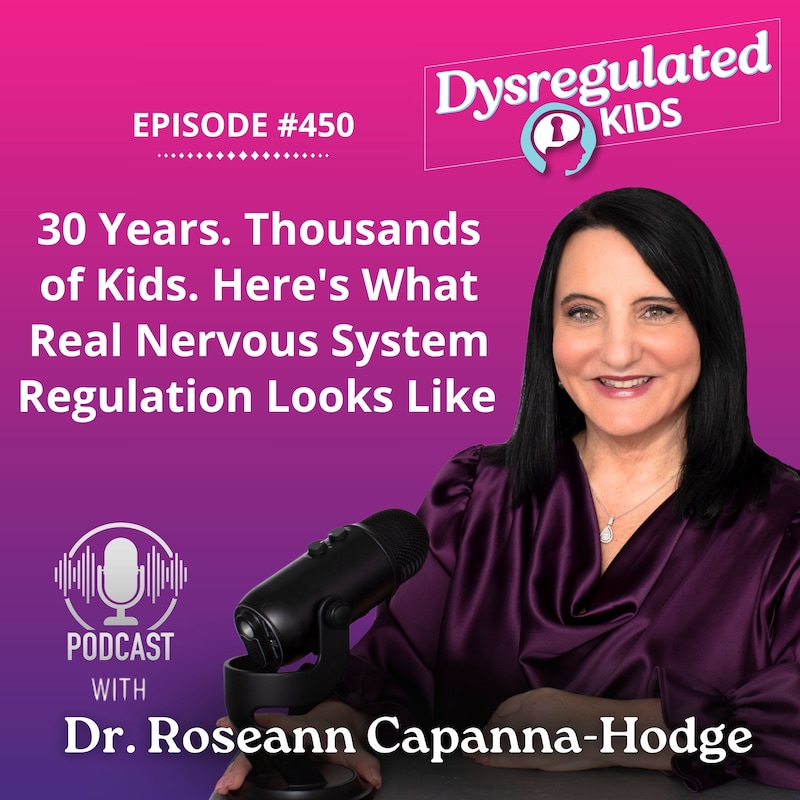
After 30 years of helping families, Dr. Roseann Capanna-Hodge shares what real nervous system regulation looks like—more flexibility, faster recovery, confidence, and connection. As a Regulation First Parenting™ expert, she helps parents understand and support emotional dysregulation in children.
Parents often hope regulation means fewer meltdowns, less arguing, and a child who never struggles. But after 30 years of working with thousands of kids and families, I can tell you: real change looks different—and it is far more beautiful.
What real nervous system regulation looks like isn’t a perfect child. It’s a child with more capacity to handle frustration, recover from big emotions, connect, learn, and experience joy. When we focus on regulation first, families begin getting their lives back.
What are the first signs that a child’s nervous system is becoming more regulated?
One of the first changes parents notice is more flexibility. Your child may still have big emotions, but they can tolerate changes, shift gears, transition, and recover with less support.
The goal isn’t fewer emotions. It’s greater capacity to handle them.
- More flexibility with changes and disappointment
- Fewer battles and conflicts
- Greater ability to pivot or transition
- More tolerance for discomfort
For example, maybe your child used to melt down because the cup was the “wrong” color. Now, they might still be disappointed, but they can grab another cup and move on.
How can nervous system regulation help a child recover from meltdowns faster?
Recovery is one of the clearest signs that regulation is improving. A meltdown doesn’t have to disappear completely for meaningful healing to happen.
A parent might say, “The meltdowns aren’t gone, but they’re different.” Instead of lasting 60 or 90 minutes and ruining the entire day, the child may recover in 15 minutes.
- Shorter recovery time
- Less disruption to the whole family
- Greater ability to return to connection
- More capacity to move forward after frustration
That recovery matters because regulation is about building capacity, not creating perfect behavior.
If you’re tired of walking on eggshells or feeling like nothing works…
Get the FREE Regulation Rescue Kit and finally learn what to say and do in the heat of the moment.
Become a Dysregulation Insider VIP at www.drroseann.com/newsletter and take the first step to a calmer home.
What does it look like when a child stops living in survival mode?
A regulated nervous system gives a child more room for joy, connection, learning, and childhood. One child in the episode used to arrive at school already overwhelmed. Months later, his teachers told his mom, “We’re seeing that he’s smiling again.”
That wasn’t because school suddenly became easier. His nervous system had developed enough capacity to experience joy.
- More smiling and connection
- Greater ability to tolerate demands
- More capacity for learning and problem-solving
- Less time stuck in threat mode
CALMS Dysregulation Protocol gives parents and professionals a framework for understanding and interrupting the stress cycle so regulation can happen first.
How does nervous system regulation change family life?
The transformation isn’t only in the child. Parents change, too. Families can stop planning every activity around avoiding a meltdown, siblings can relax, and home can begin to feel like home again.
That is real progress.
- Parents stop walking on eggshells
- Siblings feel less on edge
- Parents pause instead of immediately reacting
- Families experience more ordinary moments of calm and connection
🗣️ “Real change is healing—the capacity to tolerate frustration, solve problems, wait, recover, connect, laugh, and learn.”— Dr. Roseann
How does regulation help kids build confidence?
When children stop seeing themselves as “bad” or “stupid,” they become more willing to try, make mistakes, connect with others, and take healthy risks.
A regulated nervous system creates a sense of safety that supports confidence. And that confidence can change what a child believes is possible.
Takeaway & What’s Next
Real nervous system regulation isn’t about creating perfect kids or eliminating big emotions. It’s about creating enough safety and capacity for children and parents to recover, connect, learn, laugh, and grow.
Change often happens in tiny, ordinary moments—and those moments can add up to a completely different family life. You only need to start with 1%.
If you want practical strategies for understanding what’s underneath your child’s behavior, The Dysregulated Kid goes deeper into Regulation First Parenting® and the everyday micro-moments that help families create change.
FAQs
What are realistic signs of nervous system regulation?
Look for flexibility, faster recovery, more connection, greater confidence, and more moments of joy—not perfect behavior.
Can a child still have meltdowns and be regulated?
Yes. Regulation doesn’t mean eliminating emotions. It means building the capacity to experience emotions, recover, and move forward.
How does regulation affect parents?
Parents can become less reactive, stop living in fight, flight, or freeze, and experience more calm and enjoyment in family life.
What does regulation first mean?
It means regulating yourself and your child before focusing on correction or behavior change. Capacity comes before compliance.
Can nervous system regulation change family patterns?
Yes. Small, repeated moments of regulation can help break patterns across generations and build healthier family relationships.
Every child’s journey is different. That’s why cookie-cutter solutions don’t work.
Take the free Solution Matcher Quiz and get a customized path to support your child’s emotional and behavioral needs—no guessing, no fluff.
Start today at www.drroseann.com/help