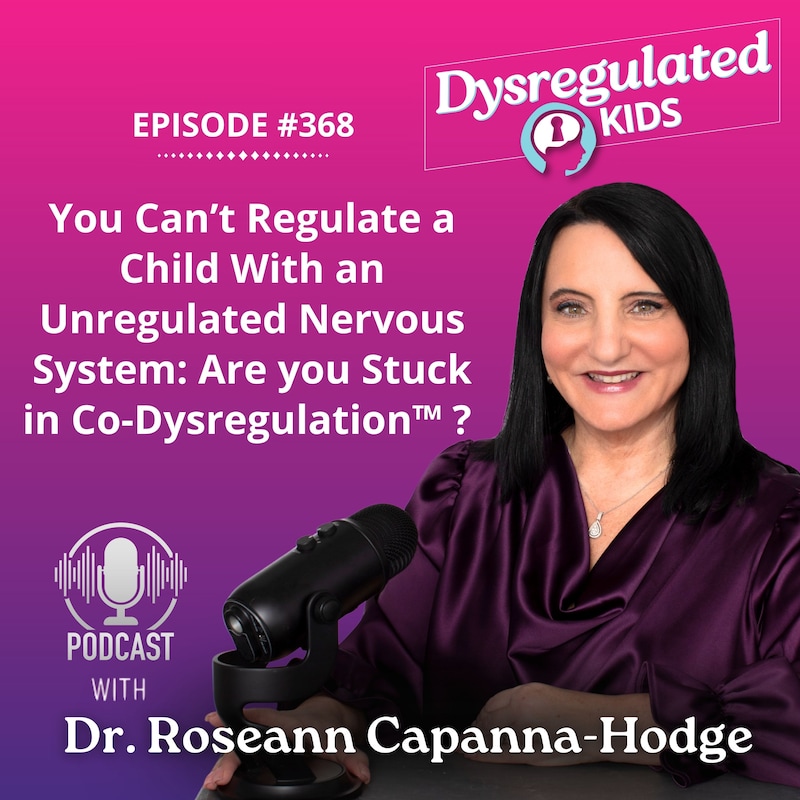
Are you stuck in co-dysregulation? When your child’s nervous system spikes, yours can too—creating a cycle of stress and overwhelm. In this episode, I share Regulation First Parenting™ strategies to calm both you and your child.
When your child’s emotions spike, it can feel like a wildfire—and sometimes, it spreads to you too. You’re not alone.
This episode dives into the real science behind co-dysregulation and how your own nervous system directly affects your child’s emotional regulation. Learn practical, step-by-step strategies to stay calm, reset your nervous system, and help your child self-regulate.
Why Do I Catch My Child’s Emotions?
Ever notice how your stress seems to mirror your child’s? That’s your mirror neurons in action, and it’s a core part of co regulation.
Research suggests that your child’s brain literally mirrors yours, sensing tension through your tone, posture, and facial expressions, shaping their emotional responses and stress response.
- Key takeaway: If your body signals threat, your child’s nervous system picks it up instantly, increasing emotional dysregulation and potentially impacting their mental health.
- Emotional emphasis: It’s not bad parenting—it’s biology.
Parent Story
One mom realized her lecturing only escalated her son’s meltdown. Pausing and softening her voice changed the dynamic entirely.
What Is Co-Dysregulation and Why Does It Happen?
Co-dysregulation happens when both parent and child’s nervous systems spike at the same time. It’s a reactivity loop: the child dysregulates, the parent gets triggered, stress amplifies, and both spiral.
Tip: Pause before responding. Ask yourself, “Am I calm enough to help?”
You cannot calm a dysregulated child from a dysregulated state. Your own nervous system must lead the way.
Parent Story
A parent learned to step back, breathe deeply, and approach calmly—creating a de-escalated environment where learning and problem-solving became possible.
You don’t have to figure this out alone.
Become a Dysregulation Insider VIP and get your FREE Regulation Rescue Kit: How to Stay Calm When Your Child Pushes Your Buttons and Stop Oppositional Behaviors.
Head to www.drroseann.com/newsletter and start your calm parenting journey today.
How Can I Co-Regulate Instead of Escalate?
Co-regulation isn’t about fixing your child—it’s about anchoring both of your nervous systems in safety. The polyvagal theory shows that a regulated adult cues a child’s body to stand down from threat.
Practical steps:
- Take a deep breath, stretch, or move to calm yourself first.
- Lead with safety, not control—lower your voice, soften your face, slow your movements.
Remember: kids learn by catching your calm, just as they catch chaos.
Parent Story
One mom stopped lecturing mid-meltdown, observed the pattern, and used one simple calming phrase to guide her child back to emotional regulation.
🗣️ “When your child’s meltdown triggers yours, you’re not failing—you’re catching their emotional fire, and the one who comes first wins for both.”
— Dr. Roseann
What Do I Do After a Meltdown?
Repairing after the storm is just as crucial as preventing it. Acknowledge your own emotions and model healthy regulation.
Tips:
- Avoid guilt or harsh reactions—repair builds trust faster than perfection.
- Admit your missteps: “I got overwhelmed too. I’m learning to stay calm just like you.”
- Reinforce emotional resilience through repeated safe, calm experiences.
Quick CALM Tip: Use tools like PEMF, magnesium, or a brief stretch to reset your own system—your calm is contagious.
Takeaway
Co-dysregulation is real, but it’s not permanent.
By pausing, observing, and regulating your own emotions, you can shift your child’s nervous system, break reactive loops, and restore calm.
Remember: behavior is communication, not defiance. With consistent calm, big emotions lose their power and children learn self-regulation.
FAQs
What is co-dysregulation in parenting?
Co dysregulation occurs when both parent and child’s nervous systems escalate simultaneously, creating a reactivity loop.
How do I calm my child when I’m stressed?
Pause, breathe deeply, and approach with soft tone and safe body language. You must regulate first.
Can my child learn emotional regulation?
Yes. Kids learn by catching calm from adults and practicing coping skills in safe, supportive moments.
Why does my child mirror my stress?
Mirror neurons cause children to read and match your emotional states, responding to tone, posture, and energy before words.
What’s the first step to break co-dysregulation?
Recognize your own stress, pause, and lead with calm before trying to influence your child’s behavior.
Every child’s journey is different. That’s why cookie-cutter solutions don’t work.
Take the free Solution Matcher Quiz and get a customized path to support your child’s emotional and behavioral needs—no guessing, no fluff.
Start today at www.drroseann.com/help