Shownotes
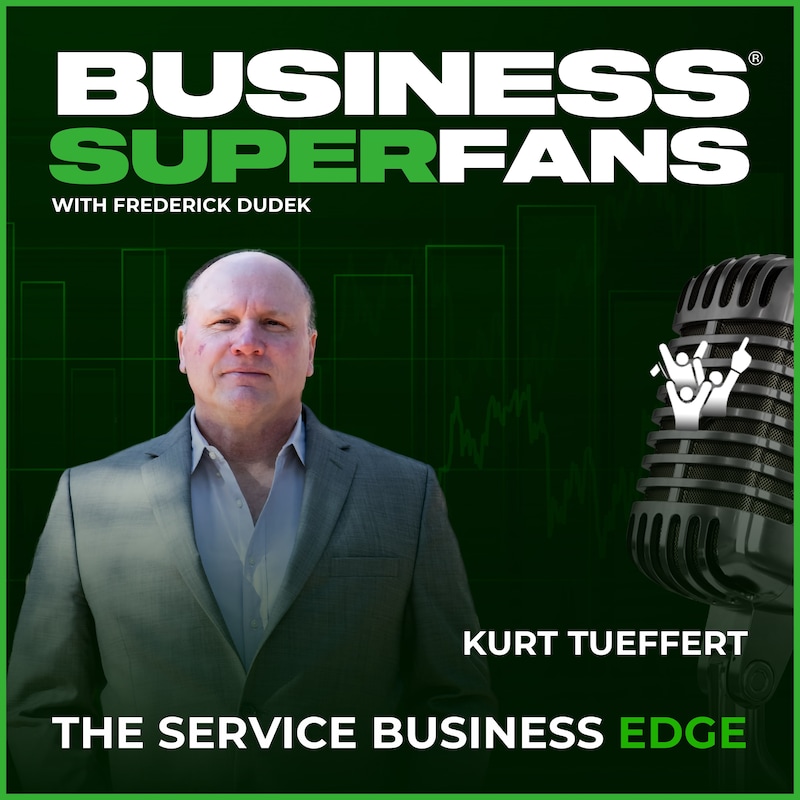
Episode 169 Frederick Dudek | Business Prosperity Advisor
Sales training for small business gets the big-league treatment in this powerhouse conversation with Curt Tueffert, founder of Peak Sales Strategy and veteran VP of Sales Development. Curt brings over 40 years of sales experience—from door-to-door grit to corporate boardrooms—and reveals the mindset and mechanics that turn average reps into steady closers.
He and Freddy D break down DISC profiles, personality-driven selling, and why most teams never “level up” (hint: reps won’t raise their hand for coaching). If you’ve ever wondered whether sales training is worth the investment, Kurt delivers undeniable proof: small businesses that train win more, lose less, and build Business Superfans® who stay loyal for life.
Discover more with our detailed show notes and exclusive content by visiting: https://linkly.link/2ThHE
Key Takeaways
- Sales training for small business is a strategic advantage, not a budget burden.
- “First they buy YOU.” Trust beats features and price every single time.
- DISC is your scouting report for tailoring communication and closing more deals.
- Old-school tools—handwritten notes, postcards, direct mail—still win.
- Training exposes who’s coachable and who’s coasting.
- Sales is a sport: practice, review, and coaching create consistent closers.
- Value beats price when the “why” is crystal clear.
- Sell the experience, not the gizmo.
Kindly Consider Supporting Our Show: Support Business Superfans® Advantage: Predictable Growth for Service Entrepreneurs
Guest Bio: Curt Tueffert
Kurt Tueffert is the founder of Peak Sales Strategy and a long-time Vice President of Sales Development in industrial distribution. With more than four decades in the sales arena, Kurt has built, trained, and coached teams of all sizes—specializing in DISC-driven sales development and practical sales training for small business. His programs blend psychology, communication, and real-world selling to produce measurable results.
Freddy D’s Take
Curt doesn’t just teach sales—he coaches it like a championship team. From childhood sales hustles to leading large corporate sales training programs, he shows how great sales reps are built through repetition, coaching, and self-awareness.
His DISC-based approach makes your sales conversations faster, smarter, and more effective. In this episode, you’ll see exactly how understanding your prospect’s behavioral style helps you adapt on the fly—like a point guard reading the defense.
This aligns perfectly with the SUPERFANS Framework™ used inside Prosperity Pathway coaching: when your people, clients, and partners feel understood and valued, they don’t just buy from you—they cheer for you.
The Action:
Schedule a 90-minute sales film review with your team this week.
Who:
Business owner, sales leader, and core sales team.
Why:
Championship teams review game tape. Your sales team needs the same. Listening to recent calls or replaying deals—won and lost—turns fuzzy “we should sell better” into concrete coaching moments. This instantly shows who’s coachable, where your sales training for small business should focus, and what’s blocking bigger wins.
Guest Contact
Connect with Curt Tueffert:
- Website: PeakSalesStrategy.com
- Email: cTueffert [at] gmail [dot] com
- LinkedIn: Search “Curt Tueffert Peak Sales Strategy”
Resources & Tools
- Peak Sales Strategy – Curt’s sales training and coaching company focused on SMB teams. (PeakSalesStrategy.com)
- DISC Profile & Sales Intelligent Quotient – Behavioral and sales acumen assessments Curt uses to customize training programs.
This podcast is hosted by Captivate, try it yourself for free.
Companies mentioned in this episode:
- DXP
- Brooks Group
- University of Houston
- Ninja Prospecting
- Action Based Selling
- CamWorks
- Bosch
Copyright 2026 Prosperous Ventures, LLC
Transcripts
Not everybody is willing to go the distance without ringing the bell. So there's a coach for everything is what you just said, Freddy.
And the coach for offense and defense and for all these special teams and you weed out. And sometimes my job is to weed out and I'm just one of the variables. Maybe I'm the last ditch effort. Send them to Curt.
Let's see if Curt can change this person. You can't change people. Change people.
Freddy D:But I am the world's biggest super fan.
Curt Tueffert:You're like a super fan.
Freddy D:Welcome to the Business Superfans Podcast. We will discuss how establishing business superfans from customers, employees and business partners can elevate your success exponentially.
Learn why these advocates are a key factor to achieving excellence in the world of commerce. This is the Business Superfans Podcast with your host, Frank Freddie D.
Freddy D:Hey super.
Freddy D:Fans, superstar Freddie D. Here in this episode 169, we're joined by Curt to effort a sales leader with more than three decades of experience helping service based business owners overcome one of their toughest challenges. Building consistent, confident, high performing sales teams in a world where most reps are under trained and overwhelmed.
From selling newspaper subscriptions at 14 to leading 100 million sales teams at DXP and creating the DXP University and sales gym programs.
Curt spent his career mastering the art and science of selling as a top Brooks Group facilitator, award winning sales developer, longtime University of Houston professor and behavioral analyst expert. He brings unmatched insight into how service providers can elevate their sales culture and performance.
If you ever felt the weight of inconsistent sales results or wished your team had a stronger, more repeatable sales process, this conversation shows you a smarter, more empowering path forward.
Freddy D:Welcome Curt to the Business Superfans podcast. Great conversation we had before we started recording.
We both have a extensive sales background, so I'm really looking forward to having a great conversation.
Curt Tueffert:Me too, Freddie. This is going to be a great opportunity for us to banter back and forth and for the listeners to really get value from that.
Freddy D:Yeah, excited about that. So let's go back to what led you to create peak sales strategy and what's the backstory before you pivoted to that?
Because there's got to be a story back there somewhere.
Curt Tueffert:Being in sales for so, so long, four decades now, I really wanted to try to do something different.
I had a company once before called Brick Wall Motivation based on some conversations I had with my middle school son who was having a hard time in math. It was like hitting that brick Wall.
So I was using some of those analogies of him struggling with math, with people struggling, hitting that brick wall. My older son and I were brainstorming one day and I wanted to recreate something not brick wall esque.
And he said, well, dad, why don't you do peak sale? Because mountain peak peak sales strategies.
And you could keep it as a strategy so that could work for sales, sales management, customer service leadership. So my son is the one who came up with the peak sales strategy. I ran with it.
He did some early development in the website, and then I turned it over to another website company. But Freddie, that's a great question. That's the origin of peak sales strategy.
Freddy D:So what's the background to before you created peak sales strategy? How did you get into sales and all that stuff?
Curt Tueffert:If you can imagine, both my parents were German immigrants coming from World War II. They came over and for some crazy reason, at an early age, I think I was 10.
And at the time, I took some of my toys, put them in a box, and went up and down my street knocking on doors, asking if they'd want to buy my toys. So for some reason, I realized if I had money, my parents weren't giving me money.
There was no allowance in my generation or in my household if I could do something to get money, that's a good thing. From there, I had a paper route before I could even drive a car.
And that paper route where I was living, you had to knock on people's doors every month and ask for the subscription money because we didn't have electronics back then. Knock on somebody's door, interrupt their evening. Hi, my name's Kurt. I'm collecting for the ledger. The ledger was the name of the paper.
And from there I realized I'd give all this money to a person I never see. But once a month, they count it all out, and then they give me a little bit back. Sales has been kind of something in my DNA.
When I went through college, I thought I'd want to be an oceanographer. And then I ended up being a computer programmer and I was developing code for the automotive business.
So all the people that would calculate your payments and print out all your documents when you purchase a vehicle, I was part of that team developing that code. And then I started started training the people how to operate the software that we designed.
From there, I got hooked up with a company that was selling. And that's when I really said, man, I really want to be in the sales game.
So early on, in my early 20s, I was in the sales game and started in selling computer systems and computer hardware, then moving into other computer systems, having my own business doing sales training and then for the last 23, 24 years in the industrial distribution space as vice president of sales development for a multibillion dollar industrial distributor. So I did all that street selling stuff you and I know is the rejection, the cold calling, the responding to objections.
And then I taught people how to do it. Then I manage people how to do that.
Now I'm coming back in the backside of my career, going back in and using so much more of my experience and assessment work to bundle together sales training that helps people in this new AI generated world get better at their sales game.
Freddy D:Let's take a quick pause to thank our sponsor. This episode is brought to you by our friends at Ninja Prospecting, the outreach team that makes cold connections feel warm. Here's the deal.
Most service business owners are drowning in spammy DMs and cookie cutter LinkedIn messages that never get a response. Sound familiar? Ninja Prospecting flips that script. They craft human first outreach that actually sounds like you and more importantly, gets results.
No bots, no fluff, just real conversations that open doors.
If you want to stop wasting time on dead end messages and start filling your pipeline with qualified leads, talk to my friend Adam Packard and his team.
Head over to ninja prospecting.com to schedule chat today and be sure to mention you heard about it right here on the business super fans, the service providers Edge. And hey, if you're the kind of person who likes to get started right away, you can join their free community at school.
S k o o l.com forward/ninja prospecting hyphen 7704. It's packed with tips to maximize your connections and start making the right new ones. All right, let's get back to our conversation.
Freddy D:Oh, what a backstory. I mean, you and I have some similarities because I'm also an immigrant. My parents came over from Europe.
I was actually born in France and grew up in this country. And you're right, there was no allowance. And you cut the yard because you were told to cut the yard. And that was it.
You were happy to cut the yard because otherwise the results would be different. When I got my first paying job was pumping gas at a gas station.
So before I was driving as well, I would walk to the place, put me on work for my first job was $1 an hour back then.
Curt Tueffert:But you really valued that dollar because you worked hard for it.
Freddy D:Sure, and I had to upsell and that's where I kind of learned sales a little bit. You know, hey, would you like your oil checked? And then you're down, you need a quart. And that was it.
Of course, there was no bonus, there was no commissions. That was just part of the job. And you got your dollar.
Curt Tueffert:I can come alongside that story. When I was in college, I was a Volkswagen mechanic. I was a little bit different. I did the upsell, you know, hey, let me check your brakes.
Let me check your engine. On a Volkswagen Bug, there's only a small amount of things that you can check. But we found a place that we could buy whole engines.
We would just give them our old engine and they would swap the core for a new. So we could bring somebody in at 10 o' clock in the morning who says, look, you need a new engine.
And we could have them in a new engine by 4 o' clock that afternoon.
Freddy D:Wow.
Curt Tueffert:And I would think about flyers and going out there and trying to get the community who had Volkswagens to get the lube, oil and filter and the all this stuff we were doing. And you're right. I think you and I both love problem solving, upselling. And then at the end of the day, we're capitalists.
So if we can sell something for a price greater than what we bought it for and we get a portion of that called a commission, that's in our blood, we like.
Freddy D:Yeah.
Freddy D:But the important part of that point is really helping who you're selling get them to achieve their goals and their business aspirations.
To me, that was the biggest reward, was seeing that business grow from the stuff that I sold them and the technology that they got that transformed their business.
And that's how I started, years later on, creating super fans that these people dealt with me, respected me because I wasn't just a guy selling stuff. I was actually looking at helping create a business strategy for them. And this happens to be a tool. And they became my sales team.
Curt Tueffert:Now, before we got on the show, you planted that seed in my mind about taking the product or the service that you are selling to help your customer achieve what they want using your product or service. It seems to me like you completely flipped the script on, it's not what I want, what Freddie wants, it's what you want.
And if I can get you where you need to go using the product or service that I have, it's a win win. So you're positioned. I'm here to solve the problem. Let me ask you some questions to determine if the problems you face can be Solved by what I have.
It's a great discovery conversation.
Freddy D:Yeah.
Freddy D:Because it opens up the conversation.
Because you're no longer talking about this, has these features and doesn't have these features, you're out of that conversation and you're really in a business strategy conversation and it becomes much more in depth. And now you're strategizing and you're no longer selling.
You're really talking about the challenges that the company's experience and everything else.
And for me, that was always fun because I would work the sale backwards and says, all right, well, Kurt, based upon all these discussions that we had, we wrote all this up on the market board based upon this timeline. You need to issue me the PO now so we can meet your timeline. You wrote it up on the board.
Curt Tueffert:It's brilliant for the listeners here who are listening what Freddy just said. And maybe we're at a place where we're burned out or we're frustrated or we've lost our perspective to where we're solving their problems.
It's all about them. It's all about what they have.
And when they build enough trust and rapport with us to answer those discovery questions, it kind of backs right into what Freddy just said is based on your timeline. Let's get started. Today, I just need a purchase order to start the process to solve your problem.
They've already bought the product or service because you've already solved their problem.
Freddy D:Right.
So let's get into some of the things that you do with the training that you do, because we talked a little bit about personality types and how important that plays into the equation stuff. So I'll let you talk a little bit about that.
Curt Tueffert:Sure.
As I look at peak sales strategy, my goal is to have those conversations with the sales leaders and to say, look, if my target audience is small medium business, there's a high probability that they've not had formal sales training or formal sales management training and coaching. So I want to come alongside them with a cost effective model using a baseline assessment, the disc profile.
I also have something called the sales intelligent Quotient. Kind of tests their sales acumen in many different areas and bundle that together with a customized sales program.
Now, that sales program can be face to face what you and I have grown up on in a hotel room or at a sales conference. Or it could be zoom based where we do the sales coaching, sales training on zoom calls, less than one hour.
We schedule out X number of calls depending upon budget and need.
And I try to customize this to help that small Medium business get an immediate ROI so that they can tie the next sale or the next close sale based on ideas from the class. If I can get them, one, two or three additional sales could pay for the entire investment in a short amount of time. That's what I've done.
I've done formal, I've done informal. I just feel there's a niche there. Small, medium businesses who always say, we're too busy, we don't have the money.
I can't fly my guys to Phoenix for a two day sales conference. And I'm saying, well, then what about some of these other technologies? Let's use what we have to get something going later on.
If you think I'm better than sliced bread, you'll find a way to bring me in face to face because of what we've done on those zoom calls. And that's powerful.
Freddy D:Yeah. And you bring up a great point, Kurt. You still need to refresh and stay sharp.
I mean, you look at a sports team, okay, you look at a sports player, and I use this analogy a lot. In football, you got a coach for just about every position, Right. Baseball, same thing. Soccer, same thing. There's a coach for every position.
And you keep practicing, you keep honing your skills, you keep improving your skills. What you and I are doing really is helping people in sales really re improve their skills, keep them fresh, keep them sharp.
Because you get complacent.
And so it's important that what you're doing is really helping that business and that salesperson, more importantly, to really take their game to another level and keep themselves at peak performance.
Curt Tueffert:Exactly. I love your sports analogies.
Whether it's a competitive sport like a football, basketball, baseball, or even if it's an individualistic sport like swimming, where you're focused on your own core skills. So many times we get. Complacent's a great word. We get into that repeat mode where we assume that we know everything or everything is the same.
And sometimes it's just the ability to understand a customer's needs, wants, and whys. What they need is what we think that we can solve. But a need is just a need.
Freddy D:Sure. I mean, you remind me of a story. I was in Germany with my reseller and we were selling some new software that we just came out with.
The product was called CamWorks. It still exists today. And I coined a term for the marketing machining intelligence.
Before, AI was a cool thing because it didn't exist back then, but we had some relational database stuff that it could do, and we're demonstrating this product and this guy, you know, to your point, was just whipping through the demo of the software because he knows it cold. I mean, he's just flying through and we're flying through and the software crashes in front of the whole group.
And this is the final decision maker because we did it in a local place and then we had to go to corporate. So I flew out to Germany twice for a ten thousand dollar sale. So there was no profit. We're making no money on this deal.
Yeah, I already got my butt chewed by the owner of the company is why am I wasting this time and money and all that stuff? You'll know the punchline in the end here, but I read the room and saw people's faces glazed over and they were just not getting it.
Not understanding because he's going too fast.
And so I said, all right, lunchtime came by and they invited us to lunch and said, nope, we're going to hang on, we're going to call back corporate, find out what's going on with the software. So we reached back, we found that it was a bug. It was a repeatable bug.
So first thing we did after coming back for lunch, we showed the software crash again. And we did that to become transparent and says, hey, it's a bug and we can repeat it so we know it's a bug.
Curt Tueffert:Okay.
Freddy D:And then I told my guy, start all over. We're going to start this whole presentation all, all over and go slow so they understand it.
And so the whole afternoon, the whole morning, four hours was wasted. We started all over and we went through the presentation.
I could start seeing people starting to understand what we were talking about because I had some smarts in it. So basically based upon a geometric shape, it would pick out the tool path automatically and do the, the milling machine aspects automatically.
And so it was a significant time saver versus the guy having to pick the what tool, etc.
Anyway, long, long story short, at the end of the presentation, people were smiling, handshaking everything else, and we walked away with an order from this little company called Bosch.
Curt Tueffert:Little company.
Freddy D:Yep. Yeah, but the point was we stopped and we slowed down and more importantly, we came clean and started over.
Because, you know, had we kept on going, that deal would have been a disaster.
Curt Tueffert:And knowing what we know about behavioral styles, sometimes the Germans can be very analytic. So they would appreciate slower than faster.
Freddy D:Correct? Yep. And so the fact that we started over showed them respect. And I spoke a little bit.
My German has gone down the toilet because I don't practice it anymore. But I was able to have some basic conversation because I was spending 10 days at trade shows up in Hanover and all that stuff.
But anyway, the point was just emphasizing what you were talking about earlier.
So how do you work with somebody and you've transformed that company and their sales team to where now they're what I would call a super fan of you and they've recommended you to other business owners that they know because there's a network of business owners in whatever industries and they talk to one another all the time.
Curt Tueffert:I think the whole idea about networking or follow up is I've got to stay top of mind. So whether it's through a newsletter or I do a lot of things with direct mail and cards and postcards and things, just keep that out there.
So if there is a referral back to another company then I can definitely keep up that whole referral based network.
And I've been working with this company, this company spend time collecting the right quotes so that when it comes time to make a decision on something that is very intangible. Most business owners want to see the immediate ROI on sales training. If I train Johnny and Lisa, when are they going to sell more?
Well, I don't have the magic wand for that one. Right. Going back to the sports analogy and you think of someone like a Kobe Bryant, how did he craft?
Well, there are stories of the interviewer who wanted to interview Kobe and he said, fine, let's do that tomorrow at 4 o'. Clock. And the interview guy said 4 o' clock in the afternoon. And Kobe goes, no, 4 o' clock in the morning. That's where you'll find me at the gym.
And I was like, we don't all have Kobe Bryant in the sales game who are constantly reading and perfecting and listening to podcast and becoming that. Well, we're not all Kobe's but we all do have those people that have the potential. I work with a guy who says, does he have the right motor?
He's got the motor in him. So I spend time in that coaching, looking at the assessments I can report back to the business owner. Hey, Johnny and Lisa, they have the potential.
They have the want to. They have the motor. But Kelly over here, Kelly's got an attitude. Kelly doesn't want to do this. Kelly shows up late.
You know, there's not much I can do. I can't motivate that person. You can promote him to the competition if you want to and get rid of them on your team and find somebody else.
But that's an entire conversation of selection, development, retention of great sales pros. What are you doing to keep those people as sharp as they are? We see the same in a basketball team. You got to cut people.
Not everybody's going to qualify for the A team. Not everybody's a Navy seal. Not everybody is willing to go the distance without ringing the bell.
So there's a coach for everything is what you just said, Freddie. And the coach for offense and defense and for all these special teams, and you weed out.
And sometimes my job is to weed out, and I'm just one of the variables. Maybe I'm the last ditch effort. Send them to Kurt. Let's see if Kurt can change this person. Well, if you can't change, people change people.
Freddy D:It's people gotta want to change. You can't make them change. They gotta want to change. They gotta raise their hand and say, you know what, I gotta level up.
Because once you have that mindset, they're open to receive the data that you're gonna give them. But until they raise their hand says, you know what? I do need to up my game. Not gonna happen.
No matter what you do, you're not gonna make traction at all.
Curt Tueffert:Level up. What a great phrase. Maybe it came from the gaming industry, but it works well within the sales industry. I need to level up my sales skills.
When was the last time that you went to a sales class?
Freddy D:It's a refresher, just a tuneup. Like we all need tune up.
Curt Tueffert:Of course, now it's very popular to have coaches, life coach, personal coach. Heck, if you want to learn how to ski, you'll be a lot happier if you invest in a coach and take skiing lessons.
Otherwise, you're going to fall, you're going to get mad, you're going to get snow down your pants, you're going to get mad again.
But if you take the lessons and they communicate in a way that you can understand adult learning, then you'll get to learn, hey, I can snowplow, I can pizza slice, and then I can do this and I can do that. Next thing you know, you get a high ROI and you're feeling like, I can come back here.
Well, the ski company is going to want great trainers to get more adults to come back again and then bring their kids and do more training because there's profit now.
We're selling the experience, we're selling the training, then we're selling the overpriced lift tickets, and you start a business and you talk about those business superfans. You have the same as it relates to skiing.
People that come back to your resort every year, they come back to your business every year, they call you on the phone and say, hey, Freddie, we're doing this expansion. What do you think? And then they bring you in at the highest level for decision making.
Freddy D:That's really all you're selling, in my view, is the experience or helping somebody achieve what they want to go. That's what you're really selling. The gizmo is a gizmo. Whatever it is, it doesn't matter. The fundamentals are the fundamentals.
And one of the things that you brought up, and I want to reiterate back, is you brought in some old school conversation into it. Sending letters, sending cards, postcards and stuff like that. People forget that stuff works.
And it works very, very powerfully because you can hide behind email, you can hide behind text messaging and all that stuff, but when you send a physical something to somebody, they stop and they actually go, wow. And it gets through the other aspect because if you get an email and you don't recognize who it is, it's a delete, it's gone.
So by incorporating, and I think a lot of people, especially in sales, need to kind of leverage a combination of things in today's world, using today's technology, especially with AI not coming into play, you can leverage that as well to, for follow up and everything else. But you still need some old school approaches, which is direct mail campaigns and sending a thank you card and things like that.
Because that sets you apart from all your competitors.
Curt Tueffert:Absolutely. You said something that's caused me to think of one of the companies that does sales training. Action based selling has a very simple process.
It's a premise which I love. It's called first they buy you, then they buy your company, then they buy the product and then they buy the price.
So when I approach sales training, I really look at the person, are you sellable? Are you buyable? Would that person want to buy from you because of the way that you've perfected yourself?
Then tell me a little bit about your company, then I'll listen about your product or service.
But if you start with product and service and speeds and feeds and bits and bytes and data sheets and death by PowerPoint, I haven't bought you and I haven't bought your company. So there's a high probability. I don't really want, need or desire. Your product or service did not pass go, yeah. And then forget about the price.
It doesn't matter how much it is you lost me Because I didn't buy you.
Now, if I buy you, Freddie, and I like you, and you ask me phenomenal questions to solve my business issues, then I don't really care that much about the size of your company. Many. You could be a one man shop, you could be a solopreneur, or you could be somebody huge. And then tell me about your product or service.
And then when they start looking at your price and going, wow, that's a little out of our budget. Well, I trust you, Freddy. Explain to me why the price is the price.
And you go back to, hmm, did I not give you enough value or is this not in your budget? Did I not ask budget questions in the beginning? We start talking about that and there is that. Jim Rohn is another business philosopher.
And when the why gets stronger, the how gets easier. Why. Why is it that you need to solve this business problem?
Because I'm losing money, I'm losing production, my employees are leaving or whatever the why is. When the why gets strong enough, your price is going to be your price. And why do people buy $75,000 vehicles? And why do people buy $25,000 vehicles?
There's a why factor in there. Why do people buy fashionable watches for 15, 1600 dollars when they can go to Walmart and buy a Casio for 29.95?
Freddy D:Sure.
Curt Tueffert:Different way of looking at things. So my passion is why people have needs and wants. But let's get to the why factor.
And many of the time I lose sales training deals because there's no why. The guy or the gal who's trying to get a band aid on a problem, or they just don't see the need for the sales training.
Well, the why isn't strong enough. So I can give you this training for free and you still wouldn't act on it. Or even the individual person, why do I need sales training?
I'm 100% a quota in June. I got six more months to ride the coattails. It's what you said before. They didn't raise their hand. They're not willing to level up, right?
Freddy D:No.
You remind me of one of my tactics I used to use is I'd turn around, say, okay, we're talking about stuff, and you'd say, okay, well, what's it going to cost me? I'd say, well, Kurt, whether It's free or $5 million, if it's not applicable, it doesn't matter, does it?
Curt Tueffert:Doesn't matter. Exactly.
Freddy D:And the look on their face would be like, what? What just happened? And I Just neutralized the money because if it doesn't work and it's not applicable, it don't matter.
Curt Tueffert:That's right.
Freddy D:Then we refocused the conversation on what mattered. And then basically the price became worked itself out because now we were solving or we didn't solve.
And if we didn't solve, I'd say, okay, you know what? We're not the right fit. This is the company you need to talk to.
And I'd step out and I'd still create a super fan because one, I had the professionalism say, our stuff doesn't work and so I'm not going to try to ram it down. And B, you should talk to this company because they got the right product for you, which gives you credibility, huge credibility.
Curt Tueffert:And they're going to call you back because once they call the other company who doesn't have Freddy, who doesn't do it the right way, they're going to call you back and go, thanks for that reference, but. And they're in the junior class league. Freddie, we want to go back to you. Let's talk again. And you get a chance to reset the conversation.
And then it's wonderful. I love what you've done on that. If it doesn't solve the problem, doesn't matter if it's a million dollars or zero dollars.
I've heard it said, well, how much would it cost for you to not do anything? By that point, you've done the discovery, you've determined that their sales force isn't professional, isn't up to date, has too much turnover.
We put a dollar amount toward that. And then when I say, well, here's how much it would cost to do some sales development. Oh, that's really expensive. Well, how much does that cost?
If you didn't do anything, continue to lose people, you continue to get junior people, your competition continues to take your lunch. How much is that costing? It's a business decision. Good points.
Freddy D:Yeah. And I want to go back to the importance of the disc personality stuff.
I think that that isn't trained enough into for salespeople because you've got to be able to pivot your personality based upon the audience that you're dealing with. And I'll just share another story. It was a railroad car manufacturer and we were selling us about 100, 150 grand. I don't remember exactly.
Software and the engineering guy and all that stuff. We were all set up, ready to go. But now we gotta get approval from the CEO, walk into this office.
I've told this story before, but I want to just emphasize it because of what you mentioned with the disc aspect, because this came into play. Huge office, glass wall, helo pad on the other side of the glass wall. Okay. This guy had an ego.
Sits behind the desk, doesn't even get up and says, okay, you guys got five minutes. I mean, in the quadrant of the quadrants in the furthest right corner of the driver personality as far as you can get at that corner.
And I remember I looked at my watch, I had the instinct to do it, and I remembered this forever. And I just started talking and I said, kurt, my five minutes are up. I just shut up.
And you could see the demeanor in the guy change because I had given him the respect that he was expecting, and that alone changed the whole dynamics of the room.
He actually got up, shook our hands, walked over, looked at the engineering manager and says, are you happy with what he's presenting as a price, a good deal, and everything else? The guy goes, yeah, absolutely.
He goes back to his desk, picks up the phone and says, please prepare a purchase order for Mr. Dudek, blah, blah, blah, closes it, shakes her hand again and says, okay, we're done. That was it. But I say that because that's how important what you're teaching people is.
Is because if I did not recognize that personality type, that sale would have been over.
Curt Tueffert:Agreed.
And again, for the listeners who are listening to what Freddie just said, we are both students of Wilson learning, and we know a lot about these assessments, and we're not using it to manipulate. It's all about understanding the other person.
The more you dive into these, whether you're a student of DISC or Myers Briggs or any of the wonderful assessments, it's our ability to understand the deal from their perspective. The more you can do that as flexing. I'm not asking you to be a chameleon.
I'm asking you to flex into their style so you can communicate the way they want to be communicated. To Tony, Alessandra wrote the platinum rule, Treat people the way they want to be treated.
And that happens when you take the time to master the behavioral styles, take the time to listen, you take the time to research, take the time to pre call, plan. And so when you're there, you approach them in neutral. I don't know what your behavioral style is. Let me ask you a couple of questions.
Let me take an assessment of your office.
You know, Freddie sees a high title person, probably an organized desk helipad over to the class window, power player, appeal to their ego, understand. And then Give them the respect by saying, hey, it's five minutes, I'm done.
Because how many times have they been bowled over by fast talking salespeople who just want to continue to push after that respected boundary of five minutes? Brilliant. Great story.
Freddy D:And what you also say there, Curt, is that also works with coworkers because I think it's overlooked. But you got a culture in a company. The cultures that thrive, people understand. So it goes beyond just sales.
It really transcends into the culture of a company because you've got interpersonalities. And if you understand each other's individual uniqueness and respect that uniqueness.
You see teams that are thriving and yet they're complete polar opposites, but they understand how to work together.
Curt Tueffert:That's powerful.
I think we all can level up our game just on this podcast as we all understand that we're looking at the way people communicate and the way people connect with one another based on the way they want to be treated. And so we learn, we adapt, we flex. And it's amazing where it goes from there.
Freddy D:Sure.
Freddy D:You know who the greatest salespeople are?
Curt Tueffert:Well, the ones who can flex. Kids, of course, because they're all over that. Yeah, Kids.
Freddy D:Dad, I clean my room, I want to buy me this thing. Mom, you know, dad says if it's okay with you, and then if both of you could say no, then they repackage it and come back. They're fearless.
And as we get older, we lose that. And what you're doing with the sales training program and stuff is you're helping get that back because as a kid, it's a natural thing.
They don't know it, but they do it. Every kid is a brilliant sales individual because they're pitching, I want this cereal at the grocery store because they saw it on tv.
So I bring that up in a humorous way. But we forget that they're one of the best salespeople around.
Curt Tueffert:Exactly.
Freddy D:So as we kind of get closer to the end here, Kurt, how can people find you and learn a little bit more about your services?
Curt Tueffert:Thanks, Freddy. I've got a website. It's all one word peak sales strategy. Peaksalestrategy.com is where you can find me. I'm on the socials, I'm on LinkedIn.
I'm on Facebook. And from there it'd be easy to find me. My email address is my first name. Well, my first initial, C for courage, and then my last name.
T U E F F e r t gmail.com and. And I'm a big believer in paying it forward. If you're struggling, if you've got ideas, if you've got questions, call me, connect with me.
I'd be more than happy to share what I got. It doesn't have to be in a formal engagement.
It can be bouncing ideas off of each other because script as iron sharpens iron, so one salesperson sharpens another. I've been sharpened by the questions that Freddie has asked me.
I'm excited to go do other things because, Freddie, the words that came out of your mouth, the ideas that are now ratcheting in my head and I would love to do the same for your listeners.
Freddy D:Well, thank you. Great conversation, Curt. You and I could talk about sales for days. I can tell.
Curt Tueffert:I've learned so much from you.
Freddy D:Thank you. I appreciate your time being on the show and definitely would love to have you on the show down the road and continue the conversation.
Curt Tueffert:You bet. Thank you.
Freddy D:Today's conversation with Curt to effort really drove home one powerful truth. Sales confidence isn't something you're born with. It's something you build through clarity, structure and repetition.
Curt showed us that when service based businesses stop winging their sales approach and start training their teams with intention, everything changes. Better conversations, better consistency, better results. And that matters because your sales process is the engine of your business.
When your team understands human behavior, follows a repeatable framework, and knows how to connect with the right stakeholders, you're not just closing deals, you're building trust, momentum and long term prosperity. That's what business superfans is all about. It's about why these conversations matter.
If you enjoyed today's conversation, make sure to hit subscribe so you don't miss future episodes. And if you're ready to stop listening and start activating, join the Entrepreneur Prosperity Hub on school completely free.
The moment you join, you'll be surrounded by other service based entrepreneurs who are leveling up their people process and profitability so they can finally step into true prosperity. Join us here at skool skool.com/Eprosperityhub inside, you'll get access to conversation tools, weekly growth plays and to help you shift from doing everything yourself to leading a business that works smoothly, predictably and profitably. Thanks for tuning in today. I'm grateful you're here and part of the superfan's journey.
Every listen, every action you take gets you one step closer to building your own superfans. Remember, one action, one stakeholder, one superfan closer to lasting prosperity.
Freddy D:We hope you took away some useful knowledge from today's episode of the Business Super Fans Podcast. Join us on the next episode as we continue guiding you on your journey to achieve flourishing success in business.






