Shownotes
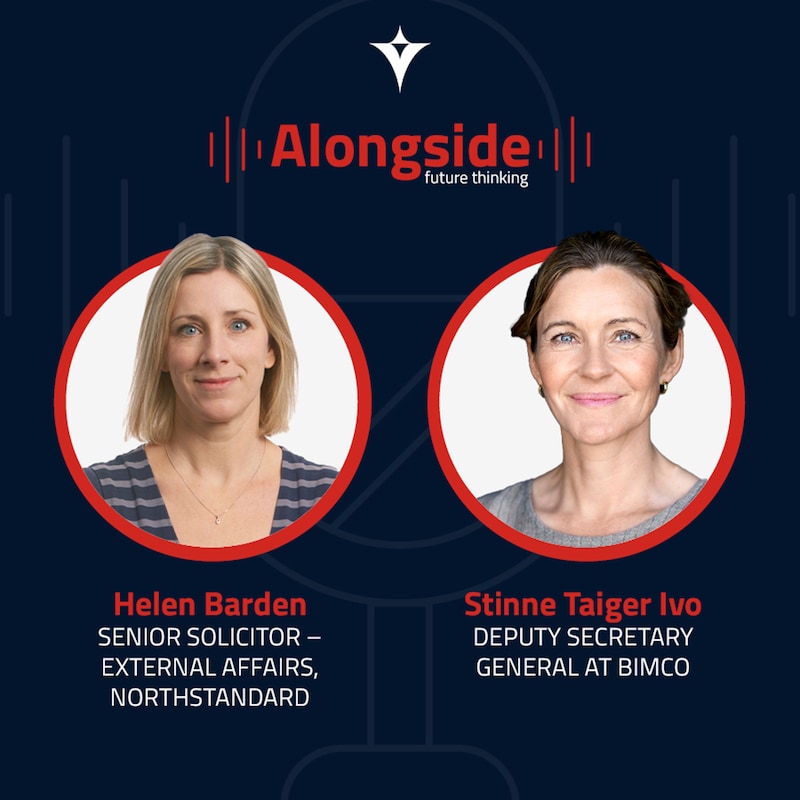
In this episode of the Future Thinking decarbonisation mini-series from NorthStandard, Helen Barden is joined by Stinne Taiger Ivo, Deputy Secretary General at BIMCO. They delve into the complexities of maritime decarbonisation and discuss how BIMCO aids the industry with regulations, contracts and clauses. They also explore the challenges of implementing the Carbon Intensity Indicator regulations and the progress made in fostering better data sharing and operational efficiency between ship owners and charterers. They also look at the broader regulatory landscape impacting maritime decarbonisation.
Highlights:
00:00 Introduction to Future Thinking Miniseries
00:18 Guest Introduction: Steena Taiger Ivo from BIMCO
01:08 BIMCO's Role in Maritime Decarbonisation
03:30 Challenges with CII Regulations
08:08 Data Collection and Energy Efficiency Clauses
12:11 Fuel EU Maritime Regulation
21:26 Future Clauses and Industry Needs
24:46 Conclusion and Upcoming Episodes
Transcripts
[00:00:31] BIMCO is a leading industry organisation which aims to be at the forefront of global developments in shipping. Such as shipping's decarbonisation journey. and to provide expert knowledge and practical advice to the shipping industry. Steena leads the contracts and clauses and support and advice departments.
[:[00:00:51] Stinne Taiger Ivo: Hi, Helen, and thanks for inviting me to, to join you in this podcast.
[:[00:01:24] Stinne Taiger Ivo: Yes, sure. And it's, it's been great getting to know you through all this subcommittee work. And we, we have more clauses to be produced in, in the future as well. But yes, I mean, the whole decarbonization topic and how, how that has sort of fallen come into play at our end, uh, at BIMCU as an organization, that is, of course, in a way, in, in several ways.
[:[00:02:12] We do newsletters, uh, we publish in FAQ for E-U-E-T-S and, and Fuel u Maritime, uh, and our regulatory and, and, and support and vice team. Also respond to, to specific inquiries from, from our membership. But then of course, uh, in my role, uh, we'll help members to provide, uh, by providing contracts or solution that they can negotiate in their existing, uh, contracts.
[:[00:03:10] And, uh, and more to, to come. So that is one of the ways that we are sort of helping the industry, um, in this respect.
[:[00:04:09] And in your view, why do you think, uh, that is?
[:[00:04:41] And the CII regulation to function as intended. To some extent, require the charters and owners to come together in a different way than the sort of current longstanding traditional business models would dictate. And drafting a contractual solution does not necessarily change market behavior. So that change between owners and charters in their approach and for that individual time charter party where the clause need to be fitted in, needed to be there in the first place before really agreeing, uh, to the clause.
[:[00:05:50] And that does not really seem to be the case. And therefore some of the elements. such as the thought through step plan on how to work to get the ship back on track. If the CII rating were starting to go south, it has not really had that commercial sort of impact, or it's not how the market has really seen the CII rating being, um, that importance of the CII rating has not really been there.
[:[00:06:47] Helen Barden: Yeah, I, I agree. I think there's, um, like you say, a few reasons why it's happened. And the, the regulations really themselves, because the The clause was drafted to deal with the regulations and, you know, it does, uh, those regulations do if you actually implement them, um, cut across the traditional rights that we are used to seeing in charter parties and I think there is the concern that the regulations as drafted are quite unfair and perhaps favour certain trades and perhaps penalise other trades.
[:[00:07:44] So, no, that's, that's really interesting. I have to say one of the things that I think is a positive that's come out of the CII regulations is the fact that owners and charterers do seem to be talking to each other though a bit more about data and about operational efficiency. So I think that's um, whilst generally the regulations haven't been looked at very favorably, I think that's a positive that has come out of it.
[:[00:08:26] Stinne Taiger Ivo: Yes, sure. Uh, because as you say, it has perhaps sparked and maybe the CII recs that that may have been the first kickoff really, but there is a different discussion between owners and charters now, not necessarily so much around a CII. That's at least the input we get from the market, but the whole of it.
[:[00:09:15] And you can say, That it has been not an unusual thing for owners to share data with the charters, but I think what we see now at the moment and the reason for also developing a specific clause for this, this is that data and accurate data, um, that is, that is an element that is becoming much more important from a charter's perspective, having accurate data, uh, and preferably being sourced by, um, by sensors on board the ship.
[:[00:10:11] In order to, to perhaps operate, uh, this is meant for a time charter context, uh, first and foremost, but, but it could be used more broadly, but it's, it's intended to, um, give better, you can say, understanding of how is the ship performing. In an energy efficiency, uh, context. So it is about following more closely, understanding better in a more transparent way, how energy efficient is that particular ship, because that is also one of the solutions being discussed in the industry and, and so much, um, now and also already last year that having a more.
[:[00:11:19] to do really share that type of data with the charter. Some would be already doing so, but others for this, for them, it will be a new thing. So there will likely be some kind of waiver or some sort of mechanism. In order to, to, to find a, a sort of percent between the charters and the owners and bought the subcommittee to provide some comfort to the owners that they will not be met with a, a speed and performance claim straight after having, uh, been more transparent about that data and fuel consumption.
[:[00:11:56] Helen Barden: Thanks, Dina. I think these tools that BIMco provide in the, by way of clauses help as well, you know, kind of progress the conversations around these topics as well as the fact that, you know, actually, um, getting them into, into charter parties. Um, on that point, in relation to clauses, I know that you are obviously very busy.
[:[00:12:44] So. What elements of the fuel you maritime are you looking at as between owners and charterers when you're looking at drafting a clause around that, uh, regulation.
[:[00:13:23] It's consisting of, of all industry experts relevant for that particular project. So we would have both in, in, in that subcommittee, charters and owner representatives, but also, uh, clubs and legal experts, but, but first and foremost, it is the commercial parties that we, uh, will as a secretariat facility to have that discussion about how do we.
[:[00:14:06] So, so that's an important aspect to, to have these commercial views represented, to have an open discussion about it. And what, what, what we're seeing. At the moment that is, um, there are several elements in the fuel year maritime regulation making it, uh, a subcommittee that will have frequent meetings to discuss all the points and some of it has to do with that borrowing and banking mechanism and also the pooling mechanism as well as the requirement to the fuel type.
[:[00:15:00] Um, some may also have in their fleet, um, a, I'll say a methanol or another alternative fuel. Ship that would actually create a surplus right away and of course, that's only very few ships at the moment But this is also meant to to be in place perhaps for for for longer period so there will be different approaches Depending on your fleet depending on where your trade really the segment that you are trading in.
[:[00:16:03] And that depends on the, again, the commercial relationship and the length of the charter party, because if it's for a shorter period, then maybe sort of, you know, It's, it's not really necessarily something you would know whether it's possible if it's just for a, for some month in, in, into the year, but we will build in that clause some mechanism to, to deal with those, um, those elements, banking, boring, and so taking into account the length of the, of the charter party.
[:[00:16:46] Stinne Taiger Ivo: That's a good point, Helen. And, and, and first we started drafting the time charter party clause, but as it is, um, As set out in the fuel your maritime regulation, it is for the DOC holder to ensure the compliance. They will ultimately be the ones facing potentially penalties, but also the ones that are defined as all the, the entity being addressed under the fuel your maritime regulation.
[:[00:17:44] So that is also. You can say work in progress and also work happening simultaneously with the, um, with the development of the, the clause for, for time shared parties.
[:[00:18:02] Stinne Taiger Ivo: We, we, we almost always have a timeframe that we ideally would like to, to, to see being possible, but it's, it is, As it is with all of our, uh, contracts and clauses that we develop, we would, uh, not only draft them in the subcommittee and have those discussions. So that may take some time because it's always based on consensus.
[:[00:18:57] So we put to the market. So we would take time not to delay the project. We do that simultaneously. We'll test it with sounding boards. So a broader group outside the subcommittee to make sure that we have a broad variety of views represented in that whole development. And then comes a more formal part, um, which is not only a sort of a stamp exercise, but rather also getting input from our documentary committee, which is the formal approval body of all our, all our, contracts and clauses.
[:[00:20:01] How is this going to work? going to be dealt with in particular if the charge party runs in into or has a length of several years. So we, we are, we are hoping to, uh, we're working as, as far as fast as we can really and hoping, uh, to have it, um, have it ready sometime, uh, over the autumn, but it's really difficult to give a firm timeline for that because it does, it does require all these processes, um, which are important because it does ensure that there are more certainty about that it's, uh, it's got, it's got the, the good process.
[:[00:21:01] So, uh, we're doing everything we can to have it out there as soon as possible.
[:[00:21:32] But I just wonder whether there are any, um, clauses that you're thinking, oh, once we've done x, y, and z, this is something, this is a topic that we're going to need to look at addressing that there isn't already an existing drafting committee in place for. So. I suppose, what, what topic do you think is going to be coming at BIMCO in the next year or so that you're going to need to address?
[:[00:22:26] Um, and then bring it to the DC and ask for a mandate to say, well, we actually think that this might be needed in the industry, as well as they would feedback input to us, um, about the same. I think one that we have identified already, that is a ETS clause for bare boat charter parties, uh, bare boat charters.
[:[00:23:11] So that is something where I think that, that we would start working on during the autumn. And for that, we have already achieved the, um, the approval from the documentary committee. Another one is, um, Is that we also part of, of the decarbonization topic, we have developed several, um, supply terms for alternative use, starting with LNG, which may not really fit into that category, but then we are in the process of developing a, um, a supply term annex, uh, that fits well together with, um, Our BIMCU standard longer terms from 2018, but, uh, an annex there for, for methanol and, um, what we think will be next, that is ammonia, to develop one for, for that.
[:[00:24:14] So in a reply to that question, it's really about having the, the closer dialogue with member, with our membership and see what do they bring to the table, because they are the, the first one to actually also hear and test and maybe have an idea about how are they going to go about this, uh, or further measures or tools to, to, to decarbonize.
[:[00:24:43] Helen Barden: I mean, it's, it's evident there's going to keep being, uh, more decarbonisation related, uh, topics to keep, uh, BIMCO busy. And it's been great having this conversation with you today, Steena. Thank you very much for joining me on the podcast.
[:[00:24:59] Helen Barden: That's it for now, so do check out the other episodes in the series where we examine the challenges and opportunities for shipping in this energy transition, as well as looking at sustainability through a wider lens.
[:[00:25:30] So from me, Helen Barden, thanks for listening and bye for now.



