Shownotes
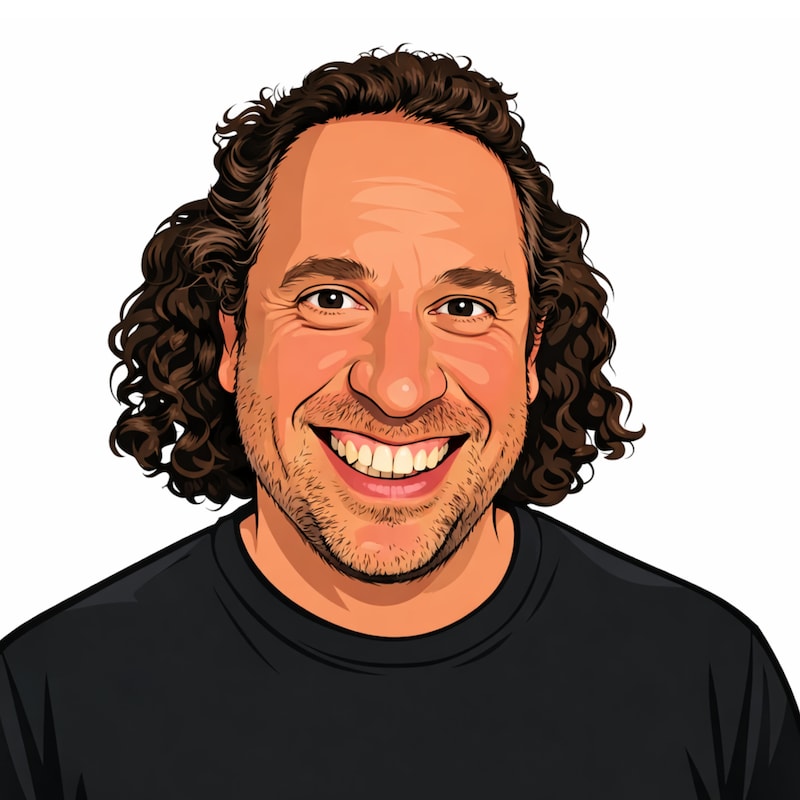
Mark Goddard is a writer and musician whose life was shaped by a 2002 road trip across America with his brother, Jeremy, chasing the roots of the music they loved and turning the journey into his book Losing Eldorado.
In this episode of Life by Misadventure, Mark reflects on the cities, music, mishaps, culture shock, poverty, freedom, and brotherly chaos that defined the trip, from New York and New Orleans to Austin, Chicago, and the long road between them.
Mark leaves you with the sense that travel can crack open your assumptions, deepen your understanding of people and place, and turn even the messiest adventure into something worth remembering.
Buy the book, photos and explore more at the Losing Eldorado website:
https://www.losingeldorado.com/
About the Show
Life by Misadventure is hosted by David Brown and features honest, engaging conversations with interesting people about life, loss, resilience, ideas, and the experiences that shape us.
Connect with David on LinkedIn:
https://www.linkedin.com/in/4dmbrown/
Watch on YouTube:
https://www.youtube.com/@lifebymisadventurepod/
Listen on Apple Podcasts:
https://podcasts.apple.com/gb/podcast/life-by-misadventure/id1782077287
Listen on Spotify:
https://open.spotify.com/show/6Z1MszCU19QglChFb11Pw2?si=98ab1a34db074b3d
Transcripts
But he couldn't speak to anyone for about eight hours. He was in utter shame, which made me laugh even more, which was even funnier. Yeah.
David Brown:And there is a photo of him.
Mark Goddard:There's a photo of him after this
David Brown:where he's, like, standing around outside and he looks like a mental patient.
Mark Goddard:He does, yeah.
Voiceover:Shut up and sit down.
David Brown:Hello, welcome to Life by Misadventure. I'm your host, David, and today we have my friend Mark Goddard in the studio with us. Hey, Mark.
Mark Goddard:Hi. Great to see you, David.
David Brown: US with your brother back in: Mark Goddard:This one here, Losing Alvarado.
David Brown:That's it. Hold it up so everyone can see it.
Mark Goddard:Searching for the Soul of America.
David Brown:That's it. And since then, you obviously have released the book and then you've come in and done some videos and all that sort of stuff.
But I wanted to talk to you a little bit about that.
Mark Goddard:Sure.
David Brown:And. And get you to tell us a little bit about your adventure.
Mark Goddard:Yeah. So I was born in Bristol, now, 41 years ago. And when I was 8, my brother was four years older than me and he was a musician. And I grew up.
My dad was a musician, and we grew up, my brother and I, playing jazz and blues, a very young age in my dad's jazz band, initially. And basically my brother went off to university and I was still at school, and he had gone off to America.
in the, you know, he was born:It was a great time for music, but it was an amazingly rich period where there was great, great contemporary music. But we both, my brother and I, we very much. We started to identify really with. Well, we really responded to older music.
Our dad was really into, like, Ray Charles and, you know, trad jazz and all that sort of stuff. And we've been taught all the.
All the American songbook, which essentially is all about, like, Beale Street Blues and, you know, Bourbon street parade and St. Louis Blues, all these places which are named in. So there was a convention in America, which is that as a way of promoting each of these different places in America.
Songwriters would write about their different cities. So it'd be like Kansas City Blues or something like that, you know, St. Louis blues.
And so we grew up with this as our sort of bedrock of the music, which we loved. But in the mid-90s it was the period when CD had. And I'm giving you a little bit of a long winded, like, explanation because it's.
Because it sort of explains why we wanted to go to America. Yes, because I think from today's perspective it's a little interesting because when we were growing up, America was very much like a promised land.
It was like, wow, this is like in the 90s, everyone wanted, you know, Chicago Bulls were cool. You know, like, it was America. Nike was super cool.
Now we see these things as big commercial entities and people kind of, you know, in the west they tend to. In Europe they tend to sort of maybe scorn America and say, I don't love America. Why do you love America?
But in the 80s and 90s, it really wasn't like that. It was quite different. And so we grew up with this whole thing of like wanting to know about where did these songs come from.
But on top of that we also discovered that we discovered vinyl. So we were growing up in the CD boom. And I grew up listening to tapes, you know, primarily. But our dad had a vinyl player and when.
And it was in the front room and you only listened to the vinyl on special occasions.
David Brown:Right.
Mark Goddard:But as my brother.
David Brown:One of those big ones. Yeah, it was a big high five.
Mark Goddard:Yeah, big high five. And it wasn't a particularly brilliant vinyl player, but it wasn't a bad one. And he had proper speakers and everything.
But the piano was in that room as well. So we had the grand piano, grand Bechstein grand, which my dad taught us to play on. And we had the vinyl in there and my dad had a load of.
going all the way back to the: or focus really stopped about:But he sort of like, you know, it's probably when he got to a certain point in his life. But my brother and I just started to. Jeremy discovered Prince through a friend. He got given Diamonds and Pearls at the age of 11, right.
As one of his first records. And I think that Prince was a real gateway drug for Jeremy because it suddenly opened and I. The thing of. The interesting thing was we shared a.
We shared a bedroom and. Well, we shared a. We didn't. We had. We were in separate bedrooms, but we. The wall was basically a Very thin partition, Right.
So I could hear everything which he was listening to. So from whatever he was listening to, I listened to. Right by proxy. Because he had the speakers up against the wall.
David Brown:Yeah.
Mark Goddard:And so we. From age of like, 12, 13, he started buying vinyl. And I. I sort of followed suit.
And as I got a bit older and we got really turned on to funk and 70s music and it's. And the great thing for us, which I think for most people our age, was that most of their parents saw that as their own. As their parents. Music.
David Brown:Right.
Mark Goddard:Because their parents were into 70s rock and all that sort of stuff. Our dad wasn't really into that. He was much more into Ray Charles and the Rolling Stones and that sort of stuff.
So for him, like, 70s rock was like, well, yeah, but that's not as good as the old stuff. But so it became our music, which was.
And so we grew up, my brother and I, idolizing, you know, Stevie Wonder and Parliament Funkadelic and, you know, discovering Earth, Wind and Fire. Like, we discovered Earth, Wind and Fire. I remember going to the car boot sale and buying. I was like, what the hell is this?
It's got, you know, Egyptian thing. I was like, wow, this is amazing. So we bought Earth, Wind and Fire. So Jeremy was old and he was. He was getting into playing that music.
I was listening to a lot of it. But why I'm telling that backstory is that that was why we were like, we have to connect with this. Where does this music live?
Where does it come from? And we were from Britain. And although this stuff's very popular in England and in Scotland and places, it's not of this country.
Like, I mean, Parliament Funkadelic, I mean, they're kind of alien, almost. Like, where does this come from? But we had a great love of all this stuff, so going all the way back to the. The birth of the blues, and we just.
It was like, we gotta go to the source. And what we could see was the world was shifting very quickly in the late 90s. It all become very. I think, like, if you look at the.
ign of that period around the:It was all kind of like future futurism. That was the whole futurist thing. People getting mobile phones.
omething which had, you know,:In hindsight, you know, later on, both of us have explored electronic music much more, but he was very much like, you know, people should be playing their instruments.
So his, one of his favorite bands in the 90s was Jamiroquai because they, they were, they were a funky electronic band but they played everything live. Anyway, he just, he came up with this notion. I was 18 years old.
He said, look, I've been chatting with a bunch of friends at university and I think we should go to America when we. When you finish your. Finish your, you know, your A levels. So we scrabbled together a bit of money.
t off to America and that was: David Brown:Right.
Mark Goddard:It was like America is a. As a land. It's all about road trips. I mean it's, it's. I don't think you really appreciate America properly on understand the culture without driving
David Brown:and, and probably from over here, the scale. So as well, I think you, you as soon as you get in a car and you start to drive somewhere, you immediately appreciate this.
The sheer scale of the difference of just how big.
Mark Goddard:Absolutely. Really is. Totally.
And so like, you know, we're born in Bristol and I travel up to London on a regular basis but you know, that's a two and a half, three hour journey. Or to go up to Manchester is like three, four hours. But yeah, you know, wouldn't rare.
What is interesting, the distances are much greater in America and people drive much longer distances. What I would say though, which is interesting is that the driving here is more stressful in a shorter period. So it's because.
It's because it's just everyone. There's so many people stuffed together. It's more like driving in New Jersey or New York here.
David Brown:Yeah, that's true.
Mark Goddard:But at the same time what we discovered is actually like that's not entirely true because the characters you meet on the road.
David Brown:Yeah, exactly.
Mark Goddard:Are quite, you know, I mean, I
David Brown:mean, I have to say, and I know some of the stuff in the story, maybe we'll touch on that in a minute. But the experiences that you had on the road, I've never had in 30 years of driving in the U.S. yeah, I'd never had anything like that happen.
So again, that just Feeds into the. The kind of. The chaos of the story and just what was going on. And I have.
You know, maybe it's because you had the Massachusetts plates or whatever it was, but yeah, it's.
Mark Goddard: driving this car, which is a: ich was this period after the: David Brown:Their.
Mark Goddard:Their potency as. And America did as well. I mean, this is the thing. This is. There's an interesting thing here.
Like America, in many ways, you see a trajectory in the way that culture in America goes, that there's an upward sort of hope until 73. And then after 73, things shift. I mean, it's a bigger question, but like, then you get Reaganomics and all that sort of stuff.
I think that for me, I think, like, you know, that's the. That's the sort of. It goes to a certain point, it goes to 73, and then things start to go wrong. Maybe it's to do with Nixon, I know, the Vietnam War.
But great music's being made in this period, you know, like the best music ever. So, like. Cause it's got. And the thing about this is. This is the other thing about the 70s is that the players were.
All guys had been playing in the 60s. You know, they'd all grown up. They'd all grown up being proper musicians.
And so when you listen to those Parliament Funkadelic records or James Brown records, any of that sort of stuff, these guys are like, top of their game. But they've been playing for 10, 15 years. And they've been playing. They've actually been taught how to. How you know, how to play properly.
David Brown:Yeah.
Mark Goddard:So. So we went over to America with this. With a very simple, Very simple quest, which was. We had some family friends who lived in. Near Boston, Mass.
In Springfield, Massachusetts. And my. We were just gonna. We wanted to get from Massachusetts to New Orleans.
David Brown:Yeah.
Mark Goddard:Because New Orleans was. Is the birthplace of modern popular music where jazz and pop, blues, essentially.
Well, the blues comes from the Delta and jazz comes From New Orleans. But New Orleans is the crux point and the Mississippi is the, you know, is the archery.
David Brown:Yeah.
Mark Goddard:Which basically feeds actually to this, interestingly, feeds America to this day.
David Brown:It is the day.
Mark Goddard:Yeah, it is. Actually.
I was actually watching something on YouTube the other day, didn't realize this, but one of the reasons America is so successful, probably the primary. Primary reason it's so successful is the Mississippi River. Right. Because it. Because it.
You can actually travel from Gulf of Mexico all the way up to the Great Lakes.
David Brown:Yeah.
Mark Goddard:And, you know, everything is as a result of that. So all the industry has come about as a result of that. Anyway. Yeah. So we. We were like, how do we get there? We got to.
We got to Massachusetts and we didn't. We had a higher car. I wasn't allowed to drive it. I was 18 years old. And now how do you get. How do we. What. What do we find? How we. We worked.
We had found out that it was cheaper to be Done some studies and spoken to people. It was cheaper to buy a car and that it was to hire, obviously. Yeah.
And then you could just, you know, if you buy a car, it doesn't matter if you don't. Yeah. Don't. If it. You can dump it, basically.
David Brown:Exactly. So talk to me about. I mean, again, upon reflection. Now, talk to me a little bit about what.
hat was it like in England in: Mark Goddard:And the primary thing, which I think is the. The most obvious thing, which you've noticed when you travel anywhere is changes in temperature.
So, you know, what's the difference between July 4th in England and July 4th in. In Boston, say, or the American South?
David Brown:50 degrees.
Mark Goddard:Yeah. Yeah. Like heat, you know, it's much hotter. Yeah. And also I talk about this in the book. It's the smell.
I mean, there's just stuff like continents smell different.
David Brown:Yeah.
Mark Goddard:Different places smell different to other places. America has. America has a very distinct smell in that period, in that time of time of the year. So that was the first thing. You know, it's like.
It was like, wow, you suddenly are in a different place. You're like, wow, we're in a completely different place now.
David Brown:Yeah. Did you feel like you were in a film? Because I've had other people tell me. Because they'd seen the U.S. yeah.
Mark Goddard:No. No, not really.
David Brown:No.
Mark Goddard:No. I mean, I think if you. In the book, the experiences that. Yes. As we got further south, as we got out of those places, yeah, I've been.
I'd been to America before, so I hadn't. Hadn't been to Boston, but I'd been to Chicago, so I caught it, you know, I was like. I'd seen big, big, tall skyscrapers and stuff, so.
So in that sense. No, I. I think what I did feel, though, was that it was. It was just a different life. Yeah, it was like.
It was a snapshot and a different way of living, you know, immediately. I mean, we went to stay with some family friends, and they had this massive mansion, you know. It was just huge. And it was like, wow. But it was.
David Brown:And no ketchup.
Mark Goddard:No ketchup. Yeah. Yeah. So very, very, very, very strict stipulations by the.
David Brown:Tell the no ketchup story.
Mark Goddard:Yeah. So we. We went and stayed with this lovely couple who were family friends of our parents.
And the funny story is that basically we'd gone over July 4th, obviously, Independence Day. Big fireworks, big party, everything.
We flew over and we were reading in the guidebook on the BA Flight, saying, oh, there's a thing called the Boston Pops where everyone comes out in Boston and watches, like, you know, great music, and they have pop music and they have classical music and they have massive fireworks in the center of Boston. And I'm 18 years old. I want to see that. And I was like, why don't we stay in Boston for the night and go up to see them the following day?
But they were like. They had sent us a message saying, like, you know, come straight, because we were having a party. You know, we have a party. Oh, cool.
We have a barbecue, whatever. And. But they'd also sent us a. Which I hadn't read because Jeremy was kind of dealing with everything.
And they sent us a very strict, like, email, which was like. It was actually on Hotmail. You know, it's all.
David Brown:Of course, yeah. And it was like, all there was back then.
Mark Goddard:Yeah. And it was. It was stipulating. It was like stuff like no sleepovers, obviously, you know, saying.
And the other thing was, we weren't allowed to use the Internet.
David Brown:Right.
Mark Goddard:Because apparently that was going to cause lots of problems.
nternet was in its infancy in:And then they were like. They had a dog called Gnasher and It's like, don't feed the dog. She gets fed enough. And it's all these things. It was like, big, long list.
And like, obviously I'm 18 years old. My brother's. He's 22. So we're quite used to being fairly independent.
And so we kind of found this very funny because it's like, you know, don't bring anyone back type thing and be like, well, you know. Yeah.
But then the funniest part, on reflection, is that she writes all this stuff and then she writes in big, like, capitals and absolutely no ketchup, full stop. And it's like, what. What. What horrors had ketchup caused in her life? I don't know. But, like, that's the most random. Yeah.
The other thing which made us. Made us laugh so much was we. We didn't know to buy them. So we were like in the.
We were in the airport and we're like, we'll just buy them some tea or something because you've got some really nice, fragrant, you know, English teas. Because her partner is. He's. He's. He's from Britain.
David Brown:Right.
Mark Goddard:And I think he's from Scotland. But, like. So we bought some tea as a present. Expensive, you know, and we gave it to them and they went, oh.
He's like, I don't like any of that muck exists. I get all my tea from. When I go back to England, I get all my tea. And he said, this. This is all my PG Tips.
They had, like, you had a whole, like, you know, loads and loads of PG Tips.
David Brown:Yeah.
Mark Goddard:And then the funniest thing as well was that in the house he had a car, like an American car. And then in the garage, he's like, come and see my pride and joy. And he had a Morris Minor Traveler.
David Brown:Right, okay.
Mark Goddard:Which was, you know, I mean, my brother and I had grown up in a Morris. My mother had a Morris Miner Traveler. So, you know, we were used to it. But, like, his was pristine.
David Brown:Those are the ones with the wood.
Mark Goddard:Yeah, yeah, yeah. But I mean, he must have got it shipped to there because I don't think they ever sold it in America. If he did, he found it, he paid a huge amount.
We just thought it was. It was an anachronism, the whole thing. Yeah. So, yeah, no, that. That was.
That was an interesting experience because suddenly we went from being in Britain to suddenly being in, like, this American suburban environment. But we were. That was not the America we were looking for at all.
Like, we didn't go over there to go and spend time and hang out in a New England mansion, you know, that was. That's. That was not our plan. We were going to go to.
To music, you know, juke joints, you know, holes in the wall, you know, we wanted to see music and we want to see artists as well.
David Brown:Yeah.
Mark Goddard:Like, so.
David Brown:So what cities did you end up going to?
Mark Goddard:So we started in Boston. Well, we started in Springfield, but we went to Boston. Drove down from Boston to New York, and then from New York, we drove across to. Well, down.
Down. Got lost on the way. We got lost everywhere. Like, we didn't have. This is the key thing about the whole thing.
David Brown:There's no sat nav.
Mark Goddard:No sat nav. It on. On. On. On Atlas. Rand McNally, which I call Randy McNally, I think throughout the whole book.
David Brown:I think that's hilarious. I think you should just call it that.
Mark Goddard:Yeah, yeah. So, yeah, Randy McNally, but it's Rand McNally. And we had this Rand McNally Atlas, and it. It was the whole of America in.
In one atlas, but it had like, you know, one page on New York, and it'd be like a big page, and you're like, oh, cool, we've got. We don't need to buy a New York thing because we've got New York. You know, in fairness, we did actually use.
We joined the aaa, which is the American Hospital association, and we did actually get maps. So where we went. So, yeah, we drove down through. Got to New York, and then we got lost on the way down to Philadelphia. Got to Philadelphia.
We saw Maxwell Singer in concert. We. It's all detailed in the book, but basically we. We. At this point, we'd been staying in New York. We decided to stay in the car.
We ended up in a truck lay by in Baltimore, which was not the best place. No.
David Brown:To be in a truck lay by. No.
Mark Goddard:And then we ended up in Washington, D.C. which was a lot. Lot different to what we expected.
David Brown:Yeah.
Mark Goddard:And then from Washington, we drove through Shenandoah National Forest, through the Appalachians, into Virginia proper, and then into Tennessee, and we got to.
Went past Pigeon Forge, which is where Dolly Parton's from, and then we went to Knoxville, then Nashville, Nashville, to Memphis, Memphis, down to the Delta, went through Clarksdale, Mississippi, and then got all the way down. We stayed at. Stayed somewhere in Mississippi and Vicksburg, which is famous for a siege. I think Vicksburg's lovely, actually. Yeah.
I remember we had fried chicken.
David Brown:That's in my neck of the woods.
Mark Goddard:Yeah, it was beautiful. It was a beautiful place. Actually, we had a nice talk time in Vicksburg.
We were only there for, like, you know, two hours, three hours, and eventually we got to New Orleans. So that was, like, the first part of the journey, basically. And then we had a. Then we got to New Orleans, and it was just.
I mean, if anyone has ever been to New Orleans, like, they will know exactly what New Orleans is. But I think for a lot of Europeans, that that was this. So the interesting about all these places that we went to was they were not as we expected.
Yeah, they were completely different. They were. You have. That's always the note. That's always the way we travel. You have a.
You have an idea of what you think the place will be like when you go there. It's completely different. Yeah, it has some of those elements of what you think.
But we found that what was interesting in America was that each different city had its own distinct feel and felt like it is. It is the United States of America. It is not the United. It's not one country.
It is many different states with very different cultures and different histories as well. And musically, very different musical, you know, histories as well, so. And cultures. And so we.
We really felt that we got to Nashville, we got to Memphis. They were different. Like, Nashville is different to Memphis, and yet they're in the same state.
David Brown:They're four hours apart.
Mark Goddard:Yeah. And they. But they're. They're distinctly different places, and they've got totally different musical expressions.
And bizarrely, in the book, I talk about how we saw great blues in Nashville, which you would not expect. So you're, like, expecting it to all be country music. And actually, Nashville's, like, the most, like, varied musical landscape.
I mean, it's a musical music capital. But, yeah, so we got to New Orleans, and New Orleans was just. Just another world, you know, it was like. It was. It was. It was pre Katrina as well.
So we did see a different side of it. And I went back 10 years later, and it was totally different.
David Brown:Yeah. It's not the same.
Mark Goddard:No.
David Brown:I don't think it's ever recovered from that.
Mark Goddard:No, it was the. I mean, we'd never crossed Canal street when we were there, because it was. So we were just worried that we were gonna get.
Everyone said, don't, because it was dangerous.
David Brown:Yeah.
Mark Goddard:And then we went back, and it was. It was. You know, Canal street was all like, an arts district with people drinking coffee, and it was like, what the hell?
This is totally different to how to work to what we remember.
David Brown:It's all been gentrified yeah.
Mark Goddard:And. But there was an energy in New Orleans. New Orleans was like. It was a part. It's a party town.
You know, it's a party town with college students and that sort of stuff.
David Brown:And.
Mark Goddard:And a lot of people come from, you know, all over America to go to New Orleans, have a great time, but it's also kind of spiritually connected. And it feels like, you know, you're in the. You're near the Caribbean, basically. You got that whole voodoo stuff and.
And all the music, all that stuff. So we love New Orleans, but we knew we couldn't really stay there for very long. Our livers couldn't deal with it, number one.
But then we were like, where do we go? Do we go. Like, do we go to Florida? Do we go, you know, down to the Keys? And that's all beautiful and everything.
And we could go to Savannah, was many ways. And we could go to Atlanta.
David Brown:Yeah.
Mark Goddard:We could go into Alabama. But then we just like, well, what do we go west? And do we keep going west? We get. Do we go all the way over to L. A? I mean, that's like that.
That is the. It is the classic thing. You cross.
David Brown:That's the classic drive and you go.
Mark Goddard:You drive through Texas or, you know, take Route 66 and you drive across through the desert and you do all those. Those places. And then you eventually go to Nevada and you go to Las Vegas and you see, you know, all those different places along the way.
But you got across the desert.
David Brown:Yeah.
Mark Goddard: d this sounds bizarre, but in:It was maybe famous to people who are into music, but I'd never heard of it. I was 18 years old and never heard of Austin.
David Brown:Didn't.
Mark Goddard:Didn't even know existed. We were. We were told in New Orleans, this is the place to go. This has got the best live music in America. It's music capital of America.
Yeah, it's a great town. It's in this, you know, red state, but it's like a. It's kind of like a blue.
David Brown:It's. It's the little liberal island in the middle.
Mark Goddard:Yeah.
David Brown:And it's the capital, oddly. So you would think that that would be like the epicenter of conservative whatever, but actually it wasn't Republican, only liberal bit.
Mark Goddard:Yeah. And. And. And actually it was like. I mean. And also, just bear in mind that when we're talking.
erent now to what it was like: David Brown:Yeah. They're much further apart today than they were then.
Mark Goddard:They were much more together. But it was like they were, you know, they were.
The red states with the red states were very socially conservative, you know, we're quite socially liberal, you know. And so we were like, cool, we'll go to Austin. So we drove over to Austin and had some adventures along the way. And we got there.
We had a great time in Austin. Like, Austin was great. And we went, saw. We saw Lenny Kravitz in Texas.
David Brown:He did?
Mark Goddard:Yeah. Which was amazing.
David Brown:Lip syncing.
Mark Goddard:Lip syncing. Yeah, sadly.
Which was, you know, I've seen him twice and I don't think he was lip syncing then, but the one time we did see him, the DAT tape stopped working in. In the Woodlands, Texas. Sorry, Lenny, but you know, it was, you know, I love you, but not when you're mine.
David Brown:No.
Mark Goddard:But, yeah, so we got to Texas. I actually got my A level results in Texas.
David Brown:Right, okay.
Mark Goddard:Which was in Austin at the Austin Motel, which was kind of crazy. And then we had this decision and we're like, where do we go? I mean, do we go? Do we go. Do we try and get across the desert?
And we just thought the car was beginning to cause issues and we thought if we go, what happens if we break down, you know, in the desert, we're screwed. Like, you know, there's like 100 miles to the next.
David Brown:Yeah.
Mark Goddard:Stop. You've got to be in a car which is going to get you there, otherwise you're going to be stuck on the side of the road for a day.
David Brown:Yeah.
Mark Goddard:You know, I don't know, you might. You might be eaten by like cougars or something. I don't know. Like, you know, it's like, it's, it's.
It's a really wild place, you know, so we were like, we're not. We drove up to. We thought we'll drive up to Dallas and see how we get on. And yeah, not. Not long into that journey, the car blew up, basically. So.
So we went. We went through Dallas and then we end up. We decided to look. We went looking for Route 66, which is like the fabled route.
So if you ever speak to anybody who's British, whatever, go, did you do Route 66? We're going to America. Did you do Route 66? As if this is a road which exists and it's like, it's a very simple road. It's like.
Well, yeah, we were on Route 66 at parts, but it doesn't link up.
David Brown:It's not a single road.
Mark Goddard:It's not a single road. It used to be.
David Brown:It's certainly not anymore.
Mark Goddard:No, I mean, it used to be the road. It was the mother road. It was the only road from Chicago to la. It pioneered that whole thing.
by the highway network in the: s weird, actually, because in:Arizona place I went. And the thing is that Winslow, for example, which is famous for the Take It In, Take It Easy by the Eagles, it's bypassed. It's a weird town.
It's like a nowhere town, really. It's got one like there was like two bars when we were there, which
David Brown:was sort of the subtext of the film Cars as well, right?
Mark Goddard:Yes.
David Brown:Do you know what I mean? The Pixar film.
Mark Goddard:Yeah, yeah, yeah.
David Brown:It's those towns out in the middle
Mark Goddard:that used to be Radiation Springs, you know. Yeah, yeah, exactly. Totally. Right. Yeah.
David Brown:It used to be on sort of a Route 66 and got quite a lot of traffic. And then the main highway came in, or the interstate, as we call it. Not like a motorway.
So the interstate came in and then everybody just started going there. And nobody goes to those spots.
Mark Goddard:No one goes to those places. I do remember distinctly going to.
erence between when I went in:You know, people are. The people are traveling a lot, but they're using booking.com, you know, I. So I found that it was. It was. It was different. You can do it.
You're gonna spend like an hour or two driving around town trying to find. Trying to find, and you won't get. You won't get the Best deal. And in whimslow, I was like, ah, I'm gonna do it the old way. See how it goes.
And it was. Went to one place and it was like crazy expensive and there was no rooms.
But I remember distinctly there was this lady in front of me and she looked like a normal soccer mom.
David Brown:Right.
Mark Goddard:She had. It was an open. It's an open carry state.
David Brown:Oh, yeah.
Mark Goddard:She had a. She had a pistol. She had a pistol strapped to her to ankle.
David Brown:Right.
Mark Goddard:And she's just like, you know, wearing jogging pants and, you know. Yeah. And it was like. It was. It was. It was hilarious. I was like, wow.
But, yeah, no, we ended up staying in this terrible place in Winslow, which was like, really quite frightening. Right. And unfortunately, just down the street there was a really cool motel, which was like a themed motel. And I chatted the.
We could have moved, but we didn't. We'd already got the other place. But yeah, yeah. No, so, yeah, from. And then from. From, from.
David Brown:So you. You found Route 66. Route 66, yeah. And on your way to.
Mark Goddard:On our way, we were like, right, okay, I think we're going to go towards Chicago. You know, like, it's the big city. We. We'd been to Chicago as kids and my parents used to go over there for a conference, a medical conference.
But we were like, let's go to Chicago. But on the way, we went via St. Louis and went through Tulsa.
And to be honest, interestingly in the book, I think actually it was in hindsight, definitely the right decision to make because we saw part of America less traveled. We went through the Midwest, and we really got to understand all the forces and the things which had caused certain things to happen.
David Brown:Yeah.
Mark Goddard:And it gave our musical history and perspective a very different perception.
David Brown:You know, you did. And I don't know if you refer to it in the book as this and because it's just. Just for. Just so everybody knows. I mean, obviously we've.
We've done a few videos. We'll talk about the videos and stuff. But we. We've also recorded the audiobook for this as well.
Mark Goddard:Yeah.
David Brown:And I've probably listened to 90 hours of the book a lot, doing the editing and stuff. So I can't remember if this is what you called it or if it's just something that I'm thinking. But essentially what you did is you. You really.
You went up the blues trail.
Mark Goddard:Yeah.
David Brown:Right.
Mark Goddard:So you.
David Brown:You kind of start from you. If you think about it, I mean, I know you went to Memphis first, but if you think about. You go to the.
The blues traveled up the Mississippi, didn't it? So it started kind of in the Delta. Yeah, that Mississippi Delta area. Yeah, it was in New Orleans. You know, there's. And I'm a. I'm a big fan of the.
And I've told you this. What I call the Dirty Blaze. Yeah, right. Really, really old, you know, sort of old black guy on a porch with a. With an acoustic guitar kind of blues.
That's my favorite. But I grew up in that environment, so I like that kind of swampy blues type stuff. But, you know, you start.
If you think about New Orleans, Memphis, St. Louis, Chicago, and you can. And you do in the book. And you talk a lot about, you know, how. How it progresses and how the music changes as it goes up.
As, you know, a lot of the black people were moving for opportunities up north, and they were going to Chicago and that whole thing. So I think it. Maybe unintentionally, you did it during the trip, but that was absolutely.
What you were doing is just following the music, weren't you?
Mark Goddard:It is. We kind of. In a strange way, we did it in a. We did a slightly backwards way. We know we went up and down, but, yeah, absolutely.
We followed that blues trail. And I think that's. And it was, I think, going to Mississippi first and then sort of discovering, like, Chicago and even Austin.
Because there was a whole Texas blues thing.
David Brown:Yeah, there's a whole different.
Mark Goddard:Yeah, but like, they. But they are kind of related to Weston. But they were. But they. Yeah, exactly. They gave us a better understanding of what.
Because it was like, right, okay, we've been at the Delta. We've been to Memphis. We've been to Nashville. We've been to that. And we've been to New Orleans. And now when we got to Chicago, it was like.
And when I started writing the book, I was like, well, of course this all makes sense, like, because the question is. Is like, why was Chicago. So in the book, I. Probably. About a fifth of the book is about Chicago, and we spent four days there. But it's all.
Because it's. The book is not just a story about us. It's a story of music.
David Brown:So there's about 500 chapters about house music.
Mark Goddard:There's loads of music. Loads of stuff about house music. I knew that. I knew that. I fight.
When I started, like, right when I got into house music, I was like, I know how there's not really. Well, there's two or three chapters about disco and house. And you think, well, that's like, what's got to do.
But I know that the people who love that music are very.
David Brown:I'm just saying for people. I am just joking.
Mark Goddard:If you're into house music. This has got a lot of stuff
David Brown:about house music, but it's not 500 chapters. It's only 250.
Mark Goddard:Yeah, yeah, but. But yeah, it's. I think what's interesting, Chicago, is that. And I sort of.
In numerous different ways, I talk about how Chicago actually, to me, my perception is, or my opinion is that it is actually the. The really quintessential American city.
David Brown:Absolutely.
Mark Goddard:Much more than New York is international. It's. New York is itself. L A is La La Land. It's, you know, it's Hollywood, but it's. They're two separate entities and they have their own identities.
David Brown:Yeah.
Mark Goddard:Chicago is the American city. Is the. It's the American city of the late 19th and early 20th century. It was the boom.
David Brown:Totally agree.
Mark Goddard:And that was also why the music went that way, because the jobs went that way. Yeah. You know, and there was the great migration. A lot of the black people went late.
And all of the big blue stars, Johnny Hooker, you know, Johnny Looker, you know, Rolling Stone, what's he called? Muddy Waters. They all. They all Howlin Wolf. They were all born in Mississippi or Arkansas and they went through Memphis and they went up to Chicago.
And Sonny Boy Williamson, the second, you know, Sonny Bowling to the first as well. I talk about that. It's a great story. Like Sonny Boy Williamson the second, basically stole Sonny Boy Williamson's the first name.
David Brown:Yeah. Started performing.
Mark Goddard:Anyone thought it was him, but it wasn't. He died. But yeah, so they all came from that place and they started off as dirty blues.
David Brown:Yeah.
Mark Goddard:But I think actually the key thing which I sort of focus. I talk about in the book a little bit is that the thing which was the big revolution in. In music of the 20th century was. Was electrification.
Yeah, it was. It was technology.
David Brown:Yeah.
Mark Goddard:And it's. You see the shift in the way that music was. And what is. What is rock and roll?
Rock and roll is like, essentially, it's music about, you know, cars and it's blues. It's blues. It's. Right. It's rhythm and blues. This tends to be focused on cars and girls and a lifestyle thing.
But it's more than that because the other key component is the guitar. So.
David Brown:Yeah, you've got the electric guitar.
Mark Goddard:Yeah. Before the election. And why does that. Why is that important?
important because before the: David Brown:Yeah.
Mark Goddard:The lead instrument was a trumpet or a clarinet or a saxophone because they're the loudest instrument in a live and live setting. The guitar was never loud enough to be a lead instrument.
David Brown:Right.
Mark Goddard:But when they electrified it, it became the lead instrument.
David Brown:Right.
Mark Goddard:And that was interesting. That is actually the real shift. That's why it's sudden and that's why you have all the guitar bands which exist afterwards.
And because they were invented, the amps, they invented the electric guitar. And suddenly you had this amazingly versatile instrument which could both be lead and rhythm.
David Brown:Yeah.
Mark Goddard:And it completely changes music.
David Brown:Yeah.
Mark Goddard:And it's why all the jazz bands stopped being. It's why all the trad jazz bands and the one. The swing bands disappeared.
David Brown:Right.
Mark Goddard:Because you don't need like a full orchestra if you've got four guys can make more noise than you. You can. Because if they've got amplifiers.
David Brown:Yeah, that's a good point, actually.
Mark Goddard:Yeah. And it's also one of the reasons like. So the early. If you listen to the early rock and roll, it's got loads of piano in it.
David Brown:Yeah.
Mark Goddard:That sort of disappears by the 60s. Like, you know, like rock music does. It does have piano, but it's not. It's not the. They're not. Tend to be. Don't tend to be the lead. Lead person.
David Brown:Yeah.
Mark Goddard:And a lot of that because he can't hear the piano player, you know, unless it's properly mic.
David Brown:Unless it's Jerry Lee Lewis.
Mark Goddard:Well, yeah, exactly.
David Brown:And you could hear Jerry Lee.
Mark Goddard:Yeah.
David Brown:Down the block.
Mark Goddard:But he probably didn't have a. Probably Jerry Lee Lewis probably had one guitar player just playing little picty stuff, you know, so. So yeah, I mean.
But Chicago, interestingly in this story, is that it suddenly I worked out that like a lot of. Like a lot of the. The pioneering genres of the. Of the 20th century Music genres sort of pioneered in Chicago.
David Brown:In Chicago.
Mark Goddard:Yeah. And it was where. It was where the audiences were as well.
David Brown:Yeah.
Mark Goddard:Like they had big audiences. It was a big industrial town and it was also a big town which had a lot of freight going through it. It was. The railroads went through there.
They could transfer into the Great Lakes. So it was like this whole region was like. Was dependent on Chicago. And obviously Detroit is another place and another.
But there was all these towns up in the north which became like in the Rust Belt, which became super successful in the mid 20th century. Early mid 20th century. And that's why the music grew up where it did. And that's, you know, what we see now is something very different.
You know, it's like these are post, sort of. We've gone. They've gone through post industrial.
David Brown:Yeah.
Mark Goddard:Situations, I think.
David Brown:I mean, and you and I have talked about this before, but, you know, I call Chicago America's hidden city.
Mark Goddard:Yeah.
David Brown:Because most of the time it's not a holiday destination for most people. You'll go there for a conference, like your parents or whatever, or you'll change flights, you know, at Chicago o'.
Mark Goddard:Hare. Yeah.
David Brown:But other than that, most of the time, people just don't go there.
Mark Goddard:Yeah.
David Brown:And it has some of the best, you know, museums. It's got every sort of American sport team that you could want to see, sometimes multiples.
Mark Goddard:Yeah.
David Brown:You know, all of the big shows go there.
Mark Goddard:It's.
David Brown:It's a very. It's got the. The big buildings like a city like New York, but it has the attitude of.
Of the Midwesterner, so the people are nice, but you get the big city at the same time. And it's a. It's a great combination of all of that.
Mark Goddard: ly not been back since. Since:It's very sophisticated. It has great museums. Yeah. And it has great institutions. It's got great. But as you say, it's got great nightlife. It's got great.
Got great nightlife, great bars, restaurants, all that sort of stuff. I mean, but it's also got a lot of institutions there. Like, I mean, like, a lot of organizations are based in Chicago. Yeah. But you're right.
ot. I think it's. What is it,: David Brown:Yeah.
Mark Goddard:30, 40 stories. I mean, it's kind of nuts. And. And actually also, like, modern architecture sort of comes from Chicago.
David Brown:Yeah.
Mark Goddard:So, Yeah. I mean, it's. It's an amazing city. I think it's. I think Chicago's. It's gone through. It's had a difficult, Very difficult period.
David Brown:Right.
Mark Goddard:I don't know a lot about the crime stuff, but from what I understand, it's like, it's got a lot of issues.
David Brown:It does at the minute.
Mark Goddard:Yeah. Okay.
David Brown:So I'm conscious of time.
Mark Goddard:Sure.
David Brown:Because we could do a Joe Rogan thing and sit here for three hours, but actually there's some other people coming In. In a few minutes.
But so from the trip, I know you guys performed live quite a few times and that was part of what you wanted to accomplish, right, is you didn't want to just go to these cities, but you wanted to actually kind of sit in and play. So, you know, you had some instruments with you and stuff like that.
I think that you took long if you had to pick what was the one standout time that you played?
Mark Goddard:Yeah, I mean, in the book I talk about it, but the big one for us was actually in New York. So we played a place called Nell's, which was quite famous in Bret Easton Ellis's American Psycho.
It was like the club in the late 80s, early 90s where all the celebrities went and we went and played I Wish by Stevie Wonder at open mic night. Yeah, R B open mic night. Which was like a, you know, difficult
David Brown:crowd and it was pretty ballsy.
Mark Goddard:Yeah, yeah, it was for.
David Brown:For an 18 year old and a 22 year old. I mean, I guess when you're that age you've. You're full of bravado anyway, but that's pretty.
Mark Goddard:It was, it was ballsy. And you know, I was quite. Jeremy was a lot more experienced than I was and it was.
It was a crowd which we thought would not love us and it turned out very well. You know, it was a great. It was a great night.
I got up and I mean, I didn't even know the song properly and Jeremy was like, we're gonna go and play it. And I was like, oh, God, wow. And so we went and we turned up and there's all these, like, there's hundreds of people there. Yeah.
And the, the thing is, these open mic nights in places like New York, probably same in Chicago is like, quality's right up there. Same in London. Like you go to a mic night in London, you've got to, you know, you got to be able to play. So yeah, we went along and. And we did.
I wish. And the crowd were a bit like, okay. And we got up on stage and we just absolutely rocked it.
We got standing ovation, didn't pay for a drink all night.
David Brown:So brilliant.
Mark Goddard:And it was. For me as an 18 year old, it was like, wow. That was like. It was, it was truly wow. It was. It was like mind blending, you know, but it was.
I was, yeah, I was like, oh my God, am I gonna. Am I gonna screw this up?
David Brown:And. And I know in one of the videos you tell. You go into a little bit more detail when talking with Jeremy about it. And it's very funny.
And his sort of take on it is quite funny as well. So people can look forward to that if they want to. So. Okay, so that was cool.
So you played in New York and that was right at the beginning of the trip, wasn't it? So that kind of set the tone for the rest of the trip. What was the funniest thing that happened?
Mark Goddard:Well, for me personally.
David Brown:Go on, you can tell. Whatever it is, just tell it.
Mark Goddard:For me personally, the funniest thing was Jeremy shitting himself in New Orleans. I mean, that was like, that, that made me laugh a lot. He.
After like a four days of like debauchery, we basically, you know, he, he, he was on the phone trying to sort out parking tickets and he basically shouted, you know, so he farted and it just followed through. But then he showed me. I just didn't want to see. But anyway, like. And I was like. And it was, it was a full log. That's the crazy thing.
I was like, how did that come out? Like, that's like. Normally if it's like just follow through, it's just like, you know. But no, it was a full.
David Brown:Lock it wet.
Mark Goddard:Yeah, yeah, but it wasn't that. It was a full log. But he couldn't speak to anyone for about eight hours. He was in utter shame, which made me laugh even more, which was even funnier.
Yeah, yeah.
David Brown:But, yeah, and there is a photo of him.
Mark Goddard:There's a photo of him after this
David Brown:event where he's like standing around outside.
Mark Goddard:Yeah.
David Brown:And he looks like a mental patient does.
Mark Goddard:Yeah. And he's like, I've just shot myself. You know, the shame was. Yeah, it was. Was. Yeah, yeah, yeah. No, that made me laugh a lot.
But there was, I mean, there was loads of amazing things which happened. Like, I mean, there's some funny bits in the book where you read the stuff you like. I mean, it's just hilarious.
Like, you know, I mean, we're young kids, you know, and driving across America, like having adventures. Yeah. And one of the funny things was how slowly we drove because the car was.
Didn't have any air conditioning, so we could only go about 30, 40 miles per hour. So it was like, you know, we're just like, maybe, maybe go up to 50 every so often. But we never were going 80 or something.
David Brown:Well, no wonder they were get aggravated.
Mark Goddard:That's probably why.
David Brown:Because you were driving 50 or 55. Yeah, like, get out of the way.
Mark Goddard:Yeah, we were just driving like, you know, I mean, we did get up to 55 but it was like, it wasn't comfortable because there's no air conditioning. So, you know, the faster you went, actually. Weirdly.
David Brown:Yeah. And that, and that might be something that people here don't understand, which is, you know, if you're in an environment where it's hot.
Mark Goddard:Yeah.
David Brown:You think, oh, well, I'll just go a little bit faster and get a bit of wind and it'll cool down. No, it's just like a hair dryer. So all you're doing is you're changing the hairdryer from low to high.
Mark Goddard:Yes, exactly, exactly. So you're just. We had to drive the whole way with the windows open.
David Brown:Yeah.
Mark Goddard:And it was just like, this is really uncomfortable. And we had these leather seats. I mean, we'd just be covered in sweat.
I remember one of the funny things is we got given like, we got given a load of Coke. Diet Coke, Right. And by some friends of ours and they had a party and no one had drunk the Diet Coke. Cause Diet Coke's disgusting.
And so we got, we started off, we had two, two liter bottles of Coke and then we had like, literally like a crate of Diet Coke. And obviously we're like, we don't have like Diet Coke. We're not gonna drink that.
But as you know, you're driving these long distances, you don't wanna stop all the time. So we started cracking into the Diet Coke.
David Brown:Right.
Mark Goddard:And very quickly we started to realize that, oh, Diet Coke's quite nice if you cheat drinking it. But the thing about Diet Coke is you can continually drink it. You can't continually drink like normal Coke. You can drink two maybe.
David Brown:Yeah.
Mark Goddard:And they're done. But with Diet Coke you can drink gallons of the stuff.
And we were like, yeah, we basically, I mean, we essentially became addicted to Diet Coke for a month or two.
David Brown:Okay.
Mark Goddard:And then afterwards, I've never touched it since. But. But it was like, it was, it was. Until we got through the crate. I remember we got through the crate.
We're like, this has to stop, you know, because like, this isn't. This is clearly not good for us.
David Brown:Yeah, yeah. They. This is a total side comment, but they did a. They did a study with a rugby club, right. And they served. So after the games, they served.
Half the team, they got, they all got the same food.
Mark Goddard:Yeah.
David Brown:And they gave them the same meals, the same number of calories and all that. Well, they gave them the same food. Food. Only half of them drank a diet like Coke Zero or a Diet Coke. And the other half had full fat.
Mark Goddard:Right.
David Brown:You know, full sugar and everything. And what they worked out is, I want to say that it was the.
The players who drank the diet drinks ate like 25% more calories in their food because the drink didn't have any calories in it.
Mark Goddard:Sure.
David Brown:Which would probably explain why you can. If you have a full fat Coke.
Mark Goddard:Yeah.
David Brown:Or a normal Coke, because it actually has sugar and calories in it. Your body recognizes that. Oh, hey, I've had some calories. I should probably slow down.
Mark Goddard:Yes.
David Brown:Whereas with a diet drink that doesn't have any, it's like basically like water.
Mark Goddard:Yeah. But it's got loads of aspartame in it. Yeah. It's like terrible for you, which is terrible. Yeah.
David Brown:But your body doesn't recognize it because there's no calories coming. So you can just keep drinking it.
Mark Goddard:The moral of this story is I never, ever, ever get anything diet because it's. You only actually think it was the Coca Cola as well. To me, the perfect measure is the can of Coke. Yeah, that's it. Done.
David Brown:Yeah.
Mark Goddard:Okay, you're done. You're like. You don't need them on that.
David Brown:Yeah. Yeah. So, again, I'm. I am quite curious and kind of your reflections of the trip.
I mean, I know some funny stuff happened and there's all that stuff and. And you go into, I know you personally like history and you're a bit of a history buff.
So in the book, again, you dig into a lot of the history of the places and stuff, but you said something about, you know, you always have an image of a place.
Mark Goddard:Yeah.
David Brown:And then that place is different. What was your biggest difference that you found? Because again, you'd been to the US before, but that was as a kid.
Mark Goddard:Yeah.
David Brown:I think. Not as a young man. So I think you're. You had a different perspective on things.
But how was it different than what you thought the whole road trip was going to be like? How was it different than you thought it was going to be?
Mark Goddard:I think the most obvious thing, and this is something which is very key to understanding geopolitics, actually, in my opinion, is America is a place of huge inequality. I've never seen such poverty in my life as I saw in America. No doubt. I mean, I've been to the.
I've been to parts of the Middle east where it's really, really bad. And it's not necessarily. You could on paper, you say, well, this is.
This isn't as bad as, like, you know, these people have some form of health care and that sort of stuff. But the. It's the glaring inequality.
You see in America, it's like you go from, like, these beautiful mansions and then, you know, another part of town, it's got nothing. And it's. And it's really clear. And, you know, you're, you know, you're in the wrong part of town and you know that you're in a dangerous situation.
And it can happen very quickly. And I might live in London, and London has got. One street's nice, one street's bad, one street, you know, people get knifed, Stuff happens. In London.
David Brown:Yeah.
Mark Goddard:But in America, it was really quite shocking how bad parts of it are. And I think it's still the case. I think it's always going to be the case because of the way that the society is built.
But again, it's the richest country in the world. You know, it's got the biggest economy and it's a place of opportunity.
And so I understand that you know, this, but from a perspective of a British person, it was quite, Quite, quite arresting to see that. And, you know, you especially get down the south in places and you're like, wow, like, I can't think. I can't think.
I mean, I've traveled a lot around America since, but, like, there are places I can't think of. The top of my Mississippi, obviously, is famously, you know, poor. But it's like, yeah, it's just. And you.
And I can see for those people, all those people, it's a very difficult place to escape from, you know, because, you know, there's so many different reasons why there's problems. But, yeah, that was. That, for me, was the thing which I didn't expect to see. You know, I, you know, you sort of heard about it, but you didn't.
To see it, actually, to feel that feeling of like, this is actually, you know, pretty awful.
David Brown:Yeah.
Mark Goddard:And you feel for the people in those situations, but at the same time, you're also worried about your own safety, you know. Yeah, I think. And I talk. We talk about it in the book, but, like, again, I'll hold it up because it's. This car was our.
Was basically our guardian angel in a strange way, because it. It was a car which people didn't want. It was basically only driven by drug dealers. So basically we didn't get lots of.
We didn't get, like, if we had driven through certain parts of town. Lost.
David Brown:Yeah.
Mark Goddard:We might have had a carjacking in a Toyota Camry. Yes, yeah, exactly. Yeah.
We might well have had a problem, but we didn't because we were in a car which was, you know, like, look like you're dealing us drugs. So, like. Okay, you know. Yeah, so. No, yeah, that was. That was my, you know, overarching memory.
But I think also the other thing, which is a different thing entirely, was that it. It also widened my mind from being in a certain situation of like.
Because I think we can be quite insular in the UK and very concerned about our own thing. We're an island. We're not like. We're not, like. It's not like France or Germany.
You can get on a train and go to, you know, I want to go to Rome tomorrow. He's like, you can do that if you're in. If you're in Munich, you gotta go to Rome, you know.
David Brown:Yeah.
Mark Goddard:Jump on a train. You drive in a car. If you've got a car you could drive to. You could drive anywhere, you know. Yeah, we can't do that.
And as a result, people in the uk, it's a. It's a big thing of leaving the island. You know, like, you. You think, oh, am I actually gonna leave the island? You have to think about it.
You have to plan it in advance.
David Brown:You do. Yeah.
Mark Goddard:And America is a much bigger place than Europe. So you have a car. You can literally go anywhere. You're like, right, I could go to. Go. Wanna go to California? Let's just get in the car.
We've got enough money for gas. Will get there. Yeah. You know.
David Brown:Yeah.
Mark Goddard:And that there is that sense of freedom there, which is just out of this world. And. And also just such a vast and varied continent, you know, and country with so many different types of climates.
I mean, like, you go down to Florida and it's like, you know, subtropical. And you go. You start off in Boston. It's something, you know, Vermont is like beautiful pine trees. And then go into the Appalachians.
It's something else entirely. And you go. I mean, New Mexico is mad. Like, you go to New Mexico and it's like. It's got every.
Like, it's got, like, five times, like, the different temperate zones. You're like, what the hell? Suddenly it's alpine, and then it's desert. And then, you know, then it's 10.
David Brown:It's amazing. And it's. Yeah.
Mark Goddard:And it's beautiful, you know, and it's beautiful. Yeah. And so America is this amazing place with amazing. Just amazing places. I'm like, you know, you go to the lakes and all that sort of stuff.
Yeah, it's an amazing place. And I think that people Who've not been should go. Just because it's. It's fascinating.
David Brown:Yeah. Maybe wait a few years.
Mark Goddard:Yeah. I think it depends where you go. Depends where you go. I mean, I don't know. I don't know. It depends what you do. Depends what you're into.
You know, I think it's. I think America has always been.
David Brown:Yeah.
Mark Goddard:Like, I mean, I think. I don't think. I don't know. Who knows what the future holds. But at the moment it's. It's not in civil war.
David Brown:It's interesting.
Mark Goddard:So.
David Brown:Interesting times.
Mark Goddard:Yeah. Right.
David Brown:Mark, where can we find the book?
Mark Goddard:Yeah, you can find the book on Amazon or through my website, which is losingeldorado.com. yes, Amazon is equally easy, but losing eldorado.com also you can buy.
I have a load of photographs which I have a book as well here, which is the photo book, which has all of the photos from the journey. I just open up to a random page. Oh, that's a good page. So David is from Memphis, which is even.
David Brown:There you go. Perfect. Yeah. Sun Studios. And Stacks Records.
Mark Goddard:And Stacks Records, which are like the two. Yeah, Key place, musical, brilliant places in.
David Brown:Well done.
Mark Goddard:But yeah, so you can like.
David Brown:There was a bookmark there.
Mark Goddard:Yeah, you can. Yeah, you can actually buy. You can buy that book and you can actually buy the prints as well if you wanted to print on your thing.
David Brown:So the. So the best place. Go to the website. From the website you can find links to everything that you want to find. Yeah, we have.
So there's a video cast coming out, an eight episode. Yeah, video cast coming out. And I won't say the time because who knows when somebody sees this.
But if you search for Losing el Dorado on YouTube or online, you'll get all the different links to where that's coming out.
But there'll be sort of eight episodes with you and your brother talking about the whole trip and going into a bit more detail and some funny stories and stuff like that. Yes, we're also doing an audiobook. So if you don't want to read the whole thing, you can actually listen to it as an audiobook.
And then there's going to be a podcast that's going to follow as well. So over, you know, the next couple of weeks from when we're recording this, all that stuff's gonna be out.
But yeah, if anybody's watching it, they exist.
Mark Goddard:Exactly. And if you wanna see my brother live, he actually has a bar in Barbados and he plays. He plays every night in Barbados.
It's called Jeremy's Barbados, named after him. But it's. It's. It's as close to the New Orleans as you can get, basically.
David Brown:And Nels.
Mark Goddard: helped him launch the club in:And, yeah, he's. He's there playing every night, so, you know, bring it. But, yeah, yeah. Losingadorado.com Go to the website. Everything's there.
David Brown:Mark, thanks very much.
Mark Goddard:Thank you very much.
David Brown:Cheers.
Mark Goddard:Thank you.


