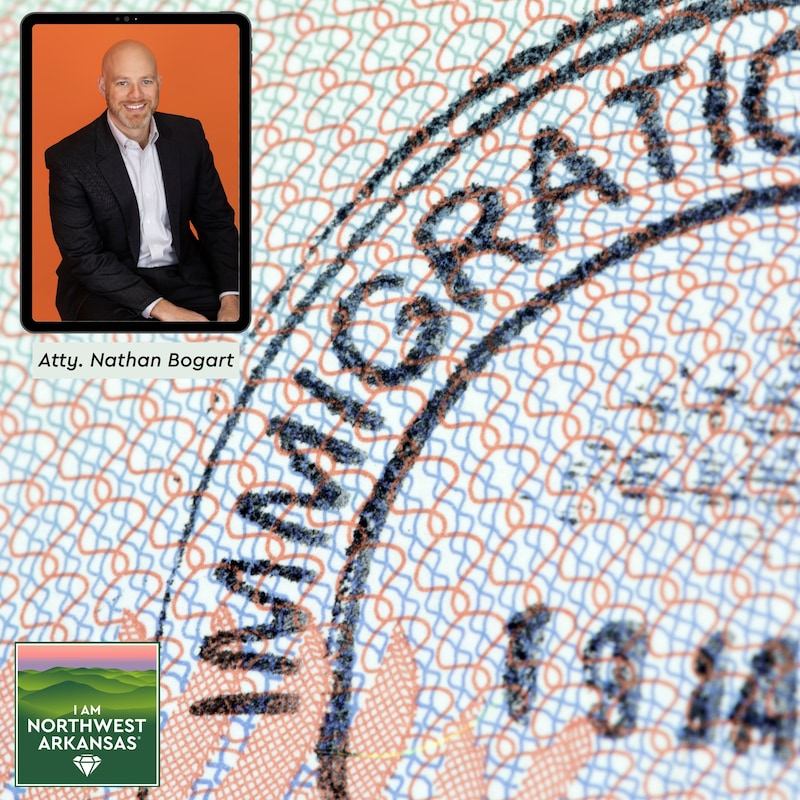
Shownotes
About the Show:
"When people get here, as flawed as we are, they can find some degree of stability and hope for their future that they just don’t have at home."
– Nathan Bogart, Attorney
In this episode of I Am Northwest Arkansas®, host Randy Wilburn sits down with Nathan Bogart, a local immigration attorney at Bogart, Small + Duell. From serving a Mormon mission in Spain to building his own law practice in Northwest Arkansas, Nathan shares the deeply personal stories and challenges faced by immigrants pursuing the American dream.
Discover how immigrant communities shape the culture and growth of our region while navigating a legal system that's often misunderstood. Nathan and Randy discuss asylum, deportation defense, and immigration's local impact on businesses and society—revealing the real struggles behind the headlines. Whether you're curious about the process or want to understand what's at stake for these families, this episode offers timely insight and compassion about immigration law in the Ozarks.
Key Takeaways:
- Immigration Stories Matter: Every immigrant’s journey is unique. The decisions and outcomes can impact generations.
- The Reality of Asylum: Contrary to common myths, the process is tough and most applicants do not win, even with strong cases.
- Northwest Arkansas’s Role: Growing communities like ours depend on immigrant labor for industries like agriculture, construction, and retail.
- Misconceptions Debunked: There isn’t always a “line” for immigrants to get in. Policies are outdated and pathways can be nearly impossible.
- Economic Power: Immigrants contribute as workers and customers—and often become entrepreneurs, starting businesses at high rates.
- Patience and Education: Changing perspectives starts with listening, understanding family immigration stories, and challenging myths with facts.
All this and more on this episode of the I Am Northwest Arkansas® podcast.
Important Links and Mentions on the Show*
- Bogart Small and Dual Law Firm Website: defendingarkansas.com
- Phone: 479-957-9819
- Connect with Bogart Small + Duell on Facebook
- Connect with Bogart Small + Duell on Instagram
- Connect with Attorney Nathan Bogart on LinkedIn
- Canopy NWA (Local Refugee Support Organization)
FindItNWA.com NWA’s Hyperlocal Business Directory
This episode is sponsored by*
*Note: some of the resources mentioned may be affiliate links. This means we get paid a commission (at no extra cost to you) if you use that link to make a purchase.
Connect more with I am Northwest Arkansas:
- Grab our Newsletter
- Email Us at [email protected]
- Connect With Our Facebook Page
- Connect With Us on Threads
- Connect With Our Instagram
- Connect With Our LinkedIn Page
- Join The Facebook Group
- Connect with our Fearless Host, Randy Wilburn on LinkedIn
Thank you for listening to this I am Northwest Arkansas podcast episode. We showcase businesses, culture, entrepreneurship, and life in the Ozarks.
Consider donating to our production team to keep this podcast running smoothly. Donate to I Am Northwest Arkansas
Mentioned in this episode:
FindItNWA.com
🎧 This episode is brought to you by FindItNWA.com – the hyper-local business directory made for Northwest Arkansas. From local eats to trusted pros, it’s the go-to spot for discovering what’s great nearby. 📣 Are you a business owner? Get listed today and connect with thousands of locals looking for what you offer. 👉 Visit FindItNWA.com to explore or join now.
Transcripts
It's time for another episode of I Am Northwest
Speaker:Arkansas, the podcast covering the intersection of
Speaker:business, culture, entrepreneurship, and life in
Speaker:general here in the Ozarks. Whether you are considering a
Speaker:move to this area or trying to learn more about the place you call
Speaker:home, or we've got something special for you. Here's
Speaker:our host, Randy Wilber. Hey,
Speaker:folks, and welcome to I Am Northwest Arkansas, the podcast that
Speaker:explores the intersection of business, culture,
Speaker:entrepreneurship, and life right here in the Ozarks. I'm your
Speaker:host, Randy Wilburn, and today's conversation couldn't be more
Speaker:timely or more important. We're joined by Nathan Bogart, an
Speaker:immigration attorney who isn't just practicing law, but he's telling
Speaker:the real human stories behind one of the most misunderstood
Speaker:parts of American life. Nathan helps us unpack the
Speaker:complexities of the immigration system, challenge common myths,
Speaker:and understand how immigrants shape and are shaped by the
Speaker:Northwest Arkansas community. If you've ever wondered what the process
Speaker:really looks like or what's at stake, this is an episode you
Speaker:won't want to miss. Nathan, welcome to the I Am Northwest Arkansas
Speaker:podcast. How are you doing? I'm doing great. Thanks so much for having me on,
Speaker:Randy. Oh, man, it is my pleasure. This has been a long time
Speaker:coming. I will give a shout out. You were actually referred to us
Speaker:by a listener of the podcast that said, you need to have
Speaker:Nathan Bogart on the podcast and your
Speaker:agent, your law firm is right around the corner from my house on the
Speaker:east side of Fayetteville, Bogart, small and dual.
Speaker:And I said, I know some of your former colleagues
Speaker:and Zoe Naylor. And I just said, man, I do need to have you on
Speaker:the podcast. So finally, finally we're here and I'm really excited
Speaker:to learn more about you. I would love for you just to,
Speaker:from an initial perspective, just share a little bit about your
Speaker:background and your superhero origin story with our audience.
Speaker:Yeah, so I guess just to kind of, you know, as. As far as a
Speaker:basic biography, I'm. I'm originally from Mobile, Alabama.
Speaker:That's where I was born. And I didn't really live. I haven't lived there in
Speaker:a really long time. I lived there through about middle school.
Speaker:I moved up to Kansas City where I attended high school and
Speaker:graduated from a high school in suburban Kansas
Speaker:City. And then I went to Madrid,
Speaker:Spain, where I served a Mormon mission. And I
Speaker:lived there for a couple years, came back home, married, I
Speaker:guess, for lack of a better phrase, my high school sweetheart.
Speaker:And we moved a few months later down here in Northwest
Speaker:Arkansas. And I went to the University of Arkansas, graduated from there in
Speaker:2007, decided to go into law.
Speaker:So I attended the University of Arkansas School of Law, where I graduated in
Speaker:2010 and started working here locally at
Speaker:a firm, Matthews Campbell Rhodes McCurran Thompson, in
Speaker:downtown Rogers. After being there for a couple years, we
Speaker:moved back up to Kansas City for a couple years, where my wife is from.
Speaker:Started my own firm, learned a lot of lessons from having made a lot of
Speaker:mistakes, trying to start my own business, and then
Speaker:ended up going down to Dallas, where I worked for a Dallas area immigration firm
Speaker:for a couple years. And then they moved me back to try and open an
Speaker:office for them, and I ended up going back out on my
Speaker:own. Yeah, I love that. So you decided to hang your own shingle,
Speaker:so that's pretty cool. What drew you into
Speaker:immigration law? Right? I mean, there's a lot of different. You could go corporate.
Speaker:I mean, just normal business law. I mean, there's, you know, patent
Speaker:lawyers. I mean, there's all kinds of law practices. But I'm
Speaker:curious to know what really drew you to immigration law and
Speaker:how did your practice specifically here in Northwest Arkansas
Speaker:develop? A lot of it was just working with immigrant communities. When
Speaker:I was living in Spain, we worked a lot with
Speaker:immigrant communities in Spain, specifically from Latin
Speaker:America, especially Venezuela,
Speaker:Colombia, and Ecuador. And so I just kind of got
Speaker:to work with people from those places and really fell in love with it.
Speaker:And obviously, that wasn't something I could do with
Speaker:my entire life. And so I came home and
Speaker:because I acquired some Spanish language skills, every job
Speaker:I had after that, I was typically having to speak Spanish. I
Speaker:continued working with people from Latin America all through
Speaker:college and law school. And so by the time I got to
Speaker:law school, I knew that this was a realistic possibility for me. And
Speaker:something that not only would be interesting and
Speaker:something that I could continue doing that I'd already kind of fallen in love
Speaker:with, but also something that I could do to support
Speaker:my family and. And help out other people at the same time.
Speaker:And so that. That's kind of how I got exposed to
Speaker:working with immigrants initially. Just kind of fell in love with it and decided to
Speaker:find a career where I could continue to do that. Yeah, I
Speaker:love that. And, you know, you're not the first person that I've had on that
Speaker:that's done a Mormon mission. And. And the impact of their experience
Speaker:on that mission has somewhat directed
Speaker:a portion of their. The outcome of the things that they do in life, which
Speaker:I always find to be interesting and So I had, I had another friend that
Speaker:would spend some time in Portugal, and another friend. I mean,
Speaker:they've gone all over the world. And it's always interesting, the outcomes of
Speaker:those experiences. Yeah, I mean, it's really supposed to be kind of a
Speaker:religious experience, but honestly, you know, for me,
Speaker:just having a chance at that really
Speaker:young age where you're typically a little bit more of a
Speaker:selfish individual, thinking of yourself and your future and where
Speaker:you want to go, taking a step out of that and going into a place
Speaker:where you're not comfortable at all, and maybe you don't even speak the language,
Speaker:and you're forced to think about and serve other
Speaker:people who may very well be very different from you. It's
Speaker:extremely humbling, and it really causes a lot of
Speaker:inner reflection, and it just changes
Speaker:perspectives. And so, I mean, there's a lot of things that are analogous to it,
Speaker:you know, military service, working the Peace Corps, things of that nature.
Speaker:But, yeah, you know, for me, it was definitely foundational.
Speaker:Yeah. And I would say the maturation process is just kind of like,
Speaker:you know, over the top, I would imagine. And, you know, in the period
Speaker:of time that you spend on your mission. Yeah, yeah, it's, it's, it
Speaker:definitely is. Just, you're just kind of thrown out in these places.
Speaker:You know, I, I, I was in a fairly stable, safe
Speaker:place, but there's people who go to, you know, all over Earth.
Speaker:Yeah, yeah. Aren't necessarily very safe. So I've been to
Speaker:Madrid a number of times, and you got you a pretty
Speaker:decent draw there, as far as that's concerned. Madrid is one of
Speaker:my favorite European cities. You've described your work as
Speaker:being deeply personal. Is there maybe a story that you
Speaker:can share? Without names, of course, to protect the innocent. That really
Speaker:impacted you and kind of reaffirms why you do the
Speaker:work that you do on a regular basis. Yeah, I mean, it's hard
Speaker:to think of really one, one story. Right. To be honest with you.
Speaker:But, you know, I, I've worked with countless
Speaker:individuals. I would say, to keep it general.
Speaker:Handling asylum matters specifically are probably the things that
Speaker:are most personal to me, and in
Speaker:a lot of ways is because we fail a lot. You know, people kind of
Speaker:live under this impression that if you show up at the border and you say
Speaker:the magic words of I'm afraid to go back to X country, then
Speaker:you know, you're going to be allowed in and you're going to be allowed to
Speaker:stay in the United States, and that's somehow some type of workaround or gimmick,
Speaker:and it's really not that way. The vast majority of people, especially
Speaker:who are processing their asylum applications before an immigration court,
Speaker:tend to lose their asylum applications even when
Speaker:they're represented by an attorney, and unfortunately, even when they
Speaker:have a very strong case. And it can be really
Speaker:frustrating work. We've won a lot of cases that I
Speaker:question why we were even representing the individual. And we've lost a lot of cases
Speaker:that I would consider to be some of the strongest cases that I've ever personally
Speaker:been involved in. But when you have a
Speaker:solid case and you know that that person's
Speaker:life is in jeopardy if they were to go back home to
Speaker:the country they came from, I feel like that's always extremely
Speaker:impactful. It's always a strong reminder as to, you know, why we
Speaker:do what we do. You can see that especially as some of these
Speaker:individuals. I've been doing this for 15 years, and you see some of these individuals
Speaker:come, and now they have families and, you
Speaker:know, spouses and children here in the United States. And you can just start to
Speaker:kind of see the generational impact that decision to come here
Speaker:and that positive result that they got of their case is going
Speaker:to have across multiple generations. Yeah. And I think
Speaker:sometimes, I think as Americans, we don't really get the privilege
Speaker:of seeing all of the behind the scenes that goes into specifically, like,
Speaker:asylum and people having to wait at a weigh station, if you
Speaker:will, until they can actually come here into the country. And I know we
Speaker:had the folks on from Canopy NWA a while back,
Speaker:and the stories that they shared about waiting in a
Speaker:refugee camp for years before their number came up
Speaker:was just simply amazing. It's like, wow, you know, like, I met one
Speaker:young lady who had spent the better part of her young life
Speaker:in a refugee camp just waiting for the opportunity to come to this United
Speaker:States. And so I think it shouldn't be lost on people, the
Speaker:sacrifice and the toll that it takes on an
Speaker:individual who desires freedom and an experience
Speaker:that, honestly, you know, the United States represents for
Speaker:a lot of people. And yes, we are a flawed country, just like a lot
Speaker:of other countries. But there is a level of hope that people see
Speaker:in our country that I don't think we should lose sight of.
Speaker:No, not at all. And even as imperfect society
Speaker:as we are, you know, we represent a lot of individuals who come from places
Speaker:that essentially failed states where they become complete and
Speaker:total autocracies, where there aren't really, at the end of the day,
Speaker:any basic freedoms. And so, you know, to
Speaker:live and to expect people to live in those types of societies and not want
Speaker:to leave is probably not a very mature way of looking
Speaker:at how the world works. But when people get here, as flawed as we are,
Speaker:they can find some degree of stability and some
Speaker:degree, like you said, of hope for their future that they just don't have at
Speaker:home. Yeah, no, absolutely. And, you know, once you've
Speaker:heard one story, you start to hear a lot of them and they all kind
Speaker:of mirror each other in terms of experiences. You just hope, I think,
Speaker:at the end of the day that the outcome is positive. Right. And I think
Speaker:that's. That's the situation that sometimes we're faced with, you know,
Speaker:hearing the outcomes that, like you said earlier, sometimes you think
Speaker:things that are slam dunks, aren't slam dunks and don't happen the way that you
Speaker:would hope that they would. So I'm curious to know, you talked
Speaker:a little bit about that. There are a lot of misconceptions people have
Speaker:about immigrants and the legal process they face.
Speaker:Can you maybe walk us through a baseline understanding
Speaker:of immigration, especially as it pertains here to the United States and
Speaker:into your practice? Yeah. So, I mean, probably the
Speaker:biggest misconception that people have and that I hear a lot when I'm
Speaker:watching the news is just this question of why don't people do
Speaker:things the right way or why don't people get in line? And the reality
Speaker:of the situation is that there isn't a line for people to get into,
Speaker:at least not in most cases. So for the vast majority of people who
Speaker:want to come to the United States, they have to have either a family member
Speaker:or an employer who's willing to sponsor them. And
Speaker:even then, the process can be absolutely fraught,
Speaker:depending on the identity of the family member, depending on the type of work
Speaker:they're wanting to come over and do, it can take years for them
Speaker:to even get into the United States. And that's if you're just talking
Speaker:about being able to come here permanently. If you're wanting to come here
Speaker:temporarily, it can be even worse. There's this whole Alphabet soup
Speaker:of visas that you have to kind of narrowly tailor your
Speaker:circumstances to fit. And if, if you don't qualify, you're not going to
Speaker:be allowed to come in. And so when you look at the United States and
Speaker:its massive need to continue to grow
Speaker:and for labor, particularly, you
Speaker:know, labor in certain sectors, and then you look at the immigrants who are
Speaker:willing to come in and do that labor and also
Speaker:provide that growth, there's no real way to connect those two
Speaker:needs. So if you're living in
Speaker:rural Mexico and you can't support your family
Speaker:and you don't have any opportunities where you're currently living, but
Speaker:there is a great opportunity to make money in the United States and come here
Speaker:and work, there's really no way for you to get into the United States
Speaker:legally. It just doesn't exist. That pathway is almost completely
Speaker:non existent. And likewise, if you're running, you know, a
Speaker:construction company or some type of agricultural
Speaker:business and you want a worker who's willing to do that work for
Speaker:less than maybe your average US Citizen would be willing to do it for,
Speaker:or maybe US Citizens aren't willing to do it at all, then
Speaker:there's really not a pathway for you to get a foreign worker to come into
Speaker:the United States and do that job for you. And so it's created kind of
Speaker:this whole, like, black market labor economy that has been existing
Speaker:now for decades. And Congress hasn't really been able to get
Speaker:together and agree on a way to
Speaker:eliminate those barriers. Yeah, I was reading
Speaker:somewhere the other day where it says we have it. The biggest
Speaker:issue with everything that we're dealing with today, like, I mean, and I'm speaking
Speaker:of 2025 and just the state of our affairs as
Speaker:it pertains to immigration is that we have been kicking the can
Speaker:down the street as it pertains to immigration reform for
Speaker:more than 25 years, which spans multiple
Speaker:administrations, both Democratic and Republican.
Speaker:So, you know, it should be no surprise to us that we're kind of in
Speaker:the situation that we're in. And while we may not like
Speaker:the results or the efforts that are being taken to try
Speaker:to, you know, fix immigration, I don't know that it is being
Speaker:fixed right now. I just think that people should be fully aware that
Speaker:this is something that we have been punting on for a. Long time,
Speaker:even longer than I think a lot of people realize. I mean, if you look
Speaker:at the history of the United States, for roughly the first hundred years the country
Speaker:existed, we didn't have any immigration laws at all. Right. It
Speaker:was literally the Wild West. And so, you know, they
Speaker:started trying to pass immigration laws roughly into the 1880s.
Speaker:And one of the very first ones was called the Chinese Exclusion Act. It was
Speaker:literally, you know, you can't come here if you're Chinese. And that triggered a
Speaker:whole wave of laws for several decades that were just based on
Speaker:reasons we didn't want people to come here. So we're just creating these classes of
Speaker:People who weren't welcome, but it wasn't really creating
Speaker:pathways for people to come into the United States. And then after several
Speaker:decades of doing that, we finally got around to passing, really, the first
Speaker:comprehensive immigration law, the Immigration and Nationality act of
Speaker:1952. And we've amended that a few times, but
Speaker:we've not really updated it. So we're still working
Speaker:under a law that was passed in 1952 that's based
Speaker:largely on the creation of barriers to people being able to come into the
Speaker:United States. And so the really big problem is that no
Speaker:one's ever really looked and asked the question,
Speaker:what kind of immigration system would benefit the United States? What kind
Speaker:of immigration system would benefit the companies and the families and the
Speaker:individuals and communities that depend on immigrants, and what kind of immigration
Speaker:system would benefit immigrants? No one's ever asked those questions, not
Speaker:once. It's just been, who do we not want here? And then
Speaker:we can't really get Congress together, like you said,
Speaker:especially not in the last 25 years, to sit down and
Speaker:think about a way to resolve the issues that
Speaker:we have because of that messed up system that we've been dealing with
Speaker:now for, you know, virtually since the 1880s. Yeah,
Speaker:no, you're absolutely right. And I mean, I think just for perspective's sake, I
Speaker:always tell people that, you know, we need to figure out how we can do
Speaker:better at that because we lead. We lead on so many other
Speaker:matters. But this is an area that we have have typically struggled
Speaker:with. And so, you know, I mean, there's always going to be room for
Speaker:improvement and room for growth. And I think this is one of those
Speaker:where both sides of the aisle can figure out a way to come
Speaker:together and not point fingers, but to come up with
Speaker:solutions that not only benefit those that are already within
Speaker:the confines of the United States, but those that. That still want to come here.
Speaker:Because in spite of everything that's happening, and I know we're putting a certain
Speaker:message out right now to the world that, hey, you're not welcome here.
Speaker:There are still a lot of people that want to come to the United States.
Speaker:And yes, there are. You know, that dream is real.
Speaker:And, you know, it says at the foot of the Statue of Liberty,
Speaker:give me your poor, your tired, your huddled masses. And, you know, we
Speaker:experienced that through Ellis island and we've experienced that
Speaker:through. What's that? There's a bridge, there's a. The Darien
Speaker:Gap there in Venezuela as people try to
Speaker:traverse, which is probably land and mountainous. I
Speaker:mean, it's almost you know, they defy death to get here
Speaker:to the United States. So clearly, clearly, people are trying,
Speaker:are still trying to get to the United States and see this as a land
Speaker:of opportunity. I guess the real question is how, as
Speaker:Americans, do we reconcile that and figure out a way
Speaker:to welcome them with open arms, if we can? So I'd love for you,
Speaker:Nathan, to maybe walk us through a typical asylum
Speaker:or deportation defense case. What the does that look like for you?
Speaker:And I'm assuming you're dealing with these all the time right now.
Speaker:Yeah. So my main area of focus, our firm
Speaker:does all aspects of immigration law. We've also grown over
Speaker:the years to include, you know, basic criminal defense practice and
Speaker:family law practice and things of that nature. But my role at the firm,
Speaker:along with two other attorneys, is we focus only on, you know,
Speaker:kind of deportation and immigration litigation issues. And
Speaker:so the vast majority of my caseload is
Speaker:asylum claims. And sort of how the typical
Speaker:process works is, you know, someone's come to the United
Speaker:States, most of them have actually appeared at a port of
Speaker:entry along the border, and they've told a border patrol
Speaker:officer, you know, hey, I can't go back to
Speaker:whatever country I'm from. Someone there wants to, you
Speaker:know, cause me harm. They want to kill me, they want to persecute me, you
Speaker:know, whatever. And so they're placed into what we call removal
Speaker:proceedings. And that's just an opportunity for
Speaker:them to present an asylum application to the immigration court. And if it's
Speaker:denied, then they will be removed or deported from the United States. And if it's
Speaker:approved and they get to remain in the United States, eventually become lawful permanent residents,
Speaker:or get a green card, and then later on down the road as well, have
Speaker:an opportunity for citizenship. So the first thing that is really
Speaker:challenging for a lot of immigrants is that the law requires them to
Speaker:apply for asylum within one year of arriving in the United States.
Speaker:And as simple as that sounds, it's incredibly difficult because
Speaker:most people don't get here with the gobs of money
Speaker:that. That it requires to find a place to live and
Speaker:settle themselves. They don't necessarily have a job lined up already.
Speaker:They don't necessarily have the funds to hire an attorney. There's
Speaker:governmental issues as well. So ICE might tell them, okay, we're
Speaker:going to place you into immigration court, and you're going to have a hearing on
Speaker:X day. But then they may never get around to filing the paperwork.
Speaker:So the question is, where do they even file their asylum application
Speaker:at that point? And so that can take up most of their first year. So
Speaker:a lot of people, if I'm lucky, are coming to see me just
Speaker:shortly before they hit one year in the United States. But
Speaker:unfortunately, a lot of people don't even get around to being able to visit
Speaker:with an attorney until a year has passed.
Speaker:So if we can even get there, then obviously, the first thing is we fill
Speaker:out an application, we file it with the immigration court, and then we
Speaker:go through a series of hearings. There's usually at least one,
Speaker:sometimes two or three status hearings. We call them master calendar
Speaker:hearings. And at those hearings, you're just kind of making sure that the case is
Speaker:ready for trial, kind of like you would in any other type of civil or
Speaker:criminal litigation. And then you will be
Speaker:assigned a trial date, what we call an individual calendar hearing. And you go and
Speaker:you present all of your evidence and all of your best arguments. You have your
Speaker:witnesses testify. That's usually going to be the applicants themselves.
Speaker:But we may also hire expert witnesses from,
Speaker:you know, a psychological background who has evaluated our client.
Speaker:We may hire academics who are experts on the country of origin.
Speaker:You may end up hiring other legal experts. If
Speaker:it's a very complicated case, you may even get multiple attorneys involved, and
Speaker:you just present the best case you can and hope that you win.
Speaker:But the real challenge that a lot of asylum applicants face at the end of
Speaker:the day is that the immigration courts are really just executive
Speaker:administrative courts. So they're not part of the judicial branch, they're
Speaker:part of the executive branch. And immigration judges, as
Speaker:we call them, are really just attorneys who were employed by the
Speaker:Department of Justice to serve in a. In an adjudicatory
Speaker:capacity. So they are
Speaker:attorney adjudicators. And so that leads itself
Speaker:to the potential for manipulation from higher up
Speaker:because they want to keep their jobs. Right. And it also
Speaker:leads to questions about, you know, whether the system
Speaker:is truly unbiased or not, because the administration
Speaker:may have specific interpretations of the law that they want to
Speaker:push. And that's regardless of the administration. Democratic, Republican, you
Speaker:know, whatever. It just lends itself to political
Speaker:tinkering, I guess you could. You could say. And
Speaker:so, you know, that's a nice. Way to put it. Yeah, you go through.
Speaker:You go through life. And I mean, I have cases now that I would
Speaker:have never. That we can win, that I never would have expected
Speaker:to win in 2012. In cases in 2012 that
Speaker:we would have expected to be a slam dunk, that, you know, there's no chance
Speaker:we're going to be successful in that case today. Just because there's also
Speaker:kind of an ebb and flow at the executive level as
Speaker:to what constitutes an approvable asylum claim or not. The president,
Speaker:especially through the Department of Justice, through the Attorney General, has
Speaker:extremely wide latitude to interpret
Speaker:immigration laws and essentially encourage
Speaker:immigration judges to apply that interpretation the way they want them
Speaker:to. Would you say that's how it. Recently we were able
Speaker:to see a huge number of South Africaners come
Speaker:here to the United States. That's one example might maybe of
Speaker:that, you know, because, I mean, again, it's like, well, if you say a group
Speaker:or a party is being persecuted or whatever, then you make a case that,
Speaker:okay, well, we want to alleviate that and give them
Speaker:asylum here in our country. Yes, there can definitely be
Speaker:some situations like that that arise. And not to
Speaker:poo poo too much on the South African experience, the
Speaker:Afrikaner experience, either. I've actually been able to represent a few
Speaker:Afrikaners over the course of my career, and those have
Speaker:always been very difficult but very interesting
Speaker:cases that are not always successful by any
Speaker:stretch of the imagination. But there are some things happening in
Speaker:South Africa that are. Maybe it's not
Speaker:necessarily as black and white as we. As we think
Speaker:in South Africa. Yeah. But, yes, the administration can certainly
Speaker:enter in and. And say, okay, we want to focus on this
Speaker:group. Now, you also have situations where there's kind of a,
Speaker:like, waves of asylum seekers. So
Speaker:there's always some other country in crisis. Right.
Speaker:And so over the course of my career, when I first started, a lot
Speaker:of people applying for asylum were from what we call Northern Triangle of Central
Speaker:America, so El Salvador, Guatemala and Honduras. And it's
Speaker:not that that has slowed down, but they've largely been replaced later on by
Speaker:people from Venezuela and now a lot of people from Nicaragua
Speaker:and Afghanistan. And so one of the things
Speaker:that's interesting, there is also kind of regardless of the political party in power,
Speaker:regardless of the administration in power, as those waves
Speaker:grow larger, the pushback from the federal government to limit
Speaker:the number of people who are winning asylum cases almost always kicks in
Speaker:at some point. And so when you're representing kind of that initial wave of
Speaker:asylum seekers from a country, you tend to be much more
Speaker:successful when you're representing them because it's new,
Speaker:and the courts aren't overwhelmed with the same story every single
Speaker:day, every single trial. And then, you know, a new
Speaker:group comes in, and they end up kind of taking the spotlight and end up
Speaker:having higher approval rates. But the government always, you know, the empire always
Speaker:strikes back. Right. So, so you, you always
Speaker:get that pushback at some point where the feds figure out, okay, well, we've seen
Speaker:enough people, you know, come from this region of the world. Maybe we approach
Speaker:these cases in, in a different way. And so, you know, in the
Speaker:early 2000s, we're going to win a Nicaraguan asylum claim probably without even
Speaker:question. And now in 2025, you're going to have to
Speaker:fight. Yeah, it's difficult. What role does northwest
Speaker:Arkansas play in the broader immigration landscape from
Speaker:your perspective? Well, northwest Arkansas is very typical of any
Speaker:fast growing metropolitan area. You're going to see a lot of immigrants come
Speaker:here, and you're going to see the area continue
Speaker:to diversify. And as it continues to do
Speaker:so, it's going to continue to depend on that diversity
Speaker:for its growth and continue to depend on immigrant
Speaker:labor specifically. And so I think northwest
Speaker:Arkansas is very typical in the American immigration experience.
Speaker:The south specifically went through a massive growth
Speaker:of immigration starting in the 1990s
Speaker:and kind of continuing through today. And Arkansas was one of those southern
Speaker:states that saw a lot of growth, specifically here in northwest
Speaker:Arkansas, but Georgia and the Carolinas saw it, too. Tennessee,
Speaker:really all over. Immigrants, like everybody else, are going to be attracted to
Speaker:areas that are growing and that have opportunities.
Speaker:Because at the end of the day, one of the things I really don't want
Speaker:to get lost. I know we're talking a lot about economic impact,
Speaker:but immigrants, at the end of the day, just like everybody else, we're
Speaker:all just human beings. We have the same wants and needs, the same goals.
Speaker:And so they're going to be attracted to the same thing that any other human
Speaker:beings are attracted to. And so I'd
Speaker:imagine that two people like us who weren't born in northwest Arkansas but
Speaker:came here were attracted for some of the very same reasons. A lot of our
Speaker:immigrant neighbors were attracted to northwest Arkansas for
Speaker:absolutely. A thriving, safe and secure environment where a lot
Speaker:of things are happening and new things are being created every day.
Speaker:Who wouldn't want to be in a situation like that? Right? I mean, it's.
Speaker:It's kind of rhetorical, but it's like, yeah, that's what everybody wants. So
Speaker:it really is. At the end of the day, it's absolutely whatever what everybody
Speaker:wants. And so you'll probably continue to see growth in the immigrant
Speaker:communities here in northwest Arkansas, just like you're going to continue to see growth
Speaker:in the overall northwest Arkansas community. Yeah, absolutely. Well,
Speaker:you mentioned industry and business, but how do. And this is kind
Speaker:of a question for Those that are in the local business community. How do local
Speaker:businesses and industries depend on immigrant
Speaker:labor, especially here in northwest Arkansas? And of course, I could, you know,
Speaker:I could think of a number of different mainline businesses that
Speaker:have a large and outsized number of
Speaker:immigrant labor. But I mean, just in general, how do
Speaker:the local businesses here in northwest Arkansas depend on
Speaker:immigrant labor? Well, two primary ways. Right. One is just direct
Speaker:labor. So, like you mentioned, a lot of industries in northwest Arkansas, just like they
Speaker:do throughout the country, depend heavily on immigrant labor. So you
Speaker:have large percentages of laborers in the construction industry, the
Speaker:agricultural industries, the retail industries, you know, that depend on
Speaker:immigrant labor. So a large number of immigrants work in those industries.
Speaker:The other thing obviously, as well is that immigrants are
Speaker:customers for a lot of small and large businesses in
Speaker:northwest Arkansas. They do have a pretty
Speaker:large spending power, and they use that
Speaker:just like everyone else does. And so if you want
Speaker:to have a serious conversation about removing immigrants from the equation,
Speaker:companies are going to be harmed both because they're going to lose
Speaker:workers and because they're going to lose customers. And at the end of the day,
Speaker:a business really can't run if it doesn't have people running it and if it
Speaker:doesn't have people purchasing its product or service. Yeah,
Speaker:I mean, I can think of a number of things where I even look around
Speaker:in my neighborhood and in certain jobs, not that other people
Speaker:don't want these jobs, but I don't see anybody else doing these jobs. Right.
Speaker:I mean, roofers, you know, you see a roof, they can tear down
Speaker:a roof of a ranch in a day and be done with it. And I
Speaker:barely see anyone other than primarily immigrants
Speaker:working on. On roof teams and, you know, doing that kind of work.
Speaker:And then when you think about the strawberries that you eat or, you
Speaker:know, you think about the home health aides that are out there, and not
Speaker:that Americans that are already here don't necessarily want those jobs, but
Speaker:I don't see anybody running to do the jobs. And that's the
Speaker:challenge. So I think sometimes we lose sight
Speaker:of all of the benefits that we're experiencing from
Speaker:all of this immigrant talent, and I will call it talent that we do
Speaker:have in this country that do a lot of things that the average
Speaker:American doesn't want to do. And let's just be really clear
Speaker:about that. And that that's not the dirty little secret, that's the
Speaker:facts. But people don't like to look at those facts and then,
Speaker:you know, wonder why certain things go high in price and
Speaker:why things become unavailable because we don't have the resources
Speaker:or the manpower to take care of those things. And I just think
Speaker:we need to. I think it's important for people to really look at
Speaker:the whole picture and as they say, count the cost.
Speaker:Yeah, absolutely. And I love that. I love that word talent. Right. For a couple
Speaker:of reasons. One, you know, a lot of times we like to refer to a
Speaker:lot of the industries that immigrants work in as unskilled labor. If
Speaker:you've ever done any type of job in
Speaker:any of those industries, worked at a restaurant, in a kitchen, in
Speaker:construction and agriculture, that is very skilled labor.
Speaker:It is not something that is done easily. But also talent, because
Speaker:just as any other group, when immigrants move into a metro area like northwest
Speaker:Arkansas, they are bringing their talents with them. And we all
Speaker:benefit from those talents every single day in
Speaker:ways that are obvious, but also probably in ways that are not obvious. I mean,
Speaker:immigrants open businesses at a much higher rate
Speaker:than native born US Citizens. Right. Regardless
Speaker:of ethnicity. That's something that's remained fairly
Speaker:consistent. Immigrants are entrepreneurs and
Speaker:the economy benefits from that greatly. And so do we every time
Speaker:we patronize an immigrant run business.
Speaker:I've eaten at more of my fair share of, you know,
Speaker:immigrant run restaurants and stores and,
Speaker:and I know a lot of other people in northwest Arkansas do as well.
Speaker:Yeah, no, absolutely. There's some amazing empanada spots
Speaker:here in northwest Arkansas, but I'm not, I can't name one because then I'll get
Speaker:in trouble. So there are multiple of them. Just take my word
Speaker:for it. So, and that's just one delicacy. I'm being kind of
Speaker:funny, but this is a serious question and I hope that people are
Speaker:listening when I ask this because I, I really do want you
Speaker:to shed some light on this from your perspective. But how do you
Speaker:approach educating people who may not have direct experience
Speaker:with immigration? Right. I mean, I personally get it, I understand
Speaker:it. My wife, her mom came here from Trinidad
Speaker:in 68 or 69. She
Speaker:became a US citizen in 77. It was one of the proudest moments of
Speaker:her life. She got her son because her. My wife's
Speaker:oldest brother was actually born in Trinidad, so he became an
Speaker:American citizen, but she and her twin sister were both born here
Speaker:in the United States, so she is an American citizen. So, you know,
Speaker:I have experiences with immigration and I understand
Speaker:it, but how do you approach educating people who may not have
Speaker:any direct experience with immigration, which I would think is
Speaker:honestly a lot of the population in northwest Arkansas
Speaker:outside of the people that we're talking about. Yes. I think
Speaker:first and foremost, I just try and be patient and I try and meet
Speaker:people where they're at. So a good
Speaker:way to have a conversation with somebody about immigration in the United States
Speaker:is actually to do what you just did, and that's talk to them about their
Speaker:own family's immigration stories. Because I think
Speaker:even if you don't have much knowledge of the immigration process,
Speaker:at some point, most people in the United States either
Speaker:came here or were brought here. Right. So they
Speaker:probably has some degree of knowledge in their family history as to
Speaker:how that happened, or at least some type of misconception that we can start
Speaker:a conversation over as to how that happened. Right.
Speaker:And then we maybe talk a little bit about the history of it and how
Speaker:we got to where we're at today and, you know, why
Speaker:things are the way they are today. But really, more than anything, I just try
Speaker:and start with being patient. I try not to be judgmental. You know, I understand
Speaker:that not everybody's working in this field, and so
Speaker:not everyone's going to have a deep understanding of the
Speaker:Immigration Nationality Act. And honestly, it's so complicated. Most of us who
Speaker:do don't really completely understand it either. It's been
Speaker:likened to, you know, immigration attorneys like to say, I'm not sure this is
Speaker:really true or not, but they like to say this, the second most complicated federal
Speaker:code after the tax code. And I think most of us can agree, if you're
Speaker:being compared to the tax code, that's probably not a good thing. As
Speaker:far as relatability and understandability,
Speaker:it's pretty messed up. So I know they don't have that. And so
Speaker:I do try and just kind of slow it down, but I like to walk
Speaker:them through the process of how somebody becomes a resident. Kind of like
Speaker:we talked about before, you typically had to be petitioned by somebody, what that
Speaker:means. And then we kind of move into what some of the needs
Speaker:are from US Companies and communities that rely on immigrants and,
Speaker:and what pathways might be available to the immigrants they rely
Speaker:on. And, and I, I've noticed that most people, when you have that
Speaker:conversation with them, I think that they,
Speaker:I've seen those light bulb moments where they're like, oh, wait, okay, this really doesn't
Speaker:work the way, you know, I thought it did. Or I was told,
Speaker:or I was. Told, maybe I need, maybe I need to think about a little
Speaker:bit more. But I think as, as an electorate,
Speaker:one of the big problems you have is that ultimately, even if
Speaker:you can clear up misconceptions on something like immigration that
Speaker:might not really be the primary motivating factor for their votes.
Speaker:And so if they're voting for other things, that may not
Speaker:motivate politicians to fix the immigration
Speaker:system. But immigration is one of those things that really touches on everything. I mean,
Speaker:it does touch on law enforcement and the economy
Speaker:and culture. I mean, it really touches on almost
Speaker:everything else that could be a hot. So not only is it this hot button
Speaker:issue itself, but it touches on all the other hot button issues. And
Speaker:we've seen that especially the last 10 years of our politics.
Speaker:Yeah. And you know, I think my challenge too is that a lot of
Speaker:times they try to paint a picture of, they
Speaker:use statistics to say, oh, well, you know, a lot of people that come here
Speaker:are committing crimes and murder and all this other
Speaker:stuff. And there may be a very, very small substat of that. I mean,
Speaker:but that if you just look at the general population, you're going to run into
Speaker:some similar numbers around that. But the reality is, is that
Speaker:85, I think, was some number. It was like 85 to 90%
Speaker:of all immigrants come here are, come here legitimately
Speaker:work, pay their taxes, even when they don't technically
Speaker:have to pay their taxes. And you know, and that's the crazy thing. And
Speaker:I think that's like a message that a lot of people miss out on. They
Speaker:think they're just here on the government's teeth, as they like to
Speaker:say, and that they are just sucking up resources.
Speaker:And that couldn't be further from the truth. And I think people need to
Speaker:recognize that. No. Yeah. I mean, even if someone's not paying their
Speaker:income tax, they're very likely paying property taxes, they're very likely
Speaker:paying sales tax. Yeah. And all the other forms of taxes that
Speaker:we pay, both in the state and federal level, there's no
Speaker:doubt that, that immigrants pay their taxes and that they are not
Speaker:necessarily taking from society in any way, shape or
Speaker:form. And you know, there's statistics everywhere, Right. Everyone loves to throw on
Speaker:competing statistics. But again, immigrants tend to commit crimes at a much
Speaker:lower rate than native born US Citizens. And I
Speaker:don't think anybody at this point is seriously contemplating the deportation of
Speaker:US Citizens. Deportation is and of itself a pretty
Speaker:extreme measure. Even if, you know, you want to have
Speaker:the argument that the punishment, you know, fits the crime. Just because
Speaker:most immigrants in the United States who are not here lawfully, first and
Speaker:foremost, almost half of them have probably never committed anything that can even be
Speaker:described as a crime because
Speaker:overstaying your Visa is not criminal, and about half of
Speaker:people here are overstays. The remaining half,
Speaker:at worst, probably cross the border one time, which could be
Speaker:prosecuted as a misdemeanor, but frequently is not.
Speaker:And so you're thinking of, you know, removing somebody from their
Speaker:family and their community because of a misdemeanor
Speaker:when most people born in the United States are probably at most going to pay
Speaker:a fine or spend a few days in jail. It's not really
Speaker:proportionate, so it is pretty extreme. This is my
Speaker:final question for you because you've been so kind with your time, and I know
Speaker:you are very busy. What gives you hope
Speaker:when the system feels stacked against your clients or the
Speaker:outcomes are uncertain? I know that
Speaker:there's an ebb and flow and that things are cyclical first and
Speaker:foremost. So even if it feels like we're in a period of
Speaker:time where it might be more difficult to help our clients navigate
Speaker:the system, I know that inevitably in the next four
Speaker:years, the next eight years, whatever, you'll probably see
Speaker:a change back. Right. We're very much on a pendulum. It swings back and
Speaker:forth. That's just kind of this weird nature of American politics and. And
Speaker:probably democracy in general. Talk about whiplash. I mean, it's.
Speaker:It feels like that pendulum swing a little bit faster these days. Yeah,
Speaker:but we've always kind of been on that. That pendulum. The other thing
Speaker:is just historical. You
Speaker:know, I think kind of like you referenced earlier, the United States is a
Speaker:country that does have a lot of problems, and it always has. You
Speaker:know, we're. We're very much one of those countries that's not perfect,
Speaker:but we have these very high ideals, and we like to
Speaker:aspire to those ideals. And despite aspiring to
Speaker:them, we don't always meet them, but we aspire to them.
Speaker:And I feel like over time, despite the cyclical
Speaker:nature, we've generally moved closer to those ideals,
Speaker:is my hope. At least then we have reverting back
Speaker:to the problems. And so I feel like
Speaker:if we can continue that trend, then eventually I think
Speaker:most things will get worked out. I think the sad thing, and the thing that
Speaker:is really hard is that there's a lot of casualties along the way. There's a
Speaker:lot of people who deserve more due process and
Speaker:more respect and greater opportunities than they. Than they receive.
Speaker:Yeah, no, that's. That is well said. And certainly you
Speaker:have a lot of work ahead of you, both you and the rest of
Speaker:your team there at your firm. So I wouldn't wish
Speaker:you nothing but continued success. If anybody listening to
Speaker:this says man, I need to reach out to attorney Bogart, gain
Speaker:some insight or understanding or I have a family member that needs help or I
Speaker:have a friend that needs help. What's the best way for people to reach out
Speaker:and connect with you? They can always call our firm or visit our
Speaker:website. Go ahead and give us the number real quick. That's fine. Of course.
Speaker:So we're at
Speaker:479-957-9819.
Speaker:And then our website is defending arkansas.com
Speaker:and we're all over social media probably a little too much these
Speaker:days, but we're, we're all over for all over social media. There's no such
Speaker:thing as being too much on social media. I know,
Speaker:I know, I know. I'm being very, I'm being very facetious,
Speaker:without a doubt. But it is the nature of the beast. And so you, you
Speaker:kind of have to embrace it from time to time. So. But
Speaker:no, I, I really appreciate you taking the time to connect with us and
Speaker:really looking forward to seeing you guys have continued success
Speaker:there at Bogart Small and Dual. And I just,
Speaker:I will make sure that everybody gets all your contact information,
Speaker:how to connect with you. We'll put all of that in the show notes. We'll
Speaker:make sure that everybody gets that and we will share this out in
Speaker:many communities that are here in northwest Arkansas that can benefit from
Speaker:your service, from your help, and just from the wisdom that you guys have
Speaker:as it pertains to immigration law. Sometimes just a well placed phone call
Speaker:can do a lot to help somebody. So we really appreciate the
Speaker:work that you're doing and keep fighting the good fight. Thank you
Speaker:so much. No, thank you. It's been a very enjoyable
Speaker:conversation. Thanks for having me on. Absolutely. Well, folks, that's a
Speaker:wrap on another episode of I Am Northwest Arkansas,
Speaker:albeit a very important one, I might say a huge
Speaker:thanks to Nathan Bogart for taking us behind the headlines
Speaker:and into the human experiences that define immigration in
Speaker:our region. His insights remind us that these
Speaker:are not just legal battles. They're deeply personal
Speaker:stories of courage, contribution, and community.
Speaker:Listen, if today's episode resonated with you, please share
Speaker:it with a friend, leave a review and help spread the word.
Speaker:And as always, we'll be back next week with another
Speaker:new episode, more conversations that spotlight the people
Speaker:and stories making a difference right here in the Ozarks.
Speaker:I'm Randy Wilburn. We'll see you soon. Peace.
Speaker:We hope you enjoyed this episode of I Am Northwest
Speaker:Arkansas. Check us out each and every week. Available
Speaker:anywhere that great podcasts can be found. For show
Speaker:notes or more information on becoming a guest, visit
Speaker:imnorthwestarkinsas.com we'll
Speaker:see you next week on I Am Northwest
Speaker:Arkansas.




