Shownotes
https://youtu.be/lfF_FfI1bss
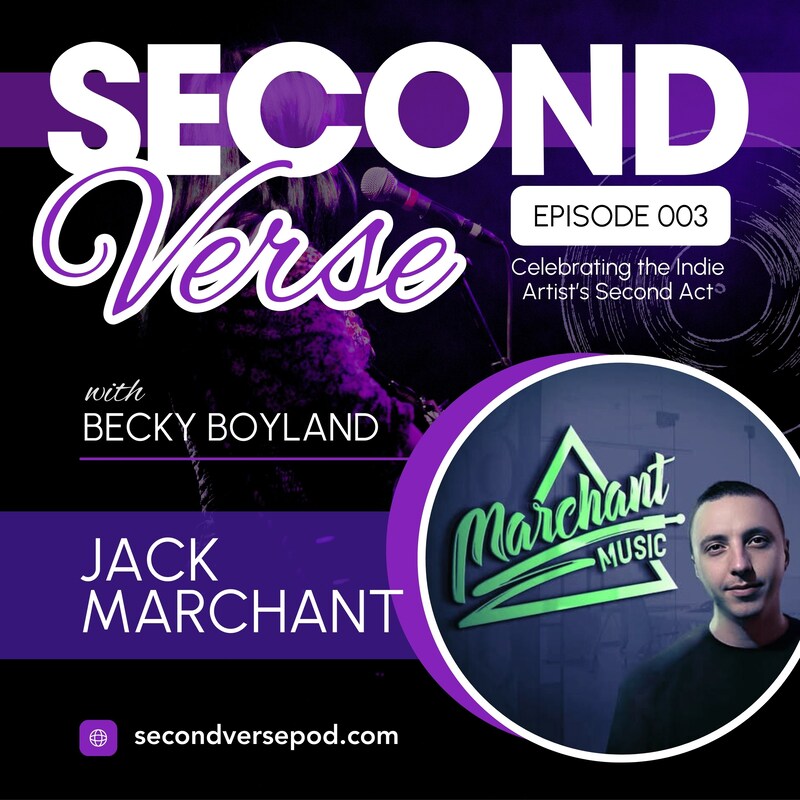
Jack Marchant: The Power of Persistence and Community in Music Production
In this episode of the Second Verse podcast, host Becky Boyland interviews London-based music producer Jack Marchant. They discuss his journey from childhood experiences in music studios with his dad's band to overcoming physical health challenges and making a full-time career in music production. Key topics include the importance of community, the reality of building a sustainable music career, and the value of mentorship. Jack shares insights on the struggle of pricing work fairly, the significance of authenticity in music, and the role of social media in connecting with fans. The episode closes with Jack emphasizing his personal slogan, 'Music for all, no matter the journey,' and offering practical advice for aspiring artists and producers.
Connect with Jack:
https://www.facebook.com/MarchantMusicProductions/
Instagram @Marchantmusic
Timestamps:
00:00 Teaser Clip
00:20 Welcome and Intro
01:31 Jack's Early Life and Musical Influences
02:57 Transition to Music Production
05:45 Breakthrough with Georgiou Music
07:24 The Importance of Community and Mental Health
09:36 Navigating the Music Industry
11:10 Challenges and Advice for Aspiring Artists
16:06 Sponsor: Attitude Creativity
17:29 An Exchange of Value
19:42 Jack's Health Struggles and Full-Time Music Career
24:12 Overcoming Vocal Challenges
25:30 The Power of Authenticity in Music
27:12 Building Community Through Music
34:32 Navigating Social Media as an Artist
44:20 The Importance of Mentorship
47:12 Final Thoughts and Takeaways
48:03 Recap
Transcripts
TEASER CLIP
JACK MARCHANT: I understand how hard it can be because we didn't have any money growing up it was tough.
But honestly, some of the best times I've had in my life were, when I was there, do you know what I mean? Like
you had to go through your struggles and people are very quick to judge.
Everyone's trying to do their best and some people are just not being given opportunities.
WELCOME AND INTRO
BECKY BOYLAND: Welcome to Second Verse, the podcast where we dive into the stories of indie artists and music professionals who have found their second act in music. I'm Becky Boyland, singer songwriter, StoryBrand certified brand messaging expert, and web developer. Like many of my guests, I've taken a winding path back and forth in my music, and now I'm passionate about helping other artists step into their own spotlight.
Today, I'm joined by Jack Marchant, a London producer from the UK who has worked with artists like Georgiou Music, The Duelers, and many incredible unsigned musicians. His work has been featured on BBC Radio, and he recently signed his first contract with Warner Chappell. Jack's journey is one of persistence, reinvention, and understanding the business of music.
From growing up in studios with his dad's band, to working in live sound, and eventually making the leap into full time music production, Jack's story is packed with insights for artists and producers alike. We talk about the power of community, overcoming personal and industry struggles, and why building a sustainable career in music means thinking like a business owner.
So grab a hot beverage, settle in, and let's dive into Jack's Second Verse.
Welcome, Jack. I'm so excited to have you on the podcast.
JACK MARCHANT: Thanks for having me.
BECKY BOYLAND:
JACK'S EARLY LIFE AND MUSICAL INFLUENCES
JACK MARCHANT: You have come into your artistry as a full-time project, but you're almost coming back around to it, it sounds like, from the way you grew up. Sure, sure. Growing up, my dad, he was in this heavy metal band. they were trying for a very long time to get a record deal and they had some good success locally, and it was going on for a very long time.
And then they ended up landing a record deal, so. I was, being kind of dragged, not dragged around, I loved going, but I was being brought to all these music studios in London and Kent Also being dragged to the gigs as well because, my mom and dad were split up, so my dad had us some weekends and all the gigs were, weekends, so we'd go like, literally sitting behind the drum kits. He was the drummer at the time. there was no health and safety back then. you could just do what you wanted. Places where, your kids probably shouldn't have been, but it was great fun and I don't regret any of it.
You know, has some great experiences there, seriously good. I think that was a big part of it. my mom wasn't a musician, but she was into her music scenes, so she was always like going out to gigs and bringing us to them and yeah, I suppose just from a young age, I was just there all the time.
BECKY BOYLAND: And you lived to tell the tale, even though there wasn't health and safety.
JACK MARCHANT: Just about, Just about honestly, sometimes it was close.
TRANSITION TO MUSIC PRODUCTION
BECKY BOYLAND: So as you got to a point where you were looking for a career and maybe just trying to make money, talk about that part of your story
JACK MARCHANT: Yeah. So I'll be honest. obviously I knew you have a massive music scene growing up. I didn't exactly know. You could go to college and do a music course, right? So. Originally went and done software development, but I was still working in a music studio alongside that. One of my friends, his dad owned a music studio in Greenwich, in London, so I just used to help out, set up the microphones in the rehearsal rooms and stuff like that.
And then. He told me, how can you study software development and not music? I was like, I don't even know you could do that. So, yeah, he, put me onto a course in a place called Lewisham in South London, and, ended up going to college and into university, which if I'm honest, I felt like. It wasn't a waste of time, but the things they were teaching there was always like, I felt like I was always a bit ahead of it because of working in the environment
And I suppose the main thing I got out of it was the networking side of it. learning to talk with people and create opportunities and you know. I'm not saying I was one step ahead because there's some very good people, like artists and producers there. But I'd had the experience of operating consoles and setting up, whereas a lot of people hadn't.
I ended up naturally helping people out with their projects as well as trying to do my own. So yeah, it was, great. with that and the studio work. I started building up a kind of, clientele of people to work with.
And then I went on holiday to Spain and I come back and the owner of the studio had told me that he's decided to sell the studio
BECKY BOYLAND: Oh no.
JACK MARCHANT: Yeah, exactly. He was like, you've got two weeks before he puts it up for sale. he was older, he wanted to retire.
I kind of get it. I didn't have money to take it over. I was like 21 or something. it was about two months after that he sold the studio. I didn't realize at the time, but the guy that took over the studio, made a deal with him to say that he still had to rent it out to me.
To dry hire it basically so I could carry on my work. And that was one of the dealers of taking it over, which I'm very grateful for. You know, I still use it to this day. someone else owns it, but now instead of people being employed there, everyone's kind of freelance.
So, I suppose during that time, when I left the studio, I literally had one person that I worked with for a very long time. Literally one, one girl. And months after that, it was very slow.
BREAKTHROUGH WITH GEORGIOU MUSIC
JACK MARCHANT: I'd get another person and another person and then they'd tell their mates and some people I'd meet at university would come and, you know, I ended up building it up slowly until one day I re-met up with a guy called, Georgiou Music, who, he's a rapper, right? So in the UK I think he's pretty big over in the US now as well. But he's a rapper. We made this demo song about mental health, right? So. And the song was called "Healing." We never had anything like this before. we recorded it in my bedroom, put it out, and it's like everywhere, like, you know, 300,000 streams on this demo and we're like. What, like we're getting about 15 before this.
Like,Honestly, that was a really great thing and that song just kept, you know, kept doing better and better. Until he almost became like a community for people struggling with mental health. It was very quick, very strong, and, kind of hard to deal with at times, I'll be honest.
JACK MARCHANT: We thought, all right, we are gonna rerecord this song and do it properly. we got a, great singer in. Who ended up having her own solo career after. We recorded it all again, much better quality then we put it out and it did well, but not as well as the demo that we had literally just recorded.
And it was like, what's going on? So we didn't get it. It was still like, you know, a hundred odd thousand streams and whatever, but it did okay, but, you know, the first one was like three quarters of a million, and we were just like, how does this work?
THE IMPORTANCE OF COMMUNITY AND MENTAL HEALTH
BECKY BOYLAND: Sometimes there's that lightning in a bottle, you know, you hit it at just the right time, I love that you mentioned community because in this day and age, it's not about, "Are you talented? Are you this? Are you that?" We're assuming that people are, that's the bar. It's more about making that connection with people.
And it is a really relatively recent movement that we care globally about mental health and how important that is. It's not surprising that would connect so well with people. That's what we can all hope for as artists, that we are building that community around those things that are so important to us have that emotional feeling and connection.
That's such a cool story, even though I understand it's mystifying when you're like, but I wanted to make it better. I wanted it to be my best music. And you didn't like my best music as much as my almost as best music. So that's actually funny.
JACK MARCHANT: Yeah, absolutely. as a producer, you think, oh no, it should be like sounding amazing, but it just prays out. As long as it's good enough people just care about what you're saying and what you're doing.
and this community started building stronger. it was Facebook at first, like that started really building stronger, right? So it ended up becoming like from just a song to put out for mental health. It was like, okay, he's actually gonna brand himself as this person that's gonna help people with mental health.
And we had both suffered with it prior. Right. And I'm talking this is about six years ago or something. So, before a lot of people were doing this kind of thing, and so we was like, okay, we need to make some more songs and address the different areas of mental health now. So yeah, we did, he's very clever in terms of the business side of it.
He knows what's gonna connect with people, what's gonna sell. How he can make money from it as well, which, people don't like to say, but if you wanna do this full time, you gotta make money from it.
BECKY BOYLAND: Absolutely, we can't have the art if we don't make room for people to make the art. They have to have the resources because we can't all do this part-time and put it out as if we're professionals.
NAVIGATING THE MUSIC INDUSTRY
BECKY BOYLAND: That can be a hangup for a lot of artists to think about, oh, I have to make money and I feel bad asking people to buy my music, but there's just no other way to do it.
We have to get paid for our work just like we would with any other career.
JACK MARCHANT: Absolutely. And yeah, that part I feel like can be a bit strange because especially for newer artists, you're trying to get them to buy products somewhere they wouldn't usually go to buy it. most people go into a store or, you know, they don't go into Bandcamp. And it's like, okay, so how then you convince these people that what they're buying, they're gonna get their value for it
BECKY BOYLAND: Right.
JACK MARCHANT: How are you gonna provide that community for them to feel like, they're part of your journey.
BECKY BOYLAND: Yeah. And that's especially in a day and age where we're not buying albums in the way that we used to. And that's where circling back to community is so important because those are other ways to develop relationships and allow people to actually be patrons of the art and support artists directly. It feels like a new method, but it's actually not.
It's a very ancient method of supporting artists the starving artist model that we think about it's almost. Paying your dues. it's actually, that's not the way it ever was. that's not the way it's supposed to be. And that's not the way that it needs to be. You talked about before we got started, diving into this, but also being careful and not just going headlong into the process without being prepared.
CHALLENGES AND ADVICE FOR ASPIRING ARTISTS
BECKY BOYLAND: That makes me think about that starving artist mentality that everybody said you always had to do, but you have different advice for people who wanna get started talk about that.
JACK MARCHANT: Yeah, I think so. So I'll finish up with Georgiou because he's gone on now to win awards I sung one of them, the newer one. it's now, nearly 20 million on Spotify. And, globally it's like a hundred million. So people have now, and he's crazy, right? He's not even done a gig yet, and he's got three quarters of a million followers on one platform.
And people are begging him to do a gig and he's still like, I don't know if it's gonna be enough people yet. And I'm like, come on. Right? There's many different avenues to make it. You just have to know what you wanna do. I think. And be honest, like with yourself, you know, first, but yeah, going, sorry, sorry.
Carry on. What was she saying?
BECKY BOYLAND: Oh, not at all. I think that people are afraid that They're not gonna make it. It's not gonna work out. And so in their fear, they may hold back, but at the same time, they may have been influenced by that starving artist concept. so if somebody says, gee, I don't know.
Should I get into music right now? What would you say to them?
JACK MARCHANT: I'm always initially a go for it guy. But you have to think realistically as well. This is just my advice to people, right? I'd always say go for it, but if you are just going for it with nothing, it's gonna be seriously difficult and you're gonna end up back in a day job in no time.
Right. I feel like before you take. the leap You need to get some things in place. You know, do you have enough clientele in any way, shape or form? Do you have money behind you to support you in case you don't get the clientele or how long can you support yourself for? And I think them two things alone are important because you need money to eat now and you also need money for later. And then I think you need to know a lot about legal stuff as well, such as, are you taking a day rate for this or are you taking like writers or publishers, or how is this getting split?
And what kind of agreements have you got in place with people to make sure that you are gonna get paid down the line?
BECKY BOYLAND: Absolutely. especially as artists start to get into. the nitty gritty of what's involved in being an artist, it can be overwhelming. There's so much information to know, and it's,not the same as many other industries where it's very clearly laid out. It can really be a challenge for folks.
They may not have to go for a degree in this, and in fact, a lot of degrees won't even give you this information, It's important to make sure they have good people they can refer to who can help them navigate these challenges and make sure they do it right.
And I think that's all really great and important advice. Make sure that you're making a plan just like you would with any other business because we are in business and be prepared and how you will invest in yourself because you do have to spend money to make money.
Make sure that you have an understanding and a support system so that you account for all of these things that you do, get paid what you're worth and according to your value, and do it the right way. I think that's really important.
JACK MARCHANT: Yeah, absolutely. I feel like that's a big problem that's happening at the minute is there's a lot of people that are taking this whole, you know, hungry thing in the wrong way. They're going out and going, I'm gonna do your mix for free. I'll record with you for free. And what they end up with is like, you know, a lesson average product to say the end, because usually these people that often it for free are just starting out, which you know, is fine.
You've gotta get some experience, but what you should be doing really is working with people at a similar level, not trying to approach people and just look, it's like you're basically lying because behind social media you can say, oh, I've done this and this and this and you can make anything up and make it look good, really online.
And people go, oh yeah, I'm gonna send my work to him. And then, you know, they'll do a free mix and the artist might go, oh, it's good enough because not all artists have great ears,they might pull it out and then go, oh, well, everyone's criticizing it, or no one's listening to it.
BECKY BOYLAND: Yeah.
JACK MARCHANT: On top of that, it lowers the bar for all working musicians and producers where say we have a rate of X amount of pounds, as a standard. artists, or whoever chooses to work with you is going, But this person's done it for this little amount.
Why am I going to give you this much? Suddenly everyone's gotta find a point where they end up meeting and it constantly brings how much money's actually in the industry down.
BECKY BOYLAND: Exactly. And it also is a really great way to damage relationships before you actually get started because you're not offering, value. even if you're just underselling yourself.
SPONSOR: ATTITUDE CREATIVITY
BECKY BOYLAND: We'll be back with more after the break.
Second Verse is sponsored by Attitude Creativity. Many indie music artists don't have a website that grows their audience and reflects who they are, so they get lost in the noise of streaming. Marketing and brand messaging with Attitude Creativity helps boost your brand and build a site that hits all the right notes.
You want to be an artist who stands out from the crowd, and to do that, you need your music to be heard. If your website doesn't reflect who you are or make an impact, you feel like a singer who's been handed a pair of drumsticks instead of a mic. You deserve a website and brand messaging you can be proud of, and that doesn't take time away from your music. As an artist like you, I understand how overwhelming websites and marketing can be, and that's why, putting on my other creative hat, I put my decades of marketing and development experience to work for you.
You'll no longer have to apologize for your website. You'll look and feel like a professional with a custom StoryBranded website you can be proud of. And right now you can get a headstart with my free downloadable EPK blueprint and start building your electronic press kit to promote your music.
Head to attitudecreativity.com/blueprint to get your copy. That's attitude A T T I T U D E creativity dot com slash blueprint.
AN EXCHANGE OF VALUE
BECKY BOYLAND: When you sell at a good rate, you're actually giving an exchange of value.
You're saying, I'm worth this amount because of what I'm going to offer you, and so it's going to be worthwhile. But when you're undercutting that, you're diminishing yourself and then as you've said, affecting the industry and the better way is just go online and get a whole bunch of stems and start getting reps, practice with what's already out there instead of practicing on unsuspecting, starving artists.
JACK MARCHANT: There's so many websites you can get free stems for. Or even if you just ask people like, oh, do you have any old stems? Most people are gonna say, yeah, you can use that.
BECKY BOYLAND: Yeah. And then you have a target too, because. Once you've practiced with those stems, you're going to have a finished product out there that you can compare with. How did I do? How close did I come, did I better their mix? Maybe you did. you'll never know that until you have that reference point as you're growing and developing your ear as a producer.
That's such a wonderful point because I have seen it so many times the recommendation to do exactly what folks are doing, just go bother somebody and,do one for free. But there's no value in that for anybody. It says you are an amateur and you may or may not provide value to this other person.
And, it's definitely not the way to grow, not the way to build, your relationships and actually develop partnerships and,ongoing, folks that you can work with. So that's a huge thing I think for artists and producers.
JACK MARCHANT: You've got this natural thing in your head where, oh, but they haven't paid me this much, so I don't have to give them as much attention as someone who had paid me this much. And even though it doesn't really work like that, you'd naturally get this thought, oh, well I don't know I'm only doing it for free for you, so I don't really have to prioritize for you. And then, it's just a horrible thing to get into.
BECKY BOYLAND: Exactly. So,it sounds like you were doing music alongside other things, and then talk about what inspired you to move along and then make music the priority.
JACK'S HEALTH STRUGGLES AND FULL-TIME MUSIC CAREER
BECKY BOYLAND: I know that it was a significant, situation for you about a year ago.
JACK MARCHANT: So I suppose when I was a young adult, I, I wasn't just making money for music. Like I said, I was working in the music studio and that was, paying my wages As soon as he sold it, I was like, oh dear. Do you know how hard it is to get into this industry?
I knew I had to get, a day job the first one I got was in a kitchen, and then I went to a supermarket, and then I joined live events, which was pretty fun I got to do some cool stuff there, so.
BECKY BOYLAND: I bet.
JACK MARCHANT: Yeah, yeah. Oh, everyone I worked, you know, they, the company I worked for had really good contracts and did a lot of the big arenas and festivals in the UK and even some abroad.
So, yeah, it was real fun. then I was a sound technician in the theater and worked for an AV company until last year. So I, somewhere along the line basically developed four herniated discs at the time it was in my back. I could feel something was wrong.
s to recover. And this was in:I was doing a lot of the programming on the desks and setting some stuff up. It was fun, but I couldn't do the lifting anymore. It got to a point, January last year actually, and I was hit by a lorry, so I was in a car station ring. And the lorry just failed to stop completely and just hit the car, which, caused some extra issues in the back.
Every time I was at that day job, I was like, I can't physically lift stuff higher than here anymore. Some of these consoles are like 270 kilos.
BECKY BOYLAND: Oh my. Yeah.
JACK MARCHANT: Yeah, exactly. it takes six of you to lift them and it's still heavy, so, yeah, I just thought, do you know what, I'm making just enough money now that I could go into music and do it full time.
I didn't even think about it. I just walked in the next day and handed in my boss a notice.
and II was very grateful. I appreciate everything that's happened throughout my life because I feel like it's led to where I'm now and yeah, I've got some issues like obviously some physical issues, but overall I'm in a good position,
And, yeah, so that's kind of led me back to doing music full time and I don't regret it at all. Since I've gone full time with it, in the right circumstances. it's been the best thing ever. I've got great contracts, I've worked with some great people and when I say great people, I don't just mean big people.
I love working with new artists. Some of them are really good. It gives me more creative control and freedom to do, more of my own work rather than having to do this, this, and that's it. So, yeah, that's fun as well. it's been a bit of a ride, but now we're at that point where it's going okay.
BECKY BOYLAND: I love that and I love your perspective. I, two years ago had spine surgery in my neck and had, I had three discs out of four that were needing to be addressed, and I had two replaced, one fused, and it was everything my surgeon promised in that it would alleviate the pain I'd had and it did, but it introduced a complication.
I had a paralyzed vocal cord, and lost my voice entirely for six weeks. as a singer, that's terrifying I'm so grateful that I've recovered. But it took me a couple of years to get my voice back to the condition that I wanted it to be in. But it also reinforced for me that, yes, this is my passion.
This is what I want to do. I can identify with that. clarity that yes, this is the direction to go and this is worth working toward and making the effort towards. I love your perspective on that.
JACK MARCHANT: Yeah, that's incredible.
OVERCOMING VOCAL CHALLENGES
JACK MARCHANT: Honestly, like you didn't have your vocal cords. How did you even bring that back did just come naturally or is it something you have to train?
BECKY BOYLAND: It's a lot of vocal training, a lot of, therapeutic approaches to singing. Straw phonation was a huge benefit for me, because it's a very gentle way to get everything going and, at some point because it's sort of a nerve problem, I,think,it does have to just wake up and join the party again.
But I got my speaking. Like, Hey, wake up, come back to the party. it was interesting because I got my speaking voice back before I got my upper register. So there was just a hard stop at a certain point that I could only sing to a certain note and then there was nothing. it took a long time to get past that, which was also very scary. It was the next scary thing in the process, but, it seemed like it took forever. looking back now, it seems like a world away. I'm really glad that it's, actually, I guess it was three years ago. it doesn't feel like that now, but, looking ahead toward what is this gonna take?
That felt like forever.
JACK MARCHANT: Yeah, that's incredible. Have you done your own podcast yet? Maybe someone should interview you.
BECKY BOYLAND: I'll definitely talk about it more and share in an episode and explain what that was like.
THE POWER OF AUTHENTICITY IN MUSIC
BECKY BOYLAND: But yeah, it's amazing that there are a lot of artists who are able to take, whether it's through the words or the music, their stories in the sense of the emotion the things they're excited about the things they value or, the hurts they want to help people work through.
Once that makes that into the music in some way is that authenticity that I think people connect with so much, just like that song about mental health. And I think that makes all the difference between, something that is, crafted, to kind of match the industry versus really putting emotion and heart and energy into what we're doing, whatever the genre and whatever the vibe.
JACK MARCHANT: Yeah, a hundred percent. And you touched on something earlier about, how sometimes something big like that happens to make you realize what you need to be doing in life it's incredible how you overcome these big things or you get through something like sepsis or your spinal issue, and then you're like, oh, well I suddenly just know what I need to be doing.
BECKY BOYLAND: Yeah, yeah.
JACK MARCHANT: It's almost like something just comes over you and you're
BECKY BOYLAND: we all have our Billie Eilish Barbie moment of what was I made for?
JACK MARCHANT: Yeah. Yeah.
BECKY BOYLAND: So as a producer and a writer, because you're collaborating so much, you are not necessarily following certain themes of your own artistry, but talk about, a personal slogan that you had because of this role as a producer.
JACK MARCHANT: Oh, so, here look. It says, "Music for all, no matter the journey."
BECKY BOYLAND: I love that you have that printed right there on your shirt. That's so perfect.
JACK MARCHANT: Yeah, one of my friends has a clothing company. He's very kind,
BUILDING COMMUNITY THROUGH MUSIC
BECKY BOYLAND: Collaborations are everything, that's for sure. Expand a little bit on that Music for all, no matter the journey. I love that.
JACK MARCHANT: So for me, I'm very soft in a way to people. I see people's struggles, I understand how hard it can be because I grew up in social housing, in, southeast London and, we didn't have any money growing up it was tough.
But honestly, some of the best times I've had in my life were, when I was there, do you know what I. mean Like It's this community thing again, like growing up, the whole estate I lived on, you are all best mates. Everyone looked out for everyone. Everyone helped everyone out and no one had a lot of money. But somehow, you always managed to do everything because some person was like, oh no, we are doing this today.
Come with us, we're doing this. You always had such a great time But then at the same time, you had to go through your struggles and people are very quick to judge. They see someone that comes from somewhere less fortunate. And they just instantly get this image of, no, I don't want anything to do with that person.
And I think because of what I've been through, I understand these people Everyone's trying to do their best and some people are just not being given opportunities.That kind of led me to. want to help as many people as I can within means if people are great at what they do or if they have a really good story or something about them is inspiring, I'll work with them and, you know, we'll figure something out that, benefits both of us in terms of how we can get this done. And I think sometimes a lot of people are a bit nervous to reach out because they think, oh, this is gonna cost me like an arm and a leg. And it's like, well, it depends how you wanna go about it. .If you wanna record in Abbey Road Studios, it's gonna cost you an arm and a leg.
BECKY BOYLAND: That's for sure that is so meaningful to me because you just sometimes need an opportunity. A lot of the celebrities that we know these days, had someone who gave them an opportunity in, many cases, and.we're a lot of times very withholding and everybody just feels like I need to worry about myself.
And I think that's the scary part of why it's easy for us to dismiss people based on just that quick thought and glance and where they may be coming from. But I think it's so beautiful that you're doing this, especially in the context of music, because we all have the ability to connect with music.
As we're listening to it, we don't know who's listening thousands of miles away, but we may be having the same reaction and emotional connection and encouragement. so there's so many ways to flatten that and build community around that. I love that, perspective and how you work with folks.
That's just beautiful.
JACK MARCHANT: Oh, thank you. honestly, it's something that's just true to me. I think a big part of, knowing your brand is what do you really believe in and what do you feel strongly about? I didn't have this brand until very recently because I didn't know, I say recently, a couple of years ago now, but, I was working in a studio at 19.
I didn't know. Why I was doing it per se. Everyone says, oh, I do music because I love music, but why are you really doing it? It's like, and then them stories that are like coming from these artists, like up and coming artists, they're inspiring and that's where you get some of your best work.
In conversations sometimes you have to have deep conversations with people and it's a lot about trust as well. Trust in the people you're working with. within that comes some of the strongest lyrics, some of the strongest music and some of the best ideas.
You reached the darkest point so you can, trust no matter what. and throwing ideas out, getting in front of the mic. Then it doesn't seem so scary because you just spoke about something that's a lot more scary than getting in front of the mic
BECKY BOYLAND: Yeah, and especially if their stories are really unique. in that specificity, you have the opportunity for it to be more universal, because it sticks in the mind and captures the attention. But that level of authenticity when you've been through something very visceral and difficult and can bring that emotion out and write about it,
those are the songs that even if it has nothing to do with my experience, really stick with me as a listener and I think stick with a lot of people And if they don't have the opportunity to get in front of a microphone and we're missing out on that art, that would be a tragedy.
JACK MARCHANT: Absolutely. I also look back in time who my influences were, And, when I actually hear what they're writing about, it's, it's the ones that were like big, but always something that was close to them or something that was happening at that time. Like, not so much just to them, but as a whole country or like a, something that's happening in the world or, you know, like even like something like "Living on a Prayer."
Like, you know, something about working class people like, and you're just trying to make it through that song's like massive and you wouldn't really think something like that's going on about the community, but it is. It's, you know, it's what's happening at the time in that place.
And that's why I think these songs connect to people. It's because they're living it. You know what I mean? I think it's so and so reason why love songs have done so well, because everyone has a heartbreak and everyone loves someone. And it sounds cheesy, but I think it's true.
BECKY BOYLAND: It is. And it's something that you can say, oh, well maybe I don't have this exact, the, these lyrics are a little bit different than what I'm really going through, but it still feels so authentic and, I've laughed at myself sometimes recently as I'm listening to music, thinking a little bit more on a critical level and realizing that these lyrics have nothing whatsoever to do with me, but it may be a song that I've just loved, musically and belted the lyrics to,
most of my adult life, or even going back to my teen years, and those are the ones that really stick. Sometimes you don't even understand the lyrics and you just connect with it anyway because I. there's all of this feeling that comes out of the entire process in production, and it's way easier to do that when there is that authenticity behind it and you can really build it up.
And it's not to say that we don't just, get excited about dancing to some, you know, pop-y, whatever. Some of those songs are really fun, they're really great. We need that kind of art too. But it's the art that makes its way in at another level. Even if it comes out in that same vibe, it may still be an upbeat dance song, but you can just tell when that story is less formula and more heart and craft it's a totally different sort of thing.
And I think those are the ones that really stick.
JACK MARCHANT: Absolutely like them. Definitely like dancey pop songs, they definitely have time. and a place you know, sometimes there's a lot of trouble going on in the world or something and, we might just need a dancey poppy song that's gonna, pick up the whole nation again and make us realize actually it's not so bad, just to take everything with a pinch of salt.
BECKY BOYLAND: Exactly, Art is good for everybody.
JACK MARCHANT: Definitely.
NAVIGATING SOCIAL MEDIA AS AN ARTIST
BECKY BOYLAND: So I think, a lot of artists and, especially when you're a producer as well, can struggle with building that community through social media and the web and trying to get yourself out there.
JACK MARCHANT: I mean, I'm gonna be complete honest. I don't get on too well with social medias, but at the same time, you know, I've started doing it more in the last year I've realized it's a big part of where we are as a kind of industry and as a whole at the minute, everything's online now, you know, really you have to use social media for something and I tend to use it as a kind of portfolio, but also a bit of a community. And what I try and teach other people is just stuff I've learned from artists that I work with that have done it very well. You know, someone like Georgiou or, Jay France from the Dualers, they've done it well but they're at two different ends of the spectrum.
So Georgiou doesn't gig. He hasn't yet, shall say. I'm not gonna say anything, but, yeah. And he's very good at keeping the community on social media, like he engages with his fans. He puts a lot of, you know, content up, videos of himself. He asks him questions, he does lives. He's, you know, very, very good.
He'll write some lyrics and he might do a little video and be like, oh, hey guys, do you think this is good enough? Does this resonate with you enough because obviously what he's writing is for people with mental health. So you know, he has to make sure from a musical and business point of view, that it is actually resonating and it is what people are going through.
And I think a big part of that is he generally does wanna help, you know, so it's being honest. Like what is it that you wanna do and get out of this? I think. Whereas, Jay France, he's a South Londoner. He's like, I'm from a South London and he's, he's cool, you know, he does a lot of gig and they played massive arenas like Wembley, the O2, all the big ones. They've toured Europe and I think they've toured America now but he's a very happy soul.
He's like, everything's like, he sees the world in color and stuff. it's great. he makes videos of him on the road with Tyber and Pete who are the lead singers of the Dualers and they'll just be doing happy videos.
That's what he believes in. He believes The world isn't a bad place and everything's great. He wants to help people uplift themselves in that way, you know, and that's how he gets his community, you know. And they also do a lot of things locally. They have a local place in Tunbridge Wells, which the lead singer owns.
And they often go down there when they're not on tour and do like small, enclosed gigs where there's only about 300 people you know, they'll be signings after and have a drink with people. So, you know, that's a way that they would build a community.
BECKY BOYLAND: Yeah.
There's that exchange of relationship whether it's happening virtually or in person, that they're able to accomplish. And I think thatthat is so important and can be daunting for indie artists who are just trying to put their feelers out and get some information going.
Because initially, especially when you're releasing music. You are having to give people all these links, go find me here. Go watch my videos there, go to this place, go to that place, and it can just get overwhelming and confusing. What is more helpful is to bring them back to your home base with a website that invites people into a story and is the hub to go out to all those places, to find them virtually and even in person.
But to be very thoughtful about building that brand messaging that is more than just, here's my gig, here's my track. Rather than just a ton of calls to action, it's a centralized place to build that kernel of relationship and then take them where they need to go so that they can make that authentic connection.
The daunting part is following all the instructions and rules that everybody says, you have to do this, this way and you have to post this many times, and it has to be about this random thing or that dance, All of those things just distract because at the end of the day, just like with the authenticity in your music, how you present yourself and how you're in interact needs to be sustainable and needs to be truly who you are, or it's just gonna burn you out. That can be the big challenge for a lot of artists who may, make those efforts initially really energized and excited and before long realize that they just can't keep that going.
It also should be supporting the creative process rather than sucking up all the time that you wanna put into your creativity.
JACK MARCHANT: Yeah, absolutely. I think that's a big reason I stayed away from, social media for a long time I did find it very distracting. I'd get almost hooked on it. I'd be like, what do I have to post next? Why didn't they like the song video as much as a picture of me with something?
You get 250 likes on a photo of yourself and 15 on a song video. And it's like, well, why isn't anyone surely this is more interesting, but, no. I was at a seminar last November. it's called the Ultimate Seminar funded by a company called Creating Vision. If there's any other Londoners that see this, you should check them out.
It's free anyway. They have guest talkers like, Nick who signed Jay-Z and loads of up and coming artists and they give you advice and there was a marketing team there and they were like... it said something that stuck with me people care more about who you are than what your music is.
So when, for example, if you just put up a song, very few people are gonna click on it until they get to know you. Because they,wanna know, you know, do I gel with this person's personality or do I like what they're doing? Like,Like you said, you've gotta be authentic and have that message that they as a community will connect to.
And then once you have that, you can start selling your music to them.
BECKY BOYLAND: Yes. We have this unprecedented access to people because of our cell phones and social media. And so we have greater expectations. We can't really let people get away with the mystery too much, or at least a lot of listeners are not really that interested in that.
They wanna know that they can be part of your tribe, that they can actually be connected to you in a certain way. That. can be a little bit overwhelming, but once we feel free enough to share that at a healthy level and then connect that to our music, that's where we will build that community of people who are looking to identify with what we do in the art that we make and the values that we have.
JACK MARCHANT: Yeah. definitely. I think you hit a nail on the head with that one. People wanna know you personally, but. share it on a healthy level. It can get very overwhelming. I also forget a lot of the time to do things. For example, I'll be in one state of mind on social media, and then I'll be doing the music.
I find it very hard to split them. Some people I know, they'll be in the music studio making videos of themselves and I'm just like, how can you do that?
I'm meant to be working right now, you know, and making these songs. it can be very stressful for someone not really. fluent on camera, it is very distracting and hard and you do feel a bit self-conscious at first
For me anyway, it was horrible. Like, having to pick up a phone try and video myself or take photos and talk to people it's a bit weird at first, I'll be honest, but you just get used to.
BECKY BOYLAND: Yeah, you can be and, I will say it is a little bit the luxury of the producer that you don't have to do it at the level that is expected of an artist, but I think that all needs to be within the context of maintaining good mental health, because we've seen so many influencers and content creators who have pushed past that boundary of mental health and either had to step back for a bit, but. In much sadder scenarios have really suffered consequences. So it's an important resource and tool, but it really still does have to come down to, if you need to focus on your creativity and your mental health, that needs to take a priority. And the other's a supportive role just to keep connection with people, but it can't take over in a way that's going to be detrimental and take away your art from what we really need in the world because we do need people's art. That's what it's there for.
JACK MARCHANT: Yeah, absolutely. keeping healthy is while you're doing it both physically and mentally is a very important point because I'm very guilty of doing this sometimes. I'll be working on something and I'll forget to eat, I'll be like all day and it's 10 at night and I haven't eaten anything.
Suddenly, you start feeling a little tired for a couple of days because you haven't been eating or drinking properly, It's very hard to keep up with it. But it's something that I think is important, you know, is to, you know, keep your mental and physical wellbeing in check in the studio.
BECKY BOYLAND: Yes, definitely. I've done that too where I've, been in the middle of a track and I'm like, what time is it?
JACK MARCHANT: Yeah.
BECKY BOYLAND: Especially when it's going great. it's just so good. And you wanna do this one little thing, and before you know it, you've blown past a meal or two.
JACK MARCHANT: Yeah, absolutely.
THE IMPORTANCE OF MENTORSHIP
JACK MARCHANT: I think one other thing to mention is I think having a good mentor is, something that not a lot of people, do. A good thing that I found really that transforms me, like with my skills rather than in any mental capacity or anything is.
Is, just having someone that I trust, someone that I know, okay, you are probably like five to 10 years ahead of where I would wanna be from now. Like, why don't I just give you X amount for this amount of sessions a month? And then we just go through my work and improve it in every way we can.
You know, artists, producers, engineers, anyone you know needs to think about is that you are gonna get better as time goes on. But having someone there from an outside perspective, is a much better option than just trying to figure it out yourself. 'cause you can't always see where you're going wrong,
Having someone that you trust that's more experienced than yourself has probably been through these before and can help you get there quicker. So.
BECKY BOYLAND: That is excellent because especially since it's so easy to DIY music these days, it's very easy to also think that, well, I can just figure this out. I can watch a couple of YouTube videos follow all these,tutorials and I will become a master and a pro. But there is. nothing that can take the place of mentorship.
And so many times we push that to the side because we think of it as a big expense. The reality is if we can trust somebody else who's got a lot more experience than us, they can really take a lot of time off of what it's gonna take us to figure out all the things they've already figured out.
And so it takes a bit of humility to do that. But you're absolutely right. That is just such a massive step forward. And it also is a really mature way to look at the healthiest way to grow. So that's huge advice. I think that's really great.
JACK MARCHANT: Yeah. Thank you. Honestly. that's something I've done recently. Like I was in that position where I was a bit naive, like, no, I'll just go on YouTube But why do I want someone else telling me what to do? Then, I was getting bored.
I was like, okay, well. I don't feel like I can break this wall alone. So I met someone, funnily enough, in that period, He was a very good engineer and he's worked with some really good names in the industry I was just like, look, this is what I can afford every month.
And we just worked something out now. And he's been really, really kind. Over a space of literally four months, the quality of the work has just gone from where it was to like different level. And honestly, I think, yeah, having a mentor is probably one of the best things I've done recently,
BECKY BOYLAND: That's fantastic. I love it.
FINAL THOUGHTS AND TAKEAWAYS
BECKY BOYLAND: This has been such an awesome conversation. what's the best way for our listeners to support your music?
JACK MARCHANT: I think, to support my music. as you've heard during the conversation, I write with other artists. I don't necessarily have my own music out there, but I'm credited and I do get royalty from other artists that I work with. So, yeah, just listen to the other artists, support them in, supporting me and the community.
So.
BECKY BOYLAND: That's awesome, and I will have everything in the show notes so that you can check out Jack's music and the artist that he's collaborated with. Thank you so much. This has been absolutely delightful and, I'm excited to hear more and keep an ear out for what you're up to.
JACK MARCHANT: Absolutely. It's been great. You've been a great interviewer thank you so much for having me on.
RECAP
BECKY BOYLAND: What an enjoyable and insightful conversation with Jack Marchant. His journey is such a great example of how music careers aren't just about talent. They're about persistence, strategy, and relationships. A few key takeaways: "Music for all, no matter the journey." Jack's personal slogan speaks to the power of music to connect people, regardless of background or circumstances.
Then, your music career is a business. Jack talked about the importance of pricing your work fairly, knowing your worth, and avoiding the trap of doing work for free just to get experience. The industry only thrives when we value the art and skills we bring to the table. And finally, mentorship is a game changer.
Instead of struggling through the years of trial and error, Jack invested in learning from someone more experienced and saw massive improvements in just a few months. So your action step, if you're an artist or producer looking to grow your career, ask yourself, do you have a clear brand message? If someone finds you online, do they immediately understand who you are, what you offer, and why it matters to them?
Are you pricing your work in a way that reflects its value? If you're consistently undercharging or offering services for free, it's time to rethink your strategy. Do you have a mentor or trusted guide in your field? Having someone who has already walked the path can save you years of frustration. If you need help clarifying your message and positioning your brand, I'd love to help.
And if you enjoyed this episode, make sure to subscribe, leave a review, and share it with a friend. Every bit of support helps indie artists and producers find the tools they need to succeed. Now to close things out, I'm excited to share a track produced by Jack Marchant. Stick around to hear "Stupid in Love" by Neemah Star.
And as always, keep chasing your Second Verse.






