Speaker:
00:00:05
Welcome to Summer Speedos from Neighborly, our short in between season
Speaker:
00:00:09
series, while Shannon takes a break from our regular interviews. I'm
Speaker:
00:00:13
Johan, the producer of the show. Some episodes are field notes recorded
Speaker:
00:00:17
outside in ordinary places where care actually happens. Others
Speaker:
00:00:20
are story field notes, more cinematic reflections that start with a story
Speaker:
00:00:24
from history or real life. Either way, we're paying attention to the small,
Speaker:
00:00:28
ordinary ways care, faith, courage and community show up around us.
Speaker:
00:00:32
So grab a cold drink or head out on that bike ride, walk or hike.
Speaker:
00:00:36
Enjoy this year's edition of Summer Speedos from Neighbourly.
Speaker:
00:00:45
Usually these episodes start with something ordinary. I've noticed a neighbor
Speaker:
00:00:49
waving first, a lawn chair sitting empty, a conversation that
Speaker:
00:00:52
somehow starts after someone says they should probably get going. But
Speaker:
00:00:56
this one is a little bit different. Today I want to share with you a
Speaker:
00:00:59
story from history because I love history. Not because we're
Speaker:
00:01:03
suddenly becoming a history podcast, but because some stories give us
Speaker:
00:01:07
language for the ordinary work of care, courage, faith and
Speaker:
00:01:10
community. And this one gives us a word we probably all need at some
Speaker:
00:01:14
point. Endurance.
Speaker:
00:01:25
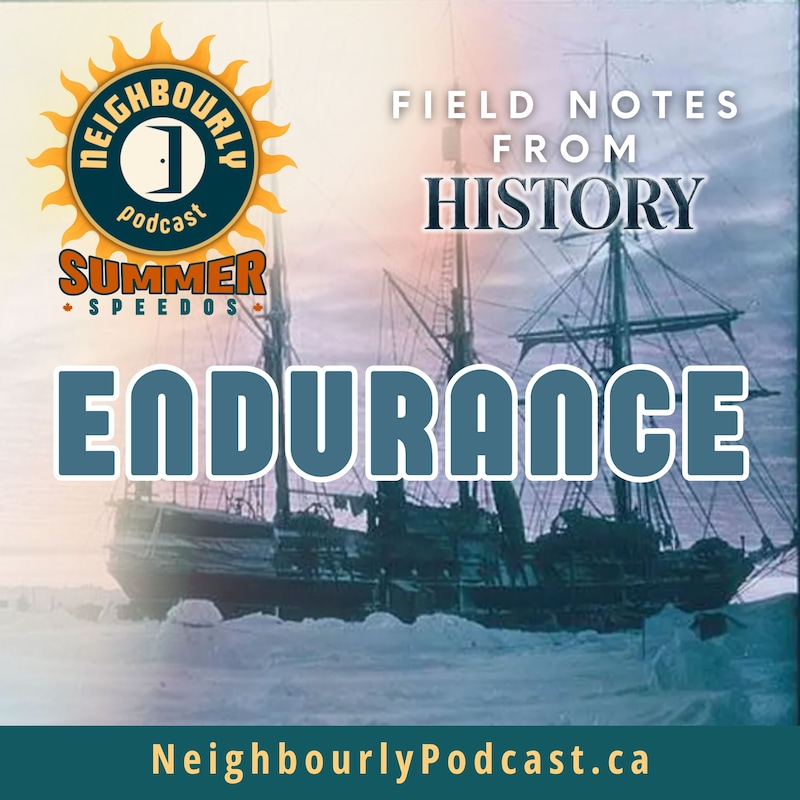
In 1914, Ernest Shackleton sailed south
Speaker:
00:01:29
with a bold plan. He wanted to lead the first
Speaker:
00:01:32
expedition to cross Antarctica on foot. The ship carrying
Speaker:
00:01:36
him and his crew was called Endurance, which is one of those historical
Speaker:
00:01:40
details you almost couldn't make up if you tried. It
Speaker:
00:01:44
sounds like someone named the boat after the lesson, before the lesson even happened.
Speaker:
00:01:49
Now, before they reached the continent, Endurance became trapped in pack
Speaker:
00:01:53
ice in the Weddell Sea.
Speaker:
00:02:02
At first, the crew hoped they can wait it out. Ice was part of the
Speaker:
00:02:05
risk. Delays were expected. This was Antarctica,
Speaker:
00:02:09
not a Costco parking lot in July. But as the
Speaker:
00:02:12
weeks passed, it became clear that they were not simply waiting for
Speaker:
00:02:16
better conditions. The ship was stuck and
Speaker:
00:02:20
the ice was deciding the terms.
Speaker:
00:02:24
For months, Endurance drifted with the ice. The men kept
Speaker:
00:02:28
living and working aboard, but the pressure around the hull kept building.
Speaker:
00:02:32
Eventually, the ice began crushing the ship itself.
Speaker:
00:02:36
On October 27, 1915, Shackleton gave
Speaker:
00:02:40
the order, Abandon ship. 28 men
Speaker:
00:02:44
left Endurance and moved onto the ice with whatever supplies they could save.
Speaker:
00:02:48
They were hundreds of miles from help, with no practical way to call
Speaker:
00:02:52
for rescue. And they were now living on a surface that can split apart
Speaker:
00:02:55
underneath them. But what stands out
Speaker:
00:02:59
for me is not that Shackleton had to manage the danger around them.
Speaker:
00:03:03
He also had to manage what was happening inside the group.
Speaker:
00:03:07
Cold, hunger and exhaustion were obvious threats.
Speaker:
00:03:11
But despair was dangerous too, maybe even more
Speaker:
00:03:14
dangerous. Once a group begins to believe that there is no way forward,
Speaker:
00:03:19
survival gets harder very quickly.
Speaker:
00:03:31
So Shackleton gave the men a structure he assigned work,
Speaker:
00:03:34
kept routines, maintained watches, and gave
Speaker:
00:03:38
people responsibilities. That may sound ordinary,
Speaker:
00:03:42
but ordinary things matter when everything else becomes unstable
Speaker:
00:03:46
and a routine doesn't solve a crisis, but it can keep people
Speaker:
00:03:50
from being swallowed by it. He also kept the men together.
Speaker:
00:03:54
Meals were shared. Conversation was encouraged.
Speaker:
00:03:58
Games, readings, music and small routines of normal life
Speaker:
00:04:01
continued. Wherever.
Speaker:
00:04:13
And I know games and readings on the ice sound almost cheerful
Speaker:
00:04:17
until you remember the floor was actively a chunk of ice floating on
Speaker:
00:04:21
water. But it was not escapism. It was a way of
Speaker:
00:04:24
reminding the men that they were still a company, still human,
Speaker:
00:04:28
and still responsible for each other.
Speaker:
00:04:31
Shackleton paid close attention to morale with the seriousness another
Speaker:
00:04:35
leader might give to navigation or rations. He watched for
Speaker:
00:04:39
men who were weakening. He understood that fear and pessimism could
Speaker:
00:04:42
spread through the camp and he didn't need everyone to pretend that
Speaker:
00:04:46
things were fine. But he could not allow hopelessness to become
Speaker:
00:04:50
the dominant voice. That feels like one of the central
Speaker:
00:04:53
lessons in this story. Endurance was not only physical,
Speaker:
00:04:57
but it was communal. The men survived because the
Speaker:
00:05:01
culture around them made survival more possible.
Speaker:
00:05:05
The original mission had been to cross Antarctica. By
Speaker:
00:05:08
this point, that dream was over. The ship was gone,
Speaker:
00:05:12
the route was impossible, and there was no version of success left
Speaker:
00:05:16
that looked like the plan that they had announced before leaving. But
Speaker:
00:05:19
Shackleton seemed able to let the mission change without letting the
Speaker:
00:05:23
story collapse. Crossing Antarctica was no longer the
Speaker:
00:05:26
goal. Getting everyman home and alive was. That is a
Speaker:
00:05:30
different kind of leadership. It takes humility to admit
Speaker:
00:05:34
the old goal is gone. It takes clarity to name the new one.
Speaker:
00:05:38
And it takes courage to help people keep moving when success no longer
Speaker:
00:05:42
looks like what everyone expected.
Speaker:
00:05:54
There are seasons in life where that is the work, not pretending
Speaker:
00:05:58
the original plan is still alive. Not calling failure
Speaker:
00:06:01
a success because we don't know what else to say, but
Speaker:
00:06:05
asking honestly, what does faithfulness look like
Speaker:
00:06:08
now? I think that is why this story still lands more
Speaker:
00:06:12
than a century later. Most of us are not stranded on
Speaker:
00:06:16
Antarctica ice, thankfully, although some of us live in
Speaker:
00:06:20
Winnipeg, which is close. But we do know what it feels like when
Speaker:
00:06:23
pressure builds slowly. We know what it feels like when a plan
Speaker:
00:06:27
changes, when progress stalls, when the thing we
Speaker:
00:06:31
thought we were building has to be surrendered. Endurance
Speaker:
00:06:35
in those seasons usually looks less dramatic than we expect.
Speaker:
00:06:39
It may look like keeping a basic rhythm when everything feels uncertain.
Speaker:
00:06:43
It may look like eating with people instead of pulling away. It
Speaker:
00:06:47
may look like checking on the person who has gone quiet. And it may look
Speaker:
00:06:51
like refusing to let the most hopeless voice in the room become the
Speaker:
00:06:55
narrator. There's a line in Galatians that says,
Speaker:
00:06:59
let us not grow weary of doing good, and I like
Speaker:
00:07:02
that it names weariness. It doesn't pretend that faithfulness is
Speaker:
00:07:06
always energizing. Sometimes doing good is tiring.
Speaker:
00:07:10
Sometimes carrying hope for a group is tiring. Sometimes
Speaker:
00:07:14
staying present is tiring. But small acts of
Speaker:
00:07:18
faithfulness can keep a person or a family or a community
Speaker:
00:07:22
from being swallowed by the ice. So maybe that is the field
Speaker:
00:07:25
note. Sometimes the victory is not reaching the destination
Speaker:
00:07:29
you first imagined. Sometimes the victory is that
Speaker:
00:07:33
no one is lost. Side note, Shackleton
Speaker:
00:07:36
and all 28 men made it back home safely.
Speaker:
00:07:40
You can look up the story if you want to hear more about it. This
Speaker:
00:07:44
has been Summer Speedos from neighbourly short field notes for the in between
Speaker:
00:07:47
season Noticing the ordinary places where care, faith,
Speaker:
00:07:51
courage and community show up. I'm Johan.
Speaker:
00:07:55
Stay curious and keep noticing.
Speaker:
00:08:15
Sam.