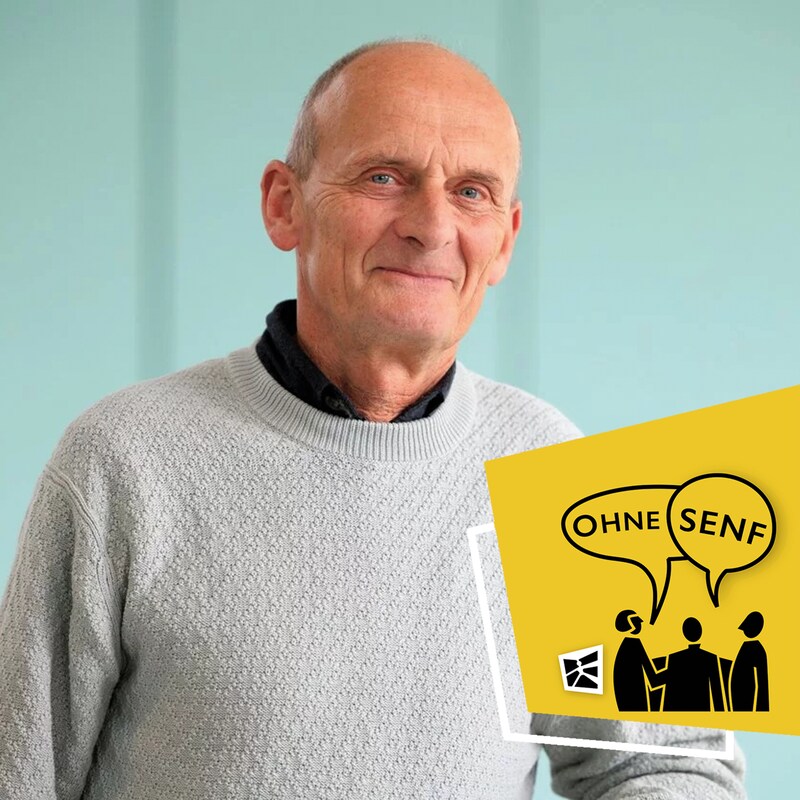
Shownotes
What does it mean to be free – in an age of artificial intelligence, total transparency, and the permanent carnival of modern life? Political anthropologist Arpad Szakolczai explores the cultural roots of our understanding of freedom in this conversation with Wolfram Eilenberger – from the Greek ideas of autonomia, autarkia, and eleutheria to the paradoxes of technology and modernity.
Szakolczai sees our world in a state of “permanent carnival”: everything becomes spectacle, stage, and simulation of freedom, while we increasingly become slaves to technology. And an economy in which escaping nature is mistaken for being free. Yet true freedom, he argues, does not arise from fleeing nature but from living consciously within it.
In his critique of liberalism, Szakolczai traces how markets grew out of medieval fairs, how rationality can turn into unreason, and what charis – the Greek notion of “grace” – can teach us about a more humane future. Szakolczai reminds us: Freedom must be lived, not programmed.
Arpad Szakolczai is Professor Emeritus of Sociology at University College Cork in Ireland and Michael Hilti Fellow at the St. Gallen Collegium. His work combines political anthropology, sociology, and philosophy, focusing on liminality, charisma, and the crises of modernity. Among his numerous publications are Permanent Liminality and Modernity: Analysing the Sacrificial Carnival through Novels (2017) and Comedy and the Public Sphere: The Rebirth of Theatre as Comedy and the Genealogy of the Modern Public Arena (2013).
Transcripts
The problem is that the modern economy didn't grow out of markets, but grew out of fairs or the fairground training and elite in our own times.
Speaker A:It's a very delicate kind of activity of what we really mean by that.
Speaker A:And Pascal said, the heart has its reasons which reason cannot understand.
Speaker B:Welcome to no Mustard, the Knowledge Podcast by the St. Gallen Collegium, St. Gallen, Switzerland.
Speaker B:My name is Wolfram Eilenberger, your host for this season.
Speaker B:Welcome, friends of Freedom, to no Mustard, the Knowledge Podcast by the Sankalan Kurilegium.
Speaker B:Eight great minds.
Speaker B:One important question.
Speaker B:Our question for this year what is freedom?
Speaker B:Who threatens it and how we can defend it in the 21st century?
Speaker B:Today's guest is Arpad Sakosla.
Speaker B:He is the Hilti Fellow of the St. Gallen Collegium.
Speaker B:He taught for more than 20 years as a professor of sociology at the University of Cork.
Speaker B:He has a PhD for economics at the University of Texas.
Speaker B:And his topic for this year is Freedom Beyond Liberalism.
Speaker B:Welcome to the podcast, Arpad.
Speaker B:Let's start with the present moment, with today.
Speaker B:Today is the 11th month and the 11th day.
Speaker B:It is 11 o' clock, and I'm not making this up.
Speaker B:11 minutes.
Speaker B:A very special time starts now.
Speaker B:It's the carnival, a time of unparalleled freedom.
Speaker B:Arpad, you are an anthropologist.
Speaker B:What is this thing with carnival?
Speaker B:Why does it even exist?
Speaker A:Well, the carnival exists in many different ways, historically and contemporaneously.
Speaker A:Carnival is supposed to be a time of suspense, a time of out of the ordinary, a time in which people do the opposite what they do normally, a time to break the rules, a time when it is error to break the rules.
Speaker A:And then, of course, it doesn't really matter, because if you are encouraged to break the rules, that's not really the breaking of the rules.
Speaker A:So that's part of the ambivalence of carnival, which is analyzed so well, among others by Michael Bakshin, whom you certainly know well, and who was a great figure of intellectual history.
Speaker A:So carnival has its historical and anthropological elements as well.
Speaker B:And would it be fair to say that carnival is a genuine expression of the human longing for freedom?
Speaker A:Well, it might be the case, but it's an indication.
Speaker A:And here I'm talking about carnival, not just specifically the modern sense of the carnival, but the medieval sense of the carnival, and again, the similar kind of rituals that existed all the times.
Speaker A:And just concerning the European tradition, it goes back to the Saturnalias of Rome, and as the rule of Saturn, and Saturn is a very particular kind of deity.
Speaker A:And actually, we don't even know exactly what it all means.
Speaker A:The Saturn goes back to the Greek satyr place.
Speaker A:And that is, you know, historians or whatever, philologues still don't agree whether there are connections between the Greek satyr players and the Roman Saturnalias, etymologically or historically.
Speaker A:So it's a very broad phenomenon.
Speaker B:And it's also a time where the fools reign, where the fools have all the power and the kings are powerless.
Speaker B:It's a time where the world is turned on its head.
Speaker B:It's almost like a revolution.
Speaker A:Well, it's exactly the point that it's supposedly a world turned upside down.
Speaker A:And that applies to the carnival, that also applies to the comedy.
Speaker A:Historians and theoreticians of the comedy describe the comedy as it is a world turn upside down.
Speaker A:And it has important contemporary relevance because in our age, actors, and not just actors, but comedians in several countries play political role, which is an indication of ever turned upside down.
Speaker B:It's interesting.
Speaker B:When you, for example, watch TV nowadays, you could also have the impression that the fool's reign, that the satire is everywhere, that irony is everywhere.
Speaker B:It's like we're living in an eternal carnival.
Speaker A:Sometimes it seems, yes, that it is.
Speaker A:I mean, that's what I wrote about the permanent carnival, permanent liminality.
Speaker A:And the carnival also has links to sacrifice, which makes it even more paradoxical.
Speaker A:Even the Saturnalias in Rome were connected to some kind of sacrifices.
Speaker A:And I call this permanent carnival of ours as a kind of sacrificial carnival.
Speaker A:Bakhtin is very important here.
Speaker B:The Russian cultural theory Guy, Mikhail Bakhtin.
Speaker A:Exactly.
Speaker A:Because Bakhtin lived in the Soviet Union and he wrote his book in the Soviet Union.
Speaker A:And the Soviet Union was again a place of a permanent kind of sacrificial carnival, because it was partly sacrificial, partly carnivalesque, very absurd, but when the absurd was real and reality was absurd.
Speaker A:So it's a.
Speaker B:Now we are already in the midst of the fascinating turns and twists you can give to cultural history.
Speaker B:You would say that the Stalinism as we know them, as we know it, and as we remember, it was kind of a carnival where the population was sacrificed for an idea.
Speaker A:It was something like that.
Speaker A:Everything about this was highly absurd, but it was only highly comedic.
Speaker A:Now, it was quite some time ago, and I don't remember eight or ten years ago, but a Scottish filmmaker made a film about Stalin.
Speaker A:Exactly in this kind of sense that it was awful and terrible and terrifying, but at the same time it was comic.
Speaker A:And this was A kind of permanent reality for those living in those times.
Speaker A:And I mean, I was born in.
Speaker A:In 58, so I didn't live in Hungary, in Hungary.
Speaker A:So I didn't live in the first times.
Speaker A:But I had some recollections or, you know, family, people around historically and.
Speaker A: ich I was growing into in the: Speaker B:Absurd, Terribly comical.
Speaker A:Yes, exactly.
Speaker B:Abysmal in many ways.
Speaker B:And one of the hallmarks of Stalinism and the Soviet World War was the aim to create a new human being, the new human to remake humanity.
Speaker B:And that brings us to your discipline, which is anthropology, political anthropology.
Speaker B:First of all, the question of anthropology.
Speaker B:What is it?
Speaker B:Is it the question, what is a human being?
Speaker B:And why are humans different from any other kind of species?
Speaker A:Yes, but that's a very important question.
Speaker A:I must say something before, because what I'm doing, I call now political anthropology, but actually I'm an emeritus professor of sociology.
Speaker A:So I was a professor of sociology for 23 years or so, teaching in Ireland, mainly in Ireland, but before then that.
Speaker A:I have a PhD in economics from the University of Texas.
Speaker A:So many people would be upset if I call myself an anthropologist, but that's part of the thing which I'm doing.
Speaker A:And certainly this question of, you know, what does it to be human is a very fundamental question, and it goes into the heart of sociology, anthropology, even philosophy.
Speaker A:I mean, that was the question of Kant's lectures.
Speaker A: s on in the early, very early: Speaker B:So it's not one of the most important questions.
Speaker B:It's possibly the most important question in.
Speaker A:A certain way, of course, because we are all human.
Speaker A:We are human beings, and we have to understand what it takes to be a human being.
Speaker A:And of course, a human being is not just an isolated human being, because a human being without language is not a human being, and a language is not a private language, as we know.
Speaker A:So it's also a social and political question, and it's also a very contemporary question.
Speaker A:If you only look into technology and AI and what does.
Speaker A:Does this do to us?
Speaker A:Or does it alter or at least threaten our very humanity?
Speaker B:And of course, the social sciences and the humanities are in the business of giving answers to that very question.
Speaker B:And several answers have been given.
Speaker B:For example, there's the idea that we are homo economicus, that we are an economical being.
Speaker B:There's an idea that we are homo ludens that we are playful beings.
Speaker B:There's the idea that we are homozymbolicum, that we are symbol using animals.
Speaker B:What is the answer, if there is any, that you prefer to that question?
Speaker A:Well, it's an interesting question because I don't like to give this kind of quick answers.
Speaker A:And the basic point is that all of these answers capture one element of that.
Speaker A:I mean, you didn't mention the Homo faber, which was also a very famous kind of response and tool using animal.
Speaker A:Very partial.
Speaker A:And there is also the response of Tim Ingold, who is one of the most famous, most important anthropologists of all our times and of old times, which is, I can't remember the Latin version of that, which is the.
Speaker A:It's the Vulcan man.
Speaker A:So the Homo labora viatore.
Speaker A:Yes, it's Homo viatore.
Speaker A:So it's.
Speaker A:And actually the Homo viatore for me is the, maybe the most closest to the real thing, the viatore in the sense of walking, in a sense of being on the road.
Speaker A:And this is in gold.
Speaker A:But this is also a kind of Heideggerian response about the road.
Speaker A:It's a very Greek response about metahodos.
Speaker A:And we are back into, even into method, because the very word method is Greek and metahodos means according to or alongside the way or the road.
Speaker A:So method doesn't mean that you have to follow the scientific method or the rules, but you have to somehow find a way and follow the way.
Speaker A:And that is very human, to find.
Speaker B:Your way and to follow the way.
Speaker B:That's one way to talk about freedom.
Speaker B:And maybe one way to define the human being is also.
Speaker B:It's a life form that seeks freedom, that has the longing for freedom, that urges to be free.
Speaker B:Would you say that this is a possible answer too?
Speaker B:That we are beings that long to be free?
Speaker A:That is absolutely the case.
Speaker A:But then we have to be very careful what we mean by this kind of freedom.
Speaker A:Because just to go back to the question of technology, which is, you know, working free means that you don't have obstacles all the way.
Speaker A:And with technology you have obstacles all around.
Speaker A:I mean, we did four pilgrimages with Agnes through Europe.
Speaker B:Your wife, Agnes.
Speaker A:She's my wife.
Speaker A:Agnes wife and co author and mentor and everything.
Speaker B:Your intellectual counterpart, you could say.
Speaker A:Yeah, well, counterpart, but not in a sense of contra, but in the sense of conversational partner.
Speaker A:Yes.
Speaker A:So we did four working partners and they were really eye opening in a kind of way, because this is when we realized somehow the untenability and the utter corruptness of the entire world.
Speaker A:In which we live in.
Speaker A:Because on the one hand, we were continuously encountering obstacles in terms of walking.
Speaker A:And also the working meant that we walked through nature walking.
Speaker B:Not working.
Speaker B:Just to make that clear.
Speaker A:Yes, we walked.
Speaker A:Walked through nature walking.
Speaker A:We walk through culture, and then we walk through modernity when it was a modern city, when it was a railroad track, or when it was an enormous highway intersection.
Speaker A:And how can you walk through an intersection of interstate highways and so on.
Speaker B:So your idea is that technology essentially is blocking our way, that we want to walk, that we want to roam freely.
Speaker B:And technology makes that increasingly impossible, which is strange to many people, because I would think, you know, the wheel is a kind of a tool.
Speaker B:It makes things much easier, makes it also much easier to travel.
Speaker B:Or think of the iPhone and the GPS makes it much easier to travel.
Speaker B:Is it really true that technology is blocking our way?
Speaker B:Is it not just paving new paths?
Speaker A:You see, that's a. I don't want to enter into conceptual distinctions, but it's very important to distinguish between technique as a kind of tool and technology.
Speaker A:And what it means is that, you know, we need tools.
Speaker A:I mean, like, I'm using a pen, and so I'm putting down points by my pen, and that's a tool.
Speaker A:But even that is a bit ambiguous because the more I register things, the more I forget it.
Speaker A:So if you look into the past, and if you looked into, you know, Homer and Greek, whatever, rhapsods, or you look into Serbian popular poets and artists, they remembered, you know, poems which were tens of thousands of words, and they just recounted it because they remembered it.
Speaker A:So in a way, simple tools undermine our own abilities.
Speaker A:Now.
Speaker A:But what I call technology, that's very different because technology is when.
Speaker A:And it's very Heidegger.
Speaker A:But Heidegger was very right in that.
Speaker B:Martin Heidegger, the German philosopher of the 20th century.
Speaker A:And what it means is that, you know, instead of we are using technology, it is technology which is using us increasingly.
Speaker A:And with the AI, that's even more the case, because the way AI works is that it takes some models and assumes that it is this model that we are following and imposes that on us.
Speaker A:So anybody who doesn't fit the model, who, let's say, is an outlier, even in terms of mathematical statistics, is somebody who is to be eliminated.
Speaker A:And that's a sacrificial mechanism on its own.
Speaker A:So you have to go with the average.
Speaker B:I see.
Speaker B:Or you could also say with Heidegger, that our freedom is framed exactly, that.
Speaker A:We are not absolutely free that's the point.
Speaker A:Yes.
Speaker B:In your project here for the San Gallen Collegium, you suggested that we should go back to the Greeks and make distinctions concerning freedom that were at the center of the Greek culture.
Speaker B:Could you name these three concepts and what they mean for present day liberalism and freedom?
Speaker A:Yes, that's very important because of course, the Greeks are one of the main sources of our own culture and our own idea of freedom.
Speaker A:And the three Greek words in that sense were autonomia, autarchia and eleuteria.
Speaker A:Now, I don't speak or even learn Greek, but my history teacher, who was a teacher in a high school, and this was because he was thrown out of the university, he should have been teaching university under communism, but for my luck, he was teaching in high school.
Speaker B:In communism, the best minds had to recede to school and not to university because they were not allowed there.
Speaker A:Yeah, absolutely.
Speaker A:I mean, when I went from my high school to university, it was a very serious drop of standards from my high school because I was in what was considered the best high school in Hungary, and it was populated by people who were not allowed to teach at the university.
Speaker A:But going back to these three words.
Speaker A:So these three words he taught us as the central words of Greek polis, or we call it democracy, but that's not exactly the way the Greeks called it.
Speaker A:But anyway.
Speaker A:And these three words could be traced to polybios, as far as I can make it out.
Speaker A:But anyway, they make autonomy.
Speaker A:Autonomy is like autonomy, except that autonomy meant etymologically and concretely something like sovereignty, that is the right to give your laws.
Speaker A:So the city states, the policies, give their own laws.
Speaker A:That was autonomy.
Speaker A:Now, autarkia is the strangest for us because autarkia meant independence, kind of independent existence.
Speaker A:So you as a police and every oikos basically had to produce its own living, not to be dependent on others.
Speaker A:And eleuteria means freedom in a more broad sense as we mean it.
Speaker B:Let me summarize that.
Speaker B:Autonomia, to give a law to yourself, a norm to yourself, and follow that.
Speaker A:Rule as a police, it was not an individual, as a politician.
Speaker A:Autonomy is a kind of individualized, liberal version of this Greek.
Speaker A:But the Greek didn't meant that you as a human being give your own laws.
Speaker A:And you know, that doesn't even make any sense.
Speaker A:We have to be careful.
Speaker A:Yes, yes.
Speaker B:So that would be autonomia in the Greek sense.
Speaker B:Then there's autarkia, and that is a very radical idea of independence in the house and in the state.
Speaker B:Exactly.
Speaker B:And Then there's the last one.
Speaker B:And that means to roam, to feel, to perceive yourself as a free human being, for example, in contrast to a slave.
Speaker A:Well, that was certainly an important point there, but that's a very delicate point.
Speaker A:What exactly meant to be a slave in Greek states, in Rome, and then it has nothing really to do with the later sort of American slavery kind of things, which is a completely different kind of idea, but whatever it means.
Speaker A:But yeah.
Speaker A:So what does it mean to be free?
Speaker A:That's the main question, by the way.
Speaker B:Yes, what does it mean to be free for us now, in our modern society, freedom is a concept that is applied to the individual, not to communities, not even to societies.
Speaker B:But the individual has to be free.
Speaker B:That's actually somewhat strange, but it is that way.
Speaker B:And then, of course, there are different ways to be free.
Speaker B:For example, one way to frame the concept of freedom is I can do whatever I want.
Speaker B:I'm free if I'm able to do that.
Speaker B:No one knows what that exactly means, but that's one idea.
Speaker B:The second idea is I become myself, I find my true self, and then I'm free.
Speaker B:And the last idea is probably I'm just being free.
Speaker B:I'm not constrained by anyone.
Speaker B:Are those really meaningful concepts of freedom to your mind?
Speaker A:Well, in my view, these are problematic views of freedom.
Speaker A:But this requires a kind of contextualization of the entire idea of freedom.
Speaker A:And here I can only give some ideas about the research which I'm not doing.
Speaker A:So they are very provisional.
Speaker A:And I would start by saying that, that we connect this freedom very much to the economy.
Speaker A:So individualism and indivisible economy, you do whatever you want.
Speaker A:You can do your own business, you make contracts with whomever you want.
Speaker A:And the basic point, as I see, is that this freedom replaces a kind of living in nature with living inside an economy.
Speaker A:And this living inside the economy is part of a.
Speaker A:A general problematization of nature, meaning that we as humans are enslaved to nature.
Speaker A:And what we need to do is to liberate ourselves from the slavery from nature.
Speaker A:So it's very simple.
Speaker A:So now the, you know, the sun is shining, but if it is raining, then we need a shelter, isn't it?
Speaker A:So we go inside the house, and that is to be free from nature.
Speaker A:And now this is very simple insofar as we turn into weather things and other matters.
Speaker A:But I think deeply in the modern, whatever you call it, mentally, mindset, maybe mindset, there is a hostility to nature.
Speaker A:So the basic point is to close out nature as much as Possible to.
Speaker B:Deny its existence and its importance.
Speaker A:Exactly.
Speaker A:And then we live inside our own houses and buildings and everything, free from nature.
Speaker A:The problem is that this makes us a slave to technology in my reading.
Speaker A:And that is a basic problem.
Speaker B:So there's a dialectics.
Speaker B:Once you try to free yourself, yourself from nature, you become a slave to technology.
Speaker A:Something like that.
Speaker A:Yes, yes, interesting.
Speaker A:And so this is why I introduce sort of my approach or my path to freedom is like freedom means living, living with a degree of freedom.
Speaker A:So living free.
Speaker A:So like working free.
Speaker A:Then you, you know, you work and you are not free to work anywhere because you are not free to work on water.
Speaker A:Very few persons can walk on water.
Speaker A:Yes.
Speaker A:So you're not free to walk anywhere you want.
Speaker A:But you know, there is nature and nature is really outside us.
Speaker B:So it's kind of a confined freedom, but confined, for example, by the laws of nature, maybe by some traits of the human creature as such.
Speaker B:And if I understand you correctly, you think it's part of the problem of the modern mindset that we have enslaved us to technology in order to become free from nature.
Speaker B:And both movements are dangerous and we could even say today devastating ecologically.
Speaker A:Absolutely.
Speaker A:And this is where we turn to reason, which is such an important question anthropologically and philosophically.
Speaker A:Because reason sort of originally meant to be aware of our own limitations.
Speaker A:So like nature, sort of reasonable, life meant that, you know, there is nature around.
Speaker A:So you need to know, you need to navigate your weight.
Speaker A:I mean, you cannot do anything because nature is giving you some trouble about that.
Speaker A:And we replace that with rationality, which is not the same thing.
Speaker A:I mean, whatever it etymological it goes by, rationality means that by using the technology and exchanging everything through the economy, then we optimize our supposed well being and freedom.
Speaker A:But it doesn't do that because again, it enslaves you in a very trivial way to technology.
Speaker B:This is so super interesting, Arpat.
Speaker B:Let me just try to rephrase it.
Speaker B:So in English language, there is a difference between being reasonable and being rational, which is very interesting in itself.
Speaker B:And you claim that being reasonable is accepting and acknowledging the limits that are given to us by our very existence.
Speaker B:And the rationality is kind of a logic of limitlessness that is embodied today mainly by market logics.
Speaker A:Yes, yes, it's something like that.
Speaker A:I mean, of course rationality is a Latin word, and in Latin it meant something very, very different because it meant ratio and ratio meant a kind of harmony.
Speaker A:So the problem is not with the world, but the problem is what we did with the world.
Speaker A:And this is a consequence of a certain kind of liberal economic idea about rationality.
Speaker A:And that somehow in this again, free market, whatever setting, rationally we can optimize individually and somehow magically these individual things through the market become a so.
Speaker A:And that just doesn't work.
Speaker B:And you see, if you look for example at commercials, this idea of limitlessness and possibilities reigning everywhere, it's everywhere.
Speaker B:You could say, for example, Toyota says nothing is impossible.
Speaker B:Or if you go now to a hotel, you say go wherever you want to go.
Speaker B:It means for me that the modern mindset or our contemporary mindset is marked by the promise of limitlessness and therefore it's highly unreasonable.
Speaker B:If I understand you correctly.
Speaker A:Absolutely, that is certainly the case.
Speaker A:And this logic of the commercials is a very important part of our misunderstanding of ourselves, which is much located in economic theory, because let's not forget that I have a PhD in economics, so I know what economics is talking about.
Speaker A:And economics is talking about the rational choice, the rational consumer and information which is available.
Speaker B:It's so strange, you know, there is no reasonable choice theory, there's only a rational choice theory.
Speaker A:Yes, because that word has become so much associated into this type of logic, which is a illogical logic, which is in a way even a kind of perverted logic.
Speaker A:I mean, how can anybody say that commercials give rational information to the consumer?
Speaker A:This is what economist is saying.
Speaker A:I mean, look up your economic theory books, rational information nonsense.
Speaker B:And now I think we already have come a long way to understand why your current project here at the St. Gallen Collegium is named Beyond Liberalism.
Speaker B:Because the very idea of liberalism and a liberal democracy is linked to certain understandings of what economy is.
Speaker B:First of all, a liberal democracy is a democracy, of course, where you have certain institutions, you have human rights, you have a focus on the individual, and you seek, if I understand you correctly, a way out of that impasse that is created by liberalism as we know it.
Speaker A:Yes, one has to be very, very careful with this because there are many elements of this liberal democratic framework, constitutionalism and so on, which were developed historically and which have much, much older background to that, which is not to be taken lightly and certain to be thrown away.
Speaker A:But part of this liberal mindset became a series of ideas.
Speaker A:And this is a very complex historical process.
Speaker A:And what the general of liberalism, which have become problematic and which we see it now, it is problematic concerning the very idea of representation.
Speaker A:So what do we mean by representation?
Speaker A:It's an enormous question of our democracies.
Speaker B:Are marked by the Representational logic, for example.
Speaker A:Exactly, representational logic.
Speaker A:But then if we look into the origin of representation, the origin of representation, the very word is theatrical.
Speaker A:And this is, for example, what is continuously being forgotten.
Speaker A:That the public sphere means representation, but it also means a kind of theatricality.
Speaker A:And that is one of the problem.
Speaker A:Then the other problem is this strange kind of individualism, which in one way ignores the cultural social community.
Speaker A:But then on the other hand, it ignores in a certain way the very personal element of that, because it's a very specific kind of individual which is supposedly represented.
Speaker A:And this is important in terms of AI, because the AI enforces the same statistical, average kind of individual.
Speaker A:So if you think like anybody else, if you like what anybody else, then you, you are fine.
Speaker A:But the moment in which you don't exactly follow this type of norms and fashions, then you, you are not, not suited by the artificial intelligence.
Speaker A:If you think like anybody, then the.
Speaker A:You write an email and the thing tells you what you write.
Speaker A:But if you don't write that, then it can easily mislead you or gives you the wrong message.
Speaker B:And yet art, but our entire culture is based on the idea stand out, make a difference, be different.
Speaker B:It sounds like a quandary, like a paradox of our system.
Speaker A:Yes, it is very paradoxical, but it's very schismatic in a way.
Speaker A:And this is where another anthropological concept is schismogenesis.
Speaker A:So Haselton's KISS Bateson is it true?
Speaker A:GREGORY BATESON MAIN ANTHROPOLOGIST so how certain schisms are generated and identities are developed around this schism.
Speaker A:And our contemporary world is full of this kind of schisms and the schism between the ideals to pursue and what the reality means, the schism between, you know, be brave and stand up for yourself, and then being really rewarded.
Speaker A:I noticed that when I went to the United States and I was free to basically to select any.
Speaker B:When was that in your life?
Speaker A:Yes, in 82.
Speaker B:82 in Texas, before the fall of the wall.
Speaker A:Was before the fall of the wall?
Speaker A:Yes, yes, it was a very particular situation from the Academy of Sciences, whatever.
Speaker A:But the basic point was you could select any course.
Speaker A:Yes, but then if you just selected courses which don't add it up together in the official kind of logic, then you had problems.
Speaker A:So you were supposed to be.
Speaker A:And then I realized that, wait a minute, this is just like that.
Speaker A:You have to write in Hungary.
Speaker A:So you write in mind of what they expect you that you would write.
Speaker A:Because if you just write what then that would have been a problem.
Speaker B:So many things that I would like to pick on and continue.
Speaker B:First of all, you said there's a theatrical element in representation.
Speaker B:And again, if we look at present day politics, it's so obvious.
Speaker B:It sometimes seems like a theater, like a charade, even a parody of real politics.
Speaker B:And yet we consider this to be politics.
Speaker B:Do I get you right when you say the problem with representational democracy is.
Speaker B:Is that it has not acknowledged the origin of representation in theater and thereby creates a false image of politics in itself?
Speaker A:Yeah, this is very much the case.
Speaker A:And it's very delicate because the idea of political representation was.
Speaker A:And there are very, very good books about that.
Speaker A:They were medieval and they were theological and aristocratic.
Speaker A:That is what it meant in a medieval sense is that it's basically Corpus Christi.
Speaker A:So politicians or members are representatives of the body of Christ in some kind.
Speaker B:There's one book by Kantorowicz, who's probably the most important scholar on this, Hasso.
Speaker A:Hoffman, who wrote a very, very good book on that.
Speaker A:So that was one part of it.
Speaker A:And the second part was, it was an election, was an aristocratic part of the aristocratic logic, meaning that you knew people.
Speaker A:And so the aristocrats who had the right to do that elect is somebody.
Speaker A:It's similar a bit in the German.
Speaker A:I don't know how this is.
Speaker A:Whatever is, I know it in Hungarian, how it is said that the electorates, whatever, who were the right to elect the emperor.
Speaker A:There were only few princes who had this kind of right.
Speaker A:So there was partly a theological principle of representation, partly as an aristocratic principle of election.
Speaker A:And somehow these two came into the modern idea of representative politics.
Speaker A:But there this representation incorporated the theatrical idea representanza and everything changed.
Speaker B:So by the migration of these concepts through time and space, the very logic of democracy changed.
Speaker A:It changed the logic and this entire entity.
Speaker A:Mediavas theological, aesthetic, election, representation worked until a certain way, until the media started to play an even ever more increasing role.
Speaker A:Pushing up already, as if coming out or resurrecting from underground, the theatrical component.
Speaker A:I can give you one example about that.
Speaker A: I remember that in about: Speaker A:And the C Span, if I remember well, was still exists.
Speaker A:It still exists.
Speaker A:It was showing how the congress deliberates.
Speaker B:I love to watch that when I.
Speaker A:Was in the US It's a good theater.
Speaker A:But you know, that was when it was said that this is an additional step in democracy.
Speaker A:I said, no, it's an additional lowering of democracy.
Speaker A:Because if you are a congressman, then you talk among yourself and you should be Entrusted that you discuss the common good.
Speaker A:But if it is shown on television, then you become actors and you should serve.
Speaker B:It becomes a stage.
Speaker A:It's a stage for you to perform.
Speaker B:But Albert, here's another contradiction.
Speaker B:Maybe because what you want in democracies is transparency.
Speaker B:You want to have visibility, you want to see what people say, what is talked about and how they decide.
Speaker B:And you say that is a problematic idea because it turns democracy into a theater.
Speaker A:Yes, transparency is another problematic idea.
Speaker A:It looks nice, but any serious discussion can only be made among people in a reserved kind of setting.
Speaker A:So just to give you one example about that, it's academic setting.
Speaker A:So academics should be discussing, let's say, an appointment or something like that.
Speaker A:Now the central issue, and I'm very stringent on that, is that you have to trust the people who make the decisions.
Speaker A:But if you want to check them the moment in which they make the decisions, then you transform academic institutions into a comedy.
Speaker A:So this happened with me in the first year I was in Ireland when there was an academic council and the academic council was only the Council of Professors, Professors in the first council I was there, they appointed five members of the staff and, I don't know, five student representatives.
Speaker A:And everybody was loudly hailing it another step.
Speaker A:I said, no, this entire entity will no longer exist.
Speaker A:And half a year later they appointed an academic board which were only some professors were selected and who became the decision making by the Institute of Academic Council.
Speaker A:The five years later it became the university management team.
Speaker A:And when I as a professor and at that time was head of department, I was asked, but who is a member of the university management team?
Speaker A:I was told, you cannot know that.
Speaker B:It'S a new kind of elite.
Speaker A:You cannot.
Speaker A:It's a new kind of managerial elite.
Speaker A:In the name of increasing democracy.
Speaker B:I think we already get a sense of how interesting our present day politics look when we see it through your lens and the lens of political anthropology.
Speaker B:Another idea, idea that we should talk about, when we talk about the beyond liberalism aspect of your work is it seems to be a very timely effort and not necessarily in a good sense, because there are many political forces right now who say exactly that we should move beyond liberalism, namely autocratic forces embodied by people like Putin, possibly Orban, possibly even Trump.
Speaker B:They say exactly, exactly, not exactly what you say, but they say the same thing in the sense that we have to move beyond liberalism.
Speaker B:And I would imagine that it's for you very problematic to make clear that you don't mean that.
Speaker A:Yes, to be sure.
Speaker A:I mean, one has to be very careful in how to formulate these kind of terms.
Speaker A:And at the beginning of what I said, I said that this kind of constitutional rule and representative institutions, which are problematic enough in themselves, but are still important in the sense that we have to keep to a certain kind of rules of the game and not allowing people to hijack them.
Speaker A:But here we come into a very important anthropological, sociological, cultural point which I think is very central.
Speaker A:And this is that when liberal democracies existed in a kind of normal way, they relied not on the media so much, but they realized that there was a kind of, and it's very difficult to say, a kind of cultured classes, which was not elites, not exactly the middle classes, they can be called, as in German is a good word about the Burgertum or something like that.
Speaker B:Maybe trustworthy people.
Speaker A:Exactly.
Speaker A:And that's the central point.
Speaker A:So they were people who could be trusted, who had a degree of culture.
Speaker A:And culture doesn't mean that, you know, you read Shakespeare and Moliere, which is of course fundamental, because if you read Shakespeare and Moliere, you get a different kind of culture than if you look at sensitivity.
Speaker A:Yes, yes.
Speaker A:And so these people still existed and this exerted a control.
Speaker A:And they exerted a certain control even through the journals.
Speaker A: Because let's say in the: Speaker B:Or the handset set in Switzerland and Mauritsu.
Speaker A:Yes.
Speaker A:And now here we come, a very important, important point about the very idea of the revolution.
Speaker A:Because right now, if you turn on the television, it's all about the commercials are about the revolution, a new revolutionary, whatever it is.
Speaker A:Ipod, everything is disruption.
Speaker B:It's now called.
Speaker B:It's now called disruption.
Speaker B:They are very careful with revolution.
Speaker B:The new world has to disruption.
Speaker A:That's the next step, which is even more problematic because of course, disruption means the instrumentalization of liminality, which turns into an other anthropological concept.
Speaker A:But indeed, and this is very important, that in my understanding, just at the same time, when there was the Cold War, when they were in Bolshevism and communism, there were kind of radical movements which attacked the heart of this cultural elite.
Speaker A:Now, it's difficult to reconstruct how that much cultural.
Speaker B:But I can see, and I think it's interesting that you are struggling with even pronouncing the word elite, because it has become such a shamed term.
Speaker B:Yes, but then again, you would hold and actually believe that we need cultural elites, we need these trustworthy people, and they are trusted by their communities, if I understand you correctly.
Speaker A:Yes.
Speaker A:Now, the elite, I have problem even in the world, because the elite as a word is a religious word, of course, and people who were cold and so they were elected in that particular sense, and we don't have a word, we cannot call them.
Speaker A:We can call them as a kind of cultural aristocracy.
Speaker A:But aristocracy has a problematic world in itself, so it's difficult to how to define.
Speaker A:But I knew many of these people still in Hungary when I was there, in Italy, in the United States.
Speaker A:So these people still existed and they exerted an influence.
Speaker A:And this is being undermined.
Speaker A:And it's a very tricky and very important question to see how these people came to be undermined.
Speaker A:What was the logic of that?
Speaker A:Was it the logic of the media?
Speaker A:Was the logic of getting ever more, ever shallower, but more transparency?
Speaker B:Yes, yes, but Arpat, let's apply this, for example, to this institution, the Haasgensang, which is and claims to be an elite institution, and even more, they claim to educate the future elite of business leaders.
Speaker B:Now, the program of this very university is based on the idea that a good business leader knows more than only business.
Speaker B:He is a humanist, he has a broad education.
Speaker B:Do you think that if you want to be a trustworthy person in the sense that you envision, it's enough to know of one thing, or would you need a rather broad and humanist approach to things?
Speaker A:Absolutely.
Speaker A:One needs a broader and humanistic approach.
Speaker A:I mean, I was teaching two years in a winter school of the Milan Polytechnic, or whatever it is, which was considered to be the elite institution in Italy, and it was institution training, architects, design and engineers or something like that, and they realize that they need some kind of humanistic or social science education.
Speaker A:As far as I understand, after two years they closed this door.
Speaker A:So maybe it was too expensive for them.
Speaker A:So it's always a tricky thing, and I don't know not to say enough, but hardly anything really about Sangaland and its background.
Speaker A:I mean, I'm here since September and it's training and elite in our own times.
Speaker A:It's a very delicate kind of activity of what we really mean by that.
Speaker B:There's a beautiful saying by Johann Wolfgang von Goethe, I know as someone who's very close to your heart and your mind.
Speaker B:He says, the one who knows only about one thing doesn't know anything about that one thing either.
Speaker B:And I think this is an idea of what it means to be educated, that if you're an absolute specialist, you're also Very bad at your specialty, because there are no specialities in a complex.
Speaker A:Absolutely.
Speaker A:I mean, today we are talking about, always about the experts, and that's a very problematic word.
Speaker A:My series is now publishing a book about experts by Paul o' Connor and Stephen Turner, who's a very important social theorist in our times.
Speaker A:He wrote several books about the problem of an expert.
Speaker A:Because really, in almost anything except extremely technical kind of matter, you know, and in the human sciences and the world of human beings, nothing is unconnected.
Speaker A:So an expert is a way to promote ignorance.
Speaker A:Really.
Speaker B:And that takes us to university culture of nowadays.
Speaker B:I know you're very critical of that culture and who cannot be.
Speaker B:Who has seen what happens inside the university.
Speaker B:Would it be fair then to say, and I'm putting these words into your mouth, maybe they are mine, that current days universities create experts and therefore idiots, which are all too specialized.
Speaker A:Yeah, that's a very important word.
Speaker A:It's interesting that I hear this and read this word increasingly.
Speaker A:And a few years ago I was reprimanded of using that word idiot.
Speaker A:Now, interestingly, idiot has a Greek etymology which is basically the same, same as we think about idiosyncrasy.
Speaker A:So the idiot in a Greek meant a purely private man who has no understanding of the broader situation of the.
Speaker B:Doesn'T know, doesn't care community.
Speaker A:Yes, and I would agree that the experts in the human worlds are some kind of.
Speaker A:I don't want to repeat the word, but they are, because they are extremely narrow and promote this narrow field.
Speaker A:And what is now happening in university life or around in publications promotions is really very, very disheartening.
Speaker A:This is the undermining of the university, which after its university means universal kind of knowledge.
Speaker B:And it's also undermining democracy at the same time because we create these experts who are specialists and of course they get promoted because they do research on one topic and they write 10, 15 articles on one topic and that qualifies them for a post.
Speaker B:And I mean, it's so obvious that this is a catastrophe that one wonders why the system doesn't change.
Speaker A:Yes, that is that we're into the heart of the problem.
Speaker A:Because I think this is promoted.
Speaker A:Exactly.
Speaker A:Because it promotes ignorance.
Speaker A:And this is a new situation.
Speaker A:And this new situation is that we are now increasingly ruled by people.
Speaker A:And it's not just Trump and then these kind of the usual candidates, but it goes into almost everywhere which don't want people around who think.
Speaker A:And that's a very dangerous kind of situation because there is no way that those who Promote this straight jacketing of university life, that this undermines any kind of knowledge and culture and understanding.
Speaker A:So this is done purposefully.
Speaker A:Why?
Speaker A:I don't know.
Speaker B:Let's maybe try to connect that with your own biography.
Speaker B:You have a very critical view on the culture that we live in.
Speaker B:You lived under two fundamentally different systems.
Speaker B:You grew up in Hungary under communist rule.
Speaker B:You then migrated, one could say, or being exiled to the US doing your PhD there.
Speaker B:Anyway, you took the decision to leave Hungary.
Speaker B:You were educated in economy.
Speaker B:And then, of course, I would imagine that you created a certain sensitivity toward the concept of freedom, because even under communist rule, it was claimed that we live in the freest society ever.
Speaker B:And then you come to terms access, supposedly a state that cares about freedom.
Speaker B:And there was also total freedom.
Speaker B:So one might get a bit suspicious biographically, wouldn't one?
Speaker A:Yes, yes, of course.
Speaker A:When I was living in Hungary, the question of freedom was very fundamental, and there was evidently no freedom.
Speaker A:Then I went to Texas, actually, I still kept.
Speaker A:I still have a Hungarian passport, so I wasn't exiled.
Speaker A:It was a complex inter.
Speaker A:And they said the details are so complicated and we don't have time for that.
Speaker A:But I was very surprised about many elements of American culture and the complexities of freedom.
Speaker A:Then I went back to Hungary, then I went back to London, and I lived one year after the last year of Margaret Thatcher's rule, which was also very interesting in the freedom agenda, a kind of freedom agenda.
Speaker A:So was it freedom?
Speaker A:Was it not about freedom then?
Speaker A:I lived in Italy.
Speaker A:So this is why I try to really capture in this book which I'm writing about, of what is really the heart of a meaningful idea of freedom.
Speaker A:And there I have to mention one particular word that is charis, and this is another Greek word, charis.
Speaker B:What does it mean?
Speaker A:Charis means Greece.
Speaker A:And they are very close to each other.
Speaker A:In fact, Greece, the English word, is a derivative of the Greek word charis.
Speaker A:But charis meant something different than Greece.
Speaker A:It was less focused on, because Greece in English means either is divine Greece, so it is strictly theological, or there is Greece connected to beauty and cosmetics.
Speaker A:So it's a very specifically limited.
Speaker A:Just the beauty component.
Speaker B:Hemingway famously said, beauty is grace under pressure.
Speaker A:Yes, it can be.
Speaker A:But, you know, it was also said that beauty is truth and truth beauty.
Speaker A:And that's Keats and Dostoevsky said beauty will save the world.
Speaker A:Even beauty is a very complex world.
Speaker A:Then we cannot reduce beauty to its commercialization because then we reduce liberalism and freedom.
Speaker B:Let's stay with Charis.
Speaker A:Let's stay with Charis.
Speaker A:Absolutely.
Speaker A:So charis meant both for the Greeks.
Speaker A:It had a divine component, it had an aesthetical, if you want, component, but it also had a social component, which for me as an anthroposis and charis meant basically a kind of kind benevolence or favor.
Speaker A:So charis meant in a fundamental trust and benevolence to the others as the foundation of the.
Speaker A:Because the Greek democracy was based on caris, justice was based on friendship.
Speaker A:And there's a good literature that up to Aristotle that friendship or philia, and philia is broader than friendship is a foundation of polis.
Speaker B:Isn't that a bit of a Christian view on Cardis?
Speaker B:It's like love thy neighbor.
Speaker A:It is very similar and of course, but it's Greek.
Speaker A:So in a sense it was pre Christian.
Speaker A:Of course.
Speaker A:Of course, the Christian element relies much on the Greek culture as much it relies on the prophetic culture.
Speaker A:It doesn't rely on the sacrificial priestly culture.
Speaker A:It's a very important difference.
Speaker B:So for not only, but also biographical reasons, you have created for yourself a certain sensitivity against ideological uses of the concept of freedom and liberty.
Speaker B:And you think right now, am I putting this correctly, that this concept has been culturally harmful, hijacked at the present time.
Speaker A:You mean freedom?
Speaker A:Yes, I mean freedom has been hijacked since a long time in many different kind of ways.
Speaker A:And ideology and propaganda are very, very important considerations here.
Speaker A:So how can freedom be an element of propaganda?
Speaker A:And this goes into the origins of much of the current ruling.
Speaker A:If you want political ideologies, for example, it can be traced back to Walter Lippy.
Speaker A:Lippman.
Speaker A: cientist who basically in the: Speaker A:And that was a very, very problematic idea.
Speaker A:Already at that time, he had also.
Speaker B:A hand in creating the concept of neoliberalism.
Speaker A:Did he?
Speaker A:Absolutely.
Speaker A:I mean, the Mont Pelerin Society, it was based on the meetings related to Walter Riepman.
Speaker A:So there are all kinds of obscure connections there.
Speaker A:Just as in terms of propaganda, there are obscure connections between late 19th century American business propaganda, First World War propaganda, Stalinist propaganda, Goebbels propaganda, these sort of all circling around themselves.
Speaker A:And all these propagandas were supposedly that, you know, we can lie in the interest of the common good, whatever way it is defined.
Speaker B:Is it too simple to claim that one of the main tasks of the humanities and the social sciences is to make us aware of the effects and the Power of propaganda, that we, as it were, sharpen our ears and that the humanities are in that business.
Speaker A:That is absolutely fundamental.
Speaker A:And that can be one of the reasons why thinking is not being, in a very serious sense, demoted.
Speaker A:Because what is now happening to academic life is extremely problematic.
Speaker A: I was in England in the late: Speaker B:In the names of market logic, in.
Speaker A:The name of market logic, or in the names of.
Speaker A:Of.
Speaker A:I don't know whether it was in the name of freedom, but in the name of maybe just a market logic kind of freedom or efficiency or greater transparency.
Speaker A:I don't know what exactly.
Speaker A:Because these verse travel, ideological verse.
Speaker A:And it's interesting because we haven't yet.
Speaker B:Mentioned Michel Foucault, a French historian and.
Speaker A:Philosopher and philosopher, very important philosopher.
Speaker A:And Michel Foucault, in some of his late inter.
Speaker A: Last interviews in the early: Speaker A:It can't be ideologically neutralized or turned into an ideology.
Speaker A:It can be.
Speaker A:Everything can be into an ideology.
Speaker A:But we have to somehow, again, live freedom.
Speaker A:That's not what he said, but practice freedom.
Speaker A:And that is what is fundamental.
Speaker B:Let's turn to give our listeners a sense of how broad your interests are and how specific they are at the same time to the idea of the rise of capitalism.
Speaker B:Because it's a hallmark of modern society, societies, liberal societies, that we address them as capitalistic societies.
Speaker B:It means basically that you're allowed to own things, that there's a kind of competition and that you have to be able to keep the gains of that competition for yourself.
Speaker B:Say this is the framework, more or less, and you say we understand capitalism poorly if we think that markets are the origins of capitalism.
Speaker B:You think there's a different origin?
Speaker B:Which one?
Speaker A:Yes, thank you.
Speaker A:I don't like the word capitalism, many of these words, because capitalism is associated, is a particular reading, which is of course Marx.
Speaker A:And I don't have a great respect or interest in Marx, but very specifically I can see that the idea that capitalism is connected to markets, it's there in Ricardo.
Speaker A:And Marx basically takes over Ricardo making a few changes.
Speaker B:18Th century economic theory, if I'm not.
Speaker A: th century,: Speaker A:The problem is that the modern economy didn't grow out of markets, but grew out of fairs or the fairground, like.
Speaker B:The Alma here in St. Calen, for.
Speaker A:Example, something like that.
Speaker A:This is a simple fact of economic history, which has been ignored in the history of economics.
Speaker A:And I think that's a fundamental misunderstanding, because a fair is something very different from a market.
Speaker A:So let's just, in terms of knowledge, explain the difference.
Speaker B:I think it's very important.
Speaker A:Yeah.
Speaker A:In terms of knowledge, if you go into a market, then a market is a local market, which basically every town had a market which extended to 10, 20 kilometers or miles.
Speaker A:People came to the same market, knew.
Speaker B:The people, you know the seller, you know the products.
Speaker A:Buyers and sellers knew each other, knew the products, knew who is producing what and how and whatever.
Speaker A:So this was an informed, if you want, rational decision.
Speaker A:A fair is something completely different.
Speaker A:A fair is something once in a year, I think in Germany is called yar market.
Speaker B:Yes.
Speaker A:So it's a yearly market.
Speaker B:For example, in Frankfurt.
Speaker B:This is the place where you do irrational things.
Speaker A:Absolutely.
Speaker A:So it's only once in a year.
Speaker A:It's connected with the carnival, for example.
Speaker A:It is popular entertainment.
Speaker A:Circus has come to town, circus is coming to town.
Speaker A:And then you don't know anybody, you go there, people are shooting or whatever.
Speaker A:You buy this or that.
Speaker A:This is where historically, the charlatans were there, they were selling products.
Speaker A:Alchemy, Dr. Faustus is located to the fair.
Speaker A:And alchemy and elixir, you get eternal life if you buy it.
Speaker B:So the difference is, in a market, you know the seller and you know the quality of the product.
Speaker B:In a fair, strangers come to town and claim that they have super products.
Speaker B:And they create an atmosphere of irrationality where everything is possible.
Speaker A:Yes.
Speaker A:And then it goes into.
Speaker A:It's all about advertisement, it's about pamphlets connected to the rise of the printing press, connected with mimes.
Speaker A:The origin of the theater is charlatans who were organizing the mimes first to advertise the in products and then became the first theater company, Comedia Delfta.
Speaker A:When is it all makes sense.
Speaker A:It is all connected.
Speaker B:It's fascinating.
Speaker A:And the fare is becoming longer and longer and more and more permanent.
Speaker A:And then what comes into it?
Speaker A:We arrive at the stock market and here we are at the origin of capitalism.
Speaker A:It's a stock market.
Speaker A:It's not markets, it's a stock market.
Speaker B:And the stock market is an embodiment of what you call permanent carnival or permanent liminality.
Speaker B:It means it's an eternal fare that is designed to make irrational decisions.
Speaker A:It's something like that.
Speaker A:And of course, we all know that because going up and down, what you buy, what you don't buy.
Speaker A: economists, wrote in the late: Speaker A:And he was saying that, I mean, we are talking about the marginal efficiency of capital and all these kind of things and justifying that it is.
Speaker A:But how can you justify somebody making 1 10, 100,000 million just because he's selling two minutes earlier than the other?
Speaker A:So there is no justification really in ethical terms on that.
Speaker A:It's just going up and down.
Speaker B:And then you could also say it's a perverted market.
Speaker B:I mean, to be a bit more.
Speaker A:Explicit in terms of when we talk about market in the classical sense, it is, and it's getting more and more, if you want perverted, more and more interconnected artificially.
Speaker A:And more and more we are moved by how the stock market that is moving.
Speaker B:But Arpad, if that is true what you say, and I think it's fascinating, it's also plausible, if you look at the London Stock Exchange or the Wall street, it really looks much more like a fair than like a market nowadays.
Speaker B:But our models and our theories to address that event are theories of rational choice.
Speaker B:And one could have the idea it's a radical misinterpretation of what's actually going on.
Speaker A:Yes, well, this is very interesting because when I was studying in Texas economics, that's when rat Rational Expectations theory came out in contrast to Keynesian theory.
Speaker A:Now, this is not the time to make a lecture on economics, but just the important point about that Rational expectations theory, which is the origin of rational choice theory, says that the government is inefficient in any kind of economic policy because people have the same information as the government as they are rational consumers.
Speaker A:Now, this is a kind of nonsense, sort of codified, and these people got a bunch of Nobel Prizes.
Speaker A:When you have your theory that the market is based on conventional information, and then your theory then guides your ideas instead of looking at that.
Speaker A:And you know, how can somebody say that we have the same information as the government we don't have.
Speaker A:So the thing.
Speaker A:And my economist professors who were Keynesian at that time said the same thing, but they lost.
Speaker B:I think we have established by now something that is true of every true thinker, that you are a radical guy because you are radically questioning the logics of our society as it exists.
Speaker B:And, and you would like them to see changed.
Speaker B:Changed how?
Speaker A:Yeah, I agree with that, except that I'm also radically conservative in that sense.
Speaker A:Because I'm radical.
Speaker B:It's a form of radicalism.
Speaker A:It's a form of radicalism in the sense that we have to go back to the roots insofar as they are meaningful.
Speaker A:And that's what radical means.
Speaker A:Radix.
Speaker B:So back to the roots.
Speaker B:It sounds like something that cannot be done because we're moving forward in time and not backward.
Speaker A:Yes.
Speaker B:What is for you?
Speaker B:The beginning of healing this culture and make it more reasonable.
Speaker B:When we have to start from now and not looking back, but looking forward.
Speaker A:We have to do both at the same time.
Speaker A:That is very important because again, I go back to walking and pilgrimage because when we were walking, we often lost the road.
Speaker A:And then what we realized that if somebody is losing the road when working, you have to go back when you missed the road.
Speaker A:You cannot just make a shortcut because you can get even more.
Speaker A:More confused and lost.
Speaker B:But if you're in a maze and you go back all of the time, you're running in circles.
Speaker A:You have to leave the maze then.
Speaker A:But anyway, so I agree with you.
Speaker A:And the point is not to go back in time in the sense that we have to go back to the 16th century or the 14th or whatever.
Speaker A:That is impossible.
Speaker A:But it's interesting that being here and the origins of the Reformation.
Speaker A:So the Reformation wanted to go back, to go back to the evangelical race, and they didn't really succeed, to put it mildly.
Speaker A:And so we have to look forward, but also in a certain way going back.
Speaker A:And we should try to find what can be meaningfully recovered or preserved in this world in which we are living.
Speaker A:And we have to take many of these concepts, like nature, like freedom, like carries, like daily interaction of real people.
Speaker A:And not letting something to be done by artificial intelligence, for example.
Speaker A:For me, if something can be done efficiently by artificial intelligence, it means that there's something wrong with it because you.
Speaker B:Don'T have to think to solve the problem.
Speaker A:Yeah.
Speaker A:And it's not just the thinking, but you don't have to feel.
Speaker A:I mean, imagine anything in our life which is meaningful links to our children and our friends.
Speaker A:Artificial intelligence doesn't do anything with that cannot.
Speaker B:So one critique of artificial intelligence for you would be that it is problem solving without feelings.
Speaker A:Absolutely.
Speaker A:And you can even mimic feelings.
Speaker A:But it's the mimicking of feelings make ethnocenses mimicking reason, because it is just guided by the law of large numbers.
Speaker A:My background is probability theory, so I know.
Speaker A:And the law of large numbers, you know, it works, but it only works in a very particular kind of way which leads into dead end, street of a maze.
Speaker B:Trying to leave the maze to find the Ausgang, the exit.
Speaker B:That's what Kant said philosophy should do, what enlightenment should do.
Speaker B:Maybe we start with feelings.
Speaker B:And a personal question to you.
Speaker B:When do you feel free, experience yourself as a free human being?
Speaker A:That's a very good question again.
Speaker A:And it leads into a central term of my thinking, which is the heart.
Speaker A:And the heart, I mean, for example, in the sense of Pascal.
Speaker A:And in Pascal you mean Lys Pascal, a contemporary of Descartes and a great philosopher.
Speaker A:And by the way, Pascal said about Descartes, three words, useless and wrong, useless and uncertain, wrong.
Speaker A:So don't worry about Descartes.
Speaker A:And Pascal said the heart has its reasons which reason cannot understand.
Speaker A:A reason.
Speaker A:Reason at that time was already the courtesy and reason, so the reason of rationality.
Speaker A:And so the reason means not simply emotion, but the reason means a kind of fundamental center of one's own existence which guides feelings and guides also one's mind.
Speaker B:I think we should take that message to heart, as one says, to really embody it, to feel its power.
Speaker B:I mean, I know that you recently got a dog that you're very fond of and the dog is with you here in St. Gallen.
Speaker B:When I think of freedom, really, my image is that I see a dog without a leash running through a meadow and being extremely happy, of being free and roaming freely.
Speaker B:And that would mean that also animals can be free and feel free.
Speaker A:That's even more than that, because dogs do something which you certainly remember when they are free.
Speaker A:That they start to be ecstatic means that they are not just running after a fox or something, they just run up and down as crazy.
Speaker A:And this is what.
Speaker A:What ecstasy means and which is a kind of excess of freedom.
Speaker A:And of course, not everything in the name of ecstasy is really freedom.
Speaker B:I think we can close the circle now, because that ecstasy is a good ecstasy.
Speaker B:It's the ecstasy of freedom.
Speaker B:But it's not an internal carnival.
Speaker B:It happens only in certain times, at certain times, in certain periods.
Speaker B:And then you have to come back, as it were, to normality.
Speaker A:Absolutely.
Speaker A:That's again the point that all this sort of eternal, permanent carnival liminality, that we are living, it certainly this has to stop.
Speaker A:And we can see it really everywhere, all this sort of limitless expansion of a certain kind of way of life, everywhere is increasingly meaningless because you cannot live all the time in a particular state of excitation.
Speaker B:And what about thinking?
Speaker B:Do you feel free when you.
Speaker B:You think because you are a Thinker.
Speaker A:The interesting thing here is that thinking has a certain similarities to dreaming in the sense that when we think who really does the thing or what does it mean that we think?
Speaker A:Neurophysiologists and whatever try to claim that certain neurons in our mind.
Speaker A:I think that's the other way around.
Speaker A:But we don't know how we think.
Speaker A:And for example, walking is very important for thinking.
Speaker A:But that's when we are free, when we work.
Speaker A:And whenever I have a problem in continuing, I always walk out of my office and start working, which in a certain HR logic is illegal.
Speaker A:Luckily I'm not under that.
Speaker A:Why do you leave your office?
Speaker A:That shows how this is nonsensical.
Speaker B:So let the thoughts and the people roam freely to the face of the earth to make them think.
Speaker A:Well, let's work and roam freely.
Speaker B:It's too much already.
Speaker A:It's a bit too much.
Speaker A:But we should should certainly think.
Speaker A:We should certainly work.
Speaker A:And then again, when we think who is that?
Speaker A:We think so it's what is origin of our ideas?
Speaker A:Nobody knows that.
Speaker B:Nobody knows that.
Speaker B:But we can one thing, we can ask one thing that we should know.
Speaker B:And that's the last question in this podcast always, which is called no mustard on a Sen.
Speaker B:If you were, and I know you have, if you were to eat a sausage in St. Gallen, would you eat eat it with or without mustard?
Speaker A:Well, I have a very simple answer to that.
Speaker A:And I became allergic to mustard when I was in Texas.
Speaker A:I don't know why.
Speaker A:But since then I cannot eat mustard.
Speaker A:So if I eat mustard for three days, my mouth is, as mole allergy does, insensitive.
Speaker A:So I eat without mustard.
Speaker B:So you have come to the right place.
Speaker B:Thank you so much, Arpa.
Speaker B:Thank you for sharing your thoughts with us.
Speaker A:Thank you very much.
Speaker A:Thank you.
Speaker B:That was no Mastat the Knowledge podcast by the Sankal and Collegium.
