Shownotes
Lifestyle is a Plan podcast is for agency founders who are done with the growth hustle, and want profitability over pressure instead.
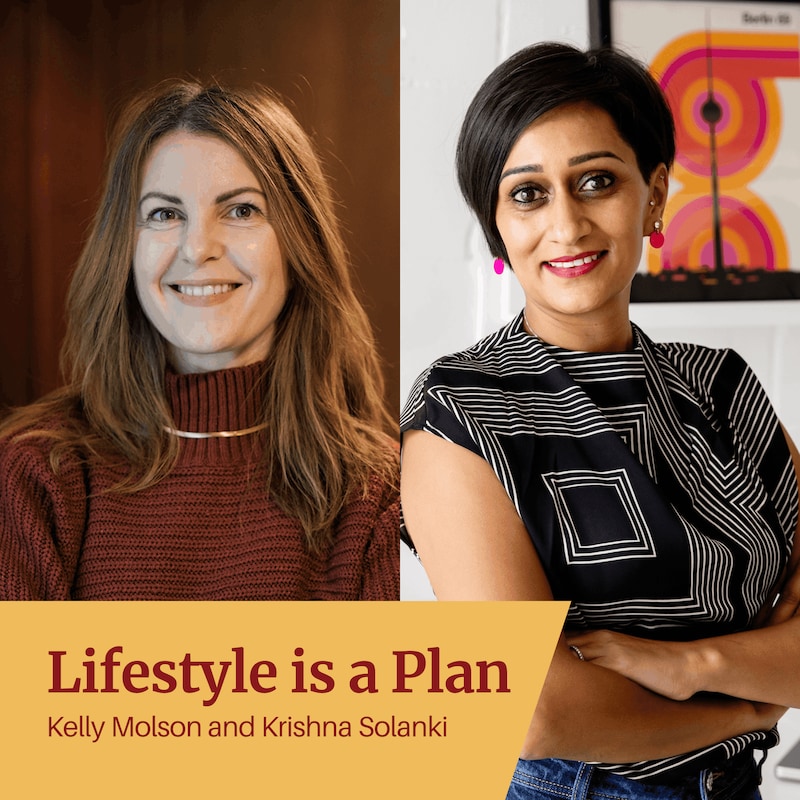
In this episode of Lifestyle is a Plan, Kelly Molson is joined by Krishna Solanki, founder, creative director and Squarespace Expert behind Krishna Solanki Designs - an award-winning studio known for clear processes, thoughtful design and a confident, friendly approach.
KSD supports independent businesses, startups, SMEs and agencies with distinctive brands and strong, converting Squarespace websites. Outside the studio, Krishna is powered by pizza, raising two brilliantly sassy girls, and working her way up the Tang Soo Do ranks as an orange tag.
Krishna is a ray of sunshine in the world, actively focused on tracking "joy" as a key founder success criteria. Rejecting the standard agency model of hiring full-time staff, she created a successful associate model that gives her the agility and flexibility she craved. Her story is a great example of creating something she needs right now, and opening up choices for the future.
You’ll discover:
- How the the associate agency model works
- Why rejecting the standard agency model was the right choice for her
- What part building a personal brand has played in her success
- How ‘Joy’ can be used as a business driver
- What keeps Krishna focused on high-value design work
- How Krishna manages rapid, opportunistic expansion into new services
Guest details
Website: krishnasolankidesigns.com
Instagram: instagram.com/krishnasolankidesigns
LinkedIn: linkedin.com/in/krishnasolanki
Guest podcast recommendations:
Creative Agency Account Manager Podcast
Brought to you by:
Lifestyle is a Plan is brought to you by me, Kelly Molson - an agency advisor on a mission is to support solo founders build the agency they want. I’m here to show the agency world that ‘lifestyle agency’ is not a cop out. It’s the future of our industry’s sustainable growth.
You can join my Lifestyle is a Plan newsletter at kellymolson.co.uk
Subscribe wherever you get your podcasts, leave a glowing review and share it with your founder friends.
Edited by Steve Folland. stevefolland.com
Transcripts
Hey, I'm Kelly. How are you doing? Welcome to Lifestyle Is A Plan, a podcast for founders who are done with the growth hustle. I'll be chatting to creative founders, agency advisors, and all kinds of brilliant people sharing real stories and practical tools to help you design an agency that supports your life, not takes it over. You'll learn about unconventional agency models, incredible lifestyle agencies, and the choices that you have to build your agency exactly on your terms. Squarespace and brand designer Krishna Solanki is a ray of sunshine in the world, actively focused on tracking joy as a key founder success criteria. Krishna rejected the standard agency model of hiring full time, creating a successful associate model that gives her agility and flexibility. Her story is a really great example of creating something that she needs right now and also opening up choices for the future of her agency. Are you ready? So let's go.
Krishna Solanki:Krishna, I'm so excited
Kelly Molson:that you could join me.
Krishna Solanki:Oh, the pleasure is all mine. Trust me. It is. Thank you for having me.
Kelly Molson:We know each other incredibly well, don't we? We've been friends now for quite a long time, so I probably should know some of these things that I'm about to ask you, but I don't. So here we go. I wanna know what your last Netflix stroke streaming service of choice a binge watch was. I'm adding to my list.
Krishna Solanki:So funny. I don't actually binge watch anything, so that one might be a hard question actually, but I have been watching Chris Hemsworth and Limitless on National Geographic on Disney, and it's all about pushing your boundaries and getting yourself out there to do something difficult to get you to a better place in life and giving you a long life. And I really am enjoying it. I think I'm on episode three. the weird thing is the last one was all about fasting. And how you can fast for five days and have just water and your body will be okay, and you might get all of the, I'm starving, I'm hungry, I'm gonna kill someone moment. But actually it gets to the point where your body eats its own fat reserves and all the bad things that are going on in the body. So I was like, I need to do this. This is gonna be a good thing for me to do at some point.
Kelly Molson:I do, I'm, not gonna be adding fasting to my list anytime soon, but that does sound really interesting. Okay. And I should have guessed that it would be something around that kind of theme actually, because that is very much you. Alright, so when you were at school, what did you think that you would be? What, like what, job did you think that you'd have?
Krishna Solanki:Another funny story. So I was sitting there talking to my best friend in art and I was quite arty and she was saying to me, she's gonna be a graphic designer when she grows up, and I looked at her and I was like, what kind of a job is a graphic designer? You are not, that's not gonna do anything, right? I'm gonna be a business analyst. I'm gonna make millions or, not quite, but I'm just gonna be really doing great. And the irony is I speak to her now and she's so you're a graphic designer? And I'm like, yes, it's great.
Kelly Molson:Is she a graphic designer too?
Krishna Solanki:She's not, but she did do graphic design as a degree and then she had her own struggles getting through to getting a job post uni, even though she was qualified in it and I was not qualified in it and managed to get myself into the industry. So Interesting. Yeah. Interesting journeys that we've both had.
Kelly Molson:How funny. So I actually, I thought that you were gonna be the one person that said to me, oh yeah, no, I was gonna be a graphic designer and that was it, and I made that happen.
Krishna Solanki:No, that is the absolute opposite. I was sitting there saying, why would you wanna do graphic design? And I actually remember saying, it's amazing because you can draw the Andex puppies logo from the toilet roll because that's what we were talking about. And I was thinking that's. So sad and I can sit here at acting vouch and say, I love doing that bit of it. And we can staring at them.
Kelly Molson:Alright, so this, that, that really surprised me 'cause I genuinely thought you were gonna be like, yeah, no graphic designer. That was what I set out to do. Made it happen. So what, like, how, what did happen? So how did you?.. I want you to tell me how you got to where KSD is today.
Krishna Solanki:So we can start at the point where I was really good at art, got a GCSE A star in it, did business and computing A level. Surprisingly flunked computing, didn't do well in it at all. Went to university doing business information systems. And then in the last year, actually my third year, it was an industrial placement and I was at, in Swindon for my industrial placement and it was working on the intranet. And I like learned how to make pages on the intranet and I learned how to do little graphics and make them in Photoshop. And then I came out of there thinking this is what I need to be doing. There's something about the whole code and designing something that is really amazing. And in the last year at uni, we were a group in, I think it was Information Systems, that was the module, and I basically carried the group through to getting us a distinction in it because we had to just design a webpage. And I was like, oh, this is really easy. This is what I need to be doing. And then I graduated. In that summer I bought myself Sam's Teach Yourself books, which are still sitting on my shelf there, HTML, CSS and doing things in tables and learning. 'cause I think tables and... was the rage back then. But HTML, CSS was just coming up, so I taught myself HTML CSS then found loads of jobs that I wanted to apply to in London and managed to bag a test at a satellite communications company based at Old Street. Went into that and did the test actually at home online, and submitted everything. And what it was, to take a webpage and design it and build it with HTML CSS 'cause they were all table based. So I thought I could do that. That's really easy. Not, Google didn't really exist. There wasn't YouTube back then where you could just copy paste and AI was just not even a thing. So it was almost like you had to know what you're doing. Did that. Got the job, and I remember on my first day they were like, oh, so we just need you to design this graphic for the launch of this satellite that we're planning that's coming up in six months time. We just put it on the homepage and I was like, I don't actually know how to use Photoshop. And I felt like the biggest dumb, I know it was my, boss at the time. He was like, it's fine. You don't need to worry about that. We know you've got the skillset and you can work it out. Just use file open and figure it out. So I was like, okay. And sat there and did that and slowly, realized that this is really easy, this is really good, and I love doing it. And then worked my way up to, I say work my way up, but I was the assistant web mistress for three years there.
Kelly Molson:Mistress, what a title.
Krishna Solanki:It was brilliant. but because my boss and then his boss, they were like there since the furniture. They weren't looking to leave. And then I was getting married at the same time, after about three years and then I found a job that was in Cambridge. So then moved to Cambridge, got a new job, worked at play.com, and I remember going in for the interview and again, I took my laptop with me thinking, oh, I've gotta show them my website. It's amazing. It's just the best thing they ever seen. And it was only my portfolio, but I went in, I remember saying look, I've done all this stuff. It's amazing. It was really bad. And they loved it. And they remember, me going in and like talking about the experience. Because. I felt like I had to prove a point at every single moment because it was almost like there's no, design background, there's no development background. It is just me sitting there behind closed doors in the ungodly hours trying to learn what I need to do to get forward. And that's what I was like, I, love doing this. This is why when you asked me the question about Netflix, I was like, oh God, this is that's going to be the worst question of this, because whenever we used to watch TV as a family. I wasn't ever interested. I'd literally just sat there with my laptop and it would be on my lap. Everyone else would be doing what they're doing. I'd be just there nerding away, doing my own thing, whether it was like writing a blog post or designing a crappy little, save the date for my friend, or whatever it was. I was just doing that rather than tv.
Kelly Molson:I dunno why that doesn't surprise me at all. Because knowing what I know about you, you are one of the most driven women that I've ever met. But also, you, really set incredibly high standards for yourself. So you are always looking for the next thing that you can achieve. And do better. And do better and better. yeah. Doesn't surprise me one little bit. So how did you go from that to setting up your own agency?
Krishna Solanki:As part of that journey of working in-house as a designer at various places, the one thing I found was I could never get the job in an agency because it was so fast paced and that's what I loved. I loved the fast pace element of all, I thought was what happening on the inside was that they were just working on different campaigns. Different projects and it was like really fast. You get to work on a million things and you can just release your creativity. And unfortunately it just didn't happen because all the agencies back then were looking for a background or needed a portfolio that you've done something for three years at university. So it just, the opportunity never rose and it used to really annoy me. So I was thinking, Why is it so like that, that the agencies are looking for something that's, you need that background where you've got all these self-taught people like myself who can do the same thing if not better, but they just don't get the opportunity. And then it got to the point where I was like, it's fine. I can freelance my way through to whatever I want to do. I can get my creative box ticked internally. So I just kept working at different companies and then when I was in London, and I moved back to Cambridge, I worked for a startup. And at that startup is literally like. About four of us sitting in an office and I was the only designer for the company. And that's where I learned about visual brand identity design, mobile app design, everything you can imagine in terms of design. They just needed it. And I was like, okay, I can do this. And when I fell pregnant, planned pregnancy and knowing that I wanted to stay here in, in Cambridge, so I didn't have the commute, raise the family and all that good stuff, I remember going in on my KIT day and them saying, oh, we're, gonna be moving, we're gonna be in London, so we're gonna need you back in London. We're gonna need you to just be there. And I was like, that's just not gonna happen. But it almost felt like it was a, we are not giving you another option, so either you move with us and come back and boom in London, or you've gotta think about your options. And I was like, there isn't an option other than I quit or I move on. And so I did, and I remember thinking in my mat leave that this is the worst thing. 'cause now I need to find a new job while I'm on mat leave. And no one's gonna know what I'm like in terms of driven, in terms of all the talent I've got that I can give, I can put back into it. And then I found another. It wasn't the startup, it was probably an SME I'd say. And it was in on the outskirts of Cambridge. It was like a 30 minute drive from home. It's not too bad, it's not London, so it's still got like its pros. I went in for the interview and it was a part-time job as well. 'cause I needed to make sure that I was being mum at the same time. My husband used to work in London, still commuted every day. So I was like, it's gonna be me who does the drop off, goes to work, comes back, picks the kiddo up from nursery and makes sure everything's happening. and I went in for the interview. I was 100% overqualified for the position. 'cause I just knew everything too much. But they loved the fact that I could do everything. So it was almost like, oh, okay, so now I'm going back into work mode after having a baby. So my confidence is already like hit rock bottom thinking I've had to find a new job. I was like, it's fine. Let's just do this just to see what happens. Loved it. Got into the job, did the work life balance thing, but I also realized that this isn't gonna last forever, that I have to commute 30 minutes and it's like I get to work for half nine and leave at actually, kiddo was in nursery at the time, so it was till like five, six, but think still thinking, I've gotta come back in the peak, I'll get her do the dinner. It was just too much. So I lessened my hours and then I realized this isn't gonna work forever. So let me start building the business up on the side and see, I've been doing freelancing for however many years. I can make this thing work, I can do it right. It's not, can't be that bad, right? So I remember thinking I've dropped hair off, gone to work. I am working part-time at this company and in the ungodly hours of coming home, picking the kid up, doing the dinner, sorting that out in the evenings, I still had energy. So I was building my own business and I remember in the first week I found Squarespace and I was like, let me just put a website together on Squarespace. 'cause I'd done WordPress. I was, quite proficient in that. And I wanted to do something in Squarespace. 'cause I'd had so many good things about it because it was quite popular in America and the other side of the pond. And all the classes and the courses and the people I was learning from, they were all American based, service business owners. So I was like, this is, working for me. Set it up, made the website. Did the blog post, redesigned it. And had an online presence in about a week. Having done everything twice over, because you're such a perfectionist, you can't get everything right first time around. You gotta keep refining, which is just my worst trait at the same time. And then... as I was progressing at work there, I was still championing my own business in the ungodly hours. And my boss said to me, you're never gonna get to creative director position if you're doing your own stuff by yourself a lot because it's not gonna encourage your position here. And by this time I was, we'd already hired a junior as well, so I was not only doing my bit, but training and mentoring a junior as well. And it sounded like it was almost a case of you've gotta stop what you're doing and focus full-time in the business, and I was like, okay, not sure I agree here, but let's just see what happens. And then, fell pregnant and then it was again in that maternity leave, the boss had sold the company and decided that they wanted to move into London, so he was closing the office.
Kelly Molson:Oh
Krishna Solanki:The second time, they were like, you gotta move into London. But by this time I was like, look, this is just the universe pointing me in the direction of saying, you've just gotta jump ship now. It has to happen. And I remember at the end of the second maternity leave in 2018, I was like, I'm gonna put it all out there on my socials that I'm now going full time into freelancing and I'm not gonna go back into working for anyone else. And that's it. That's me jumping ship, betting on myself, knowing that it's gonna work. It has to work. I've done all the hard work that I could possibly do. I've now got one kid at school, one kid in nursery, and I can do this. I know. I know I can. I've been juggling it. And this was pre COVID as well, so you have to bear in mind, like I had set up the business with the likes of Zoom, with the project management tools, everything I needed knowing that I didn't have to have the one-to-one time with clients at the same time when they may not be free. So I was recording my presentations, I was doing all of like the scripted stuff. I had it all in place. And then it was working. I reckon. I think that's around the same time we were speaking and I was like, oh, I just need some help. I don't know what I need to be doing next. And I remember it was just pre COVID, actually, because I sent you the Instagram message. And I was like, oh my God, I don't think she's gonna know who I am. Dunno.
Kelly Molson:I was very aware of who you were,
Krishna Solanki:But I, what made me actually do send you the message is because you went to an event and you had said that you'd spoken to someone who you'd admired absolutely ages and asked them for something and I was this is the peak opportunity. If there's a good time to do something, it's now, at this moment.
Kelly Molson:That's such a funny story. So I did, yeah. I was at an event and there was a woman there that I had hugely admired ages, and I asked if she would do some mentoring with me, and actually she said no and massive respect to her because actually I really wasn't a good fit for her and vice versa, she really wasn't the right fit for me either. But what I remember posting on my Instagram stories was that a year ago, I would not have even had the courage to go up and have asked her. If you do wanna talk to someone, you should just do it. What's holding you back? And then you messaged and you were like, 'actually, I've been wanting a chat to you'.
Krishna Solanki:That's exactly what it was. And I remember sending a message, thinking. Oh God, what have I done? It's gonna be like really embarrassing or something. And when you said yes, I was like, oh my God. She said yes. Now I dunno what to do about that either. I was like, I was in like some kind of meltdown thinking this is, not what I was expecting. But then it worked out brilliantly, obviously, because you were just amazing in what you were sharing.
Kelly Molson:So tell me, so we had a lovely chat. We were talking at the time, we were doing some mentorship together. Tell our listeners what KSD Krishna Solanki Designs actually is. And then I wanna find out a little bit more about the model that you've developed and the road that you took.
Krishna Solanki:So, Krishna Solanki Designs is very uniquely named after myself, which in hindsight, you could argue that's not the best thing to do, but it's working and it has worked. KSD is a Squarespace website design and visual brand design agency. Predominantly working with like independent businesses, SMEs, startups with series A funding and agencies. And that has come about because I was servicing and working with small independent businesses and realized I was packaging up my services really very well. It was easy to understand what they were, who the target audience was, and it meant that I was fully booked in advance by six months in advance. And it was very, good. So I started thinking, this is amazing. I must be doing something well, but what's the next step? What's the next phase? And I started speaking to various people in different networking groups and they were like, if you are that far in advance, either your prices are too low or you need to bring on some team members so you can take on more work at the same time. And I thought, okay, that sounds good. have no idea how to build a team, have no idea what that next step even looks like. So I thought, let me just at my rates a little bit and see what happens. And it worked really well again. So I was like, still, three months, four months, five months, I was getting to the point where six months fully booked again. And then it got to the point where I was being asked for taking on projects that big, good projects and better projects were where I wanted to be at that point in the business, but they needed to start sooner rather than six months down the line. So I was like, okay, so how do I do that? Because I don't have a clue about how that element of it works. Who do I need to hire? When do I find them? What's the rate? What does it even look like in terms of, is it me, myself, and I, 'we', that, like what's the setup? How do I then pose the business in terms of positioning? And I had lots of advice saying, you need to hire, you need to have this much amount of money in the bank. Then you can hire, say a project manager, or an account manager, and then you just build on that. It might be that you need a new developer or you need extra hands with the designer, so you then try and win the work to then tick the box and what it felt like to me was that it was more about ticking the box of growing in a way that didn't sit well. I couldn't sit comfortably knowing that I have to work really super extra hard to bring in the leads, to get the money in the bank to then pay somebody else to do the job that I may like to do still, but not sure yet because I haven't been down that route. There wasn't enough structure around it for me to feel confident in myself to know that I could do that thing happily and be confident and comfortable doing it. And so instead of thinking, I need to have bricks and mortar office, what's the next best thing? 'cause there's so many people out there, you don't need to have someone who's sitting next to you in an office to do the same or similar work or delegate the job. So I thought, let's find someone who's going to be a really good developer that might be, anywhere in the world because time zone don't really matter either. It might be that I go to bed and the work's done and that's exactly what's led to being happened. And so I didn't wanna really get an office in the same spirit of the bricks and mortar. I didn't wanna have to hire someone full time and work extremely hard knowing that I need to make sure that there's back to back leads, back to back projects. It's okay to stop. So the thing for me that was really prominent was half terms, summer holidays, Easter holidays, there's so much time off what the kids have. And I needed to make sure that I wasn't stressed out with trying to do all the work because I'm growing an agency or growing a business and then having someone to look after in terms of I've got an employee when I wanna sit there and actually just be, oh, you know what? It's one week. One week in the grand scheme of things when it's half term, if I can plan around that, I can take that time off to be with the kids. Let me do that. So I was like, I can do the one weeks I've juggled it to do three weeks over Easter. The six week period is a challenge because it's six weeks, but at the same time that summer holidays are six weeks is when everyone technically goes on holiday. So work quietened down a little bit. But what I hadn't prepared for, or I wasn't aware of, was by the time I had started to think about, I don't wanna have a traditional agency where there's an employee and I can work with ad hoc designers, developers, Copywriters photographers for the various projects. And I started building my little black book of names knowing that I could lean on so and so for a life sciences project that came through. 'cause that was their expertise in that area. and this developer was amazing. They can turn around things in three days as opposed to seven days. So I learned who the people were that were really the people I wanted to keep in the black book. And then by the summertime, I think it was in 2023, I'd got to the point where, let me just trial it to see what it actually is like with having someone on the books. Because we were that busy at the time. There's five projects coming through. They're all like really hot leads if they all land at the same time and it's peak summertime and I'm going on holiday. How am I gonna get all this work done? So I took somebody on and we'd made the contract to be three months long from August, September, October. And it was, she'd be working with me three days a week for three months. And I remember signing the contract thinking this is gonna be the best thing ever. And I learned really quickly that everything that comes through in the summertime, everyone also then decided to pause on signing contracts, pause on like when we're gonna start. Can we start in October? Can we start after the summer when we're back and we've done all the work. So I'm thinking, I've just signed the contract to have someone here. I need all that work to come in. And I was like, this is exactly what happens when you have a full-time employee. This is exactly what happens when you've got an agency and you're growing. If the work doesn't come in, you still gotta commit to the payments, right? And I did have savings in the business bank account, so I was thinking, this is okay. We can still get through. And I remember, first few weeks were fine. Then it was like, okay, that contract hasn't been signed, that's not gonna come through. Okay, that one's gonna get delayed. And they were slowly, not coming through as I'd expected or thought. And then I was like, okay, so I'm still paying my associate. I'm still paying me and nothing is coming in, but it's okay. We can work this out. Plus all the stuff I'm giving to her is now non-billable, so it's not like it's coming from client work. So I'd had to shift what she was working on to make sure that what she was working on was internal processes. So in a nutshell, she redesigned what would be our templates for the design systems she's created, like code snippets we can use in other places. But again, it's not billable. And then by the end of August, September, it hit, things started coming through. They were a little bit more slower, they came through, but I realized really quickly, that time period I was thinking I'd be relaxed because someone's helping me out here. But in fact, I'm more stressed out. I'm not able to go on holiday and take my eyes off my email because I'm worried about what's happening. If she's got any questions, I'm holding things up. All of that kind of stuff. And I was like, this doesn't feel right to me. It doesn't tick that box of this is why I'm doing it. I don't wanna be stressed out when I'm, meant to be a little bit more relaxed.
Kelly Molson:Yeah, that's a really good point. You said something earlier that I wanted to pick up on as well is that you said that you, still wanted to do the thing that you had, the skillset that you had brought into the agency as well. You weren't sure at what point or if ever you wanted to give that up and hand that over to people too, so it feels from what you just said, there was the timings of that were spectacularly bad. But it just goes to show that you can't infinitely plan for everything. You've got no idea that those projects are gonna... Okay. There, there is an element of a lull over the summer holidays, but there were still projects that, that were due to come in, due that time, that then didn't for whatever reasons. And, those are the kind of stuff that you just can't foresee happening. Was that situation the point that made you go, I need to look at a different model. That actually means that I'm not stressed through these periods and I still get to spend the time with my family without that level of extra pressure on my shoulders.
Krishna Solanki:Absolutely. 'cause I haven't then wanted to then go back into hiring anyone full time, even if it is like three, four days. I wouldn't say it's out fear of doing it, but it's more a case of it's not the right time where I am in my personal life and where I am in the business growth cycle, if you wanna call it. Because back then it was my lifestyle at home. I wanted to be very present. I always wanna be present when I'm with the kids. And I think that if I am focusing too hard on trying to achieve something that doesn't tick the box of joyful work, then it'll be like, that takes so much more energy that I don't have enough energy for home life and I didn't want that. That's not to say that maybe in three years, four years time when both my kids are a little bit older, they might be in secondary school back then, that the cycle has changed. And I'm a bit more head space, bit more freer to think, Let me now go back into let's see if I wanna hire someone and if this is the right time for me, because there's less of me to juggle. That might be a better time. But right now. I know it's not where I wanna be and where I'm gonna take the business into. I think that I'll be too stretched in trying to grow something in the wrong way, that I won't feel comfortable doing it, even though I know I can do it.
Kelly Molson:I think that's really, that is a really key point as well. I know that you can do it as well, and I know that if you set out to do that, you would absolutely do it. You would do it spectacularly well. But it's about choice, isn't it? And right now, the choice for you is not to do that 'cause that works best for you around everything else that is currently, the situation that you happen to be in lifestyle wise. And that's the whole point. Like neither one of these models is right or wrong.
Krishna Solanki:Correct.
Kelly Molson:It just depends where you are at, what you choose, what's right for you. And I think that is the whole reason that I've started to talk to people on this podcast is so they can share those choices that they make and putting it out in the world that it's not about, like there's no set playbook for how you run and, build an agency because everybody's lives and situations are completely and utterly different. What works best for one doesn't work best for the other. Can I ask you what went right when you've made that decision, what happened next? Because from, the conversation when we first started to talk to where you are now is you are, it's so spectacularly different. So do you, do you feel like that was a turning point for the business once you'd made that decision?
Krishna Solanki:I think there's lots of turning points and in particular that was a turning point. Yeah, because. If I had gone down the route of saying, no, this is what I have to do, this is what is expected of growing an agency, like hiring people and going down that route, I felt myself detaching away from it. I could feel that I was not enjoying it. I wouldn't wanna get up every day and be like, yeah, this is what's on my diary today. This is what I've gotta achieve. I was waking up thinking, oh my God, I've still gotta deal with that project not coming through, and me having to work out whether I'm gonna get the next bit of lump sum of money from. All of that was like, it just didn't fill me with the same amount of joy as if it was, if I knew that, all I have to do is wake up, do what I need to do, but find someone or lean on the people I've already built the team with. And I do think that being small and nimble gives you that opportunity to change direction quickly because you can do it yourself. It's easier to do so when there's, more people in the team and there's more people that you've gotta be conscious about looking after, you can only do things as quickly as you can with everyone else's input and making sure that everyone is on the same journey as where you wanna be. If they're not there, or if you're not able to articulate it with the team. If you've got a team, it becomes a bit more challenging of like where you wanna go, how you wanna change direction, what you wanna learn, what you wanna bring into the business. So for example, I'm gonna talk about the, course and like the, next product, high service that we've introduced in the last year. And I remember thinking, so yeah, we worked with small businesses and independent businesses, Right. At the very start, and as I grew the agency, we got more bigger projects coming through the door and all these independents and smaller agents, smaller businesses, started coming back round to us, coming back round, knocking on the door, sending me emails, saying, can we, work together on this project? It's only a smaller thing. I'm not sure if you take it on. And I was like, oh yeah, we do. But maybe you need to think a little bit more long term in what you're trying to achieve. And I was almost trying to shoehorn them into a project or a package that would work better for them in the long term, even though they weren't there yet. And it was almost like it didn't feel right doing that either, because I could see that they're just starting out. So I was like, there's gotta be another solution. So we started, I started thinking about a smaller package, which is the Website In A Week package, and that essentially ticks the box for the smaller business owners who don't have loads of finance or like the founders and the series A startups, they don't have lots of money to put into the, marketing or the creative side of the business yet. And for me, it meant that I didn't have to get a sign off from other people or try and take them on the journey. It's just put it out there, build it and see what happens if it doesn't work. It doesn't work. It's okay. But it's still like you've tried, you've made the effort. And actually after I launched that in last September, October-ish, by December we'd already got our first Website In A Week booking. So the very last week of December, we booked something to happen for an agency in New York and it came through and I was like, wow. I didn't even expect it was gonna come through, like within three months of putting it out there. But I don't think I would've been able to move that quickly if I was too busy, preoccupied thinking about all the good people I've got on my team that I need to look after and think about because I'd be too worried about trying to bring in something that's gonna make sure that they're getting what they need from me in the business.
Kelly Molson:Okay. A question for you on that though, because one of the things that you, you started this conversation with was around ultimately you've got a capacity, right? So you've got a capacity of you, you do all the things. Essentially then you get into this situation where you're trading your time for money, and there's only so much of that can go around. So without bringing other people in or raising your prices hugely, you're always gonna have this kind of battle about what you can and can't do. So how have you solved that problem for you?
Krishna Solanki:Good question. So when we've got the bigger projects in, I've got a developer that I know can pick up the development work on the bigger projects that don't need a five day turnaround time. So I can get the design done. And she was actually working on developing one of those projects and at the same time I was winning the lead for the Website In A Week. So while she developed that project, I sorted out all of the project management for the new project that we'd got for the Website In A Week. And it was a easier communication element with her because we were both on the same page of, you are running your own business, but essentially it's a white label element that you're coming in for the KSD side, she carries on doing her bit. I carry on doing my bit. And the beauty is that I love being able to not only just win the work and project manage it and design and develop, so it's a bit of a, which bit do you not want to do kind of thing.
Kelly Molson:Dilemma, isn't it? I wanna do all of these things 'cause I love them, but at some point I'm gonna have to give up some of them.
Krishna Solanki:Exactly, and it got to the point where actually I've done enough of the development that at this point it is easier for me to hand that bit out and over to someone who can finish it and do the bit that they really are good at without having them worry about everything else I need to carry on doing that's in the business. So it was an easy decision at that point, and I knew that, again, if I don't do it, then I can't move on to the next project and do the next bit. So it is, it's working out what the priorities and what I want to do in that. In that moment, and that moment might be like two, three days or a week, or literally in that half an hour. But if I make the call and say, this project can be outsourced, let's go with it, then it's easier for me to do that.
Kelly Molson:You've basically built out a really skilled, highly skilled, associate model that you can call in as, and when you can scale up and down as, as it suits you and as it suits the projects you take on and that can continue for as long as you choose to. And at some point in the future, if your situation changes lifestyle wise, you have then built out this brilliant team where some of them might want to be employed at some point as well. Yeah. So it facilitates a change in decision.
Krishna Solanki:Actually, that's how the three month contract actually came about, because that person, the associate I was speaking to, she was saying to me she was, she's looking to move on from her position, her job, and she wants to go full-time freelance, but she doesn't know how to do it. So I was like, I'm looking, ironically, I'm looking for someone I can take on for a trial period to see how it works for both of us. And she was the first person that I thought would be a good fit and she is a good fit. She's not. She's actually someone I would still work with. It's just, like I said, lifestyle choices and decisions that I wanted at the time didn't suit where and what I could deliver personally as well as in the business. So yeah, she actually reached out and did say, I'm looking to go freelance. I'm, I don't wanna be in my full-time position working as a developer on the other projects. How can I make this work? And her transparency in talking to me was also the reason to why I was like, okay, maybe I can help you out here. Maybe it'd be a good, idea to trial this. And it was a, it was a hundred percent down to being open in communication with her, telling her that this is what I have dreams to do with the business. And giving her the idea of what that vision looks like and her thinking to herself, is this something I wanna be involved with? Do I wanna work with Krishna? Do I wanna go on that journey with her? And at that time, she was also saying yes. So we were both on the same page and it was working, it was just that, the irony of the projects not coming through meant that it was just painful for it. But it did teach me also how to let go of people, and it was not the best. I hate having that conversation.
Kelly Molson:It's one of the worst parts about running a business. Yeah, I, totally feel you deeply on that. It isn't a pleasant experience to go through at all. One of the things that you have talked about, and you've said the word throughout this conversation as well, is Joy. Joy as a business driver. Now I totally lean into that. There's a story that I've told about an agency founder that gave me a really good piece of advice, which is about going out and finding the joy in your agency again and find the thing in it that you love so much that it literally gets you outta bed in the morning. And I had lost that for a long time. But you, talk about it as a business driver, which I think is a really interesting take. What, does that mean to you, joy as a business driver?
Krishna Solanki:It's a lot. It means a lot because if I don't feel like I'm having a good time doing what I love doing, then it, makes it challenging to wanna do it. For me in particular, the joy comes from being able to develop myself as a person through work as an individual, to just constantly, I'm always constantly looking to grow, and whether that means I need to train myself on AI so I can deliver the best things out there for clients and then the projects and build it into the business, whether it means reading up on something, I'm completely, it's alien to me, but still learning and thinking, how can I adapt this if it's doing Tang Suo, the martial art, it's still personal development. It's joy is, that's the joy that I get from doing all those things. It's growing, right? So I know that when I get to a point in the business where I'm like, okay, I've ticked the box. I'm six months fully booked in advance. I've got all these brilliant packages, I've got brilliant case studies. What's next? What is coming? And if I can't see what that is, then there's a problem because then I feel like. I'm running out of fun things to do. I can do these things that I've been doing since forever. But what's missing and case in point would be I have not previously served designers in my business before. I used to have them when I was before I'd set the business up as KSD, and I was running it as a freelance kind of, ad hoc design for clients. I had lots of designers reach out to me, and they were on my WordPress list of the website before GDPR kicked in. But actually in the last 12 months, or 24 months, I'd say, when I started speaking at Squarespace in New York as well, I realized there's this whole new area of people I could be serving and it it filled me with fear because I've never done it before. I've never served designers, I've only ever serviced clients. So I was thinking, they're all there. They all wanna learn from me. They're all lurking, what do I do with them? Like I dunno what to do. And then I slowly like thought, maybe I need to create a course. And two, three years ago, that was a very prominent thing on my mind to create a course. And it was all about processes because my process is quite down to a T that I, lots of people love learning about it, whether it's clients or the business owners or, designers. And slowly, I'm, doing all these talks with Squarespace and OGs in the Squarespace world, and they're all asking about the same thing. They all serve designers. So I'm thinking, now I've got this category of designers, what do I do with them? Because obviously I don't know, but that's the bit I was thinking, that's the next bit for me. Surely that's the bit that might bring me joy. 'cause I don't know if it's gonna bring me joy or if, I don't know if it's gonna backfire. But there's actually only one way to find out, and I'd procrastinate on creating this processes course for about 24 months and I was like, I'm not doing it. It's not gonna bring me joy. 'cause I don't feel like it's the right thing to do. And then fast forward that I've managed to, last year I was on a summit and I was on a YouTube takeover in the last, like Q3, Q4 of last year. And both of those were really prominent Squarespace designers. And I realized that actually they all serve designers. So again, this list of I'm serving designers is coming back this theme. And then by the end of the year I was like, I have to just wipe this bullet and just work out what it is that I need to do. So I created, I'm working on a course that's helping designers create productized services so they're able to package up what they're really good at, and it's in a way that will suit them and serve them in their business. And actually, it's really good for any service-based business owner because it's the nature of the course that's gonna help you think of what your packages are, how to price them, how to manage your time in them. And it's really, it's quite efficient. But again, that's based at. A completely different kind of audience. and to me it feels like I have to try this because I know that's bringing me a little bit of joy and I've gotta bring it back in. That's the next step for me to take in terms of growing KSD in terms of growing myself as a, business owner, as an entrepreneur, and seeing what's out there. But that doesn't mean I'm not gonna serve his clients. I wanna keep that, and we're gonna push the boundaries there. But what the next step for that, category looks is currently unknown. I just know that I've gotta do bigger, better things on that side.
Kelly Molson:Interesting that something that you've done really, which I think you've done really beautifully in terms of building your personal brand, has got you to that point as well. You mentioned earlier about speaking internationally. you have been, there's a list of places that you've spoken at on your website and the list just gets longer and longer every time I look at it. But you have been speaking internationally. You have been speaking to the Squarespace audience in the US. Would you recommend that as, I guess as a process for founders to go through in terms of building their personal brand.
Krishna Solanki:Oh yeah.
Kelly Molson:Considering what it has he delivered you back to the agency?
Krishna Solanki:Absolutely. I didn't realize I was building my personal brand until it was quite clear that's what it was. And I know that sounds really daft, but I knew that I needed to do certain things like speak, be on summits, be on podcasts, make my name be a bit more aware in the world. So that would bring in some form of recognition, some form of credibility. And in that process, I realized that I was getting clients through that as well. So I, it was almost like... when I wanted to build the business, and I was thinking, I need to get the word out there. This is what I do. How else can I do that? And slowly, it was podcasting came along. Then it was expert panelists and being on panels in like local networks. And then all of a sudden it was like, oh, actually. Squarespace has heard about what I'm doing at this side of the world and they wanna bring me on board and doing a speaking slot in the US. So I was like, okay, you are not really gonna say no to something like that if you are in that industry, you're gonna just gotta say it. And again, it's the joy of thinking, actually that's completely different. I've not done that before. It's gonna be scary. But at the same time, everything that's really good, it comes with that level of fear that you've gotta get over. And then when I spoke there, that's when I realized that everyone who's in that industry, they know who everyone else is, but they don't know who you are until you actually take the step. For example, the summit that was involved with last year, that came off of the back of being at Squarespace, New York, because she'd seen me on the stage and she'd said to herself that, we're doing the summit, you'd be a great speaker for it. Would you like to speak? So I was like, yeah, obviously I'll come and join that. And then off of the back of that, it was someone else invited me to their YouTube takeover. And I was like, if you don't take that first step in building your personal brand, you don't get the other opportunities that potentially might be waiting on the other side. So you've gotta do it. And it, yeah, it's really scary. But once you do it once. Your confidence builds and it grows and you, before you know it, you've, like you said, you've looked on the website and there's quite a few, and I'm like, even I looked on the website and I was like, wow, there is quite a few now. And I didn't realize because it goes so quick and you, get so busy in doing and having fun and doing it at the same time hopefully, that it just, it helps itself. So yeah, definitely think building personal brand is good.
Kelly Molson:So that, I think that's really good advice and you've always been someone that has said to me, feel the fear and do it anyway, which I totally relate to. What advice would you give? We've just started 2026. The last two years, the agency world's been rocky, it hasn't been a smooth sailing ship. What advice would you give solo founders of independent agencies this year?
Krishna Solanki:I'd definitely say build your personal brand. For me, what I found was I would put myself out there, so I gave myself a goal about two years ago to make sure I wrote once a week minimum on LinkedIn, because that's where I felt like that's where my target audience or key audience were, and I noticed through that, it's helped a lot with bringing in leads, putting myself out there, bringing in my confidence. Like the level of posting I do, I wouldn't necessarily say I am like post every week, but knowing that I feel comfortable doing it now, knowing that I don't care what anyone else is gonna think about, what I say...
Kelly Molson:That's really important.
Krishna Solanki:Is important. 'Cause I know there's a lot of business owners, agency owners probably fear LinkedIn, but there's actually nothing to fear about it because it's just as long as you feel comfortable in yourself and you're putting something out there that's valuable to someone else that might see something and learn from you, I think that's all it is. But definitely do that. I'd also say don't be afraid to, to trial something that you might think is the way you wanna go, because you've got the option to quickly turn back and turn, change direction quite quickly as well. Especially if you are solo founder or one man, two man band. You've got the option to be able to navigate things quite quickly. Listen and learn about what's going on around you as well. 'Cause a lot of the times I sit back and observe what's happening and before I make a move. And I know that might be like, you're moving too slow. But actually it's, you've gotta be calculated in how you make your steps. And learning from other people. There's a lot to be said about learning from other people who've already been down the road you've been down.
Kelly Molson:That's good advice. That's really good advice. So what is next for you this year?
Krishna Solanki:This year I am going to be focusing on making sure that we are growing my newsletter list, which I don't really, I haven't been doing as much in the last six months. but putting a little bit more effort into making sure we're growing the email list, growing the Squarespace designer list or service-based design list 'cause I wanna get this course out. So it's currently being developed now. By Q1 we're hoping to get that out so that we've got the rest of the year to push it. There may be another course coming by the end of the year, depending on how course one goes. We'll see. It's like a little miniseries I've got this hope for. But also really focus on like the Website In A Week, which is one of the new packages. And hone in a lot of the processes that we've got for the existing packages that we have. Really tightening them up a little bit more, making sure the behind the scenes are really, really much more tighter in essence. And I have this vision of trying to service startups, because Cambridge is a hotbed for startups, right? I've had this for a while and it's a slow burn, and I know you are laughing because I know that I've spoken you to you about this, but we're getting there. We really are getting there slowly, And I think that there's more of an opportunity for me to be actively involved in those communities in and around Cambridge as well. So I've already started making a bit more of an effort there, and I think there'll be more of that coming through in this year.
Kelly Molson:I have no doubt that there'll be more of that coming through this year. 'Cause you are certainly someone that goes out and makes this stuff happen. Thank you for coming on and talking to me today. I think it's a really, it's been really interesting to hear how your model has shaped and shifted and changed over the years. I think one of the most important messages to take from what you have done is like knowing what's right for you right now. It doesn't mean that's right for you 10 years from now, five years from now, but knowing what's right for you right now and building the model out around that, I think is a really strong message to take from this. So thank you for sharing that. I always ask my guests to share a podcast recommendation because we all need more podcast in our ears, especially this one. But I think something that kind of keeps you creatively inspired that our kind of agency audience would find really super valuable.
Krishna Solanki:Okay, so I actually do have more than one, but only because I've dipped into quite a few, but not listened to everything from everyone at the same time. So the first one would be, Jenny Plant's Creative Agency Account Manager podcast. That's an awesome one. So we recently, one of the last project we did in 2025 was actually redesigning her website. So while I was redesigning it and we were working on it, I was listening to the podcast and she's got so many amazing guests on there that give you so much insight into how to do things that I think that's definitely a good one. Then you've got Communication Untangled by Sue Keogh. Another amazing one, because I think when she talks about the different facets of communication, it lands differently depending on where I am and what I'm thinking about and what projects I've got on. So it just. That's a good one. And then there's the Marketing Meetup's. So I go to their events anyway in and around Cambridge, but their podcasts are really good as a recap. There's one I'm listening to half in, half out of, and I say that because I've paused it so many times thinking I'll come back to it. I haven't managed to, but it is hot on my list is the Ryan Lisk one where he's from Hybrid Legal, talking about how AI can be integrated into the business and marketing in particular. And I'm halfway through and it's just, it's so good. All three of those, they're really good. They're good listens.
Kelly Molson:Wow. Three podcasts.
Krishna Solanki:Hang on. I forgot to mention, and this goes without saying, this one would be the top of the list.
Kelly Molson:Thank you. That's the answer that I was expecting.
Krishna Solanki:Yes, that's what I meant to say.
Kelly Molson:That's very kind. But thank you. I'm in, a very good company there with those three podcasts. Got a little bit greedy there giving us three, but we love it. They are all excellent, having listened to all of them over the years as well. Krishna, thank you for coming on. It's been a pleasure chatting to you. I will no doubt see you achieve all of those things that you've talked about that you've got coming up this year. But yeah, thanks for coming on and, talking to us today. I appreciate it.
Krishna Solanki:No, thank you. Thank you for having me. Yeah, I'm proud to be here. Thank you.
Kelly Molson:Thanks for listening. I'd really love to know what you think. If you've enjoyed this episode, then there's a few ways that you can support it. Subscribe wherever you get your podcasts. Leave a glowing review and share it with your founder friends. You can even sign up for. My Lifestyle Is A Plan newsletter at kellymolson.co.uk This podcast is hosted by me, Kelly Molson, and edited by the excellent Steve Folland. Have a brilliant week.
