Shownotes
Send me at text to 866-612-4604 to receive my text messages to help you feel Whole Again.
Are you trying to do your recovery all alone? What if healing was never meant to be a solo ride?
In this heartfelt and practical episode, Michael introduces the “C” in his GRACE model: Community & Connection. Using the powerful metaphor of a cycling Peloton, he shares why recovery thrives in connection—and the five essential people you need on your support team. If you’ve ever felt like you had to carry it all yourself, this episode will change how you think about asking for help and riding together.
- Discover the 5 core roles that make up a strong recovery Peloton—and how each one supports you differently.
- Learn how to reflect on, redesign, or even rebuild your community with more intention.
- Get inspired to express gratitude to your supporters and recognize the power of both giving and receiving.
Take a deep breathe and rethink your support system, embrace the power of community, and take one more step toward feeling whole again—with others by your side.
Discover how to scroll less and live more by taking my Free Smartphone Wellness Audit by clicking phone.
Did you know that stickers are wonderful visual cues to help you create healthy habits? You can get one of my free Pause Breathe Reflect sticker by clicking sticker.
To discover more and sign up for My RIPPLE EFFECT newsletter by clicking Ripple Effect.
We can also connect on LinkedIn. or at [email protected]
Subscribe to be sure you don’t miss any of the micro-meditations, wellness tips, and guidance that I publish every Monday, Wednesday, and Friday at 7:11 am.
If you feel you need more mental health support, please contact NAMI.
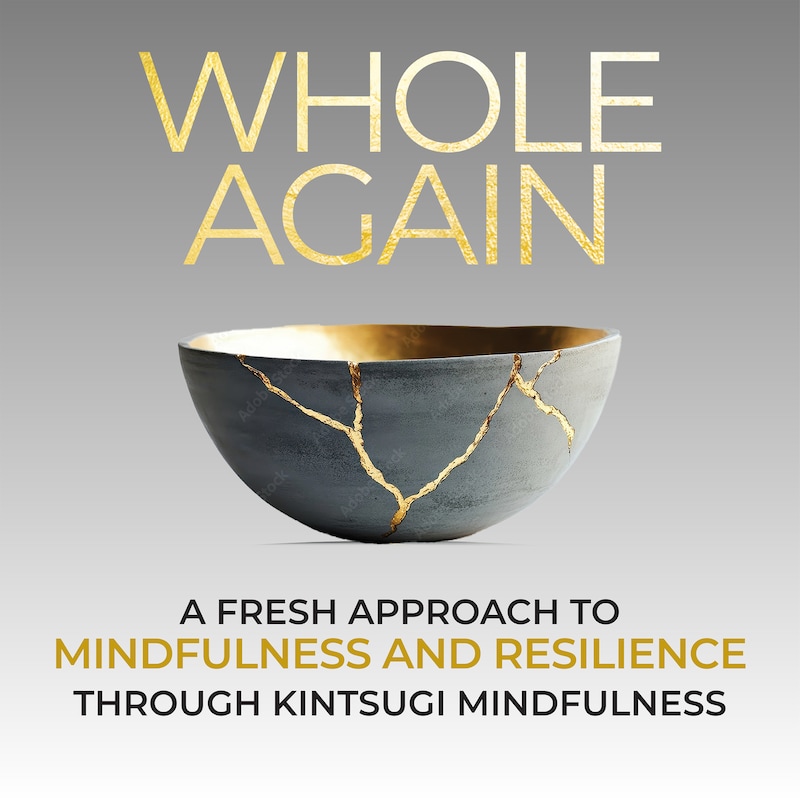
With Whole Again: A Fresh Approach to Healing, Growth & Resilience after Physical Trauma through Kintsugi Mindfulness listeners explore resilience through personal stories of trauma, scars, and injury while learning to overcome PTSD, imposter syndrome, self-doubt, and perfectionism with self-compassion, self-love, and self-worth. Through insightful discussions on stress management, mindfulness practices, and digital wellness, the show offers practical tools like breathwork, micro-dose meditation, grounding techniques, visualization, and daily affirmations for anxiety relief and stress relief. Inspired by the art of kintsugi, the podcast embraces healing as a process of transformation, encouraging a shift in perspective from worry and being overwhelmed to gratitude and personal growth. By exploring the mind-body connection, micro-dosing strategies for emotional well-being, and holistic approaches to self-care, this podcast empowers listeners to cultivate emotional resilience and live with greater balance and intention.
Transcripts
In this episode, you'll discover five people that are essential to your recovery.
Hey there, it's Michael. Welcome to Whole again, A show about helping survivors of physical injury and trauma reclaim their strength and resilience through the wisdom of Kazuki. I'm so excited to bring this episode to you because it's all about community. As we continue to explore my grace framework.
That helped me during my recovery and helped me feel whole again. Earlier this month we talked about the G, which represents gratitude. The R is all about reframing. The A is about acceptance, and now we get to talk about the power of community. But before we pedal any further, I have something else that I'm really excited about sharing with you.
my cross country bike ride in:And every week I received a bunch of messages that said, Michael, how did you know? How did you know that was the message I needed to hear in that very moment? It was a little freaky in a very good way, of course. And if you would like to receive them, all you have to do is text whole again to 8 6 6 6 1 2 4 6 0 4.
ake you back to the summer of:There must have been about 15 to 20 people. Who came into my hospital room to check on me and to help figure out how to make me feel whole again. Well, when they left, I looked over to my wife and I said, they're like my medical Peloton. And it's very appropriate that this episode is being released in July because the Tour de France is taking place in France, and I just love the event and to see it in person.
That's when you really truly get it. Not everything that's happening there can be communicated effectively through television, but it's an over the top event and that group of cyclists that you might see if you catch any of the coverage that is called a pelo. I use it as a metaphor for your squad or your team.
In fact, all the early shirts of pause, breathe, reflect, had the question on the back, who's in your Peloton, in essence, who's on your team? Who's in your squad? And the really cool thing about a Peloton is that it's made up of a whole bunch of different teams and within each team. Cyclists take on different roles.
There's the team leader who might win the overall Tour de France, but there's also a whole bunch of different helpers called Do Mystiques. They're the caregivers, if you will. There are people who specialize in sprinting, others who specialize in climbing the Alps and the Pyrenees. What's really cool is that even though these teams are competing against each other, they need each other.
They need to find a way to collaborate and work together to navigate the dangerous roads and all the traffic furniture, as they say in Europe. That's. In every little small town or a pothole, or they work together to block the wind. So yes, they are competing against one another to win the race, but they also need each other.
And so when I look at our recovery, I look at who is in your Peloton, who is bringing out the best in you? If you wanna look at this metaphor through a business lens or a corporate lens, because I do do a lot of speaking in corporate America, this could be who is on your personal board of directors? Who are those people that you can really lean on, that you can really count on to be there for you?
And I believe that a good peloton, much like the cycling Peloton, is made up of different people all performing different roles. It's really hard for one person to play a ton of different roles. So we need some diversity, we need some specialization, if you will. So I wanna share with you today five distinct roles.
Now, it could be more if you wanna make your Peloton, your Peloton, just like you make your practice. Your practice, right? Everyone has a different recipe, but I wanna share five with you to start. Another cool thing about the concept of a Peloton is that it doesn't have to be just about your recovery. You can have a Peloton in your personal life.
You can have a Peloton in your business or corporate, or career life as well. I believe it's essential to know who these people are in your life, and it's very important for them to know what role they play in your life, but we often don't share that with them for a variety of different reasons. So let's dive into the five essential roles.
I actually have an exercise in a workbook, and if you send me that text, that number that I mentioned upfront, I will also repeat the number at the tail end of this episode. I will send you this workbook so you can do this on your own, but I'll share the five roles with you in this episode. Let's start off with having someone that can offer you clarity.
This is the person in your recovery that can help clarify all the different confusion that comes your way. They will ask you the brilliant question. They will really help you think as clear as possible so you can make thoughtful decisions about your pathway to feeling whole again. So it's always good to have that person that really helps you think clearly.
The next person is, who do you call when there's a crisis? This is the 9 1 1 9 1 1. Obviously the number for emergency services here in the us. It's a different number in other places of the world, but who will you call if there's a crisis? Who's gonna be there in your moment of greatest need? The third person in a Peloton is who can be there to comfort you when you're feeling down or feeling sad.
They know how to be compassionate. They know how to be empathetic. They also know how to motivate you out of that moment. They're the ones that will provide great care to you. So who is that for you? The fourth member of your Peloton is someone who can challenge you. They'll create just enough tension, just enough pressure to help you get stronger.
They're not gonna let you off the hook, if you will. So they'll challenge your perspective. They'll challenge your thinking. You might not like it. At first, but you know that tension is gonna bring out something special. We need someone like that in our lives. In life. If we have people that just tell us what we want to hear, we're probably leaving a lot of our growth potential on the table.
All right, here's the fifth role. Someone who can really celebrate your victories, whether they're small or really big and massive. Someone who could be there and experience mudita, appreciative joy. Someone as you celebrate makes it about you, not about them. So those are the five essential roles. Now, if you have other roles that you wanna add, you can freestyle and make your Peloton.
Your Peloton, the ones I just shared with you, are someone in your life that can help provide clarity, someone that can be there in a crisis, someone who's there to comfort you when you're hurting, someone who will challenge you. And someone to help you celebrate. And it's possible that one person serves a couple different roles, but if you only have one person that serves all the roles, you might not have as much diversity in your Peloton as you would like.
So this is a good chance to reflect, to ensure that your Peloton is as strong as possible because a strong Peloton helps us dance through life. An elegant dance of giving and receiving, leading and resting. It's exactly how community works. Hence the reason why community and connection represents the sea.
In my grace model, many of us, as we go through something, as we go through recovery, feel like we have to do it all by ourselves, that we have to be the one leading the charge all the time. Or we don't wanna be the one that slows everyone down. We don't wanna be that person, that person that is falling behind.
But here's the cool thing about a Peloton. It's designed for this because you can't, I can't, we can't lead every mile. Yes. Sometimes our role will be to be out in front blocking the wind, making it easier for other people other times. We need to rest in the middle, in the safety of a Peloton, and sometimes we just need to be carried.
We need to be pulled along by the Peloton, and we all have moments like this, but it does take some courage and vulnerability to step into each of those roles. This week, I'll invite you to hit pause, take a few deep breaths and reflect on who's in your Peloton, and I'll share here in a bit how to get that workbook I mentioned previously.
And in this moment of reflection, you may decide that you need to make some changes to your Peloton, which is perfectly normal. So many people do. All the people that I tend to work with. You wanna make sure. That you trust who's in your Peloton, and here's a bonus that you can do. Reach out to those members of your Peloton and let them know how essential they are to you.
Send them a note of gratitude. Perhaps there's great wisdom in knowing win to pedal hard and when to. Ride behind someone else, someone else who's blocking the wind for you, because healing heck life isn't a solo bike ride. It's this wild ride that we do outside out in nature with uphills and downhills and false flats, crosswinds and headwinds and tailwinds in all types of weather.
And we don't do it by ourselves because ultimately. We go far together and I'm glad you're here with us on this ride.
Thanks for being here and thank you for being a fellow survivor. If you would like to receive my text messages, those perfect messages that meet you at very moment, you need to see them. Send me a text to 8 6 6 6 1 2 4 6 0 4 and as you send your text message, if you would like the workbook I've referenced in this episode on How to Build Your Peloton, let me know that and I'll send it along.
In this episode, you discovered the power of a Peloton and five key roles to have in Peloton.
Here together, we keep pedaling. On our journey to feel whole again.
And if you wish to learn more about creating beautiful ripples and how to prevent a bad moment from turning into a bad day, please visit my website, Michael O'Brien schiff.com. And sign up for my newsletter called The Ripple Effect, and join us each Monday, Wednesday, and Friday here at Whole Again, and discover how you can heal, grow, and become more resilient and celebrate our scars as golden symbols of strength and resilience.
Until then, remember, you can always come back to your breath. You've got this. And we've got you.