Shownotes
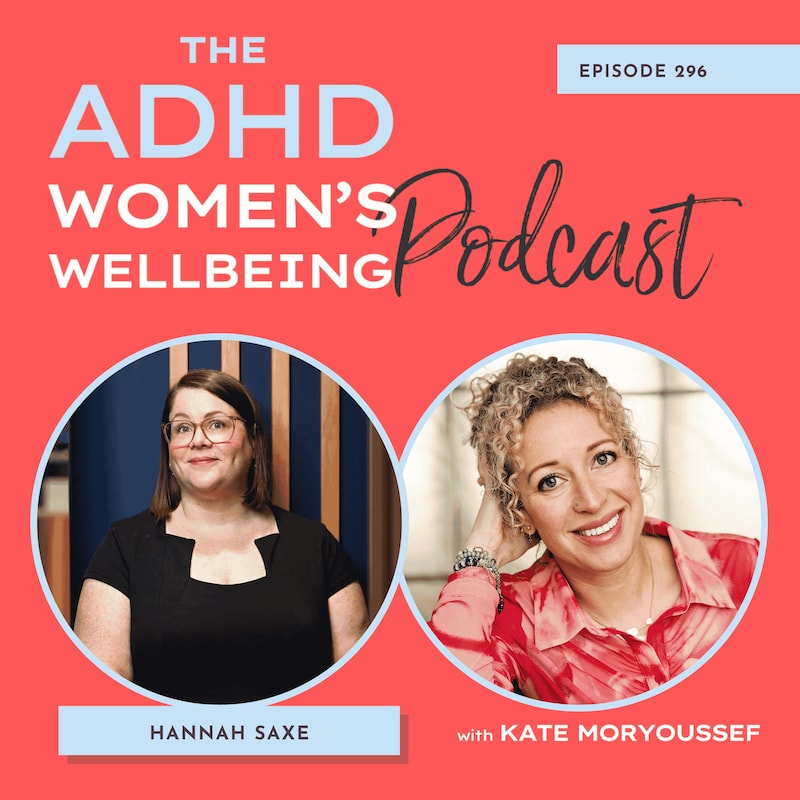
In this episode of the ADHD Women’s Wellbeing Podcast, I'm joined by Hannah Saxe, a Legal Director specialising in family law and a recognised expert in modern family arrangements, including divorce, financial settlements, child arrangements, cohabitation agreements, and LGBTQ+ family services such as surrogacy, donor conception and co-parenting.
Alongside her professional expertise, Hannah brings lived experience as a late-diagnosed AuDHD woman and mum to two neurodivergent boys. This dual perspective shapes her compassionate, practical approach to supporting families through some of life’s most complex transitions.
If you’re currently going through a separation, supporting someone who is, or simply want to feel more informed and prepared, this episode offers reassurance, insight and practical guidance to help you feel less alone and more empowered.
My new book, The ADHD Women's Wellbeing Toolkit, is now available, grab your copy here!
In this episode, we explore:
- Hannah’s journey to a late AuDHD diagnosis and how this shapes the way she supports clients
- Why neurodivergent individuals are often overrepresented in family and justice proceedings
- The new guidance from the Family Justice Council and how it aims to improve support for neurodivergent families
- The common barriers which ADHD and autistic women may face when navigating legal processes
- What reasonable adjustments are, your right to ask for them
- The power of understanding your neurodivergence to help with self-advocacy in the legal system
- The move to non-fault divorce and what this means in practice
- The emotional and practical impact of separation on children
- Neurodivergent-friendly alternatives to court, including mediation and arbitration
- How written communication and parenting apps can reduce overwhelm in co-parenting
- The importance of building your support “tribe”, including legal, financial, emotional and practical support
Timestamps:
- 01:03 - Navigating Neurodiversity in Family Law
- 09:37 - Understanding Neurodivergence in Relationships
- 17:03 - Navigating Divorce and Neurodiversity
- 26:23 - Navigating Emotional Turmoil in Legal Processes
- 30:29 - Navigating Neurodiversity in Family Law
- 36:52 - Navigating Relationship Breakdowns
- 42:32 - Transitioning to New Resources
Join the More Yourself Community - the doors are now open!
More Yourself is a compassionate space for late-diagnosed ADHD women to connect, reflect, learn and come home to who they really are. Sign up here!
Inside the More Yourself Membership, you’ll be able to:
- Connect with like-minded women who understand you
- Learn from guest experts and practical tools
- Receive compassionate prompts & gentle reminders
- Enjoy voice-note encouragement from Kate
- Join flexible meet-ups and mentoring sessions
- Access on-demand workshops and quarterly guest expert sessions
To join for £26 a month, click here. To join for £286 for a year (a whole month free!), click here.
We’ll also be walking through The ADHD Women’s Wellbeing Toolkit together, exploring nervous system regulation, burnout recovery, RSD, joy, hormones, and self-trust, so the book comes alive in a supportive community setting.
Links and Resources:
- Find my popular ADHD workshops and resources on my website [here].
- Follow the podcast on Instagram: @adhd_womenswellbeing_pod
- Contact Hannah through Brabner's website
- Family Mediation Voucher Scheme
- Cafcass Parenting Plan
- Our Family Wizard App
- App Close
Kate Moryoussef is a women's ADHD lifestyle and wellbeing coach and EFT practitioner who helps overwhelmed and unfulfilled newly diagnosed ADHD women find more calm, balance, hope, health, compassion, creativity and clarity.
Transcripts
Welcome to the ADHD Women's Wellbeing Podcast.
Speaker A:I'm Kate Moore Youssef and I'm a wellbeing and lifestyle coach, EFT practitioner, mum to four kids and passionate about helping more women to understand and accept their amazing ADHD brains.
Speaker A:After speaking to many women just like me and probably you, I know there is a need for more health and lifestyle support for women newly diagnosed with adhd.
Speaker A:In these conversations, you'll learn from insightful guests, hear new findings and discover powerful perspectives and lifestyle tools to enable you to live your most fulfilled, calm and purposeful life wherever you are on your ADHD journey.
Speaker A:Here's today's episode.
Speaker A:I am here today to help you understand how to navigate life a bit easier alongside your newly discovered discovered neurodivergence.
Speaker A:As always.
Speaker A:And I'm here today asking some interesting questions on a topic that hasn't really been covered before.
Speaker A:So I'm really excited.
Speaker A:We have Hannah Sachs here now.
Speaker A:Hannah is a Manchester based family solicitor lawyer with 20 years experience advising couples about all aspects of family law and she is now interested in neurodiversity as she is a late diagnosed or DH deer.
Speaker A:She's also the parent of a of 2nd boys and we're going to be talking about the Family Justice Council releasing guidance about how more practitioners can help neurodivergent families navigate the family justice system.
Speaker A:And I know this impacts so many people because unfortunately late diagnosed or undiagnosed neurodiversity really impacts family dynamics and creates lots of chaos and dysfunction when we don't know about it.
Speaker A:So Hannah, welcome to the podcast.
Speaker A:I'm really happy to have you here.
Speaker B:Thanks.
Speaker A:So tell me a little bit.
Speaker A:So you've been a family lawyer for 20 years and you've seen obviously the impact that I guess divorce, family, you know, breakdown in relationships can have.
Speaker A:I'm interested to know when did you start recognizing how much of that was probably tied up in lots of undiagnosed neurodivergence?
Speaker A:And I guess what that passion now is to help advocate for families to either go through that process in a more kinder, more compassionate way, but also to help these people move out of this in a way that they can reflect and hopefully move forwards with more ease and peace, I guess.
Speaker B:Yeah.
Speaker B:So I've been a specialist family lawyer for getting on for 20 years which makes me feel very old.
Speaker B:I have also got two little boys who are one has an ADHD diagnosis and the other has an autism diagnosis in the pipeline we suspect.
Speaker B:I'm also from a family of proud neurodivergent folks.
Speaker B:And I was sort of late diagnosed in my 40s, after the birth of my second son.
Speaker B:And the growth in awareness around neurodevelopmental conditions is a wonderful thing, I think.
Speaker B:And along with that growth in awareness comes this recognition within the work I do as a family lawyer of more families experiencing issues around neurodiversity.
Speaker B:So maybe they've got neurodivergent children and they're dealing with their arrangements for their care on separation.
Speaker B:Or maybe it is, as you've highlighted in your introduction, that there are issues around neurodiversity with the parties themselves, the couple themselves.
Speaker B:And what I'd noticed as a trend was late diagnosed or late discovered women who are as part of that sort of grieving process that we or reflection process that we as late diagnosed women go through, they are sort of looking again at their priorities and what they want in life.
Speaker B:You know, there's that whole process that I certainly went through where I sort of look back at with compassion at sort of old pre diagnosis Hannah and think, well, I was really hard on myself.
Speaker B:And it's for late diagnosed folks going through that process where they are then looking at their relationships and their private lives and sort of making reassessments there.
Speaker B:And I'd noticed a trend in either my clients saying, well actually I'm going through a diagnosis process or I think I might be neurodivergent or them saying that their spouse or partner is going through that journey.
Speaker B:And I just thought it was an interesting trend.
Speaker B:And it's a development in sort of family life, isn't it?
Speaker B:And that's where thankfully this guidance has come from the Family Justice Council.
Speaker B:Because there is a recognition and it comes from public law proceedings, so care proceedings initially there is a recognition now that there is an over representation in family court proceedings of neurodivergent people.
Speaker B:And because of that, and it's not just family justice proceedings, it's criminal justice proceedings as well.
Speaker B:Because of that recognition there has now come through this guidance which the primary aim of it is to help neurodivergent people navigate the sort of court system in a way that they can give their best evidence and sort of put their case forward in a fair way.
Speaker B:Because obviously being neurodivergent is stressful enough going through a relationship breakdown or a dispute about the arrangements for your children.
Speaker B:But then it's the added layer of challenge for neurodivergent folks navigating that process.
Speaker B:And it's a great thing and it's not something that is widely known about because doesn't just have application to neurodivergent folks in the family justice system.
Speaker B:So going to court, it also has application for just instructing a solicitor or speaking to a mediator, some other kind of professional connected to the family justice world where you might avoid going to court, but you can still have this resource that's available.
Speaker B:So essentially you don't have to advocate for yourself quite so much because there's a resource you can point that professional to.
Speaker A:Yeah, I think it's so powerful to hear that, especially in the justice system as a whole.
Speaker A:And like you say, family law, criminal law, there was another one that you mentioned, I can't remember what that was, but just the different aspects of how, you know, neurodivergence has to be acknowledged and we have to see it through this neuroaffirming lens because you say this is over representation.
Speaker A:You know, we know that the rates of divorce and family breakdown or marriage breakdown is so much higher in neurodivergent families.
Speaker A:And so we are now recognizing this and we need to get the support to be able to help families navigate this, maybe even prevent it through mediation.
Speaker B:Yes, absolutely.
Speaker A:And absolutely you navigate what the impact of undiagnosed neurodivergence and then like you say, the late in life recognition and how we can then almost switch courses a little bit.
Speaker B:Yeah, that's right.
Speaker B:And another trend that we as family lawyers notice is that unfortunately neurodivergent folks are more likely to be in abusive relationships and again, sort of late discovery or late diagnosis can give you that empowerment to then leave those types of relationships.
Speaker B:And the sort of main idea behind the Family Justice Council guidance is to support neurodivergent people to overcome the barriers they face when participating in proceedings.
Speaker B:And the idea is to help practitioners.
Speaker B:So family law practitioners, that's solicitors, mediators, social workers, judges, recognise neurodiversity, what the barriers could be.
Speaker B:It deals with suggesting adjustments and crucially how you go about applying for them if you're in proceedings.
Speaker B:It's that awareness piece as well.
Speaker B:There's a quite a lot of helpful myth busting in the document because in a very respectful way assumes that the person reading it doesn't know very much about neurodivergence at all.
Speaker B:So for example, it explains that neurodivergent folks might have co occurring mental health or physical conditions separate from the neurodivergence, including intellectual disabilities, but that's not often the case and that, you know, once You've met one neurodivergent person, you've met one neurodivergent person.
Speaker B:We've all.
Speaker B:We're all different, so you shouldn't make generalizations.
Speaker B:Another sort of common misconception that it deals with is this idea that neurodivergence is a sort of childhood thing that people grow out of.
Speaker B:But we know that neurodivergent kids become neurodivergent adults, and many of us mask in adulthood to be able to cope.
Speaker B:And that makes our neurodivergence less obvious, but it doesn't mean that it goes away.
Speaker B:And it's an exhausting process.
Speaker B:So, you know, imagine your relationship's broken down, you can't get an agreement about seeing your children.
Speaker B:You've got to sort out the finances, and on top of that, you are high, masking your way through the process.
Speaker B:So that creates a sort of an unseen barrier to participating in court proceedings, but also to just dealing with a solicitor or a mediator or the other person.
Speaker B:And so it's amazing that there is this document out there that you can refer to that highlights all that without you having to go into chapter and verse about it personally with your advisor.
Speaker A:Yeah, absolutely.
Speaker A:I mean, how did you feel, I guess, when you got your late diagnosis as a family solicitor who is obviously been dealing with lots of undiagnosed people?
Speaker A:You know, for you, did you have that reflection process?
Speaker A:I mean, I speak to doctors about this a lot.
Speaker A:You know, doctors who are late diagnosed, who are probably seeing lots of undiagnosed women, especially suffering with lots of health conditions, and they get the answer and they look back and think, oh, my God, look what I've missed throughout the years.
Speaker B:Yeah.
Speaker A:How does that feel for you as a family lawyer?
Speaker B:I mean, I think one of the things that you should look for as a neurodivergent person going through the process is when you sort of getting together your little tribe of people to help you through the process is to look for people with lived experience.
Speaker B:Because I, like many people, saw neurodivergence elsewhere in my family, and a lot of people see it in their children before they see it in themselves.
Speaker B:And then you do go through that sort of grief process of looking back and thinking, well, you know, I've been really hard on myself about that because I thought these traits that now I know are autistic or ADHD traits.
Speaker B:I just thought they were parts of my personality or personality flaws.
Speaker B:So.
Speaker B:So you personally, I found the sort of late discovery and late diagnosis process really affirming and a really positive experience in the end.
Speaker B:Because there's that saying, isn't there?
Speaker B:You know, you realize that you're a normal zebra rather than a strange horse.
Speaker B:Yeah, I love that.
Speaker A:I'm not a sensitive person like that.
Speaker B:So it's that process.
Speaker B:And as part of that process, yeah, a lot of people will all of a sudden think, well, I'm going to start advocating for my needs in my relationship.
Speaker B:And some relationships don't survive that.
Speaker B:So it's, you know, and you might see, as you say, undiagnosed neurodivergence can wreak havoc on a relationship as well.
Speaker B:So the helpful thing about the guidance actually is it also points out in its myth busting capacity that yes, you might have people with a diagnosis or they may suspect they are neurodivergent, but you might also have people who, for whatever reason, they would never seek out a neurodivergent diagnosis or they don't want one.
Speaker B:So actually what it's teaching practitioners to do in a really basic way is at the start of every case to look at your client and almost do like a little mini screening exercise for yourself to see if neurodivergence might be a thing and without putting a label on it, identifying the challenges that your client might have and then working out a way to sort of respectfully and sensitively put in place adjustments that they might need to make things easier for them.
Speaker B:So actually it's not about saying to practitioners, well, you need to spot when somebody's an ADHDer, for example, and get them movement breaks during hearings or movement breaks during long meetings.
Speaker B:There's no need for that label.
Speaker B:But you can ask questions around it to identify and usually you can spot it if you, if your client is the sort of client that might benefit from that kind of adjustment.
Speaker B:And I just think that that's brilliant.
Speaker A:So can I ask, I don't know if here in the uk, but I've always heard this terminology if, if you know when you're getting a divorce is irreconcilable differences.
Speaker A:And from my understanding that is just lots of different things that you just can't agree on and it's just compounded and compounded.
Speaker A:And I was thinking about this the other day actually, and I was thinking that could be a lot of undiagnosed neurodivergence, you know, lots of difficulties with OCD and emotional regulation and it could be oppositional defiance disorder and it could be PDA and it could be so many different ways.
Speaker A:You know how it shows up anxiety.
Speaker A:And there's a lot to deal with for a partner and it's also a lot to deal with with somebody who isn't understanding themselves.
Speaker A:And it gets to a point where that amount of stress just the relationship breaks down.
Speaker A:And if there is more awareness and understanding and more help and support for families to navigate this, do you think that perhaps some of, maybe some of the relationships that you've seen could have been saved?
Speaker B:Maybe so.
Speaker B:I mean, the great thing about the steps forward in the family justice system in this country is that we now have no fault divorce, which is similar to irreconcilable differences.
Speaker B:We didn't used to.
Speaker B:It used to be the case that in England and Wales you had to say that your relationship had broken down because of adultery or unreasonable behavior or because you'd been separated for a certain amount of time.
Speaker B:There was no option to just say, oh, look, we've just grown apart and we want a divorce.
Speaker B:And actually the law changed relatively recently to allow no fault divorce.
Speaker B:So now you don't have a divorce based on adultery or unreasonable behavior.
Speaker B:The only option is to have no fault divorce.
Speaker B:So you're not putting blame on anybody for it.
Speaker B:And I suppose one of the drivers behind that is that those behaviors that we were sort of historically having to pin the end of the relationship on, they are just, they can just be a symptom of the breakdown of a marriage.
Speaker B:It shouldn't be that you're sort of punished for being the person that has the unreasonable behavior in the views of your spouse.
Speaker B:They're all relationships are complex things.
Speaker B:And as you say, you know, there are all sorts of reasons why people behave the way they do and neurodivergence may be one of them.
Speaker B:And so that's pretty neuroaffirming step forward, I suppose, in as far as divorce and dissolution of civil partnerships is concerned, is that we don't now have that sort of blame, the blame game we call it, of saying, you know, it's your fault the relationship has ended because in actual fact there was no point in it anyway.
Speaker B:Because even if back in the old days you had an adultery divorce, for example, you didn't, it didn't get you anything as the purse, the wronged party.
Speaker B:You didn't get more a better outcome in relation to the finances or the children.
Speaker B:So there was no point in it.
Speaker B:Okay, that's been quite a sort of neuroaffirming step forward actually thinking about it.
Speaker A:And I guess it's about empowerment as well, isn't it?
Speaker A:Because like you say, I mean, let's just kind of say you're a woman in midlife, you've had a diagnosis, it's opened your eyes and it's made you understand and reassess life, reflect your needs, reflect how you want to live your life.
Speaker A:And sometimes that partner that you with is not, that part is not the person you want to move forwards with.
Speaker A:You know, there could have been real difficulties or there could have just been.
Speaker A:This is just not the person I want to evolve with anymore.
Speaker A:And maybe there's respect there, but you know, we want to kind of like move forwards.
Speaker A:And I hope that this no fault divorce is allowing more people to respectfully bow out of a marriage if they know that there really is no, no future there and find a way hopefully to put co parent together if the children are still at home and reduce the amount of trauma that we see in a new dysfunction and chaos that so many people have gone through as neurodivergent people in neurodivergent families without any of this education and awareness.
Speaker A:And for me, I don't put any kind of judgment on whether a marriage survives or not.
Speaker A:The big thing I would love to see more of is more compassion, more kind of connection and children being able to be co parented well together because that is the trauma.
Speaker A:I mean I was, I grew up, my parents got divorced and actually they were thankfully on good terms and I do believe that yes, it was very painful for, to get, you know, to have them divorced when I was 12 or 13.
Speaker A:What saved me, I think psychologically was the fact that they could be in the same room and they could co parent and talk to each other and there was never any dispute over custody and things like that.
Speaker A:And I think that was, you know, a godsend for me.
Speaker B:Yeah, I mean it is possible, believe it or not, to have a, a good divorce or a good separation.
Speaker B:I'm a member of a, a group of family lawyers called Resolution.
Speaker B:And what we focus on, it's a national organization, is dealing with things in a conciliatory way in our work and putting children at the forefront of our minds when advising our clients.
Speaker B:And it is absolutely possible to do what thankfully your parents did and navigate things with a good co parenting relationship.
Speaker B:And that sort of moves nicely on actually to what I wanted to say about how neurodivergent folks, whether in this country or in another country, can help themselves when it comes to navigating family law issues.
Speaker B:The Family Justice Council guidance, as I've said, is a handy all in one Place document that you can show to advisers or practitioners as you're going through the processes here.
Speaker B:We.
Speaker B:And it's got all the case law, it's got sort of how you apply for the adjustments and you shouldn't feel afraid or embarrassed to ask for adjustments because most of them, even in our sort of overstretched, underfunded court system, are inexpensive or free to provide.
Speaker B:And because of the growth in awareness around neurodivergence, it's not, hopefully not going to be seen as a sort of attempt to garner sympathy from a judge, for example.
Speaker B:There's no reason for it to be viewed that way.
Speaker B:And it's really, remember that it's really a request for equity, considering that we don't all start from the same place and we've got to acknowledge and make adjustments for those imbalances.
Speaker B:There's actually specific guidance for the judiciary is supposed to be coming out at some point this year.
Speaker B:So it's something, as I say, it takes the pressure off you to advocate for yourself.
Speaker B:It's something that you.
Speaker B:You can refer to or your lawyers can refer to.
Speaker B:So, yeah, top tip number one is don't be afraid to ask for adjustments or worry that it will be seen as you trying to get.
Speaker B:Trying to get sympathy.
Speaker B:Yes.
Speaker A:Or to sway.
Speaker A:I mean, I want to ask about magistrates, because a magistrate's going to be kind of included in this neuroaffirming awareness, because a lot of them are responsible there in the family courts and they're making big decisions, aren't they?
Speaker B:Yes.
Speaker B:So magistrates are in the family proceedings court, which is part of the family justice system.
Speaker B:And when we talk about the judiciary, we include them in it, even though they're not legally trained judges, they're sort of lay people.
Speaker B:So, yes, these guidelines can be directed at them as well.
Speaker B:Yes.
Speaker B:And there are other things you can do, actually, that go outside the guidelines.
Speaker B:And it's something that people may have come across with their children or if they work in education, is a sort of the equivalent of an all about me document.
Speaker B:And my son has one at school where it's almost like a passport that says, this is Josh.
Speaker B:These are the things that he does in class and these are the things that will help.
Speaker B:It sort of sets out your sensory profile, the adjustments that will help.
Speaker B:Again, don't be afraid to either have that as a conversation or literally have it as an email or a document that you send to your advisors, whether you're in proceedings or not.
Speaker B:So, you know, you can send it to your lawyer and your accountant and your mediator to say, when we have meetings, I only need them to be this long and then I'll need a break or there's all a myriad of, you know, I'm dyslexic so I would prefer it if you, you know, gave me more time to consider documents.
Speaker A:It's so self explanatory.
Speaker B:Yeah, yeah.
Speaker A:I mean, it's kind of like, why, why is this, why are we made to feel like we're kind of over asking or why we.
Speaker A:If this is kind of like really common sense and, you know, especially when it comes to things like lawyers and like being in court and having someone advocating for you, it's so important that we are kind of, we are able to process the information properly.
Speaker A:We're able to be as empowered as possible with small adjustments.
Speaker A:To me, it's kind of like, why has this never been the case?
Speaker A:I mean, I know absolutely, it absolutely.
Speaker B:Should be, shouldn't it?
Speaker B:And that's why I think the guidance is, is so important, because it, you shouldn't feel sort of shy or worried about doing this.
Speaker B:And another piece of advice that I give to everybody that I see, all clients, whether they're neurodivergent or not, is, is build yourself a little tribe to support you going through whatever process you're going through.
Speaker B:So if it's divorce or separation or resolving the arrangements for children, because very often I find that people will think, well, I can just, I'll just do it myself, you know, I don't need to share what's happening with anyone.
Speaker B:But the more people you have in your tribe, the easier it will be to navigate.
Speaker B:The obvious one is a solicitor to give you practical advice about the law.
Speaker B:But you might also want to have in your tribe a member of your family or a trusted friend who can come with you to meetings and sit there and hear the advice.
Speaker B:So that after you've left my office, for example, you can have a chat with somebody about, well, is this what you thought Hannah meant?
Speaker B:You know, because it takes me a long time to process information sometimes, especially if I'm stressed out or if it's emotional.
Speaker B:So have that other person there that hears it from the horse's mouth as well, or the zebra's mouth in my case.
Speaker A:Yeah.
Speaker B:And so that you can go away and sort of go back and forth with them and sort of really ruminate on it with someone else.
Speaker A:Yeah.
Speaker B:Because the amount of times I think as well where I can put my advice in writing if people need me to, because they can then process it in their own time.
Speaker B:But sometimes these disputes are pretty fast pace and there's not a lot we can do.
Speaker B:We do need to take your instructions quickly.
Speaker B:So it's important to have that other person there.
Speaker B:And as well, from a sort of cost saving perspective, it means you're not having to sort of pay for their time.
Speaker B:You can have those discussions and then come back to your advisor with a sort of clear set of instructions.
Speaker B:Other people in your tribe, you might have a relationship coach, you might have a counselor, you might have a financial advisor because you're having to make big decisions about your future and about complex issues like your finances and the welfare of your kids.
Speaker A:Gosh, it's making me think so much about how all of this has to be neuroaffirming.
Speaker A:I mean, you talk about the financial advisor and accountant.
Speaker A:I mean, if my accountant didn't know I had adhd, we'd be happy.
Speaker A:There'd be a big problem.
Speaker A:You know, the first, the minute I met him, I was like, just so you know, I've got dyscalculia.
Speaker A:I can't understand numbers.
Speaker A:I really need a lot of help and explanation.
Speaker A:And he was like, absolutely fine, no problem.
Speaker A:And to me now he calls me, he goes through it, we, you know, break it all down.
Speaker A:But if I didn't have that, it would be crazy.
Speaker A:And so with divorce, it's so big, it's so all.
Speaker A:It's so stressful, it's so panic inducing.
Speaker A:Like you say, it moves so quickly and you know, with our emotional regulation and reactivity and emotions and all, all of that, I can only imagine how much support a neurodivergent person would need who really gets it.
Speaker A:You know, this is not like, oh, you're being too sensitive.
Speaker A:Oh, you're overreacting or calm down, stop shouting or, you know, all these things and you.
Speaker A:It would internalize the things that we've already got shame about already or the things that have been these stigmas or taboos in our family or what are the reasons why we're getting divorced.
Speaker A:It could be that somebody has come to you and their spouse has said, you're so emotional, you're so overreactive, you're always too sensitive.
Speaker A:And RSD as well, rejection, sense dysphoria.
Speaker A:So much of this is part of relationships and if you don't have people supporting you like you say in your tribe that get this, it can make everything so much more traumatic.
Speaker A:And you know, it's almost like, can you build a neurodivergent divorce hub Almost where, where people can come to and say they know full not.
Speaker A:Maybe I'm not asking you to do it because that sounds like a lot.
Speaker B:But oh no, it's one of my great, my great plans.
Speaker B:There you go.
Speaker B:Have a gang of people go to people that do get it because we're all, we already exist.
Speaker B:We're already out there in the way that neurodivergent people have always existed.
Speaker B:There's just greater awareness about us now and people are sort of realizing, you know, there will be, I'm sure many expert accountant or financial advisor who will be absolutely brilliant at organizing the accounts of, you know, adhders.
Speaker B:And you know, I, I know of many a fabulous trauma informed divorce coach who are neuro neurodivergent themselves and who have lived experience of navigating relationship breakdown as a neurodivergent woman, for example.
Speaker B:So yeah, think about when you're compiling your tribe looking for advisors who get it in that way.
Speaker B:I mean I had it recently where I was advising the mum of neurodivergent boys on relationship breakdown and it's just for example, the understanding of the amount of scaffolding that we as parents in of neurodivergent kids put up every day and how exhausting that is.
Speaker B:You know, I often feel before I come and sit down at my desk in the morning that I've done a full day's work because I'm preparing the boys for going to school, school and we're following our routines and I'm doing the little, little things here and there that I know will help them regulate their nervous system and be able to go to school without hopefully getting upset or having a, a meltdown.
Speaker B:And, and that understanding that level of getting it is really important I think in its application to family law because you might get a neurotypical partner or just somebody with not as much understanding about neurodiversity as your opponent in proceedings.
Speaker B:And I've had it a number of times where I've sort of tried to say look, we can't just foist upon these children a big change in the arrangements.
Speaker B:We've got to do it slowly and we've got to prepare them for it.
Speaker B:And actually what we need to do is make sure that mum and dad are sort of singing from the same hymn sheets in terms of what they do for routines and scaffolding in their respective homes to make this work.
Speaker B:And hopefully stuff like the Family Justice Council guidance will mean there's a better understanding within family lawyers or family professionals about the need to go into that level of detail with some families to make co parenting work in practice.
Speaker A:With regards to the judges, would you say it is very important for judges as well to have this understanding?
Speaker A:Because I guess you can do it, you know, from your side and all, you know, the other.
Speaker A:But if a judge isn't taking into the these things into consideration, are you noticing there's a disparity there?
Speaker A:And I don't want to generalize, but I believe from what I know, judges are sort of a little bit more senior in age as well, because of the, the experience and the wisdom and all of that.
Speaker A:And with that age disparity, are you noticing a bit of a gap in knowledge?
Speaker B:In my personal experience of the judiciary has been, historically, they are sort of quite a conservative bunch, but they, you know, this is guidance that can be produced to them.
Speaker B:And I think they're very mindful of these sorts of issues and the changes in society and families and that that is reflected in the cases that come before them.
Speaker B:So if you, if you're in a neurodivergent family, you've got neurodivergent kids or you're neurodivergent yourself and you find yourself in front of a judge, there is absolutely no harm in referring them to the guidance or saying, look, I'm, I'm autistic, you know, I can't.
Speaker B:Or I'm adhd.
Speaker B:I can't sit here all day through a final hearing.
Speaker B:I need to have a break.
Speaker B:And there should be no shame in that.
Speaker B:But as you say, the added layer of complexity is that we as neurodivergent folks will feel embarrassed or shame about it.
Speaker B:Oh, no, I'll be all right without it.
Speaker B:I can fly under the radar.
Speaker B:Well, no, you can't.
Speaker B:And why should you?
Speaker B:In terms of their decision making in financial cases, for example, disability, of which a lot of neurodivergent folks will consider their neurodivergence to be, is a factor when determining the outcome in a finances case.
Speaker B:But the guidance is more about navigating the process and making sure that you're getting a fair crack of the whip, a fair trial.
Speaker B:But really, my sort of other top tip would be for neurodivergent folks to try and steer their family law dispute away from the court arena if you can not.
Speaker B:Because judges can't be neuroaffirming.
Speaker B:I think they can.
Speaker B:And as I say, I've had a lot of good experiences, but because there are other options out there and those other options give the parties the people, the family, more control, which is going to be in and of itself neuroaffirming.
Speaker B:So, you know, you have mediation where you go and have meetings with the other person, either sort of sat around a table with them or in different rooms and the mediator goes between you.
Speaker B:Or you have hybrid mediation where you do that, but you also have your lawyers with you, which might make you feel a bit more empowered because you can take legal advice on the go and you have.
Speaker B:Arbitration is another option for non court dispute resolution, which is a bit like private court, where you instruct an arbitrator to essentially be your judge and you're in control of the venue and the timings.
Speaker B:So if you need adjustments or, you know, you can't bear bright artificial lights, you can tailor the process to make sure that you're able to navigate it as best you possibly can.
Speaker B:And I think particularly when emotions are really high and as they often are in family law disputes that can get lost and people think, oh, well, it'll never work, going to mediation, the other parent is so difficult that we're going to have to go to court.
Speaker B:The key message I want to get across is even in the most hostile adversarial cases, it's always worth giving it a try because I see them settle every day in these alternative forums.
Speaker B:And even if you're just refining the issues, it means that the actual issue you need a judge to decide is simpler, quicker, less expensive to resolve.
Speaker A:Yeah, I mean, it is fascinating because you can think about, you know, it's almost like, what can people do to prevent the divorce?
Speaker A:If it is preventable.
Speaker A:If it is preventable.
Speaker A:And it's like, okay, so can we go to a therapist and now start understanding on your own divergence together.
Speaker A:And if that's not possible, can, you know, like you say, is it a mediator to then help prevent us from going into court?
Speaker A:And there is a, you know, all these different ways, but the most important thing is the awareness.
Speaker A:It comes back to it all the time because, you know, it's always empowering, you know, being more informed, more understanding and being able to say, right, okay, how can I break these generational patterns that many of us are stuck in?
Speaker A:Because we'd never had the awareness.
Speaker A:And I was talking to someone about it the other day and she said, there's just a generation gap of knowledge and, you know, awareness and also being able to know how to put this into practice.
Speaker A:We're sort of just hot footing it a little bit right now with like, okay, well, maybe we need to introduce this or maybe we do this.
Speaker A:But I really hope that in the future there's going to be.
Speaker A:It's just going to feel like so much more natural, like common sense natural.
Speaker A:Why shouldn't we just help more people?
Speaker A:Why shouldn't we just support more people to live life better?
Speaker A:And I guess that, you know, what you're doing, you know, in your, in your world is hopefully doing that because, you know, if a marriage isn't right or a relationship's not right, you know, let's try and move through this with the least amount of pain possible.
Speaker A:I think I'd love to just, you know, try and finish on, on something.
Speaker A:If someone is listening to this right now and they are a little bit kind of stuck or they're in proceedings that feel really difficult and really challenging is a.
Speaker A:And maybe finances are.
Speaker A:That's a really big problem right now.
Speaker A:Where should people go?
Speaker A:Like, what can people do to help themselves a little bit?
Speaker A:Maybe diffuse the situation a bit?
Speaker B:I think the key message has got to be going through.
Speaker B:Relationship breakdown or family issues is stressful.
Speaker B:You need a lot of fortitude to navigate it.
Speaker B:Build yourself a tribe of people.
Speaker B:It doesn't have to be sort of paid professionals, your family, your friends to talk to, so that you've got someone to talk through the issues with because that is invaluable.
Speaker B:Think about non court dispute resolution.
Speaker B:Even if you're in proceedings, that's always an option.
Speaker B:You can always settle a case at any stage and finances are always a concern.
Speaker B:Cost of living crisis.
Speaker B:There are resources out there to help you.
Speaker B:There's a mediation voucher scheme for arrangements to do with children where you can get.
Speaker B:I think it's £500 off the costs of mediation.
Speaker B:So speak to local mediators and see if they're in that scheme.
Speaker B:And also look at the resources that are out there for everyone.
Speaker B:But that will also help neurodivergent families.
Speaker B:So, you know, if you're having a dispute about the arrangements for children, for example, there's a written parenting plan that you can download for free from the Cafcas website, which can help neurodivergent folks like us who might be a bit chaotic because it's all written down and it's there in written format.
Speaker B:It sort of signposts you to the main issues that you need to agree when you're separating as parents.
Speaker B:That's a really invaluable resource that again, people don't really know about.
Speaker B:There's also parenting apps, co parenting apps that exist now, things like Our family wizard and app Close Again, where that is your forum for discussion with your co parent and it's written discussion, you know, what you've said, you don't ruminate as much because you've got it there.
Speaker B:But before you're in written communication, there's calendars, all sorts of helpful, practical things that can help you navigate it with as much understanding and in a way that is going to be as painless as possible for your family, because that's ultimately what we want.
Speaker A:Yeah, really interesting.
Speaker A:And I was also thinking about AI as well, of how we can use, you know, certain AI tools.
Speaker A:And I was in an assessment yesterday and the psychologist had like a little tile and he just put it on the, on the table and he said, I hope you don't mind, this is going to get, transcribe everything, then break it down so then I can understand what the key points are and what I need to focus on.
Speaker A:And I was thinking, and he said he's now seeing a lot of kids, you know, doing A levels and GCSes, helping neurodivergent kids break down the information.
Speaker A:And, you know, there's no reason why someone couldn't do that if they're in a long meeting.
Speaker B:Absolutely.
Speaker B:And we, most lawyers I know, we have the ability to do that for you.
Speaker B:So if we're having a meeting by teams, you can say, you know, please can teams transcribe this meeting and then we can send you the team summary.
Speaker B:And that's not, you know, you're not having to then pay for us to do a detailed letter of advice.
Speaker B:We can just send you the sort of rough and ready summary of what we talked about.
Speaker A:Yeah, and share and, and share it with a loved one as well and say, right, this is, you know, you couldn't make it to the meeting, but here's all the information.
Speaker A:Yeah, let's break it down and talk about it together.
Speaker A:Because it's, it's that overwhelm, isn't it?
Speaker A:And you know, I think, you know, God forbid I was in that situation, I feel so overwhelmed by all the information and remembering and processing and knowing what to do with that information, which I can only assume is very challenging.
Speaker B:Absolutely.
Speaker B:And then you've got people like me saying, right, well, we had that meeting, you know, last week.
Speaker B:I need you, I need your instructions now, because we can't do anything without your instructions.
Speaker B:I need you to make that big decision, which is where the idea of having a tribe comes in, because I can have long phone conversations with you about what you should or shouldn't do, but am I the most appropriate person to.
Speaker B:To have those conversations with?
Speaker B:You know, I can give you the practical legal advice, and that's what you pay me for.
Speaker B:But those conversations about making the decision, and that's something for the client, it's there.
Speaker B:It's for them to decide.
Speaker B:And your friend or your family member or your coach, if you don't have that sort of support network at home in your life, can help you make the big decisions without you having to fund a lawyer to do that for you.
Speaker A:Yeah, I mean, Hannah, thank you so much for your.
Speaker A:You know, listen, you're a very busy lawyer.
Speaker A:I know you've taken some time out of your working day, and I just really appreciate this because I hope this conversation will help, you know, at least one person who is navigating exactly what we've just talked about, because we need to.
Speaker A:These.
Speaker A:These open conversations can just kind of like, oh, I've not thought about that, or I'm going to try this, or just something small.
Speaker A:But I guess if someone is listening and they're thinking, I do need to instruct a lawyer or I need some help.
Speaker A:Are you open to new clients or what?
Speaker B:Of course, of course.
Speaker B:I'm always happy to have a sort of initial informal chat with anyone going through any family law issue.
Speaker A:Okay, so shall I put your details in the show notes?
Speaker A:Are you going to regret this?
Speaker B:No, no, please do.
Speaker B:Please do.
Speaker B:Yeah.
Speaker B:My email address and my number are absolutely fine.
Speaker A:Okay.
Speaker A:All right, well, thank you so, so much.
Speaker A:I've learned a lot today, so I really appreciate it.
Speaker B:Thank you for having me.
Speaker A:If this episode has been helpful for you and you're looking for more tools and more guidance, my brand new book, the ADHD Women's Wellbeing Toolkit, is out now.
Speaker A:You can find it wherever you buy your books from.
Speaker A:You can also check out the audiobook if you do prefer to listen to me.
Speaker A:I have narrated it all myself.
Speaker A:Thank you so much for being here and I will see you for the next episode.


