Shownotes
You did everything you were supposed to do.
You got the degree.
You worked hard.
You climbed the ladder.
You earned the promotions.
You built the career.
So why does it still feel wrong?
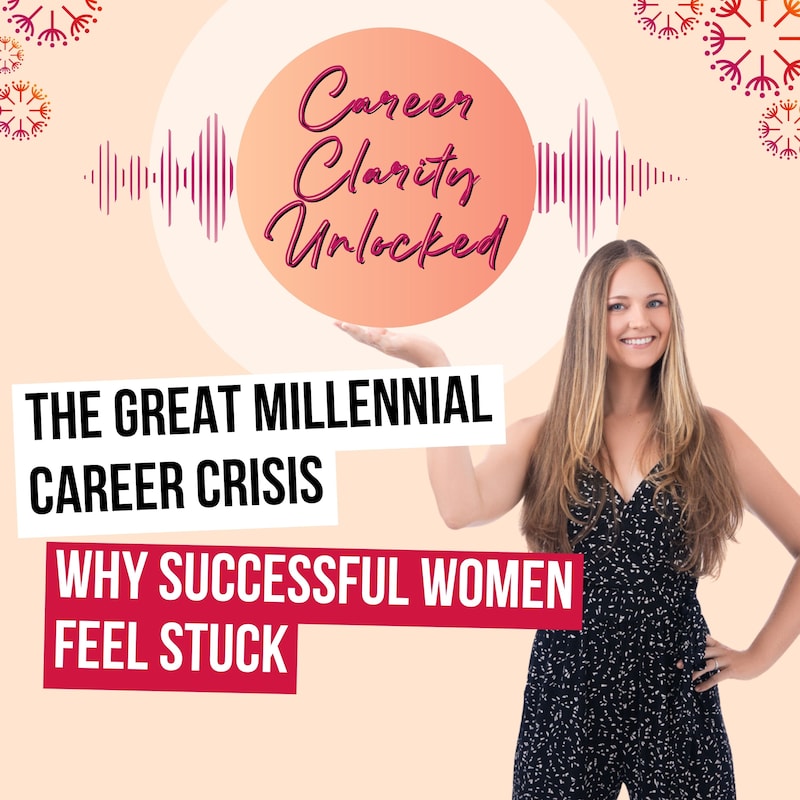
In this episode of Career Clarity Unlocked, Career Clarity Coach Theresa White sits down with Career Bloom Program Manager Karly to explore a growing phenomenon affecting ambitious women everywhere: the feeling of being successful on paper while feeling completely disconnected from your work.
After nearly a decade of climbing the corporate ladder, earning promotion after promotion, and building what most people would consider a successful career, Karly found herself asking a question she never expected:
"If I've done everything right, why am I so unhappy?"
What follows is an honest conversation about burnout, identity, people-pleasing, financial pressure, caregiving responsibilities, and the fear that comes with questioning a career you've spent years building.
If you've ever found yourself staring at your LinkedIn profile and wondering...
- Is this really what I want for the next 10 years?
- Have I outgrown my career?
- Am I burned out... or am I simply in the wrong career?
- Why does everyone else seem satisfied while I feel stuck?
- What if there's something better for me, but I'm too scared to pursue it?
This episode is for you.
In This Episode You'll Learn:
✔ Why high-achieving women often feel unfulfilled despite external success
✔ The hidden danger of making your career your identity
✔ How burnout and career misalignment can look surprisingly similar
✔ Why promotions don't always solve deeper career dissatisfaction
✔ The "good employee" trap that keeps talented women stuck
✔ How your priorities and values naturally evolve throughout your 30s and 40s
✔ The mindset shift that helped Karly stop forcing a career that no longer fit
✔ The first step to finding clarity when you have absolutely no idea what's next
Timestamps
00:00 – Welcome to Career Clarity Unlocked
00:58 – The uncomfortable question successful women avoid asking
02:12 – Meet Karly and her career journey
04:00 – The career script so many women were sold
07:33 – Promotions, achievement, and the promise of "someday"
13:46 – When your career becomes your identity
23:55 – Financial obligations and feeling trapped
27:42 – Burnout, boundaries, and chronic exhaustion
34:38 – Why your values change as you get older
41:43 – The breaking point that changed everything
46:39 – How to start finding career clarity
53:07 – Final thoughts and next steps
Ready to Figure Out What's Next?
If you saw yourself in Karly's story, you're not alone.
So many women reach a point where the career they worked so hard to build no longer feels like the career they want to keep.
You don't need all the answers right now. You just need a place to start.
👉 Book Your Free Career Clarity Call and let's talk about where you are, what's feeling off, and what your next chapter could look like.
Connect with Career Coach Theresa White:
- LinkedIn: @Theresa A. White
- Facebook: Career Bloom Coaching
- Instagram: @theresa_careerbloom
- YouTube: careerbloom
- TikTok: @career.bloom
- Website: www.CareerBloomCoaching.com
#CareerClarity #CareerChange #CareerTransition #CareerPivot #CareerGrowth #CareerDevelopment #CareerCoach #WomenInLeadership #WomenAtWork #ProfessionalDevelopment #BurnoutRecovery #CareerBurnout #JobSatisfaction #MeaningfulWork #MillennialWomen #CorporateBurnout #CareerFulfillment #PersonalGrowth #LeadershipDevelopment #WorkLifeBalance
Transcripts
Ep 95 The Great Millennial Career Crisis / Karly (finished editing)
===
[:On Career Clarity Unlocked, we're all about those light bulb moments. I'm talking to people who are still trying to figure out what they're meant to do, coaching them live to reach that magical yes, this is it moment. And we'll also hear from those who've already found their dream careers and figure out exactly how they did it.
's start this one off with a [:And if you ever had a thought like that, this episode is for you. Because what we're gonna be talking about today is what I call the great millennial career crisis. It is this really strange place that a lot of ambitious women are in, especially during their 30s and 40s, where on paper everything looks great.
nergized. You know you're... [:Yes, you're grateful for what you've built, but secretly you are wondering if this can really be it for the next 20 years. Today's guest knows that feeling firsthand. Carly spent nearly eight years climbing the corporate ladder, earning five promotions in four years, leading teams, mentoring employees, managing large-scale programs, and building what most people would consider a very successful career.
crazy leap into the unknown.[:No, she's just paused and got clear. She's took the time to understand what was actually driving her unhappiness, what she truly wanted next, and how to make a strategic transition without starting over. And today, Carly is actually part of the Career Bloom team, where she helps other women navigate the same questions she once wrestled with herself.
In this conversation, we're gonna talk about burnout, identity, success, misalignment, and the pressure that so many women feel to keep climbing even when the ladder is actually leaning against the wrong wall.
ou're gonna really love this [:And the one piece that many of us have in common is that we are at a point in our lives where we feel successful at the same time as we're feeling miserable, and that's not what we were sold.
When we were grow up, we were told, "Do everything right. Go to college, get the good job, work hard, build a career, be responsible, and you'll be happy." And we did all those things, and now look at us. We have, we checked the boxes on paper, and we're not happy. Now, how did this happen? Carly, where did your story begin?
successful and accomplished [:For some reason, I remember being told the $45,000. Um, but then they didn't tell you that you would also graduate with student debt. You would graduate potentially into an economy that is not really great for finding a, a early starting career, and what you went to school for might not even be employable in the market that you are in.
and I was like, "Okay, what [:We're relying on this system that may have potentially worked for previous generations, but we have an affordability crisis now. We can't even afford to buy a home. It's just, it's astounding, honestly. It is. I absolutely agree. And then there is no guidance, as you said. So for me, it was a little bit different growing up and going to college in Germany.
tely absurd to expect from a [:Most people in their 30s and 40s haven't figured that out. Um- Exactly ... so my 18-year-old self was looking at that list of things you could study and be like, "I guess this one here. Sounds good to me." Um, and then you get to go to school, you get good grades, you do all the right things, and then you graduate, and then they're like, "Ha.
Goodbye, good luck." And you're just standing there and you're like, "Okay," like, "Where, where's the job I'm supposed to be getting? I'm just supposed to be sending out applications? But what for j- what jobs, even?" And that brings us to then our entry-level roles into the corporate world, and we both had a very similar one.
had when you started in your [:And I was under the assumption that I could continue my education with my current credits at a American university, but unfortunately, as soon as I got there, spoke to a student advisor, and they told me nothing would transfer. Um, and just being a graduate from a four-year program being told that I have to start over from the beginning and take another potential three to four years of school was just not appealing for me at the time.
ded in my corporate job. Um, [:You had a very linear path from start to finish. Like, you just wanted to get to the highest level of management and make the most amount of money. So that really worked for me for a while. Um, I worked really, really hard within the company. I chased those promotions, get rejected sometimes, and I worked my way up the corporate ladder to the point that I actually got a sales role in the corporate office, and it felt like I made it, right?
and by the way, our offices [:Um, but just overall, like, a couple years into that corporate role, I just wasn't happy, and I really couldn't figure out why for the longest time. Because I had checked all those boxes, I had got it up to that level, and it felt like I was supposed to feel fulfilled. And unfortunately, there's a lot of people that are in the same position as me, that they got all the way up the ladder and they're like This is it?
, yeah. Yeah. I so resonate, [:Um, and yeah, my experience was a little bit different in the way that when I graduated, um, I'm from Germany, but I went to get my master's degree in the US. It's not so easy as an international student to land your first role, so I really felt, um, I really felt, um, how hard it was to enter the labor market.
It was such a huge challenge, and I do think everyone has their own version of that. Um, I do think the visa was one piece for me, but also the lack of clarity, the lack of any guidance in the job search. Um, the Hawaii job market is not the easiest one to enter. So there was a variety of factors that played into it, but eventually, I landed in the same management training program, and I was like, "Okay, I was given...
This is the [:I just didn't know. And sending out applications is not it. Um, and then what really kept me in the company was that promotion chasing. You, every, like, we got- Mm ... promoted almost every year, right? Or sometimes even six months into a role, you had another opportunity for a promotion, and that, just being very in- ambitious, I was always like, there's always the next promotion dangled in front of me, and I was always like, "Oh, if I just make it to that next step, it'll be great."
e it to that step. I'm like, [:But then for me, the question grew bigger of like, okay, management wasn't it. HR wasn't it. Recruiting wasn't it. So what- Mm ... where am I going next? So I was really, really lost, but I stayed because I had a company car. I made good money. It was a secure job. I was successful on paper. So technically, on paper, I should have been happy
it's not just the job, it's [: p down this was not going to [:And then with every passing year, year three, year five, year seven, I started to question myself more and more, like is... Am I gonna get stuck here? Is this, is this the only thing that's for me? And it was so hard to separate who I am as a person and how I identify at work, because I started to realize, like, those two people are related, but they're not exactly the same person.
was definitely a big part of [:Um, but I think it was just the familiarity of it all. Like, you work somewhere for that long, like, you know the people, you know the systems, you know exactly how things work, when they don't work, and how to fix them, and it starts to kind of be, um, like automatic at some point in time. But that's actually kind of where I started to lose myself, is because everything was so automatic, I didn't have to put any, like, creative thought process or strategic thinking into my day-to-day, that I actually started to lose myself because I had stayed for so long.
n me? Do they think that I'm [:But I really had to just, like, sit with myself after a while and start to realize that my identity is not my career. Like, I'm a person outside of whatever I do. There's people that pivot in their careers multiple times throughout their lifetime, and I actually think that's what made me more brave about stepping away, is that I was encountering, like, tons of people, like, either through, like, networking events or just meeting people, and I would tell them, like, you know, like, "I'm really unsure about where I am with my career."
was gonna sell surfboards on [:And he started working part-time with us, and he was telling me this story, and I was like, "Wow," like, "that's amazing. He just stepped away from all of that so he could sell surfboards on the beach." And he was super happy, 'cause he was aligned with what he wanted to do. And I, I definitely see that, um, it's so much more than your career title that makes you happy.
Yeah, 1,000%. I love the story. And also what you said earlier, it's not that the company we worked for is bad in any way. There are people who love working there, and it's so aligned for them, and I'm so happy for them that they found a company and a role that feels so aligned. It just wasn't aligned for us.
w where else I could go. Um, [:'Cause it's not that, uh, for the most part, I mean, there are toxic workplaces and objectively- Of course, yeah ... bad working conditions. Um, but a lot of it is really that misalignment that, like, it's not objectively bad, but it's misaligned for you. It would be the right fit for someone else. They would love that and be happy.
happy and really fulfilled, [:Um, it wasn't as much for me as my identity was wrapped up. I mean, obviously, right, we introduce ourself, like I'm senior recruiter or I'm a talent acquisition specialist with X, Y, and Z. Um, that the more you introduce yourself and use that title to describe yourself, it becomes part of your identity. But for me, it always felt like I am trying to fit in a box that
Like, that's not the right shape for me. I'm like, I'm trying to wear this box and I'm trying to fit it, but it's not really me. Um, but I just didn't know where else to go. So I was, like, in this misfitting box for a long time, um, trying to be like, okay, That big identity question, who am I? What makes me happy?
't I just be happy here? Um, [:That was so misaligned. And now I'm looking back, I can clearly see the pieces that felt misaligned. But at the time I was in, I was just... It's kind of hard to see when you're in it. It's just like, it's just not right. I don't know why and how, but it's just not right Yeah, exactly. I think that's just the hardest thing is that I kind of was in the same position where I was like, "I just want so badly to be happy.
borative. Like, there was no [:Like, even though I would typically work from home on Monday, so all I really needed to do was get on my computer and, like, check my emails and do my daily task, and I would still get the Sunday scaries. And that's when I knew that I was at the point where I was like, "I need... Something needs to change here," um, because, like, I'm not even going into the office, and I'm w- I'm having these feelings about it.
ture about what is out there [:Yeah. Yeah, it feels like when you're in one company, in one role for a while, it's kind of you have blinders on, of, like, you see what's in front of you, you see what's in there, but you're not seeing, and it's really hard to see all the other opportunities that you could tap into, right? Corporate isn't... For some people, they love corporate, and that's amazing.
Yeah. Some people really are aligned with entrepreneurial path. Some want to work for nonprofit or NGOs. Other people thrive in startups. Um, In public positions. It's, there's so many different opportunities. Um, some people have portfolio careers where you just piece together different pieces that you enjoy.
eginning, it's also not that [:We have student debts. Um, everything is really expensive, especially right now. And then there's caregiving pressures that also take up a lot of our time and responsibility. How did all of that play into your, your story of staying at the company and eventually leaving? Yeah, so for me it was really difficult for me to walk away financially for a while.
So not to get into too much detail, but I went from a two-income household to a one-income household in a very short period of time, and it wasn't just plausible for me to leave at that time. So this definitely isn't like a you don't like your job, get up and leave right away kinda thing, 'cause there are of course like factors that we need to take into consideration.
n the millennial generation, [:But when things started to stabilize for me a little bit more and I had a little bit more time to think, that's when I was like, "Okay, it, it's time for me to really figure out what I wanna do next." Yeah. Yeah, I agree. And it's not easy to have those responsibilities that all of us or many of us are carrying, and then at the same time figuring out, "But what about me?
t then I'm just getting left [:You have- Yeah ... a safe paycheck. You don't ever have to worry about paying for gas or getting your car in for any repairs. It was such a luxury to have that I- Yes ... still miss to this day. Um, but those two pieces kept me for a long time, even though I knew I'm not happy here. Um, and then obviously you add responsibilities on top of that.
So, and also, what I'm inviting people to think about is that it's not about quitting your job, right? Like, that is not, that's not what I did, that's not what you did, Carly. No. That's not what any of my clients do, is to be like, "Okay, this isn't working. We're gonna quit this and then figure it out."
y, like who, where do I want [:And then you can make a change without blowing it all up, because that's- Exactly ... unfortunately not what many of us can afford. So looking at it as, okay, this is misaligned, but I can't blow it all up. Thinking about it as like, okay, there is a third way. I can start to step by step plan my way out into the next phase of
My career where I want to go. Carly, what's your take on burnout? Do you feel that is something you experienced, you see a lot of people around you experiencing, especially in, as millennials? I do hear a lot of millennials talking about burnout. It is a really big topic.
hat's your take on that? Um, [:And it's like, it really makes me think sometimes, it's like, okay, if somebody from, that's an engineer, somebody that's from sales, somebody that is in their own, uh, startup or something, is all, are all saying the same thing, that we're all collectively burnt out. So it's kind of like, what is, what is causing that, and why is it so common among our generation?
reers, and somehow it's just [:I so agree that , there is a epidemic of burnout. And I see, like, the different layers of, like, one is the cultural assumptions that we grow up as, like, work hard, get good grades, do all of that. Like, right? We even grow up, like, I can see it with my daughter in kindergarten of how there already been, like, that pressure to perform and be good and- Oh, God
y on. And then over the last [:The pace of work with, I mean, now with this AI coming in, cloud computing, all of this, everything is just moving faster and faster and faster, right? When I think back to my parents, when they started, when they were our age, they didn't have to be on Slack at midnight or, like, be available to , answer an email at 5:00 AM.
It just wasn't even a thought. They're like, "I work 8:00 to 6:00," and, or, "8:00 to 5:00, and that's when I answer my emails." Um, so being in that cycle of hyper-productivity. So all of that I see as that one big piece that's contributing to the burnout ep- epidemic. The other big piece that I also really experienced is the misalignment.
y're different for everyone. [:And those for me personally impacted me just as much. So when I started in our previous company, I started in customer service. It's not that that was objectively hard, but for me interacting with customers for 10 hours a day, I came home and I was wiped out, and I had nothing left in my battery. And for the longest time, I couldn't figure out why, because that isn't the case for everyone.
, that misalignment and also [:So, like, I think I pushed myself so hard in my career and set, like, these really, like, extravagant goals, is because I wanted to do the best that I could, and I didn't want anybody to know that I had no idea what I was doing half the time. But it was just that fear of failure that really drove me to just keep going, keep going, and then it just got to a point where I looked at where I was at and I was like, "I, I just don't see what the point of all that hard work was."
h, answering emails at, like,:So that also contributes to my burnout. But on top of that, the misalignment definitely was a big factor in it, because there were things that I really loved about my job, and I think what I kind of gained th- with- from the clarity piece of going through the program is that it was the people. Like, I love people interaction.
g on that, and that was like [:And unfortunately, it just wasn't something that really lit me up every day- Yeah ... um, which did also contribute and make my burnout even worse than it already was. Yeah. .
It is so true, and someone else might thrive in that. There's people who love the reporting and the detail, and it's would make them come alive, but it makes so much sense that it wasn't aligned for you. And then if you're adding those long hours to it, of course at some point our bodies are gonna be like, "No, we're done here, can't keep doing that."
cess looks like at different [:Did that change for you as well? Oh, yeah, 100%. Like, I think when we're first starting our, our careers, it's all about experience. Like, we need to get as much experience as we can, build as much experience as we can, so that we can get into those higher level positions wherever we kind of are. Then we get to our 30s, and that's when we really start to, like, think about where we are in our lives and our career, and question, "Is this really, like, what I actually wanna do?"
that change your perspective [:Like, not just careers, just, like, where you wanna live, how you want to live. Like, there's just lots of factors involved in that, and I definitely experienced that probably on my 30th birthday. Wow. Yeah. For sure. And I so agree with what you were saying. I remember a conversation. I was, I was early in college, and I had a conversation with my aunt and uncle about what I wanna do when I grow up, and at that time, I was really interested in consulting jobs, and they were like, "Well, you know, in consulting," that was their point of view, but they were like, "You often work 78 hour- 70 to 80 hours a week.
ng wrong with it if for some [:That is fair. And then as I got older, in my 30s, I had my two kids, and there's a lot of things that changed, that work-life balance suddenly became so much more important. Of course, I still- Mm-hmm ... wanted to make an income, or had to make an income, but I wanted to find a balance where I can also be present with my kids.
So they, my values change. It's like night and day to how I would have evaluated a career in my 20s versus in my 30s. And in my 40s now, I feel like there's even more of a shift now. It was always, for me, important to have a values alignment and feel like I wanna do something good for the world. But now that my kids, they are four and seven now, and I'm looking at the world where I'm like, "Okay, this world is falling apart."
orld. I need to do- Yeah ... [:So that has really, from being somewhere in the middle of my values hierarchy, that has really risen to the top. And then when I talk to people in their 50s, it's often that, "I have about 10 years left in the workforce. I want those to count." I feel that becomes even more important. Yeah. For people who are like, "I don't wanna look back at my life and be like, I did X, Y, and Z.
rtant as we change and grow. [:You might be doing that into your 30s. Like, , by that time, you've got 10 years' worth of experience. Now you're trying to get to, like, the executive level, the SVP level, the CEO level, and that's totally okay for a lot of people. But I think for myself, um, maybe it's because I've been told that I'm a bit of an older soul inside, um, being at 34, but I really started to think about, like, yes, this is my job, and yes, it's here to pay my bills and put food on the table, but at the end of the day, like, am I doing something good for the world?
e lots of important things I [:Um, so that's kind of where I was at- Yeah ... when I really started to realize these things. I so agree. And there was something in me, I knew that I could do more. I had the potential to do more, but I just didn't know where to, where to put that. And as you said, like, I can easily spend 80 hours a week doing something that I'm passionate about.
love so much that I would do [:I wanna make an impact. I wanna do something good in this world." People want to do something good. They want to contribute. It's not that humans are lazy and don't want to, but it's just companies are so far off from the values that so many of us hold, and so misaligned there that when you work for , some of those corporations, it just feels like we're either contributing to the things we'd rather see less of in this world, or it's just like a hamster wheel.
I'm like, "Yes, I'm busy, I'm doing," but what do I have... What am, what am I showing for it at the end of the day? Yeah, exactly. What was the moment for you, if there was a moment, where you're like, "Okay, it's, it's time to... It's time for something different. I need to do some- I need to take a different path"?
e were a couple of different [:And I didn't receive a lot of feedback about the interview itself, which meant that my interview was good, but the feedback that I did get was that I wasn't corporate enough. So that's when I really started to, like, step back and think about my whole history with the company and where I, I genuinely felt like I was lit up and felt like I was doing something good, and that was not coming, unfortunately, from my current position.
ny that I've worked with for [:There is a mismatch here. And for me, very similarly, my... The, how do you say, the straw that broke the camel's neck. Is that the saying? Yes. Yeah. I think so. For me, the tip of the iceberg. Camel or horse. Um, yeah, for me, the tip of the iceberg eventually was that I got a pay cut. I worked- Mm ... so hard. I worked my butt off.
e, "You made too much money. [:And they were like, "We're gonna double your goals, but you're getting a 5% pay increase." So that night I got home and I calculated it out, and I'm like, "Okay, I'm getting $1,000 less a month if I just keep doing what I'm doing." And all I would hear from the company was like, "No, you're getting a 5% pay increase."
Mm-hmm. And I'm like, "Yeah, a 5% pay increase, but my goals are doubled, s- my targets are double, so I'm making less money. I'm making significantly less money." And that for me, yes, the money was one thing, but for me it was also like, do you not see how hard I worked for this? It's the principle. I really... Yeah, I really put my all into it, and instead of acknowledging that, this is what I'm getting?
you so much, but we have to [:We are so misaligned, I need to get out. And then that was a whole year before I actually left, because I really wanted to make sure I have an exit plan. I did some upskilling. I got really clear, somewhat clear on what was next. There was still a lot of work I had to do figuring that out on my own. Um, but that was the moment for me where I decided, was like I'm, I'm moving out of here.
I'm moving on Yeah, and that was pretty similar to me. , I made sure that I had a good exit plan. , It wasn't just, "Okay, I'm done," kind of thing. Like, I really, really, really sat with myself and thought about, is there any future direction for me with, uh, what I really wanna do in this company?
hat wasn't the case, I think [:Um, and just having the direction to get there, and when I started working with you, was just a, a total game changer, and I'm really thankful for that even now. I'm so glad to hear that. What would you say to others who are, right now, who are listening to our conversation, and they're like, "This is me. I'm right in the middle of this great millennial career crisis.
me, and just write down your [:And I think one thing was just schedule flexibility, 'cause, like I said, or like we mentioned, priorities do change a little bit over time, and that was really important to me, so that was, like, number one on the list. And then just slowly over time, just building that and just making sure that you have a plan in place to kind of go to where you want to go.
tegic plan forward to, like, [:Yeah. It's so beautiful to see how just having that destination can already change so much of just when you know you're in a position you don't wanna be in, but you don't know where else you could be in, to have someone look at your experience and your skills and be like, "Hey, here is how this could look in a different environment, in a different setting, in a different capacity," and you suddenly can start picturing it.
It's like, okay, now I have something to move toward. And I am just so honored and grateful, Carly, that you're now also part of the Career Bloom team, and you have those conversations with women and sharing more with them about the program.
er, is this gonna help you , [:Because at the end of the day, like, sometimes you just need somebody to talk to and talk through what you're going through to really help piece together what can help you get to where you really wanna be. And I think, um, there is, , a lot of fear with asking for help, and the confidence piece. Like, you wanna be as confident as you can in yourself to be able to make the right decisions.
to figure out on my own was [:S- absolutely agree. And what you just said, Carly, it's really actually hard, and it's actually also really brave to let yourself say out loud like, "Hey, I actually don't know what I wanna do next." We don't usually say that to people. Most of the people, especially in our professional lives, the- everyone seems to have it together and be like, "Yes, this is where I'm- my career trajectory is going."
ut then if you get to have a [:You can... If it's aligned, I can tell you more about The Career Clarity Formula. It's a really structured program through clarity, the personal branding, and the job search so you're not walking that alone. There's other women who are going through the same exact experience, maybe in a different industry and title, but that emotional rollercoaster that comes with this, you're not gonna do it alone," that can really feel like a weight off your shoulders.
to be because then it feels [:That doesn't necessarily mean that you're failing. It just means that you're in a different place than somebody else. And that's what I really realized when I started to be part of the formula and started to interact with a lot of the other women that were participating in the program, is like, we were from different countries, we were from different sides of the US, we all had completely different careers, and we were still all in the same place.
And that was really what helped me a lot, was just the community portion of it, because when you realize that you're not alone with how you're feeling or where you're at in life, then that just helps you so much more than trying to just do it by yourself. I love how you said that, Carly. Thank you so much for this beautiful conversation.
u. I'm so grateful we worked [:Before we wrap up today, I want to leave you with one thought. If you saw yourself in Carly's story, I hope you heard something really important. The problem is not you. The problem is likely that you have outgrown where you're at. Because the career that did fit you five years ago might not fit who you've become today, and the things that you valued in your 20s might not be the things you value in your 30s, 40s, 50s, and beyond.
ne else has it figured out." [:They've all made it. Must just be me. But I promise you, it is not So many successful, ambitious, amazing women are quietly asking themselves the same exact questions. Is this really what I want? Could I do something different? What would a more aligned career actually look like? But also, where do I even start?
And the good news is, those big questions you don't have to figure out alone. If today's conversations resonated with you and you are curious about what your own next chapter could look like, the first step is to simply have a conversation. Carly now serves as our career strategist and program manager here at Career Bloom.
nd one of the reasons I love [:No pressure. That is not our style. This is just a conversation about where you're at, where you wanna go, and whether we can help you get there. And if today's episode spoke to you, please send it to a friend who needs to hear this message too, because chances are she's been having some of the very same thoughts.
In one of our upcoming episodes, Carly and I are gonna continue this conversation and talk about what happened after this realization, how she actually found career clarity, what surprised her most about the process, and the specific steps she took to make a successful transition.
So make sure [:And that's a wrap for today's episode of Career Clarity Unlocked. If you're feeling stuck in that what's next spiral and are ready to finally break free, let's chat. You can book your free Career Clarity call, where we'll uncover what's really important to you, tackle any obstacles holding you back, and map out your best next step.
Schedule your free 30-minute call today on careerbloomcoaching.com. And before you head out, be sure to follow us on Apple Podcasts or Spotify so you never miss an episode. If today's conversation gave you new insights and inspiration, please leave a review. It really helps us reach more amazing listeners like you.
orld. Thanks for hanging out [:
