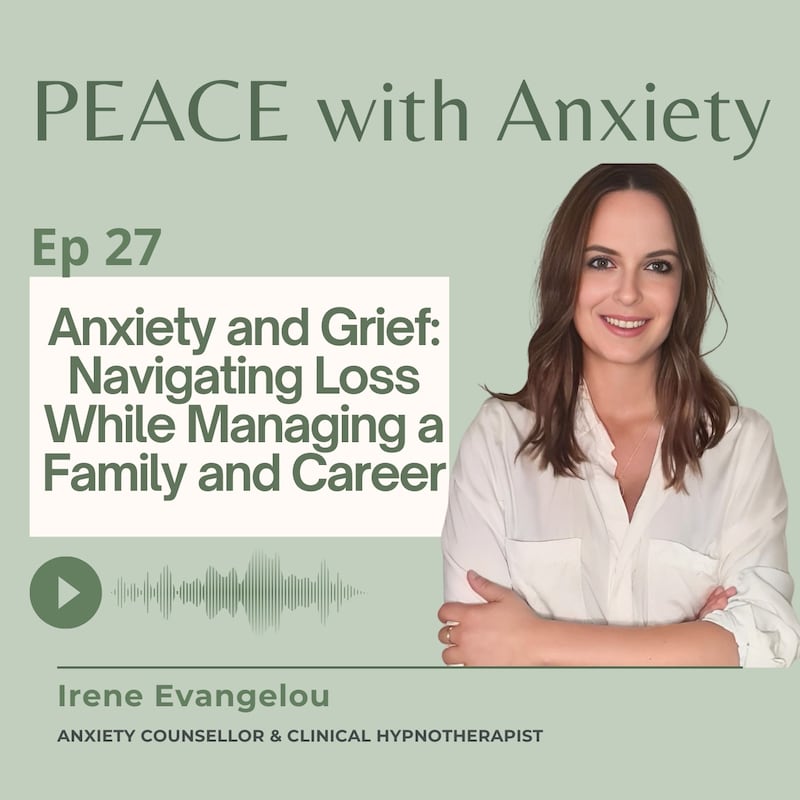
Coping with Grief & Anxiety: Strategies That Actually Work!
Episode 27 •
8th August 2024 • PEACE with Anxiety: Healing High functioning Anxiety in Eldest Daughters • Irene Evangelou - The Anxiety Therapist for Eldest Daughters
Today, we're diving into the deep end of grief while juggling high-function anxiety and all the daily chaos that comes with family and career. Grief can hit you like a ton of bricks, and when you toss anxiety into the mix, it’s like trying to ride a rollercoaster blindfolded, seriously overwhelming! But don’t sweat it; we’ve got some chill strategies lined up to help you navigate these wild waves without capsizing. From setting realistic goals to practising self-compassion, we’re here to remind you it’s totally okay to take a breather and ask for help.
So grab your favourite cozy drink, kick back, and let’s chat about how to find a little peace amidst the storm!
1:1 Reset & Reclaim Hypnotherapy Program. A 4-week journey to help you gently break down the Eldest Daughter conditioning that’s been running your life, and reclaim your voice, your needs, and your sense of self.
DISCLAIMER: All content here is for informational purposes only. This content does not replace the professional judgment of your own mental health provider. Please consult a licensed mental health professional for all individual questions and issues.
Transcripts
Speaker A:
You're listening to the Peace With Anxiety Podcast.
Speaker A:
I am your host, Irene Evangelo, Anxiety counselor and clinical hypnotherapist.
Speaker A:
I'll be coming to you every week to share actionable tips, simple strategies and useful resources to help you break free from high function anxiety.
Speaker A:
We'll be covering how to recognize and understand your anxiety, strategies to change your thoughts and feelings, ways to implement long lasting change.
Speaker A:
If you are trying to overcome people pleasing behaviors, navigate anxiety, living in self doubt or something else keeping you stuck, then you are in the right place.
Speaker A:
I know that you are ready to get to the next level of your life feeling free, calm, confident and in control.
Speaker A:
So let's get started.
Speaker B:
Hello everyone and welcome back to the Peace With Anxiety Podcast.
Speaker B:
My name is Irene and I am an anxiety counselor and RTT therapist and I have my brand new Peace With Anxiety program where I'm teaching high achieving women like you how to overcome overwhelming anxiety naturally and how to start feeling calm, confident and grounded in their lives.
Speaker B:
So today we are talking about how to cope with grief while dealing with high function anxiety, looking after your family and managing your career as well.
Speaker B:
And grief is a powerful emotion and when combined with the pressures of daily life and anxiety, it can feel overwhelming.
Speaker B:
So in this episode we will explore some practical strategies to help you navigate these difficult times.
Speaker B:
But before we dive in, I want to share something really special with you.
Speaker B:
It's the let's Talk About Grief Campaign, a wonderful initiative by Griefline and the national association for Loss and Grief.
Speaker B:
And this campaign is running throughout August and aims to raise awareness and understanding of grief.
Speaker B:
And they will be sharing invaluable resources, insights and events covering topics like loneliness, sleep, health, a child's perspective, end of life care, grieving at work and the role of the workplace, infant loss, pet loss, and many other aspects of living losses.
Speaker B:
And this campaign is so close to my heart because grief is often overlooked, yet it touches so many lives in profound ways.
Speaker B:
And griefline and NALAK are doing incredible work to spark meaningful conversations and foster a deeper understanding of what grief really is.
Speaker B:
And I am a huge supporter of griefline's impact and as a volunteer as well.
Speaker B:
It's been my privilege to be part of such a compassionate organization.
Speaker B:
It's also my personal mission to spread awareness about grief and to support those who are navigating through it.
Speaker B:
So that's why I'm really excited to be part of this campaign and to share its message with you.
Speaker B:
So for more information on the let's Talk About Grief Campaign or other grief and loss resources, please see the links below in the show notes.
Speaker B:
Now, I want to take a moment and truly acknowledge what you're feeling right now, because it's completely understandable to find yourself on an emotional rollercoaster where sorrow and anxiety seem to blend together in a confusing haze.
Speaker B:
You are carrying so much on your shoulders, often feeling like you have to hold everything together for your family while you're navigating your own grief.
Speaker B:
And it's natural to worry about how your grief might be impacting your children and your loved ones.
Speaker B:
And that weight can feel incredibly heavy.
Speaker B:
And the uncertainty about the future can be frightening, leaving you feeling lost and unsure of how to move forward.
Speaker B:
And many of you may be dealing with some physical symptoms as well, like fatigue or sleepless nights, which can only deepen that sense of overwhelm.
Speaker B:
And it's easy to feel isolated in your pain, in your grief and your anxiety, even when you are surrounded by people who care about you.
Speaker B:
And as you navigate this journey, you might be questioning your sense of self, wondering who you are without your loved ones, or without that job, or without that house, or whatever it is that you lost.
Speaker B:
And please know that you are not alone in this struggle.
Speaker B:
If there is one thing I've learned through my volunteer work with griefline is that grief and loss come in so many forms and we all experience them differently.
Speaker B:
So very briefly, grief is the emotional response to the intense feelings experienced after a loss.
Speaker B:
And loss can have many forms as well.
Speaker B:
It can be the death of a loved one, separation or divorce, the loss of safety or predictability in our lives, the loss of a pet, the loss of your home, the end of a career, loss of a community due to a disaster, to name a few.
Speaker B:
And that is all to say that it's okay to take the time you need to honour your grief and take the time as well to heal.
Speaker B:
But what happens when you're grieving?
Speaker B:
How do you take care of your family when you're struggling to take care of yourself?
Speaker B:
So let's talk about some practical strategies that can help you manage grief and high function anxiety while maintaining your responsibilities.
Speaker B:
The first thing is setting realistic goals.
Speaker B:
When you're navigating grief and anxiety, it's crucial to set realistic goals.
Speaker B:
Trying to tackle everything at once can feel incredibly overwhelming.
Speaker B:
So break down large projects into smaller manageable steps, and this makes tasks more approachable and help you feel a sense of accomplishment as you complete each step.
Speaker B:
So focus on what truly matters and be kind to yourself by avoiding those unrealistic standards.
Speaker B:
And it's okay to not have everything perfect while you navigate grief and anxiety.
Speaker B:
The second thing is to prioritize self compassion.
Speaker B:
So self compassion is crucial during times of grief and anxiety.
Speaker B:
Understanding that perfection, especially during those times, isn't attainable and that's perfectly okay.
Speaker B:
Mistakes are just a natural part of life and growth, so learn slowly how to embrace them as learning opportunities rather than setbacks and celebrate your achievements no matter how small they might seem.
Speaker B:
Even if you were able to get up in the morning and brush your teeth and put on some clothes, that is a great step.
Speaker B:
You're doing everything that you can and that is more than enough.
Speaker B:
Now the third thing you can do is establish some boundaries.
Speaker B:
And setting boundaries is vital for your well being, especially during difficult times.
Speaker B:
So try to set some clear distinctions between work and personal time that is going to help you to prevent burnout.
Speaker B:
It's important to communicate your limits and needs to those around you.
Speaker B:
It's also okay to decline additional responsibilities if it's just too much for you right now.
Speaker B:
It doesn't mean that you won't be able to do it in a few weeks or months, it's just right now for the next few days.
Speaker B:
It might not be attainable.
Speaker B:
And remember, taking care of yourself helps you to be more present and therefore effective in both your personal and professional life.
Speaker B:
Now the next thing I'm going to suggest is something that we definitely use at Griefline when we respond to callers, and that is the east approach, which stands for eat and hydrate as well, active, sleep well and spend quality time with family and friends.
Speaker B:
So proper nutrition and hydration that fuels your body while regular physical activity can help to reduce stress and improve your mood.
Speaker B:
And then good sleep is essential for mental health and also spending time with loved ones can provide that emotional support.
Speaker B:
The next thing of course is to seek support.
Speaker B:
Reaching out for support is a sign of strength and the Griefline helpline is always available if you need someone to talk to and speaking with.
Speaker B:
A volunteer can offer valuable support and comfort, and they can give you some more personalized tools and help you understand what you're experiencing and navigate through those tough times.
Speaker B:
The final thing I'm going to say is develop coping strategies.
Speaker B:
For example, practice deep breathing exercises that can help to calm your nervous system during stressful moments.
Speaker B:
Additionally, writing down your thoughts and feelings can help you not only process, but manage those anxious feelings more effectively.
Speaker B:
Grief and high function anxiety are tough to handle to say the least, especially when you have a family and career to manage.
Speaker B:
So please remember that it's OK to ask for help and to take the time you need to heal.
Speaker B:
And if you found these strategies helpful, and if you know someone who is dealing with grief, please share it with others who might benefit.
Speaker B:
And as always, feel free to reach out to me with any questions or if you need individual support.
Speaker B:
Thank you for listening.
Speaker B:
Until next time, take care and be kind to yourselves.
Speaker A:
Thank you for listening to the Peace With Anxiety podcast.
Speaker A:
If you found any value in today, I would really appreciate if you would leave me a review and share this episode on your Instagram story tagging me at Irene the anxietytherapist.
Speaker A:
Also, make sure you subscribe to this podcast so you don't miss an episode.
Speaker A:
All the links are found below in the show notes.
Speaker A:
Thank you for listening and I look forward to seeing you.