Shownotes
The saying goes that the only constant in life is change. But what if we saw that not as a threat — but as an invitation? An invitation to prepare, to adapt, and to engage with change before it overtakes us.
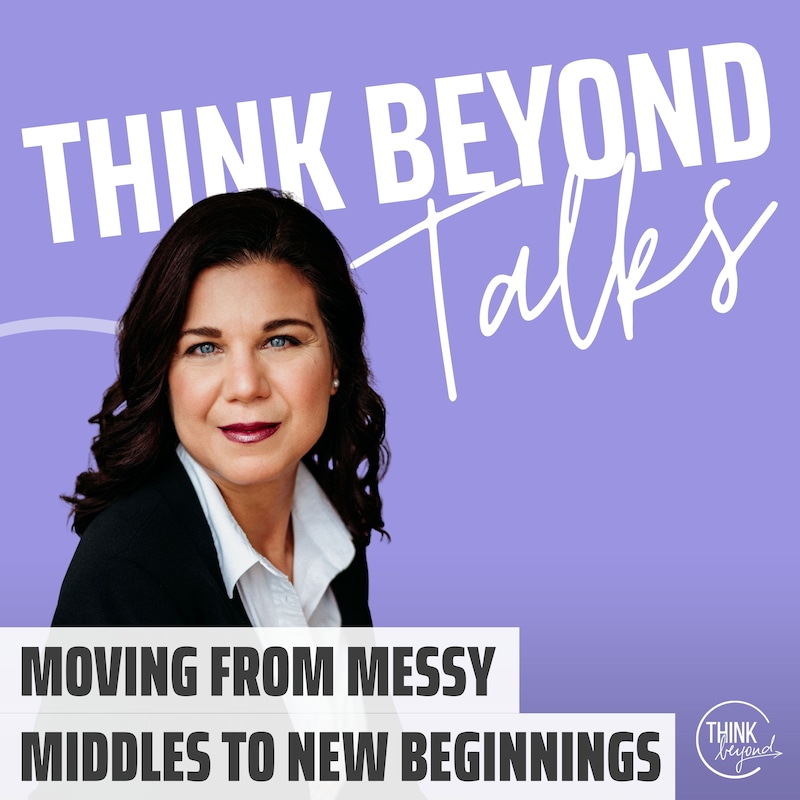
In this episode of Think Beyond Talks, host Anne Barnea speaks with Dilek Süzal — coach, trainer, facilitator, former architect, and Think Beyond Impact Partner — about how individuals and leaders can navigate transformation without losing themselves.
Dilek shares:
- Why adaptability is our greatest superpower in times of change.
- How to recognize and move through the phases of transition.
- Why resilience is built like a “bank account” — through small, consistent deposits.
Whether you’re leading a team, a project, or your own life through change, this conversation will help you find clarity and strength in the messy middle.
Transcripts
Welcome to Think Beyond Talks. I'm Anba Neher and in this podcast, I sit down with leadership development experts from our global network at Think Beyond. We explore what leaders, teams and organizations need to thrive. And you walk away with practical tips you can put into action right away. Listen, reflect and think beyond.
Anne (:Today's guest knows a thing or two about navigating change. Not just in theory, but in the very fabric of her own life. Dilek Susser began her professional journey as an architect, designing spaces that brought other people's visions to life. But life had its own redesign in store for her. Moving countries, switching languages, and ultimately stepping into an entirely new profession, she transformed not just her career, but her way of seeing the world.
Now as a coach, trainer and facilitator and an impact partner here at Think Beyond, Dilik helps individuals and teams embrace change with clarity, courage and resilience. She guides leaders and those aspiring to be leaders to manage themselves through uncertainty, to recognize the natural phases of change and to develop the resilience that sustains them along the way. In a world where change is no longer the exception but the constant,
Dilek's journey is proof that transformation is possible and that the skills we build in the process can become our greatest leadership assets. Dilek, welcome to Think Beyond Talks. I'm so glad you're here. Let's jump right in. As I introduced you, we heard that there were so many changes in life and that you're focused on how to support others when it comes to changes and how to be resilient. Can you tell our listeners what does it actually mean
change, resilience, I mean we hear it all the time. Why is it such a big topic?
my God. Thank you so much, Anne, first of all, for this amazing introduction. I'm so happy to be here as a part of this podcast series. Thank you so much for having me. It is actually very beautiful questions of what has changed, what is resilience, it's happening all around us. It's hot topic like all the time in the corporate world. And this is the core of what I do on a daily basis, working as a coach, trainer, facilitator, speaker, meaning trying to help support others.
Dilek (:going through certain challenges in life without being torn apart, with being a little bit prepared for it and go through it with confidence, with consciousness, with awareness and hopefully with ease, even when things get rough. The reason why I love this topic, I love talking about this topic of change is that I have been through a lot of changes myself in the last...
decade or 15 years, I have to say. And I need to make a definition starting like change is something that's happening all around us, but it is basically the willingness of to own something new. I have written blog post about it very recently. think it was last week's blog post. I'm telling people that when you want to own the new and make it yours, you have a superpower. Do you know?
What that is? It's adaptability. It's the adaptability that we all have as an evolutionary superpower. So I would define change as something that we put into play when we're willing to make something else, something new, our own.
Can you maybe tell us what is the difference if, I mean, change is happening to all of us, right? We can't control what's coming for us. So what's the difference if you're ready for change or if you just let yourself be moved by change passively?
as someone who has been through both, like someone who was ready for some changes and who was moved by some changes, I would say they are both. If you're not prepared enough, if you're not having other people in your life that has already been through some changes, it is a difficult situation. It wipes you out at some point and you're just like moved by it like a leaf on the river. It's just like, it's going without any certain direction. And I.
Dilek (:lived through that when we moved to Vienna. It was 14 years ago. We moved here for my husband's work. And I had a two and a half years old daughter back then. I quit my job back in Turkey, our home country. And I found myself in a new reality in matters of months. And that change was something that I was expecting. I was very excited about, I was very hopeful about, but it was something that I was not prepared for.
not in the sense that I should have been. And that change kind of like carried me away, because it was something that was handled, that needed to be handled with care. But I was so much rushing into it, like trying to be the person that I was or trying to step into, you know, what I can do in a new territory, like immediately. And it wasn't happening. It was very frustrating.
So it wiped me away, it tore me away and it was not a nice beginning, I have to say. And now as someone who is more, who has a thing or two to say about change after so many years working with leaders, with big companies like Google, the Work Bank Group, Diakin, OSCE, you name it. So many companies, many leaders and many mindful conversations after.
I would say that change is something that does not have to tear you apart. It is something that can be excitedly waited for. And if you're prepared the right way, which hopefully we will be uncovering a little bit today, so stay tuned, our dear audience. So what's coming ahead of us, it is something that is truly unpacking a lot of skills and talents that you already have that you're not aware of.
And it sounds when you told us how you moved to Vienna that you actually had so much energy and positivity because of what I assume is the magic of new beginnings. And then when the first magic kind of washes off, then you're confronted with the reality of what change really means. Is that when you discovered your passion for helping others with change? Was that the moment?
Dilek (:It was a moment in the making when we landed in Vienna. So we came here, let's take a step backwards. So I was working in Turkey, both me and my husband were working in Turkey in Ankara, big companies, corporations. I was having this leadership role, leading a team and I was about to get promoted. The same month, my husband got this opportunity in Vienna and we came at the Forkene Road.
And it was either my career and moving to Istanbul and then, or his career and moving to Vienna. It was a very difficult choice because Istanbul offered a lot of good opportunities for me. was climbing the corporate ladder. You know, I was going to be in other leaders, having another leadership position with a lot of responsibilities. They were preparing me for other leadership positions in the future. So it was a kind of like a pre-decided path, a milestone on a pre-decided path.
But when we had this chance to be able to move to Vienna, like you said, it was a very appealing new beginning excitement because we could learn a new culture, a new language, a new lifestyle. It was going to be a hundred percent newness rather than staying in the same country and moving to another city. And when we decided to move to Vienna, after leaving everything behind and after...
Back in those days, I didn't know that I was leaving my identity behind too, that professional identity, that social identity, that family identity behind and stepping into totally different roles in matters of months. So the beginning, as I told you, crushed me because I became a stay-at-home mom in months. My daughter was very small. We couldn't find a kindergarten place. And soon enough, I got pregnant with my son.
And life started to flow totally differently. And after my son was born and after he was one year old, but by the way, I'm fast forwarding in this conversation, but each day that I was waking up to a different identity of like a stay at home mom of two small kids with a full-time traveling husband, change that I wasn't expecting at all to this level, I was feeling like a totally different person.
Dilek (:I wasn't feeling like myself. I didn't know who I was any longer. I was feeling totally lost and stuck and all of those things at that time. And months were passing, quarters were passing and years were passing, if you will. And I wasn't finding who I was any longer.
That's when it hit me that I really didn't want to go back to the business of architecture and interior architecture, which I'm educated in and worked for almost 20 years. And I didn't know which else as a direction was present for me at that moment. So after the kids were in kindergarten, I chose the familiar path, applied for architecture and interior architecture positions, got one in a lovely company, a family company here in Vienna that has more than 150.
employees all around Austria. And we were working with good brands, amazing brands in Italy and in Austria. So it was a great beginning for me, but the familiar path was still there. this inner calling is there to change, but you still follow the familiar path because the unknown is too scary. Yeah.
And I'm coming back to your question now, when did this inner voice started to tingle me from inside out and say, okay, you need to change, you need to do something, you need to change. It's a couple of years in the business and I really have the feeling that I cannot be this person any longer. I cannot do this everyday tasks any longer. And what else is out there? That's when I started to work with a career coach that shifted my life.
And that made me see things totally differently from a different angle. One day I asked her like, what is the thing that you're doing to me? That sounds fascinating. Maybe I want to be you. So how can I be you? And there started the path of researching with the education and with the, different, giving myself permission for a different way of being and doing things. And this is how my coaching journey started as a part-time employee.
Dilek (:Part-time student again, full-time mom, full-time housekeeper. This is it's all started.
Well, what a journey. yeah. Thanks for sharing with us. And you said when you moved from Turkey to Vienna, you didn't know that you're also leaving an identity behind. And it sounds like quite a long time that you felt lost in this current. So how can you support as a coach people that go through such changes, how to set them up to be better prepared than you were back then?
That is actually the core of what I'm trying to do. Thank you so much for pointing this out. And when I was working as an architect, I was building spaces, right? I had some clients, they wanted new homes, they wanted new public places, they wanted new offices. And we were building places and spaces for them. But after I discovered that building people was as interesting as building spaces for me.
Being a coach started to define better who I wanted to become as a person. And when I was going through this identity shift, becoming a coach gave me the fresh breath of air to truly step into my potential, supporting others to the best of my ability. As I told you at the beginning, if we are better prepared for change, change doesn't have to wipe us away.
And now with my coaching sessions, with my mentoring sessions, sometimes during trainings and facilitations and corporations, I tell people that change is something that has a structure, that has phases. When we are more aware of the structure and more aware of the phases that are coming ahead of us unseen, but that are already there, then it is easier to cope with them.
Dilek (:What I tell them based on the book by William Bridges, The Transitions, I love that book. I always quote from it in my blog articles, in my LinkedIn articles too. So this change has this ending. It has a middle. It has a new beginning. Something ends, something begins. But very often we want to directly jump from the end to the new beginning, like I wanted to do.
I wanted to leave my corporate life behind in Ankara and the second day or the second month when I land in Vienna, I wanted to have a social cycle. I wanted to have a new job. I wanted to have new friends. I wanted to have new networking events or social gatherings, crickets. Nothing was happening, of course, because there needs to be a transition. There needs to be a, being a reborn phase. Why do we need nine months for a kid to be staying inside and having this transition?
Can you imagine? They're just like having their first drop in the mother's boom and then boom out the next day. It's not happening like that. So we need this nine months for something. And this transition looks like this. It's kind of like a marshmallow. It's like being pushed from the ending side, the new beginning side is like boom, boom. So it's kind of like a messy middle that we need to cope with. But first.
Mm-hmm.
Dilek (:we need to understand that it is coming and it is going to come no matter how prepared you are. And this messy middle is the time where we need to know that change has its phases. And the phases look like the rooms of change. So we have this amazing Leadership to Go program with the partnership with Ferry Fisher. Now Think Beyond Group is having this program and conducting this program for quite some time now.
During this program, in my modules very often, we talk about the rooms of change. The rooms of change look like this. So there's this contentment room where you're totally fine with your life, like my life in Ankara. And then you are in denial of some stuff. You say, okay, if I stay here for too long, then my life and career could be stuck and I maybe need to go for a new beginning and some changes are going to come.
We get this offer from Vienna. I'm not sure if we should be going, but I'm comfortable here. I don't know if I need to change anything, blah, blah, blah, blah. And you try to push the thing under the rug and you deny this offer and the necessity to change, which is kind of like an urge. And you deny that. After some point, because of the denial and because of the inner voice that is pushing you to do that, like this angel and demon thing, you are confused. Do I do it?
Do I not do it? You need more clarity. You don't know how to get clarity. During the course of coaching sessions, we work on this clarity a lot when we're in fork in the roads and making decisions, right? You also know that. And this stage of confusion is important because it gives birth to new ideas and new beginnings. Once we are accepting that, I'm confused right now, but it is a temporary phase and I'm going to get clarity no matter what.
sometimes by writing, sometimes by sending messages to yourself, sometimes by talking to a coach, talking to your mentors, sometimes talking with your family members. But you need that clarity sooner rather than later when you're in the confusion phase. And that confusion phase might give you this panic and you really need to search some exits to go out. Okay, last exit before the autobahn thing.
Dilek (:and you don't find the exit, you get panic. But once you push power through that and you can see that, okay, if I get to the other side, I can try something new. If it doesn't work out, I can always come back and it give some sort of a confidence to yourself and some sort of a relief that this renewal is going to bring some positivity as well as scarcity. Then from contentment to denial to confusion,
there comes the renewal phase and there begins the new beginning. So when you ask me, how do you get people prepared for change? How do you help people to cope with those? I tell them, if change is around the corner, it is a new beginning. You're going to have a messy middle. There you're going to shift from your contentment, from your comfort zone.
to denying things, to being confused and to be scared all you like and to search for the exit room. But if you stay there and if you're courageous enough, the new stuff is going to appear in front of your eyes. Like the life I have started here with a new social circle, with a new professional circle, with a new profession for God's sake. After so many years, there comes a new beginning. So I think this framework can be used.
for many different variant situations.
Yeah. And what do you think is some sort of mindset or skill that can support us, especially in this messy middle? You know, I think once you see the exit or when you start, I think that's an easier phase than when you are completely lost.
Dilek (:Very beautiful question. When I think about this messiness, of course, some analogies come from the field of architecture because, the old installation sites, were messy, know, construction sites are messy. Have you ever done a renovation in your apartment or house or, you know, built something from scratch?
building from scratch. yes, I recently ordered a bookshelf. Yes. And I thought great, tomorrow it's gonna stand. Yes. And it took me four weeks and it definitely was messy.
Right? And this messy middle of transitions mostly look like this. Just imagine that you bought a very old house in the countryside in Austria. It is fantastic, but it is super old. You know, it has this lovely wooden corner that you can sit in like in a Heurige or you have this wooden kitchen. This is great, but they're old and they're stinky and you need to change it. The walls that they look really cool, but they are moldy and you need to kind of like peel them off and you need to build something.
No, because the outer skirts are fine, but the interior needs to be re-handled. What do we do in the beginning? Do we start to put on new layers on the existing layers? Do you immediately build another kitchen on the top of the existing kitchen? No. Do you go and buy a new seating set and you build it on this beautiful wooden corner? No. What do we do? We first peel off the things.
We remove the existing kitchen, we remove the existing corner, we remove the molds in the walls, so we peel it off like layers in an onion, we peel it off. And what happens when we peel it off? It looks horrible because you see the intestines of the building. Now the plumbing is there, know, the bricks are there and the floor looks horrible. When you remove the kitchen, everything is old and stinky and you need to peel it off until you reach a layer that
Dilek (:It doesn't stink anymore. And on top of it, you start to build. That's why the renovations look messy, like the messy middle. But if you fast forward many months, you rebuild the whole space and you make a photo of before and after, how does it look? Amazing, right? It looks amazing because it looks brand new. Nobody knows what has happened in between. without that messy middle being there.
Can you build a new kitchen, a new corner, a new house interior? It's impossible. So as leaders, as aspiring leaders, we need to make sure that this messy middle is talked about, is normalized, is communicated in a way that is temporary, that doesn't have to affect everything else that's happening. And that needs to be there.
in order for the new to be born. This is how they need to handle this messiness. And one more thing, if I may, is when I was working back in one of the biggest corporations in Turkey, we shifted from one software to the other. We shifted to this SAP system that ran the whole business. And when we were in the middle of that transition, using a totally different system for everything,
that's already ongoing projects and, you know, like projects in the horizon and you need to transition very fast and as a whole team, as a whole company of hundreds and thousands of people, I mean, exaggerating thousands of people. We had a very difficult time and it was truly messy. And during those days, one thing that saved me and my team was the leadership of my former leader.
She dedicated some time to create that rapport with us to say, you know what, trust me, it's going to be fine. It's going to be much better because after this change, we're going to have this and this and this and this in play. And once with that rapport, she created enough of a trust, which we were trusting her already, but she took her time to create that rapport and trust and show
Dilek (:us the outcomes beforehand, or directed us to the new reality, new possible reality. After this change happens, we trusted her. So as leaders, what we need to do is we need to light the way to the others in a way, showing that what this, why this messy middle is in play right now and what is going to come out of it.
And once you gain the trust of your team members, once the trust is really there and they know what's going to happen clearly or to the best of the ability, because many things might happen, like 80 to 20, if they know 70 to 80 % what's ahead of them, then they can survive during this messy middle. So I would say they can give their people this analogy of the renovation of a building.
These are the tips and tricks are dear audience. can use it because they are real. I'm using it on a daily basis. Why this messy middle is there? And what is going to be happening after this messy middle if you bear with it?
And it sounds like the leader you had, she was able to also show you the light at the end of the tunnel. And you mentioned in an answer earlier, there is this urge to change, this urge to change. It's inherent, right? It's inherent in us not to stay stuck. So can you tell us a little bit more about how this urge shows up in people, but also in teams and companies?
First of all, through this change, through this awareness, we need to make sure that leaders are also flesh and blood people. They suffer, they're happy, they're sad, they have their personal issues, they have the responsibility to lead teams and get the responsibility of the work and others and creating the psychological safety for everybody else. But they're human. And once they understand that
Dilek (:Everything is changing on a daily basis for improvement, for the better, for more wisdom. Let's say, like we get older in human beings, things need to change on different levels and scales on a daily basis. First, as a leader, we need to accept that. And with that acceptance, this is something that I see in all the leaders that I work, as I tell you that once you accept
This change is a part of the game. And once you do not push your people through this change, once you do not rush your people through this change, but you communicate it well, you normalize it, you prepare them for it, and you save enough time for this transparent communication, things move forward. Because then they start to see that their organization, their team is a living
organism. And without their existence, they are one missing.
And the leader you mentioned that helped you through change earlier on showed a lot of resilience because she said, I have the responsibility. You can trust me. I don't know if she had someone to lean on, but I know that you support people when you guide them through changes also by building their resilience. resilience is also one of these buzzwords that we hear a lot. So it would be great to hear from you.
What is resilience? Why do we need it? How does support us and change? But also, how can we build it?
Dilek (:Very beautiful question. Thank you so much for this, because I change and resilience are going hand in hand. So it is not, not having things running the wrong way or not having important contracts going south or anything, because many things can happen and they can go the wrong way, like all the time. But the ability to recover from it, the ability to adapt to the new situation and the ability to come back from it is crucial.
And this is resilience. For example, as an entrepreneur, as a self-employed person, I had so many rejections, so many falls, so many ups and downs. I can't tell you how many. But at the end of the day, I stood back up and searched for the next thing. I stood back up and learned something new. I stood back up and renewed my systems. I stood back up and I got rid of the things that were not helping me, that were not supporting me.
to put more effort and intention on the things that move the needle. Without resilience, it's impossible to do that. And your skin gets thicker and thicker and thicker, which is a good thing. Falling down, having scars are amazing. It shows that you are doing something. But for resilience, of course, when you're working with corporations, busy professionals, these kind of things might sound too vague.
You need some frameworks, some systems, some easy to digest pieces. And for that, I use some frameworks for building resilience that I would like to share maybe two of them with you, with our audience today. One of them is the three P's of resilience coming from positive psychology of Martin Seligman's work. I am a leadership coach in the global platform BetterUp and he's doing a lot of work with BetterUp. But he says there's
Three P's to build resilience. One is personalization. The second one is pervasiveness. And the third one is permanence. What do they mean? Personalization is meaning that not blaming yourself constantly telling that this is your fault. You get a project, something gets wrong.
Dilek (:The deadline is overdue, nothing is moving forward, and you're frustrated. It happens like all the time. And you blame yourself constantly, it's my fault, I'm not good enough, I couldn't do that, and I should have done differently, and it's a negative spiral. It doesn't take you anywhere, because mostly when you're a leader, you need other people to take care of. Like being a mother, you can get sick, you can have...
free days, free stick days, because you constantly need to take care of other people.
For, I don't know, a couple of hours, maybe one day, you can blame yourself because it's human nature. I would never tell anything to our audience that is unrealistic. You can go blame yourself, but sooner than later, get out of that negative spiral and don't tell yourself that it's your fault. It might be partially your fault, but probably not all of it because you're not the whole organization. The second one is pervasiveness. It is like, don't...
letting ourselves stay in the idea that one bad thing contaminates everything else. Like one bad lemon contaminates all the lemon in the basket and you have a basket with the damaged lemons at one week. If one negative thought or if one negative outcome contaminates everything, we should be dead tomorrow. And the third one is permanence. Once we think and is
That situation that seems really bad now is temporary. life, like many other things that have been bad in the past. And like many other things that are about to go wrong in the future, they are all temporary. Sicknesses are temporary. Overdue deadlines are temporary.
Dilek (:Self-employment mistakes are temporary. Motherhood mistakes are temporary. Leadership mistakes are temporary. None of them are permanent because life is based on constant change, not permanence. So making a full circle with what we have been discussing, accepting change as something that is happening, knowing going through the stages of, you know, the old, the messy middle and the new.
and dealing with the messy middle with contentment, denial, confusion, and renewal stages. We see that if we do not take it personally, personalization, if we do not let this one bad thing contaminate anything else, pervasiveness, and if we constantly think that there are phases that we're going through and nothing is permanent, we are on the safe side to use this tree piece on whatever and whenever
is needed.
Very insightful, Dilek. At the first P with personalization, I thought to myself, but okay, you shouldn't blame yourself, but you also have to take responsibility. I mean, you shouldn't blame yourself, but sometimes we go around and it's easy to blame others. So I hear a little bit of a fine line between not beating yourself up, but still standing up to dealing with whatever.
mistakes happen if they're caused by you or by someone else. once you finished explaining all the P's, I understood, well, the self-responsibility lies in managing yourself in these situations by telling yourself this is temporary, for example, not fall into despair. guess it also comes with life wisdom, getting older, experiencing more fallbacks, you understand more and more, okay.
Anne (:All the other things also passed, this will also pass. So change is also some sort of relief, right? Yes. Yeah. do you feel like commenting on the aspect of self-responsibility?
Sure. There is another framework, let's go with frameworks, that are the four Cs. This can change for many different people, but this is something that I kind of like created through the work with leaders for so long. And that might be consumed as my personal lens to create a framework around this. And it has something to do and many things to do with the self-work, with the self-leadership and also leading others. And they're the four Cs.
that goes like this, clarity, connection, consistency, and compassion. Starting from compassion would be, I think, a good way of explaining what you have been touching base on. Blaming yourself to some extent, yes, it's happening, but shouldn't be there. Blaming others shouldn't be there as a leader, taking responsibility of things. But not losing the self-compassion and compassion for others is key, I think.
And then clarity is very important because once you are in the phase of change and once you want to build resilience around it, and I have a great way to build resilience by the way, I will be talking about it in the coming minutes, you need to know your values and your priorities. You need to have clarity around why you are going through what you're going through. Once you have that clarity and once you have the capacity to explain it.
Like you explain it to your child, as simple as that, as clear as that, you know, to the point as that, without too many complicated schnick schnack. Then your team is trusting you. But first of all, you need that clarity after that compassionate attitude. And the connection is incredibly important with the relationships that you built with your team members. By the way, the people that are reporting to you.
Dilek (:as well as the people that you report to. Sometimes we're the middle managers, right? Sometimes we are the senior managers, sometimes we are the first time managers. But in each case scenario, they're different people that we need to handle on a daily basis. Different directions of reporting. So when we have this true connection with as many people as possible in our organization, then we have a consistency in building
small steps of action into bigger steps of change. But for that, we need consistent action with resilience. okay, I'm in this horrible situation right now, but I'm not going to let this horrible situation affect the other part of the project because we have the deadline tomorrow.
And if I'm super demoralized and demotivated right now, and if I reflected on everybody else around me, we're never going through this deadline, pervasiveness. And we are using these tools when we are catching these buzzwords looking like real definitions of building resilience, like these three Ps and four Cs, if we could remember those words, and if we could make something out of it, if we could write them on a
sticky note and stick it to our wall, these three P's and C's because those are the things that work as anchors in our brain. It's human psychology. When you look at them, when you hear this podcast and when you know that there are people out there going through the same challenges like the leaders that I work do, then these buzzwords looking kind of like clarity, connection, consistency, compassion can help you out.
going out of that negative spiral.
Anne (:Yeah, and you said you would like to share with us how to build resilience. Yes, already sitting on the edge of my chair.
Yes. It is called the resilience bank account. Have you ever heard of this concept? It's a super concept. Let me explain you. I have heard about it recently again in Sean Achor's work in his books and in the TED talk that he delivered is this resilience bank account looks like this. Whenever you have the chance and opportunity, you need to make deposits.
How do you make deposits? Normally, when you have a bank account, think of it as a money bank account. What do we do? We make deposits to that account. We earn euros, we give it to euros or whatever, sing dollars, US dollars, whatever, that my little Turkish lira. You give it to your bank, you make some deposit. And whenever you need money, what do you do? Go to an ATM, you withdraw money and you're good to go. Deposit, withdrawal. And resilience works exactly like this.
But it works on different levels. There is physical resilience, there is mental resilience, there is emotional resilience, social resilience, spiritual resilience. There's so many different things. And just think about it. If you want to make some deposits to your health bank account, what needs to be done is that going for an exercise, going for a training every time you have the opportunity in health, you feel fine.
You feel fit, the weather is okayish, you go out there, take a walk, take a cycle ride and take a running time for yourself. Living in Vienna, we're extremely lucky because we have the utmost outdoor sports opportunities. For the past six weeks, I was in Asia, I was in Vietnam, I was in Thailand and I was in Singapore. The weather was so extremely hot.
Dilek (:It was so difficult for people to do outdoor sports. They were waiting until 10 o'clock, 11 o'clock in the evening, like ourselves, to go out for an exercise route. What else? Nutrition, for example. Whenever you have money, you have the opportunity, you have the choices. You go to a restaurant, make the choice that is healthy for your body and soul and mind. And also, for example, like money-wise.
If you have the chance and opportunity to make some money, if you're a self-employed person, go run after every opportunity, make business partnerships, go be part of platforms, go be part of networking groups, and try to the best of your capacity to grow your business and make money. Because one day might come that you won't be eligible to make money. One day might come that you might fall sick. And apart from making money, you cannot go for an exercise.
or you cannot go for work. Or for nutrition example, for example, whenever you find time, an opportunity of choices, you go choose for the nice salad and you know, like any nutritious other thing, nuts and stuff. In contradiction with a burger or anything that is unhealthy because one day might come that you're traveling, it's 10 o'clock in the evening and the only open...
food resource is the fast food chain around the corner, you need to feed your kids, you need to do that. So building resilience is like putting in anything you might need afterwards to your resilience bank account whenever you have the capacity to do it. And it doesn't need to go through big, big stages of thinking of stuff. I know that leaders, they're busy people, we're busy people.
What do we need to do? You feel fit, you feel like it, your intuition says yes, go for a run and come back. 30 minutes, don't think about it more. You have the good food, feed your brain. You need to up-level your skills and you have the time that summer, two weeks, when many of the work is kind of like slowing down. Go do an online course. Go speak to a mentor. Build that mental capacity.
Dilek (:Because you know that it's September, October is around the corner, everything's going to be like, yes, and you won't have time for an online course or whatsoever. So whenever it's possible, make the deposits so that you can withdraw when times of need or emergency.
So thank you so much, Dilek. This is such a relatable and I think easy way in anchoring resilience building in our everyday lives. And we would like to encourage our listeners to just try it now for the next three days. Make the healthy choice, make the investment in yourself, into your bank account. And then you also have a much easier time having this slip up or this like cheat day or...
Whatever, sometimes we are just humans, we do the unhealthy choice, right?
Absolutely. Beautifully put it. Sometimes out of necessity, sometimes out of pleasure, we make the unhealthy choices. As long as we build enough to bear with that, enough to cope with it, if necessary, we're good to go. Yes. Let's invite our audience for the coming three days to make investments and deposits to their bank accounts that they will be creating hopefully as of today.
Exactly. As you mentioned, you also have a blog. We share lots of these insights.
Dilek (:Mm-hmm. On a weekly basis, yes.
On a weekly basis, wow. And also you're on LinkedIn, you do a lot there. So I encourage our listeners also to follow you. And thank you so much for coming to this podcast. Very, very insightful. And to tell our listeners also behind the scenes, Dilek is actually in adapting to sleeping hours in a different time zone, as she mentioned. So some jet lag that is absolutely...
not to feel, you know, it's, it has been very wonderful talking to you. Thank you.
you so much. Anne. I'm so happy to be with our audience today. And maybe as a final remark, I want to tell people, if you want to build resilience and if you want to change some stuff, change small things and then change bigger things. Start change very small. You can change your training shoes. You can change the restaurant you eat in. You can change the way to work. You can change the book you read. If you...
start to change small things, you will start to change bigger things. And change should not feel scary. It might just be the path to whom you needed to be. And I'm so happy to be sharing this humbly what I know with our audience, with the leaders, aspiring leaders of our audience. I'm so happy to be here. Thank you so much for this beautiful conversation.
Anne (:Thank you, Dilik.
Anne (:Thanks for listening to Think Beyond Talks. If you enjoyed today's episode, share it with someone who inspires you. And if you'd like to explore how you and your organization can grow your leadership and impact, visit thinkbeyondgroup.eu. Until next time, keep thinking beyond.
