Shownotes
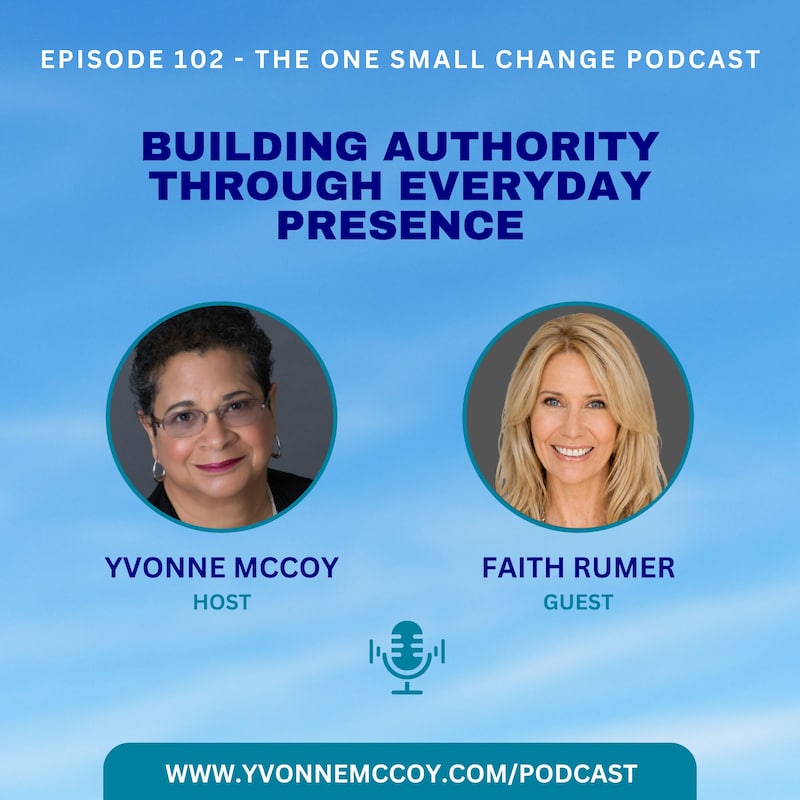
In this episode of The One Small Change Podcast, Yvonne McCoy is joined by Faith Rumer, a dynamic coach with a unique background in the arts to explore the transformative power of small changes towards authenticity and alignment. The conversation delves into why aligning your true self with your presence and work matters, especially as the world has shifted to more virtual interactions. Through personal stories and practical takeaways, listeners will learn how to step into visibility, lead with confidence, and embrace both growth and vulnerability. Whether you’re seeking to feel more alive in your daily life, boost your impact as a leader, or simply show up more powerfully in virtual spaces, this episode is packed with actionable wisdom.
Guest Bio:
Faith Rumer is a mentor and coach who specializes in helping leaders, entrepreneurs, and creative professionals align their authentic selves with their public presence and communication. With years of experience working with actors, singers, TV hosts, and diverse creatives, she empowers clients to live their fully expressed lives. Her work focuses on igniting powerful transformation through presence, voice, and connection.
Chapters:
00:00 Transitioning to Virtual Speaking
06:00 Playing in Les Mis Orchestra
07:09 Feeling unfulfilled in traditional success
12:16 Levels of leadership development
14:40 Struggling with communication skills
18:39 Being visible in virtual meetings
19:59 Overcoming shyness in meetings
25:29 Being present and mindful
28:42 Embracing Change and Courage
29:40 Yvonne appreciation and farewell
Quote from the Guest:
“When we say yes to fully expressing ourselves, we're going to be challenging our old beliefs, our feelings and judgments and fears. But as we get clarity on that and what we really want, we move through our feelings, we change our beliefs, we become more grounded, more truthful, more creative, and more resilient.”
Link:
Connect with Faith at: https://raisingyourimpact.com/
Transcripts
Hello, everybody, and welcome to the One Small Change. I am so
Speaker:thrilled that you're here and that you are going to embark on this
Speaker:journey of exploration and transformation. And I'm Your host,
Speaker:Yvonne McCoy and I bring almost 35 years of
Speaker:entrepreneurial experience. And I have an insane passion
Speaker:for discovering growth through the power of seemingly small change.
Speaker:And I'm glad that you joined this. Join me this week. Apparently
Speaker:I'm still got rubber lips, right?
Speaker:But one of the reasons I do this is because I like to bring really
Speaker:interesting people into your world that are going to help you
Speaker:in your exploration and help you with your transformation.
Speaker:And this week we are talking with the amazing Faith
Speaker:Rumer and she's going to share with us how a small
Speaker:unexpected or insignificant. Insignificant. I'm
Speaker:real having problems today, guys. Sparked a remarkable
Speaker:change in her and makes her the best at what she does.
Speaker:Faith, hopefully you can talk better than I can.
Speaker:Well, first of all, I'm going to take in that I'm the amazing Faith roomer.
Speaker:Thank you for that. I so appreciate that.
Speaker:You know, what I do is I mentor and
Speaker:coach. I coach leaders, entrepreneurs and lot of
Speaker:creative professionals. Through the years, I've worked with a lot of actors and
Speaker:singers and of TV hosts and YouTube sensations and
Speaker:all kinds of people like that. And I help them align
Speaker:who they truly are with how they show up, with
Speaker:their presence, their communication and in their work so that
Speaker:they can really have the impact and the prosperity that they want and
Speaker:what I call live their fully expressed life.
Speaker:So during the pandemic,
Speaker:that was a while ago, right.
Speaker:I had committed to going out and becoming a speaker, like going out and speak
Speaker:because I sing and I use my music when I speak and I
Speaker:wanted to reach people with my message and I committed to that
Speaker:and that when I got out and I saw
Speaker:the change of people before the pandemic, when I got out and saw the
Speaker:change in people, when I could get on a stage and talk about what I'd
Speaker:been through, how I found my voice, what was how I found
Speaker:expressing myself. It was. It was amazing to see how
Speaker:people change. And it really got me on fire to do it. Then the
Speaker:pandemic hit and I couldn't go out and do it in person anymore.
Speaker:And I had to learn like all of us how to do this.
Speaker:Like we're doing it right now. And that, that
Speaker:was a boy. That was a skill. It was a challenge and
Speaker:it still is in some ways. So I want to
Speaker:ask you kind of a strange question. We use
Speaker:the word aligned a lot. And
Speaker:I don't know whether or not people
Speaker:really know what that means or what does it mean to them. Why is
Speaker:it important to them that they're aligned? Well, and
Speaker:that's a great question. You know, if we're not. If we don't know, first of
Speaker:all, we have to get some clarity on what we really want. That helps
Speaker:to align ourselves, first of all, because we don't do that. You know, it's like
Speaker:I'm trying to get somewhere. I want to go travel somewhere, but I'm not really
Speaker:sure where on the East Coast I want to travel to. I know I want
Speaker:to go to the East Coast. Okay, but what if I
Speaker:want to go to New York? Then
Speaker:what am I going to do in New York? What's going to make me happy?
Speaker:What's going to be. What's going to be, you know, bring me joy, what's going
Speaker:to make me grow, what's going to make me come away from that trip
Speaker:and say I did something meaningful and memorable? And I
Speaker:remember that trip. So it's a little bit like that.
Speaker:Aligning ourselves to what we want to do so
Speaker:that we're not scattered all over the place, but we have a real clear destination,
Speaker:but we're also aligning. And this is the really important part, what
Speaker:an it is that makes us come alive.
Speaker:And. And I think that that is part of my message as
Speaker:well. I mean, yeah, it. It took me a really long time to get
Speaker:there. And I always like to say it's not your fault
Speaker:because we were raised a certain way, that you pres. Present
Speaker:yourself a certain way, that you come off a certain way. Right.
Speaker:And that just makes you generic.
Speaker:Wow. We are talking the same language. Yeah, yeah, absolutely.
Speaker:And the thing that makes you stand out
Speaker:is probably the thing that you don't even know that you have most of
Speaker:the time. So taking a step back, and I don't want to take all your
Speaker:time, but, you know, my favorite saying is it doesn't matter how fast you're going
Speaker:if you don't, you know, if you. If you're not going in the right
Speaker:direction. And so, you know, I think it's
Speaker:really important. I think alignment is about your business, that
Speaker:you're doing the right things to get you the right results, but it's also
Speaker:that you can feel comfortable in your own skin. You know,
Speaker:it's kind of like either you like me or you don't. And that's
Speaker:okay. I mean, because there are. It's a huge
Speaker:world out there. Not everybody has to like you or need what you have.
Speaker:But if you're going to be in business and you want it to be
Speaker:sustainable, it takes so much energy to be somebody
Speaker:else. It will burn you out. So I,
Speaker:you know, I just. I absolutely agree with you.
Speaker:You know, I think people are longing
Speaker:to feel alive again, to wake up, excited, to feel
Speaker:connected to who they really are. You know, and that can be something
Speaker:like. Like, I work with people sometimes. I have a
Speaker:client, and she's a
Speaker:symphony musician, that quality. A violinist. And she
Speaker:was. She told. This is a great story that she told me as we were
Speaker:working together, that she was in the pit for Les Mis
Speaker:for that. So that means she's in the orchestra for
Speaker:Les Mis and she's playing. And she was hating it because she had to play
Speaker:the same things over and over again every night. And she said she was
Speaker:having a panic attack while she was playing it because it
Speaker:felt so misaligned with who she was,
Speaker:because she wanted to express herself differently. She wanted to
Speaker:get out, and she wanted to do. Express her own music. So she
Speaker:ended up going and creating an album and
Speaker:doing that, and now she's doing more improvisation. But really what came up
Speaker:for her is now that she. She's done all that, she's done a lot
Speaker:of growth of mindset and spiritual growth. Now
Speaker:she wants to go out and help other people with their creativity. And that's her.
Speaker:Now that's aligned with what she's been doing for herself.
Speaker:So now she has this new full person that she's out
Speaker:there creating and expressing in a way that
Speaker:is expanding. And I think that's part of what it is as human
Speaker:beings that we're here to expand. And I think her
Speaker:story is a fairly normal one, that she went
Speaker:through all the training. You know, she had a gift. She went
Speaker:through all the training, went through all the hurdles, ended up with
Speaker:at a place which should have signaled success,
Speaker:but wasn't her, you know,
Speaker:and. And that's why we find all these. You know, we find lots of people
Speaker:who work a job that they hate, Right?
Speaker:Because that's kind of where, you know, I. I remember one time going,
Speaker:saying to myself, I'm an adult. I have a husband,
Speaker:I have a house, I have two cars, I have two dogs, I
Speaker:have three, you know, 2.5 kids.
Speaker:You don't get much more, you know, I have a job. You don't
Speaker:get much more adult than this. But there's got to be more.
Speaker:I mean, this can't be the end, right?
Speaker:No, absolutely. And that might be, you know, like, she was. Like, she wanted to
Speaker:do more expressing about how to mentor other people,
Speaker:to be a coach, to bring in some creativity
Speaker:workshops and things like that, which is what we're working on now for her. And
Speaker:I can see her just light up about it.
Speaker:And I. And that's the. For me, that's probably the
Speaker:happiest part of working with people is when they
Speaker:finally understand what they're good at.
Speaker:It's like this wait, and this curtain just opens. It's
Speaker:like, yes, this is it. And then the
Speaker:confidence comes naturally, because you don't have to. You've already
Speaker:got it. You've already got the building blocks. You've already got the skill
Speaker:that make you good at what you do. And so you're not, you know, you're
Speaker:not afraid. I said, I would like to do. This is
Speaker:so crazy. I would like to do a mastermind of women
Speaker:who are really competent, know their stuff, so if they get out to talk, they're
Speaker:not worried about their content. They're going, I. I really want a comfortable
Speaker:bra.
Speaker:Yep. You know, so. So. All right, so
Speaker:I don't want to stop you. I want you to tell me more. I want
Speaker:you to tell me what we. The kinds of things
Speaker:or opportunities that we're missing. Yeah,
Speaker:Yeah. I. I think what's happening is like, you know, certainly
Speaker:a lot of successful women, they're not struggling because they
Speaker:lack skills, though sometimes we want to work on those skills. Like, I
Speaker:work on people with communication and how to, you know, how to use their voice
Speaker:and their presence and grow that. And that's really important. But once
Speaker:you have that, what are you going to do with it? You know, once you
Speaker:have your skill set? And what I find is that, like, here's it. Like, they're
Speaker:editing themselves. I do this. I do it myself. Right. They're
Speaker:holding back their ideas, their visibility,
Speaker:maybe their leadership, their creativity, and even
Speaker:their voice. And the other day on Sunday, I was walking
Speaker:somewhere, and this thought came to me for myself. It's like,
Speaker:step into your authority
Speaker:as a thought leader, as a coach, even as a
Speaker:singer, because I go out and I sing and I perform. So as I want
Speaker:to step into that as well. I was watching
Speaker:someone sing the other day, and they almost like they were
Speaker:apologizing the whole time they were singing.
Speaker:I'm kind of singing, you know, but not really exploring and expressing their
Speaker:gifts. How many times have we seen that? What do we react
Speaker:to people who fully are
Speaker:owning who they are, that unique part of themselves?
Speaker:I say that our impact, and it expands in direct
Speaker:proportion to how fully we're willing to be ourselves.
Speaker:I think that's true. And you mentioned something
Speaker:else that we don't normally talk about on the podcast. So if you're
Speaker:willing, I would like to talk about leadership,
Speaker:because we don't talk about that often. And I think a lot of us, especially
Speaker:if you're entrepreneurs, I think we don't think of ourselves as
Speaker:leaders, and yet we really are. And
Speaker:I have a whole theory about this. Like, everything
Speaker:that's good, though you have your theories. It's like, that's
Speaker:absolutely. That's where it starts. I should say philosophies or whatever. But anyway,
Speaker:so let's talk about how important leadership
Speaker:is in terms of being yourself
Speaker:and being aligned. Hmm. Well, I think
Speaker:the first thing, and this sounds kind of obvious, but you have to be the
Speaker:leader of your own life. You know, where it is
Speaker:that you feel like the out of alignment with leading your life,
Speaker:you know, are you spending time not putting energy in the certain things that you
Speaker:want to get better at? So, for example,
Speaker:being a speaker, this is, you know, I. Practicing speaking
Speaker:is important for me. And if I want
Speaker:to go out and have that as leadership, have a leadership as a
Speaker:speaker, I need to practice it. Well, you know, one of the things that I
Speaker:always say is there's like, I consider that there are four levels of
Speaker:leadership, okay? The first one is self leadership.
Speaker:And we tend to not really develop that.
Speaker:Our system of education, which is sit down, be quiet,
Speaker:don't be seen, you know, doesn't really let you develop that
Speaker:fully. The next level is kind of leadership or
Speaker:management of projects, which we do extremely well as
Speaker:entrepreneurs, generally speaking. And then you have to move on
Speaker:to leadership of others. But if you don't know your own
Speaker:leadership strengths and weaknesses and understand the
Speaker:way you operate, it's very hard to lead other people.
Speaker:And that makes it even harder to go to the last one, which is leadership
Speaker:of an organization or a movement. And so I think
Speaker:that's why a lot of coaching programs or when you work with a
Speaker:coach, one of the things they go back to all the time is your
Speaker:mindset. And you know, what, what is your philosophy about
Speaker:leading? How do you lead? And
Speaker:so I think a lot of leadership used to come from just
Speaker:having information, which now information is
Speaker:everywhere. And so part of the leadership is helping people
Speaker:to clarify what they really need and be able to
Speaker:implement the steps to get there. So I just want to say we all are
Speaker:leaders. I mean, you Know, it doesn't matter if you're leading
Speaker:one or if you're leading many. It's
Speaker:important to have that and to understand it so that you
Speaker:can be consistent in
Speaker:what you're doing. Yeah. And that kind of accepting the authority over
Speaker:ourselves and our business, you know, and then when we work with
Speaker:our team, that work. I think clarity and getting
Speaker:clear about how we want to express ourselves is super important
Speaker:as well. That when I get in front
Speaker:of my clients or anybody and I'm
Speaker:coaching somebody or if I'm speaking, I want to be really
Speaker:clear what's important to me and what I want to express.
Speaker:So communication, I mean, I think communication is
Speaker:huge. The best leaders, I guess, are clear
Speaker:so that they can communicate well. Yeah, right.
Speaker:And I had, I had, I had a. A chemistry teacher who was a
Speaker:genius my freshman year and none of us could understand
Speaker:a word. I mean, it was like he would go a
Speaker:b XYZ and we're like, huh, do you
Speaker:know? But a. A good leader, I think, is a
Speaker:person who can communicate in a way
Speaker:that people can follow and they can see themselves in that. And I think
Speaker:one of the things that the pandemic did was I
Speaker:think we're all craving a belonging now that we didn't
Speaker:have before. I mean, I. I found myself thinking about this the other day.
Speaker:And so if you can't communicate in a way that
Speaker:brings. Makes people go, I want more. I want to be part of that.
Speaker:I want to know it's going to be
Speaker:falling kind of on deaf ears and you're not going to get to the results
Speaker:that you want. Yeah, yeah. I it my book
Speaker:truly be seen and heard. I talk about how to become an
Speaker:awesome communicator. And I call awesome not just good,
Speaker:because you can go online and find, you know, put
Speaker:pauses in, make sure that you have your point and you're going to express
Speaker:yourself this way, which is great because
Speaker:that is having presence, dynamic
Speaker:presence, which we need to be able to communicate. And dynamic presence
Speaker:doesn't have to be loud. Right. It can be soft. I'm thinking of Mother
Speaker:Teresa had dynamic presence. She had so much
Speaker:dynamic presence that she could get people to
Speaker:companies and people to give her millions of dollars for her causes.
Speaker:So. So, you know, I like people to be able to take away things
Speaker:that they can use. So talk about. Can you talk
Speaker:about just everyday kinds of things that we can
Speaker:do that will give us presence and authority?
Speaker:Yeah, yeah. The other part of it, though, I do want to add, is that
Speaker:we need dynamic presence. But we also need genuine connection.
Speaker:And sometimes people develop that, then they don't have the
Speaker:dynamic presence, or they develop the dynamic presence and they're not in
Speaker:genuine connection. We need both. But to develop our
Speaker:presence, you know, that's part of it.
Speaker:I think that there's a big part about owning our voice.
Speaker:So how can you do that every day? It sounds
Speaker:kind of funny, but as an entrepreneur, as a business person,
Speaker:we have to be seen and heard. So
Speaker:that thing that we resist often about.
Speaker:I'm going to go and put my. Put a video out.
Speaker:I'm going to record myself. So what if you commit to
Speaker:recording, I don't know, three
Speaker:videos this week without them being
Speaker:perfect? And there's the rub right there. They're not supposed to
Speaker:be perfect. They're just supposed to be you. And so I think the other
Speaker:thing, too is developing that presence. And because presence is about how we
Speaker:present ourselves, right? We have to get real clear on our why,
Speaker:what it is that we want. So when you make that video, what's the point,
Speaker:Right? Are you just going to entertain people? Sometimes that's what people do in videos.
Speaker:They want to entertain. They
Speaker:want to help someone. They want to serve or support, which is great.
Speaker:Or they want to start to express their
Speaker:ideas. Now, I've seen that happen little by
Speaker:little, people expressing their ideas. And I think it's that
Speaker:willingness to go out and start to express your ideas.
Speaker:I think the other thing I'm.
Speaker:I've got lots of ideas that are going on in my head, but I think
Speaker:the other thing is, which I always say at my
Speaker:workshop is visibility starts with.
Speaker:I mean, we're in a zoom world. Visibility starts with just being on a
Speaker:camera. Yeah. So that people see you, they see
Speaker:how you react to things. You may not say a word,
Speaker:but when they see you in the next. In the next meeting or whatever, they
Speaker:go, oh, she's doing some of the same things I'm doing. Maybe we should
Speaker:connect. Or you ask a question
Speaker:and somebody goes, oh, my God, that's a great question. I would like to
Speaker:talk to them more. I mean, it is a simple, free
Speaker:thing that you can do. And I can tell you that
Speaker:I can have 20 people in a room and
Speaker:at least seven of them are not on camera. I mean,
Speaker:my last workshop, I literally said, okay, I'm gonna
Speaker:bribe you guys, whoever answers this question. You can
Speaker:put your information in the chat. Yeah,
Speaker:but it shouldn't. You. I shouldn't have to bribe you. If you are sure
Speaker:about what you do, if you Are, you know, if you
Speaker:feel you are in the leadership and in the authority, you should want
Speaker:people to see you. And you know, and, and, and
Speaker:I will say that
Speaker:about a couple months ago, I was writing a post and I was like, what
Speaker:is the right picture for this? Right? What's the right image? And I was writing
Speaker:about being yourself. And I was like, the right picture
Speaker:is me. Isn't that funny? You
Speaker:know, I so love what you just said because that. Make it like there's a,
Speaker:there's a small step. Make a commitment in the next meeting or the next five
Speaker:meetings you're in, not just the next meeting, but the next five to put on
Speaker:your camera and then, and then contribute something. Ask a
Speaker:question or contribute something. Now I, I
Speaker:used to think of myself as shy, that I would
Speaker:like, sit back and get information and not go out and, you know, talk to
Speaker:people. And I really, really change that in myself. I've made a
Speaker:commitment that I will always keep my camera on when I'm in
Speaker:meetings. And it's, and it's, it's. Sometimes it's
Speaker:difficult to do that, but. And then also to,
Speaker:to speak up, to be the one who actually offers something in
Speaker:the meeting. And I think that, that that's part of the
Speaker:connection and part of the belonging, that you're not just the
Speaker:voyeur, right? That you're actually. And, and, and
Speaker:here's the thing, here's the thing.
Speaker:You, when you participate, you actually learn more.
Speaker:Right? And, and, and a perfect example of this
Speaker:is, you know, even though some of us think of ourselves as
Speaker:introvert and shy and stuff, and we, we tend to sit back.
Speaker:I was, I was in a networking and masterminding kind of thing.
Speaker:And, and the person, you know, that was
Speaker:asking for help, everybody was asking her these questions. And I got so
Speaker:frustrated. Yeah. And I said to, I said to,
Speaker:I said to her, do you have some paying clients? She said, yes. I
Speaker:said, do they love what you do? Do you get them the results that you
Speaker:want? She said, yes. I said, then you do not have a
Speaker:service delivery issue. You have a client
Speaker:attraction issue. You don't need to be fixed, you need to be found.
Speaker:And everybody in that room went, that is now
Speaker:my new, that is now my new thing
Speaker:I would have never done discovered on my own.
Speaker:Right? And it's an interesting thing that I'll
Speaker:like. For me, it feels vulnerable to get out in a
Speaker:mastermind and express, like I'm having trouble with this or this is what I think,
Speaker:or then say something and then the person kind of challenges you, which
Speaker:they need to do for you to grow. And that can feel, Feel
Speaker:very. For me, I would say
Speaker:vulnerable. But there's strength in that vulnerability
Speaker:to do that. Now when I'm coaching or teaching or teaching a group, I
Speaker:have a group of a course in
Speaker:being able to unlock and to empower our emotions.
Speaker:That I do. It's an eight week course and it's really a beautiful experience.
Speaker:But I teach, when I teach that course, I allow myself to be
Speaker:in the moment with everyone. And we
Speaker:have some, you know, some pretty deep moments, but things will come out of me
Speaker:because I'm in the moment, that I'm not scripting myself, that
Speaker:I'm reacting, that I'm being spontaneous, that I'm in that
Speaker:and it will come out. That environment always makes
Speaker:me feel more empowered than being in a
Speaker:group mastermind where I'm saying, hey, I need help.
Speaker:And I can understand that. I. I
Speaker:think for me, when I'm someplace
Speaker:and my emotions come to the surface, I mean, I
Speaker:was kind of raised to not be emotional. Yep.
Speaker:And so it is so scary. And I
Speaker:am always amazed at how
Speaker:supportive the room always is. Yep. You know,
Speaker:because I think in so many situations we're raised
Speaker:to believe that everybody's out for themselves. That, you
Speaker:know, that it's not a safe place. If you show somebody your vulnerability,
Speaker:it's like, you know, it's a chink in your armor kind of thing.
Speaker:There was one other thing that I wanted to make sure that I asked you
Speaker:about because I think it's very powerful.
Speaker:So we talked about, you know, being visible, being on camera.
Speaker:What do you think? Probably one of the hardest things
Speaker:for me is to pause and
Speaker:let things sink in. Talk about the power
Speaker:of silence, I guess. Yeah, it's listening.
Speaker:It's absolutely really listening. And you know, often
Speaker:when we have tension up in here and up in our,
Speaker:we're kind of trying to get our point across and we're up here and we're
Speaker:doing this. What happens is we're not listening
Speaker:anymore. We're all up here trying to express, trying to
Speaker:get something. When we allow ourselves to breathe,
Speaker:fall back down into our body now you can just see the difference
Speaker:in my, my whole demeanor. Now I can sit
Speaker:and listen because I'm not trying to get anything anymore.
Speaker:Well, I think the other thing is
Speaker:that it gives people the opportunity to
Speaker:respond. So you can listen if you just go in at
Speaker:100 miles an hour, which I have a tendency to do a lot chatgpt
Speaker:says to Me, you need to pause. You didn't, you know,
Speaker:and. And I think the other part to that is being on Zoom, sometimes
Speaker:it's hard to. To, you know, stay on track and
Speaker:read the chat and do those other things. So you do need those pauses
Speaker:whether you're on Zoom or not, just to. Just to kind of
Speaker:feel what's going on. Yeah, yeah. How often we are. You know,
Speaker:the other thing that happens is you can be trying to do three things at
Speaker:once. You're in your meeting on Zoom, and you're checking your emails and you're doing
Speaker:this and you're not being present. So it's that present, being present with
Speaker:somebody. And I really know that because of all the voice work that
Speaker:I do and when I work with actors, how to be present in the moment,
Speaker:they have to be present with their emotions and what's going on. You got to
Speaker:get back into your body, got to drop down out of our head and
Speaker:back down into our body. I cannot
Speaker:believe that our time is up, as
Speaker:I've talked about so many things. So
Speaker:I'm just going to say that. That Faith has got a fabulous gift that you
Speaker:need to make sure. Make sure that's one of the things you do, that you
Speaker:need to breathe, be in your body, take pauses, listen,
Speaker:make sure that you're on camera.
Speaker:So, Faith, when was the last time you did something new for the first
Speaker:time? Something new for the first time? You
Speaker:know, it wasn't the very. The very first time I ever did something
Speaker:was the first time I did something in that environment. And I was in my
Speaker:church choir on Sunday and. And I just joined the
Speaker:choir again, and we were doing
Speaker:a song and she, the choir leader, was, you know, motioning to people
Speaker:to do a little, like, ad lib solo over something. And
Speaker:everybody was going along and I. And I kind of was like, oh, I'm not
Speaker:sure I'm ready for this. And then she pointed to me and I
Speaker:let it fly. I went. I said, you know what? I am not.
Speaker:I am. I'm opening up fully. I am not going to edit myself
Speaker:here. I'm going to be in the moment. I'm going to sing. And I got
Speaker:done. And everybody was like, yeah. So that was something that
Speaker:I did for the first time in that environment and gave myself
Speaker:permission. Bravo.
Speaker:Bravo. Yeah. All right, guys. You know, I gotta do a
Speaker:commercial. So as the first step, make sure you subscribe and share
Speaker:and engage on social media about the podcast,
Speaker:because one of the reasons I did this is it is
Speaker:designed to supercharge your business through connection. It's my
Speaker:way of trying to help grow a community that we
Speaker:can give back and have impact. And so I
Speaker:hope you'll continue to join me for the one small change as we go
Speaker:forward. And I've done a couple of
Speaker:individual episodes that you might want to take a look at.
Speaker:Faith, before we leave, what are your
Speaker:last words of wisdom? What do you want us to remember?
Speaker:Well, let's see. That's a really good question. I would
Speaker:say.
Speaker:That when we say yes to fully expressing ourselves,
Speaker:we're going to be challenging our old beliefs, our feelings and judgments
Speaker:and fears. But as we get clarity on that and what we really want,
Speaker:we move through our feelings, we change our beliefs, we
Speaker:become more grounded, more truthful,
Speaker:more creative, and more resilient. And that's when
Speaker:we can connect more deeply with others. And that's something AI
Speaker:can't do. Oh. Amen.
Speaker:So the time always goes really fast.
Speaker:But this is what I want you to remember. Change can be simple,
Speaker:but it's not always easy, and it requires courage and
Speaker:resilience and a willingness to step out of your comfort zone. I always
Speaker:say that, you know, if I don't have some butterflies on my
Speaker:stomach, it means I don't care, right? Because I always want to do my
Speaker:best, and you always kind of worry about that. But if you are
Speaker:just being lackadaisical, it means you're starting to
Speaker:stagnate. So I don't want that to happen to you. And so that's why
Speaker:I bring all these wonderful speakers to you, so that you can look at
Speaker:things that you can do and take action about right away.
Speaker:So I hope you will continue to join me on the one small change as
Speaker:we go on this journey of a bold vision and innovative
Speaker:possibilities. And until the next time, stay
Speaker:very, very curious. Thank you, Faith.
Speaker:Thank you, Yvonne. It was such a pleasure. And what fun
Speaker:it was. Yeah. All right, everybody. Bye.