Shownotes
00:00:29 Hello listeners, welcome to Social Skills Coaching
00:01:04 Limit Consumption for More Production.
00:03:36 1. Survey your information consumption.
00:03:39 2. Remove at least 50 percent of the least valuable content
00:03:50 3. View descriptions of information pieces as pitches for your time and attention.
00:03:57 4. Say no more often.
00:04:01 5. Consider cutting entire information forms from your life.
00:04:07 6. Monitor how much of any one information source you’re consuming.
00:12:50 The 40-70 Rule popularized by Colin Powell
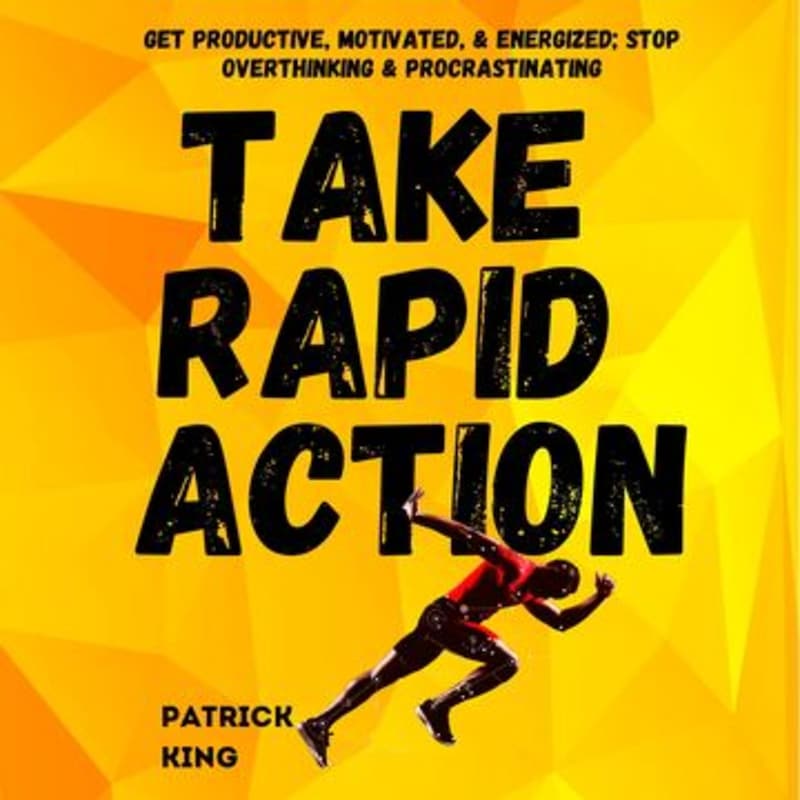
Take Rapid Action: Get Productive, Motivated, & Energized; Stop Overthinking & Procrastinating By Patrick King
Hear it Here - https://bit.ly/takerapidactionking
https://www.amazon.com/dp/B082YZ95LV
Practical, psychological methods to turn your thoughts into reality, instead of endless avoidance and laziness.
Transform from struggling with getting off your butt, to a machine of productivity and self-discipline. Create an action bias in your life -- starting now.
How to break inertia, overthinking, paralysis, sloth, and insecurity.
Take Rapid Action deconstructs the psychology of laziness and why tomorrow always sounds like a better idea. This book is many things at once: a shot of motivation, a spark of fire, an understanding of your brain, and a list of techniques to get into motion. This is one of the most valuable skills you’ll ever gain, because only action matters in life, not good intentions.
Transcripts
Are you spending hours reading, scrolling or watching, but feeling like you're not actually getting anything done?
Speaker:Imagine a world where you effortlessly prioritize your tasks, conquer procrastination, and feel energized and motivated every day.
Speaker:Hello listeners, welcome to Social Skills Coaching, where you become more likeable, more charismatic, and more productive.
Speaker:Today is the 18th of March, 2026.
Speaker:Today's featured book is Take Rapid Action from Patrick King.
Speaker:This is a guy that uses psychology to overcome procrastination and build self-discipline.
Speaker:It includes actionable techniques and insights into the mind's tendency towards inaction.
Speaker:And this book hopes to equip you to break inertia and achieve your goals.
Speaker:Today's episode comes from the section of the book titled Limit Consumption for More Production.
Speaker:We know how the constant influx of news, social media, and digital distractions can actually hinder productivity and well-being.
Speaker:In this episode, we're going to learn practical strategies to reclaim your time and focus by consciously limiting your information consumption.
Speaker:will highlight the importance of self-awareness in recognizing unconscious consumption habits and offer some of those actionable steps to curate your media sources.
Speaker:So, get ready to discover how reducing your intake can free up valuable energy for work, meaningful activities, and personal growth.
Speaker:It happens all the time.
Speaker:You’re sitting down, trying to get in some reading, and by the time you look up, hours have passed.
Speaker:Losing track of time in this pursuit is great if you’re being productive, but reading is only productive when it adds actual value to our lives.
Speaker:More often than not, it doesn’t!
Speaker:Consuming information is almost always seen as a net positive.
Speaker:It’s what we believe underlies being educated and intelligent, and reading in particular is seen as superior to more passive forms of media consumption.
Speaker:The point is that it’s easy to feel like we’re being productive by reading, when all we’re actually doing is wasting time in a slightly more intellectual way than binge-watching Game of Thrones.
Speaker:When we justify our information consumption in this way, what we’re really doing is justifying our procrastination.
Speaker:We use information as a procrastination tool.
Speaker:Reclaim your lost time and get started by going on an information diet.
Speaker:Information diets aren’t about being less educated or cutting out leisure reading; they’re simply about considering our end goals and if we are unconsciously doing something detrimental to those goals.
Speaker:Too often and too easily, we get sucked into information, and when we consume, we cannot produce.
Speaker:But how do we decide what information is worth consuming, and what’s worth leaving on the shelf?
Speaker:How do we even know what information is sucking up our time?
Speaker:Begin by taking an honest look at how you spend your time.
Speaker:You can do this in the following steps.
Speaker:1.
Speaker:Survey your information consumption.
Speaker:2.
Speaker:Remove at least 50 percent of the least valuable content you consume and cut the noise from your information diet.
Speaker:3.
Speaker:View descriptions of information pieces as pitches for your time and attention.
Speaker:4.
Speaker:Say no more often.
Speaker:5.
Speaker:Consider cutting entire information forms from your life.
Speaker:6.
Speaker:Monitor how much of any one information source you’re consuming.
Speaker:For one week, make a list of every type of media you consume, from your Facebook feed to War and Peace.
Speaker:It’s important to know exactly where your time is going so you can make cuts.
Speaker:You might be surprised to find you’re scrolling through social media feeds for hours per day, or you may discover that you spend far too many hours inhaling the latest bestseller.
Speaker:It doesn’t matter what you’re consuming when you begin this process; what matters is that you identify where your time is going so that you can redirect it toward activities that need to get done.
Speaker:After you make your list, you’ll see a lot of different mediums.
Speaker:Social media, books, magazines, television, podcasts, and similar items will probably populate your list.
Speaker:Some are genuinely valuable; they help you be more creative, bring you joy, and make you and your life better.
Speaker:They assist you in your work, or they are flat-out required research to keep you progressing and growing.
Speaker:This doesn’t all have to be edifying; genuinely enjoying a TV show or other product can be a good enough reason to keep it in your life.
Speaker:But right off the bat, you can also see that some of these are useless and keep you stuck in inaction.
Speaker:You’ll find a lot of items that you didn’t actively choose to watch or read; they were just there, in front of you, and you consumed them on autopilot.
Speaker:Autopilot as unconscious consumption is the real enemy here.
Speaker:You can tell something should be cut out of your life when it has no current or practical utility.
Speaker:Only information we can immediately apply to our current situation is important.
Speaker:This is what happens when we fall into the Wikipedia rabbit hole, for instance—suddenly we end up learning about 17th-century woodworking when we were only trying to become knowledgeable about one historical figure.
Speaker:Hypothetical or just in case information can also be useful, but most of the time it shouldn’t be your current focus.
Speaker:This is like researching the type of clothing you should buy when you lose 50 pounds—it’s a legitimate concern, but not at the present moment.
Speaker:Plenty of other information you take in will be downright useless—you neither enjoy it nor find facts within it that can be applied to better your life.
Speaker:It was just placed in front of you, and you consumed it without realizing it.
Speaker:These are cereal boxes, advertisements, and vapid entertainment news that are just entertaining enough to suck us in but are mostly without substance.
Speaker:Once you cut out 50 percent of the least useful media you consume, you’ll have that much more spare time to devote to the things you’ve been putting off.
Speaker:That’s way better than wasting time skimming through posts or blankly watching a show you don’t care about.
Speaker:This tactic in itself isn’t a cure for procrastination, but it does help when you are at the fork in the road, and if a distraction is less handy, it’s one less obstacle to working.
Speaker:It helps to view television, books, articles, and podcasts as pitches for your time and attention.
Speaker:Both are finite; everything we consume also consumes our time and energy.
Speaker:In addition, we can’t produce at the same time as we’re consuming.
Speaker:It’s impossible to do both at once.
Speaker:At this point, it should be obvious that being entertained or educated doesn’t come free of cost, even when no money is being charged.
Speaker:Even when items are free, they’re not without cost to your work and productivity.
Speaker:Given all of this, it makes sense to be discriminating about what we spend our time consuming and to be especially careful before we let something new catch our eye.
Speaker:Before watching or reading anything, even something you know you’ll like, read or listen to a short description and consider whether the object is worth your time.
Speaker:You can even do this with works you already know by consciously reminding yourself what you’re going to find before loading up a website or sitting down for a film.
Speaker:The important thing here is consciousness.
Speaker:When we think about the cost of frittering away time on subpar entertainment, we’re less likely to indulge—or to waste time.
Speaker:In addition to considering the inherent cost of consuming information, there’s a much simpler way to change our habits: commit to saying no.
Speaker:Merely deciding to stop indulging in media a set number of times, say three times per week, can radically change how we interact with the world.
Speaker:Without consciously setting limits, it’s easy to see keeping up with friends on social media as an obligation or to feel like we have to finish watching the show we like, but none of that’s compulsory.
Speaker:At all points, we control our action.
Speaker:We can always say no.
Speaker:While filtering things out of your life and preventing your newfound autonomy from being snatched from you, consider the mediums that deliver low-value information to you.
Speaker:Often, we find ourselves drifting back to the same time sinks over and over again.
Speaker:When we notice these patterns, it’s worth considering excising the whole medium from our lives.
Speaker:Whether it’s getting rid of cable TV, committing to a life without social media, or deciding to spend less time reading books, making a decisive change can prevent the need to say no over and over again.
Speaker:Finally, consider how much time you’re sinking into all the remaining forms of media you consume.
Speaker:How much time is spent on television, reading, listening to podcasts, or scrolling through feeds?
Speaker:If you spend too long in any one place, it’s likely you’re devoting time to those activities because they’re automatic, not because you’re really enjoying them.
Speaker:Cutting back in those areas can leave more time for the good things in life.
Speaker:Learning to make cutbacks on attention expenditures lets us focus on information that helps us grow, learn, and thrive.
Speaker:Fortunately, the process of reducing the noise from your media streams can be approached in many ways, allowing anyone to make small—or even major—changes in their routines.
Speaker:Once we’ve established a newer, more conscious routine, it’ll be that much easier to find time for the people and things we truly love and to finish tasks we’d otherwise be inclined to set aside.
Speaker:That sure beats being constantly stressed about the work we’re avoiding.
Speaker:Summary and action steps: • What does it mean to err on the side of action?
Speaker:Simply, it means that instead of freezing or analyzing, you should attempt to make your default response action.
Speaker:Have an action bias.
Speaker:• The first way to err on the side of action is to break through what’s known as comfortable inaction.
Speaker:This is where you feel that things are good enough, so you might as well not disrupt the status quo.
Speaker:This is where we get sayings like “good is the enemy of great” and so on, but it’s true—you will never live the way you want if you are too comfortable where you are now.
Speaker:o Action step: You aren’t uncomfortable enough to take action, so increase the amount of discomfort that comes along with inaction so you have no choice but to act.
Speaker:For something you are trying to break past a plateau on, allow your imagination to run wild on the various negative consequences you will face.
Speaker:Think about the rewards you will miss.
Speaker:Think about the short and long- term repercussions.
Speaker:Once these seem more urgent and tangible, action will be far easier.
Speaker:• It’s tough to get started when you’re facing something huge.
Speaker:You already dread it because you know it will not feel rewarding and you won’t be able to finish anytime soon.
Speaker:That in itself is discouraging.
Speaker:Therefore, break up your tasks into as tiny steps as possible, steps so small that it’s almost no different from your status quo of inaction.
Speaker:o Action step: Break down a task you’ve been dreading into ten small, individual steps.
Speaker:Can you break it down into fifteen, and then twenty?
Speaker:How does it feel to achieve something, no matter how small?
Speaker:I bet it feels great.
Speaker:• The 40-70 Rule popularized by Colin Powell states that you should get started with no less than 40 percent of the information you feel is necessary, but no more than 70 percent.
Speaker:For our purposes, focus on getting started with percent—what might feel like an insufficient amount of information.
Speaker:But in reality, you’ve already hit the point of diminishing returns, and anything else will be learned more effectively along the way.
Speaker:o Action step: Apply the 40-70 Rule to elements other than information: confidence, planning, learning, and preparing.
Speaker:Write down the top ten details you need to complete something.
Speaker:Now try eliminating three of those details.
Speaker:Did it make a difference?
Speaker:For that matter, how many of the ten do you actually need to get started?
Speaker:To simply begin, you likely need nowhere close to ten.
Speaker:• Indecision is basically overthinking by another name, and it is an equivalent obstacle to erring on the side of action and gaining momentum.
Speaker:Indecision is defeatable in many ways, with the common thread between many of the methods being some sort of pickiness.
Speaker:o Action step: Attempt to apply all the tactics described to something you are having trouble deciding on.
These include:commit with the intent of backtracking, apply strict boundaries, utilize a default choice, seek satisfactory choices over perfect ones, engage in intentionally judgmental thinking, and be purposefully general and vague.
These include:Which one works best for you and helps you reach a decision the quickest?
These include:• Finally, you can limit your information consumption.
These include:Very little of what we consume is helpful or even relevant.
These include:Most of it is also consumed unconsciously, without us realizing that we are spending so much time and effort on it—we get sucked in.
These include:Cultivate self- awareness, curate your consumption and reduce your media sources so you can devote your limited energy toward work and motion.
These include:o Action step: make a list of what you consume for a week, and make a resolution to cut down on at least 50 percent of it.
These include:Preview information before you engage with it, and view everything as a pitch for your time and energy.
These include:It's important to remember day to day that we cannot control the world around us, but we can control what we allow into our minds.
These include:By consciously curating our information consumption, we free up valuable time and energy to focus on what truly matters, building a life of purpose and meaning.
These include:Albert Einstein is quoted as saying, the important thing is not to stop questioning.
These include:Curiosity has its own reason for existing.
These include:Let that curiosity guide you as you navigate the world of information, always seeking out knowledge that empowers and inspires you.
These include:Until next time, keep questioning, keep learning, and keep moving forward.




