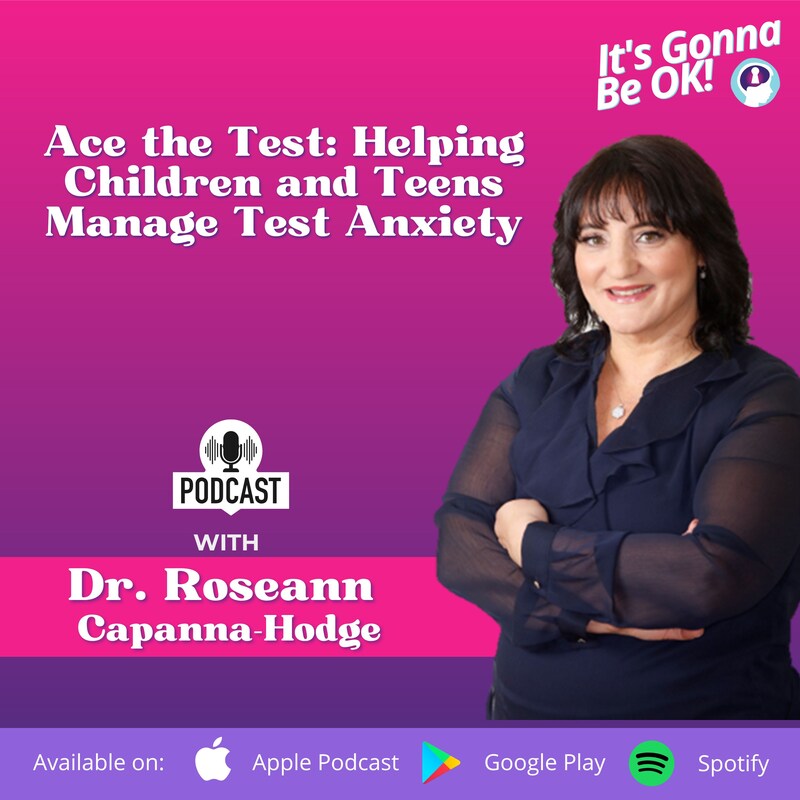
Managing Test Anxiety in Children
If your child struggles with tests, panic, or worry, you’re not alone. Managing test anxiety starts with understanding that it’s not laziness—it’s a dysregulated child whose nervous system is overwhelmed. In this episode, Dr. Roseann explains why test anxiety occurs, practical strategies to calm the brain, and routines that support focus, emotional regulation, and confidence.
In this episode, you’ll learn:
- How managing test anxiety improves focus and learning
- Brain-based strategies for Anxiety in Children
- Tools for reducing school stress and School Anxiety and Refusal
- How to support a dysregulated nervous system for better performance
Why children get anxious even after studying
Test anxiety often stems from:
- Pressure, perfectionism, or fear of failure
- Dysregulation of the nervous system
- Cognitive overload despite preparation
Parent story: A teen studied late and still panicked on the test. Regulation-first strategies restored focus and improved working memory access.
Tips:
- Keep study blocks short and consistent
- Prioritize sleep over cramming
- Use active studying instead of just rereading
Creating routines that reduce anxiety
- Study sessions of 20–30 minutes with short breaks
- Multisensory strategies: whiteboards, color coding, walking while reviewing
- Chunk information into small groups to support memory and attention
Parent insight: Short bursts of active learning plus movement are more effective than hours of passive review.
Habits to calm the brain before tests
- Consistent sleep schedule
- Daily movement, even short walks or stretching
- Protein-rich and anti-inflammatory meals
- Daily calming routines: breathwork, visualization
Parent story: Implementing structured pre-test routines reduced panic and increased confidence.
Teaching positive self-talk
- “I can do hard things.”
- “I am prepared.”
- “I know how to calm my body and brain.”
Pair self-talk with visualization: imagine walking into the test calm and confident.
When to seek professional help
Seek support if anxiety is persistent, worsening, or impacting daily functioning. Options include:
- Neurofeedback
- Counseling
- Brain-based behavioral support
Behavior is communication. Managing test anxiety requires addressing the nervous system first to allow learning and focus.
Listen + Take the Next Step
Get your FREE Regulation Rescue Kit to help your child manage stress and meltdowns:
👉 www.drroseann.com/newsletter
Takeaway
Managing test anxiety doesn’t require perfection. Calm the brain first, use structured routines, positive self-talk, and supportive habits. Children can move from panic to confidence with consistent practice and regulation strategies.
FAQs
Q1: What triggers test anxiety in kids?
Pressure, perfectionism, sensory overload, and dysregulation.
Q2: How can I calm my child the morning of a test?
Use movement, calming routines, and brief visualization or breathing exercises.
Q3: Are practice tests helpful?
Yes, when paired with regulation and positive framing.
Q4: Can lifestyle changes reduce anxiety?
Yes. Sleep, nutrition, movement, and structured routines support the nervous system.
Q5: Is test anxiety common in neurodivergent kids?
Yes. Children with ADHD, autism, dyslexia, or anxiety disorders are more susceptible.
Dr. Roseann Capanna-Hodge helps parents understand Emotional Dysregulation in Children and teaches practical Nervous System Regulation in Children and Co-Regulation Techniques through Regulation First Parenting™.