Shownotes
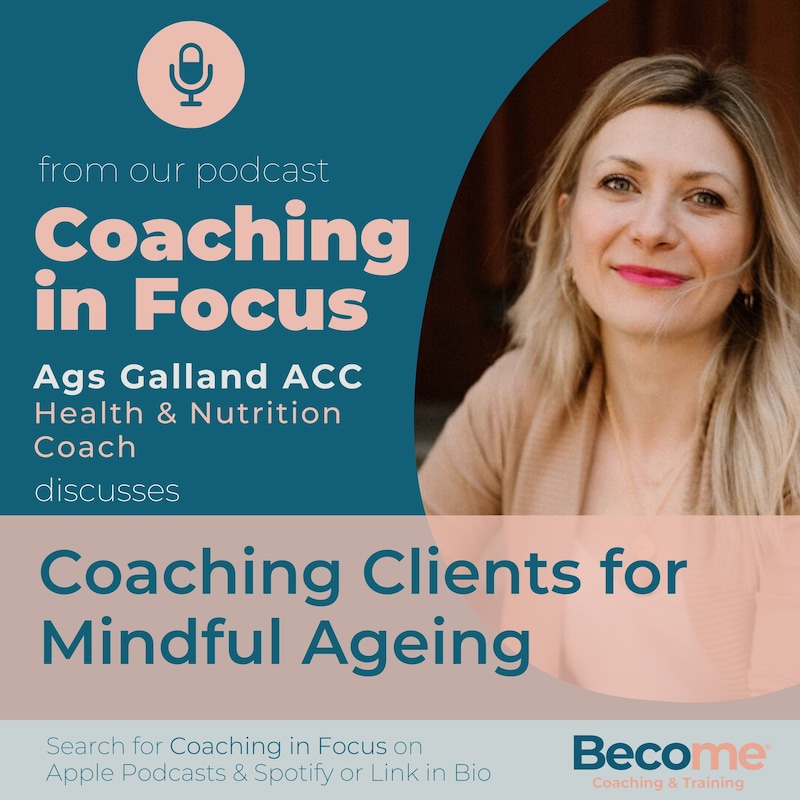
In this episode, Joseph Grech, Coaching Psychologist, welcomes Ags Galland, a Nutrition and Health Coach, to discuss the concept of mindful ageing and coaching.
Ags shares her expertise and experiences in the field, particularly focusing on how nutrition and coaching can support individuals as they age. The conversation explores the importance of self-awareness, making intentional choices, and addressing various aspects of aging, including physical and mental health, body image, and self-esteem.
Ags emphasizes the value of knowledge, resources, and research in the pursuit of healthy aging and provides recommendations for books and podcasts that delve into the topic. The episode encourages listeners to embrace the concept of mindful aging and make proactive choices to enhance their quality of life as we age.
Transcripts
Hi everyone, and a very warm welcome from myself,
2
:Joseph Grech, on our latest episode
of the podcast, Coaching in Focus.
3
:I am super, super excited today because I
am joined by the very amazing Ags Galand.
4
:Ags, how are you doing?
5
:Ags Galland: Yeah, I'm really
cool and very excited to be here.
6
:Thanks for having
7
:Joseph Grech: me.
8
:Thanks for making a bit of time
for joining us today and sharing
9
:some of your expertise in relation
to a very interesting topic
10
:about mindful aging and coaching.
11
:To give you a bit of background
as well in relation to Agz, Agz
12
:is a nutrition and health coach.
13
:She's currently based in New
Zealand, although I know that
14
:Europe is her home and we hope to
see her again here very, very soon.
15
:She's an alumni of BECOME, um,
she's added our diploma with us,
16
:and she's also one of our mentors
as well, supporting other trainees.
17
:And as I mentioned, we're here to
talk about mindful aging, coaching,
18
:and nutrition, and how that can
support people, and also explore Ag's
19
:experience working in this space.
20
:So, maybe as a starting point,
X, um, tell us a little bit more
21
:about yourself and about what you
22
:Ags Galland: do.
23
:Mm hmm.
24
:Thank you for that.
25
:And I think you did, I mean, you
did, um, do a good job already.
26
:So I'm a nutrition and health coach.
27
:I do have a few different certifications
under my belt, but I think the recent
28
:one added to my resume, let's say, is
my master's in personalized nutrition.
29
:The idea of, of me working in this
space is really combining coaching,
30
:combining that approach, um, on one
on one coaching and group coaching
31
:together with that nutrition knowledge
and nutritional therapy coaching, uh,
32
:which I am absolutely passionate about.
33
:So that's for me, hopefully going forward.
34
:I'm in my last year of training.
35
:Uh, it's been a long
journey, but very exciting.
36
:And yeah, at the moment I'm based in
New Zealand, as you said, and it's been
37
:lovely to explore this side of the world.
38
:And who knows when they might be back to.
39
:You know, a little bit
closer to civilization, but
40
:for now, um, this is home.
41
:You might have guessed, I am quite
passionate about healthy aging and,
42
:um, kind of midlife and what does it
mean to all of us and how to make it
43
:more intentional and more mindful.
44
:Joseph Grech: Let's
start with that, maybe.
45
:Let's start with his idea around
mindful ageing, um, what it
46
:actually means, why it's relevant
47
:Ags Galland: today.
48
:Yeah, this concept is, I see ageing as one
of those things that it's very certain,
49
:it's one of the only certain things in
life that we will all age at some point.
50
:Uh, we will all, you know, not to make
it grim at the first five minutes of
51
:the podcast, but then we all die at some
point, but yet we, we know so little.
52
:So it's something so unavoidable,
but we know so little.
53
:And we, um, a lot of the
times quite fearful of it.
54
:Maybe we resist to talk about it.
55
:Uh, a lot of the time we may be
in denial, you know, with things
56
:like puberty or childhood, every
stage we really embracing it.
57
:And we really put.
58
:attention to celebrating it and to
making a point of, you know, going
59
:through different stages of life.
60
:However, when we get to midlife or when
we, you know, kind of past the 40, the
61
:50, the 60, that kind of celebration is
not, um, you know, nearly as present.
62
:And, and actually it starts to
almost like tip into the other way.
63
:In today's world, I guess the
way, the way I view it, because we
64
:also rushed, you know, we're going
through our twenties, which are fun.
65
:Then we're going into thirties,
which are also fun, but also a
66
:little bit more responsibilities.
67
:Then we're going into our forties and
you know, everything adds on, right.
68
:Whether you have a family or not, whether
you study extra thing, whether you, you
69
:know, working two jobs or not, depending
on what your lifestyle is and your
70
:choices are, we just all have so much on.
71
:And we really lay, we really
kind of rarely stop and pause
72
:and think about, you know, age,
what are the choices I'm making?
73
:What are the choices that serve me?
74
:What are the choices that
do not serve me anymore?
75
:What does it mean for me to,
oh, you know, like I have.
76
:a few aches here and there.
77
:Um, maybe, you know, does
my lifestyle need to change?
78
:What does it mean for me that I see my
first, you know, or five or, you know,
79
:500 first gray hair, all sorts of things,
just kind of rushing through life and,
80
:you know, neglecting those experiences.
81
:And, and I think mindful aging as
a concept for me is really kind
82
:of encouraging that slowing down a
little bit and, um, maybe reflecting.
83
:Um, and learning to see it as a part
of life, as a part of that, something
84
:that will, you know, unavoidably happen
and, and, and decide for yourself,
85
:how do you want to approach that?
86
:Uh, whether there'll be through
that denial or resistance, or do
87
:I have it in me to embrace it?
88
:Or if not yet, what are some
steps that I can maybe take
89
:towards that to make myself.
90
:you know, enjoy that part.
91
:It's still so much life ahead of us.
92
:And, and there are some ways that we can
make it, um, make and make it enjoyable.
93
:And it doesn't have to be crazy,
you know, that doesn't have to
94
:be as wild or the same as you,
as it was when you were 20 or 30.
95
:Um, it's just about approaching
this process a little bit
96
:differently with more.
97
:maybe self awareness.
98
:So the benefits
99
:Joseph Grech: of this idea about being
more aware, making choices that we
100
:want to make, rather than just aging
without noticing, and then perhaps
101
:in our 70s realizing that we didn't
make those choices in our 40s, that
102
:perhaps we could have wanted to.
103
:Is that, is that what it is?
104
:Is that part of it?
105
:Ags Galland: Yeah, and it is part of it.
106
:And it's also making, I think for
me, a big part of that co kind of.
107
:mindful aging concept is also
looking into how do we want
108
:our years to look ahead of us?
109
:There is this concept of lifespan
versus health span, for example.
110
:So those are some years that, you
know, lifespan is really the number of
111
:years that someone will live throughout
their life, right, from birth to death.
112
:And then you have health span, which
is really, it's been on, I guess, out
113
:there as a concept very recently, if
you follow, or if you're in this sort
114
:of area, but it's really just number
of years that someone is healthy
115
:without any kind of disabilities
or chronic diseases, et cetera.
116
:And that, you know, because our
lifespan, so the years we live have
117
:been extending, our health span, sadly,
as a have been, you know, declining.
118
:And for me, when I think of mindful
aging as well, this is a concept of,
119
:how can I make choices now that will
help me to extend that health span?
120
:And that may include physical
health around, you know, how we,
121
:how we walk when we're 70 or,
um, you know, what can I do now?
122
:that I'm able to walk when I'm 70 or
what we eat now and how is that going
123
:to affect my health going forward.
124
:Um, and there can be concepts
around mental health, right?
125
:Mental and kind of wellbeing,
cognitive health, and that's
126
:super important as well.
127
:So I think there's.
128
:a lot to it, but definitely that self
awareness is that first step as with
129
:anything to do with, you know, with
coaching and getting one another.
130
:Yeah.
131
:Yeah.
132
:You,
133
:Joseph Grech: um, that's exactly what
I was thinking, how nicely it bridges
134
:this idea around nutrition, health,
physical health, mental health and key
135
:aspects in coaching practice, such as
elevating somebody's self awareness.
136
:And I can really see.
137
:the link between the two areas.
138
:Do you have maybe any, any stories,
any examples from clients who
139
:you've worked with that benefit
from coaching for mindful aging?
140
:Ags Galland: I do have some and there are
a couple of, I guess I see a few different
141
:Themes that maybe pop up typically when
clients come to me and we, you know,
142
:that topic comes, I do work with, and
not only, but predominantly women.
143
:So there was a lot of discussion and
coaching around, you know, perimenopause
144
:and around that mindful midlife.
145
:There was so much that changes for women
around, you know, kind of 40 and up.
146
:Um, and you know, it's not only
talking about all the kind of society
147
:expectations and beliefs that we've.
148
:grew up with.
149
:Um, it's also, you know, how just
life changes, you know, like with
150
:all the different responsibilities,
as we mentioned with all the
151
:different extra agendas and things,
and it's just life is really busy.
152
:Um, so a lot of women on top
of that experience, that whole.
153
:Yeah.
154
:Different symptoms, body changing, body
image changes, um, you know, different
155
:beliefs potentially that comes with
things like lack of confidence and
156
:maybe different levels of self esteem.
157
:So there was a lot of, there's the
theme around that and potentially how
158
:do we embrace that or how do we maybe
first, it's not even embrace that
159
:it's first to acknowledge that, right?
160
:That accepting, acknowledging this is
what's happening, then making a choice.
161
:It's how do I want to.
162
:Make a different and what are some
choices that I can make towards that and
163
:then potentially learn to maybe embrace
it or learn at least to accept that and
164
:and and try to work with it or try to
live around it because again as we said
165
:it's unavoidable and there is also that
other thing that it's you know people.
166
:do realize, hey, this is what's happening.
167
:I'm already proactive around some stuff.
168
:I just don't know
exactly how to change it.
169
:I maybe struggle with some of the beliefs
I have, or maybe I need some actual
170
:practical, you know, like we're talking
just literally coaching around, you
171
:know, your routine or your practices.
172
:What, what are some things that may
need to change for you in your life?
173
:To reflect certain, you know,
maybe lifestyle changes.
174
:Maybe there is something, you
know, around your health issues
175
:or wellbeing issues, maybe your
capacity to, you know, or resilience.
176
:So we do, so there is almost like
two different sides to it or themes.
177
:That's the kind of denial and I,
I don't know what's going on, but
178
:I think something needs to change.
179
:And there is also that awareness
already where people like,
180
:okay, I think I'm there.
181
:I just don't know still
what to do with it.
182
:Joseph Grech: Right.
183
:Which again, kind of reiterating
Mag, that is kind of so called
184
:in coaching factors, right?
185
:One is around working in relation to the
mindset of the individual, and then the
186
:second kind of stage, you're talking about
actions, once the individual is aware of
187
:their beliefs or things that they want to
change, how they're going to implement.
188
:that change.
189
:You also, you said, you said you,
uh, you studied nutrition as well.
190
:You're doing your MSc and nutrition is
often a concern as people age as well.
191
:So how do you incorporate nutrition
guidance into your coaching
192
:Ags Galland: as well?
193
:And that's a really good question
because it is, it's tricky in
194
:a way that it is different.
195
:Um, the, the style of, I guess,
nutrition advice or nutritional therapy
196
:that I will fully be practicing as of
next year is personalized nutrition.
197
:So we do take into account people.
198
:Particular genetic makeup,
people, you know, health history.
199
:Um, it's not like a cookie, cookie cutter,
um, you know, diet or approach that people
200
:can get from the internet and just follow.
201
:It is really personalized.
202
:It takes a lot of effort to implement,
to, um, you know, uh, work with people,
203
:to, um, arrange it for them, et cetera.
204
:But so kind of almost divided into two
different, I guess, how I do it now.
205
:and how I will do it going forward.
206
:But at the moment, um, because nutrition
is almost like the field that you,
207
:you know, if someone doesn't know
about, you know, potential benefits of
208
:certain, you know, fruit and vegetables
and how food can be medicine for
209
:them in, in their particular setting
or in their health condition, it's
210
:really hard to maybe elicit that.
211
:You know, response and ask them for
answers, um, as coaching would do
212
:because, you know, if they don't
know, they probably don't know.
213
:So it's that kind of that knowledge
and mentoring piece, uh, which
214
:is so different to coaching.
215
:Um, so I typically would, you know, again,
be very upfront with the clients and, you
216
:know, set agreements around how do we.
217
:you know, how the coaching sessions
or how the program will look and how
218
:do we address certain things that
there will be elements of, you know,
219
:coaching where I wouldn't be giving
advice and I wouldn't be telling
220
:you certain things around nutrition.
221
:And there will be also sessions or parts
of the sessions where, you know, I will
222
:make it clear that this is now we, you
know, discuss in particular elements
223
:of nutrition or your diet, et cetera.
224
:So it's.
225
:It's just around making that quite
distinct for the client so they know that
226
:there is a difference and, and seamlessly
kind of incorporate them into the program.
227
:And you know, everything is always
tailored and individualized.
228
:So some clients would be happy
to work with more of, you know,
229
:around the coaching side of things.
230
:Maybe they know their knowledge is
already quite vast and they quite
231
:happy to actually be challenged and to.
232
:Um, be coached rather than actually
maybe learn and some others will be,
233
:you know, on the opposite spectrum.
234
:So it's really just depends on, on where,
where people are at and going forward.
235
:Um, that's something to be, to
still be decided, but I feel like it
236
:probably will be more focused, maybe
potentially having separate packages
237
:or, um, separate offerings for people.
238
:So it can be even more distinct
for them to, you know, if you
239
:just really require nutritional
therapy with a limited spectrum.
240
:coaching scope, that's an option.
241
:Or we can do, you know, wider coaching
scope, which I still believe they
242
:complement each other so beautifully.
243
:Um, because there is, you know,
nutritional therapy or nutrition is just
244
:a change in general behavioral change.
245
:And I, I almost cannot view
it now without coaching.
246
:Um, so, um, so like, I
247
:Joseph Grech: know that, for example,
I need to eat certain foods, but
248
:I might not be eating them, right?
249
:So like, sometimes if, if I'm in
that space, is this idea around
250
:coaching is not a, a learning
method for absolutely everything.
251
:So, for example, somebody might
be really clear in relation to
252
:the nutritional benefits of eating
healthily, um, practicing certain
253
:habits, but they're not doing it.
254
:And that's when coaching becomes
quite useful, addressing mindset,
255
:because they have the knowledge.
256
:But it's how, how do you support somebody
actually do that behavioral change, as you
257
:Ags Galland: mentioned.
258
:Absolutely.
259
:Absolutely.
260
:And it's a lot around, you know, from what
I see at the moment, you know, a lot of
261
:it is, you know, around the mindset piece.
262
:You know, we know we, we,
we typically smart humans.
263
:We know what's good for us.
264
:You know, the, when we think, and when we
step back, the principles are very, very
265
:simple in a way, you know, that's not
about biohacking and doing crazy diets and
266
:miracle foods and superfoods and all that.
267
:It's just.
268
:you know, it's a few simple
principles that we probably all know.
269
:Um, but it's, it's around that behavioral
change and it's around, you know,
270
:obstacles that, you know, what's standing
in your way, what needs to happen here
271
:that it will be different, you know?
272
:Um, and I think those are some
questions that some people are
273
:good at answering themselves.
274
:Um, and potentially thought of themselves
and, and in many instances, you know,
275
:many people have not thought about any
of that and that's have been stopping
276
:them from making those changes.
277
:So I think you're right.
278
:Coaching is just fabulous for that.
279
:Yeah.
280
:Joseph Grech: Yeah.
281
:And it's that kind of that challenge
in coaching that we talk about where.
282
:I can imagine working with a client and,
and exploring this idea around, you know,
283
:you have this knowledge, you've tried
things before, things are not working.
284
:Let's kind of really explore
what's happening here.
285
:Then just simply set some actions.
286
:Yeah.
287
:For that pattern to be repeated again,
and then the Exactly doesn't complete.
288
:Did you know that I'd become.
289
:We offer a number of different coach
training programs to people just like you.
290
:If you're new to coaching, there is a
level one diploma in integrative coaching.
291
:If you've been coaching for a while,
or perhaps you're already an ACC coach,
292
:then we have the advanced diploma in
integrative coaching, which leads all
293
:the way to the PCC credential by the ICF.
294
:We also have a number of CPD
programs and certificates,
295
:including mentoring and supervision.
296
:To find out more, go to tobecome.
297
:org or just check the show notes.
298
:The other thing that is coming
to mind is around body image.
299
:I imagine grey hairs.
300
:earlier.
301
:I do have quite a few of those.
302
:You can see them very well here.
303
:You can see
304
:Ags Galland: mine, but they're there too.
305
:Joseph Grech: And I'm sure
they're in the thousands now.
306
:Um, but how do you support people navigate
this change in perhaps in body image, self
307
:esteem that comes naturally with aging?
308
:Ags Galland: Yeah, it does
come naturally, doesn't it?
309
:And it is a big thing, especially,
I mean, I don't want to, you know,
310
:kind of single out here woman, but
especially for women in today's society,
311
:it is a huge thing for men as well.
312
:You know, many people just generally
link their value and their worth.
313
:to how they look and how they,
how potentially people view them.
314
:And because aging has been seen as
such a, I guess, concept of, you know,
315
:the youth is the desirable thing.
316
:You know, any decline is,
you know, frowned upon.
317
:We, we should always look certain way.
318
:We should only wear, you know, this and
this and have this sort of body or this
319
:sort of leg or arm or whatever, you
know, things change, our bodies change.
320
:That's something that will happen.
321
:So those are the sort of things
that, um, definitely are visible.
322
:Um, around that kind of population
of, you know, 40 up where, where
323
:a lot of changes starts to be,
you know, kind of sneak up on us.
324
:We may not see them, you know,
overnight, but one week or one day
325
:you just wake up and you're like,
Oh, well, I haven't seen that before.
326
:Or you know, like how
many of you are here now?
327
:So, um, so it's definitely
present and a lot of it is
328
:around, you know, that acceptance.
329
:So acceptance, there is a belief
change, um, that may need to be
330
:shifted, uh, or that may need to happen.
331
:There is work around visualization
or imagining it, you know, there's
332
:work around a lot of, you know, a
lot of the time we, we do start at
333
:basics, like around values, you know.
334
:What are some values?
335
:What's important to you?
336
:Um, how come is important to you?
337
:Where do you see yourself in, you
know, five, ten years or even, you
338
:know, we go further and like when
you're 70, how do you want to look?
339
:How do you want to move?
340
:What do you see yourself doing?
341
:I think those are some sort of
questions that we do explore.
342
:Um, within, um, that kind of mindful
aging coaching, you know, it does,
343
:can help with that body image change.
344
:It's a lot of work.
345
:It is something that, again, it's,
it's, um, you would know it too, you
346
:know, links so, so many different
beliefs and societal, as I said,
347
:expectations, but it is something that can
absolutely be a part of the discussion.
348
:And for some people it will talk about.
349
:It's
350
:Joseph Grech: about strengthening your
core, your real you, who's, you know, that
351
:kind of what's on the inside in a way.
352
:So, because that in a way can,
can stay, doesn't need to change.
353
:If you know what your values are, they
can be a bit more constant as I feel like
354
:Ags Galland: we, you know,
as I said, like It's such a
355
:fast, fast pace for many of us.
356
:You know, we kind of breeze
through, it's almost like our
357
:twenties, maybe early thirties.
358
:It's like research we've
been doing with our life.
359
:And then, you know, after
that the real game begins.
360
:And a lot of the times we just have
not maybe had time to think about it.
361
:You know, what do I really want?
362
:What do I like?
363
:What am I choosing?
364
:You know, why am I choosing this?
365
:Do I even like this?
366
:You know, those are some sort of questions
that we can get wrapped up, um, you
367
:know, again, as we grow older and maybe
we started to get more, you know, self
368
:awareness and realize certain things
around our behavior or our actions.
369
:And that can get confusing, right?
370
:This is the time where a lot of
people kind of like to do that soul
371
:searching and, and maybe work with
someone like, you know, yourself or
372
:myself to, to figure some stuff out.
373
:And I think it's very, it's
very normal and it's very
374
:natural just because of that.
375
:weird time of our life.
376
:It can
377
:Joseph Grech: also, I'm reflecting on
this, it can also feel that it's another
378
:choice, another thing that we have to do.
379
:So that's why I'm thinking about myself.
380
:Well, I might push it away a little bit.
381
:It's something else to think about.
382
:How do I want to be in five years time?
383
:What can I proactively
plan for my later years?
384
:It feels like it's one extra thing
on my to do list, but actually
385
:it's a really important thing.
386
:Part of that to do list.
387
:Yeah, the more that I kind of push
it away The the less I'm able to
388
:live authentically because I'm just
kind of on this Threadmill of life.
389
:I'm just kind of doing things again and
again over and over without mindfully
390
:noticing and making choices around them.
391
:So it feels like it's a
really important part of
392
:Ags Galland: it.
393
:Yeah, absolutely.
394
:And it can be, you know, a
lot of us are in denial, you
395
:know, like, Oh, I have time.
396
:Oh, I don't have to think about it yet.
397
:Or like, Oh, aging, I'm still young.
398
:I still got it.
399
:But we, I think a lot of us
do internally feel like, Hey,
400
:something's just not the same anymore.
401
:You know, the same tricks
don't do the same trick.
402
:And you, and I think you know, if we do
not spend enough time to maybe consider
403
:that or reflect on that, um, you know,
things are, I'm not saying like, Oh,
404
:things will just decline and start
to go downhill from there, but that's
405
:something that's slowly, slowly chip away.
406
:And when we talk about mental health
or, you know, physical health, even.
407
:I think there is this kind of concept
in the healthcare and, you know, within
408
:healthcare in general, that it's easier.
409
:Oh, I'm just going to treat
it when the time comes.
410
:I'm just going to treat
it versus I believe.
411
:And I really kind of like the concept
of prevention a little bit more, you
412
:know, instead of treating it when
probably it's might be too late or
413
:might be really hard or might be really
expensive or whatever the reason is,
414
:what are some things that I may do?
415
:Yeah.
416
:They're not going to cost me as in
like money, or they're not going
417
:to cost me a lot of time or energy.
418
:They're just little things that I can
maybe try to start to incorporate now
419
:to prevent any of that going forward.
420
:And I think that's a way more
powerful way to look at it.
421
:In terms of our years ahead,
you know, it all kind of links
422
:up to what I'm doing today.
423
:It will have some sort of impact
on what we're doing, you know,
424
:in a year or five years time.
425
:Um, and how we feel then as well.
426
:Joseph Grech: And also sometimes, because
we're thinking about this from, uh, as
427
:kind of not noticing these things, but it
could be that we don't notice them because
428
:we're so engrossed into what we of, Um,
creatively, if we really enjoy something,
429
:if we're passionate about something,
we tend to work really hard towards it.
430
:And we might not notice that
our body is telling us to slow
431
:down a little bit, because we're
enjoying the doing quite a lot.
432
:But actually being mindful and saying,
yeah, I love doing all of this.
433
:Stuff, but also let's listen to
what my body's telling me around.
434
:Exactly.
435
:Yeah.
436
:How it feels, what it needs.
437
:Mm-hmm.
438
:How it needs to be nourished as well.
439
:Mm-hmm.
440
:Ags Galland: Exactly.
441
:And that comes with practice, right?
442
:Not everyone is, um, has that skill yet.
443
:Mm-hmm.
444
:. Um, it's something that we just need
to learn to practice, to be able to
445
:pause and ask ourselves those questions.
446
:And you know, what, is it good for me now?
447
:Yeah.
448
:I know that something was good for
me a year ago or five years ago.
449
:Is it still the case?
450
:Like, how does it make me feel now?
451
:And just be able to, you know, re
evaluate and see where you're at today.
452
:You may not be in the same place and
you might be in a better or worse,
453
:like, doesn't matter, but it's just
that that those little differences,
454
:as you say, paying attention to it.
455
:I think that's really what, where it's at.
456
:Yeah.
457
:Yeah.
458
:Joseph Grech: So Ax, we're, uh, we're
getting close to the end of our podcast.
459
:I, of course, want to thank you for
being here, but also before we do,
460
:I'm going to sneak in one last...
461
:Next question.
462
:I know that a lot of our viewers
will be interested in this topic,
463
:so I'm just wondering if there's
individuals who might want to
464
:develop themselves further on this.
465
:Either, whether they're new coaches,
whether they're interested in nutrition.
466
:Mm-hmm.
467
:, are there any tips that you
might share, perhaps that
468
:have helped you, that can help
469
:Ags Galland: someone else?
470
:Maybe let's give it a
three or four quick tips.
471
:Mm-hmm.
472
:. Mm-hmm.
473
:. Um, and I feel like the one
that I always love is, you know,
474
:knowledge, knowledge is power and,
and, And let's not be afraid of it.
475
:I think, again, going back to that denial
and, you know, resistance about, Oh,
476
:knowing and do I want to know how, what
to do and that I'm aging, et cetera.
477
:Let's, that's going to happen.
478
:Right.
479
:So how can I then empower myself
to know once I know I can make
480
:better choices and that's just.
481
:you know, with everything in life.
482
:So I love, I love that as a concept.
483
:In terms of the resources, kind of more
into like people to look into or, um,
484
:some, you know, books or et cetera,
there are a couple of, I mean, there
485
:are so, once you dig into this area,
there is actually, it's a lot going on.
486
:And I, you know, my master's was,
was very obviously academic and
487
:science based and evidence based.
488
:We, um, you know, we've
gone through a lot of.
489
:different, you know, research
papers and studies and people.
490
:So there was actually, um, quite a
huge area, um, in science currently
491
:in research that looks into healthy
aging and, you know, from, um, kind
492
:of genetic and epigenetic side.
493
:So that's something that people
may want to explore Keen, maybe
494
:to, to look into that physical
side of aspect of aging in general.
495
:I think there was one that I
particularly always go to doctor.
496
:It's a medical doctor.
497
:He's based in the U S and he
has a podcast called the drive.
498
:Um, and he is huge on, you know,
healthy aging and he's very.
499
:kind of into the whole idea of like, how
can I even be better when I'm 70 than now
500
:that I'm, I think he's around 50 or so.
501
:Um, and he had a book out recently as
well, um, that is full of beautiful,
502
:um, you know, tips, not only on like
physical health, but mental health
503
:and, and stress resilience, et cetera.
504
:So that's, I feel like all of those
concepts really add into to that
505
:mindful aging and help people to.
506
:be more, you know, in
tune with their body.
507
:And as we said, start to like become more
aware and start to make maybe different
508
:choices if they decide to do that.
509
:Yeah.
510
:I think those are probably, I
mean, there's heaps of books for
511
:women that I could recommend.
512
:Um, if you want, I'm
happy to send you a list.
513
:We can add them to show notes.
514
:you know, kind of around midlife,
et cetera, that are insightful.
515
:And again, very important
for that knowledge piece and
516
:knowing what's happening or
what's going to happen for us.
517
:I think that's already, uh, you
know, we can make choices from
518
:there and that's very empowering.
519
:Joseph Grech: Brilliant.
520
:We'll add them to the notes as well.
521
:And I'm sure.
522
:Uh, we'll add your contact details.
523
:So if anyone wants to reach out, um,
and have a chat with you directly
524
:they can as well Thank you for
spending a bit of time with me.
525
:I know that our viewers would Have got
a lot out of our conversation today It's
526
:a question that we get asked quite a
lot about supporting people as we age.
527
:Um true life wonderful and And,
um, hopefully I get to see you
528
:on the podcast very soon as
529
:Ags Galland: well.
530
:Absolutely.
531
:Thanks for having me.
532
:It was lovely to talk about it.
533
:Always keen to do that.
534
:So, yeah, thank you for all
listening and being interested in it.
535
:Take care.
536
:Take care.
537
:Bye.