Shownotes
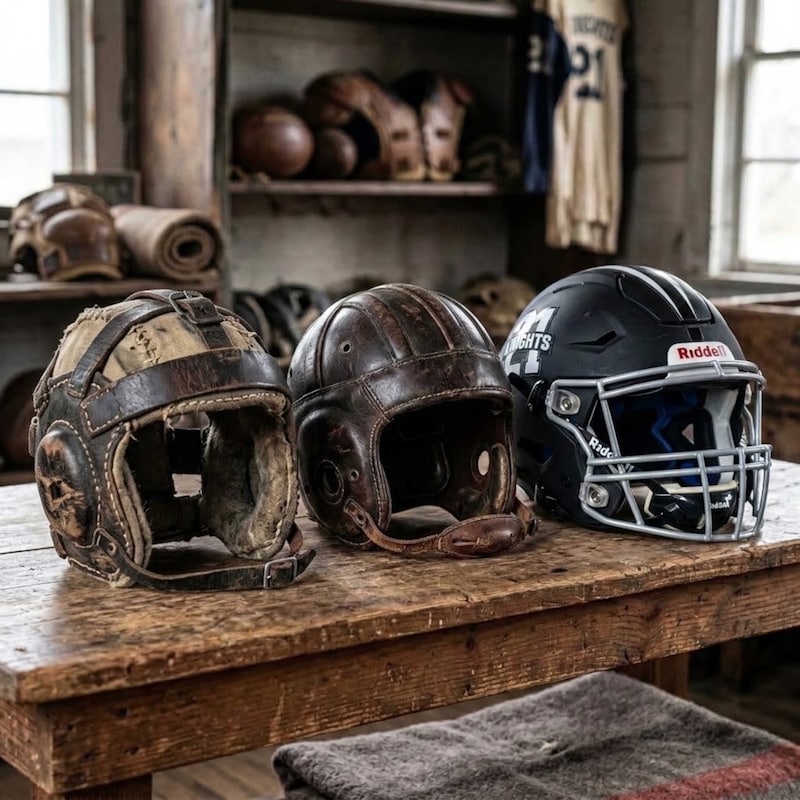
The narrative presented in this episode elucidates the often-overlooked contributions of Ralph W. Drury to the evolution of football headgear, asserting that he may very well be the true innovator of the football helmet. While historical discourse has predominantly celebrated figures such as Joseph Reeves and George Barclay as pioneers, our exploration reveals that Drury's head harness, utilized in 1893, predates these renowned individuals' acknowledged creations. We embark on a meticulous examination of the context surrounding early football equipment, emphasizing the ambiguity that shrouds the origins of protective headgear in this sport. The episode is enriched by insights from Timothy P. Brown of Footballarchaeology.com, who provides an in-depth analysis of Drury's significance within this historical framework. Ultimately, we aim to illuminate the complexities of football's past and correct misconceptions regarding its development, thereby contributing to a more nuanced understanding of the sport's heritage.
The conversation is based on Tim's recent article titled: Ralph W. Drury and Football’s First Helmet - https://www.footballarchaeology.com/p/ralph-w-drury-and-footballs-first
Don't forget to check out and subscribe to the Pigskin Dispatch YouTube channel for additional content and the regular Football History Minute Shorts.
Miss our football by the day of the year podcasts, well, don't, because they can still be found at the Pigskin Dispatch website.
Do you want more football history? Test your Gridiron Knowledge, we feed you Daily with our new FREE activity, The Pigskin Trivia Drive.
Grab a copy of our latest book, "Marooned," on the 1925 Pottsville Maroons NFL franchise saga.
*OR* Grab a copy of our book on Western Pennsylvania football history, "World's Greatest Gridiron Team" on the 1903 Franklin All-Stars
Drop us a line at PigskinDispatch@gmail .com and check out and subscribe to the Pigskin Dispatch YouTube channel.
Contact us directly at [email protected]
Miss our football by the day of the year podcasts, well, don't because they can still be found at the Pigskin Dispatch website.
The exploration of the origins of the football helmet reveals a captivating narrative, challenging the conventional understanding of its inception. Notably, while figures such as Admiral Joseph Reeves and George Barclay have traditionally been credited with the development of early headgear for football, a lesser-known name emerges from the shadows: Ralph W. Drury. This episode delves into the historical context surrounding Drury's contributions, emphasizing the ambiguity that often accompanies the documentation of early football equipment. Through a thorough examination of various accounts and artifacts, we uncover Drury's role in shaping the evolution of head protection in the sport. The discussion highlights the complexities involved in attributing credit for innovations, particularly when faced with a lack of definitive documentation and the prevalence of soft leather gear mistaken for helmets. Ultimately, this episode not only sheds light on the significance of Ralph W. Drury but also invites listeners to reconsider the narratives that have long been accepted in football history, urging a reevaluation of the figures who have impacted the game's development.
Transcripts
When you think of the very first football helmet, names like Admiral Joseph Reeves or Lafayette's George Barclay probably come to mind.
Speaker A: rd the classic stories of the: Speaker A:But what if the true pioneer of the gridiron headgear is a name that's been largely buried?
Speaker A:What if the timeline of football's most iconic piece of equipment actually hinges on a man named Ralph of your Drury?
Speaker B:Timothy B.
Speaker A:Brown of Footballarchaology.com joins us to tell the story of Drury in a moment.
Speaker B:Hello, my football friends.
Speaker B:This is Darren Hayes of Pigskind dispatch.com welcome once again to the pig pen, your portal puzzle football history.
Speaker B:And welcome to another Tuesday where we visit with our friend Timothy p. Brown of footballarchaeology.com for another piece of football history that's been brought to life from one of his tidbits.
Speaker B:Tim, welcome back to the pig pen.
Speaker C:Hey, Derek, Good to chat.
Speaker C:And I'm gonna do my best.
Speaker C:I'm gonna try to harness all my willpower.
Speaker C:Not to make a dad joke here,.
Speaker B:You know, harness all your power.
Speaker B:Okay.
Speaker C:Your willpower.
Speaker B:Well, that, that's a good segue into what we're going to be talking about because you wrote an article on Once Upon a Time called Ralph Drury and Football's first helmet.
Speaker B:I'm sorry, Ralph W. Jury.
Speaker B:I want to forget his middle initial.
Speaker B:Don't want to be confused.
Speaker B:So the football's first helmet.
Speaker B:What can you tell us about this?
Speaker C:Yeah, so this one's actually, I think, you know, kind of a really fun story.
Speaker C:Just so for a long time, there's been kind of three people who are credited with developing the first helmet.
Speaker C:So, you know, it's, it's.
Speaker C:When you get into this kind of stuff, it's murky because it's like, who knows who did what or, you know, a lot of things weren't documented.
Speaker C:You know, it's just, you know, we didn't have some of the systems we.
Speaker C:We have in place today.
Speaker C:But you also get into the issue of what is a helmet, right?
Speaker C:And the reality is nobody at the time really had a helmet because a helmet requires some kind of hard, mechanical protection, as opposed to most of what they were using were soft leather types of.
Speaker C:And other goods.
Speaker C:But anyway, so there's three people that are generally credited with the first helmet, and one of them was John Naismith, you know, basketball's inventor.
Speaker C:And he may have done some of it when he was attending McGill in Montreal.
Speaker C:You know, Playing Canadian rugby.
Speaker C:But he ended up at Springfield College in Massachusetts.
Speaker C: And in: Speaker C:And he's wearing what you know, is described as like a kind of like ear muffs and then, but it stayed on his head.
Speaker C:It's like wrapped in flannel.
Speaker C:And then there's kind of little chin strap or under the jaw strap that to keep it in place.
Speaker C: he was doing, he did that in: Speaker C:Now is that a, is that a helmet?
Speaker C:You know.
Speaker C:And then another guy that typically gets credit is a guy named Joseph Reeves and he played for, for Navy and he was a captain.
Speaker C: In: Speaker C:He ended up being a big deal in the Navy.
Speaker C:So high level admiral.
Speaker C:So it didn't hurt his brain too much.
Speaker C:But there's pictures of him wearing this like dome like device.
Speaker C:And it's in the tidbit or the images, all of these images from the tidbit, but it's just kind of this really odd shaped, kind of looks like a beehive stuck on his head.
Speaker C:And, and it's unclear what that was made of, you know, like how, how what materials that was made of.
Speaker C:Then another guy who oftentimes gets credit is a guy named George Barclay, who Pennsylvania guy actually started his career playing for Bucknell because he went to Bucknell's Academy.
Speaker C:They're kind of like their prep school.
Speaker C:And then, then he ended up going to college at Lafayette.
Speaker C: And in: Speaker C:You know, it's kind of leather with various straps.
Speaker C:And then you know, a lot of the early ones were, were protecting the ears because of cauliflower ear.
Speaker C:Just like you know, high school wrestlers get.
Speaker C:So there's that and, and then not too long ago, or actually it was actually a little bit, a little while ago, you know, friend who I've posted other pictures and used his stuff.
Speaker C:You know, John Gian Antonio on.
Speaker C:I came across a picture that he had showing a picture of West, a guy playing for West Point.
Speaker C:So it's in a West Point team picture and there's this guy wearing, you know, a head harness.
Speaker C:Right.
Speaker C:I mean it's not 100% clear.
Speaker C:It's not as clear as, as Barclays had head harness.
Speaker C:But it, it's clear he's wearing something.
Speaker C:There's a strap going across the top.
Speaker C:So you know, I mean, I'M willing to call it a head harness.
Speaker C:So he had this picture that.
Speaker C:And, like, nobody knew of this picture.
Speaker C:You know, nobody had identified this image with this guy's, you know, wearing this head.
Speaker C:Head harness.
Speaker C: But it's clear it was army in: Speaker C:In part.
Speaker C:Like, he initially identified it because Lori Bliss was their coach that year, and he had been a famous Yale player.
Speaker C:So, you know, he's only in.
Speaker C: he was only at West Point in: Speaker C: So, okay, this is: Speaker C:Team.
Speaker C:Team picture.
Speaker C:So I'm out there, I'm trying to figure out, you know, writing a book on history of football equipment.
Speaker C:And so I'm trying to dig in once again into, okay, what's the origins of the helmet?
Speaker C:And so I'm kind of doing a dive on Joseph Reeves, the Navy guy.
Speaker C:And in doing that deep dive on him, I find this picture.
Speaker C:Well, newspapers had trouble printing photographs at the time, so a lot of times they had used line drawings, and sometimes they'd have a photo and then they do a line drawing of the photo, and that's what would get published, the line drawing.
Speaker C: ew of the Army Navy game from: Speaker C:Right.
Speaker C:And so I recognized the outline, and it was like.
Speaker C:And.
Speaker C:And that line drawing told everybody's name, you know, identified each of the guys.
Speaker B:Ah, okay.
Speaker C:Then it was like, okay, so this is a guy named.
Speaker C:The guy wearing the head harness, this guy named Ralph W. Drury, who was a cleave or freshman that year.
Speaker C:And he ended up starting.
Speaker C:And then he started, you know, parts of the next.
Speaker C:He started some games that year and, you know, number of games the following year.
Speaker C:But he had actually played at UMass for two years.
Speaker C:And then, you know, which was typical oftentimes back then, like, guys would either play a couple years or go through their full college career and still then start as plebs at the.
Speaker B:Wait a second.
Speaker B:People would be on one college team on a different one.
Speaker B:Wow.
Speaker C:Yeah.
Speaker C:And especially going into army was probably the.
Speaker C:The most famous they would take.
Speaker C:I mean, these were students who had passed tests and all that kind of stuff.
Speaker C:But, you know, like Oliphant, you know, he played four years at Purdue, and then he plays four more at army, you know, and that's what, Late.
Speaker C:Late teens, early 20s, something like that.
Speaker C:All right, So, I mean, it wasn't uncommon.
Speaker C:There were teams that wouldn't even play army because of their policy, you know, in terms of veteran players.
Speaker C:So anyways, you know, kind of once we, I was able to identify this guy and I didn't really find much else about, you know, I didn't find information in the papers about, you know, him wearing this head harness or suffering a head injury or anything like that.
Speaker C:But, you know, I mean, I, I look at the picture, it's pretty clear to me what he's wearing.
Speaker C:But, you know, but interestingly then, you know, he played the following year.
Speaker C: So he played in: Speaker C: r because he ended up like in: Speaker C:Won the Distinguished Service Cross, a couple of Purple, you know, awarded a couple of Purple Hearts, and.
Speaker C:Yeah, so, I mean, he ended up having a very successful, you know, career as a, as an army officer, despite not making it through West Point.
Speaker C:But so, you know, at the end of the day, the question is really, you know, if you look, go to the tidbit and look at the, the image, you know, is that a head harness?
Speaker C:Right.
Speaker C:I mean, I think it is.
Speaker C:And, you know, if, if it's a head harness, then he's a year before George Barclay, who wore one that at Lafayette.
Speaker C:And then really the, the, the trend in football head protection was for the first 10 years, head harnesses were the direction.
Speaker C:Right.
Speaker C:I mean, pretty much every, if you were wearing head protection and all the manufacturers that made stuff, they were pretty much making head harnesses.
Speaker C:So that was really the, you know, the seed, if you will, for the direction of football head protection that eventually evolved into helmets that we know today.
Speaker B:Wow, that is pretty cool when you add a fourth name to that list, you know, because I, I know I've even written and talked about it before with Barclay, Reeves and Naismith before, but did not know about Mr. Jury until I, until I read your articles.
Speaker B:That that is pretty cool to bring bring him up.
Speaker C:Yeah.
Speaker C:I mean, so this is just one of those where, like, I didn't go looking for it, but I, you know, came across it in a, on a different, on a board that, you know, I'm a member of and so are you.
Speaker C:And so, you know, it, it's just like, it's one of those things that I see something like that and then I jot it down, and it's like, okay, I got to come back and look at this.
Speaker C:And so, because I was writing that chapter, that's why I looked into it and, you know, kind of stumbled across this, a drawing that identified who he was.
Speaker B:Well, once again, you know, we don't care how you got there, but once again, you.
Speaker B:You helped correct a piece of history that we maybe weren't.
Speaker B:Weren't thinking of or maybe were incorrect on.
Speaker B:So we appreciate that.
Speaker B:But you.
Speaker B:You do this quite a bit in.
Speaker B:In your tidbits.
Speaker B:You know, this is the only time I can think of, you know, probably a handful of them that.
Speaker B:Where you've brought some, shed some light on somebody that might be before somebody we already think has done something for the first time.
Speaker B:So how can people participate and take a look at your tidbits?
Speaker C:Yeah, yeah, I. I publish my stories on footballarchaeology.com it's a substack site, so a couple times a week, you know, one of my postings is this podcast, and then two or three others a week.
Speaker C:Just depends on how busy I am with the rest of my life.
Speaker C:And so you can subscribe, which means you'll get the.
Speaker C:An email every time I publish.
Speaker C:You can also just follow or bookmark and, you know, so there's different, you know, kind of levels of.
Speaker C:Of following, but, you know, whatever.
Speaker C:Whatever works for you.
Speaker C:Feel free to, you know, jump in that way and hopefully enjoy the stuff.
Speaker B:All right, well, Tim, we really appreciate you sharing this story with us and can't wait to talk to you next week about something new and exciting.
Speaker B:Old and exciting or old and exciting, but maybe it's new revelation of something exciting, which would be new.
Speaker B:Right.
Speaker C:All righty.




