Shownotes
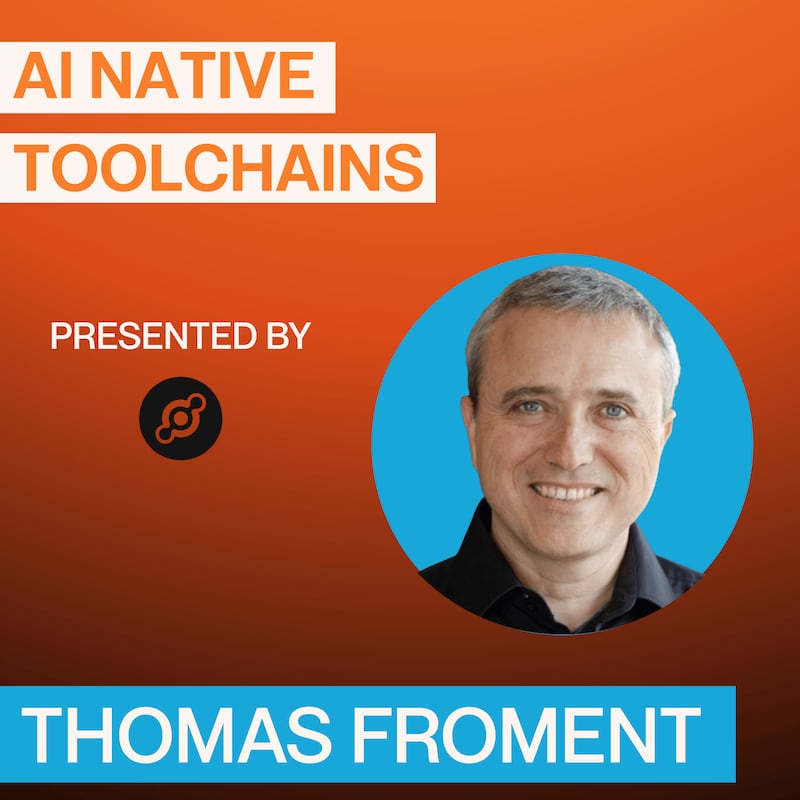
Thomas Froment, Program Manager for Development Tools at the Eclipse Foundation, talks about how AI-native, vendor-neutral tooling is transforming the way IoT and LoRaWAN developers build, test, and ship products.
In this episode, he explains what Eclipse Theia is, why it matters, and how open-source toolchains give companies more control, privacy, and long-term resilience than proprietary AI editors. Drawing from his experience leading Theia, Open VSX, and other Eclipse development-tool initiatives, Thomas breaks down the rapidly evolving AI workflow landscape and why embedded engineers should pay attention.
- What Eclipse Theia actually is: a framework for building fully customizable, AI-native development environments designed for embedded and IoT toolchains
- How Theia differs from VS Code and Cursor, including privacy, extensibility, transparency, and the ability to integrate hardware, local workflows, and cloud systems in a single toolchain
- Why open-source governance and vendor independence matter for companies developing IoT devices, especially in regulated or security-sensitive environments
- The explosive growth of Open VSX and the shift toward extension ecosystems not controlled by a single vendor
- The role of Model Context Protocol, AI agents, and domain-specific prompting as organizations integrate AI deeply into engineering and testing workflows
- How teams use Theia to build hybrid local-plus-cloud development environments that support hardware-in-the-loop testing, device constraints, and long-tail IoT edge cases
- Emerging use cases for lightweight and local AI models inside IoT products, and why customization of prompts and agent behavior becomes essential
- Collaboration tooling within the Theia ecosystem, enabling real-time co-editing, code reviews, and multi-developer workflows for embedded teams
- Why IoT and LoRaWAN companies need to think in terms of entire toolchains rather than just IDEs, and how open-source components allow a tailored pipeline from development through testing and deployment
Guest Links:
Transcripts
My guest today.,Thomas Froment,
is not a LoRaWAN native.
2
:He's the program manager over at Eclipse
Foundation, running the Theia program
3
:and walking people through
how AI is going to be integrated
4
:into businesses and specifically open
source tool chains like Theia.
5
:So we talk about the difference
between Theia and Cursor,
6
:what Theia can do, what it might be good
for if you're looking for privacy
7
:or customization or security versus
using some of the other tools out there.
8
:Fascinating conversation
with a guy deep into AI
9
:and really relevant to what we are doing
in the general IoT world.
10
:This show is sponsored
by the Helium Foundation.
11
:To check out what they're doing.
12
:Go to Helium.Foundation.
13
:Now let's dig into the conversation
with Thomas Froment.
14
:Thomas, welcome to the show.
15
:Thanks so much for coming on.
16
:So thank you for inviting me.
17
:I'm really excited
to have you on as kind of this
18
:not outsider to LoRaWAN,
but certainly not this LoRaWAN core piece
19
:is that you're coming into this
from an AI core piece.
20
:So let's probably start off with what
Theia is so people understand
21
:what we're talking about
before we get into it. Yeah. That's true.
22
:Thank you
I was going to start by a disclaimer
23
:saying, Okay,
I am not not a LoRaWAN expert
24
:I am working for the Eclipse Foundation
as a program manager.
25
:I'm working on the development tools
part of the Eclipse Foundation.
26
:And as you said,
Theia is one of the key project
27
:and AI capabilities of Theia
Theia’s platform is a framework
28
:to develop tools
and to develop IDE like tools.
29
:It's a kind of new generation
of tooling as the Eclipse Foundation,
30
:and it comes with a very exciting
and very great AI features.
31
:And like all the open source project
at the Eclipse Foundation under
32
:under no governance, so hopefully
we will come back to this later on.
33
:But yeah,
34
:this is also why I accepted to join you
in this podcast because yeah, I say, okay,
35
:we have people who have more expertise
on any on this topic,
36
:but we know many companies were already
using this technology to develop
37
:some tooling and building blocks
or to customize toolchains.
38
:And why Theai?
39
:I don't know if you want me to,
to go into all the details.
40
:Right now,
but it's an open source project.
41
:So we'll open source framework
with building blocks and fronts.
42
:To give you a few example,
when you start doing AI,
43
:you want some basic capabilities
like connecting to what we call MCP.
44
:MCP, the kind of standard way
of connecting to any system we have.
45
:You have thousands of systems
46
:if you want to connect to any tool,
a check system,
47
:a corporate system, or whatever
your drive, Google Drive, Google White,
48
:whatever you want and you want to cut
when you want to connect to this stuff.
49
:Of course,
you need some software components.
50
:And in the Theia open source project
you have this component
51
:you can integrate then and you can
make them part of your own toolchain.
52
:And exactly why I say, okay, it's
very relevant
53
:to show what you have in
as part of this framework.
54
:I just give the model Context protocol,
the MCP,
55
:as an example of what is available
among the building block of tier.
56
:But you have basically all the basic,
most important block.
57
:Of course, to drop agent as well.
58
:Literally today,
more and more people are looking at
59
:how to integrate
agent AI agents into their systems.
60
:And for
61
:that's again, yeah, it's
if you start from scratch
62
:or you try to develop it by yourself,
it's yeah, you will you will experiment.
63
:And basically today with all this tool
or it's moving very, very quickly.
64
:We have a lot of innovation.
65
:And every day even myself,
I discover a new tool
66
:and sometimes a new tool having
after a few weeks, millions of users.
67
:So people are really excited
about using this technology
68
:because it brings great benefits
in terms of productivity and so on.
69
:But it comes also comes with new risk.
70
:You guys are seeing usage grow yourself
right that you're seeing this in Theia.
71
:Yeah we see usage grow.
72
:This is one of the
you know it's a clear foundation.
73
:Most most of the time
people know the foundation.
74
:Thanks to the
the eclipse ID which is 20 years old.
75
:And but at the foundation
we have many new project.
76
:And this one here is one of the most fast
growing project we have.
77
:We are releasing, a release every.
78
:When I say we, it's not myself,
it's a community.
79
:It's a community based core of the open
source developers are delivering
80
:a new release every two weeks
with, more than 100 contributors.
81
:So you see, it's a very,
very active project,
82
:and they are basically integrating
the most recent AI features.
83
:People are working on new models,
84
:new start outs, protocols
that are coming all the time.
85
:So yeah, it's
one of the most fast growing.
86
:And along with tier
we have the marketplace called Open Race.
87
:It's also a part of my very Mr.
88
:Foundation
as a as working on the development tools.
89
:It's another open source project.
90
:But it's not only a project,
it's also a service.
91
:And basically it's an alternative
to the Microsoft marketplace of extension.
92
:I don't know if people are familiar with
this system, but basically the VS code
93
:extension mechanism is a kind of defacto
standard for extensibility
94
:mechanism and software
people are using VS code.
95
:Was attending
96
:the things conference recently
and basically everybody was using VS code.
97
:And we know that
and as extension mechanism,
98
:we are relying on a marketplace.
99
:And one of the key feature of to to be
compatible with the standard marketplace.
100
:So you can connect to as an IDE
or as a tool using building blocks.
101
:You can connect it and benefits
from the Microsoft bucket of extension,
102
:or you can use you a separate marketplace,
the VS code.
103
:Open this one.
104
:And in that case with tier
plus openly six,
105
:you have a fully independent and not no.
106
:You know you cut any risk to be one door
locked would say
107
:or to have any dependency
on a single though.
108
:And this is kind of the big thing here
is that a lot of folks are using VS code
109
:or cursor.
110
:I use cursor every day, and the argument
for using tier is the privacy piece.
111
:The security piece,
and that it's an AI native IDE
112
:versus vs code, which was an IDE.
113
:And then they kind of chucked AI into it.
114
:Am I getting that kind of right.
115
:Yeah, it's it's about privacy.
116
:And so it's so transparency I would say
transparency and seeing a customizability.
117
:I think when you walk in this domain
of embedded software, IoT and so on,
118
:you need to customize your environment
to your specific needs domains.
119
:You need to connect with hardware.
120
:And you have
you need to mix web based or cloud
121
:based systems with local systems
because you you have the test environment.
122
:Most of the time you need to run it
locally.
123
:All these use cases
need customization in your toolchain.
124
:In general.
125
:You say you see,
I say toolchain and not IDE.
126
:It's not only an industry
or my perspective.
127
:Most of the successful tool
that we see today, first of all, as you
128
:said, are ever proprietary
or single vendor tools.
129
:But beyond that, it's very,
very difficult to customize.
130
:Then if you want to make these kind of
131
:I read deployments
that are local, NLM or local tooling,
132
:plus a web based and cloud based tooling
and makes all of them in your toolchain.
133
:It's very tricky,
and basically most of them,
134
:you cannot do it
because you fully depend wander.
135
:And this is where open source makes sense.
136
:Here.
137
:You can as soon as you will need
to customize
138
:on your environment,
on your domain, on your test.
139
:Yeah. Okay.
140
:You see, what
this is for me is a key differentiator.
141
:And why and so enthusiastic
about even bicep.
142
:Yeah yeah.
143
:And it's tracking for me now.
144
:I mean I watch the YouTube piece
that you had the TM,
145
:but this idea that we're kind of looking
at the classic open source piece where
146
:and on the one side you get open source.
147
:You can do anything you want with it
transparent,
148
:you can customize it as much as you want,
go crazy because it's all right there.
149
:And usually that's more difficult to use,
150
:but more powerful is typically that's
my experience is like a neo non nerd.
151
:And on the other side
you've got stuff like cursor
152
:or someone like me who doesn't have
the coding experience comes in
153
:and I can say like, all right,
I'm going to do whatever with IoT,
154
:whether it's figuring out a codex or what
are codex with the LoRaWAN or whatever.
155
:Is this kind of the big general piece?
156
:Yeah, yeah, exactly.
I see you. Yeah. Okay.
157
:You you give the example of course of
they are very powerful tool and for sure.
158
:And that's why we see such a huge
and increasing traction
159
:to all these tool first,
but also to on TR and open V6.
160
:I was looking at the metrics.
161
:We have something like a ten times
the factor grow on open
162
:V6 traffic today we we this month
we expect to have more than 1 billion
163
:of download extension download
compared to 100 million last month.
164
:So you say in just one month the usage.
165
:And this is because all this tool,
like you saw that you mentioned,
166
:but not only cure.
167
:So I can mention many others heavily
depending
168
:on these extensibility mechanism.
169
:And they're relying on the translation
open v6 marketplace.
170
:Yeah okay.
171
:So with that is the background of what
what it is and kind of how it works.
172
:I keep an eye on the trends in IoT.
173
:And the thing I'm seeing now is that
174
:a lot of people are asking this idea,
like, how is IoT data being used by AI?
175
:And that starts to be something
that is well within your wheelhouse,
176
:where you say like, okay, here's
177
:how we see people
potentially using their in their IoT
178
:kind of workflows, whether it's
collaborating in real time or your ability
179
:to run locally, any of those things
kind of spark ideas for you to say,
180
:hey, Theia is a good use case
or good, good tool if you have X, Y, or Z.
181
:Yeah,
because as I said, it's not only an idea.
182
:You of course you say,
okay, it's known as IDs
183
:because IDs, one of the application
184
:that has been developed
with what we call the Theia platform,
185
:and we are exactly the same model
as the eclipse ID was in the past.
186
:Eclipse ID was not only an ID,
it was a platform.
187
:And we have exactly the same model 40.
188
:Yeah. Okay.
189
:So what is the perfect customer
190
:or really user of Theia
look like for you in the IoT space?
191
:Like what?
192
:What will they need
that only Theia can give, I think.
193
:Yeah, really?
194
:The part where I really believe
it's that we have a need.
195
:TR is about setting up development
and testing toolchains.
196
:Because as I said today,
if you want to, to take into account,
197
:first of all, your environment
constraints, plus privacy and the question
198
:on your dependency
some of the time, from what I see
199
:from the industry, people don't
really care today about vendors looking
200
:actually,
201
:because they know that they are
they are maybe taking some risk or
202
:relying on a single vendor, open source,
or even an appropriate solution.
203
:But at the end of the day,
tools are so powerful.
204
:That's okay.
205
:They are ready to take this risk.
206
:And they say, okay, let's go for it.
207
:But specifically on in the field of IoT.
208
:And again, I am not an expert,
but from my past experience,
209
:or even if with the current users
210
:or people who are members of the
of the working group simulation,
211
:I see that
as soon as they want to to, to customize
212
:and to make this hybrid configuration
with, with remote and local,
213
:also take into account, as you say,
the privacy and security constraints.
214
:Then they are
215
:basically forced
to look at something like TR.
216
:So this isn't the only solution of course,
but at least with TR okay,
217
:we can really look at how it is
done and check
218
:and make sure that they will put in place
this setup.
219
:And that's why I for me
the key word is toolchain.
220
:It's you have a tool chain.
221
:You you need to not only build
and develop your components,
222
:but you need to integrate with hardware
and software into your your environments.
223
:And for sure, if you have to do it today
224
:and from what I hear
from the people working in industry,
225
:not me, but from from them,
there is no perfect solution.
226
:Consequence
is that today the way they work is
227
:they are using the powerful tool,
even if it takes the risk to be locked,
228
:but it does not cover the full toolchain
and the full use cases
229
:that they need to take into account
to put in place and from the development,
230
:testing and integration environments.
231
:So for me, if you want to take
the global picture and global touch
232
:and problematic, it's good to have a look
at at this kind of project.
233
:Yeah.
234
:I mean, the more I hear about it,
the more exciting it gets.
235
:Or it's like, okay, this is I can see it
being this super powerful thing.
236
:If it's more than just this IDE,
if it's this whole kind of basically,
237
:it's the AI tree
238
:that you're going to hang all your stuff
on, whether that's interacting with it
239
:and writing code or having the thing
do whatever it is that you want.
240
:Let's talk a little bit more
241
:about the customization piece,
how to handle prompt customization.
242
:That's a really big thing,
certainly for for me as I go through.
243
:Is that something that you guys
are focusing on paying attention to?
244
:Of course, I don't say
it's it's a it's an easy topic,
245
:but for nobody, it's it is actually
if you you can of course you can generate
246
:you can do some via coding
and and get some great improvement
247
:in your productivity, new software
development, productivity.
248
:But at the end of the day,
if you are building a business,
249
:you have to take into account
these requirements.
250
:And so then you have the choice
between okay,
251
:developing a lot of things by yourself.
252
:And again
I don't say it's an easy task for nobody.
253
:It will be.
254
:Yeah.
255
:But integrating end to end software
on that way or a system and testing system
256
:design testing and and even integration
deployments
257
:is the kind of thing
you have to do anyway.
258
:So if you have just basically
you have the choice of having
259
:just a very small part of your issue
solved and giving you an improvement
260
:in terms of productivity
on one side or building.
261
:Yeah, your your business
with full and on integrated environment.
262
:But yeah, you are free.
263
:Yeah I understand what you say
when you say okay, it's for me.
264
:It's, it will cost maybe me a lot.
265
:If I want to start.
266
:You will.
267
:My next startup.
268
:Maybe you will pay
an additional cost at first.
269
:But in that case, you can use to add
that to it.
270
:It's basically is ready to use it.
271
:And really what you can really compare it
with overrides
272
:like so windsurfer, etc..
273
:Sure.
274
:So can you talk me
through the collaboration tools, the
275
:the ways that people have to work together
with things
276
:that might be different
from something they've seen before?
277
:Yeah.
278
:The collaboration tools, you mean? Yeah.
279
:We have a project which is integrated with
to called the Open Collaboration Tools.
280
:Open collaboration tool is really a way
for multiple developers to share
281
:the screen and develop and make, code
review, real time collaborative edition.
282
:So yeah,
this is a kind of additional features.
283
:And this is a separate open
source project, by the way.
284
:But like most of the AI features, it's,
285
:combination of various open
source project and you can integrate them
286
:all together
to, to bring these kind of new features.
287
:Yeah.
288
:And beyond that,
I don't know if you exactly what you,
289
:you expected some on this side,
but for me, what is interesting
290
:behind this kind of open source project
is for sure you have, this foundation,
291
:this opportunity to, to, to to enable this
multiple, companies collaboration.
292
:And it brings a lot of value.
293
:But because there we have
they are all bringing their requirements.
294
:And of course, sometimes you
you will find somebody ready
295
:to implement your, requirement.
296
:But most of the time the answer from
the community will be, okay,
297
:you want this. So feel free to to start
298
:the implementation
and feel free to contribute to it.
299
:I mean, it is super exciting
to think we're living through this time.
300
:That's this massive explosion of AI,
and there's all these tools out there,
301
:and this is one of them.
302
:And it's really important for businesses
to look at their practices and say, hey,
303
:how do we want to integrate AI into
what we're doing?
304
:And certainly for IoT businesses, it's
a big part of it.
305
:I know I've talked to
306
:whether it's the kind of one man shows
or the really big organizations.
307
:They're all saying, hey,
we're we're integrating the saying and,
308
:and there's a huge push in this industry
309
:to make sure it's fully integrated
because it's such an advantage to use it.
310
:Well, move your last use case.
311
:And I'm thinking of in terms
of thinking of this industry,
312
:is what I see more
and more people who say, okay, of course
313
:we need lightweight models
and not only local model is not only
314
:a question of privacy, but a question of
of size and resource consumption.
315
:Yeah.
316
:And I see some people from the community,
from today's
317
:community
who are experimenting this to see, okay,
318
:oh, can I manage to have local models
and then to bring these AI features
319
:this time, not only for my development
environments, but for for my products
320
:and to integrate into my product
some new AI features.
321
:And typically in that case,
you are typically in the kind of,
322
:use case
where you need to be able to modify
323
:and to to tune the source code and,
and the prompting.
324
:The it is, fully it's fully something
325
:that should be done collaboratively
326
:because, yeah,
if you rely on a vendor all time,
327
:the prompting part is the circuit party,
the part which is really hidden
328
:beyond the get the see, it's working
well again, it's great tool.
329
:But yeah, if
330
:you need to customize your prompting,
especially if you want to target
331
:this kind of specific deployment
with lightweight models and local models.
332
:Yeah, it is rad to see.
333
:And there's all these little constraints
that the IoT side has, especially LoRaWAN,
334
:where
there are the low bandwidth constraints
335
:and your resource constrained
and the rest of it and saying, okay, okay,
336
:we're not just working in that in an IDE.
337
:There's this entire tool chain,
as you're saying, to say, hey,
338
:from from soup to nuts,
how do we integrate this whole thing?
339
:That's got to be pretty exciting
to work in there.
340
:So very cool. Thomas,
thanks so much for making the time.
341
:I know you're really busy with clips.
342
:Thanks for coming on and explaining
a little bit about what the is doing.
343
:Thank you very much. Have a good day.
344
:That's it for
345
:this episode of The Business of LoRaWAN.
346
:I built this for you,
the one person in about 100,000
347
:who actually has an interest in how
this tiny little slice of the world works.
348
:Of course,
this isn't just about you and me.
349
:It's about everyone in law.
350
:When and how we can work together
to make an exceptional thing.
351
:LoRaWAN is a dispersed community
with little pockets of knowledge
352
:all around the world,
and most of them don't
353
:talk to each other as much as I'd like.
354
:So the first and best thing
we can do to make this show better
355
:is to get more guests
on who I don't even know exist.
356
:I want to talk to strangers.
357
:Strangers who are your friends.
358
:Please
introduce me to the most rad LoRaWAN air
359
:you know, or point on my way
or help reach out and give me a name.
360
:When it comes to running down
LoRaWAN guests, I can track a falcon
361
:on a cloudy day
if you can remember metsci.show,
362
:you can find me that's M-E-T-S-C-I
363
:dot S-H-O-W, metsci.show
364
:Okay, so sharing knowledge
by getting great guests on is the first
365
:and by far the most important thing
we can do to make this better.
366
:The next best thing for the show to do
is the usual stuff.
367
:Subscribe to the show, give it a review.
368
:Share it in your corner of the world.
369
:Again, that's Matt's sideshow.
370
:Finally, if you want to support the show
financially, you can do that over
371
:at support.metsci.show You'll see options
there for one time donations.
372
:If you really like this show
as well as an ongoing subscription option.
373
:If you think the show is worth supporting
for the long term.
374
:If you want to try LoRaWAN for yourself,
sign up for a MeteoScientific account
375
:at console.meteoscientific.com and
get your first 400 data credits for free.
376
:That's enough to run a sensor for
about a year if you're firing every hour.
377
:The show is supported by a grant
from the Helium Foundation
378
:and produced by Gristle King, Inc..
379
:I'm Nik Hawks.
I'll see you on the next show.


