Shownotes
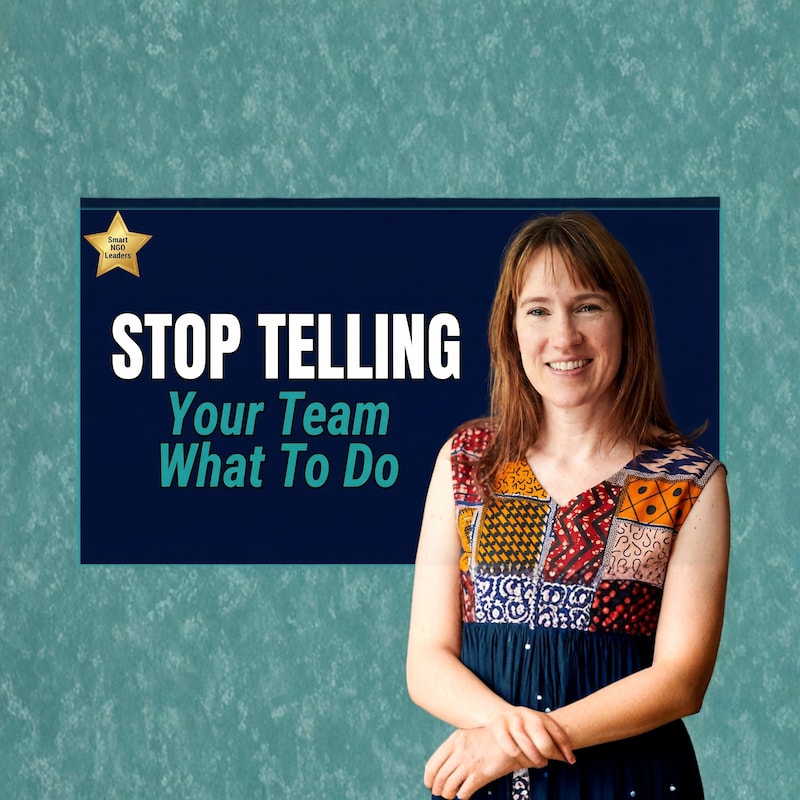
What if your team keeps coming to you with problems—not because they lack initiative, but because of how you’re leading them?
If you feel like you’re constantly answering questions, solving problems, and being the go-to for every decision, it can quickly become exhausting. You want a capable, proactive team—but instead, you may feel like the bottleneck. The truth is, many leaders unintentionally create this dynamic, even when they believe they’re empowering their teams.
In this episode, you’ll learn how to truly empower your team and reduce your own workload by:
- Recognizing the hidden beliefs that may be keeping your team dependent on you
- Shifting your approach so your team starts thinking, deciding, and taking ownership
- Building a more independent, proactive team that frees up your time and increases overall impact
Press play now to discover how to stop being the bottleneck and start leading a team that thinks and acts independently.
What Is Your Leadership Style? Free Quiz:
Want to know how to lead better? It starts by understanding your leadership style. To find out yours, take my free quiz “What Is Your Leadership Style?” - you’ll immediately find out your default style, how it may be impacting your team and a few practical ways to become an even better leader. Just click on the link fill out your quiz and click submit.
This podcast empowers international development and humanitarian NGO UN leaders to achieve high performance teams, fostering diversity, inclusion, and wellbeing, overcoming burnout and overwhelm, while maximizing impact and productivity.
Transcripts
If your team keeps coming to you with problems instead of solutions,
Torrey:you might think they need more guidance, but what if it's the way you're
Torrey:leading that's actually the reason?
Torrey:So how often do you use your team's ideas?
Torrey:When they come to you with a problem, do you tell them what to do?
Torrey:Or do you ask them what they think?
Torrey:Because many leaders believe they're empowering their teams when in reality
Torrey:they're doing the exact opposite.
Torrey:Hi, my name is Torrey and I'm the host of the Modern Humanitarian
Torrey:and Development Leader podcast.
Torrey:And after coaching over 900 leaders in the humanitarian and development sector, I've
Torrey:seen the same patterns again and again.
Torrey:Leaders who care deeply about their impact, who work incredibly hard,
Torrey:but who are unknowingly creating more work for themselves because
Torrey:of how they lead their team.
Torrey:And most of this comes down to a few common myths about empowerment that once
Torrey:you're aware of you can start to overcome.
Torrey:So today I'm gonna share three of the most common ones, so that you can
Torrey:start to recognize them and shift them.
Torrey:Because when you truly empower your team, everyone wins.
Torrey:Your team grows and takes ownership.
Torrey:You get your time back and your organization becomes more effective
Torrey:because people are no longer waiting on you to move things
Torrey:forward and to answer questions.
Torrey:Okay.
Torrey:Myth number one, my culture doesn't support empowerment.
Torrey:This is something I hear often from leaders especially
Torrey:who are taking my course.
Torrey:In my culture, the leader is expected to have the answers.
Torrey:Or in my culture, we tell people what to do.
Torrey:And while that may be true at a broader level, here's where the myth comes in.
Torrey:It does not have to define how YOU lead your team.
Torrey:I've worked with a leader who believed his team would never accept
Torrey:being asked for their ideas, that it simply wouldn't work in his context.
Torrey:But when he tested it, he discovered something surprising.
Torrey:Not only did his team have ideas, but many of them he found were better than
Torrey:the ones he would've come up with himself.
Torrey:And when he realized this, he also realized that it wasn't the
Torrey:culture holding his team back, it was his assumption about his
Torrey:team that was holding them back.
Torrey:So culture is not fixed, and within your team you have
Torrey:more influence than you think.
Torrey:Yes, some individuals may resist, but more often than not, people rise to
Torrey:the level of leadership they're given.
Torrey:Okay.
Torrey:Myth number two.
Torrey:Empowerment takes too much time.
Torrey:This one feels very real.
Torrey:It's faster to tell someone what to do than to coach them
Torrey:and ask them for solutions.
Torrey:But here's the trap.
Torrey:Every time you tell someone what to do, you train them to
Torrey:come back to you the next time.
Torrey:So while it may feel faster in the moment, it's actually creating more dependency
Torrey:on you and more work over the long run because you become the bottleneck.
Torrey:On the other hand, if you spend time upfront building your team's thinking and
Torrey:decision making, you create independence, you reduce future interruptions,
Torrey:you reduce repeated questions, and you gain back time in the long run.
Torrey:And here's something really important.
Torrey:Coaching doesn't have to take a long time.
Torrey:In fact, the coaching framework I teach uses just four key questions
Torrey:that can take up to five minutes.
Torrey:If your coaching conversations are taking too long, it's probably
Torrey:because you're still trying to solve the problem for your team instead of
Torrey:helping them think for themselves.
Torrey:Myth number three.
Torrey:Empowerment should feel good.
Torrey:This is the one that surprises people the most because we assume that if something
Torrey:is working, it should feel comfortable.
Torrey:But empowerment often feels uncomfortable, especially in the beginning.
Torrey:For your team, because they're not used to making decisions, and for you, because
Torrey:you're used to being the one who does.
Torrey:And this is where many leaders stop.
Torrey:Not because empowerment doesn't work, but because it feels
Torrey:uncomfortable and uncertain.
Torrey:So you start to doubt yourself.
Torrey:You might think, what if they make the right decision?
Torrey:You might think, what if they make the wrong decision?
Torrey:Or what if the quality drops, or what if I'm still responsible for the end result?
Torrey:So what do you do?
Torrey:You step back in, you take control again, and the cycle continues.
Torrey:But here's the shift, that discomfort doesn't mean something has gone wrong.
Torrey:It just means that you're doing something new.
Torrey:When you learn to expect that discomfort and allow it, it becomes more manageable,
Torrey:and over time it'll start to fade.
Torrey:So let's bring this all together.
Torrey:The three myths that often keep leaders stuck are, number one,
Torrey:that culture prevents empowerment.
Torrey:Number two, that empowerment takes too much time.
Torrey:And number three, that empowerment should feel comfortable.
Torrey:But when you challenge these beliefs, you will start to lead differently.
Torrey:You stop solving every problem.
Torrey:You start building your team's capacity, and you begin to create
Torrey:more impact with less personal strain.
Torrey:So here's a question to reflect on this week.
Torrey:Where might you be unintentionally disempowering your team because
Torrey:of the way that you're thinking?
Torrey:And what is that costing you?
Torrey:Because if this doesn't change, you'll keep working harder while
Torrey:your team stays dependent on you.
Torrey:And that is a recipe for more work, stress and burnout.
Torrey:And next week we're going to take this one step further because empowerment
Torrey:isn't just about your team, it's also about how you're either empowering
Torrey:or limiting yourself as a leader.
Torrey:Okay, until then, keep evolving.
Torrey:Bye for now.
Torrey:Are you the type of leader that tells others what to do, or do you let
Torrey:them figure it out for themselves?
Torrey:Understanding your leadership style is a first step to deciding what's
Torrey:working for you and what's not.
Torrey:To find out your leadership style, take my free quiz: What is your leadership style?
Torrey:You'll immediately find out your default style, how it may be impacting
Torrey:your team, and a few practical ways to become an even better leader.
Torrey:Just click on the link in the show notes, www.aidforaidworkers.com/quiz.
Torrey:Fill out your quiz and click submit.
Torrey:So what are you waiting for?
Torrey:Go to www.aidforaidworkers.com/quiz and discover your leadership style now.
Torrey:Your team will thank you for it.