Shownotes
When the main oncology hospital in Kharkiv was bombed, patients started dying — not from the bombs, but from losing access to their chemotherapy. Ross Skobronski, a Spanish-Ukrainian mathematician who had come to Kharkiv to visit family just one month before the full-scale invasion, watched and waited for someone to respond. No one did. So he did it himself.
Today, Mission Kharkiv serves more than 3,200 oncology patients with full treatment courses across Ukraine, operating a cold chain logistics system out of a bunker four metres underground. Ross and his team of 62 deliver chemotherapy to hospital doors on the day of each patient's session — a level of precision and responsiveness that puts much larger organisations to shame.
In this conversation, Ross talks about how he built Mission Kharkiv from scratch, why his mathematical training shaped his problem-solving more than any humanitarian manual could, and what he sees as the fundamental disconnect in how the sector talks about localization. As the chair of the NGO platform's steering committee in Ukraine, he brings a sharp outsider's perspective on the dynamics between international and national NGOs — and why he doesn't believe power will ever be shared voluntarily.
In this episode:
- How a $40 million pharmaceutical donation launched Mission Kharkiv
- Building cold chain logistics in a city under siege
- Why "naivety" might be the most undervalued quality in humanitarian action
- The gap between localization rhetoric and reality on the ground
- Why Ross believes power must be taken, not shared
- A proposal for a localization accountability framework with measurable indicators
- What it would take to replicate Mission Kharkiv in other countries
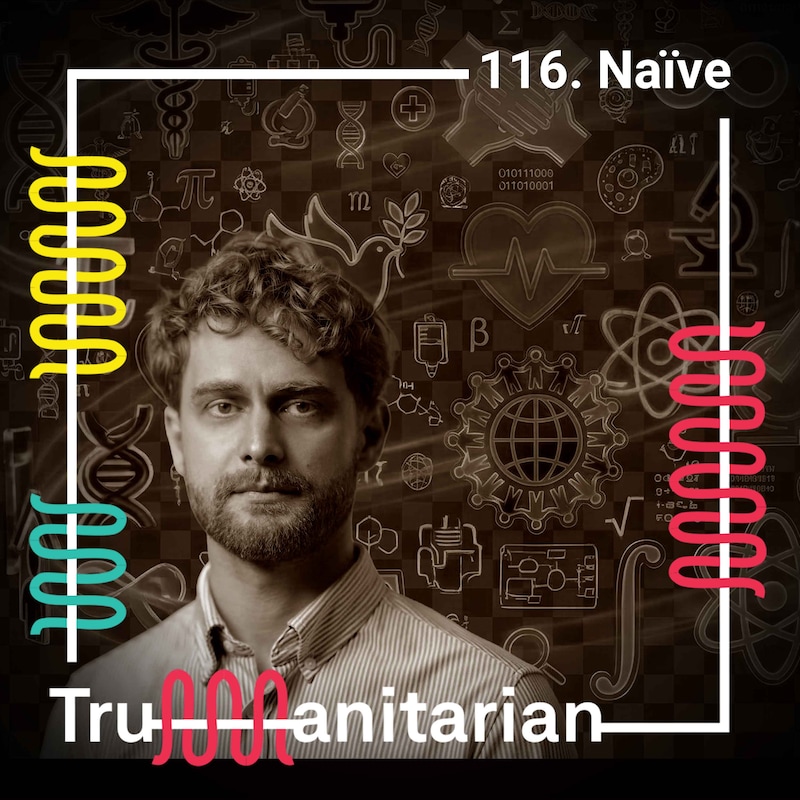
Guest: Ross Skobronski, Founder and Director of Mission Kharkiv and Chair of the Steering Committee of the NGO Platform in Ukraine.
Transcripts
Lars Peter Nissen: My guest today is Ross Skobronski. He's the founder and a director of Mission Kharkiv and the chair of the steering committee of the NGO platform in Ukraine. Ross is a Ukrainian-Spanish mathematician who happened to be in Kharkiv when the full-scale Russian invasion happened. What followed is one of those stories that at the same time defy and define the humanitarian sector. When the main oncology hospital in Kharkiv was bombed and people were dying, not just from bombs but also from not having access to their chemotherapy, Ross and his team stepped in. Today, they serve more than 3,200 oncology patients with full treatment courses throughout the Ukrainian territory, operating out of a bunker four meters underground, running a complex cold chain logistics operation to ensure that patients can get their treatment.
Mission Kharkiv's work is both impressive and innovative, and this is such an interesting conversation, not just because of the work they do, but also because of the unique perspective Ross brings to the table. Being unexposed or naive, if you will, to the ins and outs of the humanitarian sector prior to his experience with Mission Kharkiv, Ross has a very clear-eyed and sharp perspective on the rest of us on the humanitarian sector. And his role as the chair of the NGO platform gives him a unique insight also to the dynamics between international and national NGOs, what power sharing looks like, whether it's possible, and what a strong partnership looks like.
I will stop here because it's a conversation that actually speaks for itself, so I'm not going to share much more about it. But listen to it, and when you have listened, please share it around on LinkedIn, make some noise, send it to colleagues who might want to listen to it. I think it is an important conversation for us as a community to reflect on. You're also more than welcome to give us a financial contribution. Go to our website, trumanitarian.org, give us a one-off amount or sign up for monthly contributions. We deeply appreciate it; it helps us produce this content. So if you do like the pod and you are in a position to support, please do so. As always, the most important thing is that you enjoy the conversation.
Ross Skobronski, welcome to Trumanitarian.
Ross Skobronski: Well, thank you. Thank you for having me.
Lars Peter: We're sitting here; it's a lovely spring day in Geneva. You have just come from Ukraine to Geneva to participate in the Humanitarian Network and Partnership Week that takes place this week. You're the founder and director of Mission Kharkiv, and you're also the head of the steering committee of the NGO platform in Ukraine. So it's great to have you here.
Ross: It's a great pleasure to be here.
Lars Peter: So tell me, Ross, what is Mission Kharkiv?
Ross: Well, Mission Kharkiv is a national NGO, and we try to address the gaps that usually fall through the cracks of the system and are sometimes perceived outside the humanitarian cycle, especially in the emergency phase, like oncology patients and some specific interventions for mental health as well.
Lars Peter: So it's especially people who are sick and need ongoing medical assistance, and that can be difficult in a war zone?
Ross: Yeah, it's just to ensure the continuity of care during the humanitarian crisis because these patients usually have scheduled their treatment like for the next month. So when there is a conflict, it gets interrupted and the continuity is just broken by displacement, by bureaucracy in another country when they become IDPs. So we are trying to bridge that gap with Mission Kharkiv.
Lars Peter: So it's really about continuity of treatment?
Ross: Yeah, continuity of treatment. Like, for example, for oncology patients, 80% of our cases are chemotherapy, and it requires like five or sometimes six sessions during five months, for example. So in order to ensure that, we need to ensure that there is a proper logistic setup for medication. This is cold chain medication, so apart from that, you also need to ensure this cold chain during conflict. So yeah, these are the things that we do.
Lars Peter: And you're originally a mathematician. So excuse the question, but what the heck does a mathematician know about oncology?
stion. Yeah, I was working in:Lars Peter: We'll do another episode on that later.
I went to Ukraine in January:Lars Peter: But I would imagine that in the situation in Kharkiv, you could have chosen to do many things. There must have been many needs that were unmet. How did you choose this particular entry point?
Ross: Yeah, and many people think that maybe there is some personal relation, right, to oncology. But it's not like that actually. Well, since the beginning, I knew that I'm going to be doing mostly health-related...
Lars Peter: Why is that?
Ross: Because the majority of my friends are doctors, my family were doctors, and I was just seeing first-hand how they are suffering. So that was the personal part, right? But I started with pharmaceuticals. That was the only purpose, right? To bring pharmaceuticals, to classify them, because during the initial phase, like, the humanitarian aid in pharmaceuticals was sometimes just like a soup. Everybody was sending just everything, and you could find, I don't know, from Paracetamol to Morphine in the same box, right? And they were written not in Ukrainian, so you needed to classify and to also help beneficiaries to understand how to take these pills, right? So we became like a sort of pharmaceutical hub in Kharkiv and we were doing this service for other organizations as well. Whenever they didn't know what to do with the medication, they sent it to us, we classify, we send back to them.
Lars Peter: So really, it's medical logistics?
Ross: Yeah, medical logistics from the beginning. That was like... I decided to not do everything but to do one thing, focus on it and do it right, like as much as efficient as I can. So I had the team of pharmacists helping me and lots of volunteers. And in April '22, the oncology... the main oncology hospital in Kharkiv was bombarded. And suddenly we were just overflowed with requests for people that needed assistant, and basically they were dying because they had no access to medication. And we were thinking, okay, someone's going to help them, you know. The UN system is there; there was a lot of actors already at that point, right? It's the second month of the war. But the request just kept coming and coming and coming, and I saw no response, absolutely no response. Like, I've seen people dying because they suddenly interrupted their treatment.
So, okay, this is how our first focused project appeared, actually. So, and the purpose was to get people out of Ukraine, especially those patients who cannot receive their treatment inside the country, and get as much medication in as we can for those who stay and for some reason cannot leave. That's it, that was the whole purpose. It was quite difficult to find the resources and to fundraise for this as well... Well, actually, we did not fundraise. We just kept requesting medication.
Lars Peter: Who did you request medication to?
Ross: Everybody. Everybody. I didn't know whether people in Spain, people in... I used all my network, all... and then the network of my network. So it was just leverage. And my purpose was sending the request everywhere and coming to interviews and speaking to people that are close with pharmaceutical industry, that are close with the NGO world as well. So I spoke to everybody. And the first support came from actually a pharmaceutical company. And they decided to donate a huge amount; it was $40 million worth of chemotherapy. And that's how it all started. That's how it all started.
Lars Peter: Okay, so if you have $40 million worth of medication and you have a society like Ukraine, the Ministry of Health is going to have opinions about this.
Ross: Actually, they did not have any opinion.
Lars Peter: Really?
Ross: Yeah. I mean, they were, I think, quite busy with other things, and we were since the beginning completely transparent of what we do. You know, we establish this system where you can track where each individual packet of medication, which serial number, which expiry date, which goes to which patient with which cancer type, when was it delivered, where was it, and when is going to be the next one. So it's like complete transparency. And we just open that to donors and to interested stakeholders, and that's it.
And also, very interesting is that $40 million sounds like a big amount of money, but that's also a big amount of volume of medication that is cold chain, that is... must be stored between 2 and 8 degrees in a city under siege that is bombed, that there are blackouts, and not the best environment to secure medication.
Lars Peter: No, it's a perfect storm, I'd say.
Ross: Yeah, yeah, exactly. So we builded our own place that we call right now "the bunker." It's 4 meters below the ground. We reconstructed a Stalin-era chamber that is in the center of the city. We, together with logisticians from MSF, we developed our own SOPs to run in this place. We had this autonomous generator that we can launch remotely. So it is an autonomous place that is still serving us a lot. And yeah, this is part of our protection now.
Lars Peter: It's a fantastic story. You say "we." How many people work with Mission Kharkiv?
Ross: Right now, we are 62. 62, and we are hiring more for project implementation right now.
Lars Peter: And MSF supported you with knowledge on med-logs or cold chain management or...
was huge support in September:Lars Peter: If I can just return to your link to the authorities. So the Ministry of Health, you fly under the radar by and large, I can hear. You're transparent with them and they say that's great, we need this medicine in here. But you must have a link... you don't go straight to the patient; do you link up with individual doctors, do you go to the hospitals? How do you link to the medical sector?
Ross: Yeah, that's... that was interesting discussion that we had with the lawyers as well to establish that, right? Because this medication is prescribed. I mean, it's chemotherapy; it's basically poison. Actually, it is poison, because chemotherapy was invented as a poison. And it's a prescription medication, so we establish agreements with hospitals. And instead of doing a prescription, they do a prescription to take it from us, from Mission Kharkiv. So to avoid duplication, right? Because if a patient gets a prescription, he can buy it, and he also can receive it from us and sell one. So, I mean, it's a fraud, right? So in order to avoid that, we established this policy that the doctors, they have a choice: they either prescribe the medication officially if there is an official line of supply for that type of active substance, or if they know that Mission Kharkiv has this medication, because we're fully transparent on our inventory. They say, "Hey, okay, so we're going to prescribe and you can get it from Mission Kharkiv."
Lars Peter: So the patient comes and picks up their medicine from you? You're a pharmacy?
Ross: We're like a pharmacy, but we're a delivery pharmacy. The delivery is done on the same day when the chemotherapy session is taking place. So we deliver the medication in front of the doors where the person is scheduled to have the session.
Lars Peter: It's a hugely complicated operation.
Ross: You know, now that I'm saying that, yeah, it is complicated. But at that time, it was like, okay, I think this is the most efficient way. Let's do it this way, you know? But right now we have our processes, and these are some of the most established processes that we have.
Lars Peter: And how many patients do you serve?
Ross: Right now, we serve... up to now, more than 3,200 patients.
Lars Peter: That's cumulative?
Ross: That's cumulative across these years, but those are the ones who actually received a full chemo course. Our total outreach for patients in general medicine is over 60,000 people already.
Lars Peter: And are you geographically... how much do you cover now?
Ross: We are nationwide operative. In the process of registering in Spain right now due to our, like, historic attachment to this country. But our only operations that we run right now is in Ukraine, even though when I'm talking with humanitarian professionals, every time I hear that our work is needed in other countries as well because these problems... it appears to be a nightmare for a lot of actors. For OCHA to coordinate this and this continuity of care, it is still a problem.
Lars Peter: So it's such a fascinating story, and I'm just full of admiration for what you've done. I think that's the first thing I want to say. I mean, it is such an amazing achievement to get an operation that size off the ground under those circumstances. So you and your colleagues can be extremely proud of that. The question on my mind is, do you think you would have been better at it if you had worked with MSF for three years before that and not been a mathematician?
Ross: Well, thank you, first of all. I don't know.
Lars Peter: That's what we do here.
Ross: Yeah. I mean, I have admiration for MSF, you know, how they operate and what they do. But I'm not sure that I would be able to launch this having traditional lenses, you know, on my eyes. I don't think so. I would be thinking, "Okay, so who can I address this problem so they can try to pick up with it?" instead of doing it myself, you know?
Lars Peter: Yeah, that's a bit what I'm after. And of course, I'm not picking on MSF; they're fabulous, right? They're fantastic at what they do. But there is something really, really interesting and profound about your story in terms of the learning curve you went through. And it sort of raises two questions. Can you know too much about humanitarian action and too little about a context, in a sense where you sort of had a very deep contextual understanding but a more shallow understanding of the way we think about humanitarian action? And secondly, would you be able to replicate this in other contexts?
Ross: We are thinking in that direction, actually, right now. We are systematizing what we did, our operations that you said they sound quite difficult and apparently, maybe they are quite difficult. So we are systematizing that, and we definitely would like to do that. I was visiting Pakistan and I talked with oncologists there because I couldn't resist but to talk and to understand what's the situation there. And they were amazed; they were not aware that such project in humanitarian world exists, right? And they were basically asking us to come and open Mission Kharkiv in Islamabad, for example. So it's definitely something that we want to dig in and explore, but in order to do it on sustainable basis, right, it cannot be done immediately, unfortunately. We need to study it and do it properly. But we were invited to run this in Mali, in Malawi as well, since there are acute problems with oncology there as well. So definitely, that is something that we're looking in, and this is a direction of our thoughts, of what I'm thinking as well every day.
In terms of the learning curve, yeah, I think the fact that I was very distance from humanitarian action before, I was doing mathematics, it really influenced the approach. And even though there is no mathematics involved in the processes, actually... like I was doing completely other stuff in academia. But the way you are trained six years in mathematics is, they teach you to approach these complex problems and you don't supposed to give an immediate answer, but you're supposed to give an answer somewhere, you know? So it's a way of thinking of like, okay, you do not surrender under big problem, just keep thinking, keep digging and try to find a solution, and the solution will come. So I think that helped me a lot, actually.
Lars Peter: It's interesting. You know, in the medical sector, you talk about a naive patient as a patient that has not been exposed to treatment before. And in a sense, you were naive to the humanitarian system. And when I hear you talking, and not naive in the sense that you're naive about the world, that's not what I'm saying, but in terms of the learning that we have had, you were unexposed to that. And so what I'm thinking is, do you need a naive Malawian and Pakistani and somebody else who approaches it with fresh eyes, with different glasses just like you did to get it right? Or to what extent is what you have done in Ukraine... to what extent is that replicable across the world?
Ross: I would like to believe that being naive is actually part of being a humanitarian, right? This should be a crucial part because there are people suffering; let's alleviate this suffering, let's help them. And this can be perceived as naive. So but everything starts with that, and I think it's important to maintain this push within the Mission Kharkiv's team; we always try to maintain, we always try to be close to our beneficiaries, and we have several ways of doing that, actually, very like management-style. But yeah, this is something that is likely replicable definitely because the resources are there. The resources are there. You have pharmaceutical industry, you have NGOs, huge NGOs that specialize in pharmaceutical logistics, and you have us, like Mission Kharkiv, who actually understand this micro-logistics level and cold chain logistics within the humanitarian setting. So it is definitely replicable; it's a question of... I was about to say "humanitarian reset," actually. Yeah, because we always say, it's a question how you define life-saving operations, no? And if you arrive to a refugee transit center, for example, and you deliver a hygiene kit to an oncology patient, that's not truly life-saving, you know? He needs to continue his treatment, and that would be the life-saving. Okay, and I think right now in the humanitarian, from what I'm seeing, we have an immense gamma of niche in NGOs that can provide unique expertise. So it is a question of dedicating a slight amount of resources to them and opening and not just blocking that "Hey, oncology is development; we're not going there."
Lars Peter: Just to unpack the gamma thing, what's that?
Ross: Well, we have...
Lars Peter: What does "gamma" mean?
Ross: Gamma... it's a variety. You have a variety, a huge spectrum, right? Spectrum is the right word. A huge spectrum of NGOs that shaped their activities to a particular niche, right? Because it's always better to do something focused and do it right than just disperse yourself.
Lars Peter: So we call them "one-trick ponies" in this show.
Ross: Yeah, yeah, exactly. Or one-trick ponies, and there are many local and hyper-local one-trick ponies that are doing amazing job. But we need, instead of like usual due diligence processes, like also give them a chance of pursuing their perhaps naive idea, but they could be able to address the gaps immediately on the ground.
Lars Peter: Yeah, I think your story raises questions about how we work with preparedness and how we work with what we call localization, which is a word I don't particularly like. You're also the head of the steering committee of the NGO platform in Ukraine, and that is a platform that brings together INGOs and national NGOs. For you, and I'll continue to call you naive as a compliment, not as a criticism, right? For you as a naive humanitarian, what strikes you about that platform? How have you seen that play out?
Ross: Well, when I first arrived to the platform, because I became the head of the steering committee just in one year. We joined as an organization, as a member, and the next year I got elected to the steering committee. And first of all, I remember my thoughts on the first meeting with all the members, 130 members or so. I was amazed by the amount of NGOs there, international NGOs and national NGOs. And the types of different thinking that there is between INGOs and national NGOs. They do think completely differently, like national NGOs are there to address more pragmatic issues, like "We need to deliver seeds somewhere, can you help us?" and bringing like operational issues, actually. Whether the INGOs, it's more about information sharing and sometimes opinion sharing on localization or on other topics, but more in a higher level, you know, in more abstract level. So it is very interesting to see how the platform brings these two perspectives together, right? And it's like actually a melting pot where... where this dialogue between INGOs and national NGOs sometimes, not always, sometimes occurs in a very productive way. So the national NGOs get to learn the system, but the INGOs actually get to learn what is happening actually on the ground in different sectors that they don't operate perhaps. So it's a wonderful thing to bring humanitarians together, actually. And I think this would be the first purpose. Then, it's when they agree or disagree on some particular direction of working, like "Okay, let's pursue this year, let's address advocacy and government relation strongly this year," right? "Let's prioritize inside-country advocacy for the external one." So instead of focusing to Geneva or Brussels, let's focus on Kyiv and try to perhaps educate the authorities as well because they must be educated; they don't know about the humanitarian world as well, which is actually a huge problem. Like you said that you don't like the word localization, but one of the thing that I'm seeing on the ground as well is that actually a lot of INGOs and some of the big international actors, they're converting government workers to project managers. And I don't think this is part of the localization. They come to a department of, I don't know, social policy or social protection and they say, "Okay, write us a concept note because we have this funding window and you should prioritize this and this activity." And instead, they should be listening to what actually the government needs.
Lars Peter: Yeah, I should clarify, of course, that when I don't like the word localization, it's because I think the way we discuss it in Geneva and across the humanitarian sector is disingenuous. For me, localization would entail a real shift of power towards the people we serve, towards the national civil society. And that's not what I see. And I think what you just explained is one part of that masquerading as localization but really maintaining the power.
Ross: Yeah. Well, actually, you... almost my life span in the humanitarian world, I'm a newbie here and naive newbie, right? But what I see during these four years I'm in, I don't think this power sharing is possible, actually.
Lars Peter: Interesting.
Ross: I don't think it's possible because this is how the system is set up. The power and the leadership must be taken; it's not something that you expect to be shared with, right?
Lars Peter: But let me challenge you on that. It's a really interesting perspective. But your organization, are you being run by internationals?
a in Spain; I'm Spanish since:Lars Peter: But wouldn't you say that you're good example of localization? Homegrown, in a sense. I mean, yeah, you're an expat but you're also Ukrainian.
Ross: Yeah, I'm... I do consider myself Ukrainian as well. I think we are definitely a national and local organization because it's rooted in our name, it's rooted in our operations and the city that where we started and the problems of that city. We were not brought from outside inside Kharkiv to start some particular set of activities; we started in Kharkiv hearing local problems. So I think that's what defines a local organization. Because, I mean, it can be run by expats and international people, but then it can be transpassed to someone else who is local, right? It really, I think, the indicator for being a called local-national NGO is that you start from not just to trying to catch some call for proposals grants and allocations, but you start from the ground and trying to push that problem.
Lars Peter: Exactly. I think that's it, right? It is that the key decisions, strategic and operational and tactical, of Mission Kharkiv are made with a deep responsiveness to the situation in Ukraine. And for me, that's the key localization. So how come you managed to do that? When you see... what enables local actors to operate like that? Where does that power come from?
Ross: And that power can... I think it comes combined because you cannot operate in silos still, right? You need international community and you need your voice to be heard. So what I did is I became sort of a bridge. I was sharing what's going on in Kharkiv with Spain nation, for example, right? And I was able to translate in the way so Europeans will understand the proper the problems of local people. And we did our own crowdfunding and fundraising, and the power is given by the people's outreach, like usual taxpayers. They're reaching out and saying, "Hey, I see your problem, I want to support it, how can I do that?" And that what gave power Mission Kharkiv, right? But we did not... we was not expected that there's going to be a big organization with a historical mandate coming and saying, "Hey, we're going to share power with you." We were not even dreaming about it, and I don't believe in it, actually.
Lars Peter: So today, where does your funding come from? Is it still in-kind donations from pharmaceuticals, is it private citizens, how do you get money?
Ross: We actually quite diversified our fundraising. We still have crowdfunding component, which we consider crucial for our independence. We have donations from American organizations, like we cooperate a lot with organizations like Direct Relief and AmeriCares, right? That are health-focused global big NGOs that do provide us with pharmaceutical donations, right? We also are in consortia with other NGOs in Ukraine. We also have our own fundraising, like for example, once we built our cold chain warehouse, we can rent the chambers to other NGOs. And this is one way to fundraise as well. As I do believe if there are processes inside an NGO that you can set it up in a for-profit way and transform all this profit to the program, this is a one of the most sustainable way instead of relying on country-based pool funds, right? So the last thing is the country-based pool fund. So we really not prioritizing it at all.
Lars Peter: And so you haven't had the experience that you described before of somebody coming and saying, "Hey, we'd like you to do a concept note and you need to put A, B, and C in there."
Ross: We did have the experience that approaching us, but we had maybe the luck that they we were listened to, you know? It was an American organization approached us, AmeriCares. And they were like, "How we can support you?" And we just saying, "Well, we need to construct the bunker, we need to set up our logistics and that, that, that." But we had this luck they were not influenced influencing us at all on what we were writing in the concept note, perhaps because that is not a traditional humanitarian actor. I don't think how that would be part of the if there was an organization part of the INGO community, you know? That would be different because there was a due diligence, right, and things like that and the common indicators and that could actually break break what Mission Kharkiv became right now.
Lars Peter: So if we look at where you are now, you have been hugely successful, I would say. In a couple of years, you established a very specialized NGO helping a highly vulnerable group of Ukrainians, you cover the whole national territory, it sounds like your financial situation is fairly stable, you have a team of 60 people, you've done groundbreaking work in terms of medical logistics and, you know, door delivery of treatment. That's fantastic. What's the next step? What are you... strategically, where are you aiming for the next couple of years?
Ross: Yeah, well first of all, we have a program with beneficiaries outside Ukraine already because we developed this big mental health program of ours that we address also oncology patients, their relatives and medical professionals, also we do sometimes prisoners of war returning to Ukraine. In the psychological support side of things?
Ross: Yeah, mental health support. So right now we are operating as well in the Netherlands; there is an organization reached out to us and saying, "Hey, there is a Ukrainian diaspora and there are some cases with cancer, can you include them as well?" And, "Okay, yeah." So we have provided this service to Ukrainian diaspora abroad in mental health support. So right now we are registering in Spain, and it will be interesting to work with the diaspora there as well. And as I said, replicating our experience and contrasting and testing our SOPs in other countries that that would be of huge interest, or partner with a local organization in Mali, Malawi, Pakistan, you know, and share our experience. You know, we have no problem with sharing the protocols, the SOPs that we that we have, and help them navigate, you know? This is one way of working, and if they can set it up just following our instructions, that is also a good way to localization. But, I mean, Mission Kharkiv is a hard-skill organization; we don't have mandate for coordination or localization; there is... we just do hard-skills things. And that's it.
Lars Peter: And now you're here in Geneva for this week to participate in HNPW. Why is that a priority?
Ross: I think I have experience to share in in the way that I entered humanitarian world and my perspective on how I see these localization talks and some safety concerns for volunteers and humanitarian workers in Ukraine because I was I was one of the volunteers who were also going to the frontline when everything started, right? So sharing that perspective and I'm not here to mostly represent Mission Kharkiv, I'm here as a head of the steering committee, as a Ross as well with my own opinion on localization and humanitarian world. So I think it's important to bring sometimes outside perspective. And it's very interesting to talk with humanitarian professionals that have been there for decades and also learn from them.
Lars Peter: What are the three to five things you'd like the humanitarian sector at large to reflect on or to learn from your experience?
Ross: Get back to being naive, I think. In a sense that listen to local actors sometimes; I mean, almost always, they're the ones who actually understand the immediate needs, particularly during the emergency phase. And it will be great for them to push them and to empower them to not just fall in the traditional humanitarian cycle, right? And this is like the message for local leaders across the world, definitely. But for the humanitarian system, you know, I learned that localization, the word itself had been around for more than 20 years, right? And when we are talking about this process of localization, I really, and maybe that's my mathematical background, but we need to measure a progress somehow. So I really think that we should develop, the humanitarian, the global humanitarian community, a sort of localization accountability, localization commitment accountability framework that can be measured. Because it's very hard to to do, but it's very needed, and I think it's already the time to to do it. It doesn't mean that there's going to be power sharing, but it's something that will allow to speak to the global humanitarian community in a in a language that they understand with indicators. If we can rate international agency, INGOs, national NGOs in terms of their commitment to localization and readiness as well, that will allow just like a competitive process to appear, you know? And it's not always the fault of the INGOs as well because they there are much worse things than localization not happening, right? For example, fraud and corruption on the on the ground. In case the national NGOs given the resources and given the funding cannot observe it and and just making fraud. And also it's a government as a mediator; it's also an important actor that is getting regretted sometimes, right? Because if some if there is no right policies in place, localization will not happen as well. So there's three pilLars Peter. And this is my main message like three pilLars Peter: you need to share power in terms of funding, you need the capacity of local actors being controlling understandable way, and you need to measure the preparedness of the local authorities for localization. So measure that and give an agency a ranking from zero to 100, for example, in terms of their commitment and preparedness for localization.
Lars Peter: I really love this conversation, Ross. I really do. Because I think what we are talking about is two different things. On one side, there's the celebration of naivety, which I think we tend to overlook. That that at the core of humanitarian action are people who are refusing to accept the things that are happening and trying to help the people who are suffering. That dedication, that purpose, being purpose-driven and just focusing on that... that tunnel vision on helping those that nobody wants to help. That for me is at the core of humanitarian action, and that's the naivety we talk about. And then there's the whole structural element, there's the business model, there's the relationship to the government, there's the due diligence, there's the avoidance of corruptions, the fiduciary stuff, all of those things that we always talk about. But we need to balance the two sides up. I think we need to work on the business model and find a way of it driving more power to national actors, driving more power to the edge of the operation. And then the edge needs to be populated by people who are purpose-driven and refuse to accept the state of the world. And you, you embody those two sides with your work with Mission Kharkiv and with your work on in the NGO platform. And I think that's really unique and very powerful, and it's been a real privilege to learn more about your work. So thanks a million for coming on Trumanitarian. All the best with your work in the coming years, and I suspect it's not the last we hear from you. So thank you.
Ross: Thank you, Lars Peter. It's been a pleasure.



