Shownotes
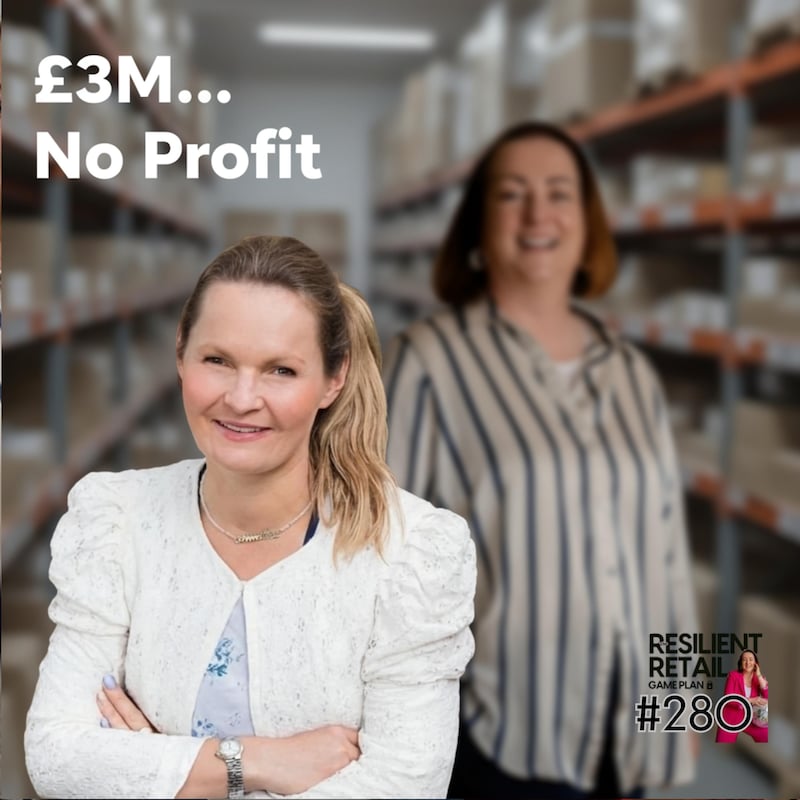
On paper, Anna Scaife's business Anna Lou of London looked unstoppable — multi–seven-figure turnover, dream stockists like Selfridges and Harvey Nichols, celebrity customers, even a Carnaby Street shop. But behind the scenes, the numbers were quietly telling a very different story.
With thanks to this episode's sponsor Faire (https://faire.com/) Use the code 'GamePlan25' to claim 50% off and free shipping with your first order!
Hi, I'm Catherine Erdly.
This week on the Resilient Retail Game Plan, I’m digging into the real retail profit vs turnover conversation.
What happens when the visibility shoots up, the orders explode, but the margins… don’t?
Anna shares how she scaled too fast, drowned in stock, tried to please every buyer, and chased the kind of “success” that looks incredible on Instagram — but nearly cost her the entire business.
We talk about the ego hits, the financial shocks, the burnout, and the moment she finally rebuilt everything from a place of alignment, clarity and actual profit.
If you’ve ever felt the pressure to keep growing, keep adding more, keep saying yes — even when it’s draining your cashflow — this one’s going to land. Hard.
We cover:
– Why high turnover means nothing without margin
– How stockists can destroy cashflow without you noticing
– When “busy” becomes a red flag
– The emotional cost of maintaining the illusion of success
– Rebuilding with a made-to-order model
– Why alignment and nervous system regulation matter more than people admit
– What sustainable retail growth really looks like
This is the story behind the story.
And it’s one every product founder needs to hear.
Timestamped summary
00:00 "Anna's Untold Business Struggles"
04:23 "Pivoting to Sustainable Simplicity"
06:29 "Misalignment and Rediscovering Purpose"
09:45 "Wholesaling: Shuffling Stock Globally"
16:03 "Staying Aligned in Business"
19:32 "Intentional Business Growth Insights"
Enjoy the episode? DM me your lightbulb moments or next guest wish list @resilientretailclub on Instagram. Please rate, follow, and review this podcast in your app—it helps more indie founders decide to give us a try!
Mentioned in this episode:
Faire 50% offer
Use the code GamePlan25 to get 50% off and free shipping with your first order at faire.com
Transcripts
On paper, Anna, founder of Anna Lou Jewelry, had a
Speaker:story that reads like the kind of trajectory every product founder
Speaker:secretly hopes for. You start making things at home. A buyer
Speaker:spots you, suddenly you're in Selfridges, then Topshop, then Harvey
Speaker:Nichols. Your pieces are popping up on celebrities.
Speaker:So it grew and grew and grew to the point where I was turning over
Speaker:almost £3 million but not making any profit. You're doing
Speaker:shows on QVC, journalists are calling. You have a shop on
Speaker:Carnaby street in London and the orders keep climbing.
Speaker:Welcome to the resilient retail podcast Game plan. I'm Catherine Erdly and in the next
Speaker:few minutes, you're about to get powerful real world retail strategies from
Speaker:insights shared both from my guests and myself, backed up by
Speaker:my 25 years in the retail industry. Keep listening to learn how
Speaker:to grow a thriving, profitable product business. Let's jump in
Speaker:with this latest episode. It
Speaker:all sounds incredible, doesn't it? It sounds like proof that the whole thing
Speaker:is working, because that's what we're taught to believe when you're busy, busy. Busy
Speaker:and you've got the pressure of making the sales back because you just bought all
Speaker:this stock, you're not grounded and you're not
Speaker:aligned with yourself. Big stockists mean success. High
Speaker:turnover means stability. Visibility means safety.
Speaker:But that's not what was happening behind the scenes. The numbers were telling a
Speaker:very different story, one that most business owners don't talk about until
Speaker:they're on the other side of it. And that's why I wanted you to hear
Speaker:Anna's experience directly from her. Not the glossy version,
Speaker:not the look where I ended up version, the real one, the one that played
Speaker:out underneath all the noise while everyone else assumed she was flying.
Speaker:But instead of starting with the highlight reel, I asked her to explain
Speaker:what the business actually looked like during that turbulent period.
Speaker:Financially, operationally, emotionally. And she didn't hold back.
Speaker:Here's Anna. I was actually a multi seven figure
Speaker:business, so it was actually more than a million. Yeah. And I was in Selfridges
Speaker:and Topshop had a concession in Topshop, Harvey
Speaker:Nichols, Liberty's Harrods, Issa Tan in Japan.
Speaker:I mean, the stores that people would dream of.
Speaker:And I have to say that I even had a show on
Speaker:qvc. I was quite young, but I was selling, selling, selling,
Speaker:selling, selling, selling, selling and not really looking
Speaker:at the proper numbers. And I was manufacturing.
Speaker:How it all started was when I first got into
Speaker:Harvey Nicks, I then slowly got into the other department
Speaker:stores. It's kind of a bit of a ricochet effect. Once you're in one,
Speaker:then sort of. The others tended to follow suit. But what
Speaker:happened was, is that I had an interview with another
Speaker:high street company called Reese. I think Reese is
Speaker:still going. I'm not sure if they still are. So they asked me to do
Speaker:a collaboration with them, which was obviously really exciting. And
Speaker:I had never made in China before, but what happened was I was
Speaker:making at home, in my bedroom, selling in
Speaker:these department stores. So I'll see my turnover wasn't massive. And then
Speaker:all of a sudden I get this meeting with Reese and they said, how
Speaker:many pieces can you make a week? And I just plucked out
Speaker:of the sky, oh, 50,000. I mean, I'd never made
Speaker:more than about. Probably 35, to
Speaker:be honest. Yeah, 35. Not 35,000, just 35.
Speaker:35, yeah, exactly. Well, maybe a bit more, but anyway, so this meeting
Speaker:went exceptionally well and then I received this massive order
Speaker:for 48,000 pounds worth of jewelry. And I thought,
Speaker:oh, my God, I'm going to have to go and get these made overseas. So
Speaker:I literally made the samples myself, took them over to China, because I'd
Speaker:been suggested some places to go and had the
Speaker:whole collection made over there, delivered back to Reese. So it
Speaker:grew and grew and grew to the point where I was turning over
Speaker:almost £3 million but not making any profit.
Speaker:Wow. Wow. So that was
Speaker:partly lack of experience. I was just really
Speaker:inexperienced and I have learned so much since.
Speaker:From the outside, that kind of growth looks amazing. On the
Speaker:inside, it was overwhelming. Stock everywhere, spreadsheets
Speaker:everywhere. And a business that only worked if Anna never
Speaker:stopped sprinting. I guess it's because you've got a
Speaker:spreadsheet of items that people are ordering
Speaker:regularly. You know, every day we've got new boutiques,
Speaker:people saying, oh, but I want that one in a pink and not a blue.
Speaker:And then have you got that one in more of a lighter blue, not a
Speaker:darker blue? You know, all of those questions that go on and in the end
Speaker:you realize, actually we've got far too much stock, we've got far too
Speaker:many options, we've got cells on spreadsheets. The cost
Speaker:of managing those spreadsheets of the staff
Speaker:was just not feasible for me. I got
Speaker:pregnant, actually, with my first child and I just thought,
Speaker:whoa, this isn't going to work, this is not sustainable. And I
Speaker:have to say, I did have options of getting investment and a lot
Speaker:of competitors that I've got now did take investment and
Speaker:they've grown and they're huge and they're Amazing brands,
Speaker:but that's a choice I chose to be a mum at home
Speaker:and basically pivot on. Keep the brand going,
Speaker:but making sure that it was online only
Speaker:and made to order. The other hidden piece here, and
Speaker:it's an important one, is what Anna was sacrificing personally to keep
Speaker:all of this moving. Not just financially, although that alone
Speaker:was huge, but emotionally, energetically, in
Speaker:ways that never show up on a profit and loss sheet, but are really real
Speaker:for founders. Because when you're running a business that looks wildly
Speaker:successful from the outside, there's this unspoken pressure to keep the illusion
Speaker:going. You don't want to admit, even to yourself, that you're not
Speaker:paying yourself well while you're paying staff, paying for concessions,
Speaker:paying rent on a shop on Carnaby street, paying to fix mistakes that
Speaker:other people made. You don't want to acknowledge how much of your time is being
Speaker:swallowed by admin, by stock issues, by the endless cycle of
Speaker:saying yes so people don't lose interest. And honestly,
Speaker:most founders don't even notice the toll until something forces them
Speaker:to stop. Pregnancy burnout, a big bill they didn't see
Speaker:coming, or simply the quiet realization that they haven't enjoyed
Speaker:their own business in a little bit too long. Anna hit that
Speaker:point. She didn't make a big, dramatic announcement about it. She didn't have a
Speaker:breakdown in a boardroom. She just saw it. She
Speaker:saw the gap between what she was projecting and what was actually happening behind
Speaker:the curtain. And then there's the values piece, the part
Speaker:we often ignore because we think it's secondary, something that you sort out later
Speaker:when things are calmer, except it never gets calmer.
Speaker:And meanwhile, she's making acrylic pieces she no longer feels aligned with,
Speaker:moving stock around the world because the wholesale machine demands it, and
Speaker:dealing with buyers who want 10 variations of everything but won't commit to any
Speaker:of them. At some point, it stops feeling creative, it stops feeling
Speaker:meaningful, it stops feeling like her. And that
Speaker:internal tug, the misalignment, the discomfort, the
Speaker:this isn't who I am anymore feeling, that's often more powerful than
Speaker:any spreadsheet or sales report. Because when your values start whispering
Speaker:that something is off, you can only ignore them for so long before it
Speaker:becomes physically exhausting to keep going. So, yes, the
Speaker:financial strain was real, but so was the emotional strain of running a business
Speaker:that didn't reflect who she was anymore. And that combination,
Speaker:the numbers and values colliding, is what ultimately pushed her into
Speaker:rethinking everything. That's the moment I Want you to hear next, because
Speaker:this is where the shift really begins for Anna. Here she is. Well,
Speaker:I really wasn't paying myself that much money. I was paying all these people.
Speaker:I had, like, nine members of staff. I had people working in the concessions
Speaker:and also just the managing of all the stock in all these different places, like
Speaker:Selfridges. I hate to say it, but they didn't really know where half the stock
Speaker:was and the cupboards would be lost. And it was very.
Speaker:I'm being a bit too honest here, but it was very, very
Speaker:stressful that in the end you just think, oh, my
Speaker:God. Like, this is. I've made some wrong choices and you just have
Speaker:to have a long, hard chat with yourself. I mean, that was one of
Speaker:my first rebirths that I would call was really
Speaker:hard because it was my baby that I had built from nothing
Speaker:but pure creativity and passion. And I just had to face up to the
Speaker:fact that I didn't have a financial controller. I had some
Speaker:people working in the shop that weren't particularly honest.
Speaker:I had a shop in Carnaby street, which was a really brilliant shop and it
Speaker:was packed, had loads of tourists coming in day in, day out. It
Speaker:was brilliant and it was popular, you know, it was in the magazines. We had
Speaker:celebrities wearing the pieces. We had Kate Moss, we had Lily Allen, we had
Speaker:Paris Hilton, Kylie Minogue. So many different people. But
Speaker:it just wasn't enough. You almost needed to have a lot more
Speaker:investment. You needed to have like a boost of investment to go
Speaker:really big. That's not an excuse. But that was something that I just
Speaker:thought, I'm not going to be able to get that investment because I'm pregnant with
Speaker:my first child. I won't be able to give the investor
Speaker:necessarily what he wants because I want to look after my baby.
Speaker:I'm interested as well about the stock piece, because one of the things that I
Speaker:quite often run into is that people will say, well, I need to have the
Speaker:stock to make the sales. So they. There's a sort of mentality that
Speaker:more stock equals more sales, but then what they don't
Speaker:realize is that more stock also equals less cash flow. And
Speaker:it's like finding that balance between, you know, like you said, someone said, oh,
Speaker:do you do this in pink? And you were saying, yes, and adding it to
Speaker:the spreadsheet. Was there ever a point at which you thought, what if I just
Speaker:stop. And I
Speaker:actually
Speaker:realized that wholesaling was basically moving stock
Speaker:around the world so that that shop wasn't going to have it. Well, then that
Speaker:shop might have it and then that shop might have it. And in the end
Speaker:I was a bit like, we just like transporting stock from
Speaker:shop to shop. One, you know, this is all just a bit strange.
Speaker:...
Speaker:bringing
Speaker:more plastic into the world. I've made some interesting
Speaker:choices with this business because I love it still and I do still think we've
Speaker:got my handwriting. The plastic quirky products
Speaker:definitely were the things that gave me a name because they
Speaker:were bold and bright. Yeah. And then since then it's been
Speaker:letters and names and now I've kind of moved into
Speaker:much more, you know, wellbeing and personal journey
Speaker:pieces. From the outside, people still assumed things were great,
Speaker:but Anna had already decided to step back from a lot of that prestige
Speaker:and, and rebuild on her own terms. I've always been quite
Speaker:brutally honest and what I realized is that people didn't really need
Speaker:to know that we weren't in those stores anymore because
Speaker:they still had the database of people. It's not like, oh my God, big
Speaker:announcement. We're not going to be in Sally's gift shop
Speaker:next month. Right. We don't need to do that. I mean. And
Speaker:Harvey, Nick's just sort of slowly sort of dissipated and I just had
Speaker:enough of those. You know, the payment terms was getting longer and
Speaker:longer and longer and longer. And we just can't work with
Speaker:120 days payment terms. So you deliver them the stock and
Speaker:then it would be four months until you were paid.
Speaker:That
Speaker:was
Speaker:actually
Speaker:QVC Japan that said that it wasn't QVC UK. We did used to sell
Speaker:on QVC UK but it wasn't quite so strict. But you still have to put
Speaker:the stock up front now. I think I'm highly investable
Speaker:actually as an entrepreneur that's been through
Speaker:every possible.
Speaker:Mistake that you could possibly go on
Speaker:and still be around. You know where the hurdles
Speaker:are. If I was about to invest in someone, I'd want to use somebody
Speaker:like me who knows where not to go wrong. So what does it
Speaker:look like when you come out the other side of all of that? For Anna,
Speaker:it's a mix of very practical number watching and a much deeper
Speaker:focus on her own energy and alignment.
Speaker:And
Speaker:I buried my head in the sand with the costs.
Speaker:And I remember I had this shop in Carnaby street and then I just realized
Speaker:I couldn't really afford the rent. And then they said, well, you know, we'll
Speaker:give you a bit of an extension. They said it was like a pop up
Speaker:store rent, but it was like a long term pop up store rent. But anyway,
Speaker:in the end I just realized I just had to bite the bullet and be
Speaker:like, oh my God, like I haven't really been looking at the
Speaker:numbers properly. One thing that I've learned is that I have
Speaker:an accountant who is literally like in my pocket.
Speaker:Not a rich husband, but an accountant that is in my pocket.
Speaker:So, yeah, I definitely know that the numbers are
Speaker:absolutely vital and I'm looking at
Speaker:graphs all the time, all the time. However depressing it
Speaker:is just looking at numbers, looking at the data, looking at. Everything, looking
Speaker:at the costs right now. Looking at the costs way more than I even
Speaker:look at the sales, actually always looking at the other way
Speaker:around. To be honest, this is the part of the conversation I keep coming
Speaker:back to because it's one thing to say, right, I need to look at my
Speaker:numbers properly and quite another to actually change how you run
Speaker:your business day to day. Most product founders I work with don't struggle
Speaker:because they're reckless. They struggle because they are unfocused.
Speaker:They chase sales and keep running after shiny new tactics instead of
Speaker:focusing on what really makes a difference to the bottom line. And Anna did
Speaker:exactly what so many of us do. She focused on the exciting bits. The
Speaker:orders, the interest, the stockists, and ignored the
Speaker:extremely unsexy truth sitting right underneath all of it.
Speaker:Costs, margins, capacity, cash flow,
Speaker:the stuff that doesn't sparkle. What I love is that she doesn't
Speaker:gloss over it. She's blunt. She didn't look at the numbers. She didn't have the
Speaker:right structure, and she paid for that. But she also
Speaker:rebuilt herself around it. She started tracking the right things. She
Speaker:brought in an accountant. She learned the actual rhythms of her business
Speaker:rather than the imagined ones. And then this is the deeper bit.
Speaker:She realized it wasn't just about spreadsheets. It was about her nervous system, her
Speaker:alignment, her ability to make decisions from a place that wasn't
Speaker:purely panic or purely yesing or pure external
Speaker:validation. Because you can have the best systems in the world, but if
Speaker:you're permanently overwhelmed or out of sync with your own business, none of it
Speaker:sticks. But when Anna talks about this, you can really hear the shift.
Speaker:She's not just a founder who learned financial discipline. She's a
Speaker:founder who learned herself. Here's how she explains it in her own
Speaker:words. One of the things that I do now is actually
Speaker:check in with myself before anything. So this is
Speaker:the first thing to just make sure that that stockist
Speaker:feels aligned, that everything that you're doing feels aligned. And when I
Speaker:say feels aligned, it's like when you're busy, busy, busy, and you've got the pressure
Speaker:of making the sales back because you've just bought all this stock, you're not
Speaker:grounded, and you're not aligned with yourself. And to
Speaker:me, that's really, really important, number one.
Speaker:And dealing with your own nervous system, actually.
Speaker:Because if we're calm and we're high vibe and we've got good
Speaker:frequency and we're eating well and we're sleeping well, then the business will
Speaker:take care of itself. As I said before, like, not to strip
Speaker:away kind of what looks good and have a
Speaker:look at what's actually making you the profit,
Speaker:which is easier said than done, because I have also been really guilty,
Speaker:being a designer, of going, no, I'm not taking it off the website
Speaker:because I love it. And then it hasn't really sold at
Speaker:all. But I'm so adamant that I won't take it off because I love
Speaker:It. Which is not
Speaker:great, but. But then I'm like, there will
Speaker:be that person out there that loves it. It is why they call it the
Speaker:art and science of running a retail business, because it's part science about the
Speaker:numbers and part of it is the art of picking the right product. Yeah.
Speaker:And you're so right about the science. And I think that that science is
Speaker:something that is. You can learn that science. And it's also. I think
Speaker:with investment, there's a science to investment as well. There's a science to
Speaker:all of it. And I didn't know that science before. I was just given this
Speaker:amazing opportunity and I ran with it. I remember when I was in
Speaker:Tokyo and I was with the British embassy and they'd taken out
Speaker:like six brands to showcase their work for the accessories embassy.
Speaker:Honestly, I think I did a million pounds worth of sales alone
Speaker:in that one trip. Wow. And I
Speaker:remember the ambassador, British fashion ambassador,
Speaker:she said, we've never seen anything like it. Like, this is
Speaker:absolutely unbelievable. And I was like, well, you know, I didn't think.
Speaker:I thought this was normal. But now when I look back, I was just so
Speaker:blase about it. And that feels like the right place
Speaker:to leave Anna's story today. Because where she is right now is
Speaker:such a strong place in terms of having created a business that works
Speaker:for her. It actually fits her with a focus on things that matter
Speaker:to her, like meaningful pieces that are aligned with her interest in personal
Speaker:development. She's taken control of her manufacturing and shifted her
Speaker:model from overproduction to made to order. And I think that's the
Speaker:real takeaway here. We spend so much time chasing things we're told matter.
Speaker:The big names on the stockist list, the perfect Instagram feed, the revenue number
Speaker:that looks impressive when you say it out loud. But none of that guarantees
Speaker:stability, and certainly none of that guarantees joy. And
Speaker:none of that guarantees a business you actually want to wake up and run every
Speaker:day. What Ana's story shows is that the pivot points, the
Speaker:uncomfortable moments, the pauses, the rebirths, they're not
Speaker:signs you've failed. They're usually moments when you finally see the truth clearly
Speaker:enough to do something about it. So whether you're at the start of your journey
Speaker:or you've been running your brand for years, I hope this conversation gives you
Speaker:the permission to step back and check in with yourself. Not just with your numbers,
Speaker:though. Absolutely do that. But with your energy, your capacity,
Speaker:and your values. Because the businesses that last are rarely the ones that grow
Speaker:the fastest. They're the ones built with intention, honesty, and a founder
Speaker:who's willing to evolve. If you'd like to find out more about Anna, you can
Speaker:check out Anna Lou of London on Instagram. That's A N N
Speaker:A L O U of London on Instagram, and we'll put
Speaker:all the links in the show notes. And if you're finally ready to get help
Speaker:with some of the challenges we've raised in this episode, you might want to book
Speaker:a call to talk about my Retail by Design program kicking off in January.
Speaker:Go to resilientretailclub.com and click on Retail by Design to find out
Speaker:more about the Focus Framework that I use to help you get
Speaker:in touch with the business that you really want to run. And I'm looking forward
Speaker:to talking to you next week in episode 281. That one's all
Speaker:about how to run a stock clearance sale. See you next week.




