Shownotes
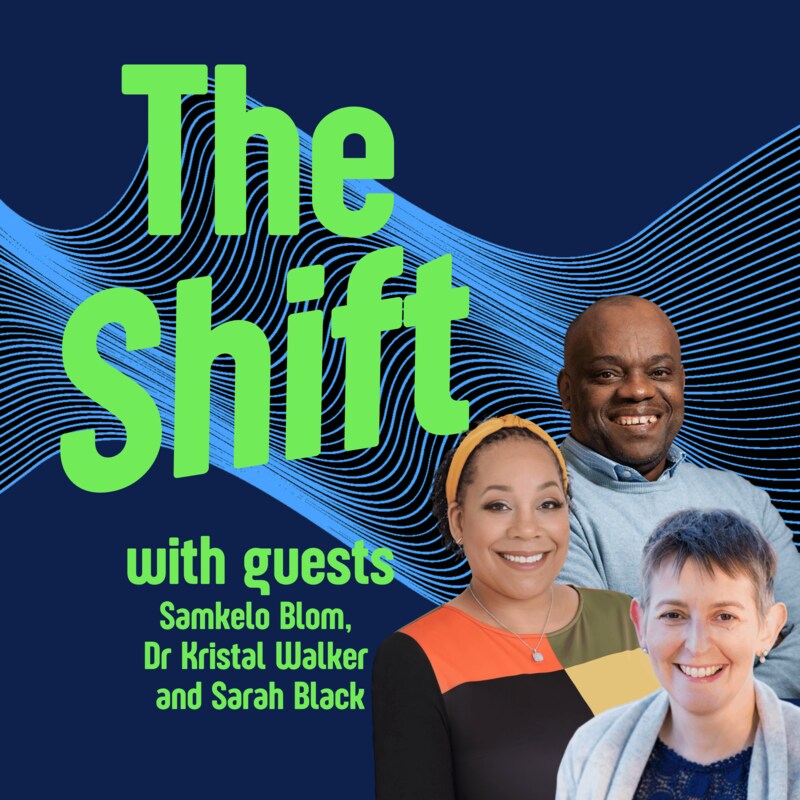
In this special episode, Trisha steps back and hands the mic to three voices from three continents — each responding to the same question: what does it feel like when someone says, "We're all the same"?
What emerges is something that Cultural Intelligence (CQ) frameworks can name but can't fully capture on their own — the lived experience of cultural blindness. From South Africa, the United States, and Northern Ireland, these three perspectives share a quiet, consistent thread: the weight of being asked to make yourself smaller in the name of fairness.
This episode is both a companion to Episode 79 and a milestone — Episode 80 — and it marks the occasion the only way that feels right: by listening.
Join Trisha in this journey of growth and discovery throughout the year via Substack or LinkedIn.
Voices in this episode:
- Samkelo Blom (Episode 37) You can learn more about Samkelo and the work of his organisation here and connect with him on Linked In here.
- Dr. Kristal Walker (Episode 58) Connect with Dr Kristal Walker on LinkedIn.
- Sarah Black (Episode 9 and Episode 48) Check out Sarah Black on LinkedIn and sign up for her Newsletter.
Transcripts
I would like to acknowledge the Dharawal people, the Aboriginal people of Australia, whose country I live and work on. I would like to pay my respects to their elders, past, present, and emerging, and thank them for sharing their cultural knowledge and awareness with us.
Trisha:Hello everybody, and welcome back to The Shift. I'm Trisha Carter, organizational psychologist and an explorer of cultural intelligence. If you're a regular listener, you'll know that this podcast is really about one thing, thinking about our thinking What we call CQ strategy in the cultural intelligence framework, the moment when you can become aware of assumptions you're carrying and when you choose to look at them differently It's a metacognitive shift.
Trisha:If you were here last episode, episode 79, you'll know that I finished with some questions. That episode was called Cultural Blindness: When Fairness Isn't Fair, and it explored why some of the most well-intentioned things that we might say, things like, "I treat everyone the same," or, "I don't see color," those things can actually cause harm, not because the people saying them are hostile, but because they're sitting at what Milton Bennett called minimization on the Intercultural Development Continuum.
Trisha:That's the stage where the emphasis on our shared humanity really starts, in some ways, to erase the very differences in people's lived experience. And so I ended that episode by asking, when I say, you know, I treat everyone the same, whose normal, whose same am I using?
Trisha:When I reflected on that, you know, after the recording, I realized that as much as I can speak to it through research, through the CQ framework, through theory, through my experience with clients, me personally, I'm very close to that dominant cultural group, to the normal here in Australia. And there are people in my world who can answer it from their lives in a way that might speak more clearly to what it means.
Trisha:So I reached out to three friends and colleagues, three people I deeply respect, all working in the space of cultural intelligence and inclusion, each from a different part of the world and from a slightly different perspective. And they're three people that you have heard before if you've been following along.
Trisha:And I asked them a question: What does it feel like when someone says, "We're all the same," or "I don't see difference. I don't see color." How does that feel for you? How does it hit you? What came back were three voice messages that I want to share with you almost exactly as I received them because these voices, they say it way better than I do.
Trisha:And in this, which is our eightieth episode, dear listeners, it felt right to let other people do the talking. So the first voice is from Samkelo Blom. He joins us from South Africa. You might have heard Samkelo if you listened to episode thirty-seven, which was about cultural intelligence and leadership shifts.
Trisha:Samkelo is a cultural intelligence facilitator. He's a DEI thought leader, a business owner, and HR consultant. He thinks deeply about what inclusion actually looks like on the ground in practice in workplaces and in teams day to day. He is a Black South African, so his experience and his voice has a unique perspective.
Trisha:Samkelo
Samkelo:you are spot on.
Samkelo:This thing of we are all Australians also does come, I think, in every country. We are all South Africans. Uh, als- also sometimes, Trisha, it can come as we are the in-group, or this is how things are done here. So people might not use the word to say we are South Africans, but this, uh, this is how we expect things to be done.
Samkelo:Uh, we are a team here, and this is how we function here. So almost like you are made to feel shamed because you don't see or behave like other people. And, and, and when they say that it's an indirect force or that makes you want to do things like other people do or to see things the way that other people see.
Samkelo:So in that in that cultural blindness, what I see is not everyone is visible Not everyone is seen. Not everyone is heard. It's almost like we must be this homogeneous group that thinks and behave the same, and yet God made us differently. Our lenses, our feelings, our views are not the same.
Samkelo:Uh, how the orientation program might have worked for one person, it's not gonna be the same for somebody who's neurodiverse. It's not gonna be the same for the single mother. It's not gonna be the same for someone who's gay or who's a lesbian. It's not gonna be the same for somebody who's a Catholic.
Samkelo:It's not gonna be the same for somebody who comes to-- who comes from Indonesia. So it's the same program. It's, it's, uh, orientation, it's performance management. The language and the interpretation is not the same. When we want sameness in people, we undermine, we ignore the unique giftings and talents and abilities and lenses they bring.
Samkelo:Yes, they want to get to the same goal like all of us, but not engaging them for at the level of who they are, at the level of their identity, we miss getting the best because we want them to see things the way we see, and it's not always gonna be like that. We each bring a uniqueness. And yes, we are Australians, but we might value certain parts of being Australians.
Samkelo:Yes, we are South Africans, but in a country of eleven, in fact, twelve languages now because the deaf language has also been recognized as a language as well. That means that we interpret and see things totally different. So to your point, yes, there is that cultural blindness. How does it feel like?
Samkelo:It makes you not to be seen. It makes you, uh, to be ignored, not to be visible, not to be heard, uh, heard. It makes you feel like unless you do this, then you are not part of us. Thank you, my friend,
Trisha:thank you, Samkelo. I want to just echo something that Samkelo spoke about because, because I don't want to overlook it. Cultural blindness doesn't always make itself obvious. It, it doesn't necessarily come with a sign that says, "We are all the same." Sometimes it comes in the form of a standard, like he said, an orientation program, a performance management process.
Trisha:One process or program that was designed usually with one type of person in mind and then applied to everyone as if the design was neutral. But as Samkelo points out, the same program is not experienced the same by the person who's neurodivergent or the single mother or the person who's gay or lesbian or the person coming from Indonesia The word same is doing a lot of work there.
Trisha:South Africa, as Samkelo reminds us, is a country of 12 official languages now. That means 12 different ways of interpret- interpreting and navigating the world. A single standard would miss 11 of them And what Samkelo captures that I think is the, the quiet sadness or devastation even in cultural blindness, when we insist on sameness, people don't just feel uncatered for, they feel unseen, not part of us unless they act out their belonging in a way that's been decided for them.
Trisha:The word Samkelo used was erasure
Trisha:And now I want us to listen to the voice of Dr. Kristal Walker. You may have heard Kristal in episode fifty-eight when we spoke about cultural intelligence and authenticity. She's from the USA. She's a thought leader, keynote speaker, a learning and development expert, and a passionate champion of cultural intelligence.
Trisha:She also speaks here as a Black woman in the US. In the context of this conversation, that means a lot
Kristal:When people say, "I don't see color," uh, for me, I usually understand the heart behind what they're trying to say. Um, but I think most people really are intending or they, they mean to say, "I treat everybody equal," or, "I'm not a racist," or, "I see people as human beings." And I, I wanna acknowledge that intention first because it-- I think it really does matter, but impact also matters.
Kristal:So for many people of color, hearing "I don't see color" can feel dismissive, it can feel offensive, it can even feel triggering, especially in today's climate where race still affects people's li- uh, their lives and their lived experiences every day. I think the reality is color does exist, uh, just like culture exists, just like history exists, experiences exist.
Kristal:And pretending not to see those things can, I think, unintentionally communicate that I don't see an important part of who you are, or maybe even worse, I don't see the challenges connected to your identity. And for me, as a woman of color, I don't want someone to ignore my color. My color is connected to my culture, to my history, to my experiences, to my family, to my faith journey, my resilience, and even some of the obstacles that I've had to overcome.
Kristal:It's actually a part of my story. So when someone says, "I don't see color," to me, it can often sound like, "I don't see your your full humanity." Uh, let's be honest though, many people grew up being taught that the right thing to do was to avoid talking about race altogether, especially in previous generations, people were taught that noticing race was, was the real problem.
Kristal:But the issue isn't noticing race. In my opinion, the issue is assigning value or stereotypes or different assumptions or even a level of superiority to race, and that's the difference there. Uh, I think for me, healthy inclusion says, "I do see you. I respect you. I acknowledge and, um, I acknowledge your experiences.
Kristal:They may be quite different from mine." Or it could say... it could mean, uh, "Your differences don't diminish your value." Uh, that's very different from pretending that differences don't exist at all. And I also think that in today's climate where people are still targeted, people are still discriminated against and overlooked or even judged because of their race or their ethnicity or their cultural identity, when you say, "I don't see color," it can actually feel especially painful when many minorities don't even have the luxury of forgetting their color.
Kristal:Uh, society reminds them of this on a consistent basis. So instead of saying, "I don't see color," I think people might wanna consider replacing that phrase with statements like, "Hey, I, I value people from all backgrounds," or, "I recognize and respect our differences," or, "I wanna understand experiences outside of my own," or, "I see you and I respect who you are."
Kristal:To me, that language creates acknowledgement instead of erasure. And honestly, this conversation is not really about making people feel guilty. It's about helping people grow. We could give grace for intention, uh, while we also make room for better understanding, and I think because true connection doesn't really come from pretending that we're all the same.
Kristal:It actually comes from recognizing our differences and then still choosing dignity, compassion, and respect in any way that we, that we can in this life. Thank you for allowing me to be a part of this discussion, Trisha
Trisha:What I deeply respect and love about Kristal's response is where she starts. She begins with grace and wisdom, She acknowledges the intention behind, "I don't see color." Most people saying that are trying to say something good. They're trying to say, "I'm not racist. I treat people as human beings. I judge people by who they are." And Kristal doesn't dismiss that, she honors it. But then she draws a distinction that is central to everything we talk about in CQ strategy, the difference between intention and impact.
Trisha:Because we all know impact matters. And for many people of color, the impact of, "I don't see color," is the opposite of what was intended. Kristal names it so personally. Her color is connected to her culture, her history, her family, her faith journey, her resilience, the obstacles she's had to overcome. When someone's saying, "I don't see your color," they're in effect saying they don't see her full story.
Trisha:They're asking her to set aside a piece of herself, not because it's a problem, but because it makes the interaction simpler for someone else And Kristal offers us something really practical here, a reframe. Instead of, "I don't see color," she invites us towards language like this: "I value people from all backgrounds.
Trisha:I recognize and respect our differences. I want to understand experiences outside of my own." Effectively, I see you That's not a small thing. That's the whole shift.
Trisha:The third voice comes from a different kind of lived experience. Sarah Black, a culturally intelligent communication expert, a CQ facilitator for the Cultural Intelligence Center Sarah joined us in episode nine way back at the start, and so you may have heard her voice then as we talked about how does communication shift people.
Trisha:And then she also joined me in episode 48 as we talked about cultural intelligence and AI And if you've heard her voice, you'll know that she's Irish. What she shares draws on her experience growing up in Northern Ireland during the period known as The Troubles
Sarah:As someone who grew up in Northern Ireland and grew up during some of the, the more difficult days of civil unrest and what we refer to as the Troubles, one of the things that I experienced, not so much within our own, culture or cross-cultural context, but it was from people outside saying, "Well, you just, you just need to get on with it.
Sarah:You know, we're all the same. You need to put it aside. Um, you just need to have a nice cup of tea, and it'll all be all right." and sort of minimizing what are very complicated, deeply traumatic experience for people over generations. And I've always found that really difficult and really frustrating because we do need to bring those things into the light and unpack them and acknowledge them, and then learn how to navigate across them.
Trisha:Sarah's voice opens up something that neither Samkelo nor Kristal really spoke about Historical differences The Troubles was not a small thing. It was decades of civil conflict and community trauma that shaped every part of daily life for people in Northern Ireland. And yet, as Sarah tells, people from outside would say, "You just need to get on with it.
Trisha:We're all the same. Have a nice cup of tea, and it'll be all right." That's minimization at its most painful, not from malice, but from discomfort with complexity A tendency to reach for common ground that skips over a wound. Let's not go there. Let's smooth it all over. And what Sarah's talking about is exactly what I believe the work of general and cultural intelligence should be.
Trisha:We do need to bring things into the light. We need to unpack them and acknowledge them, and then, this is the word Sarah uses, navigate across them Not ignore them, navigate them. That's a very different thing. Because you can't navigate what you haven't first allowed yourself to see or to hear about
Trisha:So here we are, dear listeners. Three voices, three countries, three very different contexts. South Africa, the United States, Northern Ireland And yet something threads through all of them with a quiet, consistent ache. The experience of being asked to make yourself smaller. Of being told in one way or another that the most generous thing, the fairest thing, is to pretend the differences don't matter.
Trisha:To find the thing we have in common and stay there. Samkelo calls it being made to feel like you're not part of us unless you conform. Kristal refers to it as not seeing her full humanity, and Sarah is speaking about minimizing what is deeply generationally traumatic
Trisha:So these three voices are the answer to last episode's question. They are the lived experience. When we default to sameness, even lovingly, even generously, this is what we're asking people to absorb. And when we choose to see, really see, as Kristal says, this is what becomes possible instead
Trisha:Hey, before I close today, I wanna step back from the content just for a moment, 'cause this is episode 80. I can't quite believe it myself, 80 episodes. Over two and a half years of conversations and questions and moments of shift. When I started this podcast, I have a very clear sense of why I wanted to make it.
Trisha:I believe, I truly believe, that the ability to see things from different perspectives is one of the most important things a person can develop. And cultural intelligence gives us a framework for doing that intentionally Through deliberate reflective practice of thinking about our thinking. That CQ strategy, and that's what the shift has always been about.
Trisha:What I couldn't have predicted is how far that conversation would travel, because this conversation has been listened to in 89 countries. 89. When I think of that number, I don't actually think of it as a metric, 'cause I often think of a person, and sometimes I might know somebody and I might think of who might live there, but there are so many countries in this group where I don't know people.
Trisha:So I think of a person I don't know in Iceland, and in Nigeria, and in Brazil In Kuwait, in Russia. Someone who found this show and felt something in it that connected to their experience of trying to navigate in a world that is beautifully, complicatedly, and sometimes painfully diverse. And honestly, that's what keeps me going And also the fact that it's not just the reach, it's the depth.
Trisha:Because while there are a certain number of downloads, there's a different number of people. And so I know that some of you are listening over and over, and some of you have been listening and learning with me since early in this journey. You come back, and sometimes you share things that you've learnt from it, and I do appreciate it, and I appreciate if you share episodes with others.
Trisha:I know that you are doing this work not because somebody told you to, but because you, like me, believe it matters. If you're one of those people, thank you. Thank you for asking the hard questions. Thank you for sitting with the discomfort, and thank you for choosing curiosity again and again. This is what cultural intelligence looks like in practice, and that's exactly what Samkelo, Kristal, and Sarah have modeled for us today.
Trisha:The courage to name what they've experienced and the generosity to do it so that the rest of us can learn. There's more to come. Don't worry, I'm not stopping. More voices, more moments of shift, more questions worth reflecting on together. I'm so glad we're doing this. So until next time, dear listeners, please make sure that you have pushed follow or subscribe, and join us again next time on The Shift
