Shownotes
"𝙒𝙚 𝙖𝙧𝙚 𝙩𝙝𝙚 𝙛𝙞𝙧𝙨𝙩 𝙜𝙚𝙣𝙚𝙧𝙖𝙩𝙞𝙤𝙣 𝙩𝙤 𝙙𝙞𝙚 𝙬𝙞𝙩𝙝 𝙢𝙤𝙧𝙚 𝙙𝙞𝙜𝙞𝙩𝙖𝙡 𝙖𝙨𝙨𝙚𝙩𝙨 𝙩𝙝𝙖𝙣 𝙥𝙝𝙮𝙨𝙞𝙘𝙖𝙡 𝙤𝙣𝙚𝙨." — Niki Weiss, Digital Thanatologist & Founder of ENDevo
𝗪𝗵𝘆 𝘁𝗵𝗶𝘀 𝗰𝗼𝗻𝘃𝗲𝗿𝘀𝗮𝘁𝗶𝗼𝗻 𝗺𝗮𝘁𝘁𝗲𝗿𝘀:
We're all building companies, accumulating data, and leaving digital trails — but 70% of Americans have no end-of-life plan at all. Not a will. Not a legacy contact on their phone. Nothing. In a world where AI can replicate your likeness after you're gone, that's a problem worth solving now.
𝗧𝗵𝗲 𝘀𝘁𝗼𝗿𝘆:
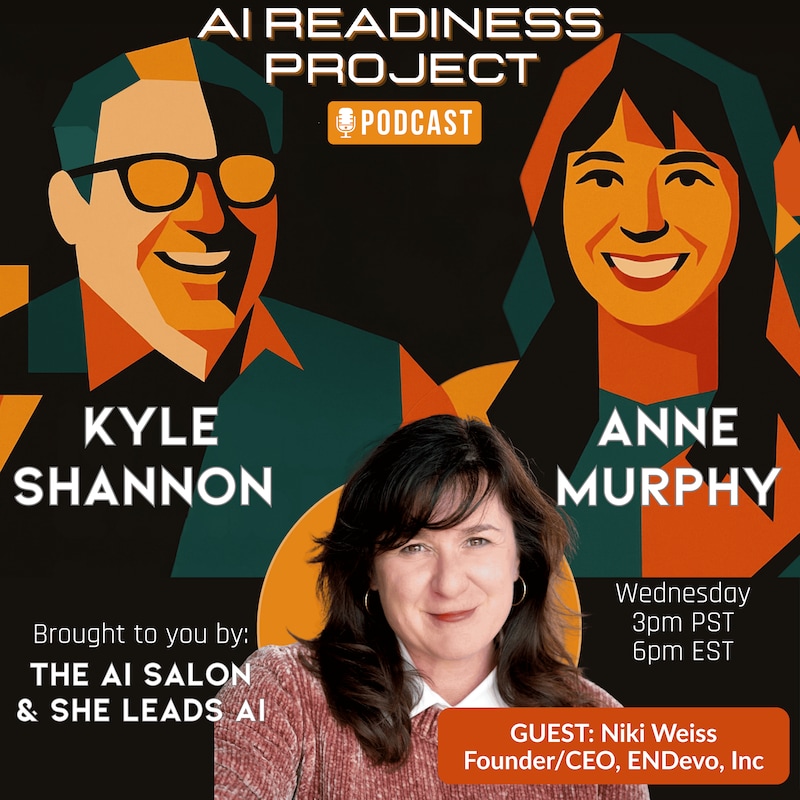
Anne sits down with Niki Weiss — hospice clinician turned project manager turned Digital Thanatologist and founder of ENDevo — to talk about the part of AI readiness nobody's discussing: what happens to everything you've built when you're no longer here to manage it. Niki lost both parents by the time she was an adult, spent years doing bedside hospice work, and now helps individuals and companies get their legal, financial, physical, and digital affairs in order before crisis hits. This episode goes from surprisingly practical (yes, you can set up your iPhone Legacy Contact in about 90 seconds) to genuinely philosophical — and Anne does both live, on air.
𝗬𝗼𝘂𝗿 𝗥𝗲𝗮𝗱𝗶𝗻𝗲𝘀𝘀 𝗥𝗼𝗮𝗱𝗺𝗮𝗽:
• 𝗛𝗼𝘄 𝘁𝗼 𝘀𝗲𝘁 𝘂𝗽 𝘆𝗼𝘂𝗿 𝗶𝗣𝗵𝗼𝗻𝗲 𝗟𝗲𝗴𝗮𝗰𝘆 𝗖𝗼𝗻𝘁𝗮𝗰𝘁 𝘁𝗼𝗱𝗮𝘆 — and why skipping this means your family may need a court order to access your data
• 𝗛𝗼𝘄 𝘁𝗼 𝘁𝗵𝗶𝗻𝗸 𝗮𝗯𝗼𝘂𝘁 𝗱𝗶𝗴𝗶𝘁𝗮𝗹 𝗮𝘀𝘀𝗲𝘁𝘀 𝗮𝘀 𝗽𝗮𝗿𝘁 𝗼𝗳 𝘆𝗼𝘂𝗿 𝗲𝘀𝘁𝗮𝘁𝗲 𝗽𝗹𝗮𝗻 — passwords, social accounts, and everything living in the cloud
• 𝗛𝗼𝘄 𝘁𝗼 𝗮𝗽𝗽𝗿𝗼𝗮𝗰𝗵 𝗲𝗻𝗱-𝗼𝗳-𝗹𝗶𝗳𝗲 𝗽𝗹𝗮𝗻𝗻𝗶𝗻𝗴 𝗮𝘀 𝗮 𝗽𝗿𝗼𝗷𝗲𝗰𝘁 — with checklists, accountability, and a realistic timeline (Niki's clients have a complete plan within 100 days)
• 𝗛𝗼𝘄 𝘁𝗼 𝗽𝗿𝗼𝘁𝗲𝗰𝘁 𝗯𝘂𝘀𝗶𝗻𝗲𝘀𝘀 𝗰𝗼𝗻𝘁𝗶𝗻𝘂𝗶𝘁𝘆 — so your company doesn't collapse if something happens to you
• 𝗛𝗼𝘄 𝘁𝗼 𝗵𝗮𝘃𝗲 𝘁𝗵𝗲 𝗰𝗼𝗻𝘃𝗲𝗿𝘀𝗮𝘁𝗶𝗼𝗻 𝘄𝗶𝘁𝗵 𝘆𝗼𝘂𝗿 𝗳𝗮𝗺𝗶𝗹𝘆 — because most people aren't avoiding the plan, they're avoiding the discomfort
𝗜𝗻𝘀𝗶𝗱𝗲 𝘁𝗵𝗲 𝗖𝗼𝗻𝘃𝗲𝗿𝘀𝗮𝘁𝗶𝗼𝗻:
• [𝟬𝟬:𝟬𝟬] Intro & this week's format — Kyle's traveling, Anne's flying solo
• [𝟬𝟰:𝟬𝟬] Anne on "Claudifying" She Leads AI — building AI agents, compound engineering, and what she learned from Beth Lyons and Sebastian Chedal
• [𝟭𝟯:𝟬𝟬] Building Sheila: Anne's AI Chief of Staff and how her agentic executive leadership team works
• [𝟮𝟭:𝟬𝟬] Introducing Niki Weiss — Digital Thanatologist, what that means, and why Thanos is actually the Greek god of death (not a Marvel villain)
• [𝟮𝟳:𝟬𝟬] Niki's origin story — hospice work, losing both parents early, and how a will update changed everything
• [𝟯𝟬:𝟬𝟬] 70% of Americans have no end-of-life plan — and the data on your phone is the new conversation starter
• [𝟯𝟮:𝟬𝟬] Live demo: Anne sets up her iPhone Legacy Contact in real time
• [𝟯𝟳:𝟬𝟬] Niki's program 𝘔𝘺 𝘍𝘪𝘯𝘢𝘭 𝘗𝘭𝘢𝘺𝘣𝘰𝘰𝘬 and ENDevo's employee wellness model for end-of-life planning
• [𝟰𝟭:𝟬𝟬] AI, grief bots, Facebook's ghost platform, and what it means to not own your digital afterlife
• [𝟰𝟳:𝟬𝟬] Can AI replace the grief process? Downloading consciousness, and what it means to be human right now
• [𝟱𝟯:𝟬𝟬] Niki's definition of AI readiness — and why this is "the next level of adulting"
𝗧𝗵𝗲 𝗧𝗼𝗼𝗹𝗸𝗶𝘁
• Final Playbook / ENDevo: www.finalplaybook.com
• Niki Weiss on LinkedIn: www.linkedin.com/in/nikiweiss
• She Leads AI: https://she-leads-ai.mn.co/
• The AI Salon: https://thesalon.ai/
• The AI Readiness Program: https://ruready4ai.com/
𝗟𝗶𝗸𝗲, 𝗦𝗵𝗮𝗿𝗲, 𝗦𝘂𝗯𝘀𝗰𝗿𝗶𝗯𝗲
Catch a new episode of The AI Readiness Project every Wednesday at 3pm (PST), co-hosted by Anne Murphy of She Leads AI and Kyle Shannon of The AI Salon. Want to meet others navigating this new terrain with humor and humanity? Visit The AI Salon or She Leads AI to find your people.
Transcripts
The AI Readiness Project with Guest Niki Weiss
[:Announcer: In this remarkable age, AI isn't the main character you are. While the tech is racing ahead. It's the humans who learn to harness AI mindfully. That will win. Each week we meet remarkable people doing just that. Join Kyle Shannon, tech leader and AI instigator and Anne Murphy fundraiser and AI consultant as they lead the conversation about staying grounded, growing smarter, and leading with what makes us human.
Anne Murphy: Good morning, good afternoon, good evening, whatever time of day is wherever you are.
ies. This is one of his new, [:So if you haven't yet check out his TikTok about the seven AI economies, it's go, it's gone viral. And so it's a neat thing to be able to pay attention to. And then come hang out with Kyle at his live, which is every, every weekday evening for the past million years in AI time. Or Kyle has been up there entertaining, encouraging, and educating us all right?
consider my most influential [:So Kyle's not here, so I'm gonna chat a little bit, then I'm gonna talk about the AI salon, and she leads AI because we must. Let everybody know about what we're up to and opportunities to engage, because now is the time for community. And then we have Nikki Weiss, who is a digital fan. Tologist, I was worried I was gonna put an extra syllable in there, which I'm gonna guess most of our audience members have not heard that term before.
Our own humanity, our inner [:Right now. And our, um. Our community, our family is going to be part of that cleanup project when we're gone. And I don't, I think that's one of the things that I really wanna ask Nikki about is how can we plan ahead for that. I know the topic is much bigger than that, but I'm excited to have Nikki with us today.
our entire business. We're a [:And does all the things. And Kate Rivera, who also does all the things, we're a small team. We are super tight knit. We do the work of 10 people, no question. Um, and moving an entire operating system, essentially the way that we work together over to Notion and Claude, is a, is a trippy experience. And I wanna share a little bit about that.
ly understand, um, research, [:In a commun in a community together on AI governance, particularly in the realm of algorithmic bias. So I think it's gonna be a really interesting, interesting experience and brings up some of the things that go on when you claw your organization. So here's, here's where I am in the Claude Project for, for our company.
like, you know, made it seem [:But of course, that was accepting this, this big risk of having open claw under a different set of, you know, ai, uh, laws and policies and regulations running rampant in your machine. And so a lot of people were like, no, no open claw, right? I don't need to do open claw. I'm gonna do, you know, other things that are slightly safer.
r relatable. I get their use [:So I've learned from other women watching them use clog code, like sitting on a Zoom screen and just watching somebody do stuff, watching them cook with their whatever, their preferred AI tool. I've also gone to a few workshops, so, um, women defining AI hosted a special kind of behind the scenes event with the, uh, with a woman from Anthropic who came in and did some demoing with cloud code.
Sorry, everybody. Um, and then just. Messing around. And if you know, you know that I, I do not like play or have leisure really with ai, it's not to that like I would rather be outside. So that's something that I've tested for myself. I did an experiment, other course of 30 days. What did I like better?
e things, having fun with ai [:So what I've been able to do is use my use cases to learn Claude code. So specific things that I am doing for my clients in, she leads AI for our, you know, enterprise here. 'cause we have another company as well. Um, and just really being driven about, I'm going to, I'm gonna see what all I can do with CLO code, with my limited knowledge to solve this problem.
life and it is the one that [:And so I'm always asking myself, what problem are you solving? So as I've been learning cloud code, that's been my constant question. What problem am I solving? Like, let's reel it back. What problem am I actually trying to solve? Am I just on an experiment and am I, am I learning anything? Am I helping Claude co get smarter about working with my brain?
re learning curve and really [:It is. It's remarkable. I swear I'm getting so much smarter every day. Um, but that's kind of how AI has been for me. So while I've been doing the use case based work, I've also been really focused on teaching Claude Code, how to Work with My Brain. And I learned this from Beth Lyons, who is one of the hosts on the Daily AI show.
how to work with Claude Code [:And so one of the hacks that I'll share with you, it's not really a hack, but it is kind of a hack, um, is your closing up shop protocol. And this may work in any AI system. I don't know. I've just really been focused on it with Claude Code because we have, we have set up our second brain. We've never worked in notion before, and now we're moving everything over to Notion.
at we did, what we did, what [:The other is, um, what is the other one? Oh, what did you learn along the way today about our projects, the things that we worked together on? What did you learn about working with me so that, you know, every day we're getting like that 1% better and better at working together? So Claude may say, I learned that, you know, if I, I learned that if I, um, if I write a sentence with, you know, a comma B comma C pattern, you're gonna tell me not to.
om, uh, our most recent, uh, [:So at the end of your session, you ask Claude Code, what do you need from me in order to be able to get smarter about working with us? Access, you know, intelligence? Do you need even money? So at the end of it, you have that conversation. So each time it's called compound engineering. Each time you work in claw code, it gets a little bit smarter, a little bit smarter.
I'm just gonna say a couple more things about the Claw. The Claw, Claude Ification of our work, because. I'm, I just can't wait to get Nikki up here. But one of the things that I did was, uh, I'll give you an example of how I built my, my chief of staff. So Sheila is my chief of staff. Sheila runs the whole enterprise.
[:But here's the thing. I know how to do executive leadership teams. I know how, you know what I mean? I know how to do that organizational structure, so I just thought, I'm just gonna keep going with it. Yes, it made me sick during my career, but this is what I know how to do. I'm gonna lean in for my, with my AI executive leadership team.
s child's play. Then after I [:That I had, I, I sat down and I thought about all the chiefs of staff I've ever worked with, right? All of the very, very high level executive assistant types, the COO types, like who are those people who I've worked with in the past, and what was awesome about working with them, what did I find to be the most effective?
So I made a laundry list of that. Then I found a woman on TikTok who is like the, you know, the lady who does all of the training of chiefs of staff. She's got like this amazing program, pedigrees. And I learned from her content, downloaded a couple of transcripts, did some more research on perplexity to bolster it up.
ill creator skill a lot, um, [:On each other. So I built a, a, uh, you know, psychosocial world as well. I don't have any idea whether that matters none, but it was kind of fun to set up the backstory for some of my agents underneath the agents. There are skills, something that I found really helpful. Skills are just like an SOP, uh, a standard operating procedure, how something gets done.
[:Exactly how you want them, or my, my opinion is don't put 'em in your ecosystem until you are sure that they are good. And that goes for like most things. Don't put stuff in your ecosystem that isn't good. That's my, my method is, um, and most things that I'm bringing into cloud code get a rating of, have I approved it?
Not yet. No. It can't go in. So like if I'm bringing a document over from Google Drive to, um, Claude Code, I give it a rating on how confident, confident I am that this is accurate information to get your team on board. That's my next step, and I'll have to talk about that another day because we're right in the middle of it.
put all my agents and all my [:All of our contractors will build a knowledge base, kind of like an MCP, so that everything that they draw on about she leads AI is approved, branding, everything. So that's a little bit about the quad ification of both Empowered Fundraiser Consulting and, um, she leads AI and stay tuned for our adventures.
leeping or in a meeting. I'm [:Um, it is amazing. Like I said, Kyle Shannon was my gateway drug into much of the, uh, world of ai and he is the co-founder of the AI salon. One of the highlights is their AI practice lab, which is a feature of their um, uh. Paid membership program, which I highly recommend. This is really changing people's lives, and part of it is because it's run by Liz Miller Hirschfeld, who is just an absolute gem, a star, a facilitator, extraordinary, and a beautiful artist.
I highly recommend doing it, [:You guys know, if you're listening to the show, you guys know, um, our mission is to unite accomplished women to advance AI for global prosperity. And we understand that directly rolling up to that like do not pass, go. Do not collect $500. Women must accumulate wealth in order for that to happen. We know that the great transfer of wealth is coming down the pike, not soon enough.
Our mission in She Leads AI is to help many, many, many more women launch their businesses into the, into the world, into the wild, um, and get paid well for the work that they love to do, that they're excellent at. And that helps them build their legacy for the future. We have educational programs. We have an in-person conference.
We have a [:Niki Weiss: I love your energy, Anne. I can meet it. Finally, someone who meets my, you know.
Anne Murphy: Yeah, let's go. By the way, Nikki, do, how do, do, do we, how long does the audience have with you? Do we have 20 minutes? Do we have 30 minutes?
Niki Weiss: We, the conversation is endless. So it is, it's
Anne Murphy: fair.
Niki Weiss: It is, it is. You know we're,
Anne Murphy: I love that you just said that.
all, tell us the beginning. [:Niki Weiss: Okay, so let's just land this conversation so everyone's real clear that we're all on the same page.
Anne Murphy: Yes.
Niki Weiss: Death and dying.
The digital age. How to avoid the shit show.
Anne Murphy: Oh, how to avoid the shit show. Was anything I said about our digital lives and our families Resonant
Niki Weiss: couple buzzwords, right? Yeah. I mean, especially for women. Lead ai. We're all building companies. Yeah. But we're building companies. Of the life that we're building today to support our families to, to, to empower our creativity, to offer our spiritual desire, to make a positive impact in the world.
But what we have to understand is part of living is dying. We're all gonna die, whether it's ourselves or our loved ones.
Speaker: Yeah.
Weiss: So, because death has [:If I talk about it, it's gonna happen. So as a tologist, so phonology this, think of psychology, sociology, anthropology. So phonology, thank Got it is study deaf and dying.
Anne Murphy: Thank you. Now I get it.
Niki Weiss: I know it's a hard one, right?
Anne Murphy: Why can't just get to the ology part. pH
Niki Weiss: theology, Thanos, Thano,
Anne Murphy: Thanos,
Niki Weiss: Thanos. Thanos is actually the Greek God of death.
h, monster. So there's a lot [:Let me ask you this. And did you realize, well, let me just, it's not a question. It's, and you and I we're the first generation to die with more digital assets than physical ones.
Anne Murphy: Yeah.
Niki Weiss: Mind blowing.
Anne Murphy: Can I, can I interject for the audience and for you of a level setting thing, which is that, um, my mom was terminally ill for over 10 years and she was very, very young.
sh teacher and a writer, and [:Analog treasures were extremely important to me 'cause they were extremely important to her. I was lucky to be able to clean out my mom's closet with, of physical things, let alone getting to digital things. It has been all these years. I still have that stuff. Like literally right here. I can't do it. So that's another piece of this is, and those are artifacts that I want my kids to have.
Niki Weiss: But do your kids want 'em?
t been able to do it because [:Wouldn't it have been lovely if we would've just had one nice neat and organized archive of my mom's beautiful writing that I could go to and say, here kids, here's, here's the, here's the, you know, external hard drive, plug this in when you wanna learn about ma uh, you know, learn about grandma.
Niki Weiss: So let's take that as a starting point, right?
It is because of your deep connection to your mother
Anne Murphy: mm-hmm.
t for you because you saw it [:Maybe the, the way you're wired, you were able to lean into it. For many people though, Anne, that's not the case.
Anne Murphy: Mm.
Niki Weiss: So let me just do a little bit of like, how did I become a digital theologist? Yes,
Anne Murphy: thank you.
Niki Weiss: Yes.
Anne Murphy: Yeah. I got
Niki Weiss: a little digital phonology, right? So, well, word of the day. Everyone's got that. So when you go play Scrabble or Wordle, like, um, although I think they use shorter words, but, um, Thanos Elise, you might be able to get Thanos in there.
So my parents, these are my parents back here.
Anne Murphy: Mm.
Niki Weiss: Um, they both passed away by the time they were 50.
Anne Murphy: Yeah.
Niki Weiss: Life happens. Uh, so for me, growing up, death was just very much part of my upbringing. For some people, they run away from the experience. For whatever reason, I leaned into it. So the first part of my career, I actually worked as a hospice clinician, bedside supporting families as they transition to this end stage of life.
Was your mother in hospice when she,
Anne Murphy: um, we [:Niki Weiss: But that whole concept of. You know, at some point, oh,
Anne Murphy: along goodbye the, yeah, she had, she had early onset dementia, so obviously that even factored a into digital story. What?
Niki Weiss: Yeah. Your family has a story.
Anne Murphy: We got a story about, right.
We got a story about stuff after life. Right. And, and by the way, our, our, in our top three things that my husband and I support is, um, uh, end of life choices. It is our, we are very
Niki Weiss: passionate. Yes. I mean, you live in that state when, when we'll talk about it.
Anne Murphy: Yes.
Niki Weiss: So for me, like it's just, I'm wired for it.
Some people run away from the experience. I leaned into it, so I stayed in a hospice. Um, it was a gift. I mean, to be able to work with families, to hear their stories, to see their tr you know, challenges, both, you know, personal, you know, closing out someone's life and, and, and well as the family's acceptance of that life being letting go.
Now, this is all, I worked [:It's an easy conversation. I'm a project manager, so, um, I had transitioned piece of information there. I transitioned from hospice when I turned 40 and realized I wanted to make money. And then became a project manager. And that's where I'm at right now is working as a project manager, um, in healthcare.
So leaning into it back to we need to update our wills, we started to move through this process like it's a second marriage. We've got adult children, like who gets, what makes, whose decisions, when are those decisions made? And oh, by the way, I have a brother who is a, an estate attorney, so he got a good deal.
d early. Project management. [:Anne Murphy: are we solving.
Niki Weiss: So the problem with solving today is why is this conversation still so difficult?
Why are people not planning? 70% of Americans don't have an end of life plan in place. They don't have anything. No will, no nothing of nothing. So I did my research and I'm like, okay, what's gonna change the conversation? And I realized it's our phones. It's our data,
Anne Murphy: our phones.
Niki Weiss: It is our data that's gonna change this conversation because it's easier for me to say, Hey Anne, if you died tomorrow, this is an honest question.
And if you died tomorrow and your phone died with you, think about multifactor authentication. How much mayhem would there be for your loved ones you left behind?
I've been seeing a lot about [:Um, I am, we are very, uh, early in our data security and privacy hygiene protocols in our company. And therefore, my, everyone knows what my passwords are, but we also have one password.
Niki Weiss: Well, but your phone though, if your phone
Anne Murphy: died, think about multi authentication password is They know my password.
Niki Weiss: Nope, phone's dead.
Anne Murphy: Oh, phone's dead forever.
Niki Weiss: You're the phone. You're in a plane crash. Phone died with you.
Anne Murphy: Oh, the phone's gone. Well, yeah, they would have to, they would get what they can get from my, from my thing. That's it. It
Niki Weiss: doesn't work that way. Do you realize the phone companies have more control over your data than the government right now?
Anne Murphy: Shush. Even after Doge and Elon Musk and his goons, tell me more or tell me less.
Niki Weiss: I,[:so it is our data, right? Again, we can, we're going down the rabbit hole here. So the fact that we. Our digital afterlife can live on forever. Now we can. Now I break it up into three different domains, right? So we can talk about, Hey, today, like you said, that that data hygiene, right? Can we just start organizing our passwords?
Logins, right? Do we have, if something happened, you know, can we have business continuity? This is important.
Anne Murphy: Mm-hmm.
Niki Weiss: Right? So that's kind of what you're working on. So that's that question. If you die tomorrow and your phone died with you multifactor authentication,
Anne Murphy: my phone, that is the limiting factor is my stupid.
Niki Weiss: So here, let's do a quick
Anne Murphy: phone company.
Niki Weiss: Do you have an iPhone or Android?
Anne Murphy: iPhone?
Niki Weiss: Do you have it by you?
Anne Murphy: Mm-hmm.
Niki Weiss: Let's do this one exercise. It'll take a minute. Okay. It'll make me forever. Okay. And then your friends and family are gonna do this. Go. Go into your settings.
Anne Murphy: Okay.
Niki Weiss: [:Anne Murphy: Okay.
Niki Weiss: See where it says sign in security?
Anne Murphy: Yeah.
Niki Weiss: Click that. Okay. It'll spin. Scroll the bottom.
Anne Murphy: It's spinning. Okay.
Niki Weiss: See where it says Legacy Contacts?
Anne Murphy: Yeah.
Niki Weiss: Oh, is is there anybody's name in there? I
Anne Murphy: believe, I believe
Niki Weiss: no. Okay. Now click on Legacy Contacts
Anne Murphy: Uhhuh
Niki Weiss: and read out loud to me what it says. Okay.
Anne Murphy: Add Legacy contact.
Oh, it just went straight to my, it went straight to my contacts.
Niki Weiss: Well, well because you hit, um, go back. Don't hit, don't add a Legacy contact. Hit the, um, like so it explains to you what Legacy contacts is.
Anne Murphy: Oh, yes. It's okay. So real quick, add a legacy contact, share your access key. Send an access key now or print copy and save for later.
legacy with people who care [:Niki Weiss: and
Anne Murphy: oh,
Niki Weiss: and the fact that you don't have your legacy contact set up. If you died tomorrow and your phone died with you, your loved ones would have to get a court order to access your data.
Anne Murphy: I'm adding my legacy contact right
Niki Weiss: before you do that. So here's the phonology piece. Come in. Okay, so here's where, so here's theology, here's like, let's take a deep breath before you start adding people to your legacy, which I do recommend. I recommend as a, is to have a conversation.
Anne Murphy: Yeah.
Niki Weiss: Hey, loved one of mine.
Anne Murphy: Yeah.
Niki Weiss: I am setting up, I'm working on my end of life planning. I would like to add you to my legacy contact. Is that okay? What does that mean for them? Um, as soon as you add them, they're gonna get an SMS and if you don't explain that to them, they're gonna be WTF, so Right, and, and legit. I've had people.
Anne Murphy: I just did it.
I just, I just said, heads [:Niki Weiss: Okay. But this is like that digital piece. So now you added your husband.
Anne Murphy: Mm-hmm.
Niki Weiss: What if the two of you're in a car crashed together? Well,
Anne Murphy: I was gonna add my daughter and my son Agreed.
And then I guess my dad.
Niki Weiss: Um, so no judgment. I would add people who are technologically comfortable. Right. So, I don't know where your dad's, you know, but it, there are some 80 plus year olds that are really good with technology. Right. Him
Anne Murphy: really good.
Niki Weiss: But I would, but more important, more importantly, you should be in his
Anne Murphy: Yeah, I'm probably not.
Niki Weiss: I'm sure. So again, this is where the ology comes in. We just start unraveling the layers of the scenarios.
ability to do something like [:Niki Weiss: Uh, let me, okay, let's just take it sidestep a little bit. Do you have a will or trust?
Anne Murphy: Yes.
Niki Weiss: Um, is it digital or physical form?
Anne Murphy: Both.
Niki Weiss: Okay, great. Those that are named in the Will and trust, do they have a copy?
Anne Murphy: No. No.
Niki Weiss: Do they know exists? Do they know that this document exists?
Anne Murphy: Mm, nah. They really wouldn't.
Really? My daughter, my daughter would probably call that up 'cause her brain is like a computer, but not really.
Niki Weiss: Would she know where it is? Would she, she gets the call. She gets the call, and whoever your, your children are, are, you know, they're, they're gonna, who's gonna shut down your life if something happened to you?
Anne Murphy: Yeah, I know. I don't have a good plan for it.
Niki Weiss: That, that, that's
Anne Murphy: what is, is there like a three step or something?
Niki Weiss: We have, so lo and behold, I built out a, a program,
Anne Murphy: [:How commerce comes into this?
Niki Weiss: Yeah. I mean that I, you know, when building out Endeavor, yes, we are helping individuals. I am passionate about helping individuals. We do have a B2C product that called my final playbook, that allows, you know, someone like yourself to just have that roadmap, that step by step project management because we educate, project manage, and empower people to build out comprehensive plans.
Right? Like you said, you have some of the pieces, Anne, but like if it were to happen tomorrow for your children, whoever it would be,
Anne Murphy: it would suck.
Niki Weiss: And, and here's the piece that people aren't talking about. They just lost you. Like, ugh, they just got that phone call. They're not Oh, I
Anne Murphy: know.
Niki Weiss: Mentally, emotionally,
Anne Murphy: no way.
very predatory, making those [:Yeah.
Anne Murphy: Oh, no way.
Niki Weiss: Like they wrote 'em down. No, they just like, it's like that last minute. Oh my gosh. I don't know. So let's bring it upstream. This is the reality endeavor. We want to, again, educate, project manage, empower people to start building. Now, when life is good, like, and life is good, you're building a company, but this is, yes, this happens to be another like do domain that you need to be thinking about is like, okay, this business continuity, what if plan, what happens when?
ers though. We want to offer [:But when it comes to end of life planning, death, dying, or incapacitation. Your employees are like still dancing around it. They're not sure what to do or how to do it. So let's just create a program that gives them those step-by-step checklists, accountability, educational opportunity to build out a comprehensive plan so they can have a peace of mind for those they leave behind.
Anne Murphy: That's good stuff. That's quite an employee benefit,
Niki Weiss: but that is taboo. Here's my beef. Here's my beef. We're willing to talk about infertility, like, and, and erectile dysfunction. But really you won't talk about end of life planning
book in behind you indicates [:Niki Weiss: I did not write it. Oh. Um, a lovely uh, well, notebook nurse, hospice nurse wrote it and it's a children's book.
Anne Murphy: I love it. So brilliant. So brilliant. Yeah.
Niki Weiss: But there is adult book out there, um, Aldi, um, he
Anne Murphy: wrote, oh yes, I played tennis with his parents when I was, uh, when I worked in Athens, Ohio.
Niki Weiss: Oh my
Anne Murphy: God, by the way. That's
Niki Weiss: awesome.
Anne Murphy: My favorite, some of my favorite octogenarians ever. They were one of those like, like just silent but deadly Tennis play.
Um, the dad who's, I can't remember his name, barely moved, but just absolutely crushed it on the court. It was awesome. Wan I believe I, he's a good one. He's a good one.
Niki Weiss: You know, pay
Anne Murphy: attention to,
Niki Weiss: um, and again, you know, there's books all over the place, right? So Checklist Manifesto. Oh, nice. One of my favorite books that he wrote.
Anne Murphy: Nice, nice, nice. It says the checklist. What's the,
Niki Weiss: [:Anne Murphy: Okay. How to Get Things Right. I love that. I love
Niki Weiss: that. So when it comes to end of life planning, it, it's a checklist.
Anne Murphy: Yeah, that's
Niki Weiss: true. But because it's so emotional.
Anne Murphy: Mm-hmm.
Niki Weiss: Because death is so taboo and unknown and people are afraid to, like, what happens when, okay, now let's go down the rabbit hole just a little deeper because this is where the AI piece comes in.
Once we're gone because of ai, because of our digital footprint, we will not own our digital afterlife.
Anne Murphy: Yeah.
Niki Weiss: That's just a fact we all need to face right now.
Anne Murphy: Hmm.
Niki Weiss: What does that mean? Our likeness? Here's the, here, here's the recent news that came out. Facebook, they just announced their new patent. I don't know if you're familiar with it.
Anne Murphy: No, I haven't paid attention.
t where they will be able to [:Anne Murphy: Wow.
Niki Weiss: It'll be what they call a ghost platform.
Anne Murphy: Oh God. That is that really, is that dystopian or is that really like, like, is that like nine out of 10 likely to happen? What do you think?
Niki Weiss: No, I think we're there. We're already there. We're already like, I mean,
Anne Murphy: that's awful.
Niki Weiss: When you take, you know, when you take 11 Labs for example, or nano banana or any of these like SOA data, soa, I mean replica, I mean, all of these companies are already the, the technology exists today.
There's one more sci-fi ask.
if you want to. If there, if [:Niki Weiss: There is a Black Mirror episode called Be Right Back.
Anne Murphy: Be Right Back. Okay.
Niki Weiss: This was launched as 13 years ago, like 13 years ago. So the scenario is, and this exists today, husband dies. Wife is like devastating devastation in grief, like just drowning in Grief. Friend says, Hey, just click on this app or click on this.
social media, and they were [:Anne Murphy: Mm-hmm.
Niki Weiss: With her dead husband. Then they upsell her on, Hey, you know, we have an, a voice activation package if you'd like.
Anne Murphy: Yeah, of course. Who
grams we have today, March of:Then they upsold her to the next package, and this is where UPS showed up with a very large box, right. And, and, uh, dry ice of an Android, basically humanoid. And it looked like her husband, sound like her husband. And she basically, you know. The trials and tribulations of trying to continue to live on. Okay, so that was, that's, that was a television show.
The [:Anne Murphy: 13 years ago, you're saying
Niki Weiss: that was 13 years ago that exists, that now the humanoid piece doesn't exist, but what does exist and I, I do trainings with hospice agencies talking about bereavement and, and where these grief bots, they're called grief bots. Are you familiar with them?
Mm-hmm. So for your listeners, only in
my
Anne Murphy: imagination.
Niki Weiss: Yep. We're there. So for your, for your love, for your listeners. So a grief bot actually exists today on, and I work with tech, death tech companies right now that are, that are building solutions. So you basically, again, you scrape. For, um, a digital, digital assets grandpa dies.
I will answer your question.[:Whole home systems. So now just like Siri and Alexa, you have a whole home system, but instead of Siri or Alexa, you now have been able to infuse your dead relative beloved relative's avatar into AI, into a whole home solution. So imagine that parent whose 12-year-old child just passed away from some terminal childhood disease.
Hi. And you walk into, hi mommy, daddy, how are you today? The weather outside is, I miss you. This is what I'd like, you know, and mom, they or another loved one, whatever that situation is, that technology and exists today.
psychology, psychiatry, um, [:And do we need to grief?
Niki Weiss: So this, this is where, look, death is the most humanistic experience we will all go through.
Anne Murphy: Yeah.
Niki Weiss: AI can't replace that. It will try to simulate it. I know that there is technology out there where people, and they're working hard at it. How to, you know, neural link, how to, you know, Microsoft has now neuro patterning and for those that are, let's say younger than 30, listening to this, or I remember 30 years ago when they were talking about geo numbing, right?
To be able to take our genetics and be able to map 'em out. I'm like, ah, they'd never be able to do that. Well, lo and behold, now we have crisp crispr.
Anne Murphy: Yeah.
Niki Weiss: [:Patterns are just, how is our thought pattern, pattern any different than they're just bites of data. Yeah.
Anne Murphy: We are LLMs. That's the other thing, right? That's the other thing to consider, is that
Niki Weiss: they can barely get anybody to fill out their legacy contacts on their iPhone, much less go down this rabbit hole. I mean, this rabbit hole is like questioning that human existence. Like who are we as humans? I know
Anne Murphy: who are we as humans? Are we fleas on the dog of life? Are we specs on a rock hurling through the, you know, stratosphere?
, all we do is create files. [:This whole AI thing becomes really, really weird. And you start wondering, and this is maybe a glimpse into what it's like when you live with AI 24 7, is I do start to, I think I was ahead of the curve wondering, uh, trying to figure out fact from fiction because there's so much fake, so much artificial, so much just slop and crap and weirdness and everything all baked into the ai, it's.
I don't know. You start to, I think you start to have a hard time knowing what's real and what's not. And that's the, that is what will devastate our society. That's what I think
Niki Weiss: our, our, our meaning of humanity.
hy: Our meaning of humanity. [:Niki Weiss: So let me, like I said, we can, I can stay Hi. And just be like, Hey, do you have a will or trust?
Do you have power of attorney medical advance directive? Yeah. Like we can, we can stay up here in the administrative piece. Yeah. Which needs to happen. Yep. Because we're, we're, we're spiritual beings living in material world. And if you're asking me back to what do I want it done with my digital afterlife?
I mean, I would want that option to, I mean, okay, my podcast, this conversation, this is now becoming a digital asset, right?
Anne Murphy: Yes.
Niki Weiss: So, um, I've, I've made the choice to live on at some level, even if I'm not here tomorrow, will my family be able to control it, own it, profit from it? Probably not.
Speaker: Yeah.
Niki Weiss: The way that things are being set up right now.
Speaker: Yeah.
? Low hanging fruit is, Hey, [:Anne Murphy: right? We just
Niki Weiss: work there,
Anne Murphy: right?
Boy, some really low hanging fruit for the, for the, for our elders would be if you have gone through the trouble of giving someone your Bitcoin password and they have saved it somewhere and put it in a safe and put it on a thing, da, da, da, you are more than qualified. This is your moment. Start talking to your kids, your family.
Start filling out your thing because if you can do a Bitcoin password, you can do your regular passwords for your, like Google Workplace. Um,
Niki Weiss: and I just wanna throw it out there. I mean. Death is indiscriminate Anne. It doesn't care how old you are. It doesn't care what your socioeconomic, your health status is.
he has terminal diagnosis of [:You, you die unexpectedly. That's one. Or you get that terminal diagnosis like my son-in-law, or you need a long-term care plan, right? Because all of those are gonna require a plan for your legal, financial, physical, and digital aspect of the life that you've built today.
Anne Murphy: Nikki, we literally could talk forever.
Niki Weiss: I told you.
Anne Murphy: And, um, I in my mind have been coming up with some ideas on how we can bring. Your wisdom to more women and also get people to start filling out their doing the iPhone thing. And, um,
Niki Weiss: I don't playbook.
Anne Murphy: I've got some ideas and some, and some opportunities there.
ience have no fear. We will, [:Niki Weiss: live fully die ready,
Anne Murphy: live fully, die ready? Yes. Um, but let me ask before, you know, as we close, what is your definition of AI readiness?
Niki Weiss: My definition of AI readiness is, is a willingness to straddle both, both worlds, right? We're material beings in a living, in a spiritual world. And I think AI is gonna be the bridge between the two.
Anne Murphy: Wow. Wow. Wow. Wow, wow, wow, wow. Okay. So folks, if you're sitting on the sidelines, and this conversation didn't inspire you to at least dabble.
t in the game, if you're not [:Niki Weiss: it's the next level of adulting.
Like this is
Anne Murphy: your, it's the next level, hashtag level, the next level of adulting. Yes. So, um, goodness gracious. Thank you, Nikki. If people wanna get ahold of you, which I sure hope they do, um, how do they reach you? What's the best way? What's your, what's, what's cracking, what can, what can people, uh, get involved with that you're up to?
Niki Weiss: Well, I'm easy to find on LinkedIn. That's probably the best place to find me. Um, I'm on all the social medias, ex Facebook link, you know, TikTok, we're all over the place. So my final playbook, if you look up digital fan ontologist, word of the day, an ontology. You will find me. Um, and Nikki Weiss is easy to find.
One K two s is all good. And this was an awesome conversation, which I knew
fomo. I get to usually spend [:Um, so thank you everybody. Thank you for being here. I hope you walk away with a little bit of an action plan. This was a really, really practical episode and we'll see you on the next one, which is next week, on Wednesday, uh, around this time. Thank you so much everybody.


