Shownotes
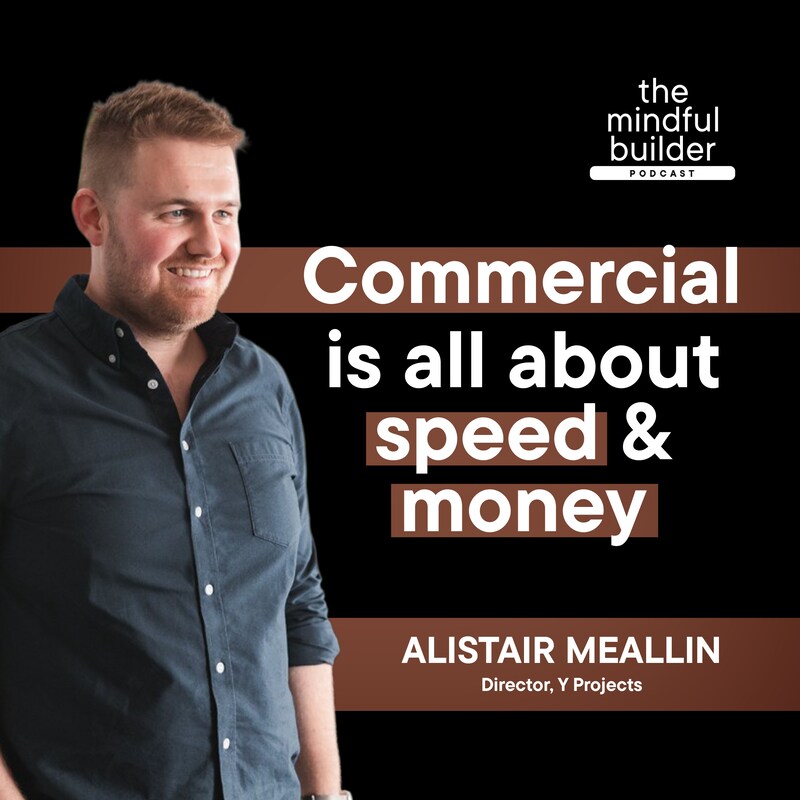
“Commercial teaches you speed and logistics. Residential teaches you people.”
In this episode, we sit down with Alistair Meallin, Director at Y Projects, to talk about what it really takes to build high-quality custom homes in Australia. With over a decade in construction and a construction degree from the University of Melbourne, Alistair shares the lessons he learned on big commercial sites and why he ultimately moved into residential building for the client connection.
We unpack Alistair’s path through construction management and working with larger builders, including Icon Construction, and how those early years shaped the systems and standards he now brings to Y Projects. This is a practical look at site management, trade coordination, and what it means to run a building business without losing the human side of the job.
A big part of the conversation is the design process and budget reality. Alistair explains why a successful build is not just the final product, but the client experience along the way, and how small design upgrades can stack up fast. Clear communication, grounded expectations, and aligning design with budget are key to avoiding stress and cost blowouts.
We also talk team culture, staff retention, and advice for apprentices and future builders. Alistair shares why curiosity and learning the “why” matters, plus his vision for making custom-designed, high-quality residential construction more accessible.
👇 CHAPTER MARKERS 👇
00:00 Podcast Welcome
02:59 Commercial Builder Lessons
05:32 Defects And Retrenchment
07:31 Mentorship Deep End
08:56 High End Homes Shift
11:21 Client Emotions Process
15:05 Onboarding Handover Systems
17:47 EBA Unions Explained
21:50 Starting Y Projects
22:25 Footscray Development Story
28:22 Y Projects Name Origin
29:34 Leaving Commercial For Townhomes
32:21 Flexibility for Family
33:10 Retention Through Realistic Timelines
34:08 Carpenters Hours and Value
35:24 Hiring for Team Fit
35:56 Positive Site Leadership
39:22 Frozen Yogurt Budget Trap
42:57 Precon Costs and Risk
45:28 Making Custom Homes Attainable
48:43 ECI Early Budget Alignment
51:34 Architect Retention Debate
54:04 Builder Network and Support
55:19 Advice for Apprentices
59:59 Wrap Up and Contact
LINKS:
Y Projects:
Y Projects Instagram:
https://www.instagram.com/yprojects/
Our Sponsors:
Proclima - https://mindful-builder.captivate.fm/proclima
MEGT - https://mindful-builder.captivate.fm/megt
Connect with us on Instagram: @themindfulbuilderpod
Connect with Hamish:
Instagram: @sanctumhomes
Website: www.yoursanctum.com.au/
Connect with Matt:
Instagram: @carlandconstructions
Website: www.carlandconstructions.com/
Mentioned in this episode:
Transcripts
Welcome to the, uh, minefield Builder Podcast.
Speaker:We're in the built to last studio with, uh, sponsored by Pro Climber.
Speaker:Uh, we've been using their Alistair products for, I
Speaker:would say nearly 10 years-ish.
Speaker:We're getting close.
Speaker:2018. Yeah.
Speaker:Getting close,
Speaker:close building, but I put it on.
Speaker:Yeah.
Speaker:Um, it's, I know it's both of our non-negotiables in our building, so
Speaker:now you, you are, you are not a high, well, you are a great builder.
Speaker:Yeah.
Speaker:But you don't sort of fit into that like.
Speaker:Typical cliche, high performance builder, however you use the Proclaimer system.
Speaker:Do you know why It's, for us, it's just a warranty thing, like, yeah.
Speaker:Since we've started using the Proclaimer products, abbu, I sleep at night when
Speaker:it's bucketing down, rain outside.
Speaker:I feel like our buildings are, it's, it's the warrant insurance that your wrap.
Speaker:Is acting as your barrier to effectively prevent the water getting into the
Speaker:building, and then the cladding is just the treatment on the outside.
Speaker:Yeah, like
Speaker:that right there is probably really great promo for Proclama because
Speaker:it's it, in my opinion, your external building wrap should be this stuff.
Speaker:Yeah.
Speaker:Well I think the thing about like the work that we do is we do some pretty
Speaker:hairy architectural cladding work in terms of, we're doing some jobs at the
Speaker:moment where there's no cappings on it.
Speaker:Um, some of the metal cladding we've done in the past before I
Speaker:know is water getting behind it.
Speaker:And so if the heavy lifting's not being done by that external
Speaker:wrap, we're in big trouble.
Speaker:Yeah, totally.
Speaker:Yep.
Speaker:So we're with Alistair.
Speaker:Why projects?
Speaker:Yep.
Speaker:Now who are you, Al?
Speaker:Uh, I'm a builder.
Speaker:Um, and have been white product's, been around for about seven years now.
Speaker:So we, we, I'm sort of an interesting case study that I didn't come down the
Speaker:traditional residential building route.
Speaker:So in rms Williams Chinos type?
Speaker:Yeah, exactly, exactly.
Speaker:So I, um, I studied construction management at Melbourne.
Speaker:It was called, um, it's called the bachelor environments now.
Speaker:It was the first year to go through.
Speaker:The new course, but, um, yeah, so we, we did, I did construction at uni and then
Speaker:I actually went and worked for a big tier one builder called Icon Construction.
Speaker:Yep.
Speaker:I used to play footy with his son.
Speaker:Yeah.
Speaker:Oh, it's, there's a, it's a, to you, honestly, it's a really good
Speaker:founding as a builder because obviously you're exposed to, um, it's
Speaker:effectively how the best guys do.
Speaker:Like, obviously you look at the, the multiplex of the world, the icons, the
Speaker:um, Simons these really big builders and they've got their systems dialed in.
Speaker:Like in order to deliver a 400 apartment building Yeah.
Speaker:You've gotta have the systems in place
Speaker:and to make money.
Speaker:Yeah.
Speaker:And to make money too.
Speaker:'cause that's the hardest part.
Speaker:Like obviously in the commercial world as well, like if you think
Speaker:it's hard and residential, commercial is 10 times harder in terms of.
Speaker:The, the reason why our, our clients are making the decisions they
Speaker:make, it's more of an emotional decision, but in commercial, it
Speaker:is all about speed and money.
Speaker:Yep.
Speaker:Um, so for me that's amazing grounding, like you learn, um, how
Speaker:to, how to deal with programs, how to deal with budgets, how to really.
Speaker:Do the kind of administration side of the business.
Speaker:Um, so, but funnily enough, like the one thing that I never really
Speaker:loved about that world was that the focus was such a commercial focus.
Speaker:Like it was always about speed and cost.
Speaker:The quality was something that was, it's important and I think it's got
Speaker:a lot better, but when I was involved in it, like it was really about
Speaker:like, let's just get this thing done as fast as possible and as, let's
Speaker:just try and make some money on that because budgets were always so tight.
Speaker:Um, so.
Speaker:They're off small margins, don't they?
Speaker:Oh mate.
Speaker:The margins that these commercial builders run off is, is frightening.
Speaker:Like obviously the contracts are such, they we're talking in the hundreds
Speaker:of millions, so Yeah, contracts,
Speaker:5% of 500 million is not bad though.
Speaker:Yeah, but I, I, I, I think it's even lower than that.
Speaker:I think they're like, I've heard some down at the two, 3%, like it's low.
Speaker:Like really low.
Speaker:And they competitive
Speaker:tender too.
Speaker:And it's competitive tender.
Speaker:So it's, it's a hard, hard game.
Speaker:And I've got a lot of, like, I think any builder in Australia in the
Speaker:world is like, it's good on you.
Speaker:Like, it, it's, I remember dad when I, um, when I first told him I wanna
Speaker:be a builder, um, he's, he works in the construction industry as well.
Speaker:He goes, are you sure you wanna be a builder rail?
Speaker:Like you've got the marks to be an accountant.
Speaker:You can go do, like, go do finance.
Speaker:You don't do stock broking.
Speaker:Like, are you sure this is what you wanna do?
Speaker:I'm like, yes, dad, I really wanna do this.
Speaker:Um, and I probably should have listened to him.
Speaker:Like, I think he's ly the wise words.
Speaker:You've still got your
Speaker:hair though.
Speaker:I know.
Speaker:I'm, I'm doing all right with the hair, but I could have been literally.
Speaker:But you're talking about Botox though, weren't you?
Speaker:Yeah, exactly.
Speaker:So I could have been lying on a beach deal, enjoying my long holiday,
Speaker:playing golf, doing long lunches, but I am, I chose the path of building.
Speaker:So worked at Icon then, um, what was your role
Speaker:there?
Speaker:So, I always started off as a, I think they call it a project coordinator.
Speaker:Yeah.
Speaker:So my first gig at Icon was we did this job, um, in a Beckett
Speaker:Street called a Beckett Tower.
Speaker:Um, it was about a 300 apartment building.
Speaker:Um, and my job was defecting, so I started at the top of the building and
Speaker:I, it's the bottom of the building.
Speaker:I worked my way up every single apartment.
Speaker:Going through and running defect lists, and then basically adminis trying to
Speaker:administer those defects with trades.
Speaker:So during construction or
Speaker:during construction?
Speaker:Yeah,
Speaker:exactly.
Speaker:So by the time you get to the next one, that plaster could be on and it's like
Speaker:Exactly.
Speaker:And so you kind of, um, it was a, a lot of time the defects were the, because the,
Speaker:remember these apartments are the same.
Speaker:Each, each apartment is exactly the same.
Speaker:So you kind of, the defects are quite repetitive.
Speaker:Yeah.
Speaker:But.
Speaker:The hardest part is that, um, just dragging the same trades back
Speaker:to fix the same problems again.
Speaker:And, and again, it's quite a mundane, um, arduous task.
Speaker:Um, so anyway, so did that and like, I, I suppose thing for me, there's, I, um.
Speaker:Icon slowed down a fair bit.
Speaker:And so they were, um, pretty much retrenching boats left, right, and center.
Speaker:And I remember, um, I rang my supervisor at the time and said, what do I do?
Speaker:Like, um, he'd, he'd since left to go work at another company.
Speaker:Like, what do I do?
Speaker:I'm watching everyone left, right and center of me be
Speaker:given the red slip to leave.
Speaker:Um, and he said, Hey, look, I'm at this new business.
Speaker:We are looking for a junior.
Speaker:Do you wanna come across?
Speaker:So I, um, I left Icon and I, um, I went to this other small
Speaker:non EBA builder called Vic.
Speaker:So they were basically a, um, a small Croatian builder developer.
Speaker:They were doing sort of, um, way smaller scale than what ICON were.
Speaker:So we're doing like 30 apartment jobs, maybe 40, 50 apartments.
Speaker:So that sort of tier three non EBA well.
Speaker:Um, but the best thing for me, and it was probably the best decision I ever made,
Speaker:was that that was a really small company.
Speaker:And at that time they were really just getting into that commercial construction.
Speaker:So they were kind of, um, I was thrown well and truly in the deep end Yeah.
Speaker:Exposure for what I was doing.
Speaker:Um, like it was really just me and my supervisor running
Speaker:these 60 apartment jobs.
Speaker:And he was probably one of the, I still thank a guy's name was Don was one of
Speaker:the best mentors I reckon I ever had.
Speaker:Um, and he just really took me under my, his wings and just trained me
Speaker:up to be, um, as good as he was.
Speaker:And
Speaker:what are some of the tips that he gave you?
Speaker:So it's more like, it's, what he did for me was that he would put me in situations
Speaker:where, like take for example, he would send me out to a group of trades.
Speaker:And he knew I was gonna lose the argument, but he would send me out there and make me
Speaker:argue it just because it was good for me.
Speaker:Like he would just sit there and I would just have to argue, argue, argue,
Speaker:until I could kind of get people to persuade them that it had to be done.
Speaker:And he knew I was in a losing battle.
Speaker:But it's that sort of skillset that he gave straight in the deep end.
Speaker:Oh, straighten the deep end.
Speaker:And also like just.
Speaker:Um, being, we were obviously letting big contracts and I was just getting
Speaker:involved in everything and was site based, so really got to know.
Speaker:Um, I've, we've since done basements at Y projects, but it was really good
Speaker:exposure to, had actually built a basement, had a waterproof it properly.
Speaker:Yeah.
Speaker:Where basements go wrong.
Speaker:Um, and then obviously, yeah, just doing the sort of the
Speaker:commercial sort of construction.
Speaker:What an amazing foundation to then step into residential.
Speaker:Like I'm really envious.
Speaker:Yeah.
Speaker:Was
Speaker:residential
Speaker:the next step?
Speaker:Well, so what happened was, so I, funnily enough, so we were doing this,
Speaker:doing these sort of larger apartment buildings and then we ended up doing
Speaker:some smaller townhouse projects.
Speaker:So.
Speaker:I was given even more of a bit of a step up, so I was sort of
Speaker:doing ca kind of junior PM work on these smaller townhouses.
Speaker:Yeah.
Speaker:And I, what I found was that I was really loving the smaller stuff.
Speaker:So we did that and then I got an opportunity to sort of PM a
Speaker:developer's own beach house in sho.
Speaker:So it was like a three, $4 million house.
Speaker:Geez.
Speaker:In showroom.
Speaker:And I, what I, those was back
Speaker:pre
Speaker:COVID times too.
Speaker:Yeah, it was just back pre COVID times.
Speaker:And I think what I really realized, this was a 10 million house.
Speaker:Yeah, exactly.
Speaker:Um, it was all, it was all cla in stone in that house.
Speaker:So like, I remember we had a, um, and when I say stone, it wasn't like, um,
Speaker:traditional kind of sheets of stone we're talking like boulders that someone
Speaker:had to literally chisel no way into a square, like brick and then lay it.
Speaker:So I remember it was the most.
Speaker:The most precious trade.
Speaker:I've, I can't remember the trades name, um, the subcontractor's name,
Speaker:but it was the most precious trade I've ever worked with because it's
Speaker:probably only like four or five of these traditional stone mates in
Speaker:and can't, you can't push 'em because I'll just go,
Speaker:they'll just push 'em.
Speaker:There's about 10 other 15 other jobs that they're getting paid
Speaker:a fortune to go across to.
Speaker:So his, I remember his bill came in and it was the fastest invoice we've ever
Speaker:paid in a commercial construction company.
Speaker:Like he was literally come in, paid 15 minutes later.
Speaker:Um, and he, if he decided he didn't wanna work for the day, you wouldn't harass him.
Speaker:You'd just leave him, et cetera.
Speaker:Um.
Speaker:Anyway, I di I digress.
Speaker:So we are doing some sort of, um, I obviously got exposure doing, uh, single
Speaker:houses and then from that, um, I just realized that that's really what I, my
Speaker:passion was and that's what I loved.
Speaker:Um, and I think the big difference for me from that versus doing the
Speaker:apartment sort of work was that you knew who your clients were.
Speaker:So you knew.
Speaker:Um, I'm building this home for this person.
Speaker:This is their dream place.
Speaker:Versus when you do apartment work, to be honest, you, you don't, you
Speaker:never, you never meet the clients who are gonna move in there.
Speaker:And whilst obviously these apartments are kind of the people's dreams.
Speaker:Yeah.
Speaker:And like that's their, where you sort of, yes, they're not a four or $5
Speaker:million home, but it's still someone's dream home and that's where they
Speaker:wanna live in and they're gonna bring up their family there, et cetera.
Speaker:You forget that and you sort of, you have that don't have that disconnect
Speaker:'cause you don't have that personal relationship with the client.
Speaker:So, um, I think that's what I fell in love with and I, I also really loved the fact
Speaker:that the decisions in a high end home were made emotionally rather than commercially.
Speaker:Yep.
Speaker:So the fact that my clients wanted to spend a fortune on some
Speaker:rare Carrara marble or whatever, that's their own personal choice.
Speaker:It didn't make any sense.
Speaker:Like they can get stoned from a million other suppliers.
Speaker:Yeah.
Speaker:And I'm sure it would look just as good and perform just as good, but that's what
Speaker:they wanted and that's what they got.
Speaker:Um, and that's what I loved about it.
Speaker:It's funny, the, the, the things that you talk about, this emotion, um, and
Speaker:that's the side of it that you love.
Speaker:Like you talk to Harvard Dozen and other builders and they're like, oh, I just
Speaker:wanna stop working for clients because there's too much emotion tied up in it.
Speaker:And I'm, I'm the same as you.
Speaker:Yeah.
Speaker:Like, I love delivering homes to my clients.
Speaker:That they just love being in.
Speaker:Uh, and so it's really interesting that, you know, we're all sitting
Speaker:here sharing that same feeling.
Speaker:And yet I talked to someone else yesterday who was like, I'm done with building.
Speaker:I'm sick of all this emotion that's tied up with it.
Speaker:You know what?
Speaker:That's their problem.
Speaker:I'm gonna say if you, if you can't have a good relationship with your
Speaker:client, it's not the client's problem.
Speaker:It's your problem.
Speaker:It's, it's hard.
Speaker:I think that's what I was saying before that I think I've got so much respect
Speaker:of anyone who calls myself a builder.
Speaker:Yeah.
Speaker:Because it is, I, I cannot think of many careers at the harder than what we do.
Speaker:It is just risk, the risk, the emotional investment that our clients
Speaker:are making going down this path, like this is all their life savings.
Speaker:They're trusting us to kind of deliver.
Speaker:It is such an emotional journey.
Speaker:And like I'm, I'm sure you boys have been the same that.
Speaker:By no fault of their own, the client made a decision that they weren't.
Speaker:Um, I know they picked a paint color they weren't happy with.
Speaker:It's really upset.
Speaker:They, they, they stew on it, they get upset about it, and it's,
Speaker:we've, we've done nothing wrong.
Speaker:You about to build with your wife.
Speaker:Yeah,
Speaker:yeah,
Speaker:yeah.
Speaker:Exactly.
Speaker:Exactly.
Speaker:Yeah.
Speaker:Where you go through that.
Speaker:Yeah.
Speaker:Um, and it's, I, I get it like, yeah, a hundred percent.
Speaker:It,
Speaker:it's, that's why I say the comment, like, if I think I, like, I speak
Speaker:to people as well and they're like, oh, the client, the pain in the ass.
Speaker:I hate talking to 'em and.
Speaker:Like, yeah, sometimes I get anxious when the client calls me.
Speaker:Like, that's just normal.
Speaker:But the thing is, there's a reason why that you are fighting with the client
Speaker:and you haven't got a process, right?
Speaker:You haven't.
Speaker:You haven't vetted them correctly, you haven't sat down with them
Speaker:and just grabbed a coffee and go, who are you as a person?
Speaker:Like we're, I'm a person, A people first.
Speaker:Like I'll pick my project off the person and then if the project ticks my boxes,
Speaker:then we'll look at it kind of thing.
Speaker:Yeah.
Speaker:I mean, I think, and I think the relation, like important relationships, uh, extend
Speaker:beyond them when the home's built too.
Speaker:Like I've got, um, two, uh, issues on past projects, like there
Speaker:were four or five years ago.
Speaker:One was seven years ago.
Speaker:And the client called me out, we're having a good chat, and he's
Speaker:like, Hey, I've got this problem.
Speaker:Like, great, I'll come around and have a look.
Speaker:Yep.
Speaker:And I wanted to go back.
Speaker:I want them to have a, I want them to still be in love with their home.
Speaker:I want to show them that I'm still showing up and, you know,
Speaker:still part, still part
Speaker:of the story.
Speaker:We're, we're actually, we're just working out like who's at fault?
Speaker:Um.
Speaker:Because it, there's a whole bunch of different people involved in it,
Speaker:like landscaper, engineer, et cetera.
Speaker:Um, but I'm really quick to go back and, and fix it.
Speaker:'cause I want them to be in a, in a beautiful home.
Speaker:Still, it
Speaker:still represents you.
Speaker:Like they, in say six months, they'd be like, Hamish was really
Speaker:professional about the situation and we'd still recommend him.
Speaker:Yeah, I think that's, I think you, you, you just.
Speaker:You, we've, we sign off and you talk about risk.
Speaker:Like we sign off on the project for 10 years.
Speaker:We are part of that family no matter what.
Speaker:Like we're the, I'm the extra child in their relationship.
Speaker:I think what a lot of builders forget is that.
Speaker:Most of our clients have never been through this process before.
Speaker:Yeah.
Speaker:So our job, like as much as our job is to deliver, um, for what we see at
Speaker:White Project, as much as our job is to deliver a beautiful home, it's also the
Speaker:experience of building the house as well.
Speaker:Like yeah, it should be a great experience.
Speaker:Like it's for a lot of our clients, it's probably something that's so exciting and
Speaker:they've dreamt about for so long, and so.
Speaker:The fact that I, I think the process of building the home is
Speaker:as important as the end product.
Speaker:The journey.
Speaker:I, I would actually say that it's probably more
Speaker:so your question you say there like, they've never built before.
Speaker:One of my questions is, have you built before?
Speaker:And if they say yes, and I say, why aren't you using the same builder?
Speaker:Oh, we didn't get along with them.
Speaker:Red flag.
Speaker:Yeah.
Speaker:Instantly.
Speaker:Oh, well, yes.
Speaker:And
Speaker:because are we, we, we clashed, we fought the whole time.
Speaker:There's like,
Speaker:I think, I think, I think it's important to talk to the client
Speaker:and really understand Yeah.
Speaker:Why the
Speaker:back story behind it.
Speaker:Totally.
Speaker:I think that's process based.
Speaker:Like we're one thing, some stuff that, to be honest you, it hasn't opened overnight.
Speaker:Like it's been something we've been developing over a long time.
Speaker:But we've got some really good onboarding process of our clients.
Speaker:Really good process as we're approaching handover.
Speaker:Ha.
Speaker:Handover works.
Speaker:That's such a hard
Speaker:period.
Speaker:Yeah, but do you know what, it's, for us, we actually talk about
Speaker:like, even sort of things we do.
Speaker:Like, so we actually talk about handover at the start of a job.
Speaker:Mm. And it's, it's sort of, it's not, um, it doesn't make sense,
Speaker:like why are you talking about handover when we're starting a job?
Speaker:But I think it's really important to set the goalpost, kind of give some
Speaker:really clear structure about Yeah.
Speaker:Um, how that's gonna happen from day zero.
Speaker:I love that.
Speaker:Yeah.
Speaker:Um, and the other thing we do too is we are really big and God, we've got.
Speaker:I've got some legal clients working for, at the moment, they laugh at me,
Speaker:they're like, God, you're worse than us.
Speaker:They're the best
Speaker:clients.
Speaker:So
Speaker:lawyers, but we, we make them sign and we actually really talk about,
Speaker:we do some quite high risk, um, things at the moment in construction.
Speaker:So a classic example, we're actually doing a project at the moment
Speaker:that's all cladding caught in steel.
Speaker:And I was really concerned because we've got timber windows that are
Speaker:beneath this cor and steel cladding.
Speaker:And we've also got some exposed in situ concrete benches.
Speaker:And I'm obviously really concerned that this cor and steel is gonna drip.
Speaker:This rust colored, um, caught in stain everywhere.
Speaker:It's gonna stain these beautiful bench tops and stain these timber windows.
Speaker:Um, and.
Speaker:My job as a builder is not to tell them, Hey, you can't have that courtin.
Speaker:It's more to say, Hey, just so you're aware, this is gonna happen.
Speaker:If that's all cool and everyone's on the same page, fine.
Speaker:We'll play on.
Speaker:What would be
Speaker:your fault though?
Speaker:No, it's, it's not, it's not my fault at all.
Speaker:But I think where, where, um, clients get off site or where people can get upset is
Speaker:they just don't know what's gonna happen.
Speaker:Transparency from the
Speaker:start.
Speaker:Transparency in it.
Speaker:Yeah.
Speaker:I mean, it, I think, I think it's your obligation as a builder to, if you know
Speaker:that you need to tell Yeah, exactly.
Speaker:And not push the buck back onto the designer.
Speaker:No, no, no.
Speaker:A hundred percent.
Speaker:So it should, it's should a conversation.
Speaker:And look, we've, we've, and we gave them alternate options.
Speaker:Obviously some fan, like we live in a world now where there's
Speaker:gazillions of, um, building products.
Speaker:So we gave them some options of some alternate court and claddings
Speaker:that are effectively fa corin that look just as good, but, uh, that
Speaker:it's again, emotional decision.
Speaker:They want the real thing and that's fine, but it's just making sure
Speaker:they're aware of what the risks are.
Speaker:Yeah.
Speaker:Yeah.
Speaker:Um, and look.
Speaker:There is standing on those tin windows and they're okay with it.
Speaker:Lawyers are the best clients.
Speaker:They're black and white.
Speaker:They see the contract.
Speaker:It's actually,
Speaker:but they're quite, it's funny, they laugh.
Speaker:They laugh at me now.
Speaker:They're like, they, they, we kind of make a joke at all the time.
Speaker:They're, you gonna tell us about court again and how that problematic it's
Speaker:gonna be, and like, the fact that they're so across it is a really good thing.
Speaker:And they're kind of, they're not getting to the end of the job
Speaker:and going, oh my God, my new seat is covered in court and stage.
Speaker:Yeah.
Speaker:Et cetera.
Speaker:It's part of the story.
Speaker:It's part of the story.
Speaker:Yeah.
Speaker:Awesome.
Speaker:Yep.
Speaker:So, so you've gone from, uh, that, that bigs Sean and Project Yep.
Speaker:Um, where you were managing that one.
Speaker:So where did Y project start?
Speaker:Can I, can I actually jump back because we talked, 'cause it goes
Speaker:back to just the commercial side.
Speaker:You said before about EVA, non EBA and EV Sure.
Speaker:Yep.
Speaker:Uh, types of projects.
Speaker:Yep.
Speaker:What's, can you just explain that and the problems with the EBA.
Speaker:So.
Speaker:Icon was a EBA builder.
Speaker:So what that means is basically that they're, um, all the trades that work
Speaker:on them have to be part of the union.
Speaker:So basically there's obviously union set minimum wages and standards, and we would
Speaker:have union reps on site and all this.
Speaker:Did
Speaker:anyone see the fucking, um, social media posts that, um, what's the fucking
Speaker:big union that we've sector Yeah.
Speaker:Put out the other day about the air quality.
Speaker:Oh, if you are working outside at the moment in the city, you really
Speaker:should be, uh, you really should be shutting your sight down and all
Speaker:these comments underneath saying, what about the fucking fire people
Speaker:and, and the emergency services in the fires, should they shut down?
Speaker:It's, it's a, it's a different world.
Speaker:Like, um, yeah, it's, it's, it's probably taking the piss adds, it
Speaker:adds an extra degree of complexity.
Speaker:An already and very, very, and cost.
Speaker:And cost.
Speaker:That's the thing that sort of.
Speaker:We all, the thing that really worries me and the hardest part about a lot of our
Speaker:trades is that they can all residential, the pay in residential is nowhere near
Speaker:what it is in working in a EBA site.
Speaker:Like if a carpenter is to leave and work, leave from residential and go work in
Speaker:EBA, his wage would jump exponentially.
Speaker:Do you
Speaker:not?
Speaker:Good go.
Speaker:Good go
Speaker:for, but the problem is for it, the job satisfaction I think
Speaker:is equally heavily diminished.
Speaker:Like there's something beautiful about putting someone's home.
Speaker:If you are, go print.
Speaker:No, I agree.
Speaker:In 400 apartments.
Speaker:I won't hire you if you've come from a commercial carpentry
Speaker:background, like that's when I just rehired recently on seek.
Speaker:One of the questions like, have you worked commercial?
Speaker:Is that like your current job commercial?
Speaker:It was an automatic filter just to throw you in the bin.
Speaker:Like, I wasn't interested in you.
Speaker:I,
Speaker:I'll give you
Speaker:your work, your work, your work ethic, and your work.
Speaker:Um, the, the, they're just lazy.
Speaker:I tell you what, it's Matt.
Speaker:We had a, I remember back in, so this is, comes back to me doing this defect
Speaker:and I remember going out to a plumber and said, oh, can you fix this basin?
Speaker:And he said, I can't do it.
Speaker:I'm like, what do you mean you can't do it?
Speaker:He goes, I only know how to install pans.
Speaker:That's all I do.
Speaker:Yeah.
Speaker:So my, my one, my one job is I fit pans off and I am so quick and good at
Speaker:fitting pans, but any other plumbing outside of that fitting off pans,
Speaker:I wouldn't know know how to do it.
Speaker:So I know, I know a carpenter did their carpentry apprenticeship as a commercial.
Speaker:The thing he, he didn't, he did doors.
Speaker:Not, did he not only not do doors, he only re-put the latch on after
Speaker:they've already been drilled out.
Speaker:And that's what I mean,
Speaker:three years just obviously
Speaker:they get paid well, but in their job satisfaction, their degree of knowledge
Speaker:of trades, he's far, far, but, so
Speaker:it's not, so it's not a car.
Speaker:Like I would refer to him as a. It's, I wouldn't even say skilled laborer.
Speaker:Yeah.
Speaker:Like it's, it's just someone, it's not even, it's not even a,
Speaker:but just for, for contrast, you put yourself the
Speaker:commercial hat back on Unreal.
Speaker:Like you've got the bloke who is the expert at doing this and he's so quick
Speaker:and efficient at doing this, whereas.
Speaker:Um, you know, your own trades that when you get, you gotta do something
Speaker:new, it takes a while to nut out.
Speaker:Yeah.
Speaker:And it's obviously there's that teething problem.
Speaker:So there's obviously the huge efficiencies they get from a commercial
Speaker:kind of financial perspective, but from a job satisfaction from
Speaker:the actual employee themself.
Speaker:Um, far less.
Speaker:I, yeah, I, I'm all unions, pro safety, love, all that sort of stuff.
Speaker:Yeah.
Speaker:So,
Speaker:yeah, a hundred percent.
Speaker:Like, you know what?
Speaker:Amazing.
Speaker:I just think we are getting to a point where it's taken it way too far.
Speaker:Like if there's a bit of rain, just keep, just chuck the jacket on, keep working.
Speaker:Like I'm gonna be straight out, honest and all it's done is, we've
Speaker:seen, and Victoria specifically is, we've seen so many people leave a
Speaker:residential setting in say carpentry.
Speaker:'cause there's been so much commercial work they've left, they've paid them.
Speaker:Two x of what they'd probably get in a residential sector.
Speaker:And then they've come back expecting the same pay and
Speaker:it's just driven the price up.
Speaker:And no one talks about this as why construction has also gone up is 'cause
Speaker:we've spent so much money on say, a big build that people now have an expectation.
Speaker:'cause they paid whatever they could.
Speaker:To get them in there, and now it's coming back to us.
Speaker:Mm-hmm.
Speaker:I think that'll, it'll, it'll check itself out over the next 12 months, I reckon.
Speaker:I reckon.
Speaker:Yeah.
Speaker:I think we've
Speaker:already seen it though.
Speaker:So you're asking Hayim where, so obviously how did, obviously we did
Speaker:that house in sho, um, and how did, why product sort of come about?
Speaker:So, um, funnily enough, like I think the thing about being a young
Speaker:bloke is, or particularly my sort of personality, is that I'm a very do
Speaker:first worry later kind of approach.
Speaker:And I think ish is probably the same.
Speaker:This is why
Speaker:we're gonna, along
Speaker:to, it's funny like we, um, fail forward.
Speaker:Yeah.
Speaker:I think it especially fail forward and I think it, that's sort of been the
Speaker:reason why we've been able to achieve so much is that I think once you.
Speaker:Get the motion rolling and you committ to something, you've gotta make it work.
Speaker:So I am, you've got
Speaker:no other choice.
Speaker:Got no other choice.
Speaker:So I actually, rather than buying a first home, I bought a
Speaker:development site in Footscray.
Speaker:Yeah, this is while I was working full time.
Speaker:And, um, just because it'll gives some context on this development
Speaker:site, when you're obviously thinking big block foot gray, blah, blah.
Speaker:Is that how
Speaker:you pronounce
Speaker:it?
Speaker:I bought a hundred.
Speaker:That's.
Speaker:189 square meter site in, um, right near kind of, um, Seton.
Speaker:Just are you, obviously, you know where, um, the railway hotel is.
Speaker:I know where you are.
Speaker:Yeah, yeah.
Speaker:Like,
Speaker:yeah, like the, um, on the corner,
Speaker:it was on, um, Huntley Street and Rail Street there.
Speaker:So parallel the train line.
Speaker:Yeah, yeah, yeah, yeah.
Speaker:Down there.
Speaker:Yeah.
Speaker:So I bought this 180 square, 89 square meter site in Footscray.
Speaker:Um, and I remember I went to actually a local architect who
Speaker:is in Setin called Basal of Arts.
Speaker:Yeah.
Speaker:Yeah.
Speaker:So I went in there and I, I remember going in and I met, um, ire, who's the
Speaker:owner of this architecture practice,
Speaker:and Sarah,
Speaker:uh, Sarah, yeah.
Speaker:And I, so she went in there and I said, I've, I put this site, I'll put three
Speaker:townhouses on my 189 square meter block.
Speaker:And she looked at me, she's like, oh my God.
Speaker:Like, what?
Speaker:What are you talking about?
Speaker:And.
Speaker:Um, look, what I did was I actually sat down and I showed her like I,
Speaker:I, obviously, the thing about doing this is I, I did had, I had done some
Speaker:homework, like I'm not completely blind, so I showed her, I'm like, I
Speaker:think we can get 1, 2, 3 townhouses like this and I think the shadow room's
Speaker:gonna work in our sort of favor and we could do some car parking like this.
Speaker:And I remember she sat there and she sort of, she didn't say
Speaker:anything for a minute and I was like, oh my God, what have I done?
Speaker:Um, and then she said, I think, I think we can get a, I think we
Speaker:need to get a TAM planner involved.
Speaker:But what you're saying makes sense.
Speaker:So I remember we got the town planner in and she's like, I,
Speaker:I think we can make this work.
Speaker:So we, um, we basically got a, I remember getting a planning permit,
Speaker:which we managed to get a planning permit on these three triple
Speaker:story town asses in Footscray.
Speaker:Um, and it was in my defense, like I'd bought, it's the
Speaker:activity zone in foot scrape.
Speaker:That's probably the highest, most dent zoning in the area.
Speaker:Yeah.
Speaker:Um, I was right, like the re the shadowing work, the rear lane work.
Speaker:Are you ever wrong?
Speaker:Like it was?
Speaker:What's that?
Speaker:Are
Speaker:you ever wrong?
Speaker:I do definitely do make mistakes, but that was sort of like I, I did have
Speaker:some method behind my madness, but.
Speaker:Um, that was really my first exposure.
Speaker:So I got my planning permit and then I actually sold all
Speaker:three town asses off the plan.
Speaker:Wow.
Speaker:Geez.
Speaker:And I, we actually set the record at the, um, in, in north or basically
Speaker:in Footscray for highest square meter rate for these town asses.
Speaker:Wow.
Speaker:And at the time, like obviously.
Speaker:The world of developments improved immensely in terms of like
Speaker:marketing collateral, but this is the days when you have these, um,
Speaker:this is Preco, this is pre COVID.
Speaker:So we've got kind of these, um, developers who are just getting these
Speaker:overseas Chinese firms do their renders.
Speaker:Yeah, and it looks like.
Speaker:It was bad, bad, bad.
Speaker:Yeah.
Speaker:And so we actually got a proper 3D 'cause obviously this is my
Speaker:commercial background, so having worked with developers and seeing how
Speaker:they would um, sell their products.
Speaker:Sell their products, exactly.
Speaker:So we got a proper 3D visualization artist.
Speaker:We got some really nice brochures done, some nice marketing boxes to
Speaker:show the materials and the project.
Speaker:Um, and it, it did really well.
Speaker:Like,
Speaker:really well.
Speaker:Well, did you, and you built them.
Speaker:Yeah, so that was the next part.
Speaker:So I, um, not, obviously not being exposed to residential construction.
Speaker:I actually didn't have a DB, so I got what we call A DBM.
Speaker:Yeah.
Speaker:Yes.
Speaker:It doesn't exist anymore.
Speaker:So, um, I got my domestic budha managed.
Speaker:So, um, anyway, what I did was I needed to keep, pretty much, I, I bought the site.
Speaker:Got all, got them all off the plan and I literally was like, I'm out of dough.
Speaker:So I had to go get some finance.
Speaker:So ring up family go, I need some help.
Speaker:We've got these things sold.
Speaker:Here's the of construction cost.
Speaker:You don't get the
Speaker:money to the end until they're sold.
Speaker:Yeah, exactly.
Speaker:So anyway, so I managed to get some help from family to pay to
Speaker:actually fund the construction.
Speaker:Then um, I love
Speaker:that you just figuring out these.
Speaker:This is what I
Speaker:mean, like you just work it as you go.
Speaker:So I, so I got my DBM, um, and then I was like, I'm gonna build it,
Speaker:but I need to keep working at the time because obviously need income.
Speaker:Yeah.
Speaker:So I basically would get up at sort of 5:00 AM in the morning.
Speaker:I would go to site, um, before work would get there at sort of six would meet.
Speaker:Um, Steve, who's my, was basically the leading hand carpenter on that
Speaker:job, who's still with me today, is one of my best supervisors.
Speaker:Um, that's pretty cool.
Speaker:Yeah.
Speaker:So basically we'd meet him at six 30.
Speaker:He would go for this, we're gonna get done for the day.
Speaker:He would work for the day and kind of manage the day-to-day problems.
Speaker:And then I would come there after work, see what got done
Speaker:for the day and just repeat.
Speaker:And then every weekend was there.
Speaker:Obviously working away at it, but pretty much built those three townhouses while
Speaker:I was working full time, which was wow.
Speaker:Not
Speaker:how long, how long did it take you to build?
Speaker:It took me about 18 months, I think.
Speaker:Uh, and the, and, and clients were happy
Speaker:and clients super happy.
Speaker:Yeah.
Speaker:And like the thing for me was that the, I know being really upfront, like obviously
Speaker:commercial building is very different to residential building, and so that was very
Speaker:much an eye opener like I was learning.
Speaker:Did, since you saw them off the plans, had you already, uh, specified
Speaker:fixtures, fittings, carpet, everything?
Speaker:They didn't have any say in the final fitter.
Speaker:Exactly.
Speaker:Yeah.
Speaker:Yeah, exactly.
Speaker:Could
Speaker:I make
Speaker:a variation?
Speaker:They could.
Speaker:Yeah, we had some clients made some variations.
Speaker:It was part of the sales contracts.
Speaker:Okay.
Speaker:But, um, it was a pretty kind of like your typical project where
Speaker:they're, they're buying effectively.
Speaker:Um, something that's a, a look.
Speaker:Yeah.
Speaker:But it was, to be honest, you, it was a vertical learning curve and
Speaker:it was the best learning curve.
Speaker:Yeah.
Speaker:Like I learned how to be a builder, learn all about development.
Speaker:Um, yeah, just alert a ton.
Speaker:So why didn't you keep going on that developed
Speaker:trajectory?
Speaker:It's a really good question.
Speaker:To be honest, you, I don't think, and I, I think a lot of people assume
Speaker:developers make an absolute fortune, and I actually don't think it's the case.
Speaker:Like I learned super high risk, how hard it is to make development and
Speaker:how, how high risk it's, and I, to be honest with you, if, if it wasn't
Speaker:for me being the builder, it would probably be a cost neutral project.
Speaker:Like the fact that I built it was the reason why we were able
Speaker:to make it a profitable project.
Speaker:But it is so hard to make these small projects stack up.
Speaker:We, I did three of them with my dad, who's an electrician, brothers a plumber.
Speaker:And we make profit on 'em.
Speaker:But it's not what you think.
Speaker:It's
Speaker:not what you think.
Speaker:No, it's not
Speaker:like
Speaker:I'm buying a Ferrari.
Speaker:Yeah.
Speaker:There's no Ferrari parked at the front board is, yeah, yeah, yeah.
Speaker:It'll still be
Speaker:it.
Speaker:B, super off topic, and I've never asked you this, why is it, why projects?
Speaker:Like why So
Speaker:I've got that
Speaker:written down right
Speaker:here.
Speaker:This is a good question.
Speaker:Yeah, I've your question.
Speaker:So this, this comes back to it.
Speaker:So when we were doing the, this is actually links in beautifully.
Speaker:So the develop, I had to come up with a name for the development company.
Speaker:So we, these townhouses we were developing were.
Speaker:Basically targeted towards generation Y. So they were a first home
Speaker:buyer product, um, that set up.
Speaker:So we actually called it Why projects with the idea that we were, that
Speaker:was sort of our target market and who we were developing for.
Speaker:Interesting.
Speaker:I didn't know this.
Speaker:Yeah.
Speaker:How, I've not asked you this before.
Speaker:'cause I'm like,
Speaker:I'm going through Alistair trying to start, say no Why in there.
Speaker:Yeah.
Speaker:And so that's, that's why it was like that.
Speaker:And I think.
Speaker:For me, I loved, there was just so many, like my marketing hat being on there were
Speaker:so many cool kind of, um, offshoots you can do with a company called Why Projects.
Speaker:I was like, why?
Speaker:Like, why Project?
Speaker:Like, I like as in like, why would you do it kind of thing.
Speaker:Exactly.
Speaker:But no, no.
Speaker:The reason why we, the reason why it was like that was because,
Speaker:and like we were obviously.
Speaker:Try like in my head, I actually, while I was doing it and setting up the company,
Speaker:I thought that I'd be a developer and we'd be doing, um, similar sort of projects
Speaker:and like I love the idea of, um, smart homes and all the kind of fun new cool
Speaker:stuff you can, um, implement into home.
Speaker:So yeah, that's where the name why Fred's coming about from
Speaker:And it's stuck.
Speaker:And it's stuck.
Speaker:Exactly.
Speaker:So, um, did this townhouse project and we got to the end of it and
Speaker:I've, um, realized that I actually.
Speaker:Managed to get through, and I quite enjoyed building it.
Speaker:And I thought I've had enough of, um, commercial construction.
Speaker:So I decided to, um, my auntie at the time, she had a, she's an architect.
Speaker:She actually had a site in St. Kda.
Speaker:Yep.
Speaker:So she had a planning permit and she had six, 10 houses.
Speaker:She wanted 10 houses she wanted built.
Speaker:So that was enough for me to kind of leave, um, leave my workplace,
Speaker:basically build her town homes.
Speaker:Um, why
Speaker:did she design your original one?
Speaker:Why didn't you design the foot screw one?
Speaker:Did?
Speaker:Like, I think for me, the reason why I actually went to Bachelor
Speaker:bar was that, um, I did a lot of homework before I bought this site.
Speaker:So I was looking at advertised planning permits for sort of the past 18 months.
Speaker:Yeah.
Speaker:And I kept consistently seeing that Bachelor, Barts, the local art tech,
Speaker:was getting amazing kind of outcomes.
Speaker:Okay.
Speaker:In terms of sites.
Speaker:So for me it was that local knowledge.
Speaker:Yeah, yeah.
Speaker:Yeah.
Speaker:So I thought
Speaker:someone, they literally practic or they were, they've just.
Speaker:Shut up.
Speaker:Yeah, they, they're
Speaker:right across the
Speaker:market right now.
Speaker:To give you some sort of context, their office was 150 meters from the site,
Speaker:so they knew it back to front the area.
Speaker:Okay.
Speaker:Yeah.
Speaker:Yep.
Speaker:Yep.
Speaker:Which makes sense.
Speaker:Yeah, which makes sense.
Speaker:Um, so yeah, so basically did her, um, so basically left her,
Speaker:built those, um, townhouses.
Speaker:We've still the same guys I've got on site today, so like Tristan and Steve.
Speaker:Wow.
Speaker:Still looks like that's,
Speaker:and what year was that?
Speaker:God, this would've been, I don't know, because
Speaker:you're already young.
Speaker:Yeah.
Speaker:Yeah.
Speaker:I'm, I'm 36.
Speaker:You're same age as
Speaker:me.
Speaker:Yep.
Speaker:Um, yeah.
Speaker:You know, there's, there's probably an interesting conversation
Speaker:there about, um, staff retention that we could probably have.
Speaker:Yeah.
Speaker:You know, and how, how do you keep good stuff?
Speaker:'cause I, you've talked about Steve and, and Andreas from the moment I've known
Speaker:you, and that was 2019 when we first met.
Speaker:Yeah, exactly.
Speaker:Uh, right before COVID first Builder's breakfast
Speaker:Yep.
Speaker:In Melbourne that.
Speaker:Dwayne Pierce kind of put that big shout out for, and that's where we met Nook
Speaker:and Samford and all that kind of stuff.
Speaker:So Good.
Speaker:Yeah, that was unreal and probably one of the best things that have
Speaker:come outta that practice, honestly.
Speaker:Like I feel so privileged to have met so many people that
Speaker:I still talk to from that.
Speaker:Unreal.
Speaker:Yeah.
Speaker:So, so I've known these guys for a long time.
Speaker:What, that's at least seven years.
Speaker:Mm-hmm.
Speaker:You've had those guys.
Speaker:Yeah, exactly.
Speaker:So.
Speaker:I, to be honest, you, we've been so, so lucky, like, and I
Speaker:don't think that we, what do I,
Speaker:luck's not the word.
Speaker:I reckon it's not luck.
Speaker:Yeah.
Speaker:Maybe it's because I, I've always believed that you need to treat
Speaker:people the way you wanna be treated.
Speaker:Yeah.
Speaker:I think that's really the key.
Speaker:Like I, and I hate the cliche that white product is a family, et cetera, and I
Speaker:sort of, I think, I think it's a really bad leader, but it's just more that.
Speaker:I always believe that you treat people the way that you'd
Speaker:like to be treated themselves.
Speaker:And we obviously, it's hard, like we're running a business.
Speaker:I'd love to pay everyone millions of dollars in salaries, but we can't,
Speaker:I think, I think, I think there's a, there's, there's a thing that everyone
Speaker:needs to do and that's pay people.
Speaker:Yeah.
Speaker:I think you need to pay people fairly
Speaker:Correct.
Speaker:But then it's the, it's the other things.
Speaker:And I'm gonna give you one example and, and I'm pretty sure that
Speaker:you got, you do the same thing.
Speaker:I got a text message from one of my team late at night on.
Speaker:Would've been Monday night.
Speaker:Hey, I forgot to tell you, but it's my son's birthday tomorrow and he wants me
Speaker:around to open presents in the morning.
Speaker:I'm gonna be there.
Speaker:Is it okay if I'm there at seven 30 to eight o'clock?
Speaker:And I'm like, absolutely you can do.
Speaker:I said, take your time.
Speaker:Like, you know, there's no rush.
Speaker:It's hard.
Speaker:Like the thing about our job is that.
Speaker:We don't work in an environment where, um, like say for example, a
Speaker:supervisor he's got trades at are meeting him at seven o'clock, et cetera.
Speaker:Like, it's really hard.
Speaker:But we, we do try and coordinate where we can
Speaker:and then, and then they're there.
Speaker:Some trade wants to stick around at 5:00 PM
Speaker:Yeah,
Speaker:exactly.
Speaker:It's, it's a really hard Yeah.
Speaker:Yeah.
Speaker:And then they've gotta go home and probably do, like, they've been asked
Speaker:questions all day, they've got families.
Speaker:Like, it's a really tough gig.
Speaker:Yeah.
Speaker:So I, I just wanna just unpack that.
Speaker:This is a little bit more about that staff retention because
Speaker:obviously you've done it well.
Speaker:Like what are some of the other things that.
Speaker:Some of the other reasons you think you guys have stuck around?
Speaker:I think we just try and make a really good work environment.
Speaker:Like I think that sort of, um, it's interesting like when we, I've talked
Speaker:to some of the, we work with, and they basically said that Al, you obviously
Speaker:give us goals and guidelines of what you want to achieve, but it's not like I'm
Speaker:sitting, I need all this done by today and it's really two days worth of work and I'm
Speaker:at there screaming if it's not finished.
Speaker:Like Yeah.
Speaker:And I, I think that comes back to.
Speaker:Us as a builder, making sure we actually allow for the fact that we know that,
Speaker:um, carpentry, it's gonna take a lot longer than what everyone always thinks.
Speaker:Always does.
Speaker:Always does.
Speaker:And so you need to allow for that buffer and need to allow the fact that it's
Speaker:a killer on all projects,
Speaker:isn't it?
Speaker:A hundred percent.
Speaker:And so I think that by not having this culture of just
Speaker:get it done,
Speaker:get it done, get it done, it has to be done.
Speaker:We are bleeding money all the time.
Speaker:I think that's what makes the work
Speaker:environment like how many like enjoyable.
Speaker:New passive house, you probably know roughly off the top of yet.
Speaker:How many hours did you put into a project?
Speaker:Like it's between minimum 2,600 minimum
Speaker:Oh, hours.
Speaker:Yeah, hours.
Speaker:Car and tree.
Speaker:I reckon.
Speaker:Reckon it's start starting, like I, it's
Speaker:like close to three.
Speaker:I've, I've actually got some extra good data about this.
Speaker:Yeah.
Speaker:Uh, yeah.
Speaker:So we've got one that's up around the 5,000 hour.
Speaker:Oh Jesus.
Speaker:That's stoker.
Speaker:It's so 400 and something square meter.
Speaker:Oh,
Speaker:okay.
Speaker:Yeah, it's a big one.
Speaker:Danny Showroom.
Speaker:Sure.
Speaker:Uh, but the other ones, yeah, around two and a half, 3000.
Speaker:I could, and that's.
Speaker:That's a crazy amount.
Speaker:Yeah, and so my biggest gripe right now with our industry is I actually
Speaker:think carpenters are underpaid for the work they do because they
Speaker:have to be across all trades.
Speaker:They have to deal with all trades.
Speaker:They're there from the start to the finish.
Speaker:The issue is if you have a plumber that wants to raise their their price
Speaker:by $5 an hour and they're there for 10 days, you do that on a carpentry job.
Speaker:When you want to increase the rate of a carpenter to pay
Speaker:them better, your time, inc.
Speaker:3000 hours by five, there's 15 grand on
Speaker:a project.
Speaker:This is what I was saying, the four hour, like, um, I, I know us, right?
Speaker:Yeah.
Speaker:We want to pay people more money.
Speaker:Yeah.
Speaker:Like we do.
Speaker:But the reality is we also need a business that makes money
Speaker:so we can employ the people.
Speaker:So if you start paying people more money, then you don't have
Speaker:a business to pay the people.
Speaker:It doesn't become worth it.
Speaker:So what I wanted to try and unpack is what are some of the
Speaker:other things that we can do Yeah.
Speaker:To, to, to make that environment better.
Speaker:So I think, oh, yeah.
Speaker:See that that culture is really important, but I think.
Speaker:I think also too, that we find that getting the right mix of people
Speaker:in the company, so we are really, really, um, careful of who we employ.
Speaker:Yeah.
Speaker:And I think it's just making sure that they're gonna mesh well with the other
Speaker:guys and it's just gonna work well like
Speaker:clients.
Speaker:So you wanna get like, like my team are like, they're probably like,
Speaker:they're kind of like a quirky bunch.
Speaker:Yeah.
Speaker:If they get along and stuff like that's like, but you pick, they've gotta fit
Speaker:into that group that when I hire a carpenter, they're not walking with me.
Speaker:Yeah.
Speaker:Like you guys
Speaker:pick the person.
Speaker:Yeah.
Speaker:The only thing that comes to mind, actually this, sorry I just cut you off.
Speaker:Mad that, um, it's also too that I am really conscious of the.
Speaker:Personality or kind of how I, um, when I get to site, I'm really
Speaker:ensuring that I'm in a happy mood.
Speaker:Yeah.
Speaker:I I'm trying to be that bubbly person.
Speaker:Yeah.
Speaker:We call it, um, like yeah, we try and like I'm always walking the team.
Speaker:I'm walking on like, why is the music so quiet boys?
Speaker:Let's get the music coming in here.
Speaker:I think that's super important as well.
Speaker:'cause if you come to site as sort of a grumpy builder, I shoot the buses
Speaker:here and that really negative approach, I think that's really contagious.
Speaker:Go at lunch, have a sit lunch with em.
Speaker:I work for a builder and a very big builder.
Speaker:Every time he'd come on site, it was like the project manager, Hey, he's coming.
Speaker:'cause everyone would walk on eggshells.
Speaker:Yeah.
Speaker:And he would just crack it.
Speaker:Anything music's too loud.
Speaker:Why's your car park there?
Speaker:It's like.
Speaker:There, there's a height, there's a reason why he was
Speaker:starting over 30 different staff
Speaker:leader.
Speaker:I've, I've been on sites like that.
Speaker:So it's, it's actually, I've seen the other thing about having this commercial
Speaker:founding is I've just seen so many different approach to managing sites.
Speaker:Yeah.
Speaker:So we had one site manager and he was just tyrant and look.
Speaker:He, in his def, in his defense, he would deliver a project
Speaker:faster than I have ever seen him.
Speaker:Like, yeah, unbelievable.
Speaker:But at But at what cost?
Speaker:But at what cost?
Speaker:Correct.
Speaker:And it took an huge emotional toll on him as well.
Speaker:But he was just screaming, yelling, or they just.
Speaker:Just pounding all day every day.
Speaker:It doesn't
Speaker:get you anywhere.
Speaker:But, and it to you for, in the commercial world, it works.
Speaker:Like he could push projects and just push blokes.
Speaker:The absolute limits they could do, but, but then there's that
Speaker:cycle of people that are just coming to know.
Speaker:Yeah, exactly.
Speaker:Exactly.
Speaker:So I went to work for this builder, specifically knowing I was gonna be there
Speaker:for six months to learn what not to do.
Speaker:That was the actual reason.
Speaker:It wasn't to learn how they build amazing houses.
Speaker:It's like, Hey, I knew that he had bad culture, but I wanted to experience it.
Speaker:So I could make sure that I didn't treat my team like that in the future.
Speaker:Yeah.
Speaker:Yeah.
Speaker:I mean, and do you know what, like if you are rocking up the site smiling and you
Speaker:know, joking and laughing with your team all the time, the times that you actually
Speaker:have to say something to get a hurry on, or we need this done today, or Hey, you
Speaker:know, that thing you did over there, I don't think that's up to our standard.
Speaker:Those conversations become a lot easier.
Speaker:Because you are positive 95% of the time, and then there is this moment where
Speaker:they know that you're serious because potentially it's a little bit outta
Speaker:character that you've gotta kind of, you know, turn the volume up a little bit,
Speaker:put a bit of acceleration on what you're doing, or pick someone up for doing,
Speaker:um, something maybe not up to standard.
Speaker:Yeah, exactly.
Speaker:Your frozen yogurt analogy.
Speaker:Yeah.
Speaker:So we'll keep, we'll keep coming.
Speaker:We'll, we'll get there.
Speaker:We, we will get there.
Speaker:I love this story about
Speaker:YPI
Speaker:can't, I haven't, I wanna keep going.
Speaker:Let's keep going.
Speaker:The timeline.
Speaker:Yeah.
Speaker:So we did the, um, we did the townhouses for St. Kda and then like, like all
Speaker:things come that I had a mate who had own a house in South Yarra and
Speaker:he said, I can do me new kitchen.
Speaker:I said, fantastic.
Speaker:I can do a new kitchen.
Speaker:So he did his new kitchen, et cetera.
Speaker:Then the next door neighbor to him ended up having a planning permit for
Speaker:her house to add a third story on top.
Speaker:So we did that and then it sort of just, it just sort of
Speaker:snowballs like Yeah, it does.
Speaker:You sort of, I think, um, where I see builders being successful, I
Speaker:think personality of the builder is as important and sales is such
Speaker:a skill that is just so invaluable.
Speaker:Like being able is present yourself well.
Speaker:Being able to develop rapport with people and, um, it's not taking
Speaker:your shit too seriously.
Speaker:Yeah.
Speaker:It's having a bit of fun,
Speaker:I think.
Speaker:I think having a fun is too, but I think that's sort of the, the key
Speaker:that you can, um, networking in developing and relationships and that's
Speaker:sort of how Ypr has sort of grown.
Speaker:Yeah.
Speaker:Um, to where, to where it is.
Speaker:Um, I think the, going to the yoga analogy, so we um, quite an interesting
Speaker:case study that we've actually employed an in-house architect.
Speaker:At by projects in the past six months.
Speaker:And that was sort of, it's something that I've been thinking about for
Speaker:a long, long time, and it's, it's, it's been, it was a bloody hard
Speaker:decision to be honest with you.
Speaker:Like we work with some fantastic designers.
Speaker:Mm-hmm.
Speaker:Um, and yeah, it was, it was a really, really hard
Speaker:decision to sort of, to digest.
Speaker:But I think the, the yoga analogy is that, um, I, we, I kinda explain to
Speaker:clients that when they're going through the design process, it's like going
Speaker:to, um, these frozen yogurt bars.
Speaker:So I, at the frozen yogurt bar, you get given a cup, um, and you get, there's
Speaker:all these yogurt dispensers and you start filling up the cup and you start
Speaker:adding all the smarties and, um, and like all the toppings, like your mango and
Speaker:your strawberries, and like the little bits of granola on top of your yogurt.
Speaker:Um, and it's really exciting.
Speaker:Like it's sort of like you kind of fill this thing up, but at no point
Speaker:in any one time did anyone telling you what this cup's gonna cost.
Speaker:And it's not really until you get to the end and you sort of pled on that scale
Speaker:and then they sting you for 40 bucks of yogurt and you're like, hang on, hang on.
Speaker:I just wanted to go in and get a quick dessert.
Speaker:Like it's, I didn't know knowing what.
Speaker:Like, I know I probably got a bit excited along the way, but God, that's well
Speaker:and truly more than what I wanna spend.
Speaker:And I think sometimes the design, um, process can be a bit like that.
Speaker:Like it's, it's a really exciting time for clients that all these amazing stuff
Speaker:they're seeing on Instagram and Pinterest.
Speaker:And you've obviously got the, um, the designers too, getting really
Speaker:excited along the way as well.
Speaker:And these things just grow and grow and grow.
Speaker:Um, and the reason why we actually put design in house was that
Speaker:I, it's just really hard as a builder to break people's dreams.
Speaker:Yes.
Speaker:So it just, it used to kill me.
Speaker:Like we would get given these plans and clients would tell you, oh,
Speaker:we've got this budget to spend.
Speaker:And we would look at it and go, oh my God, like, this is
Speaker:just so far from your budget.
Speaker:Um, and we were just always, the bear is a bad news.
Speaker:And the problem with being a builder is that.
Speaker:Pricing jobs, you don't make money.
Speaker:Like it's, it's probably the, it's the biggest loss leader e
Speaker:even, even if we charge for it, we don't,
Speaker:even if we charged for it, it's, it's just such a loss leader.
Speaker:And so the problem you've got is that you've got this design.
Speaker:Um, the other analogy I use is like, what happens is it's like
Speaker:giving the client the keys to the M three or the C 60 3:00 AM g Merck.
Speaker:It's really hard to go out of the a MG and go back to the entry
Speaker:level C 200 or the basic Merck.
Speaker:Still a ripping car.
Speaker:Like, don't get me wrong, most of our clients are coming out of
Speaker:a Mazda or a Holden or a Ford.
Speaker:And so to go into an entry level Merck, unreal.
Speaker:Like it leather, see, it's got like, it's got the cool stereo system thing, but
Speaker:if you know what the v eight's, like, if you know what kind of what's what's
Speaker:out there, it's really hard to go back.
Speaker:And I think the problem we've had is that.
Speaker:These clients, they get these amazing designs done.
Speaker:Um, and we'd obviously have the, the bare of bad news that what they want
Speaker:to do, they can't do for their budget.
Speaker:But the car analogy is that it's so hard to go from when you
Speaker:know what the house could be.
Speaker:Yeah.
Speaker:To come back and sort of get rid of things that they'd fallen in love
Speaker:with and emotionally attached to to get this project into construction.
Speaker:Because as a commercial, like commercially, we need to build
Speaker:these things to make money.
Speaker:Yep.
Speaker:Totally.
Speaker:I mean I love, I love that analogy 'cause it is so hard to step outta that
Speaker:really nice high performing car into something that's a little bit less.
Speaker:Yeah.
Speaker:And you doing design construct and even the approach that we take
Speaker:during construction now mady, where we're getting in at the beginning of
Speaker:design, even though we're not doing design in house, we can manage that.
Speaker:We're not showing them the the V eight G wagon.
Speaker:We're, we're just going, Hey, you know what, you're probably down here.
Speaker:So we talk about loss of.
Speaker:Cost in the pre-construction thing?
Speaker:I think it's a little bit of a good topic to touch on a little.
Speaker:I think so.
Speaker:How much, oh, you're gonna probably spend between say, six and 15 grand.
Speaker:Let's just call it somewhere in that range.
Speaker:Alright.
Speaker:Yeah.
Speaker:Precon, how many, how many hours do you think go into that project?
Speaker:400. Oh,
Speaker:it's, I, I don't have any numbers around it, but it is insane.
Speaker:Like we, we, we, we've tracked it off across a couple of projects and it,
Speaker:the number's high, so we worked it out.
Speaker:Uh, off, off two or three projects that we were investing
Speaker:about 30 grand's worth of Yeah.
Speaker:Um, resources.
Speaker:Mm-hmm.
Speaker:And you, so you're already behind, let's add the better end.
Speaker:15 grand minimum, just type before, that's assuming that you were able
Speaker:to get 15 grand from being involved.
Speaker:Yeah.
Speaker:I think, um, you had a podcast guest, Joel.
Speaker:Yeah.
Speaker:From Heidi Build and I listened to his podcast.
Speaker:It was resonated me tenfold.
Speaker:Like I think he's a fascinating cat.
Speaker:Like he's funny as reaper bloke and one thing such a better politic.
Speaker:One thing I took from his podcast, he said that the architectural building,
Speaker:it's, it's a bad business model.
Speaker:And he obviously nearly lost it all doing this world.
Speaker:And I get it, like there's so much joy as a builder, you get from delivering
Speaker:these insane projects and dealing with stuff like the most cool stones
Speaker:and tapware and all these complex details, but it is, it's, it is hard.
Speaker:It's not, it's not
Speaker:profitable.
Speaker:It's like commercially as a business.
Speaker:Like it's, it's, yeah, it's, it scares me some of these builders
Speaker:who are doing this sort of stuff.
Speaker:Yeah.
Speaker:And how the margins are to make the projects stack to sort of, to get
Speaker:these things to construction because the client's so in love with the A MG.
Speaker:Yeah.
Speaker:Um, yeah, it's, it's Friday and they hold all
Speaker:the risk
Speaker:and they hold the risk.
Speaker:And so, um, that was with the other thing that we saw, like it's, for us as a, as a
Speaker:business, I think we still want to deliver really cool projects for our clients.
Speaker:But, um, I think we've almost gone, like some of the stuff that's getting
Speaker:designed in Melbourne is just, we've sort of almost lost the plot that.
Speaker:These are family homes.
Speaker:We are designing, like, they're just so sculptural now.
Speaker:Yep.
Speaker:That, um, yeah.
Speaker:It's
Speaker:too much choice.
Speaker:Like when you started your apprenticeship, there was three
Speaker:tiles you probably could pick from
Speaker:and you pick one of 'em.
Speaker:So, I mean, I, I'm probably gonna challenge that thought process.
Speaker:Yeah.
Speaker:Part, part of it.
Speaker:I agree.
Speaker:Like I think that really good architecture and pushing the
Speaker:boundaries, it's really important.
Speaker:I think it's good.
Speaker:Yeah.
Speaker:It's really important.
Speaker:Yeah.
Speaker:Yeah.
Speaker:However, it's simply not affordable for everyone.
Speaker:Yeah, exactly.
Speaker:And I think there's a place, I think there's like.
Speaker:Don't get me wrong.
Speaker:Like I, we'll, I think we'll still keep doing a lot of architectural work still
Speaker:just as we sort of transition across.
Speaker:But, um, I think the vast majority of people, um, yeah.
Speaker:It's just, it's becoming so unattainable to do these architectural projects.
Speaker:Yeah.
Speaker:Yeah.
Speaker:Um, but I think like.
Speaker:It's scary that, um, one to $2 million sounds like a lot to do a project.
Speaker:And you boys laugh.
Speaker:I you're laughing now.
Speaker:It's not, but one to $2 million is your earning $4 million before tax?
Speaker:Yep.
Speaker:That is so much money.
Speaker:It's lot.
Speaker:God, that is a lot.
Speaker:And so like a 1.5 project to build a brand new house, you're like, okay, that's like.
Speaker:That borderline starting point.
Speaker:Yeah.
Speaker:So hang, hang on.
Speaker:We we're also forgetting that you gotta buy the land as well.
Speaker:Yeah.
Speaker:To buy
Speaker:the land as well.
Speaker:Yeah, yeah.
Speaker:Like this, this thing.
Speaker:So I think the reality is that, um, the reason why we're going down this path is
Speaker:that I really believe that it's, I'd love to give the opportunity for a lot more
Speaker:people to live in a custom design home.
Speaker:Yeah.
Speaker:I think there's something like, you know, yourselves, you guys
Speaker:build them, they're awesome.
Speaker:Like there's just something so cool about designing it to suit your
Speaker:lifestyle, your needs, et cetera.
Speaker:But I
Speaker:think I learned this recently, moving into my own house is.
Speaker:I I for a while.
Speaker:You know, when the client and, and the project client trick
Speaker:start, when are we moving?
Speaker:When are we moving in?
Speaker:And you're trying to give 'em a date.
Speaker:You just trying to work out exactly when that final trade would come in.
Speaker:So you can have a clean defect handover period.
Speaker:And then they move in.
Speaker:Yep.
Speaker:And they almo they're like, but we're almost done.
Speaker:And it's like, you are, but you're not you.
Speaker:They get excited.
Speaker:So with my own house, I got to experience that for the first time because you
Speaker:see it and it's the longest eight weeks of your life because you're
Speaker:like, it's there, like we're done.
Speaker:It's almost there.
Speaker:Then literally you're like, but just, just give it a bit
Speaker:of a wipe down and we're good.
Speaker:And it's like, no, you're gonna follow the process.
Speaker:Mm. And then you move in and it's like, the feeling is unreal.
Speaker:It
Speaker:changes their life.
Speaker:No, it's, it's, it's beyond that,
Speaker:I think, what we do.
Speaker:Yeah.
Speaker:It's, it's honestly life changing, moving.
Speaker:So the thing for me is obviously we wanna give more people the opportunity
Speaker:to live in these custom homes.
Speaker:Yeah.
Speaker:But, um, and it even comes down to like, each builder has a certain
Speaker:kind of, um, take for example, um, two pack versus Thermo Laminate's
Speaker:a really interesting one.
Speaker:Yeah.
Speaker:Us as builders.
Speaker:We love ther laminate.
Speaker:Yeah.
Speaker:But I've got a lot of other builders who might have their own genrey arm,
Speaker:who love two pack works better for them.
Speaker:So it's really hard for designers to sort of design to suit everyone.
Speaker:Yeah.
Speaker:And do it as efficiently as possible.
Speaker:But we know what we can do well, what my skill set of my guys are like.
Speaker:They might be really skilled in doing.
Speaker:Some things we do more of that.
Speaker:Of
Speaker:course.
Speaker:And, and you know, the cost.
Speaker:Know the cost.
Speaker:Yeah.
Speaker:And the other, sort of, the other whole side of the things as well
Speaker:is the, the sort of, the thing that we've always really struggled with
Speaker:is that whilst there's a universal language of architecture, each
Speaker:different plan set we get from designers is completely different.
Speaker:And there's al there's a bit of a learning curve.
Speaker:In learning, like just take for example, um, this is sort of getting a little bit
Speaker:technical, but take for example, when you see RLS on a floor plan, you don't know
Speaker:if that's finished floor level, structural floor level, what you're looking at.
Speaker:When we see, um, interior plan, they're taking that from tiles.
Speaker:Plaster frame.
Speaker:Yeah.
Speaker:Like.
Speaker:It sort of changes from and where you actually find the
Speaker:details you're looking for.
Speaker:Like, is the door hardware, is that in a separate, a four document?
Speaker:Is that on the door page?
Speaker:Like where is that?
Speaker:There's
Speaker:too many pages
Speaker:that, that's too many documents.
Speaker:So for us, um, we basically, the reason why we're going down this
Speaker:approach is that we are trying to like.
Speaker:I've alway, I've said building is hard, but it's equally as
Speaker:hard for our guys on site, like our carpenters, our supervisors.
Speaker:Like it is extremely stressful, high pressure job.
Speaker:So for me, I'm trying to, to keep staff retention high and keep my guys
Speaker:happy as possible and make in building these homes as enjoyable as possible.
Speaker:Just trying to make a bit easier.
Speaker:Simplify, simplify sim
Speaker:simplify documentation.
Speaker:Yeah, exactly.
Speaker:How do you then not become the $40 frozen yogurt client?
Speaker:Yeah, exactly.
Speaker:That's a, it's a really interesting question.
Speaker:I, I think.
Speaker:For us, our process falls in its head when we have a client that comes
Speaker:as a budget and then we show them a project that's tenfold outta their
Speaker:budget like that to, as I may as well just pack up shop that sort of yeah.
Speaker:Misses the key fundamentals of why we're doing it.
Speaker:So yeah, I think, um, there we, we, we did a lot of, we do a lot of ECI
Speaker:work and the thing that I've always challenged, struggled with the a CI
Speaker:work is that we were getting shown these plans the same day that the,
Speaker:our clients were getting shown it.
Speaker:It's too late.
Speaker:Like if we get shown the interior plan set, when they get shown it,
Speaker:this is, they fall in love with it.
Speaker:I'm, I'm lost.
Speaker:I'm dead.
Speaker:I, I, I have a really good example Yeah.
Speaker:Of, uh, clients falling in love with the design.
Speaker:Had a phone call just before Christmas.
Speaker:Mm-hmm.
Speaker:And I'm like looking at their application form and actually booked in
Speaker:a meeting with them like on the 24th.
Speaker:Yeah.
Speaker:Because I'm like, this looks like a great project.
Speaker:I'll have a chat with them.
Speaker:Not, not far from me.
Speaker:Good budget.
Speaker:Looking through the plans, did a really quick square meterage
Speaker:on it, a million dollars out.
Speaker:My estimate was a million dollars out, so I jumped on the phone and, and I said
Speaker:to the, to the clients, I go, even though I know you've got a really great budget,
Speaker:it's a lot of money that you, the number that you put down here is a lot of money.
Speaker:But I'm my feeling if, if you wanna, if you wanna get a passive house,
Speaker:which I know that's what you wanna do.
Speaker:Yeah.
Speaker:And you want to build it this big, which I know you want to do.
Speaker:And I'm talking, we have, we have drawings ready to go to contract.
Speaker:They are resolved, doc, what I would call resolved drawings.
Speaker:Mm-hmm.
Speaker:Engineering, architecturals interiors.
Speaker:Um, cam had done the, um, PHPP on it and I was just honest with him.
Speaker:I said, look.
Speaker:If you want me to build this home to that number, it's big wholesale changes.
Speaker:I'm just telling you that now.
Speaker:Yeah.
Speaker:And I, and I'll let them sit on it for Christmas and I touch base with
Speaker:them, uh, at the start of this week.
Speaker:Sure.
Speaker:And said, Hey, where you're at, we've got a couple of ideas.
Speaker:And they basically said, look, we've invested too much time and
Speaker:money into the plans already.
Speaker:We don't wanna change anything.
Speaker:And it sounds like you can't build it for my, for our budget.
Speaker:Who can though?
Speaker:And I, and I actually said, I go look.
Speaker:Well, I didn't wanna, I didn't wanna press the point too much.
Speaker:It obviously made the decision they didn't wanna build with us.
Speaker:Yep.
Speaker:And I said, my opinion is that without wholesale changes,
Speaker:no one can build this home.
Speaker:Yep.
Speaker:For your budget.
Speaker:Do you?
Speaker:And that's the sad, that's the saddest thing for me, is I've seen so many
Speaker:clients spend so much in design fees.
Speaker:To go nowhere.
Speaker:Yep.
Speaker:That is, it breaks my heart.
Speaker:Like, and it's, and we are not talking like few grand here for some resign.
Speaker:We're talking tens of thousand dollars these clients are spending.
Speaker:Yeah.
Speaker:These,
Speaker:these
Speaker:guys
Speaker:would've would drop north of 50 grand on
Speaker:this stuff.
Speaker:Yeah, that's, and it's really sad, like it's.
Speaker:And you can tell it just breaks them like they're so, and a lot
Speaker:of them too will never actually go for that design process again.
Speaker:They're like, prob what?
Speaker:What a lot of clients we see do is they sell the home, they'll buy
Speaker:something, finish, and that's it.
Speaker:Done.
Speaker:Yeah.
Speaker:So could I ask you a question?
Speaker:Both you, and I'm kind of happy I'm not the one answering this.
Speaker:Here we go.
Speaker:Thanks Matt.
Speaker:Thank you.
Speaker:So architects, press us on retention.
Speaker:Yeah.
Speaker:And you've,
Speaker:you've, you've gotten this puffy occasion.
Speaker:Yeah.
Speaker:Yeah.
Speaker:So architects will press us on retention for a project.
Speaker:Sure.
Speaker:Yep.
Speaker:Should architects have retention against a client for not designing
Speaker:a project to their budgets?
Speaker:Ah, it's too hard.
Speaker:I think it's, I think, um, it's really, really, really hard for an
Speaker:architect design budget, I think.
Speaker:I agree.
Speaker:A agree.
Speaker:It's, it's actually really hard for us.
Speaker:Yeah.
Speaker:Like, I think it's, there's no.
Speaker:And, and do you know what you are saying?
Speaker:It's hard for you too.
Speaker:And you have everything
Speaker:under the one roof.
Speaker:All the tools
Speaker:under the one roof.
Speaker:It's re still really hard because I get excited.
Speaker:Yeah.
Speaker:Like I'm sitting there designing these things and um, it's
Speaker:amazing what you can do now.
Speaker:Like we've got as, um, we're designing this office, we've
Speaker:got the 3D visuals of it.
Speaker:Yeah.
Speaker:And I'm like, wouldn't it be sick?
Speaker:We did beers and that, and it's.
Speaker:It's exciting and I've gotta,
Speaker:you keep putting more shit on
Speaker:top of your
Speaker:frozen yogurt.
Speaker:I've gotta, I've gotta step back and go, hang on a second.
Speaker:Our clients giving us a break.
Speaker:They wanna spend this and we've, the thing we always tell clients is you
Speaker:need to be really clear with us what you wanna spend, because we are gonna
Speaker:design something in that budget.
Speaker:Don't come to me later and say, oh, we've got an extra 20 $300,000 in our sleeve.
Speaker:Because it's sort of, it defeats the whole process.
Speaker:Yeah.
Speaker:Honesty is key.
Speaker:Honesty.
Speaker:Honesty is so, so, so critical.
Speaker:But, um, yeah, it's, it's hard.
Speaker:It's really hard.
Speaker:So I, I don't, I don't necessarily blame designers.
Speaker:I think it's, it's just extremely, extremely hard and I think.
Speaker:The problem we've got is that like, if you think about how the traditional
Speaker:marketing model of designers work is that they, um, they, they're,
Speaker:they basically would try and design the best home visually they can.
Speaker:Um, so obviously get some PR and Yeah.
Speaker:Et cetera, and get some great Instagram coverage, et cetera.
Speaker:And then they'll obviously get exposed to more clients.
Speaker:They'll get more work.
Speaker:Yeah.
Speaker:And it's, it's, it's a really good model.
Speaker:But the, the trouble is that obviously the cost of doing it
Speaker:is hard and they don't get paid
Speaker:enough either.
Speaker:Oh, nowhere near enough.
Speaker:Nowhere near enough.
Speaker:Can I, can I answer the question?
Speaker:Yeah.
Speaker:Yeah, I don't think that there should be a retention for architects.
Speaker:I don't think there should be a retention for builders.
Speaker:That's the answer I was hoping and, and I think that the only way to,
Speaker:and I'm not gonna say this solves the problem, but the only way to get
Speaker:a good result that's close to your.
Speaker:Design brief and budget is to have everyone working together.
Speaker:A
Speaker:hundred percent.
Speaker:There's absolutely,
Speaker:there's absolutely no perfect answer.
Speaker:That's, and I think it's this, like, obviously whether it's working in-house,
Speaker:whether it's working close in as in like working with an ECI process.
Speaker:Yep.
Speaker:Each builder's got their own propensive how they want do things, but I agree,
Speaker:it's that day one involvement is the key.
Speaker:I, I, yep.
Speaker:That is honestly probably the best answer you could give.
Speaker:And so I'm getting
Speaker:goosebumps.
Speaker:Um, we've got, we've only got a few more minutes.
Speaker:Yeah, sure.
Speaker:Hey, our like, um, uh, look.
Speaker:We talk probably every other day, right?
Speaker:It's, yeah, we do.
Speaker:Yeah.
Speaker:We're like, I think, you know, we're we, you know, I think all
Speaker:three of us are like peas in a pod.
Speaker:Like we share ideas.
Speaker:We, we we're,
Speaker:we're not on site as much, the three of us too.
Speaker:Yeah.
Speaker:I, I think actively solving problems together, which I think
Speaker:has been really beneficial.
Speaker:And know, just before we jumped on, Matt, you're talking about hiring an
Speaker:estimator and then we are talking about our experience with our estimator.
Speaker:Um, and I'm really, I, I feel really grateful to have you as someone
Speaker:to call and say with you, Matt.
Speaker:Because I feel, um, or and the group, the wisdom group.
Speaker:Yeah.
Speaker:Same.
Speaker:Yeah.
Speaker:You know, like this, like without that group, like we would just
Speaker:be like staring at our computer screen crying, thinking, how the
Speaker:fuck am I gonna solve this problem?
Speaker:I think that's really important to have, and I'm super excited.
Speaker:To see where, why projects goes.
Speaker:And I know it's this probably unsung sort of competition between us to
Speaker:so who can hit our turnover targets.
Speaker:Yeah, yeah, yeah.
Speaker:Sure.
Speaker:And we're kind of tracking like this year to be on the same.
Speaker:So look mate, for
Speaker:full disclosure, we've got the same accountants.
Speaker:Yeah.
Speaker:So they're
Speaker:the ones kind of betting on each two.
Speaker:But yeah, uh, it's awesome mate.
Speaker:Hey mate, really appreciate you taking the time.
Speaker:I know this is a short notice today and come on.
Speaker:And I think the conversations.
Speaker:Um, flowed.
Speaker:Really?
Speaker:Uh, well, it
Speaker:just fun.
Speaker:Yeah.
Speaker:It's, it's, it's like, honestly, it's like just gonna be you boys.
Speaker:And, um, look, we do this mindful moment for MEGT, uh, every, every episode.
Speaker:And I wanted to ask this question because we've got three builders in
Speaker:here who all have apprentices and who all want see good apprentices come
Speaker:through and then out the other end.
Speaker:'cause I know that you are currently looking for a project manager.
Speaker:I know Matt, you are looking for like a leading carpenter.
Speaker:Yeah.
Speaker:Um,
Speaker:oh, I think I just got one yesterday, which would be out of nowhere.
Speaker:What, what's some advice that you can give apprentices to show them
Speaker:what that pathway looks like?
Speaker:Because I had a conversation with my own apprentice yesterday saying, you
Speaker:know, you're gonna finish at the end of the year and you're a baby carpenter.
Speaker:Like, what's our, you're not even
Speaker:a carpenter.
Speaker:What's our steps for you to then take that next to step up to the next level?
Speaker:Yeah.
Speaker:So what's some advice that you can give apprentices during their
Speaker:apprenticeship that's gonna show us.
Speaker:Like that.
Speaker:We wanna invest more time in them to then take that next level.
Speaker:I think it's there, it's little things outside of work.
Speaker:Like, you know, when they kind of, they get excited about stuff and the
Speaker:Apprentice might send me some stuff he's doing at trade school or Yeah.
Speaker:Um, asking me questions about, we are doing estimating
Speaker:as a module at the moment.
Speaker:How would you actually work out this?
Speaker:That I think for me.
Speaker:Um, like as, as a, as an employer, I don't necessarily think, um,
Speaker:passion for me is everything.
Speaker:Yes.
Speaker:Like personality and passion is everything in terms of if you can say
Speaker:that they're really wanting to be there and, um, they're kind of showing a job.
Speaker:Like, I've always believed that, um, like a job, you should go to
Speaker:work because you love going to work.
Speaker:Like it's, it's, you spend so much time doing it and if you like, um, yeah, we've
Speaker:got, we've got a sort of, uh, I son the boys, we had a site supervisor who sort
Speaker:of lost the passion for site supervision and I'm not gonna keep him there.
Speaker:Like I, I said if you, if you've lost the passion with this, then look, it's,
Speaker:it's time for you to find something else.
Speaker:I don't want you to come to work every day, should, you know,
Speaker:if you don't have that passion.
Speaker:I
Speaker:remember saying to you yesterday when we were having this conversation, I
Speaker:said, you know, don't try and keep him if he wants to go, don't try and keep
Speaker:him a hundred percent.
Speaker:Yeah, yeah, a hundred percent.
Speaker:And so we, I obviously like, I'll, I don't wanna lose him from
Speaker:a company, so we'll office him.
Speaker:Some alternate, some roles, like we sort of look, can we rea accommodate you
Speaker:in some completely different position?
Speaker:That's a pivot, but that, that sparks that passion again,
Speaker:that sparks that passion again.
Speaker:Yeah.
Speaker:But I think if you, the question comes back to the apprentices
Speaker:that, that for me is everything.
Speaker:Like in terms of, and I think it's really important too that to, to
Speaker:not forget that your supervisor started as apprentices one day.
Speaker:Yep.
Speaker:Um, and so we are really, and coming back the whole talk about staff retention, we.
Speaker:There's, I think it's really important to show them that there's a pathway.
Speaker:Yes.
Speaker:So your apprentice here today.
Speaker:But one day you could be the site supervisor and this is
Speaker:what it looks like to get there.
Speaker:I can tell you what that, I think that's awesome.
Speaker:Don't look at it as an apprenticeship.
Speaker:That's great.
Speaker:That's great advice.
Speaker:Yeah.
Speaker:Like don't look at it as like, oh, I just do my four years and I'm done.
Speaker:Like Yeah.
Speaker:In your year three, go do your diploma.
Speaker:Yep.
Speaker:Yeah.
Speaker:Like if you can't juggle that.
Speaker:And
Speaker:I think it's those little kind of peripheral things that you can do.
Speaker:Like the YouTube stuff, the podcast study, there's so There is so much.
Speaker:Yeah.
Speaker:Free information.
Speaker:It's so good, isn't it?
Speaker:I know.
Speaker:We're so
Speaker:lucky.
Speaker:You can just sit on like you're on your fucking phone anyway.
Speaker:You may as well like do something that might learn something.
Speaker:Dave, who works for me makes a, it's honestly one of the best analogies.
Speaker:He's like, you do a uni degree, you go to uni, you do your class,
Speaker:you learn, you you learning, but then you gotta go home and study.
Speaker:What's the difference between an apprenticeship?
Speaker:You go to work, you learn you gotta go home and do some study.
Speaker:Mm. Why is it any different?
Speaker:I actually
Speaker:had that conversation with, of my apprentices
Speaker:yesterday.
Speaker:For me, I'm not a carpenter, so, so apprentices actually really challenging
Speaker:for me because I can't physically teach them any carpentry work.
Speaker:Yeah.
Speaker:But don't you think that there's, they can either though a really
Speaker:competitive advantage because you can teach them the other side of
Speaker:it.
Speaker:Exactly.
Speaker:Exactly.
Speaker:So I, I'm so reliant on my leading hands and my supervisor to teach
Speaker:them how to be great carpenters and the other carpenters they work with.
Speaker:Yeah.
Speaker:And I think that's really good 'cause that gives the other guys
Speaker:ownership of making sure that these guys grow into a great role.
Speaker:And it's satisfying for them too.
Speaker:Yeah.
Speaker:Yeah.
Speaker:But it's, it's sort of, um, no, it's, it's.
Speaker:Apprentices have been, um, probably, I've always relied on the team to make sure
Speaker:they get to where they need to get to.
Speaker:Yep,
Speaker:yep.
Speaker:And look, I I, I think I've said this in a past episode too.
Speaker:In my opinion, getting into the trade now is best time.
Speaker:Like is is the best time.
Speaker:A hundred percent.
Speaker:Like some really good
Speaker:grants too.
Speaker:Really good grants As as employees and just as
Speaker:of January
Speaker:one.
Speaker:Um, and I think there is a safe, secure work opportunity moving forward.
Speaker:So much
Speaker:work like
Speaker:with Yeah, with ai, my god particularly coming and disrupting a lot of industries.
Speaker:Um, so, and if you are thinking about becoming an apprentice, I would really
Speaker:encourage you getting in touch with MGT and, and seeing what your options are.
Speaker:A huge thing.
Speaker:To them for sponsoring this segment as well.
Speaker:Helps us deliver some good content, but Awesome.
Speaker:Alistair, how do we get onto you?
Speaker:How do people contact you?
Speaker:Um, there's obviously Instagram at y projects.
Speaker:We've just about to update our website, so, um, our old website's up there,
Speaker:but you can see some of the projects we've done@www.yprojects.com au.
Speaker:Yep.
Speaker:Um, otherwise get 'em in the show notes too.
Speaker:Yeah, exactly.
Speaker:Thank you.
Speaker:Awesome for coming on buddy.
Speaker:I really appreciate it.
Speaker:And uh, and keep up those entertaining ads that you've got.
Speaker:The moment.
Speaker:Yeah.
Speaker:We'll
Speaker:yeah, we good.
Speaker:Thanks boys.
Speaker:Awesome.
Speaker:Thanks mate.
Speaker:Cheers.
