Shownotes
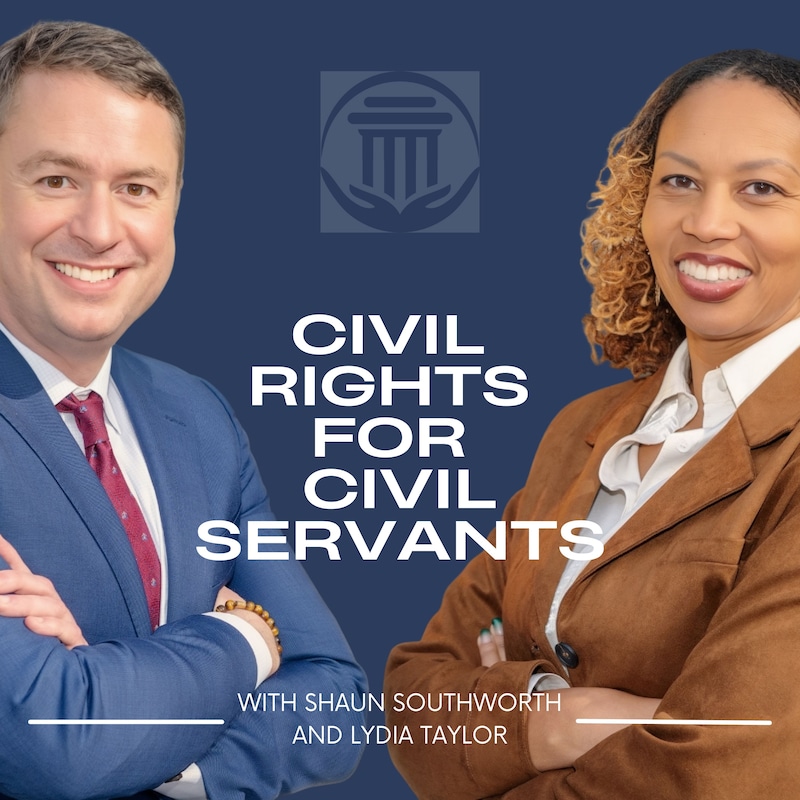
Welcome to the premiere of Civil Rights for Civil Servants, the podcast from Southworth PC dedicated to federal employees nationwide. Hosts Shaun Southworth (founding partner) and Lydia Taylor (managing partner) launch the show on Juneteenth — a deliberate choice, because the day the last enslaved Americans in Galveston learned they were free, two years after the Emancipation Proclamation, captures a theme at the heart of this work: people can hold rights they don't know they have. Many federal employees are in exactly that position.
Every episode follows the same rhythm: The Docket (the federal-workforce news you need to know, in plain English), The Case File (one legal strategy you can actually use), the Interview, and Ask Shaun & Lydia Anything.
In this episode:
The Docket
- Schedule Policy/Career — the June 3 executive order moving roughly 4,800+ positions (about 8,000 employees) out of their traditional civil-service protections in a first wave, and what it means for MSPB and whistleblower rights. Who is actually affected, and why most of the workforce is not.
- OPM's proposed RIF rewrite — why a change that elevates recent performance ratings over length of service could reshape how reductions in force play out, and what employees should watch for.
The Case File: The File You Should Be Building on Your Agency
Why documentation is the most powerful tool a federal employee has. Shaun and Lydia walk through the last 18 months in three chapters — the initial shock, the courts' response, and the current "shutdown rebound" stage — and explain why you should keep your SF-50, performance evaluations, position description, awards, and key supervisor emails organized and within reach (always within your agency's IT and security rules). Plus: why HR works for the agency, why cases are won on facts and evidence rather than emotion, and how mindfulness helps you respond clearly instead of reacting.
The Interview
The surprise first guests turn out to be the hosts themselves. Shaun and Lydia interview each other on what drew them to this work — Lydia on the significance of launching on Juneteenth and standing up for federal employees, particularly the Black federal workforce; Shaun on his path from a small town in Wyoming to founding a civil-rights-focused firm — and what they hope the show will be.
Ask Shaun & Lydia Anything
- Which documents should I keep copies of at home, and can I do that without getting in trouble?
- I'm on probation, or my job just moved to Schedule Policy/Career — am I powerless now?
A quick note: This podcast is legal information, not legal advice. Listening does not make you a client. If something is happening to you at work, talk to a lawyer about your specific situation.
Have a question for the show? Email [email protected] or reach us through our social platforms.
If this episode helped you: Please leave a five-star review wherever you listen, and share it with a coworker who needs it. Subscribe so the next episode comes to you automatically.
Learn more / get help: attorneysforfederalemployees.com
Free daily newsletter for federal employees: fedlegalhelp.com/newsletter
Podcast home: fedlegalhelp.com/podcast
This show is proudly ad-free and sponsored by Southworth PC. Your service is worth protecting — let's protect it together.
Transcripts
It's significant for me and it's a little bit emotional for me that we're launching our podcast on Juneteenth. We talked a little bit about what Juneteenth is at the top of the show, which commemorates the day that union troops arrived in Galveston, Texas and announced to the still enslaved Americans that they were no longer enslaved. And what is striking about that for me, Shaun, is that was two years after the Emancipation Proclamation had been signed. And so there were a group of enslaved Americans that were still functioning as slaves despite the fact that they had been freed two years previously. And the reason for that is because they had rights and they didn't know it. And so that just parallels so closely for me to what we do. A lot of federal employees don't even realize that they have a lot of the rights in place that they do.
(:And that's a snippet from today's powerful episode of Civil Rights for Civil Servants.
Shaun Southworth (:Welcome to Civil Rights for Civil Servants. I'm Shaun Southworth, founding partner of Southworth PC, a law firm dedicated to representing federal employees nationwide. Before the EEOC, the MSPB, the Office of Special Council, and everywhere else your career gets decided. I've spent over 20,000 hours fighting for federal employees and I'm also a longtime mindfulness practitioner because I believe protecting your career and protecting your peace go together.
Lydia Taylor (:I'm Lydia Taylor. I'm the managing partner and co-owner of Southworth PC. Before I joined Southworth PC and became a federal employment attorney, I spent years in HR and employee relations, including leadership roles in several large school districts. I also conducted EEO investigations for a major state university. So I have seen workplace issues from just about every angle that you can see them. What drew me to this work though is that I've always been passionate about employee rights. I know how institutions make decisions. I know how workplace investigations unfold and now I help federal employees who navigate those systems when their careers are on the line. So together, Shaun and I represent the people who keep our country going.
Shaun Southworth (:And here you're joining us on each episode. We're going to break down the news that matters to your federal career, walk you through a legal strategy you can actually use, different one for every episode. And we're going to sit down with people worth hearing from and answer your questions. So if you're ready, let's get to work.
Lydia Taylor (:Let's do it. So today is our first episode, Shaun. This is exciting. It's Friday, June the 19th, 2026, which means it is Juneteenth. And that is very intentional that we launched on Juneteenth and we will get more into that into the show. So today we're going back over the last 18 months that have forever changed the federal workforce, probably more than any other period in modern history.
Shaun Southworth (:And that's coming up on Civil Rights for Civil Servants. Before we begin, we want to remind you that we are not beholden to any outside sponsors. This podcast is proudly ad free. It's sponsored by Southworth PC. So you're never going to hear us promoting any products like a toaster that also plays music or a yoga mat that doubles us a sleeping bag.
Lydia Taylor (:With that being said though, we do have a request and that is that if you enjoy the show, if you find the show informative, please leave us a five-star review wherever you get your podcasts and share, share, share this episode with your friends or a coworker who needs it. That's really how this information reaches the federal employees who need to hear it most. Also, if you have a question for us that you'd like us to answer on the Ask Shaun and Lydia segment, email us at [email protected], or you can reach out to us through any one of our social platforms.
Shaun Southworth (:And one more quick note before we start. The show is legal information, not legal advice. Every case is different and listening doesn't make you our client. And even if you are a client, we're not talking to you as your attorneys right now or anyone else for that matter to give you legal advice in this podcast. If something's happening to you at work, feel free to talk to a lawyer about your specific situation and if you're interested, feel free to reach out to our firm through attorneysforfederalemployees.com.
Lydia Taylor (:So guys, welcome to the very first episode of Civil Rights for Civil Servants. We are glad for every one of you who are here and joined us on today. And like I said earlier, chose this day on purpose because it is Juneteenth. It is the day that in 1865, the last of the enslaved Americans in Galveston, Texas were finally informed that they were free. It has been a federal holiday since 2021 and later in the show we'll talk a little bit more about why this day is important and how this day deeply connects to the federal workforce and why those two entities are more connected than maybe people realize.
Shaun Southworth (:And I think a lot of people are going to be surprised about how those two things are connected. I think many people understand the importance of Juneteenth, but when it comes to state's rights versus federal rights, the federal government really has been out there promoting civil rights. But one thing I did want to discuss before we get in, since this is our first episode, want to talk a little bit about how we intend the show to work for everyone. So every episode for you all will have a rhythm. First, we're going to have the docket. That's the must know federal employee news from the past couple of weeks in plain English. The stuff that people at your workplace are talking about at the water cooler so you make sure not to miss any of that. After the docket, then we're going to have what we're calling the case file each week, which will be one legal strategy, one protection, one set of steps you need to know to protect yourself.
(:And then after that, most weeks we'll have the interview. So it's the docket, the case file, and the interview where we'll sit down with a guest or a few guests for an interview. I'm really excited about that to get some other people outside of our firm in these conversations. And then as always, we'll close with the ask Shaun and Lydia anything questions, any of your questions answered.
(:Welcome everybody. This is the first docket on the first episode. Again, the intention here is that there are maybe two or three things that are happening in the federal workforce that you need to know about. It takes us a few days to get these recorded so this won't be the latest up-to-date information sometimes, but it should be pretty current within a few days or so. If you want the latest stuff, follow our social media. The one thing that's on the docket this week is going to be schedule policy/career. Many people might've heard of it, some people might not have heard anything about it. So what is schedule policy/career and what do you think every federal employee needs to know about that?
Lydia Taylor (:Sure. So June 3rd, the president issued an executive order that essentially puts the protections that have historically been in place for federal employees in jeopardy for about 8,000 employees, 4,800 plus positions moved in. It's the first wave. So as you can imagine, Shaun, after the year and a half that federal employees have had, that's scary to know that an executive order has come out that potentially puts federal careers in jeopardy with regard to the protections that allow those employees to continue with the federal government. So maybe just talk more about who the employees are that are in jeopardy because we don't want everybody in the federal workforce to panic at this point.
Shaun Southworth (:Yeah. Most people are not impacted by this, but you're absolutely right that the who is the story here
Lydia Taylor (:Beyond the
Shaun Southworth (:What. So again, like you said, about 8,000 positions impacted. I don't know if they said it was going to be 50,000, but they're saying 97% of these people are GS-15 levels. So these are high-level federal employees. A lot of them are attorneys and they're taking their protections away, many people think, so they can coerce or push these people to do what the administration wants. So it'll make it harder for these federal employees to do the right thing because they're losing their MSPB rights. They've had to do all these things because they can't just fire them at will. The protections are pretty strong. And so what's happening is for these employees that are taking away their MSPB rights, there's some other stuff they're doing, but that's the big one. For people who might not know, what are MSPB rights? Why are they strong?
Lydia Taylor (:So to put it in the simplest terms, Shaun, MSPB rights are part of the reason that federal employees have historically felt more secure than most workers in the private sector. So as a federal employee, if something major happens to your job, something that we as lawyers call an adverse action, that could be a removal, a suspension, a demotion, or certain other serious employment actions, you may have the ability to challenge that decision and have someone outside of the agency take a look at it. So that means that you're not just stuck with whatever your supervisor or your agency says happened. There is a process in place that the agency is supposed to follow and there's an opportunity for you as the employee to ask whether that decision is supported by the facts and made in accordance with what these rules are.
Shaun Southworth (:Yeah, which is a big deal. It's a lot of what we do, but those rise that you're talking about, you get notice of them,
Lydia Taylor (:Get
Shaun Southworth (:An opportunity to respond. If those things don't happen, it can be reversed. And then the agency has to charge you with something specifically and like you said, it goes to an outside organization and then there's a whole process we go through and the agency
Lydia Taylor (:Has
Shaun Southworth (:To prove it.
Lydia Taylor (:They have a checklist essentially that they have to check all of those boxes.
Shaun Southworth (:The Douglas factors in particular for penalty. So even if you did it, is the penalty too extreme? Is there no nexus to federal service without getting in the weeds too much? There's a whole bunch of things they have to do. And so now those protections no longer exist for these people that you're talking about at the top, which many people think is the administration's effort to put their hands on the scales and force top level officials to do what they want or risk losing the jobs,
Lydia Taylor (:The
Shaun Southworth (:Family support that they're providing. And so truly, truly bad stuff, just so people know that EEO protections still continue though for these federal employees, if they're facing something, they still might have avenues, they still might want to reach out for legal support. One thing that's developing right now that's interesting is OPM and Director Scott Cooper says that they'll still have whistleblower protections, but not under the statute. And then in the guidance, it's not clear and they're telling agencies to develop policies that will provide similar protections, whatever that means. This has been a big deal for a time. So it's finally come into place. June 3rd, like you said, the executive order came out On June 10th they were supposed to notify people. So if you've been affected by this, you should be notified.
Lydia Taylor (:You should already know. So hopefully that brings some comfort to some people, right? If you haven't heard, no news is good news.
Shaun Southworth (:Exactly. Even if you've lost those protections, that doesn't mean you still shouldn't consume our content or learn how these MSPB cases might go anyway because those might be arguments that you can learn to avoid situations, but also just even if those rights are gone, don't necessarily head for the Hills, get some mindfulness apps out, we'll see how it goes. And I think the
Lydia Taylor (:General themes, Shaun, over the last 18 months is be prepared for a fight. The administration may take some rights away as we have seen happen, but that does not mean that you're not in a position to be able to fight for them. So you've spent 10, 15, 20, 40 years building a federal career. We do everything that we can to ensure that it's not just wiped away with the swipe of a pen.
Shaun Southworth (:And I think that brings us, that's a perfect transition to the next docket item. So docket one is schedule PC docket entry number two is OPREM's proposed RIF rewrite to the regulations. Just background on that, the RIFs we're seeing still being challenged. We still got a while that happened last year. Some of those cases are being won right now, so it's interesting to watch that. We'll see that still taking a while. This one, what they're doing is changing the RIF rules. So the RIFs that went forward, they largely were protecting seniority. A RIF is supposed to be a no-fault thing and how it's applied would protect people who've been there seniority. Their new change for the first time ever, they're changing the factors. And so your latest performance ratings would matter more than your tenure or length of service. So then you get administration in, they can just choose that they give low ratings to and then run a riff a year later or something.
Lydia Taylor (:And
Shaun Southworth (:So they can target people a lot more with that. That's my
Lydia Taylor (:Concern. And just think about the domino effect, right? If people in upper level management don't have those same job protections and their job can be threatened, then how objective is their management of the people below them in their supervisory chain? So it is an effect that starts at the top but ultimately has the power to affect a large swath of the federal workforce.
Shaun Southworth (:Yeah. And so it could be like your last
Lydia Taylor (:Appraisal changes.
Shaun Southworth (:Right. Could end up mattering more than your last 20 years of service if you agree, disagree with us, whatever. But regardless, you're watching this, now you know your performance ratings matter more than ever. So be mindful of that, learn what to watch for. You don't know what a performance plan is, then learn. So summary of the two things I think most federal employees should know about right now is what's happening with schedule PC, how that might be affecting their upper leadership at the agency, a lot of the attorneys trying to do the right thing. And then second, OPMs propose changes to RIF regulations and if RIFs occur again in the future, your seniority might matter a whole lot less than your last two performance appraisals.
Lydia Taylor (:Which is what every federal employee has been working to build, right, that seniority. So quick question for you, Shaun, before we move on. When it comes to protecting performance record, what kind of tips would you give to our listeners on the best way to do that?
Shaun Southworth (:So I think it's a great question having done this a lot. I was mentioning what is your performance plan? Put your hand on your performance plan, put your hand on your position description and read them. Have those for your records, save the records, be mindful of those, how you're doing, what your boss is telling you the records and just start to look at everything from a records-based position. What does the records look like and how can you start to make sure you're building your own record?
Lydia Taylor (:Yeah, and agree, Shaun, you should be able to put your hands on your SF-50 at any given moment. You should be able to put your hands on your last five performance evaluations at any given moment, emails exchanged with your supervisor with regard to performance issues or concerns. All of those things are things that you should have in your filing cabinet, so to speak. Now, obviously we have to advise you that you don't want to violate any IT rules of your agency, but everything that you can keep from a paper trail perspective, you should. The most powerful tool you have is sitting in your filing cabinet, whether that's digital or otherwise. It's important to hold onto these
Shaun Southworth (:Documents.That is the perfect transition to what's coming up next, which is our case file for this week and that topic is the file you should be building on your agency Welcome everybody to our first case file. And of course, our first case file has to be about the files you should be building on your agency. That might sound weird to some people, or maybe after the last 18 months, it does not sound weird. So weird to
Lydia Taylor (:Them at all.
Shaun Southworth (:So you need to be building some files. And that's what we've been trying to say again and again, if you're a do the right thing person, you don't think about those sort of things. But what we wanted to do in this case file is kind of walk through three different chapters of how things have unfolded and remind people who've been through what's happened, talk about what's happened, and then help educate some people who might not have been following this in depth. So this started the current iteration, January 20th, 2025 and a single day there was a bunch of executive orders. This DOGE was created, so to speak, legal issues with that return to office-
Lydia Taylor (:And the federal government changed as we know it forever.
Shaun Southworth (:Yes. One day DOGE returned
Lydia Taylor (:To
Shaun Southworth (:Office ordered, Schedule F revived,
Lydia Taylor (:DEI
Shaun Southworth (:Programs were terminated, DEI staff were placed on administrative leave within 48 hours, including people who had merely attended adversity training years later. I think that might be why we're on social media right now, Lydia. Do you remember that call when I called you in the morning?
Lydia Taylor (:Barely because I don't think the sun was up yet, but I just remember that it maybe was 7:00 AM. Your ADHD was jumping off more than usual because just the sheer adrenaline, I think all of your legal bells and whistles were going off about what was happening. So I remember you said, "I've gotten 10 FOIA requests ready to go and ready to file before the sun came up that morning." So yeah, I remember the phone call very well.
Shaun Southworth (:Then I was like, "Can we do this? I'm going to put this on social media." We maybe had three, 4,000 people follow us on social media. And my plan was not just to FOIA the information, I want them to preserve these records,
Lydia Taylor (:But
Shaun Southworth (:Within all of the FOIA requests we cited to case law on why I thought this was illegal that I don't think a lot of people knew about trying to say that people in DEIA positions might be covered through these commission cases. Then I FOIA the EEO offices so they would know their protections and send them out and ... Oh, I can't even remember her name. Remember
Lydia Taylor (:Her name either, but I remember hearing that name a lot that day. I can't
Shaun Southworth (:Remember either. She responded. It was the person from Musk had placed in OPM, Amanda Scales. There we go. Amanda Scales.
Lydia Taylor (:And a scale. And she's
Shaun Southworth (:Responding to me personally.
Lydia Taylor (:I think that a lot of the questions that you were clear-minded enough to ask that day, most people weren't because they were overwhelmed by the kind of talk and awe tactic of it all.
Shaun Southworth (:I was like, "We need to get information out to people. " And I was like, "Lydia, can we do this? " Well, didn't know what to do and we wanted to provide information out there digestible that could help them. This is just us doing this real time. At some point we realized just all this feedback we were getting from people that we were providing information to people because supervisors, HR, legal departments-
Lydia Taylor (:They were not. ... was too
Shaun Southworth (:Scared.
Lydia Taylor (:And many of them, I wonder if they knew what to say. When I put on my HR hat, Shaun, I think about that period and I think that what struck me was number one, the speed that it was all happening in, but also how all of these decisions that in most cases, these HR decisions are measured and take time to implement. I was really struck by how many decisions appeared to be being made and executed before anyone had thought about and worked through the logistics of them.
Shaun Southworth (:Right. And in retrospect, a lot of this, you saw the timestamps, Project 2025 coming out of the Heritage Foundation, this is not their top lawyers in my opinion. So they just have this plan. They're executing it. I remember talking to some of them, they're just getting the information out, sharing it. They say a RIF would normally take six to nine months to plan
Lydia Taylor (:Absolutely. I worked for a school district that implemented a reduction in force and it was literally all hands on deck in HR for more than a school year. It took a total of about 12 to 16 months to really go through each and every one of those positions, be aware of bump and retreat rights, how we were going to ensure that workforce was being covered. It was a laborious, exhausting, long task. And so to see this roll out so quickly. Something was definitely off about that.
Shaun Southworth (:And even just looking back here on my notes that I have for this, just think about how quick it was. I'm still shocked even though I've been through it. We've all been through it. So January 20th, DOSH created, returned to office ordered, Schedule F revised, DEI programs terminated, most staff on admin leave within 48 hours. Less than a week later, January 28th, the fork in the road email hits 2.3 million inboxes resign. Now get paid through December. The DRP came after that quickly. Justify your job. Tell me five things you're doing. This is Russell votes. Let's put them in trauma. February 13th to 14th. OPM, that's when they directed agencies to fire probationary employees. February 14th, they still call it the Valentine's Day Massacre. So that's really that first part, that break next week before you even start into the rep. The
Lydia Taylor (:Valentine's Day thing.
Shaun Southworth (:Then the April 1st HHS rip. If I break it up was that first huge push so much happened so quickly. But this time I've been on social media a lot more. I know we're working to change that, but you run the day-to-day operations of the firms. I'm also helping. We are super busy with 60, 70 hour work weeks. We are onboarding.
Lydia Taylor (:The hectic undertaking. Definitely a labor of love, but a lot of work. So yeah, I am working and getting my social media muscles up to where you are. Now you've cut it. But yeah, there's a lot involved in running our firm and making sure that our clients are getting what they need.
Shaun Southworth (:Yeah. I really appreciate the work you, Joe, other people of our leadership team. We work so well together that we were able to be all hands on deck and we knew which zones each person had to cover. Definitely very supportive. Through that time, just looking back, we are trying to do what we can. If we could have done something better, if people could have done something better, I think it comes down to what we're talking about today. The case file is building the records or another way to phrase it going forward. Why are records so important even if you think everything's fine? Even if you trust your employer, why should people keep their employment records organized?
Lydia Taylor (:That's huge because it's bigger than your supervisor.
(:It's bigger than even their supervisor. What's happening throughout the federal government is systemic and all you have in your arsenal really are your documents. I've had people who were calling into the firm say they didn't even get my position right on my RIF letter. So it matters that you have your SF-50 that actually documents what your position is. You know what I mean? Those really are the only tools in the arsenal as an employee that you can employ. But the great thing about that is that they're very powerful tools and it matters. If you're going to advocate for yourself or even if you are reaching out to an attorney to advocate for you, we can't do that without having all of the information. And so you having your documentation someplace safe, someplace that you can put your hands on it, someplace where if you are subjected to a reduction in force of some kind or if you are unceremoniously removed from your position and now you're locked out of systems, there are not going to be a lot of people on your side if you're calling saying, "Hey, can I get my SF-50?" It's something that you should have in the event that something like that happens.
(:I don't want anyone to start looking at their supervisor sideways. I can't trust this person. That's not at all the messaging that we're giving you. Just understand that it's bigger than them and it's not about any particular person. It's not about any particular agency. It is the systemic changes that are happening throughout the federal government that you should always be mindful of protecting yourself from. The first step to protecting yourself is having your documentation in order.
Shaun Southworth (:Yeah, no, really good points. Most people, I'm sure you see this in HR, they bond or they have this relationship with their supervisor who they think controls everything and speaks for the agency, but their supervisor has supervisors who have supervisors and their political appointees pushing on people. And so just going forward, best practice, let's keep our records in a row. We talk about records that kind of brings us to the second chapter we divided this year, did three big things. That first chapter we talked about was just where everybody's just in shock. Then chapter two starts around February 27th in my mind where the courts start to answer it and then they start to riff people and there start
Lydia Taylor (:To be
Shaun Southworth (:Legal challenges and pauses where, okay, now the legal system's doing somethings itself-
Lydia Taylor (:Trying to kick in and respond.
Shaun Southworth (:And everybody's like, "Why can't you stop people from being illegal right away?" I'm like, "God, that's not what we do. I wish." Looking at the notes here, big things. Judge Alsup, February 27th stated no statute anywhere ever has granted OPM the authority to direct the termination of employees and other agencies. So this is a lot of probationary employees start to get their job back. By mid-March, two federal courts had ordered roughly 24,500 people reinstated. Then we have April riff start. We talked about HHS a lot because it was so messy. It's like they put these things in a database and a lot of the data was wrong. They referred them to people, contact people who were dead.
Lydia Taylor (:Still messy at HHS.
Shaun Southworth (:So it is, but this is the second chapter, you start to see the courts, start to learn about the law, responding. And then the big thing is we get a stay on the rifts and then people are following us a lot more like, "What's going on? " And that was really, honestly, I wish people never had to contact us. We say we're not exactly party planners, but it was one of those things to be able to help people and be like, "Thank you. I have some chance of knowing what's going on here."
Lydia Taylor (:Yeah. It felt a little like, man, to be able to stand in the gap for them. If you remember during that time I was doing consultations and I was easily doing 10 consultations a day. And what I was learning was that almost every call I did was someone that was in absolute panic. Both my husband and I work for HHS. What are we going to do? You know what I mean? Or I've been doing this for 40 years. And to be able to be in that position where they were able to call someone in real time and actually speak to a person, Was I always able to solve their problems on those calls? No. Or even answer all of the questions at that point. No. But to just be able to be available was an honor really.
Shaun Southworth (:Somebody showed up in full panic mode at our office has never happened before. Really, but I don't judge that person, appreciate that person. I understand. And then I shared my stuff. I had been laid off in a riff when I first came to Atlanta due to no fault of my own. Got a great severance. It messed me up for a few months. And we've helped thousands of federal employees. I'm a mindfulness practitioner. Part of the reason I got into it, just seeing the emotional toll this takes, people don't even get it until it happens to them or if they know someone
Lydia Taylor (:And
Shaun Southworth (:To be able to help a lot of those people. But yeah, during that time we were super busy. We were trying to do our best. That's how I see the courts are too. And at this point, I don't think people realize, but there are organizations created to fight this legally from the power. We are doing what we can, but there are pretty big victories to see for people. It's still going
Lydia Taylor (:To play
Shaun Southworth (:Out.
Lydia Taylor (:It was a huge victory when probationary employees got their jobs back. There haven't been a lot of bright moments over the last 18 months, but definitely that was one of them when the courts found that those probationary firings were unlawful.
Shaun Southworth (:I think that was a key one.
Lydia Taylor (:And
Shaun Southworth (:Then the other one is when the riffs got stayed until in July, Supreme Court let the big rifts proceed. Looking at the language very closely, they didn't say whether they thought they were legal or not. They just let them go forward and then the shadow docket, all that stuff. So that's the court's answer. And to tie it back into documents, because we want to emphasize that again on this. We talk about keeping documents before you know anything's wrong. Super cool. They might not be in control, but let's keep the documents as a general practice. What happens when you know you're in a fight? Now you're documenting stuff when you know you're suing the agency or you're in a big dispute with them. One of our clients, I remember, I remember him coming in and the first time I met in person in the office, we don't do that a lot.
(:Most of the stuff is electronic. But I remember him walking in and shaking his hand and then I looked down and realized he had brought a cart full of documents, of boxes of documents. And Lydia, in my head, I was like, "Oh, this is going to be good. This is going to
Lydia Taylor (:Be good." It doesn't happen every day that somebody walks in with a whole vault full of documents.
Shaun Southworth (:And to me, as lawyers, you don't have to have documents to win your case. You definitely can win it without it. But when you know someone is standing on principle, there's been one, two, three, four emails to say the least. HR background, some HR are good, some bad. We don't have to say they're good or bad, but they have access. They're building the file too. HR is trained to document. So what should employees fighting them at that point be doing?
Lydia Taylor (:They should be doing the same. And I think that one thing that federal employees or any employee should be aware of, HR works for the organization. HR is an advocate for the organization. I don't say that to say that HR has it out for employees. I was HR and so I know what it is to sit in that seat. But I also know what my role was and my role ultimately at the end of the day was to protect the organization. And so employees really have to keep that in mind that in the same way that HR is ultimately protecting the organization, you have to be advocating for yourself. You should not be counting on HR to take up that role and responsibility because they are very specifically charged with something else by the agency or by the organization.
Shaun Southworth (:They're trying to protect the organization while things are unclear, things are rolling out. The law might not be clear and people are going to start to have different views on things.
Lydia Taylor (:Sure.
Shaun Southworth (:And so then when you're documenting stuff, I don't just mean write it down. And these evil people did all these evils to be mindful about it. Tell the truth. Don't overstate things. Know that a year, two years, this might unfold and people are going to want to be seen, but then take steps away. We roll out mindfulness to help people and talk about that. But I also think it wins more cases because this can be so emotional. And so sometimes being aware of that, learning how to process that, self-care, getting counselor, therapeutic support, this can help you see more clearly, but also document more clearly.
Lydia Taylor (:Cases are not won or lost on emotion. And I think that sometimes when people have not been involved in a legal process before, the only perspective that they have is maybe what they've seen on TV or what they see in lawyer commercials. But the reality is judges are very rarely swayed by emotion. They are swayed by facts. They are swayed by evidence and facts and evidence live where within the documentation.
Shaun Southworth (:Yeah. But people are people and we're all emotional people.
Lydia Taylor (:100%. I am chief among them for sure. So I know and completely understand what that is, but in order for us to do our best work for our clients, we have to make sure that they understand that while we feel what they're feeling and while we can empathize with what's happening in order for us to deliver the results that you're looking for, we have to deal in facts. We have to deal in evidence. We have to deal in documents.
Shaun Southworth (:Exactly. Yeah. And so if you're going through something, this at least empowers people more to know you're not alone for the emotion, all of that.
Lydia Taylor (:For sure. But
Shaun Southworth (:When you set that email out, get into the mindfulness stuff so you don't get triggered to send something you regret.
Lydia Taylor (:It's a game of chess.
Shaun Southworth (:Yes.
Lydia Taylor (:It's a game of chess and you have to be wise.
Shaun Southworth (:And you're more wise when you're more emotionally in control.
Lydia Taylor (:Well,
Shaun Southworth (:Perfect. I think that is a great transition to the third chapter
Lydia Taylor (:Of the- The shutdown, rebound. Yeah.
Shaun Southworth (:Yep. So that's how we're looking at it from the shutdown. We're not in a new normal. We're in this stage.
Lydia Taylor (:That's where
Shaun Southworth (:We're at
Lydia Taylor (:Now. Holding their breath. Maybe waiting to see if there's another shoe that's going to drop.
Shaun Southworth (:How are they going to do this year two too as
Lydia Taylor (:Much as I did
Shaun Southworth (:Year one?
Lydia Taylor (:Yeah. Yeah.
Shaun Southworth (:So just to hit a few, the deadlines remind people, October 2025, there was a 43 day shutdown longest ever. We got 4,100 RIF notice issues in the middle of it and
Lydia Taylor (:The
Shaun Southworth (:Court blocked them as political retribution.
Lydia Taylor (:We've been setting a lot of records and not in a good way.
Shaun Southworth (:I wish we would stop. Yeah. So the records, the toll by numbers so far is that there were approximately 317,000 departures in 2025 for OPM. So the workforce, if you think about that, is generally around two million employees.
Lydia Taylor (:So
Shaun Southworth (:370, 17,000 departures is huge. There was a survey of probationers answered whether they moved on, 17% are still unemployed. 68% are reemployed but earned less and 95 reported mental health effects. This is from the federal news network.
Lydia Taylor (:Because how could they not?
Shaun Southworth (:2026.
Lydia Taylor (:How could they not?
Shaun Southworth (:Right. So now the fight is class actions, people challenging it before. And throughout all of this, a lot of what we do at Southwest BC, regular stuff continued throughout this that we deal with defending careers before the MSPB, the EEOC, all of this. That still continues on. That's where we're at right now. And to tie it back into documents again, a lot of what's going to happen unfold for the people whose rights have been violated or might. And the future is going to depend upon documentation. Not only we're talking about what they documented in writing, should you put it in writing or not? It just depends. We answer those questions all the time, but also for our clients working with us a lot of what we do is ask them questions, gather the evidence and then if we come back to it a year later or so we've got their recollections recorded to help them remember.
(:So final thoughts or anything about the case file documents before we turn it over to the best guest interview of all time?
Lydia Taylor (:No. I think that everybody is waiting with bated breath for us to get to our special guests. I
Shaun Southworth (:Love they're very special. Okay. Up next, two special guests for sure. Now we are back for the first ever interview. We promised some surprise guests for our premier, definitely some people with a deep connection to today's episode. So Lydia, do you want to announce
Lydia Taylor (:Who the guests are? Some people whose work you may be acquainted with already. Some people you may have met through social media already. Drum roll, please. Our special surprise guests today are ... It's me and Shaun.
Shaun Southworth (:Yeah, we're here.
Lydia Taylor (:We are each other's special guests on our first podcast episode today.
Shaun Southworth (:For a few reasons. One, we
Lydia Taylor (:Are just getting started. We couldn't get anybody else. I promise it's not. It
Shaun Southworth (:Might be a little bit because of the time, but we are getting started. We do have plenty of people coming, but I think we also wanted to introduce ourselves to people who might watch this who didn't follow us. For sure. Yeah. Social media, so you just get to know a litle bit about us. I really am excited for other guests in the future because that's going to be something new.
Lydia Taylor (:And so people can- And look forward to talking to some other people as well. Yeah,
Shaun Southworth (:For sure.
Lydia Taylor (:Most people are acquainted with us, you more than me for sure. But most people's acquaintance with us, if they're not clients are via our social media. And those are just three minute snippets of who we are. So as we embark on podcast number one, that we take some time for you to get to know us and get to know who we are and get to maybe understand the motivation behind why it is we do what we do.
Shaun Southworth (:Perfect. Well said. Also, I think it'll be fun watching us question each other, so I hope they enjoy that.
Lydia Taylor (:Yeah, that might be fun. I don't know if it's going to be fun for us, but it might be- No, it'll be fun.
Shaun Southworth (:I'm being mutually assured distraction. I'm just kidding. I think we have a really good working relationship.
Lydia Taylor (:Oh, we do.
Shaun Southworth (:Yeah.
Lydia Taylor (:All right. I'll go first. I'm up for it. I can go first.
Shaun Southworth (:Perfect. Okay. I've got some questions here. Just by way of background, really appreciate you genuinely for the changes you've brought to the firm, made you an equity partner in the firm after building this up for a long time.
Lydia Taylor (:As
Shaun Southworth (:I've told you, because I saw your sense of judgment, that's the most important thing for us to build, to grow. We have to deal with issues and handle them the right way and make judgment calls all the time. And so I just saw you do that repeatedly. At the time it felt like we both are Rocky Mountain people. You were in Colorado for a long time and I'm Wyoming.
Lydia Taylor (:I have decided that we are both Bronco fans. Ooh,
Shaun Southworth (:See,
Lydia Taylor (:There we go. That has bonded us as well.
Shaun Southworth (:Has it? That's great. So Lydia is a huge Bronco fan if you don't know this. At one point I considered we are a data-driven firm with KPIs presenting them in Bronco's colors.
Lydia Taylor (:So that I would actually pay attention to the numbers.
Shaun Southworth (:That's not what I meant. As Lydia mentioned, I got ADHD, it is what it is. But Lydia, I do want to start to give you the opportunity to talk a little bit about something that I know that's important to you about what we do. I know from my end you're great at human resources, the human side of people. That's one of your passion. So that is great. But I know talking about the Black community's experience, the fact that we're launching this on Juneteenth is very important to you and having a public forum to communicate that to people of all races. I guess my question is, why is that important to you and what do you hope to be able to use this platform to do?
Lydia Taylor (:Sure. For a few reasons it's significant for me and a little bit emotional for me that we're launching our podcast on Juneteenth. We talked a little bit about what Juneteenth is at the top of the show, which commemorates the day that union troops arrived in Galveston, Texas and announced to the still enslaved Americans that they were no longer enslaved. And what is striking about that for me, Shaun, is that was two years after the Emancipation Proclamation had been signed. And so there were a group of enslaved Americans that were still functioning as slaves despite the fact that they had been freed two years previously. And the reason for that is because they had rights and they didn't know it. And so that just parallels so closely for me to what we do.
(:A lot of federal employees don't even realize that they have a lot of the rights in place that they do. Last year we had the privilege of recording some radio spots in Washington, DC. And when we started getting calls from employees who heard those radio ads, they were saying in our consultations, "I didn't even know that lawyers existed for federal employees. I didn't even know that there were certain things that they can't do from a disciplinary perspective. From a discriminatory perspective, they just simply didn't know their rights. And so very much in the same way they were operating under rules that didn't exist anymore. And so Juneteenth is significant for me within the context of what we do because freedom on paper and freedom and practice are just two very different things. And that is just something that has really stuck with me and stayed with me.
(:And I think about that in the practice of what we do every day.
Shaun Southworth (:Yeah. The practice of what we do, a lot of it has civil rights work
Lydia Taylor (:In many
Shaun Southworth (:Ways. And I'm thinking about it this way, because I saw some comments. If you say something about how this impacts the black community, well, this has impacted white people or other people. Yeah, that's not the point that that is decidedly true. But if you think about Juneteenth, you say that 1865, that's not that long ago. I feel we're back to 1965 right now. And so that's only a hundred years ago now, essentially, that's where they're putting us back to. And as a civil rights attorney, I'm not black. I'm around a lot of black people. I've learned a lot. I want you to imagine as a federal employee right now, if you were upset because you thought the law was being broken and you knew the law was being broken and they broke it. Now imagine that the law said because of your race, you were enslaved and then you get an emancipation proclamation and it takes two years for that act.
(:Just try to put that back in to people have some empathy. We are seeing a lawsuits that I think there's going to be a disproportionate impact on the black community from this. For sure. I think that good government jobs, if you look statistically, black Americans have faced discrimination in the workplace. The government was one of the few places where they were closer to parity to what you would expect if they had a discrimination free environment.
Lydia Taylor (:And
Shaun Southworth (:So let's at least hear each other out, that there are racial components. It doesn't mean that scientists weren't also attacked, the disabled people weren't also attacked. 100%.
Lydia Taylor (:That federal
Shaun Southworth (:Employees weren't attacked.
Lydia Taylor (:I like to go back to a word that I used earlier and that's systemic. And the reason for that is because ... And I see those comments too, Shaun, why are you focusing on black people? This is happening to everybody in the federal government. And yes, that's true. And I don't take anything away from that. And I work as an attorney that advocates for all federal employees, but the fact is not lost on me that more marginalized communities are the ones that feel the tsunami first and understand that a tsunami, while it may hit them first, is going to take out everybody. And so the reason why I circle back to the word systemic, Shaun, is because it's important to understand that the federal workforce is a community and if there is injustice in one marginalized portion of that community, rest assured it's coming for everybody else.
(:So whether you are a Black federal employee or not, even if you are uninterested in particular in the plight of the Black federal employee or the history of the Black federal employee, you should be aware of it, especially the way that things have been unfolding over the last 18 months. It is something that is ultimately very likely to impact you and your community as well.
Shaun Southworth (:Yeah. And I don't understand why people think it's a trade-off. It's not. It's not. When you see in justice in places, people taking advantage of the minority or an abuse of power, that's what this is all about. This administration has, in my mind, been an abuse of power. The rule of law is questioned these things all go hand in hand. And one of the ways legally behind the scenes, one of the worst concepts that they're trying to bring over to Title VII is this concept of colorblindness.
Lydia Taylor (:I hate that word as it relates to people.
Shaun Southworth (:One, it's not even true you can't be colorblind. People see race, but it's literally trying to be blinded to race or color so you can't help anyone of that. That's legally what I think that means. There's going to be like, " No, it just means we're treating everybody equally. "It means you don't see that. So if you can't be a non-black federal employee seeing the problems of black federal employees, how can you help them or know if there's a problem? Exactly. If you are a non-disabled federal employee but you don't care that disabled federal employees are having their reasonable accommodations revoked and you don't see it.
Lydia Taylor (:Absolutely. It completely takes the power away from words like discrimination, which I think is the point. If we're all the same, then discrimination's not a thing. If I don't see color and I don't see disability, then you can't be being treated differently because of that thing. You may be being treated differently for some other reason that's not discriminatory, but it takes the power out of those words. And I do believe that the dismantling of DEI and all those things, that is exactly the point.
Shaun Southworth (:Yeah. So this podcast could turn into hours. Maybe one day we'll have a three hour podcast.
Lydia Taylor (:It
Shaun Southworth (:Could.
Lydia Taylor (:So what
Shaun Southworth (:Do you want people to know about you, your platform, what matters to you?
Lydia Taylor (:Let's see. There's so much. I will say this. What's important for me, Shaun, is I hope that through my platform, this podcast, my social media, the work that I do that all federal employees, particularly black federal employees, know that they're seen, know that the decrease in black women in the workforce, the disproportionate number of black employees that have been riffed or terminated in the probationary firings, know that these things are not in your imagination, that I see you and I understand what it is that you are experiencing. I understand that it hits differently for you and that it hits differently in our community. I remember being a kid and living and growing up in a black household where we knew people who had good government jobs, meaning that they had a pension and they had benefits and they had job protections and those were things that everybody in the black community did not have.
(:And so those were heroes amongst us. Those were the people that some of us could go to when we needed help because there was financial stability in those homes that may not have existed for everybody. And so if I could leave one thing with those that listen to me, with those that are joining us today, it's I see you. I understand, number one, what the significance of these federal jobs are in our community and I subsequently understand the impact of the dismantling of those protections and that stability. And my job is to do everything that I can to protect that stability in our community and to make sure that those protections stay in place for you.
Shaun Southworth (:Awesome. I'm really proud of what we do. Civil rights law protects people of all races, genders, all of that. But historically Black Americans have been impacted in many harsh ways. And that's actually when the Civil Rights Act of 1964, that's where it comes from. And that's why we back up a hundred years or back in the '60s, just to remind people you might not know at that point, looking at the legal profession, I think it's like 95, 96% of all lawyers were white men. We still have a problem discrimination in all of these, but a huge problem with black Americans having access to the law, the power, the systems, the judges, and women as well. And in fact, we're still fighting these battles, but when they wanted the Title VII, the Civil Rights Act of 1964 to fail, and this was largely people marching in the streets that brought this up.
(:So their last minute plan was to say, "Okay, we're going to add in protections for women because no way they're going to go for that too." That's where we're coming from on this because I think we all do focus on what matters to us, but we need as a society, if we're going to serve the public, we need to see the public.
Lydia Taylor (:See them as what they are.
Shaun Southworth (:Yes.
Lydia Taylor (:Absolutely. Yep.
Shaun Southworth (:Which is why mindfulness, I think that's the answer to colorblindness. I know this is a little out there, but my understanding of mindfulness is being in the present moment and being nonjudgmental and seeing people for who they are. And so if you can be mindful and you can see the person, who they are, their soul is, and you're not taking mental shortcuts along the way, if you're truly practicing mindfulness, you need to learn, be aware. So I think we need people with more empathy. We need people who are more mindful. People
Lydia Taylor (:Who are appreciative of the really rich tapestry that we have the privilege of being exposed to. Being a Black woman is so much a part of my experience and informs who I am and how I am and how I move through the world and how the world sees me. I don't want that extracted from your profile of me. I don't want you to look at me and see past that. I want you to see that that is exactly who I am in the same way. It's my duty to see you for exactly who you are and every contribution that you make, every part of who you are is part of that contribution. And so I think that we are dismissive of people when we decide not to see every piece of who they are. I have some questions for you, Shaun.
Shaun Southworth (:All right, here we go.
Lydia Taylor (:I have a few questions for you. You grew up in Wyoming.
Shaun Southworth (:Yeah.
Lydia Taylor (:You may be the only person I know that grew up in Wyoming, even though I grew up next door to Wyoming. You are also the first in your family to go to college. Tell me how a kid from your background ends up founding Southworth PC And creating this rich, diverse law firm that fights for the civil rights of federal employees. How did you go from Wyoming kid to that?
Shaun Southworth (:So yeah, I grew up in Wyoming, a small town of like 3000 people. First person of my family to go to college, pretty poor. So a double wide trailer. And I was identified through the gifted and talented program, just curious, want to learn things. I remember my grandfather, I have a bunch of people in the military in my family didn't go to college and he was in charge of bereavement down at the Air Force Academy in Colorado Springs. So I went to see him. He spotted, I'm a huge nerd. And so he bought me a set of encyclopedias back when we had these things called books. And I was like, "I got to get out of Wyoming. I want to see more people. " I'm reading my encyclopedias doing debate. I thought I would probably go to law school because I wanted to be successful, whatever that meant, but I grew up into this Catholic church and one of these persons around me just saw me as poor.
(:And so he's like, "Oh, law school is not for you. I just don't think, " because he couldn't see that vision. So I felt like this form of somebody not seeing me for who I am. I remember seeing my mom, very smart, super smart, but I think she's got a, I'm not quite sure, an associate's degree or something like that would be the most, but she was working as a clerk at a gas station. We only had two stoplights in the entire town, but she's working there and this jerk is working with this man. I come back for my first semester at Grinnell College, this really good liberal arts college and he is like, "Yeah, go clean the bathrooms." And she's like, "I did them yesterday." And he's like, "That's women's work. Go do that. " And that sort of stuff was not even notable then because it was so ingrained into the stuff back stuff
Lydia Taylor (:Like that. Which again, that's not that long ago. Not, right? I don't want anyone to listen to this and think that you're telling a story from 1921. You're not. It's not that long ago.
Shaun Southworth (:And it's maybe today and because we're privileged and we got to the point where we are, there's plenty of people in our society still facing this discrimination who don't have the voices. Do you know what I mean? Do you ever wonder that if we just progress through people? So took an interest in employment law because it was just important to me, but I just do not like it when people are judged for who they're not and certain things matter more. I grew up in Wyoming. There's plenty of great people in Wyoming, plenty of great Catholics. I love Catholics. I consider myself Catholic now. I don't like it when people are treated differently for who they're not and I saw a lot of that. So as I'm going to law school focusing on the things that matter
Lydia Taylor (:To me,
Shaun Southworth (:I just ended up in this area. That's how I eventually end up in Atlanta. I love Atlanta because it's a place where I truly, in all the places I've ever lived, it's not perfect, but I do think it is a place where people see each other more for who they actually are.
Lydia Taylor (:I would agree with that. Yeah. I got one last question for you.
Shaun Southworth (:Okay.
Lydia Taylor (:What do you want this show to be, Shaun? What ultimately do you hope that this podcast will be for our listeners?
Shaun Southworth (:So I hope it will help them understand the law better, their legal protections better, but in a truthful way, the limitations. So if something like this ever happens to them again, they know more in advance, they're more prepared and I want them to see the law for what it is. It's a battle right now between different sides fighting. So I just want them to be more informed about their rights and truly to stand up for federal employees because civil servants really are so important to protecting our democracy. So that's my main goal.
Lydia Taylor (:All right, that's our goal. I think that we are aligned in what our goals are for this podcast and hopefully our audience, our folks that follow us know us a litle bit better and I'm sure that they'll get to know a little bit more about us with each episode of the podcast
Shaun Southworth (:Agreed. Really glad we crossed paths. I think things happen for reasons.
Lydia Taylor (:100%.
Shaun Southworth (:And now everybody you just saw that were we not the best guests that could have been on the first episode?
Lydia Taylor (:What better guests than us?
Shaun Southworth (:But if you know of any, which I'm sure you do, feel free to email [email protected]. We already have some people we're excited for. There are plenty of people to be real beyond us who back and support the federal community all the time. So thank you for your support, Democracy Forward, all sorts of organizations we want to touch upon later, but that is it for our first interview of our first episode of our podcast. Up next we have the Ask Shaun and Lydia Anything Segment.
Lydia Taylor (:So this is a segment where you have the opportunity to ask Shaun and Lydia anything. So you can send your questions to us at [email protected] or you can drop in the comments or the DMs of our social media platforms. No federal employment questions are limited. And so if you're wondering about it, the likelihood is that a thousand other federal employees are wondering the same thing. So by all means ask your questions, whatever they may be.
Shaun Southworth (:We're going to gather these questions from emails, from social. If it's particularized information, Ruby will reach out to ask you for permission to use this. But these are general questions here today that we've gathered. Lydia, the question for you for this episode, someone wants to know what documents should I actually keep copies of at home and can I keep them without getting in trouble?
Lydia Taylor (:So again, you should keep everything that you can get your hands on. The most important ones are obviously your SF-50. Have a physical copy of that always at your disposal. All of your performance evaluations, you should keep your performance evaluations at your disposal as well. Yo position description. That is important for you to have in your documentation file as well. Any awards that you've received or key emails about your performance. If your supervisor has sent you an email that says you did an awesome job on Project X, that should be part of your file of documents as well. Really guys, everything that you can get your hands on, but these are the documents that are really important for you to have in your file. Keep it organized, keep it current. Again, obviously we do not want anyone violating any IT rules that your agency has in place, but if you can get copies of these documents so that you don't have to ultimately go into a system to try to retrieve them when you need them, that is the best way to handle that.
Shaun Southworth (:Exactly. But making sure to follow all of the policies,
Lydia Taylor (:The rules,
Shaun Southworth (:Classified information, all those rules, know them, follow the rules.
Lydia Taylor (:Question for you, Shaun.
Shaun Southworth (:Yes.
Lydia Taylor (:I am on probation or my job just moved to schedule policy/career or schedule PC. Am I essentially powerless at this point?
Shaun Southworth (:Good question. People on probation don't have those MSPB rights or people who just put on schedule policy/career got rid of those rights as well. So are they powerless? No. So one, we want to be mindful here. We're not just talking about the law. Maybe your supervisors above you want to protect you and so just because they can legally do something doesn't mean that they will. So I want people kind of in that mindset to begin with. Just because the law might not protect you doesn't mean you might not be protected for other things. Be a good performer, try to follow the rules, learn about your rights. Just because you can't sue someone doesn't mean you're powerless. We're going to see this particularly in the area of whistleblowing. I don't know how this is going to go because I think the rights are legally gone, but now they're telling them to put policies in place where they get the same substantive protections.
Lydia Taylor (:What's
Shaun Southworth (:That mean? And if they're terminated because they're a whistleblower, are they going to get those rights through the policy? We don't know yet. But if you are on probation, you still have whistleblowing rights, undoubtedly. You still have EEO rights. If you are scheduled PC, you still have EEO rights and you might have some weird form of whistleblower rights. So you're not powerless and then you might have other protections depending on that. I don't think people should run for the Hills and then also know a lot of schedule policy/career is going to be challenged. I think there's a lot potential for some of those arguments to be found meritorious and for this to be undone. So to your point, Lydia, I think everybody should be keeping the documents through this. Try to stay mindful of things. We won't know how these things are going to play out for a second, but we need to see things for what they are.
Lydia Taylor (:I agree. And seriously, when in doubt, ask the questions. Reach out and ask the questions.
Shaun Southworth (:Yeah. Yes. Awesome.
Lydia Taylor (:We have successfully made it through podcast number one. Congratulations.
Shaun Southworth (:We're going to define success a little lower. We're going to get better. This is something we're not experts in, nor were we experts on social media, nor are we now. We are two federal employee attorneys who care, who are trying to get some information out to you and we're only as successful as the people support us who disseminate our stuff.
Lydia Taylor (:Absolutely. And I will say again, in the spirit of Juneteenth, if you don't know your rights, you don't have any rights. So our hope here is to make sure that you know the rights that are available to you that you have access to. So please continue to follow our social media. Keep up with us here on our podcast. We are really just looking forward to keeping you all informed.
Shaun Southworth (:Awesome. Love it. Before we let you go, thank you everybody for your time and your support, especially for spending Premier Day with us. If this show has helped you, here's how you can help us. Leave a five-star review wherever you rate your favorite podcasts, share the show. Just tell a coworker to go to fedlegalhelp.com/podcast and make sure you're subscribed so next episode comes to you automatically. And one more, our firm produces a free daily newsletter for federal employees around 4,000 feds get it every day. That's at fedlegalhelp.com/newsletter. Your service is worth protecting everybody. Let's protect it together at Southworth PC. Thank you everybody for your time. Happy Juneteenth and have a great
Lydia Taylor (:Rest of your day. Happy Juneteenth, everybody. Bye-bye. Yes.


