Shownotes
Abraham and the Art of Generosity
Episode Summary
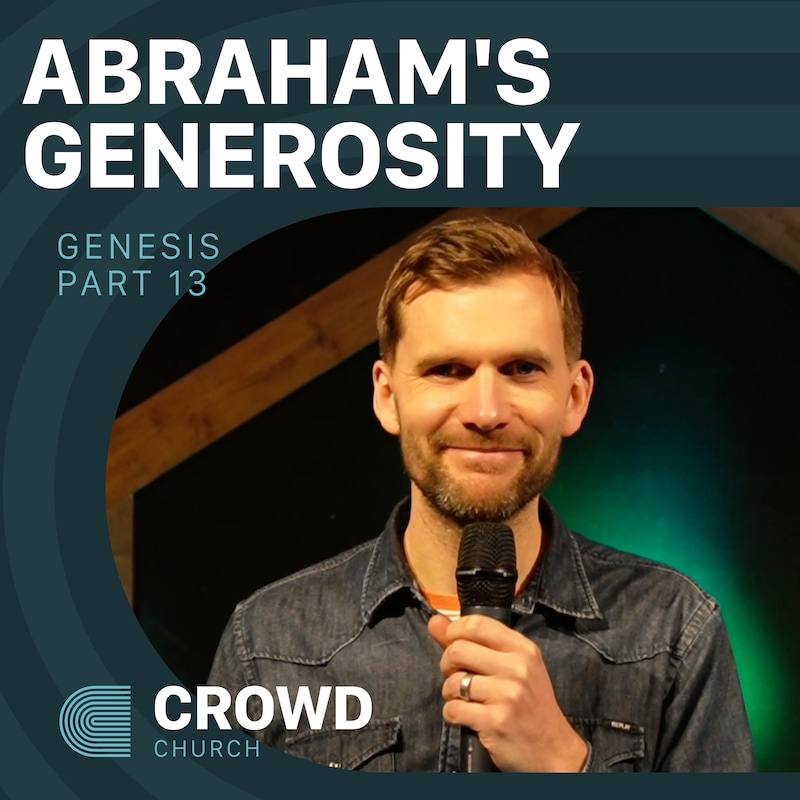
In this week's service, Jack Mariner explores Abraham's journey from self-reliance to radical trust through the lens of generosity. Beginning with a relatable story about learning to ski, Jack draws parallels to Abraham's struggle to trust God's provision rather than taking matters into his own hands. Through personal stories and biblical exposition of Genesis 12-14, we discover how Abraham's encounter with Melchizedek marked a pivotal moment in his understanding of God as provider, leading to the first recorded tithe in Scripture.
Key Points
Abraham's Learning Journey
- God promised Abraham blessing and to make him a blessing to others
- When famine struck, Abraham took matters into his own hands by going to Egypt
- Despite Abraham's deception about Sarah being his sister, God rescued and still blessed him
- This pattern reveals God's faithfulness even when we falter
The Turning Point with Melchizedek
- In Genesis 14, Abraham meets Melchizedek, the mysterious king of Salem and "priest of God Most High"
- After receiving Melchizedek's blessing, Abraham gives him a tenth of everything
- This represents the first mention of tithing in Scripture, long before the Law was established
- Abraham then refuses wealth from the king of Sodom, showing his trust in God as his provider
Tithing as Worship
- Abraham's tithe wasn't about following rules but expressing worship and trust
- The principle extends beyond money to all resources God has given us
- James 1:17 reminds us that "Everything good comes from God. Every perfect gift is from him"
- Tithing represents intentional, proportional giving as an act of worship
Personal Stories of Provision
- Jack shares his experience living by faith as a church intern with minimal funds
- God provided exactly what was needed through unexpected gifts that covered his rent
- These stories illustrate that while we may not always have everything we want, God provides what we need
- The testimonies aren't about prosperity gospel but about freedom from the grip of possessions
Conversation Street Highlights
Why Churches Talk About Money
- The team tackled the perception that churches are "just after your money"
- Jesus spoke extensively about money because it reveals what's truly in our hearts
- Paul highlighted the Macedonian church's generosity despite their extreme poverty
- Christian giving is countercultural—driven by love rather than social status
Enjoying God's Gifts Without Guilt
- The team discussed whether Christians can enjoy nice things without guilt
- Jack acknowledged his own struggle with a "poverty spirit"
- Will noted that receiving is as important as giving in understanding God's grace
- Matt quoted Billy Graham: "God's given you two hands, one with which to receive and one with which to give"
The Freedom of Generosity
- Generosity frees us from the "tyranny of stuff" that traps us in always wanting more
- Being able to give something away shows it doesn't have control over us
- Will shared how giving away his camera lens fund led to an unexpected blessing
- The ultimate goal is to experience the fullness of life that Jesus offers
Takeaways
- God is abundantly generous, giving us everything including His own Son
- Trusting God with our resources is a journey of faith, not an instant achievement
- Generosity is an act of worship that demonstrates our trust in God's provision
- The first biblical tithe was given before it became a rule—it was a heart response
- We cannot out-give God; His provision often comes in unexpected ways
- True freedom comes from holding possessions loosely, always ready to give
For more resources from this message and to continue exploring Abraham's journey through Genesis, visit our website.
https://crowd.church/talks/did-abraham-know-something-about-money-that-we-dont-genesis-part-13
Keywords: Abraham, generosity, tithing, Melchizedek, trust, provision, financial faith, Genesis 14, first tithe, giving, Christian stewardship, money and faith, spiritual growth, biblical generosity, Abraham and Sarah, Kingdom economics, prosperity gospel, Christian giving
Transcripts
Welcome
---
Matt Edmundson: Good evening. Welcome to Crowd Church. Great to be with you this evening. Uh, great to have you here. I, I am with the beautiful and talented. We'll stop with ladies and gentlemen.
Will Sopwith: Good evening. Good evening, all. Lovely to see you.
Matt Edmundson: Yeah, absolutely. It's great to be here. Thank you for joining us. Make sure you say hi in the comments.
Love to know where you're watching from. Uh, and yeah, tell us what's going on in your life right now. Uh, we'd love to know more about you. If we dunno already. Head to the website, crowd Church. Um, and you'll find all kinds of information there, including information about the new Alpha course, which is starting on April the ninth, which I believe is a week on Wednesday.
ine at the same time, so you [:We'll do it probably over Zoom. Um, but you're more than welcome to come join us. Love doing Alpha. It's like a. 16 week, I want to say course that kind of introduces you to Christianity and some of the fundamental concepts. Um, so yeah, come join us for Alpha. If you wanna know more, head over to the website crowd.
You see, I'm wearing the crowd merch tonight. Oh, it's Crowd Merch. Uh, head to Crowd Church. Uh, and you'll, there's a link on there for Alpha. You can follow that and it will tell you everything you need to know, but genuinely would love to see you in there. So yes,
Will Sopwith: I would, yeah, do, do check out that link if, if you don't know about Alpha.
Not a, it's not the kind of course that you get a certificate at the end of and you tick Yeah, I know this. Do, do, do, do. It's a, it's a place to come and question to, to talk about whatever really. I mean, obviously there's some structure to it. Um, but, and it does take you through, um, the, the, the principles of Christian faith.
opportunity necessarily. To [:Matt Edmundson: Fantastic. And of course, today in the UK and in several countries around the world, but not in the States.
Yeah. And not in the States. Today is Mother's Day. I found this out the hard way when I lived in the States. Um. I called my mom just randomly and she's like, why have you not sent me a Mother's Day card? I'm like, 'cause it's not Mother's Day yet. And she went, no, it is. And so that's when I learned we have separate mother's days, uh, around the, around the world.
I
Will Sopwith: won't know that. 'cause my brother's in Canada actually. And because I've bought things on, uh, online things for Canada, I start getting adverts for like the American Mother's Day because didn't we do this like a month ago? What was going on?
Matt Edmundson: So anyway, uh, for those that do celebrate Mother's Day, happy Mother's Day.
w that Mother's Day can be a [:Mother's Day isn't always. Straightforward for everybody around the world. So, but we appreciate for some that it is, uh, and so yeah, it, it's, it's, it's one of those days where we just wanted to, I think. I think there was a wonderful prayer today on the lec Lectio 3 6 5 app, which said, Lord, for mothers today, we pray joy, uh, for orphans, comfort, for not yet mothers, hope for struggling, mothers grace, and for the lonely family.
t want you to know his peace [:Will Sopwith: Yeah, no, absolutely.
And, and I, I was thinking about this today and there's so many pictures throughout the Bible of God's heart as a mother, um, and that sense of nurture, of faithfulness, of, um, unconditional. Uh, desire, input. Um, and, and actually lots of the, uh, the biblical analogies, um, are are definitely a motherhood. And, uh, yeah, for all those who, um, are in that season where your mother doesn't actually realize that you are their son, I salute you being there today.
but, uh, happy Mother's Day. [:Matt Edmundson: Mother's Day. Yeah, absolutely. Um, Sonya said, where do you get these hoodies from?
She wants one. Um, it's, I dunno, we should maybe sell 'em on the crowd website. The amount of people that request these crowd hoodies, crowd, church merch, um, they, you know, pastor Alexander, we, when he came over last year, we got him, um, a crowd church hoodie. So he's running around in the Congo in a black crowd.
The, probably the one place on earth. You do not need a hoodie, but he really wanted one. So, um, they are limited edition, uh, these crowd church hoodies and very cool. Very cool. We should all wear them. Absolutely. Uh, right. Should we get into it? I think we probably should, shouldn't we? So today we are carrying on our conversation in the book of Genesis.
weeks ago. Sharon looked at [:Uh, it was a phenomenal, I, I really enjoyed it actually. Um, and Jen was on that last week with Sharon and Anna, and we have Jen's husband with us sharing the next stage, uh, the next step. In fact, I think we got these the wrong way round though. I think you should have. Is that right? There was some discrepant.
Anyway, we've got Jack talking about Abraham's generosity. So without further ado, let me hand over to the wonderful Mr. Jack Mariner.
Talk with Jack Mariner
---
Jack Mariner: Hello. Yeah, well it's great to be with you and thank you, Matt. Yeah, I want one of those jumpers. Get them on. You're, you're missing a trick there. Get them on. Yeah. Yeah. Internet. Internet. We are looking at this book of Genesis, first book of the Bible. I've loved this series. Absolutely loved this series so far.
second talk we're looking at [:And today I wanna pick up this theme of blessing and generosity. So if you wanna, uh, turn to Genesis 12, if you're following with the Bible, we're gonna have the scriptures on the screen as well. But this is a story about learning and I wanna share a little story about learning because. I dunno about you guys, but I love learning if there's anything to learn.
If there's someone doing something and someone's like, who wants to have a go, I will put my hand up. Um, often not publicly, but I would like to have a go at a game. And so friends were go and skiing and snowboarding about five, six years ago and I'd never been. And they said, Jack, do you want to go? And I was like, yeah, of course.
s French border, and I think [:He's kind of like my genesis master for the week. He was like, stay on these nursery stokes, go anywhere but. Ski lift. It was quite genuine. And uh, so day one I did that. Me and this friend just kind of fell over quite a lot. Day two, the same sort of thing happened. Then day three, I had this moment of madness where I went over to the ski lift.
I was like, how bad can it be if I go up that ski lift? And so next thing I know on this ski lift, and we're going higher and higher and higher, it turns out to be the. Tallest or longest and highest going ski lift of the whole resort. And we got, I got to the top and then I'm like, what goes up? Must come down.
stunning. It was absolutely [:And this, I remember this guy coming up to me. He says, KO and I, which means, sir, you okay? And I said, oh, no, uh, no. First one. I said, we, we, I was a bit too, too. Um. Too, too honest to like, I, I didn't want to admit my defeat. I says, we, yeah, I'm fine. And then it happened again. And this time I fell over and I really hurt myself.
I winded myself and, and another person came up and says, UR, and this time I says, no. I'm not. Okay. Um, and we had a little chat with broken French and English, and I decided I need to start this walk of shame going down this mountain. Picked up my skis step by step. Had to get to the bottom. Found everyone else.
ow how you go about learning [:And actually this is at the heart of so many stories that we look at the Bible, humanity, learning to trust God and learning something. So let's get to the passage, Genesis 12. The call of Abraham, the Lord had said to Abraham, go from your country, your people, and your father's household to the land. I'll show you.
I will make you into a great nation, and I'll bless you. I will make your name great and you will be a blessing. So God makes this promise with Abraham go and I'll bless you and I'll make you a blessing. Now, the first thing that stands out to me. Is that in order to be able to bless, you've got to have the ability to give something to, to be able to bless.
h, um, Adam and Eve in Eden, [:It is absolutely abundant and radiant. And God says to Adam Eve. You can go anywhere, you can have all of this apart from that fruit on one tree. He wants to meet their needs. He wants to be their provider. He is an abundant God. He's overflowing with goodness and he wants his people to be blessed. And so it's with this same nature that God makes this blessing, makes this promise that Abraham go and I'll bless you and make you a blessing.
, does he? Instead of coming [:Severe. So instead of experiencing this abundance and this, this, um, expansion that God would give him that he was expecting, Abraham finds himself and his family, all those that he'd brought along. He finds this famine so great that he goes to Egypt and here in Egypt, they, uh, fear, he fears that when he meets the Pharaoh, such was the customer at the time.
That when a beautiful woman like his wife, Sarah, soon to be Sarah, um, when they see someone like that, that they want, uh. If they're already married, they'll murder the husband. And so Abraham is fearing for his life. And he says, Sarah, you're gonna have to pretend you're my sister, because if you're just my sister, they'll take you in and they'll give me lots of things.
hat's what they do. And they [:Enough camels as well. So he got this blessing, even though he'd been deceiving, but the Lord inflicted serious diseases on Pharaoh and his household because of what Abraham had done. And so Pharaoh summed Abraham to him and said, what have you done to me? Why didn't you tell me she was your wife? Then Pharaoh gave orders about Abraham to his men, and they sent him on his way with his wife and everything he had.
So God promises to bless Abraham, but when this famine arises, instead of trusting God, he takes matters into his own hands. I don't know if anyone can relate to that, where you feel that God has said something or you think I'm doing everything right. Why have I not walked into a better position? Why has this breakthrough not come?
[:And as a result, Abraham ends up in this mess and God has to intervene, rescuing, and Abraham from his stupidity, from his foolishness. And yet what I think is really remarkable is that God not only rescues Abraham. He blesses him anyway, he keeps his promise that if you go, I will bless you. And in chapter 13, we read how he gives Abraham wealth and livestock birth battle successes.
le encounter between Abraham [:If you break down this name, it's uh, king of Righteousness, Mel Ude. Um. He only appears briefly in Genesis 14. He's described as the King of Salem, which if you think J Salem, there's this king of peace already. You might be thinking about this name. You're thinking, oh, that this sounds a bit familiar. And he's also named the priest, uh, of God Most High.
your enemies into your hand.[:And then we read, Abraham gave him a 10th of everything. So Abraham meets this priestly figure one who represents God most high, and as an act of worship, he chooses now to give him a 10th of everything he has. What a turnaround. So we go from God saying, go. I will bless you, Abraham going, but then in fear going his own way and then God is doing something stupid, so God has to rescue him, but then God blesses him anyway, and it's as, as if at that point Abraham gets it.
Uh, this is what it means to be blessed. I'm gonna give you it anyway. It's yours anyway, and this is where I'll come to the main point of this message. For me, something has changed in Abraham's heart. This whole experience up to this point was Abraham learning. To trust God. He moves from trusting in himself to provide, trusting in his own ways, to trusting God, even despite his circumstances.
learning. I can trust God. I [:Uh, in Liverpool Frontline Church, and it was custom at the time. It was normal at the time for people to live by faith. This term that we use, where basically you will do something where you might not get paid a lot, you might volunteer, but you'll trust that God will provide and it helps that you hear God saying, do that before you do it.
elt God saying you should do [:Those first six months were really hard, those first six months where this was before the days where you could look on your phone and see how much you had in your bank account. And so I was going to Asda and I was, uh, calling up my bank, co-op bank. How much money do I have in my bank? What do I have? How can I, how much can I afford, um, to spend this week, three pound 23, right?
I can get bag of pasta, pesto, maybe some bacon if I'm lucky. And I remember thinking. God, this isn't the blessed life, is it? This is not what I signed up for when I was gonna take a risk and go out for you. Why am I not seeing more money come in? Why? Why am I living this kind of, such, such a harsh life when it come to, uh, what food I was gonna have and other monies, and I remember.
and some people gave me some [:It was March. I didn't have any money in the bank and I went to speak at my parents' church where I grew up in London and. Just for 10 minutes. They asked me to share a little bit about what I was doing that year and straight after it, this guy came up to me and he said, Jack, thank you for sharing. I got saved.
I gave my life to Jesus. I met Jesus when I was at university, and I really believe in what you're doing. I really believe that God wants to meet more people through student ministry. I wanna, um, start supporting you financially. Now, little did he know that. The rent that I needed to pay in April was 220 pounds, and I didn't have anything in my bank account.
needed for my April's rent. [:All of heaven's treasures at his disposal. He's a God who can provide, he's a God who is abundant in his generosity. Now, I knew God could provide, but it was quite hard at at moments, and I didn't always have everything I wanted. I didn't have always the latest things, and I haven't always had the latest things, but God has always provided, and that's been my testament and the testament that I've known so many believers have.
God is our provider and God can be trusted. Now going back to Abraham, what we see in this interaction with Mel Kda is Abraham relinquishing ownership of what is his. There's this transition where he wants things. Then he's able to give them away because of his relinquishing ownership. Right after he tithed to Mal kda, Abraham gives back wealth.
like, no, I'm not gonna keep [:He wants God to get the credit. He wants God to be seen as the provider. And I dunno about you, but I find it really easy to think that what I've earned. What I've possessed is mine. If anyone's seen Lord of the Rings and Gollum with that ring, that precious ring, this is mine. It's my precious, and it's so easy for us, I think, to look at our possessions, to look at the money that we've earned, whether we've inherited it, whether we've got a degree, whether we've worked our socks off, and we've come out of school early and we've made a living for ourselves.
earning an important lesson. [:We get to give back to God, we get to give away. It's as if God is making us a steward of what he's given us and he's saying, what are you gonna do with it? How are you going to use what I've given you? And there's all sorts of parables and stories that say that. Same message, James one 17. Says, everything good comes from God.
ce, he lets us enjoy it with [:And because we are blessed, we are able to be a blessing. Just like Abraham, it's worship, it's generosity. It's a sign of his trust in God. And so this story of Abraham and Milk is that it's, it's a key story of why we believe in the principle of tithing. It's the story, it's the first mention anywhere in the Bible of a tithe, giving the first 10th of something.
And it's, what is key is that this was before tithing was introduced as a rule for God's people. It was before it became a a, a, a system. There was a temple tithing system set up where all God's people were expected to tithe into all sorts of different ways. So Abraham gave 10%, not as a rule, 'cause it was before it became a rule.
render, it's honors God, and [:Now this is where it's really important to look at scripture, 'cause there's all sorts of understandings around tithing and around giving, and I just wanted to share some thoughts on this. On the one hand, you might look at the New Testament and say, Jack, it doesn't really mention tithing that much. And I'd say, you are right.
It doesn't, but what it does do is it talks so much about giving. New Testament is full of sacrificial giving, and that might be giving to, uh, spiritually, spiritually, to leadership, those who feed you spiritually. It might be giving to gospel expansion and missionary endeavors, it might be giving to the poor.
stament, and Paul encourages [:That is the mark of those who encountered, those who have encountered God, those who have encountered his abundant grace in their lives, those who have encountered that God sent his one and only son the best gift he could give for them, and they couldn't help but share what they had with others, both in what they say, but also what they had.
t we do not need to apply in [:You know, there's this idea of, oh, I'll just tip a little bit, um, how I, however much I feel, um. But as we've unpacked a little bit already today, 10% is never the thing, never the heart. When you look at the various things people gave into in the Old Testament, it was actually a lot more than this 10%. There were three sets of at least three sets of.
Tithing in the Old Testament, there was the first or sacred tithe giving 10% each year to the priests, uh, for their services and for the Temple upkeep. Then the second tithe was if you wanted to be part of the community, you would set aside money each year for the annual feast and festivals so that you could travel and so that you could be part of them.
r the poor. So in total, the [:So there's this principle of giving sacrificially that goes right from Genesis all the way through the Old Testament, through the temple period, into the early church and New Testament church. I dunno if you've ever thought about giving, maybe you give away lots of money. Some of you, you've maybe given 10% or even more faithfully to your local church for years.
ondly, what is God saying to [:Remember, 10% is a good principle, but it's not really about the 10% is it? It's about our hearts. So coming into land, it's remembering that we serve and can trust an abundantly generous God. We do not need to fear for lack. There's a beautiful passage in Matthew six where it says, you do not need to worry about, just as the birds don't worry about, uh, what they need.
We do not need to worry about the food and the drink and what we're gonna wear. We do not need to worry which child has ever worried about what they're gonna eat, what they're gonna drink, what food they're gonna wear. A a father knows their needs. It's remembering it is God who gave us the money in the first place.
s. And it's about worshiping [:To a place where he gives away most of what he has as a symbol of his trust in God. God calls us to learn to trust in him and to be generous with what we have. So this week I just wanna encourage people to think about those questions. God, do I believe that you're a generous God? Do I trust you and God?
What are you saying to me about the money and what I have? How can I steward that? Well bless you. Thank you.
Conversation Street
---
ite 'em in the comments, uh, [:Talked about how one of the biggest obstacles for people going to church, I'm just gonna address the elephant in the room straight away. Get ready chaps. One of the biggest obstacles people have for going to church is the belief the church is just after your money. Yeah. And so I'm kind of curious who's gonna answer that question first?
Jack gone. What'd you think? Well, how would you, how would you respond to that? The church is just after your money.
urch always talk about money?[:And I think it. It really doesn't. But of course, each time, each Sunday, we do give an opportunity for people to give. Um, I I, I think it's, I I think it's a, it's so counter-cultural and I touched on it a little bit. It's so, it is a costly thing to do that you can't, you can't really, you're okay over there?
Yeah. That's falling off the chair. Matt's falling off his, his chair. Can't believe your answer, but you can't really even fathom the prospect of giving. Until you've met something that is too good to be true, like God sending his only son on the cross.
Will Sopwith: It's a, it's a really good point. And I think, and we can all immediately, I mean, as you were talking, I was immediately thinking of, of some of the, kind of the broadcast of like, and, and you know, the, the link comes up at the bottom, please give here.
money. But, but I think you [:Attitudes are where their heart before God is. And so it's, it, it, I I don't think, I think it's great the churches talk about money, not because the churches need money, although they do, but actually because it is a real, it's one of those issues that really cuts through very clearly to what's really going on in your heart.
Jack Mariner: Yeah, and I think it, it is a shame that there has been a lot of abuse and it's, we need to acknowledge that, that there has been a lot of abuse of people either. Speaking about this prosperity Gospel too much and saying, you will be blessed if you do this. And, um, there's different, different places around the world won't, you know, specifically talk about anywhere in particular, but I think there has been abuse and people wanting and using the platform to live the blessed life.
not talk about it? Or do we [:It shows my heart. You could just Google scripture on giving and it's, it's endless.
Matt Edmundson: There's a lot there, right? Isn't there? And I think, I think this idea that you said. About it being countercultural is really important. So the, I was reading this morning, actually, you know, you, you mentioned, um, the Macedonians in the, the letter.
So Paul writes a letter to the church in Corinthians. The Christians in Jerusalem are an immense poverty, and so they do something called the Jerusalem collection. And so different churches decide to give to the Jerusalem church, right? And so Paul writes to the church in Corinthians. And they started to put together a gift.
a year later Paul's like, I [:The only thing is it's probably more than you can spare, right? That's probably the only fact. But the thing about. That I love about this passage and the way Paul talks about it is it is utterly countercultural in the sense that at the time the sort of the Greco-Roman culture was. If I had wealth, I gave it away because it was expected.
I would build a library, I'd build a road, I'd throw a festival. Um, it was never to give to the poor. It was never to be about dealing with inequality. It was all about my social standing. Right? Yeah. So if I gave, then you'd do a statue for me or an inscription or something to honor me, and if I didn't give, then I would be dishonest.
bout this sort of, I give to [:Will Sopwith: and actually like that culture is, is so very clear now as well.
If you, if you think about companies and their kind of. Publishing what they're giving to and, and it feels very much like, is this 'cause you really care about this particular charitable work or is this just a kind of part of your marketing really? Yeah. It's a very similar sort of idea of like, it's quite showy, showy giving, which again, Jesus talks about very much.
Yeah. Um, in his time.
with every culture. Yes. For [:That and how we spend our time, because it's go basically goes back to the same sort of heart root of discipleship. It's like, how are you spending your time? He's talking about something that goes right to the heart of who's on the throne of your life or what are you placing your hope in? How are you putting your focus?
Maybe social media isn't, isn't quite there, but it's what is the thing of our time. Yeah, money's always. Money's always, every culture's always grappled with wanting more, wanting to keep up with appearances. Um, yeah, could take us down a rabbit hole. There
Will Sopwith: isn't that sad though, you know, after however many years of, of of Christian thought or, um, you know, it is still just as much of an issue.
It [:There is so much money in the world being squandered on ridiculous stuff. Where is this money? All we need is a tiny, tiny percentage of it just to kind of keep doing what's really good. And, and you talked a bit about that kind of fear of faith, so mm-hmm. As a leader in an organization that needs finance to do good stuff, how, how do you, how do you grapple with that, that challenge?
the presence of himself that [:Yeah. Possessions and power and relationships and all sorts of different things, but everything he has is him. He has given us all of that. Um, so it is more in that kind of heart sense that he has given when, when we get our minds around the fact that he's given us life. Yeah. And eternal life. Everything else is just fleeting.
It is that kind of aspect because yes, we have a hole in our next year's budget again, and we need, you know, it's a hard time at the moment with charitable sector, isn't it? Yeah. Yeah. And um, so we are having to think creatively, but it doesn't change my trust in God. I see it as. Stressful. Yes, and occasionally lose sleep about it, but really an adventure.
d staff. We're gonna have to [:I don't know if you've got any other ways that you've dealt with that.
Will Sopwith: No, I mean it similarly, it keeps you up at night 'cause it's like the impossibility. I-I-I-F-I, I felt that frustration of what I said of like, just looking at the sheer abundance of material resource that there is washing around the world and, and how the sort of amounts that would make a huge difference to any charitable work are kind of just Yeah.
Yeah. They're just, they're just, um. Squandered away without anyone noticing, and yet they could make a massive difference. But I think I know, I really like what you said, that it's, uh, in a sense, money's not the issue. It it is the thing that kinda keeps us challenged and keeps us close to God, but, um, yeah, but it, there's, there's a whole lot more.
But it
Matt Edmundson: is not just [:Because he was so wealthy. Everybody would just agree with him and say yes all the time. We see that a little bit stay actually, uh, with well-known billionaires. Everyone's just saying yes, yes, yes. Mm-hmm. And I didn't. And he said to me one day, he said, Matty, you're not that bothered by my money. Why is that?
And I said, do you really want to know? And he said, yeah. I said, well, the Bible says, which is always a good way to start a conversation. The Bible says that the wealth of the sinner is stalled up for the righteous. I said, you are a sinner. And I'm righteous. So it's all mine anyway. Right. Brilliant, brilliant.
really well after that. And [:Jack Mariner: What a fantastic question.
I dunno the answer to it. I, I mean, I, I've gone on my own journey. I, I've got a bit of a poverty spirit. I'm gonna be honest with you. I really hate spending money. Um, and in the last sort of five years, I felt a bit of a breakthrough in that, of. Actually, it's all right. Occasionally to spend a little bit on myself, maybe get, you know, a nice pair of trainees or something.
ionships with people who can [:I know people that, that, you know, spend money on investing things and they'll say, well, actually that's, this is my wiring to be able to invest well and I'm gonna therefore live in a better house. Because actually that's good investment in that house. It's, it's acquiring money just as I live in it. Um. I think it's a really good question.
Will Sopwith: Yeah. Yeah. And, and, and I think that that what you said about it being a heart issue is absolutely the, the case and the fact that you're, you are asking that question Ellis shows that your heart is clearly in a good place because you're even considering it. Whereas most people were just like, it's mine.
nd of. Following God. 'cause [:And when we get to heaven, everything will be all right. And, and that can be, that can completely drain the joy out of Yeah. Your life. And to be honest, it's a very bad witness. Um, that, that others looking and go, it's like, wait, I'm becoming a Christian. It's like, well, why would I wanna live like that?
You're miserable the whole time. You've got nothing. Um, but actually, I mean, what, what fascinates me about the whole. Challenge to tithe. And the fear, faith thing is that as you begin to do it, it just kind of removes that hold that it has on it. And to the point actually when you know if, if you, if you're giving and you know that your heart is, I wanna be generous and I want to give to it, where there's a need, it becomes actually a lot easier to then spend money.
Not because you feel like you've kind of, oh, I've done my 10% so I can spend the rest on me. Yeah. But it just. It just becomes kind of easier 'cause your whole, it doesn't feel like money's gotta hold on you anymore. Yeah. Um, but there is something really important about not losing that sense of God blessing you.
And sometimes that is [:Matt Edmundson: Yeah. No, that's very good. I might, I might slightly. Become contrary to this in the sense that I don't, well, I, because I, I, I, I think I had a slightly different upbringing.
I, I grew up where money was not, I mean, we didn't necessarily lack, but it was definitely not flowing. Um, and when I came to the church and I, I started to get my head around some of these things. Actually, I, I can't say I've grown up as a Christian with a poverty spirit, what we call a poverty spirit.
ney can't be your God if you [:Yeah. So whatever it is you buy. Can you hold it loose enough to be able to give it away? I had, um, I had a, a mini Cooper. A mini Cooper s loved that car. It was like a go-kart on wheels, right? It was just beautiful. What color? Black. The only car I wanted, a British racing green actually. Um, but I got a black one and it was awesome and loved that car.
I could not, that I, if the police were watching would ever do this, but apparently I could beat a portion on 11 away from the traffic lights in that car. Loved it. And God told me to give it away so. How do I respond to that though? I'm like, do I do, and I'm not saying this to make me look good. Don't get me wrong.
ostentatious, especially in [:It's the only reason. And so my wife, as wise as she is, said to me, you can have an Omega watch as long as you don't buy it and you don't steal it. And so I was like, okay, challenge accepted. Uh, and so I, and I, again, that there's a theology around this and I, I appreciate some people will struggle with what I'm about to say, but I prayed and I asked God for an Omega watch.
Um, I. Just because that was my, I don't know. I couldn't tell you. It's just my heart's desire. Now, I'm not saying that everybody listening to this go and pray for an Omega watch and God will give you one that's a prosperity gospel, which has been blown completely outta proportion. That's not what I'm saying at all.
for. Um, and in that box was [:I still have that watch, and every time I see it, it's just a reminder to me of God's promise. It's not an ostentatious thing, it's not a status thing. I rarely wear it. It's a reminder of God's faithfulness and promise to me. So the question is. Would I be able to give it away? And I think actually I probably would.
Mm-hmm. I'm not holding onto that. Mm-hmm. That's funny. 'cause I've been praying that someone would give me an,
Will Sopwith: I think, I think one other thing on this that just came to mind when you telling that story is that. Part of the problem of worrying about, oh, can I, can I have anything for me? 'cause it's not right.
'cause you know, the world is full of need. We could very easily give everything we had and it still not be even vaguely enough and still feel bad about having anything, you know, having clothes, having anything to eat, you know, there, there's always stuff you can give to. Um, but the gospel is all about what we receive.
It's not about what we [:Um, and money is, is a classic there. Um, and so there's something actually of, of, you know, holding it lightly, saying, God, you know, if there's a particular thing you want, it might be a holiday, it might be something you wanna buy. Submit it to God and say, God, I I'd love this. Is that, you know, can I, can I have that kind of thing?
And, and being able to receive is actually a, a vital part I think, of walking with God.
Matt Edmundson: Yeah.
Will Sopwith: And uh, and when we, when we can't do it 'cause we're so bound out with guilt, then we, we miss out actually the whole gospel, um, because we're not receiving God's grace.
Matt Edmundson: So true. Billy Graham said, God's given you two hands, one with which to receive and one with which to give.
Corinthians talks about how [:How can I give? Into your kingdom with what you've given me, right? So I, I know business, I know online business. So God, how can I use that to grow the church? How can I help that to build your kingdom? It's just a question that's perpetually in my head. So whatever God's given you look for ways to give that away.
Not just money, but money is obviously important and, and give that away as well. Um, but yeah, you've got two hands, one with which to receive and one with which to give.
Will Sopwith: And that, and that is a load of fun. I mean, it, it really is fun. And, and I'm sure there's lots of stories about it. I mean, one that occurred to me just listening to you, Jack, was I'd been saving for a camera lens.
up for this camera lens and [:And I was just like, and immediately I thought, it's my lens fund that I've been saving up. And I probably had, I dunno, it probably was a couple of hundred quid that I've been saving up over months and months. So it was like, okay, so away I gave that. Next week, tax refund. Doubled. Doubled the money that'd saved.
And it's like, okay, what do I do with this? It's like, no, no, that's for the lens. But you, you, you do it. Yeah. And, and, and have it, you can kind of do both and you can have it all, but. Yeah. Yeah. And I think God really wants to get our attention on that and he wants us to, to test him out on that. And again, it's the, it is the fear of faith thing.
It, it's very counterintuitive, isn't it? 'cause when you, if you give more away, then well that surely increases the fear 'cause you've got less. Mm-hmm. But it actually, it flips it around.
Jack Mariner: Yeah. And [:I know people who have absolutely nothing and have a great joy. Yeah. I also know people who have absolutely nothing, and you could tell how miserable they are. They've, they've not quite grasped it. And likewise for people who have loads, I've known people who have loads and just want more. Can't wait to get that extension, can't wait to get this, can't wait to go on that big holiday, whatever it is.
But also, I've known people who, who have loads and who are. So generous and who, who, it doesn't mean anything to them. So I think in a way it doesn't matter. I think, you know, Paul talks about I've had plenty, I've had nothing. Yeah. To live is Christ. Yeah. And, um, to die is gain. He's got his eyes. It's the heart.
. Ultimately, God might give [:Um, and I'm like, okay, I'll join you with that and we'll see where that goes. But, uh, I think that's okay. Um, but yeah, it's about our hearts, isn't it? Is is this that important to us or is God more important to us and his ways?
Matt Edmundson: Very good. That is a great place to end Conversation Street. I feel like we're just starting to get into this chaps.
I'm not gonna lie. I think we could go all night. Um, talking about God's generosity, um, and the joy. I think the joy is in the giving. Um, it's good to receive. I. Yeah. But boy, is it good fun to give. And I think if you've not discovered that yet, try it, you'll, you'll see what I mean. Uh, coming up next week Will, what's, what's happening next week?
Yeah.
faith. Um, there's a lot of [:Matt Edmundson: Yes, do that. I will be, uh, on Crowd Church again. Uh, YouTube, Facebook, and Instagram. All of them just come join us. Come say How's it in the comments. Chaps, before we go, we've been talking a lot about generosity. Uh, a closing story or a closing thought on this whole topic.
Will Sopwith: I, I've got a closing story 'cause I'm aware that we're, we're kind of talking, I mean, you know, off conversions, camera lenses, like well, yeah, that's all very nice.
Um, we've got a neighbor who spent years, uh, living out in Sub-Saharan Africa and. When she first moved here, she, they didn't really have anything because actually they'd, they'd been in this culture where, you know, on a street someone has a pot or someone has a, an implement of some sort and someone would go and borrow it and, and that was it.
was like there was no there [:Um, and so, yeah, that, that's, I've just remembered that story and that's a real challenge. 'cause it, it's, it's not just about this, it's not just about the stuff we have, but it, it, it opens up so much more.
Matt Edmundson: Yeah. Amen. Have you got a story or a final thought?
Jack Mariner: I, I didn't really, I thought that Will was taking, I thought you were just asking one of us.
is just so much more to life [:The, the wanting. There's just so, you know, advertising is, is just got bigger and more attractive. Um, so the, the better we can do to get ourselves into a community or put our own disciplines in place where we just take off these traps of wanting more and more, the more. Of the fullness of life that Jesus has for us, we can step into and we can experience.
Um, yeah, it's been great. It's been good chat tonight.
Will Sopwith: Thanks, Jack. Good to have you.
Matt Edmundson: Yeah, very good. Thank you ladies. Gentlemen, uh, it's been great to be with you this week. Do join us again next week, uh, and uh, reach out to us through the website, crowd Church. If you are hanging around this far, you want to come join us in the Google Chats.
You can do [: . That's it from us. Bye for [:


